
Who Is Writing This
My name is R. Kirilin. I was born in what is now Ukraine, back when it was still the Soviet Union, and the food of that part of the world is the food I grew up eating.
I am not a chef, and there is no reason to pretend otherwise. What I am is a traveller with a particular weakness for Central and Eastern Europe. I go back whenever I can, and the first thing I do anywhere is eat what the people there eat — a village market, a side street, somebody’s kitchen table. Food tells you more about a place than most guidebooks manage. Reading about where these dishes came from is simply something I find interesting, and this site is where it ends up.
Why The Healthy Half Exists
The second half of the site came from something more ordinary. Getting older, I ran into health problems that meant giving up foods I had eaten my whole life. The obvious response is to stop eating them. The more interesting question, and the one this site is built on, is whether a dish can be changed and still be itself. How much can you take out of borscht before it stops being borscht.
Sometimes the answer is: quite a lot. Sometimes it is: almost nothing, and the honest thing is to say so.
How These Recipes Are Put Together
The traditional recipes are compiled from published sources — regional cookbooks, ethnographic writing, and accounts by people far closer to these kitchens than I am. Every recipe article names what it drew on. Where regions disagree, and for the big dishes they always disagree, I say so rather than picking one version and calling it correct.
The classics on this list are cooked in my own household. Borscht, varenyky, holubtsi and their neighbours are not theory here.
The healthy adaptations are a different matter, and I would rather be plain about it. They are reasoned out from the same sources and from what each dish structurally depends on — what the fat is doing, what the starch is doing, what can be swapped without the thing collapsing. Most have not yet been through a home kitchen. They are carefully argued starting points rather than tested-and-perfected recipes, and where a substitution costs something, I say what it costs. If you cook one and it works, or it doesn’t, tell me.
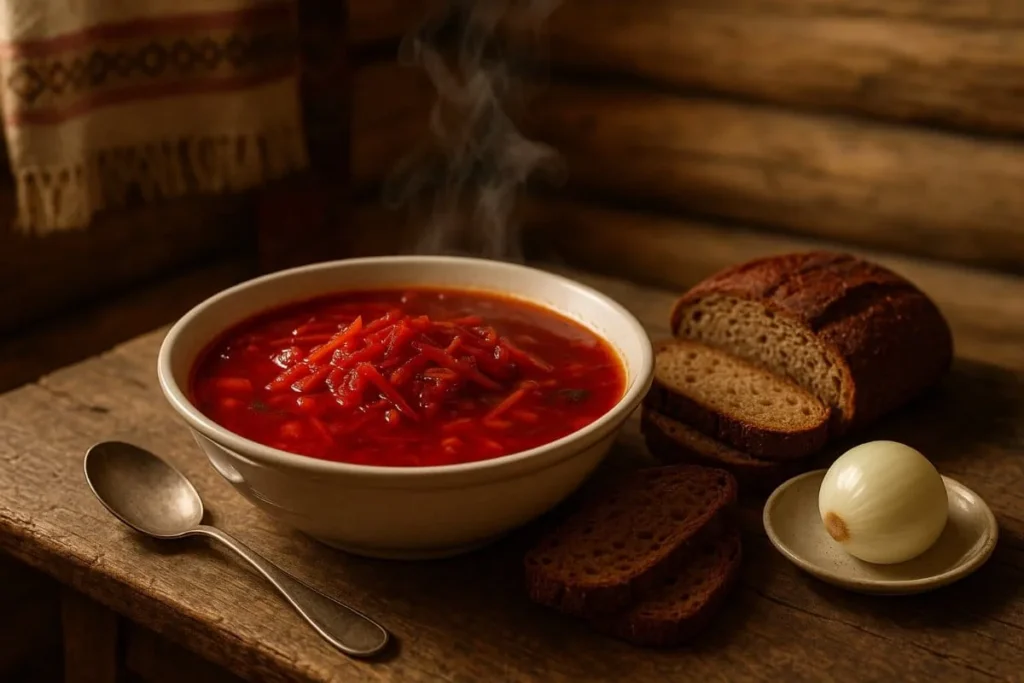
A word on the tools: the research behind these articles — finding sources, reading across them, drafting the English — is done with the help of AI. I choose the subjects, decide which sources to trust, and edit every article before it goes up. The photographs are generated images as well; they show what a dish looks like, rather than the particular pot of soup a recipe produced. I would rather tell you that than let you assume otherwise.
What You Will Not Find Here
Invented family stories. Fabricated ratings. A claim that any of this is the one authentic version. These cuisines belong to a great many people. This site is one person reading carefully and writing it down.