

Active time: ~45 minutes | Total time: ~1 hour 10 minutes | Serves: 4 (about 12–14 crepes) | Difficulty: Moderate
Quick overview
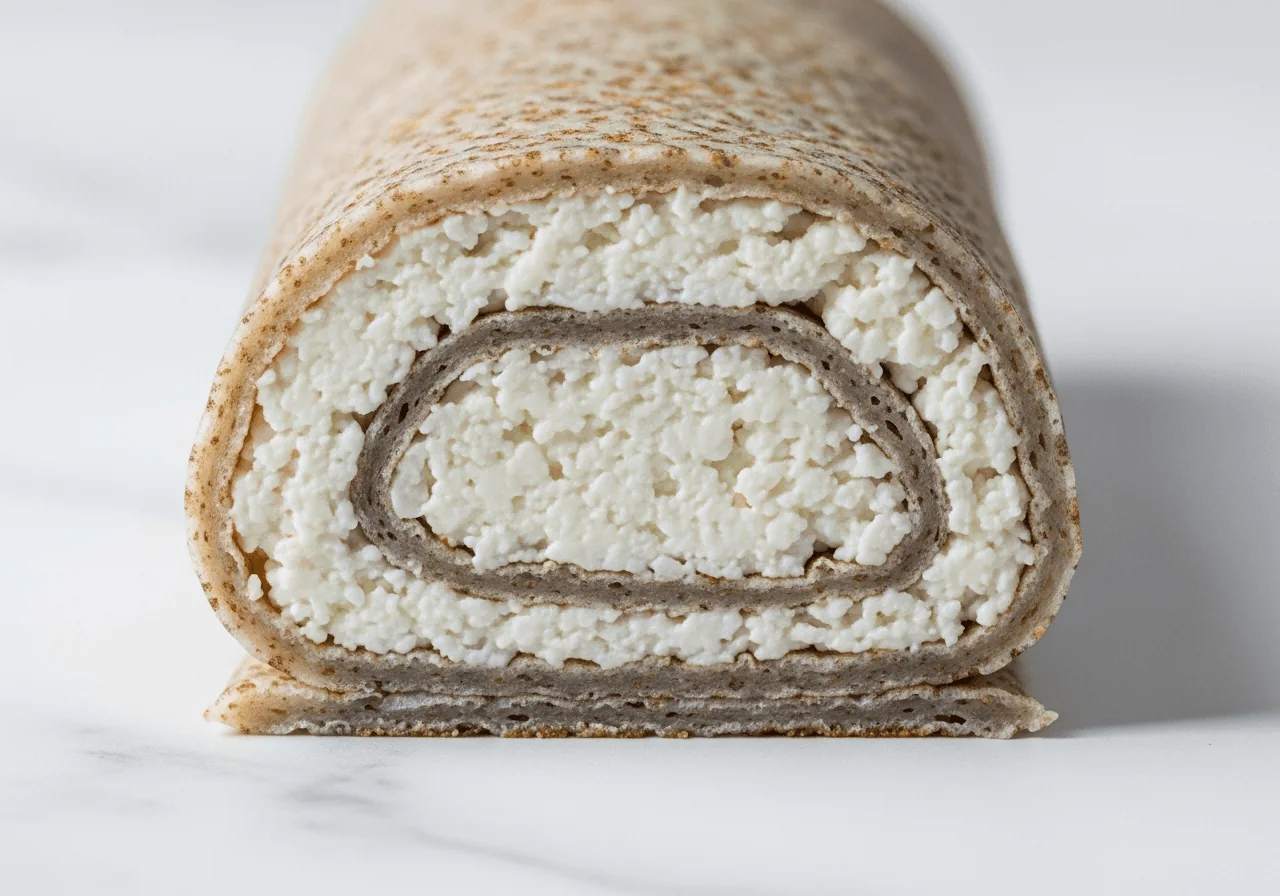
- A 50/50 blend of buckwheat and whole wheat flour replaces white flour in the batter — more fiber, lower glycemic impact, no change in method
- The filling uses 2% low-fat cottage cheese instead of full-fat dry curd — protein stays high, saturated fat drops
- Greek yogurt replaces the heavy cream in the filling; two tablespoons of whole milk go into the baking dish instead of cream
- Greek yogurt replaces sour cream on top: less saturated fat, more protein, similar tang
- The method is unchanged — one-sided crepes, same rolling technique, same covered bake
What this version changes — and what it keeps
Traditional nalysnyky are already a more reasonable dish than many Ukrainian recipes — not fried, protein-rich filling, no heavy sauce. What adds up quietly is full-fat dairy at every stage: in the filling, poured over the rolls before baking, and spooned on at the table. Saturated fat accumulates across butter, heavy cream, and full-fat sour cream without any single step looking like the problem.
This version addresses each of those. The flour swap is about fiber and blood sugar response, not dramatic calorie cutting. The cream in the baking dish is replaced by a small amount of whole milk — enough steam under tight foil to keep the rolls moist, without the fat load. The filling uses 2% cottage cheese, which holds nearly all the protein of the full-fat version. Swapping Greek yogurt for sour cream at the table is the most direct trade: less saturated fat, more protein, similar flavor.
Nothing about the method changes. Anyone who’s made the traditional version has nothing new to learn here.
Why these swaps work
The flour change takes the most explaining. White flour is what remains after milling removes the bran and germ — the parts that carry most of the fiber, B vitamins, and vitamin E. Harvard T.H. Chan School of Public Health has the numbers: refining wheat strips away more than half of its B vitamins, 90 percent of the vitamin E, and virtually all of the fiber.¹ What remains digests quickly. Harvard puts it plainly: fiber “slow[s] the breakdown of starch into glucose — thus maintaining a steady blood sugar rather than causing sharp spikes.”¹
Buckwheat compounds that. Harvard’s Nutrition Source lists it among whole grains.¹ Cleveland Clinic notes that buckwheat has a low glycemic index compared to grains like millet, bulgur, and couscous — breaking down more slowly and producing less of a spike in blood sugar.² It also contains fiber, protein, and antioxidants including rutin, a plant compound studied for potential cardiovascular benefits.² Cleveland Clinic’s registered dietitian specifically names buckwheat flour as a replacement for white flour in pancakes.² Keeping it at 50% of the total flour is a practical call: pure buckwheat crepes are fragile, contain no gluten to hold them together, and crack when rolled. The whole wheat flour provides the structure.
The cottage cheese question is a little more involved. Cleveland Clinic recommends 2% rather than nonfat: “Nonfat cottage cheese may sound like a good idea, but it contains less protein and won’t be as satisfying.”³ A 100-gram serving of 2% provides 84 calories, 2.3 grams of fat, and 11 grams of protein.³ The protein is mostly casein, which digests slowly — Cleveland Clinic notes this can help prevent blood sugar spikes.³ Harvard flags one practical thing: cottage cheese can run high in sodium, so a low-sodium variety is worth choosing, especially for anyone watching blood pressure.⁴
Swapping Greek yogurt for sour cream at the table is straightforward. Cleveland Clinic recommends it directly: using Greek yogurt instead of sour cream “cuts some saturated fats from your diet” while adding protein and probiotics.⁵ Greek yogurt also contains roughly twice the protein of regular yogurt, and that protein “can help you feel fuller longer,” in Cleveland Clinic’s words.⁵ Full-fat plain Greek yogurt is the closest match to sour cream in texture and flavor — nonfat versions are noticeably thinner and feel less satisfying on hot food.
Healthy nalysnyky recipe
Recipe developed independently by Heritage Healthy Kitchen, drawing on traditional Ukrainian culinary methods. Sources for further reading are listed at the end of this article.
Ingredients
Crepe batter (serves 4, about 12–14 crepes)
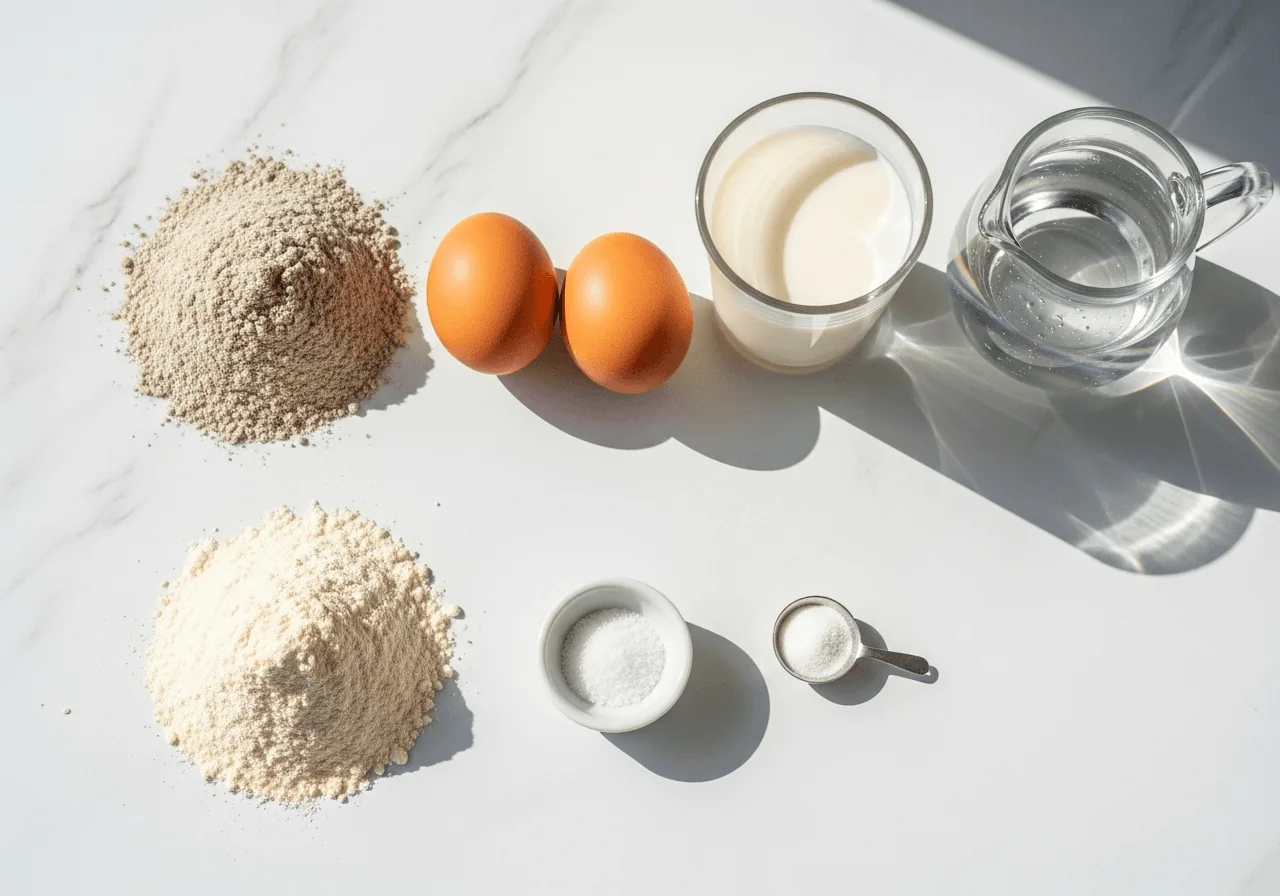
- 100 g (⅔ cup) buckwheat flour
- 100 g (⅔ cup) whole wheat flour
- 2 large eggs
- 300 ml (1¼ cups) low-fat milk (1% or 2%)
- 120–150 ml (½–⅔ cup) water, room temperature
- ½ teaspoon salt
- 1 teaspoon sugar
- 1 tablespoon sunflower oil, plus olive oil spray for the pan
Cottage cheese filling
- 450 g (2 cups) low-fat (2%) cottage cheese, well drained
- 1 large egg yolk
- 2 tablespoons plain Greek yogurt (2% or full-fat)
- 3 tablespoons fresh dill, finely chopped
- ½ teaspoon salt, or to taste
- ¼ teaspoon freshly ground black pepper
For assembly and baking
- 1 tablespoon unsalted butter, softened
- 2 tablespoons whole milk
- Plain Greek yogurt and fresh dill to serve
Instructions

Make the batter
Whisk the eggs, salt, and sugar in a large bowl until uniform. Add both flours and whisk into a thick paste — buckwheat absorbs more liquid than white flour, so it will feel denser at this stage. Gradually pour in the milk and water while whisking. Stir in the oil. The finished batter should be thin enough to coat the pan in one smooth tilt; add water a tablespoon at a time if it seems thick. Rest uncovered at room temperature for at least 20 minutes.
Cook the crepes
Mist a small (18–20 cm / 7–8 inch) non-stick skillet with olive oil spray and place over medium heat. Pour in 2–3 tablespoons of batter and tilt the pan immediately to spread it thin. Cook until the top looks dry and matte and the edges lift cleanly, about 1–2 minutes. Slide the crepe out without flipping — same as the traditional version. Buckwheat crepes are slightly more fragile than white flour ones; handle them gently when stacking.
Make the filling
Mash the cottage cheese with a fork or press through a fine sieve. Stir in the egg yolk, Greek yogurt, dill, salt, and pepper until smooth. Taste and adjust seasoning before assembling. If the filling seems runny, the cheese needs more draining time — this applies even at 2% fat content.
Fill and roll
Lay one crepe flat, cooked side down. Spread 2–3 tablespoons of filling in an even layer, leaving a 2 cm (¾ inch) border. Fold the sides in, then roll from the bottom into a snug tube. Place seam-side down in a buttered baking dish. Repeat with the remaining crepes and filling.
Bake and serve
Preheat the oven to 180°C / 350°F. Dot the rolls with the remaining butter and drizzle the whole milk evenly over the dish. Seal tightly with foil — a proper seal matters, since the small amount of liquid needs to steam rather than evaporate. Bake for 25–30 minutes until the rolls are heated through. Serve immediately with plain Greek yogurt and fresh dill.
Kitchen tips
Rest the batter longer than usual — at least 20 minutes, 30 if you have time. Buckwheat flour takes longer to hydrate, and the extra rest makes the crepes more pliable and less likely to crack when rolled.
Start with 120 ml of water and adjust from there. Buckwheat absorbs more liquid than white flour, and the right consistency varies between brands. The batter should pour off a ladle in a thin, even stream — not hang and drip slowly.
Handle buckwheat crepes more gently than white flour ones. They have no gluten, so less elasticity. Roll without pulling or stretching; if a crepe cracks slightly at the edge, it will still hold once it’s seam-side down in the dish.
Drain the 2% cottage cheese before mixing the filling. Lower-fat cottage cheese can still carry more moisture than you want. Draining through cheesecloth for 20–30 minutes before using prevents a runny filling.
The foil seal is doing the job that heavy cream did in the original. A tight cover traps the steam from the two tablespoons of milk. If the foil is loose or the dish is too large for the quantity of rolls, the moisture escapes and the rolls dry out.
Nutritional comparison
Per serving — approximately 3 filled rolls, one of 4 servings

| Nutrient | Traditional nalysnyky | This version |
|---|---|---|
| Calories | ~310–340 kcal | ~215–245 kcal |
| Protein | ~16–18 g | ~18–20 g |
| Total fat | ~15–18 g | ~6–8 g |
| Saturated fat | ~8–10 g | ~2.5–3.5 g |
| Carbohydrates | ~22–26 g | ~22–26 g |
| Dietary fiber | ~1 g | ~3–4 g |
| Sodium | ~460–510 mg | ~450–500 mg |
All values are estimates based on standard ingredient databases and will vary depending on specific products, brands, and portion sizes. Choosing a low-sodium cottage cheese reduces the sodium figure substantially.
Storage and reheating
Keeps in the refrigerator for up to 3 days in a sealed container. Reheat in a covered baking dish at 160°C / 325°F for 15–20 minutes, or pan-fry in a little butter until golden on both sides. A microwave works in a pinch but is less forgiving in this version — buckwheat crepes have less elasticity and go rubbery faster than white flour ones.
The assembled, unbaked rolls freeze well for up to 2 months. Freeze in a single layer on a baking sheet first, then transfer to a bag. Thaw overnight in the refrigerator before baking as directed, adding 10 minutes to the baking time.
Healthy Ukrainian Nalysnyky

Ingredients
Crepe batter (serves 4, about 12–14 crepes)
- 100 g (⅔ cup) buckwheat flour
- 100 g (⅔ cup) whole wheat flour
- 2 large eggs
- 300 ml (1¼ cups) low-fat milk (1% or 2%)
- 120–150 ml (½–⅔ cup) water, room temperature
- ½ teaspoon salt
- 1 teaspoon sugar
- 1 tablespoon sunflower oil, plus olive oil spray for the pan
Cottage cheese filling
- 450 g (2 cups) low-fat (2%) cottage cheese, well drained
- 1 large egg yolk
- 2 tablespoons plain Greek yogurt (2% or full-fat)
- 3 tablespoons fresh dill, finely chopped
- ½ teaspoon salt, or to taste
- ¼ teaspoon freshly ground black pepper
For assembly and baking
- 1 tablespoon unsalted butter, softened
- 2 tablespoons whole milk
- Plain Greek yogurt and fresh dill to serve
Instructions
- Make the batter: Whisk the eggs, salt, and sugar, then whisk in both flours until smooth. Gradually whisk in the milk and water, stir in the oil, and rest the batter at least 20 minutes.
- Cook the crepes: Pour a thin layer of batter into a hot, oiled non-stick skillet and tilt to spread thin. Cook one side only until matte and the edges lift cleanly, then slide out without flipping.
- Make the filling: Mash the cottage cheese, then stir in the egg yolk, Greek yogurt, dill, salt, and pepper until smooth.
- Fill and roll: Spread filling over the cooked side of each crepe, fold in the sides, and roll into a snug tube, seam-side down.
- Bake and serve: Dot with butter, drizzle over the milk, seal with foil, and bake at 180°C / 350°F for 25–30 minutes. Serve with plain Greek yogurt and fresh dill.
Frequently asked questions
Does buckwheat flour change the taste significantly?
Yes, noticeably — and it works in the dish’s favor. Buckwheat has an earthy, slightly nutty flavor that’s absent from white flour. The 50/50 blend keeps it present without letting it take over; the dill-seasoned cottage cheese filling is strong enough to hold its own. Anyone familiar with buckwheat blini or soba noodles will recognize the flavor immediately.
Can I use 100% buckwheat flour to make this gluten-free?
Buckwheat is naturally gluten-free, so yes — but the crepes will be significantly more fragile. Without gluten there is nothing to give the crepe elasticity, and they crack more easily when rolled. If you need this to be gluten-free, use 100% buckwheat, keep the filling on the drier side, and handle each crepe carefully. The result is slightly denser but still flavorful.
Is 2% cottage cheese still a meaningful protein source?
Yes. Cleveland Clinic puts 2% cottage cheese at 11 grams of protein per 100 grams, alongside 84 calories and 2.3 grams of fat.³ That protein is mostly casein, which digests slowly and supports both satiety and blood sugar stability.³ Cleveland Clinic’s registered dietitian recommends 2% over nonfat specifically because nonfat “contains less protein and won’t be as satisfying.”³
Why does removing the heavy cream make such a difference?
The three tablespoons in the traditional baking dish add roughly 150 calories and 15 grams of fat to the whole recipe — concentrated saturated fat that the dish doesn’t need to stay moist. Two tablespoons of whole milk under tight foil do the same job. Cutting the butter from two tablespoons to one saves another 100 calories across the dish. Together, those two changes account for most of the difference you see in the nutritional comparison table.
Will Greek yogurt work as a topping on hot food without separating?
It can separate if it sits on very hot food for long before eating. Add it right before serving rather than while the rolls are still steaming. Full-fat or 2% Greek yogurt is more stable than nonfat. If you want it slightly warm, stir a spoonful of the cooking juices into the yogurt before adding — that small warmup prevents separation.
Is this version appropriate for managing blood sugar?
The changes here — whole grain flour, buckwheat’s lower glycemic index, higher fiber content, and slow-digesting casein protein — all move the dish in a more favorable direction for blood sugar response compared to the traditional version.¹²³ Individual needs vary significantly based on health status, medications, and overall diet. Anyone managing diabetes or prediabetes should talk with a doctor or registered dietitian rather than relying on recipe changes alone.
What about sodium — is this version lower?
Not by much, because the main sodium source in both versions is the cottage cheese. The meaningful reduction comes from choosing a low-sodium variety of cottage cheese — Harvard specifically flags sodium as the thing to watch with cottage cheese⁴ — and most supermarkets carry reduced-sodium options.
The traditional version
If you want the full traditional recipe — white flour crepes, full-fat dry cottage cheese, heavy cream in the baking dish, and sour cream on top — the Traditional Ukrainian Nalysnyky article covers the method, history, and cultural background in detail.
Further reading & sources
The following sources were consulted for the nutritional information and health context in this article. Heritage Healthy Kitchen’s recipe was developed independently; these links are provided for readers who want to explore further.
- “Whole Grains.” The Nutrition Source, Harvard T.H. Chan School of Public Health. nutritionsource.hsph.harvard.edu — fiber’s role in blood sugar stability; nutrients lost in refining white flour; buckwheat listed among whole grains.
- “5 Health Benefits of Buckwheat.” Cleveland Clinic Health Essentials. health.clevelandclinic.org — buckwheat’s low glycemic index, fiber, protein, and antioxidant content; dietitian recommendation for use in pancakes.
- “7 Reasons Why Cottage Cheese Is Good for You.” Cleveland Clinic Health Essentials. health.clevelandclinic.org — nutritional profile of 2% cottage cheese; casein protein and blood sugar; recommendation to choose 2% over nonfat; sodium data.
- “Is Cottage Cheese Healthy?” Harvard T.H. Chan School of Public Health. hsph.harvard.edu — Harvard nutrition faculty guidance on sodium content and choosing low-fat varieties.
- “Is Yogurt Good for You?” Cleveland Clinic Health Essentials. health.clevelandclinic.org — Greek yogurt as a sour cream substitute; protein content and satiety benefits.
Disclaimer
The information in this article is provided for educational and informational purposes only. Heritage Healthy Kitchen makes no representations or warranties regarding the accuracy or completeness of any content on this site. Nutritional values are estimates only and will vary depending on the specific ingredients, brands, and measurements used. This content is not intended as dietary, medical, or professional nutritional advice. Always consult a qualified healthcare provider regarding any dietary needs or health conditions. Heritage Healthy Kitchen is not responsible for any outcomes resulting from the use of recipes or information published on this site.
Cook by Occasion
This recipe is part of our Maslyana table.
You Might Also Like
More heritage recipes from our kitchen




Leave a Reply