Traditional Ukrainian Nalysnyky Recipe: Stuffed Crepes

Active time: ~45 minutes | Total time: ~1 hour 20 minutes | Serves: 4 (about 12–14 crepes) | Difficulty: Moderate
Quick Overview
- Make a thin, pourable crepe batter and let it rest 15–20 minutes before cooking — the rest makes the batter spread evenly and the crepes more elastic
- Cook each crepe over medium heat, one side only, until the top looks set and the edges lift cleanly from the pan
- Make the cottage cheese filling while the crepes cool — dry enough not to leak when rolled, seasoned well enough to taste good on its own
- Spread filling across each crepe, fold the sides in, and roll into a snug tube
- Arrange in a buttered baking dish, pour over a little cream, cover and bake at 180°C / 350°F for 25–30 minutes
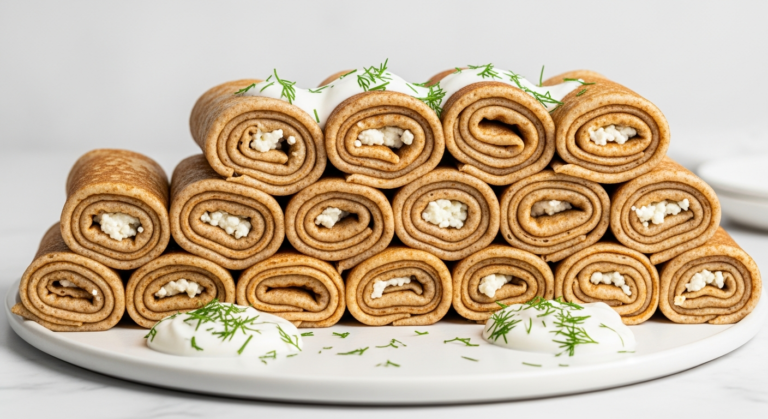
- Serve immediately with sour cream and fresh dill
What Nalysnyky Is
Nalysnyky are Ukrainian stuffed crepes. The thin pancake itself is called mlyntsi — a word that shares a root with mlyn, the old Ukrainian term for a mill.³ Fill them and roll them, and they become nalysnyky.
The filling varies by household, season, and region. The most common version pairs dry cottage cheese with egg, a little cream, and fresh dill.² Sweet versions — cottage cheese with vanilla sugar, honey, or poppy seeds — are just as traditional.³ Other fillings common across Ukraine include seasoned ground meat with onion, braised cabbage, and mushrooms.⁵ The method stays the same regardless: crepe first, filling second, then the whole thing rolled and baked.
History and Cultural Roots
Thin grain pancakes go back a long way in Slavic cooking. In Ukrainian tradition, mlyntsi appear in the culinary record as far back as the 9th century, when the word mlyn — mill — became established across the region.³ These were not luxury items: quick, inexpensive, and made from whatever flour was at hand — wheat, buckwheat, cornmeal, or semolina.⁵
Across Slavic cultures, the round golden pancake carried a solar meaning. It stood for the sun and the return of warmth, and Dazhbog — the Slavic deity of sunlight and abundance — was connected to it in the broader folk tradition.⁴ When Christianity spread through the region, those older associations absorbed into the new calendar rather than disappearing.
In Ukraine, that tradition lives most visibly in Masliana — the week before Great Lent, also known as Kolodii, with its own distinct folk customs.⁴ During Masliana, mlyntsi and nalysnyky are made daily.⁵ The stuffed version belongs to this festive period, but nalysnyky moved long ago into everyday cooking as well: Sunday breakfast, a weekend dish for guests, something any household might make without needing a particular occasion.⁵
The first large wave of Ukrainian emigrants left for Canada between 1880 and 1917 — many from northeastern Ukraine, where the dish was already well established — and nalysnyky went with them.² Today they appear at Ukrainian Canadian community dinners and family tables as reliably as they do in Ukraine itself. The IEU notes that cottage cheese has long been a central filling ingredient in Ukrainian flour-based cooking, used in varenyky, pyrizhky, and baked goods as well as eaten on its own with sour cream.¹
Filling Traditions
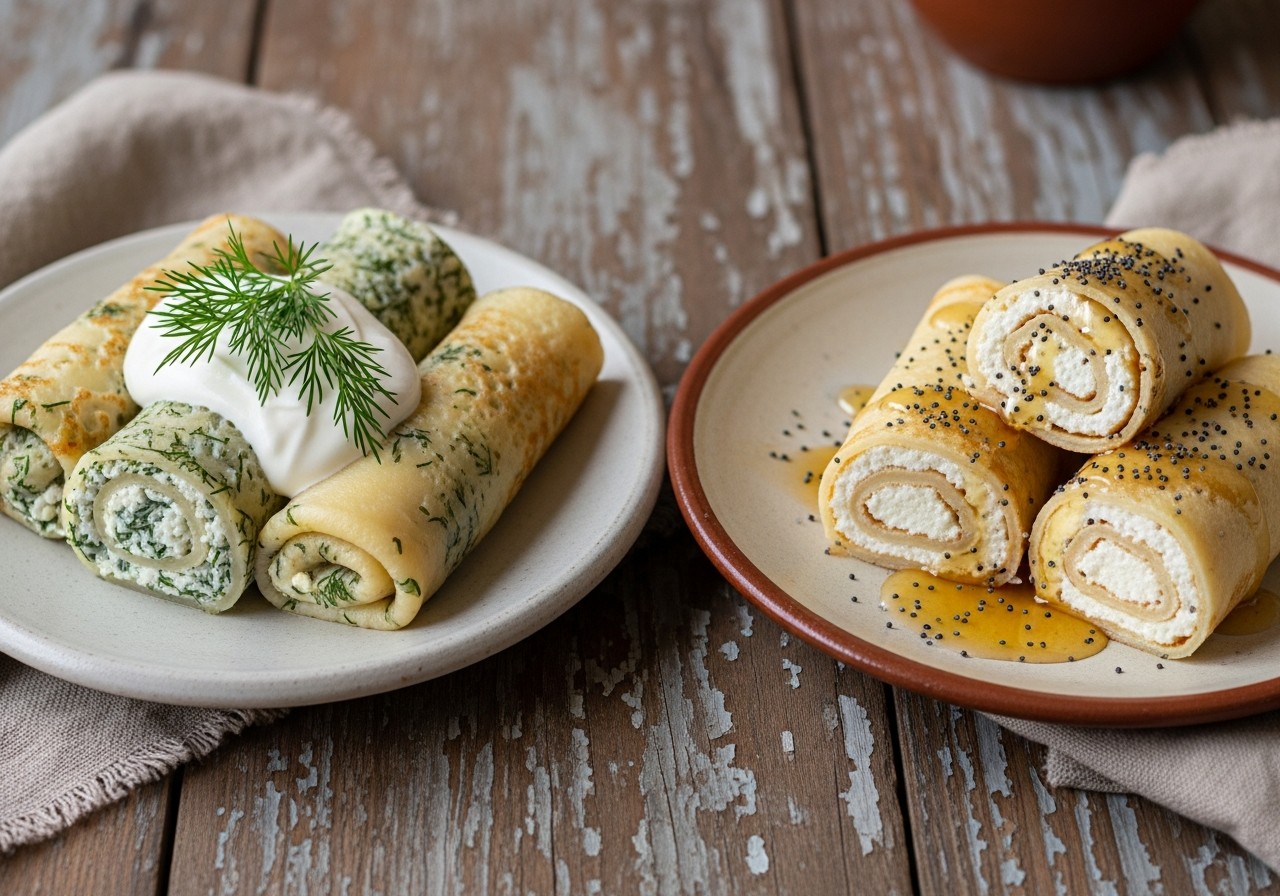
Sweet and savory versions have always run side by side in Ukrainian households. The sweet cottage cheese filling — blended with vanilla sugar, a spoonful of cream, and sometimes poppy seeds or honey — works as a dessert or a morning dish.³ The savory version with dill, black pepper, and salt is the form most Ukrainian Canadians know from family cooking.²
Meat fillings, typically ground pork or beef cooked with onion and garlic until well browned, make nalysnyky a proper main course.³ The cabbage filling — braised shredded white cabbage with onion — is older and more austere, suited to meatless days as much as to tight budgets.³ Mushroom fillings, fresh or dried, offer an earthier option that’s well loved across Ukraine.⁵
Flour variety shapes the dish quietly. Wheat flour gives the most tender, flexible crepe. Buckwheat produces a darker batter with a nuttier flavor.⁵ Some households blend the two. The flour changes the character without changing the method — and that kind of variation gets passed down without anyone deciding to pass it down.
Traditional Nalysnyky Recipe
Recipe developed independently by Heritage Healthy Kitchen, drawing on traditional Ukrainian culinary methods. Sources for further reading are listed at the end of this article.
Ingredients
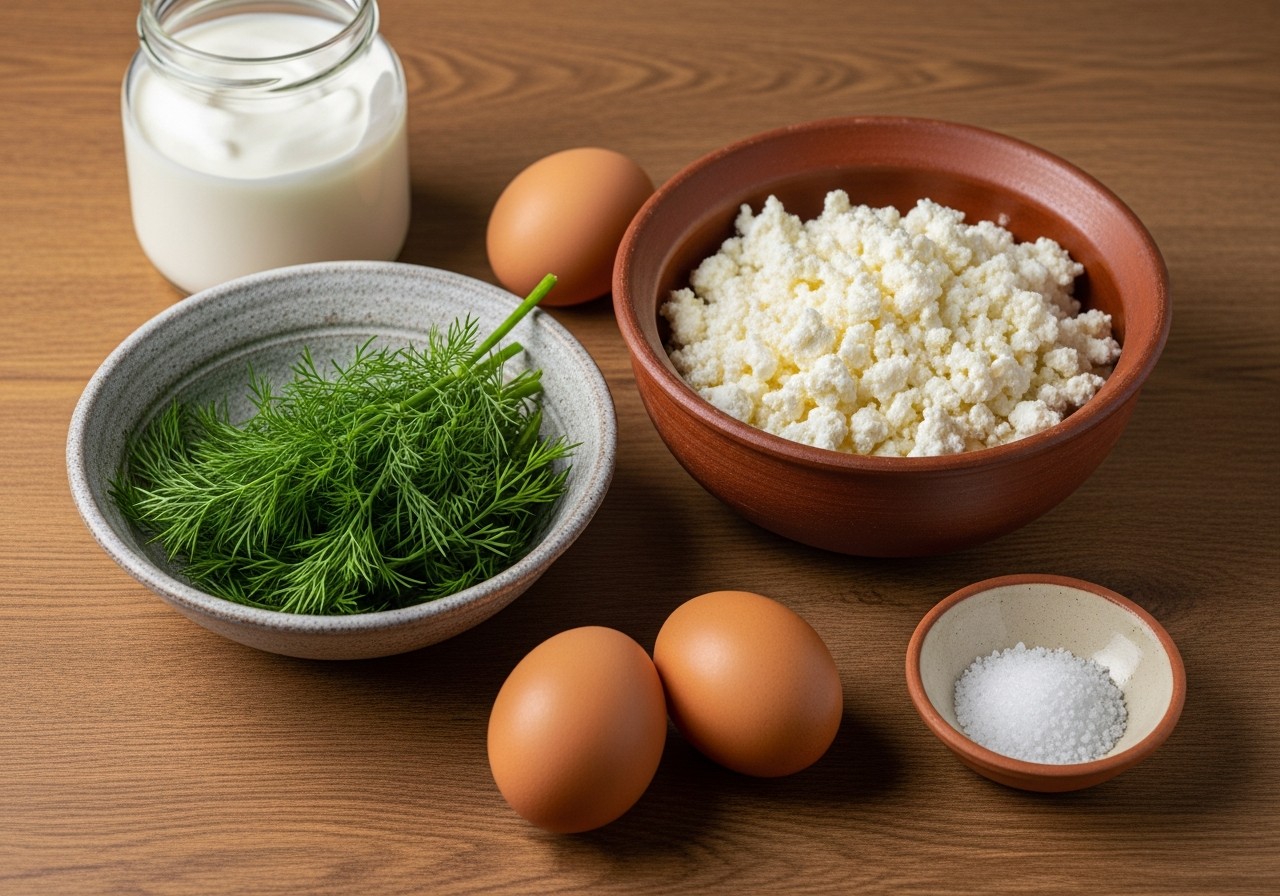
Crepe batter (serves 4, about 12–14 crepes)
- 200 g (1⅔ cups) all-purpose flour
- 2 large eggs
- 300 ml (1¼ cups) whole milk
- 120 ml (½ cup) water, room temperature
- ½ teaspoon salt
- 1 teaspoon sugar
- 2 tablespoons sunflower oil or melted butter, plus more for the pan
Cottage cheese filling
- 450 g (2 cups) dry cottage cheese (farmer’s cheese or quark, well drained)
- 1 large egg yolk
- 2 tablespoons heavy cream
- 3 tablespoons fresh dill, finely chopped
- ½ teaspoon salt, or to taste
- ¼ teaspoon freshly ground black pepper
For assembly and baking
- 2 tablespoons unsalted butter, softened
- 3 tablespoons heavy cream
- Sour cream and fresh dill to serve
Instructions
Make the batter
Whisk the eggs, salt, and sugar in a large bowl until uniform and slightly frothy. Add the flour and whisk into a thick, smooth paste — no dry streaks. Gradually pour in the milk and water while whisking to prevent lumps. Stir in the oil. Let the batter rest uncovered at room temperature for 15–20 minutes; it spreads more evenly after resting and gives a more elastic crepe.
Cook the crepes
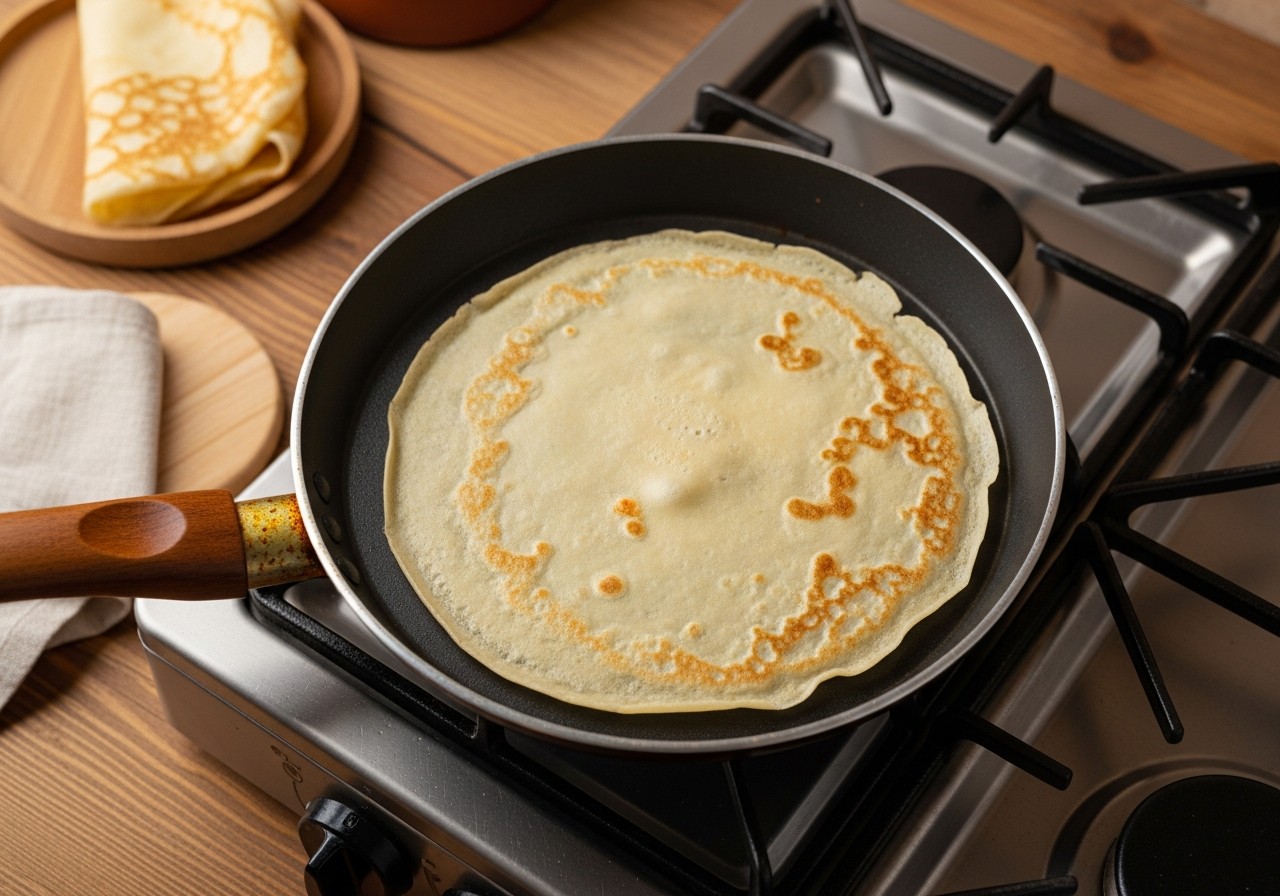
Set a small (18–20 cm / 7–8 inch) non-stick skillet over medium heat and brush it lightly with oil. Pour in 2–3 tablespoons of batter and immediately tilt the pan to coat the surface in a thin, even circle. Cook until the top turns matte and dry and the edges lift cleanly, about 1–2 minutes. Slide the crepe out without flipping — this is intentional: the uncooked surface becomes the inside of the roll and sets during baking. Stack finished crepes on a plate as you go.
Make the filling
Mash the cottage cheese with a fork or press it through a fine sieve to break up any large curds. Stir in the egg yolk, cream, dill, salt, and pepper until smooth and cohesive. Taste before assembling and adjust seasoning. If the filling seems runny, the cheese needs more draining time.
Fill and roll
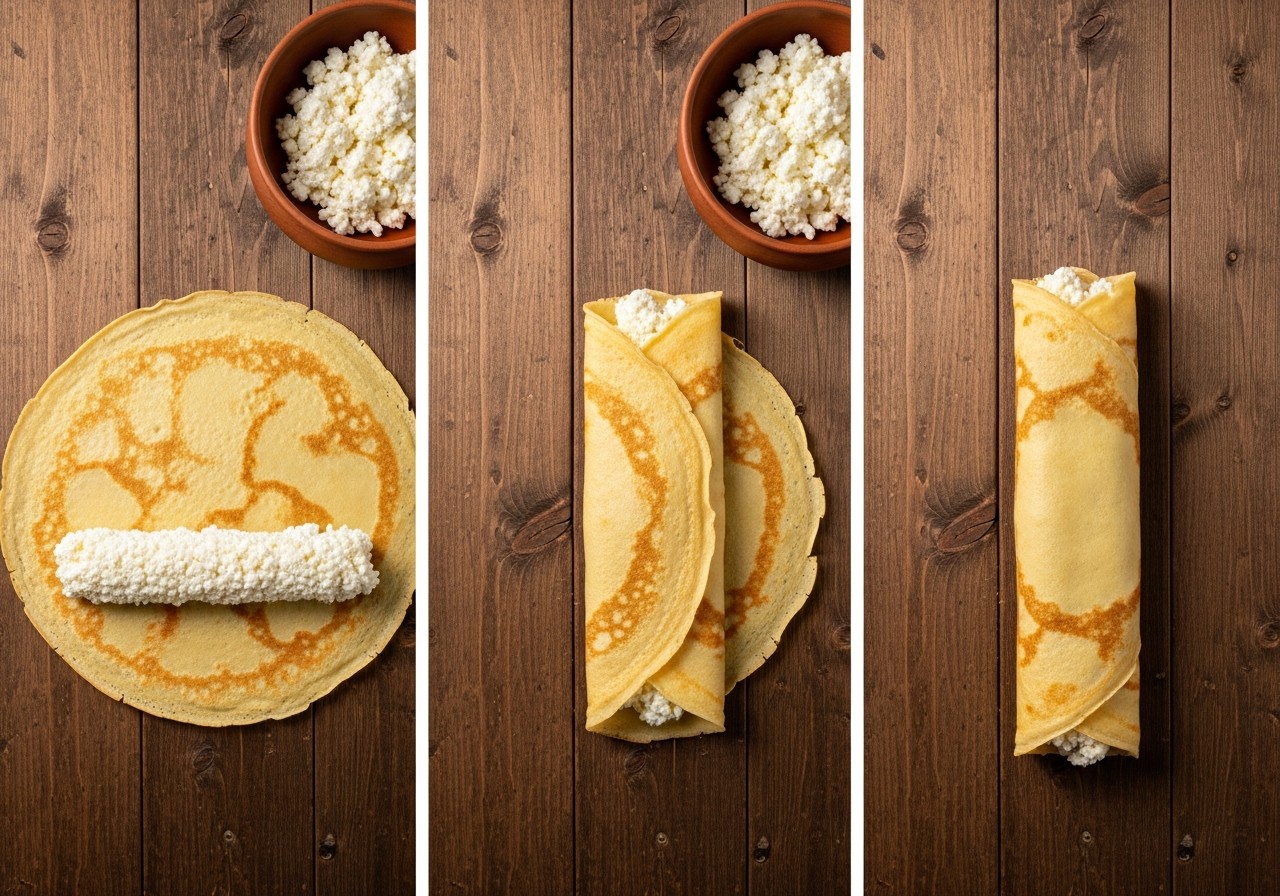
Lay one crepe flat with the cooked side facing down. Spread 2–3 tablespoons of filling in an even layer, leaving a 2 cm (¾ inch) border around the edges. Tuck the left and right edges toward the center, then roll from the bottom up into a snug tube. Place seam-side down in a buttered baking dish. Repeat with the remaining crepes and filling, arranging the rolls in a single layer.
Bake and serve
Preheat the oven to 180°C / 350°F. Dot the tops of the rolls with the remaining butter and pour the cream evenly over the dish. Cover tightly with a lid or aluminum foil and bake for 25–30 minutes, until the cream is absorbed and the rolls are heated through and slightly puffed. Serve immediately with sour cream and fresh dill.
Kitchen Tips
The first crepe almost always fails. The pan needs time to reach the right temperature and the oil needs to distribute before the batter behaves. Think of it as calibration, not waste.
Dry cottage cheese matters more than it might seem. Wet cottage cheese leaks into the crepe during baking and the rolls come out soggy. If dry curd or farmer’s cheese is unavailable, drain regular cottage cheese through cheesecloth for at least 30 minutes, pressing gently, before mixing the filling.
The batter should pour like thin cream. If it comes off the ladle in a slow, thick ribbon, add water a tablespoon at a time and whisk again before cooking.
Cook one side only. The uncooked surface becomes the inside of the roll and sets in the oven. Flipping makes the crepe stiffer and harder to roll — skip it.
Fold the sides before rolling. Tuck the left and right edges toward the center before rolling from the bottom — it stops the filling squeezing out the ends during baking. Some cooks roll straight without folding, which works but leaves the rolls looser.
Nutritional Information
All values below are estimates based on standard ingredient databases and average serving sizes. Actual values will vary depending on the specific products used, how well the cottage cheese is drained, and how much cream is absorbed during baking.
Per serving (3 filled rolls, approximately)
- Calories: approx. 310–340 kcal
- Protein: approx. 16–18 g
- Carbohydrates: approx. 22–26 g
- Total fat: approx. 15–18 g
- Saturated fat: approx. 8–10 g
- Dietary fiber: approx. 1 g
- Sodium: approx. 460–510 mg
Most of the protein comes from the cottage cheese and the eggs in both the batter and the filling. Dry cottage cheese has less moisture than regular cottage cheese, which shifts the fat and calorie count depending on which type is used.
Storage and Reheating
Cooked nalysnyky keep in the refrigerator for up to 3 days in a sealed container. Reheat in a covered baking dish at 160°C / 325°F for 15–20 minutes, or pan-fry in a little butter over medium heat until golden on both sides and heated through. Both work better than a microwave, which makes the crepes rubbery.
Nalysnyky freeze well at the assembly stage, before baking. Arrange filled, rolled crepes in a single layer on a baking sheet and freeze until firm, then transfer to a freezer bag. They keep for up to 2 months. To cook from frozen, thaw overnight in the refrigerator and bake as directed, adding 10 minutes to the baking time.
Plain crepes (unfilled mlyntsi) can be stacked with parchment between each one and refrigerated for up to 2 days or frozen for up to 1 month. Bring them to room temperature before filling.
Two equally traditional ways to fill and roll nalysnyky — choose the savory cottage cheese and dill version, or the sweet vanilla version below.
Traditional Ukrainian Nalysnyky — Savory

Ingredients
Crepe Batter
- 200 g (1⅔ cups) all-purpose flour
- 2 large eggs
- 300 ml (1¼ cups) whole milk
- 120 ml (½ cup) water, room temperature
- ½ teaspoon salt
- 1 teaspoon sugar
- 2 tablespoons sunflower oil or melted butter, plus more for the pan
Savory Cottage Cheese Filling
- 450 g (2 cups) dry cottage cheese (farmer’s cheese or quark, well drained)
- 1 large egg yolk
- 2 tablespoons heavy cream
- 3 tablespoons fresh dill, finely chopped
- ½ teaspoon salt, or to taste
- ¼ teaspoon freshly ground black pepper
For Assembly and Baking
- 2 tablespoons unsalted butter, softened
- 3 tablespoons heavy cream
- Sour cream and fresh dill, to serve
Instructions
- Make the batter: Whisk the eggs, salt, and sugar, then whisk in the flour until smooth. Gradually whisk in the milk and water, stir in the oil, and let the batter rest 15–20 minutes.
- Cook the crepes: Pour a thin layer of batter into a hot, lightly oiled skillet and cook one side only until the top is matte and the edges lift cleanly. Slide out without flipping.
- Make the filling: Mash the cottage cheese, then stir in the egg yolk, cream, dill, salt, and pepper until smooth.
- Fill and roll: Spread filling over the cooked side of each crepe, tuck in the sides, and roll into a snug tube.
- Bake and serve: Arrange seam-side down in a buttered dish, dot with butter, pour over the cream, cover, and bake at 180°C / 350°F for 25–30 minutes. Serve with sour cream and fresh dill.
Traditional Ukrainian Nalysnyky — Sweet
Ingredients
Crepe Batter
- 200 g (1⅔ cups) all-purpose flour
- 2 large eggs
- 300 ml (1¼ cups) whole milk
- 120 ml (½ cup) water, room temperature
- ½ teaspoon salt
- 1 teaspoon sugar
- 2 tablespoons sunflower oil or melted butter, plus more for the pan
Sweet Cottage Cheese Filling
- 450 g (2 cups) dry cottage cheese (farmer’s cheese or quark, well drained)
- 1 large egg yolk
- 2 tablespoons heavy cream
- 3 tablespoons vanilla sugar (or sugar plus ½ teaspoon vanilla extract)
- 1 tablespoon honey, plus more to serve (optional)
- 1 tablespoon poppy seeds (optional)
- Pinch of salt
For Assembly and Baking
- 2 tablespoons unsalted butter, softened
- 3 tablespoons heavy cream
- Honey and sour cream, or fresh berries, to serve
Instructions
- Make the batter: Whisk the eggs, salt, and sugar, then whisk in the flour until smooth. Gradually whisk in the milk and water, stir in the oil, and let the batter rest 15–20 minutes.
- Cook the crepes: Pour a thin layer of batter into a hot, lightly oiled skillet and cook one side only until the top is matte and the edges lift cleanly. Slide out without flipping.
- Make the filling: Mash the cottage cheese, then stir in the egg yolk, cream, vanilla sugar, and a pinch of salt; fold in honey or poppy seeds if using.
- Fill and roll: Spread filling over the cooked side of each crepe, tuck in the sides, and roll into a snug tube.
- Bake and serve: Arrange seam-side down in a buttered dish, dot with butter, pour over the cream, cover, and bake at 180°C / 350°F for 25–30 minutes. Serve warm with honey and sour cream, or fresh berries.
Frequently Asked Questions
What is the difference between nalysnyky and mlyntsi?
Mlyntsi are plain Ukrainian crepes. Nalysnyky are mlyntsi that have been filled, rolled, and cooked a second time — baked or pan-fried.⁵ The batter is identical; what makes nalysnyky nalysnyky is the filling and that extra cooking step. Many Ukrainian recipes labeled “mlyntsi” are served plain with honey, sour cream, or jam and are a different dish entirely.
What type of cottage cheese should I use?
The traditional filling calls for dry, firm cottage cheese — sold as farmer’s cheese, quark, or tvorog in some markets.² Regular wet cottage cheese is too liquid and will leak during baking. If dry curd isn’t available, drain regular cottage cheese through cheesecloth for at least 30 minutes before using, pressing gently to remove excess moisture.
Can I make nalysnyky ahead of time?
Yes. Cook the crepes up to a day in advance, stack them with parchment between each one, and refrigerate covered. The filling keeps separately for a day as well. Assemble and bake just before serving, or refrigerate the assembled unbaked rolls for up to 24 hours. Cold from the fridge, add 5–10 minutes to the baking time.
What other fillings work for nalysnyky?
Traditional options across Ukraine include seasoned ground meat with onion, braised white cabbage, wild mushrooms, and sweet cottage cheese with vanilla sugar or poppy seeds.³⁵ Mashed potato with caramelized onion is another common choice. Whatever the filling, it should be fully cooked, well seasoned, and firm enough not to leak when rolled.
Why do my crepes tear when I try to roll them?
Usually one of three things: batter too thick, crepe overcooked in the pan, or filling too wet. The crepe should leave the pan soft and pliable, not stiff at the edges. If the cottage cheese wasn’t well drained, the excess moisture softens the crepe from the inside before baking even begins.
Can nalysnyky be served without baking?
With a fully cooked filling — ground meat or sautéed mushrooms — yes, serve the assembled rolls straight away without further cooking.³ With raw egg in the cottage cheese filling, a bake or a pan-fry is needed to set it safely. Pan-frying the rolls in butter until golden on all sides is a traditional alternative to oven baking and gives a crispier result.
Are nalysnyky similar to blintzes?
Close relatives. Blintzes, from the Ashkenazi Jewish culinary tradition, follow the same logic — a thin crepe around a filling, cooked a second time. The fillings, seasonings, and frying technique differ between the two. Both belong to the same broad family of stuffed Eastern European pancakes that appear under different names across the region.
Looking for a Lighter Version?
Traditional nalysnyky use white flour in the batter, full-fat cottage cheese in the filling, and heavy cream in the baking dish. A lighter version is possible without losing what makes the dish work — spelt or buckwheat flour for the crepes, lower-fat cottage cheese, and a smaller amount of sour cream at the table instead of baked cream. Heritage Healthy Kitchen covers those ingredient swaps, their nutritional trade-offs, and the adapted method in a separate dedicated article.
Further Reading & Sources
The following sources were consulted in researching the history, technique, and cultural background of traditional Ukrainian nalysnyky. Heritage Healthy Kitchen’s recipe was developed independently; these links are provided for readers who want to explore further.
- “Traditional foods.” Internet Encyclopedia of Ukraine, Canadian Institute of Ukrainian Studies, University of Toronto. encyclopediaofukraine.com — overview of Ukrainian culinary traditions and the role of cottage cheese in Ukrainian flour-based cooking.
- “Nalysnyky (Ukrainian Crepes with Cheese and Dill).” Domestic Dreamboat. domesticdreamboat.com — recipe with notes on filling types, Ukrainian Canadian tradition, and the first wave of Ukrainian immigration to Canada.
- “How to Make Ukrainian Crepes (Nalysnyky).” Matusya’s Kitchen. matusyaskitchen.com — traditional filling recipes with historical context on mlyntsi and the word’s connection to mlyn (mill).
- Josh Wilson. “Maslenitsa, Masliana, Meteņi: Spring Holidays of the Slavs and Balts.” Folkways Today (SRAS). folkways.today — solar symbolism of the round blin in Slavic tradition; Ukraine’s distinct Masliana/Kolodii celebration and its pre-Christian roots.
- “History of Ukrainian Cuisine.” Ukrainian Recipes. ukrainian-recipes.com — nalysnyky within Ukrainian culinary tradition, Masliana context, regional flour varieties, and the mlyntsi/nalysnyky distinction.
Disclaimer
The information in this article is provided for educational and informational purposes only. Heritage Healthy Kitchen makes no representations or warranties regarding the accuracy or completeness of any content on this site. Nutritional values are estimates only and will vary depending on the specific ingredients, brands, and measurements used. This content is not intended as dietary, medical, or professional nutritional advice. Always consult a qualified healthcare provider regarding any dietary needs or health conditions. Heritage Healthy Kitchen is not responsible for any outcomes resulting from the use of recipes or information published on this site.
You Might Also Like
More heritage recipes from our kitchen

Leave a Reply