
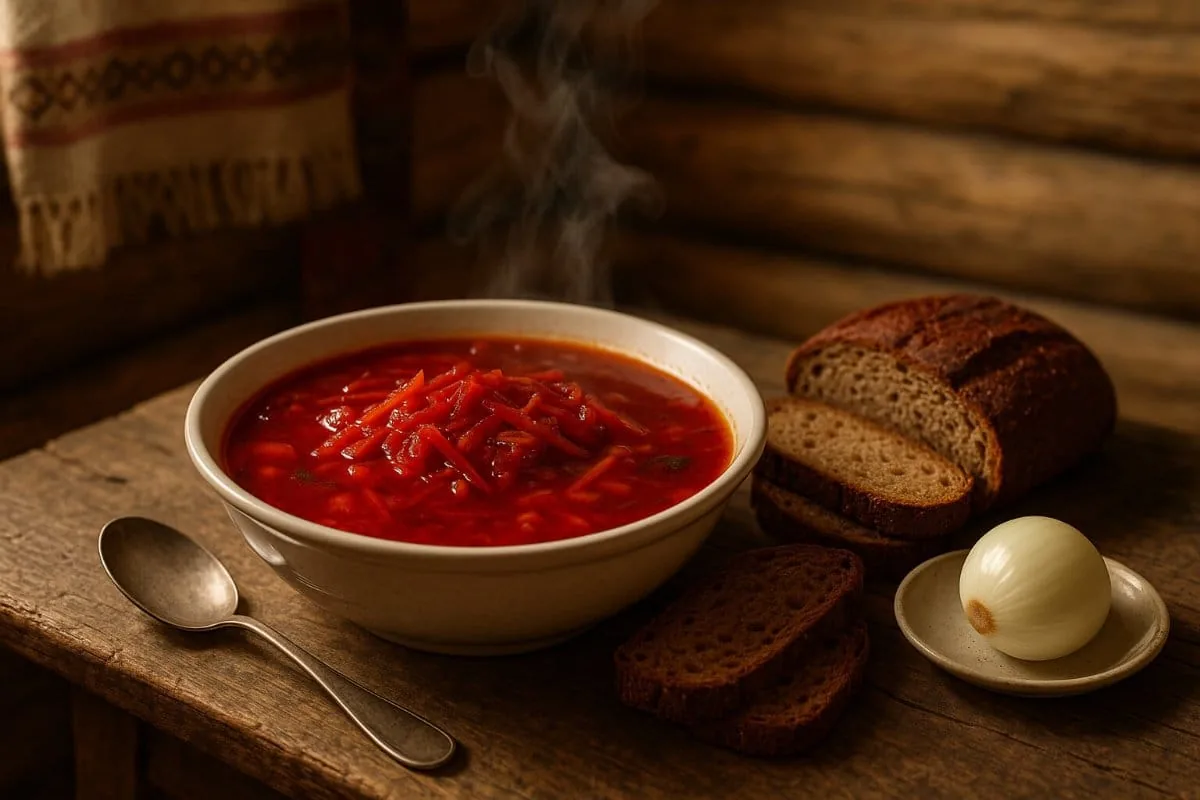
The Story Behind Ukrainian Borscht
Borscht is not one recipe. It is a family of soups cooked across Ukraine for something like twelve centuries, changing with the region, the season, and what a household could afford that year. Ask in Poltava and in the Carpathians and you will be told two different things, both correctly. The version below is the one most people mean: beets, a long-simmered stock, and a pot that occupies the stove for most of an afternoon.
In 2022 UNESCO recognized the “Culture of Ukrainian borscht cooking” as Intangible Cultural Heritage¹, describing a dish that “unites people of all ages, genders and backgrounds at the table.”
According to culinary historians at the Smithsonian Institution, the soup began in the 5th century as something made with hogweed, and became a beet dish only much later². Red beets went in during the 16th century. They are where the colour comes from, and also the sweetness that everything sour in the pot — the stock, the cabbage, the splash of acid at the end — then has to balance.
Traditional Ukrainian Borscht Recipe
Adapted from America’s Test Kitchen methodology and Ukrainian heritage sources³
Prep Time:
Cook Time:
Total Time:
Serves: 8-10 people
Difficulty: Intermediate
Ingredients
For the Rich Broth:
- 2 lbs (900g) pork shoulder or beef chuck
- 12 cups (2.8L) water
- 1 large onion, quartered
- 2 bay leaves
- Salt and pepper to taste
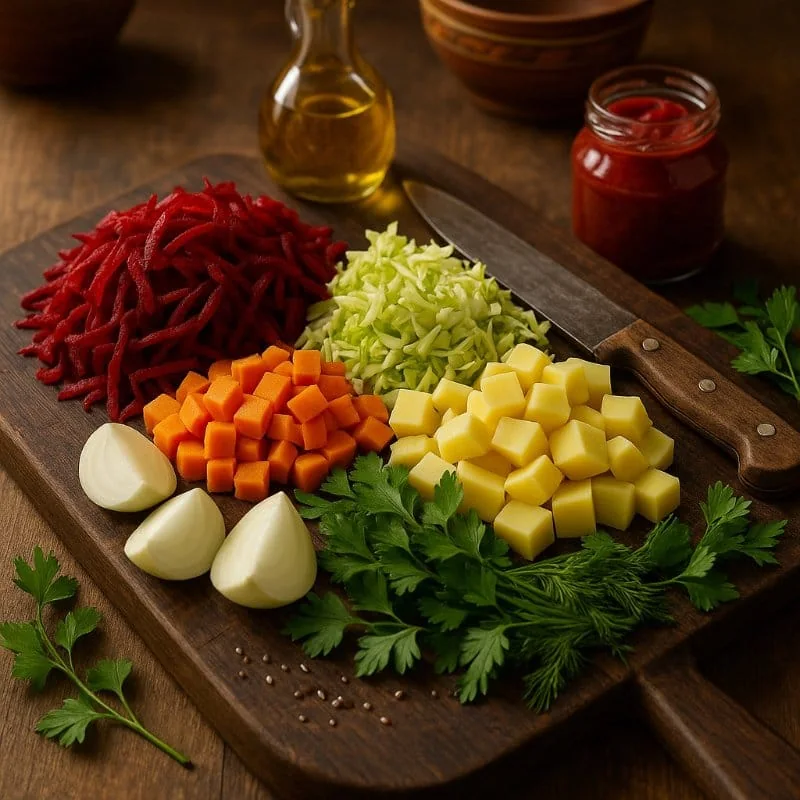
For the Borscht:
- 3 medium (450g) fresh beets, shredded
- 3 medium (200g) carrots, diced
- 4 cups (300g) green cabbage, chopped
- 4 medium (400g) potatoes, cubed
- 1 large (150g) onion, diced
- 4 cloves garlic, minced
- 3 tablespoons (45g) tomato paste
- 2 tablespoons (30ml) sunflower oil
- 2 tablespoons (30ml) white vinegar
- Fresh dill and parsley
- Salt and pepper to taste
Traditional Serving:
- Full-fat sour cream
- Fresh dill
- Dark rye bread
- Raw garlic cloves (optional)
How It Is Made
Step 1: Build the Flavor Base (2–)
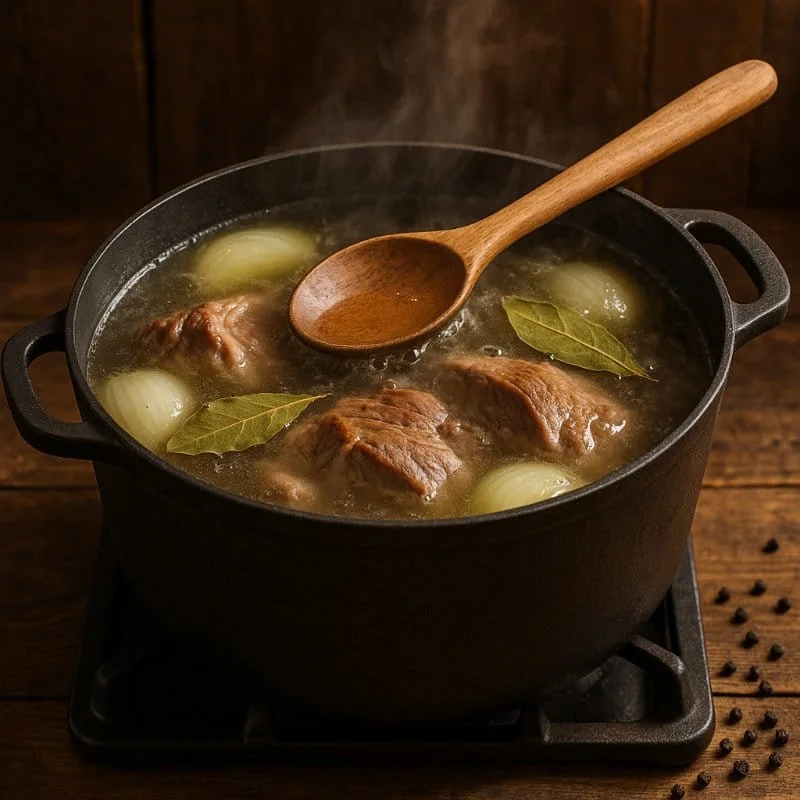
1. Create the broth: Simmer meat with quartered onion and bay leaves for 2– until tender. Skim foam regularly for clear broth.
2. Remove and shred: Remove meat, cool slightly, and shred into bite-sized pieces. Strain broth and return to pot.
Step 2: The Zazarka ()
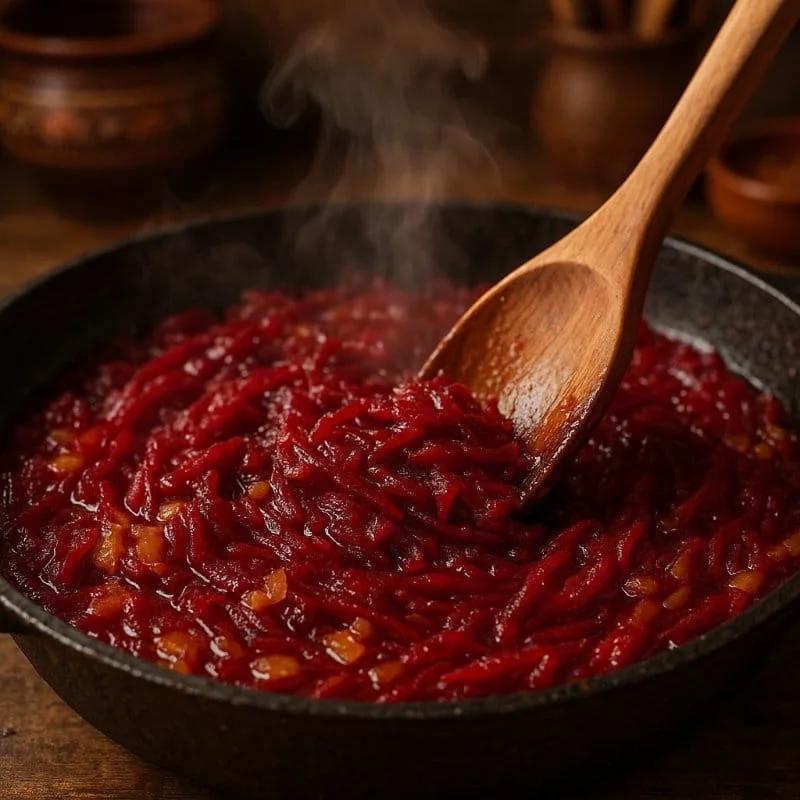
1. Heat oil: In large skillet, heat sunflower oil over medium heat.
2. Layer vegetables: Sauté diced onions until golden, add carrots, then shredded beets. Cook until softened.
3. Add tomato paste: Stir in tomato paste and cook until fragrant.
Step 3: Assemble the Borscht ()
1. Add vegetables in sequence: Add cabbage to broth first, then zazarka mixture, then potatoes and shredded meat.
2. Season and finish: Add vinegar, salt, pepper. Simmer until potatoes are tender.
3. Rest: Let stand before serving for flavors to meld.
Tips from Ukrainian Kitchens
- Color secret: Always use fresh (not canned) beets and add white vinegar at the end of cooking — the acid reacts with the beet pigment to hold the deep crimson colour. Canned beets produce a muddy brownish soup.
- Timing matters: Borscht genuinely improves overnight as the flavors meld and deepen. Make it the day before serving whenever possible — Ukrainian grandmothers call it “the next-day magic.”
- Consistency: Borscht should be thick enough to hold a wooden spoon briefly upright, but not so dense it loses its soup character. Add hot broth to thin if needed.
- Balance: Taste as you go and adjust between sweet (beets), sour (vinegar) and savory (broth and meat). Each pot is different depending on beet sweetness — trust your palate.
Nutritional Information
Per serving (1.5 cups):
- Calories: 280
- Carbohydrates: 28g
- Protein: 18g
- Fat: 12g
- Fiber: 6g
- Sodium: 650mg
Beets carry the folate and the dietary nitrates; the meat and the beans carry the protein. Harvard T.H. Chan School of Public Health links those nitrates to cardiovascular health and to athletic performance⁴.
Regional Variations Across Ukraine
Borscht changes as you cross the country. What grew locally decided most of it, and the differences hardened into habits that people now defend.
- Western Ukraine (Galicia & Volhynia): Mountain and Carpathian versions are notably heartier, packed with extra root vegetables like parsnip and celery root. The broth tends to be richer, and local cooks often finish with a spoonful of fermented beet kvass for a deeply sour note that defines the region’s character.
- Central Ukraine (Kyiv region): Considered the “classic” or “court” version of borscht, this style features an elaborate zazarka with multiple stages of sautéing and a generous amount of tomato. Kyiv cooks take pride in an impeccably clear ruby broth and a balanced, complex flavor profile.
- Eastern Ukraine & Poltava: The eastern tradition often includes seasonal vegetables such as fresh zucchini in summer or dried mushrooms in winter. Poltava-style borscht is famous for its dumplings (halushky) served alongside, making it a complete meal in a single bowl.
Traditional Serving & Storage
How It Is Served
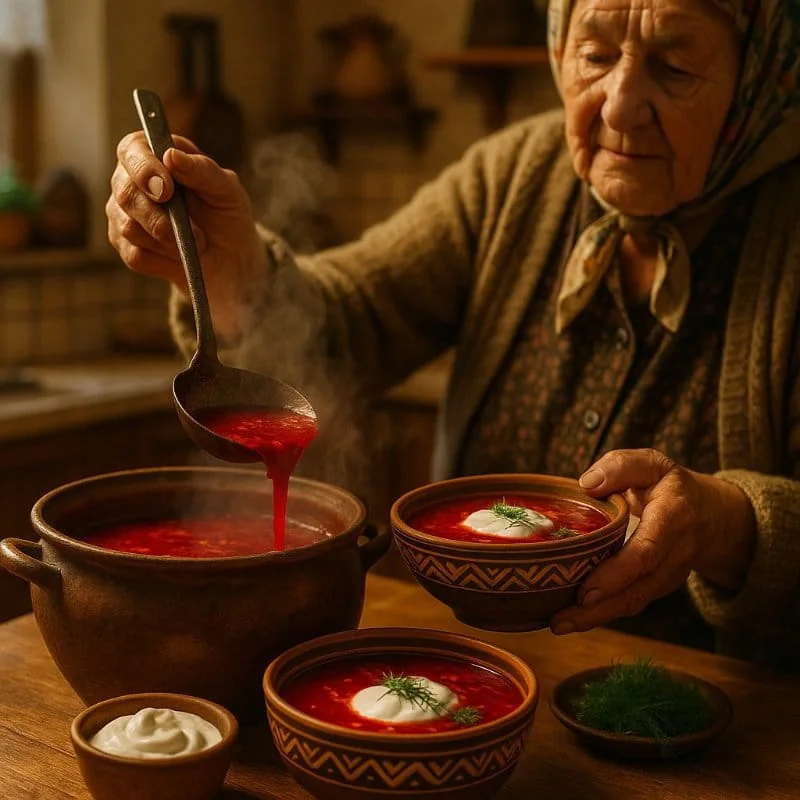
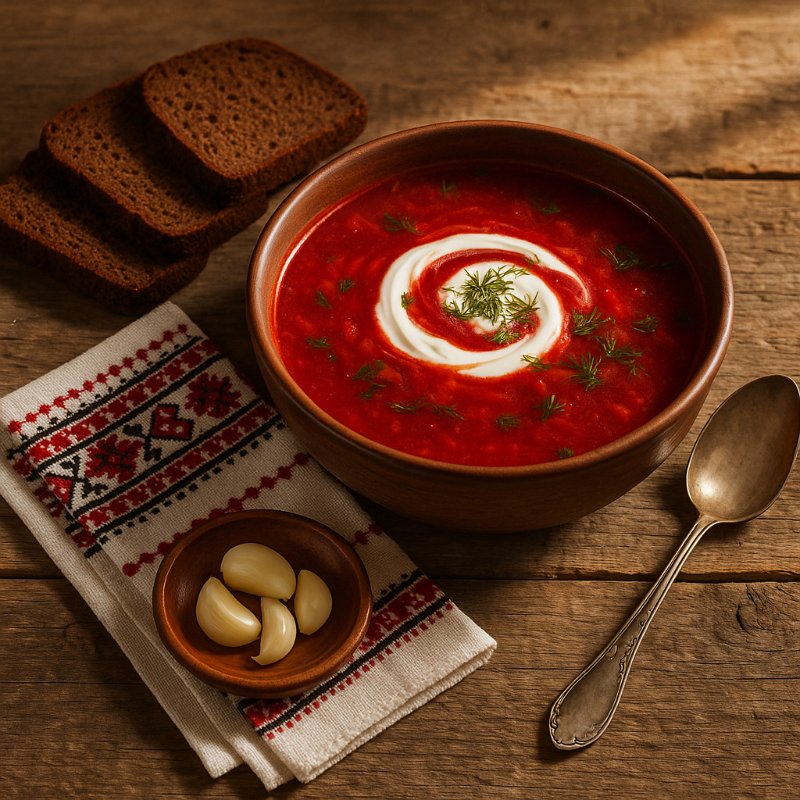
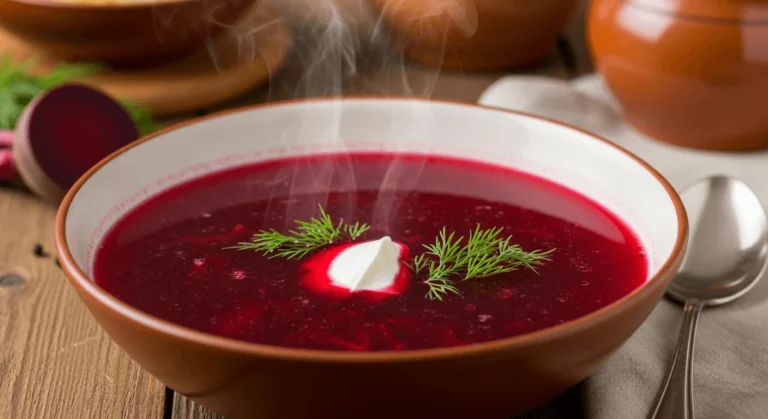
Serve in deep bowls with generous sour cream dollop, fresh dill, and crusty rye bread. Many families eat raw garlic cloves between spoonfuls for added health benefits.
Storage Instructions:
- Fresh: Refrigerate up to 4 days
- Frozen: Freeze up to 3 months (texture may change slightly)
- Reheating: Gentle heat, add fresh herbs after warming
Cultural Significance
The same pot has done a lot of different jobs. It turns up during Orthodox fasting seasons in its meatless form, the pisnyi borshch. It turns up at weddings and at harvest. It travelled with Ukrainian emigrants to North and South America and to Australia, where for a great many households it became the thing that tastes like home.
Worth noticing which UNESCO list it went on in December 2022: heritage in need of urgent safeguarding, not heritage in general⁵. What that protects is a practice — the pot started before the guests arrive, the argument about whether beans belong in it, the jar of soured beet juice kept on a shelf for the purpose. That part survives every substitution on the ingredient list.
On the Holiday Table
Once a year the pot is built without meat on purpose. The pisnyi borshch, served with vushka, small mushroom-filled dumplings, is one of the twelve dishes of Sviata Vecheria, the Ukrainian Christmas Eve supper, and it appears in that form on our Sviata Vecheria menu.
Frequently Asked Questions
Why did my borscht turn out brown instead of deep red?
The crimson color comes from fresh beets plus an acid added at the end of cooking. Use raw (not canned) beets and stir the white vinegar in during the last few minutes — the acid sets the beet pigment. Long boiling without acid turns the soup brownish.
Can I make this borscht vegetarian or vegan?
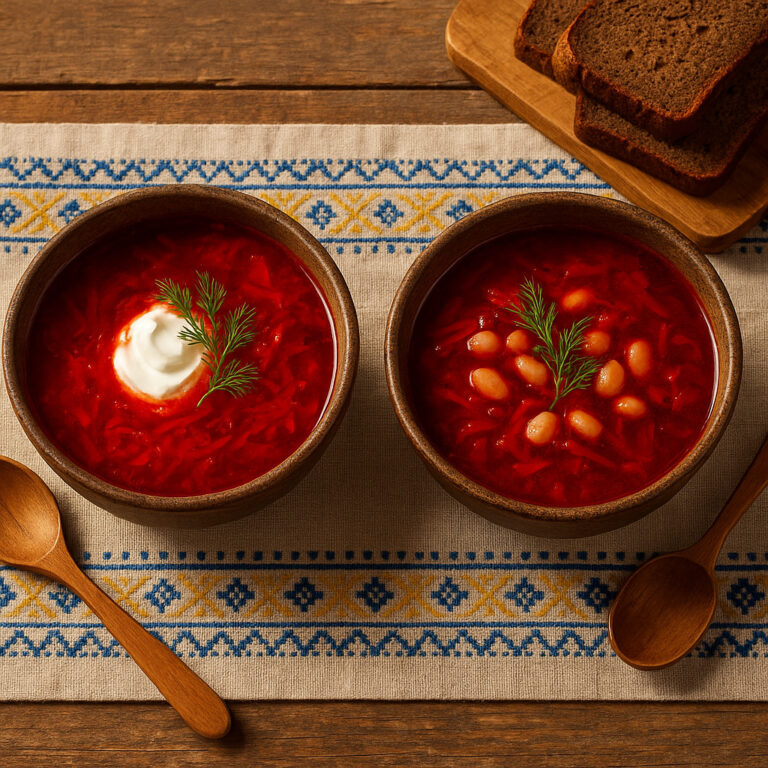
Yes. Skip the meat and build the base on a rich vegetable or dried-mushroom broth. This meatless version is the traditional Ukrainian pisnyi borshch, served during Orthodox fasting periods. Use sunflower oil and add white beans for protein if you like.
Is borscht served hot or cold?
This traditional recipe is served hot, ladled into deep bowls with sour cream and fresh dill. There is a separate chilled summer beet soup (kholodnyk), but it is a different dish — the hot version here is the classic comfort food.
How long does borscht keep, and is it true it tastes better the next day?
Refrigerate up to 4 days or freeze up to 3 months. And yes — borscht genuinely improves overnight as the flavors meld, which is why many families make it a day ahead.
What should I serve with borscht?
Classic accompaniments are full-fat sour cream, fresh dill and dark rye bread. Many Ukrainian families also serve garlic pampushky alongside, and some eat a raw garlic clove between spoonfuls.
Why is Ukrainian borscht considered so significant?
In 2022 UNESCO inscribed the culture of Ukrainian borscht cooking on its List of Intangible Cultural Heritage, recognizing how the dish brings families and communities together across more than 1,200 years of tradition.
Looking for a Lighter Version?
If you want a lighter take on this dish, see our Healthy Ukrainian Borscht: Keto & Plant-Based Variations.
Traditional Ukrainian Borscht

Ingredients
For the Broth
- 2 lbs (900g) pork shoulder or beef chuck
- 12 cups (2.8L) water
- 1 large onion, quartered
- 2 bay leaves
- Salt and pepper to taste
For the Borscht
- 3 medium (450g) fresh beets, shredded
- 3 medium (200g) carrots, diced
- 4 cups (300g) green cabbage, chopped
- 4 medium (400g) potatoes, cubed
- 1 large (150g) onion, diced
- 4 cloves garlic, minced
- 3 tbsp (45g) tomato paste
- 2 tbsp (30ml) sunflower oil
- 2 tbsp (30ml) white vinegar
- Fresh dill and parsley
To Serve
- Full-fat sour cream
- Fresh dill
- Dark rye bread
- Raw garlic cloves (optional)
Instructions
- Broth: Simmer meat with quartered onion and bay leaves for 2–3 hours until tender. Skim foam regularly. Remove meat, shred. Strain broth and return to pot.
- Zazarka: Heat sunflower oil over medium heat. Sauté diced onion until golden (8–10 min). Add carrots, then shredded beets. Cook until soft. Add tomato paste, cook 1 min until fragrant.
- Assemble: Add cabbage to broth first, then zazarka mixture, then potatoes and shredded meat. Add vinegar, salt and pepper. Simmer 20 min until potatoes are tender.
- Rest and serve: Let stand 10 minutes before serving. Ladle into deep bowls. Top with a generous dollop of sour cream and fresh dill. Serve with dark rye bread.
—
Medical Disclaimer: This recipe is provided for cultural and educational purposes only. Individual dietary needs vary. Consult healthcare providers regarding specific nutritional requirements or health conditions before making significant dietary changes.
—
Sources:
1. UNESCO. (2022). Culture of Ukrainian borscht cooking. UNESCO Intangible Cultural Heritage in Need of Urgent Safeguarding.
2. Smithsonian Institution. (2023). A Brief History of Borshch. Smithsonian Folklife Festival.
3. America’s Test Kitchen. (2023). Hot Ukrainian Borscht.
4. Harvard T.H. Chan School of Public Health. (2023). Beetroot Nutrition and Health Benefits.
5. UNESCO. (2022). Ukrainian Cultural Heritage Documentation.
Discover healthy adaptations in our companion article: “Healthy Ukrainian Borscht Variations: Keto & Traditional Plant-Based Recipes”
Cook by Occasion
This recipe is part of our Sviata Vecheria menu.
You Might Also Like
More heritage recipes from our kitchen
Leave a Reply