

Active time: ~45 minutes | Fermentation: 5–7 days | Total cooking: ~1 hour | Serves: 6–8 | Difficulty: Intermediate
Quick Overview
- Prepare the zakwas buraczany (fermented beet juice) five to seven days ahead — this is the soul of the soup and cannot be rushed
- Build a separate vegetable broth with beets, root vegetables, dried mushrooms, and aromatics — simmer 45 minutes, then strain clear
- Combine the strained broth and zakwas in a ratio of roughly 3:2, then season with sugar and a splash of vinegar or lemon juice
- Heat gently — the moment the first bubbles appear, pull the pot off the heat. Boiling kills both the color and the flavor
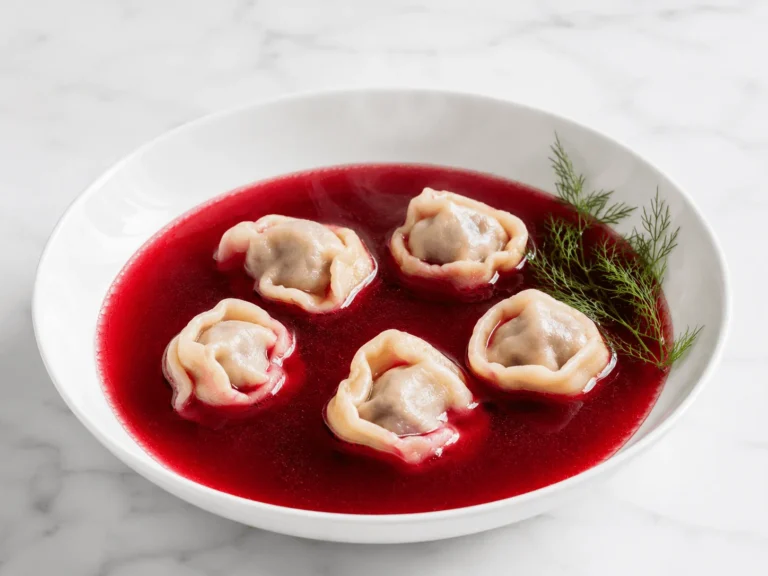
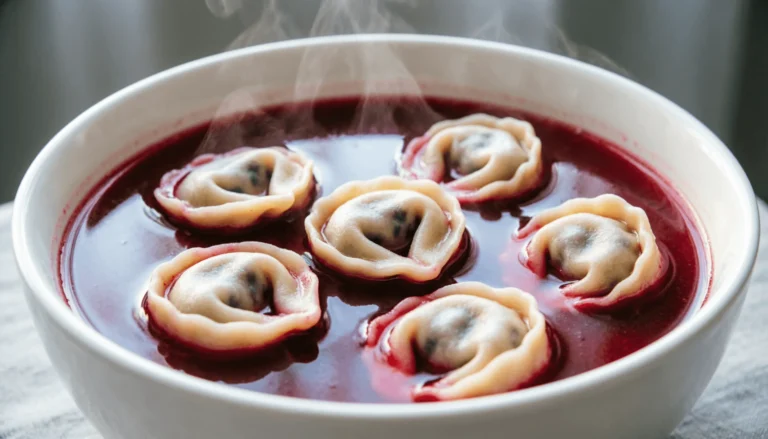
- Serve immediately in warm bowls with uszka (mushroom-filled dumplings) on Christmas Eve, or with potatoes and sour cream any other time
What Barszcz Czerwony Is
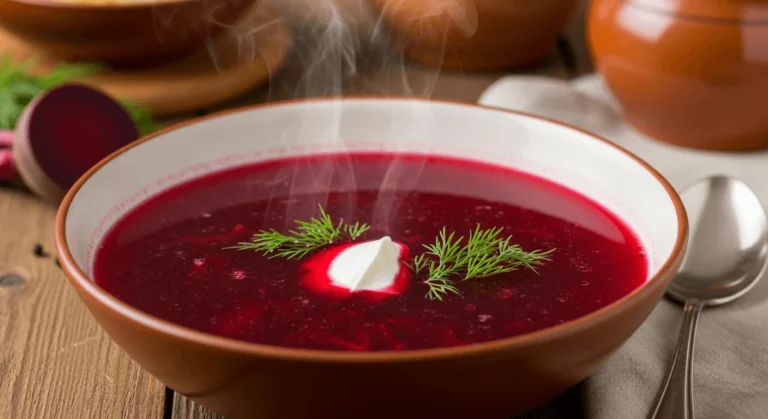
Barszcz czerwony is Poland’s red beet soup — a clear, jewel-colored broth that balances earthy sweetness against measured sourness and a quiet warmth from allspice and marjoram. It is not a thick vegetable soup. It is not the Ukrainian-style borscht loaded with cabbage and potatoes. Polish barszcz czerwony is a refined, strained broth, transparent enough to see through, deep red-ruby in the bowl.¹
The clarity is intentional. A proper barszcz is strained twice: once to remove the cooked vegetables, and again through fine mesh or cheesecloth until the liquid runs clean. That clarity makes the soup elegant enough to open a formal holiday meal and simple enough to serve on a Tuesday night with a piece of rye bread.¹
The soup’s sour character comes from two sources: zakwas buraczany, a naturally fermented beet juice prepared several days ahead, and a small amount of vinegar or lemon juice added at the end for balance. Together they create a tartness that reads nothing like sharp vinegar — it is softer, more rounded, with a fermentation depth that shortcuts cannot replicate.²
History and Cultural Roots
The word “barszcz” in Polish originally referred to hogweed (Heracleum sphondylium), a wild plant that grows across Europe and Asia. The earliest sour soups in the Slavic tradition were made from hogweed, fermented much the same way sauerkraut is fermented today. The plant gave its name to the soup, and the name stayed long after the ingredient changed.¹
Borscht as a category of sour, broth-based soup reached Poland in the 16th century. For most of that early period, it had no beets in it at all. In the 17th century, Polish aristocratic cookbooks still included hogweed barszcz recipes — some seasoned with poppy seed and almonds. The beetroot version began appearing in cookbooks only around 1735.¹²
By the early 19th century, red barszcz was fully embedded in everyday Polish cooking. The hogweed original had faded to a historical footnote. The expression “tani jak barszcz” — cheap as barszcz — entered the language as a proverb, which says something about how ordinary the soup had become across all social classes.¹²
In medieval Poland, barszcz czerwony was served with groats, fish, or eggs — not dumplings. Uszka, the small mushroom-filled dumplings now inseparable from the Christmas Eve soup, came later. The specific pairing of clear barszcz with uszka as we know it today is a relatively recent development — late in the dish’s long history.²
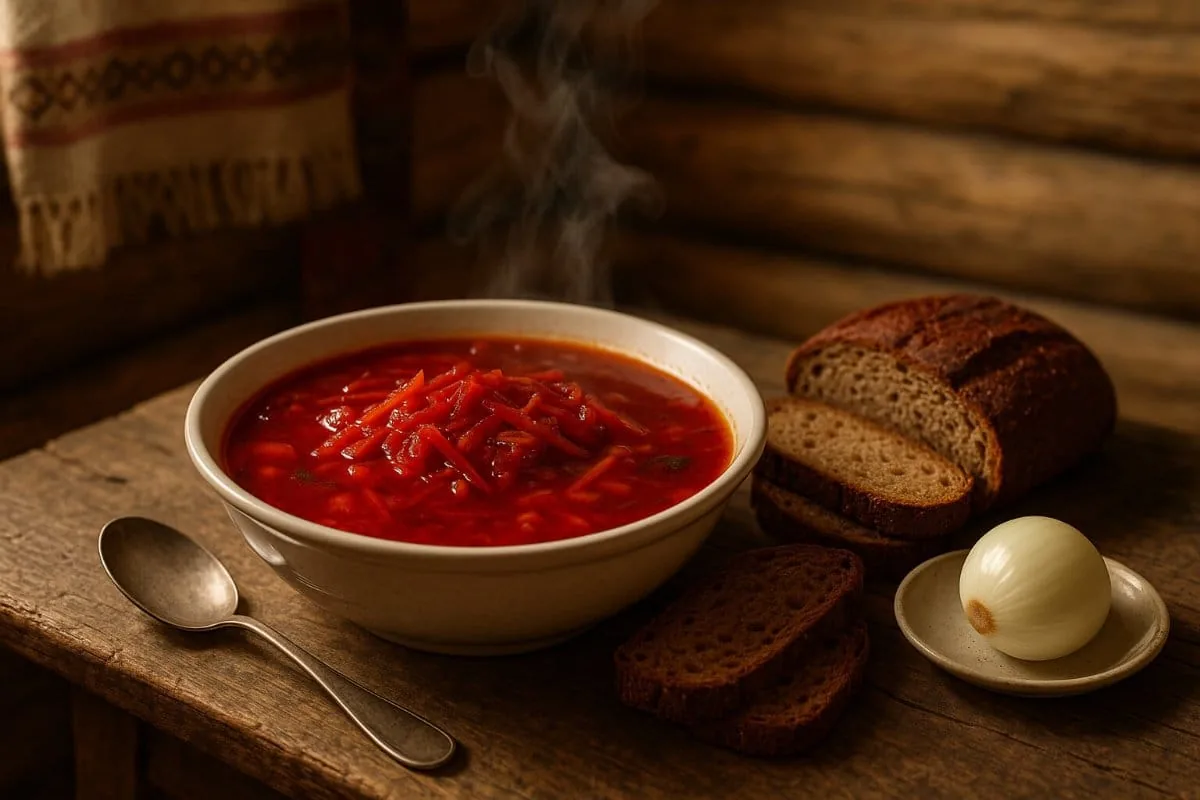
Barszcz evolved differently across regions. What Poles call barszcz ukraiński — a hearty, chunky soup with beans, potatoes, and meat — is closer to what Ukrainians call borshch. The Polish red barszcz went the other direction: lighter, clearer, more refined, anchored to holiday ritual rather than everyday sustenance.¹
Wigilia and the Christmas Eve Table
Wigilia — the Polish Christmas Eve supper — is the most important meal of the Polish year, and barszcz czerwony opens it. The meal is traditionally meatless, governed by Catholic fasting customs, and draws the whole family to the table for a supper that can stretch for hours. The soup appears in its clearest form, strained to a ruby transparency, with three to five uszka floating in each bowl.³
The combination of clear beet broth and mushroom dumplings is specific to Wigilia. The dried wild mushrooms used to flavor the broth are saved after straining, then chopped and mixed with sautéed onion to fill the uszka. Nothing is wasted. The process of fermenting the beet kvass, building the broth, and shaping the tiny dumplings can take the better part of a week — that preparation time is woven into the tradition.³
The soup’s red color carries symbolic weight. In Polish Catholic tradition, it is associated with celebration and, at Wigilia, with the solemnity of the holiday. At other times of year, barszcz czerwony also appears at weddings, name days, and winter gatherings — typically in a heartier form, served with potatoes or cream.³
For Polish families living abroad, making barszcz on Christmas Eve is often the tradition that outlasts everything else — the one dish that carries the smell and taste of home across any distance.³
Traditional Barszcz Czerwony Recipe
Recipe developed independently by Heritage Healthy Kitchen, drawing on traditional Polish culinary methods. Sources for further reading are listed at the end of this article.¹²³
Ingredients
For the zakwas buraczany — prepare 5–7 days ahead
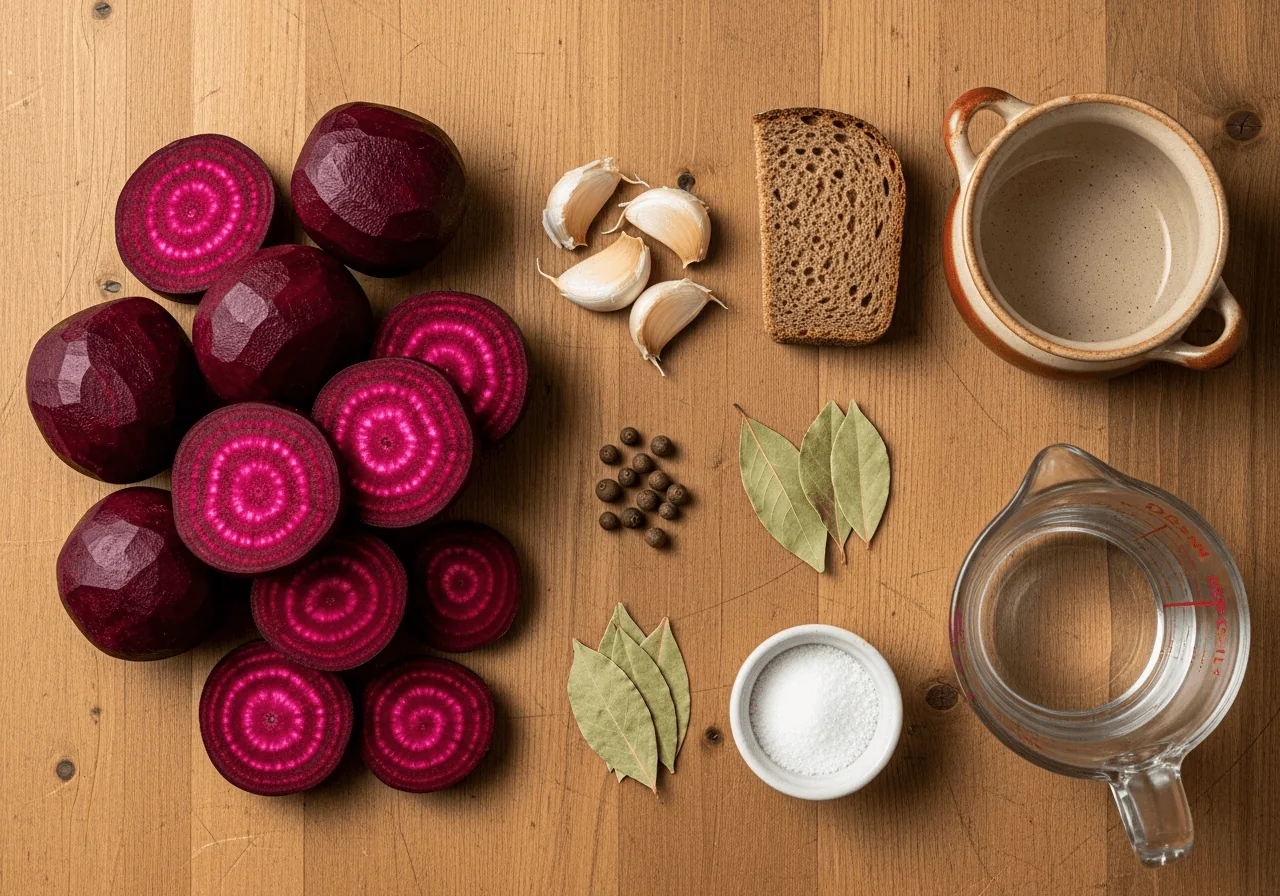
- 1 kg (2.2 lb) raw beets, peeled and sliced into rounds
- 1 litre (4 cups) warm water
- 1 tablespoon fine salt
- 3 garlic cloves, peeled and lightly crushed
- 3 bay leaves
- 4 allspice berries
- 1 small slice of sourdough or rye bread crust (optional — speeds fermentation)
For the broth (serves 6–8)
- 500g (1.1 lb) raw beets, peeled and halved
- 1.5 litres (6 cups) water or light vegetable broth
- 1 medium onion, halved and unpeeled — the skin adds color
- 2 carrots, halved lengthwise
- 1 small parsley root or 2 celery stalks, halved
- 2–3 dried forest mushrooms (porcini or Polish leśne grzyby)
- 3 bay leaves
- 6 allspice berries
- 4 black peppercorns
- 2 garlic cloves
- 1 tablespoon dried marjoram
- 1 teaspoon sugar
- 1–2 tablespoons red wine vinegar or fresh lemon juice
- Salt to taste
To serve
- Uszka dumplings (mushroom-filled), for Christmas Eve
- Or: boiled potatoes, a spoonful of sour cream, a pinch of fresh dill
Instructions
Step 1: Make the zakwas buraczany — 5 to 7 days ahead
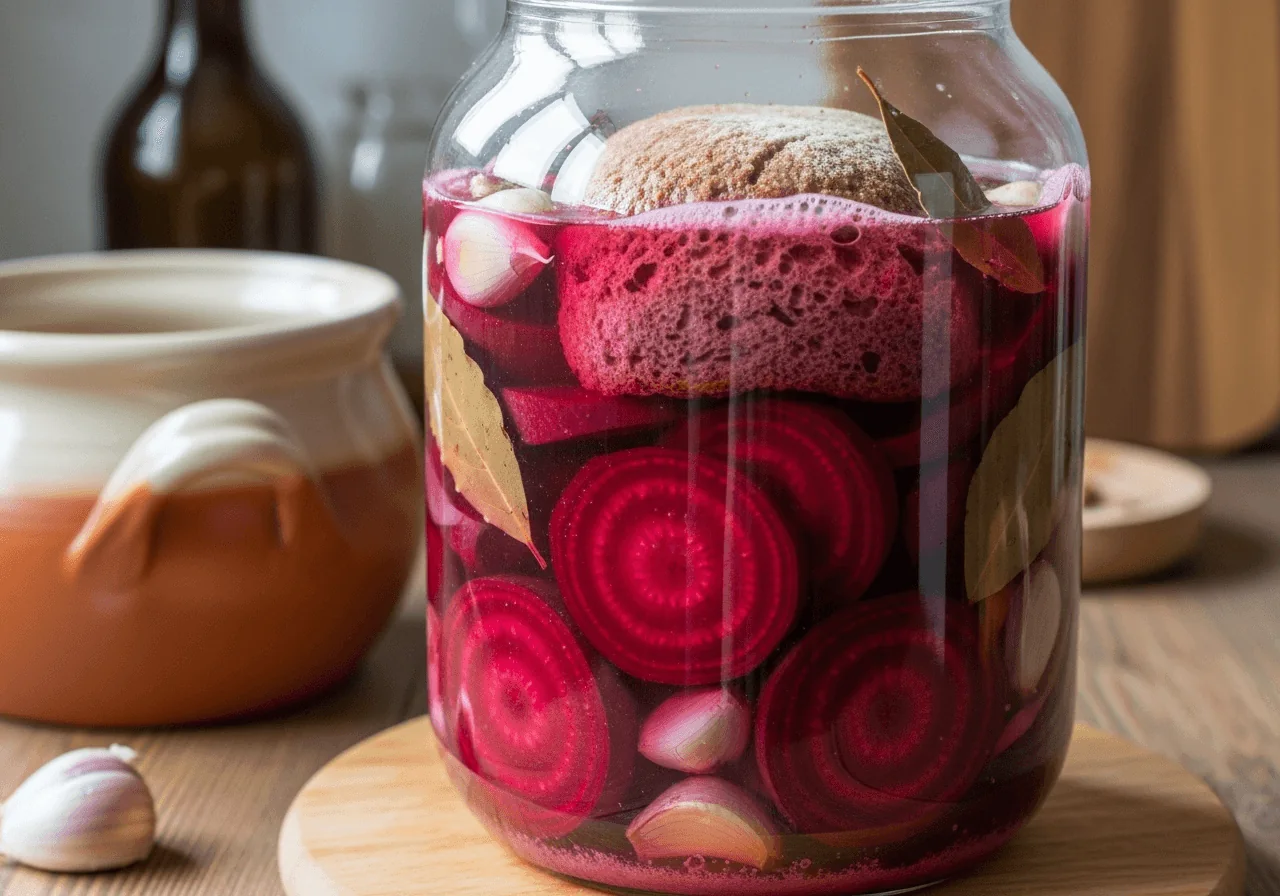
Pack the beet slices into a clean glass jar. Add the garlic, bay leaves, allspice berries, and bread crust if using. Dissolve the salt in warm water and pour over the beets — they should be fully submerged. Cover loosely with parchment paper or a cloth. Leave in a cool, dark place for five to seven days. The liquid will turn deep red and develop a pleasantly sour, earthy smell. Strain through a fine sieve and set aside. Discard the solids.
Step 2: Build the broth
Place the beets, onion, carrots, parsley root, mushrooms, bay leaves, allspice, peppercorns, and garlic in a large pot. Cover with the water or vegetable broth. Bring to a boil, then reduce to a steady simmer. Cook uncovered for 40 minutes. Add the dried marjoram in the last ten minutes.
Step 3: Strain to clarity
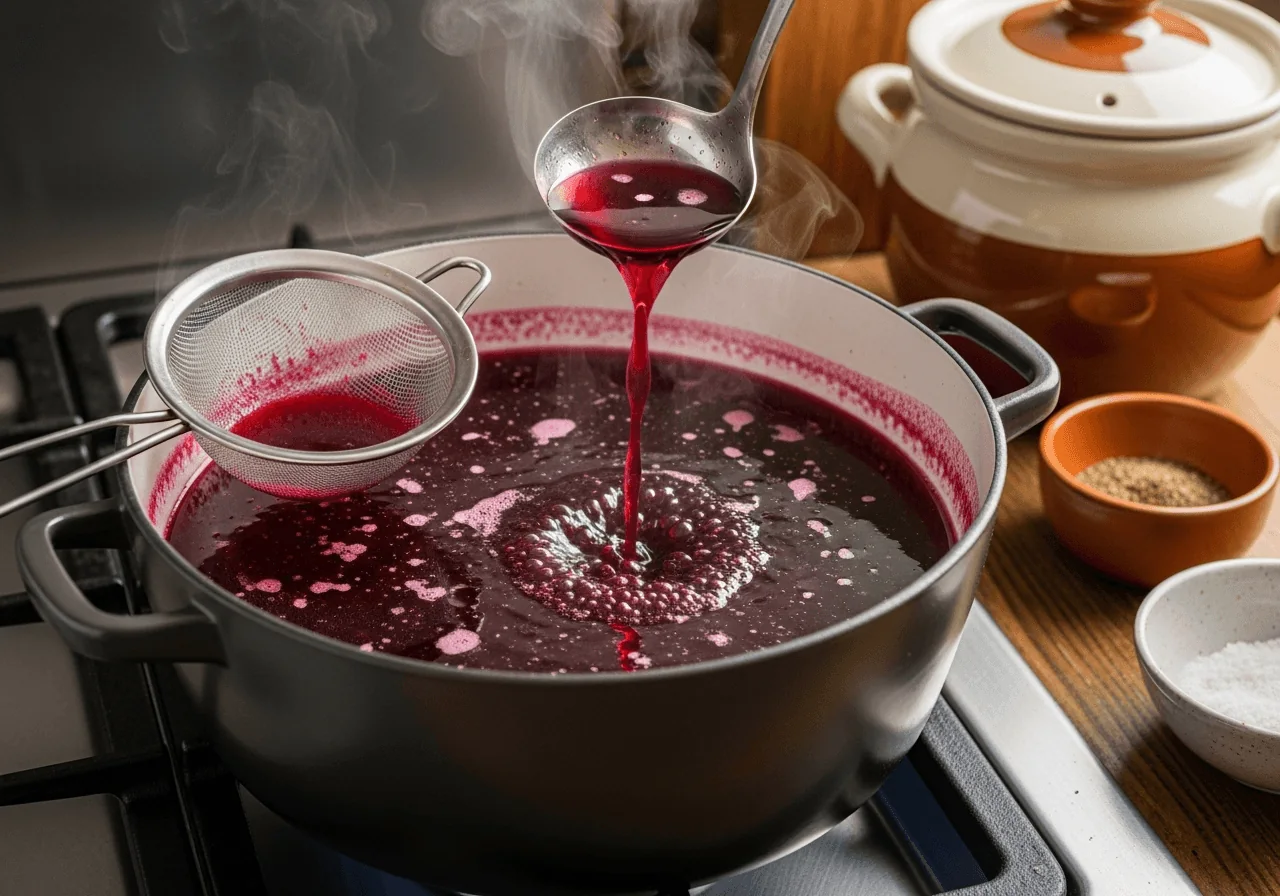
Pass everything through a fine-mesh strainer. For a fully clear broth, strain a second time through cheesecloth or a clean kitchen cloth. The liquid should be a rich, transparent red-ruby. Set aside and let it settle briefly.
Step 4: Combine and season
In the pot, combine the strained broth and the zakwas in roughly a 3:2 ratio — though the exact balance depends on how sour your zakwas turned out and your own preference. Add the sugar, vinegar or lemon juice, and salt. Taste and adjust. The soup should be clearly sour but not sharp, with a gentle sweetness underneath.
Step 5: Heat carefully and serve
Warm the soup over medium heat, stirring occasionally. The moment you see the first bubbles rising from the bottom, remove the pot from heat. Do not allow it to boil. Ladle into warm bowls at once and add your chosen accompaniment.
Kitchen Tips
On the zakwas
Use non-chlorinated water if possible — chlorine slows or kills fermentation. If your tap water is heavily treated, let it sit in an open jug overnight before using. The bread crust is a traditional shortcut that introduces wild yeast and gets fermentation going faster, but the zakwas will develop without it given enough time at the right temperature.²
On color
Barszcz czerwony is won or lost on color. Beets get their deep red hue from betalain pigments, which break down under sustained high heat. A vigorous boil turns the soup brown.⁴ Keep the broth at a gentle simmer throughout, turn off the heat the moment the combined soup begins to move, and add a splash of acid at the end — lemon juice or vinegar helps stabilize the color.
On clarity
A rolling boil clouds the broth. Simmer gently and resist the urge to stir too often. If the broth still looks slightly murky after straining, let it rest for ten minutes — the sediment will settle to the bottom, and you can ladle from the top rather than pouring.
On advance preparation
The broth can be made one to two days ahead and refrigerated. Add the zakwas and the final seasoning only just before serving. This is standard practice in Polish kitchens in the days leading up to Wigilia — the broth is ready, and the final assembly happens quickly on the day.²
On the onion
Leaving the onion unpeeled and halving it through the root adds a deeper amber tint to the broth. Some cooks char the cut face briefly in a dry pan before adding it to the pot — the same technique used in making a good consommé.
Nutritional Information
Values below are estimates for one serving of clear barszcz czerwony (approximately 250ml / 1 cup). These are estimates only and will vary depending on specific ingredients and serving size.
- Calories: approximately 55–70 kcal per serving
- Fat: under 1g
- Carbohydrates: 10–12g
- Fiber: 1–2g
- Protein: 1–2g
- Sodium: moderate — adjusts based on salt used in the broth and zakwas
The nutritional value comes largely from beets. A 100-gram serving of cooked beet contains approximately 44 calories, 2 grams of fiber, and covers around 20% of the daily recommended folate intake. Beets are also a good source of manganese, potassium, copper, and vitamin C.⁵
Cleveland Clinic dietitian Sarah Thomsen Ferreira highlights beets as standing out specifically for heart health — their compounds work together to improve blood flow, support arterial health, and help manage LDL cholesterol.⁴ Much of this comes from beets’ high nitrate content, which the body converts to nitric oxide, a molecule that relaxes and widens blood vessels.⁴⁵ The deep red pigments — betalains — also carry anti-inflammatory properties.⁴
These benefits apply to the beets used in building the broth. Levels in the finished, strained soup will be lower than in whole beet preparations — but the soup remains light, low in fat, and nourishing all the same. The fermented zakwas also contributes beneficial bacteria, as any lacto-fermented food does.²
Storage
Clear barszcz czerwony keeps well in the refrigerator for two to three days. Store it in a sealed container. Reheat gently over low heat and stop before it boils — same rule as the first time.
The soup freezes well for up to three months. Freeze it without uszka or other accompaniments and add those fresh when you reheat and serve. Thaw overnight in the refrigerator and warm on the stovetop.
If you made a larger batch of zakwas, keep it separately in the refrigerator for several days once strained. You can use it to build the soup in smaller portions across that time.²
Traditional Polish Barszcz Czerwony

Ingredients
For the zakwas buraczany — prepare 5–7 days ahead
- 1 kg (2.2 lb) raw beets, peeled and sliced into rounds
- 1 litre (4 cups) warm water
- 1 tablespoon fine salt
- 3 garlic cloves, peeled and lightly crushed
- 3 bay leaves
- 4 allspice berries
- 1 small slice of sourdough or rye bread crust (optional — speeds fermentation)
For the broth (serves 6–8)
- 500g (1.1 lb) raw beets, peeled and halved
- 1.5 litres (6 cups) water or light vegetable broth
- 1 medium onion, halved and unpeeled — the skin adds color
- 2 carrots, halved lengthwise
- 1 small parsley root or 2 celery stalks, halved
- 2–3 dried forest mushrooms (porcini or Polish leśne grzyby)
- 3 bay leaves
- 6 allspice berries
- 4 black peppercorns
- 2 garlic cloves
- 1 tablespoon dried marjoram
- 1 teaspoon sugar
- 1–2 tablespoons red wine vinegar or fresh lemon juice
- Salt to taste
To serve
- Uszka dumplings (mushroom-filled), for Christmas Eve
- Or: boiled potatoes, a spoonful of sour cream, a pinch of fresh dill
Instructions
- Prepare the zakwas buraczany (fermented beet juice) five to seven days ahead — this is the soul of the soup and cannot be rushed
- Build a separate vegetable broth with beets, root vegetables, dried mushrooms, and aromatics — simmer 45 minutes, then strain clear
- Combine the strained broth and zakwas in a ratio of roughly 3:2, then season with sugar and a splash of vinegar or lemon juice
- Heat gently — the moment the first bubbles appear, pull the pot off the heat. Boiling kills both the color and the flavor
- Serve immediately in warm bowls with uszka (mushroom-filled dumplings) on Christmas Eve, or with potatoes and sour cream any other time
Frequently Asked Questions
What is the difference between barszcz czerwony and Ukrainian borscht?
Polish barszcz czerwony is clear, strained, and typically vegetarian — a refined broth served in a cup or bowl, sometimes with small dumplings. Ukrainian borshch is a thick, hearty soup with beets, cabbage, potatoes, and often meat or beans. They share a common origin in the Slavic sour-soup tradition but evolved in opposite directions. Polish barszcz moved toward clarity and restraint; Ukrainian borshch moved toward fullness and substance.¹
Do I have to make the zakwas, or can I use vinegar instead?
You can make barszcz without zakwas by using only fresh beets in the broth and adjusting the sourness with vinegar or lemon juice at the end. The result is a decent soup. What zakwas adds is a softer, more rounded sourness — a fermentation depth that vinegar cannot produce on its own. For everyday barszcz the shortcut is fine. For Wigilia, it is worth planning ahead.²
Why does my barszcz turn brown instead of staying red?
The color comes from betalain pigments in beets, which break down under sustained high heat.⁴ Boiling the finished soup is the most common cause of color loss. Keep the broth at a gentle simmer when building it, add the zakwas off heat or at very low temperature, and finish with a splash of acid. Lemon juice or vinegar helps stabilize the pigments and keeps the soup red longer.
What is traditionally served with barszcz czerwony?
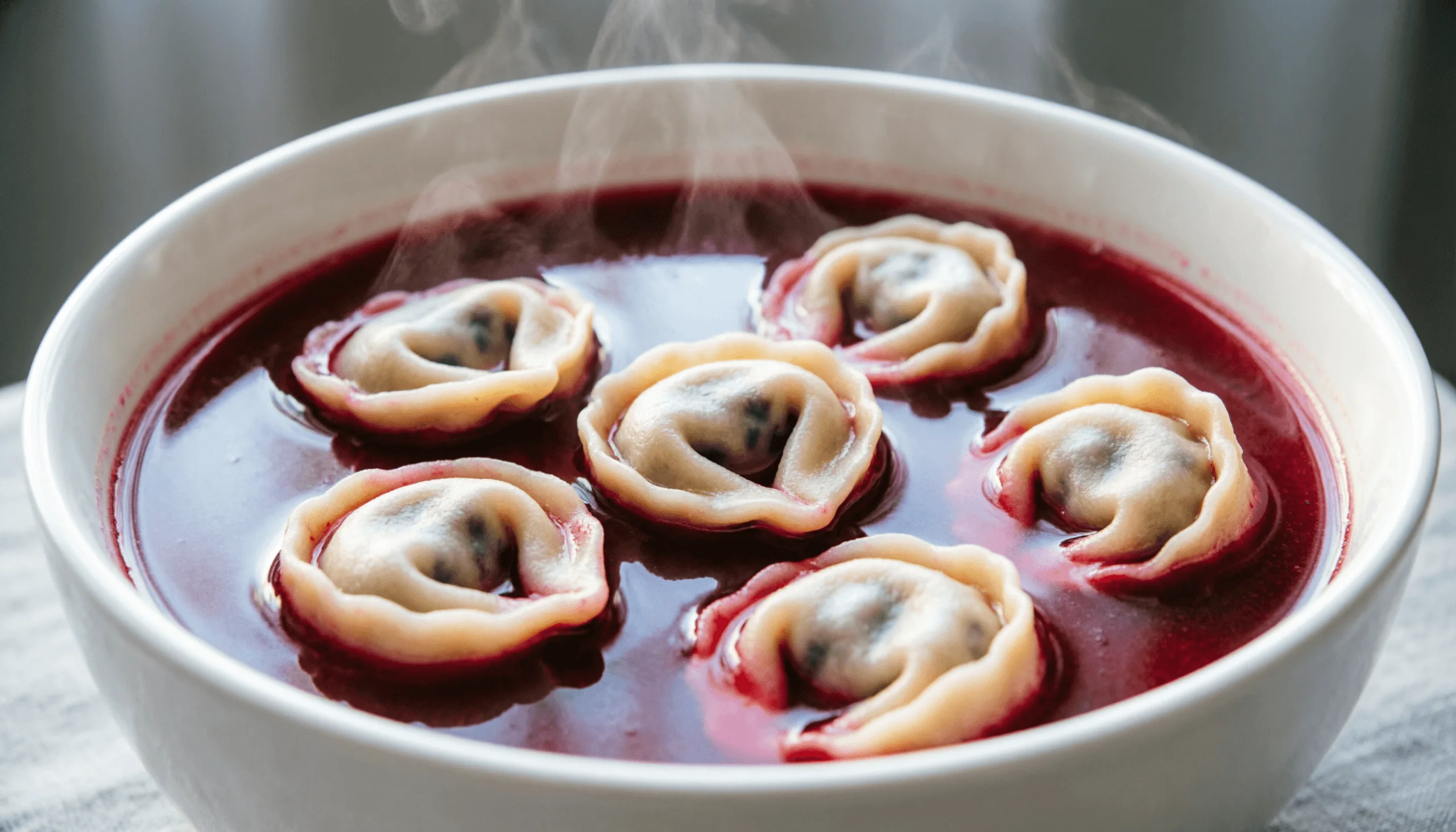
On Christmas Eve, barszcz czerwony is always served with uszka — tiny ear-shaped dumplings filled with sautéed wild mushrooms and onion. At other times of year, common pairings include boiled potatoes, sour cream, krokiety (savory crepes with mushroom-sauerkraut filling), or dark rye bread. In some households the soup is served in a handled mug rather than a bowl, especially at informal gatherings.³
Can barszcz czerwony be served cold?
Clear barszcz czerwony is a hot soup. The chilled version — barszcz chłodnik — is a different preparation entirely, made with kefir or buttermilk, cucumber, and fresh dill. It shares the pink color and beet base but has a creamy texture and is very much a summer dish. Serving regular strained barszcz cold is unusual and not traditional.³
Is barszcz czerwony always vegetarian?
The Wigilia version is always meatless by tradition, built on vegetable broth and the flavor of dried mushrooms. During the rest of the year, many Polish households use a light chicken rosół broth as the liquid base, which adds body and a mild richness. Both versions are common and widely accepted. The soup is naturally dairy-free if sour cream is served on the side rather than stirred in.²
Thinking About the Healthy Version?
Traditional barszcz czerwony is already one of the lightest soups in Polish cooking — around 60 calories per serving, naturally low in fat, and built on fermented and fresh vegetables. The healthy adaptation article covers both barszcz czerwony and uszka as a pair: extending the zakwas fermentation for a stronger probiotic benefit, expanding the vegetable base for more fiber, lower-sodium seasoning, and a whole spelt dough for the dumplings they are served with.
Further Reading & Sources
This recipe was developed independently by Heritage Healthy Kitchen. The following sources are provided for further reading on the history, nutrition, and cultural context covered in this article.
- Polish Food 101 — Barszcz. Culture.pl (Adam Mickiewicz Institute). https://culture.pl/en/work/polish-food-101-barszcz — History of barszcz from hogweed origins through red beet preparation, and regional variations in Polish tradition.
- Klesta, Karolina. Polish Red Borscht Barszcz Czerwony Recipe. Polish Foodies. https://polishfoodies.com/polish-red-borscht-barszcz-czerwony-recipe/ — Historical timeline of the recipe’s development, zakwas buraczany technique, and Christmas Eve serving tradition.
- Barszcz: Poland’s Iconic Beet Soup. Bay Area Polish Group. https://www.bayareapolishgroup.com/en/food/barszcz/ — Cultural significance of barszcz in Polish tradition, Wigilia customs, and regional variations.
- Thomsen Ferreira, Sarah, RD. 5 Health Benefits of Beets. Cleveland Clinic Health Essentials. https://health.clevelandclinic.org/the-health-benefits-of-beets — Cardiovascular benefits of beets, nitrate content, betalain pigments, and fiber.
- Coyle, Daisy (APD) and Ajmera, Rachael (MS, RD). Medically reviewed by Jerlyn Jones, MS MPA RDN LD CLT. 9 Impressive Health Benefits of Beets. Healthline. https://www.healthline.com/nutrition/benefits-of-beets — Detailed nutritional profile, evidence on blood pressure effects, betalains, and fiber content.
Disclaimer
This article is for educational and informational purposes only and is not intended as medical or nutritional advice. Nutritional values provided are estimates and may vary depending on specific ingredients used, preparation methods, and serving sizes. If you have specific dietary needs or health conditions, please consult a qualified healthcare provider or registered dietitian before making changes to your diet.
Cook by Occasion
This recipe is part of our Wigilia menu.
You Might Also Like
More heritage recipes from our kitchen
Leave a Reply