
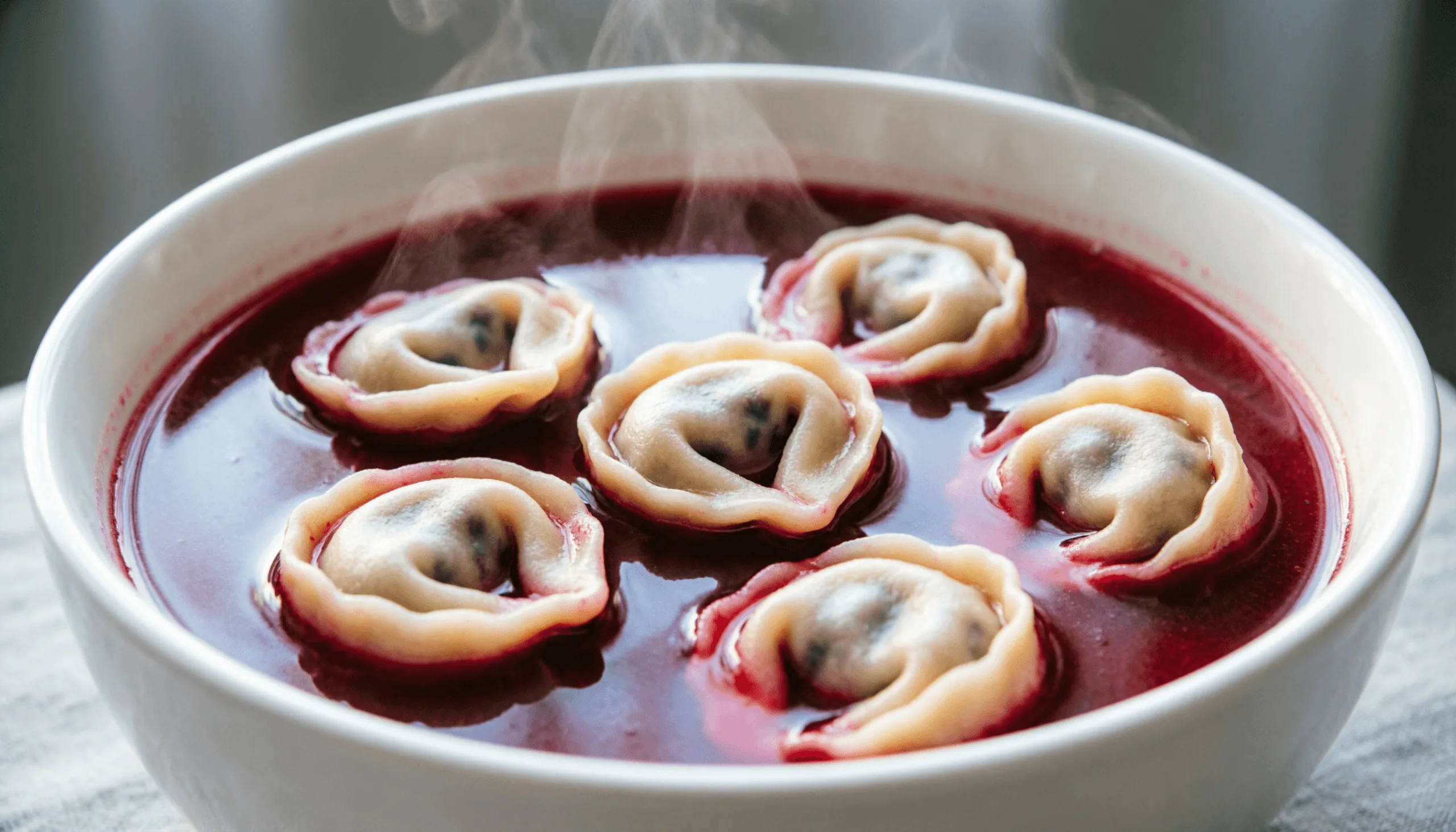
Active time: ~1.5 hours | Mushroom soaking: overnight | Total: ~2 hours | Yields: 50–60 dumplings | Difficulty: Intermediate
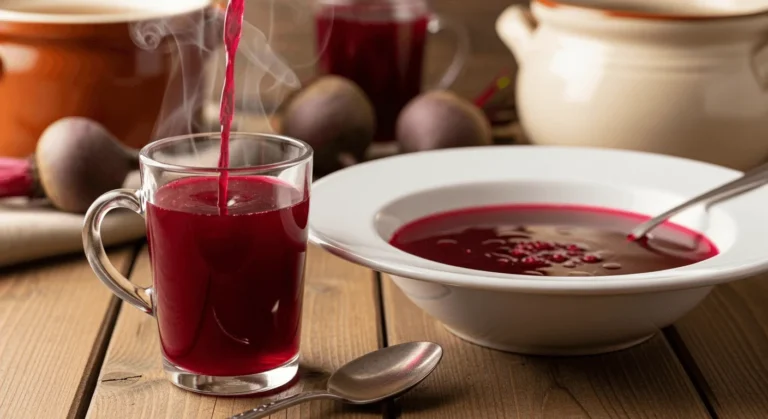
Served with: Traditional Barszcz Czerwony — these two dishes belong together at the Wigilia table.
Quick Overview
- Soak dried mushrooms in cold water overnight — the soaking liquid gets added to the barszcz, not the drain
- Cook the filling: chop the soaked mushrooms, fry with onion until the mixture is dry and fragrant, season and cool
- Make the dough: combine flour, egg, warm water, and oil — knead until smooth, rest under a cloth for 10 minutes
- Roll very thin, cut 4cm squares, fill sparingly, fold into a triangle, wrap around a finger and pinch the ends — that creates the ear shape
- Cook in gently boiling salted water until they float, then 1–2 minutes more. Serve immediately in hot barszcz czerwony — three or five per bowl
What Uszka Are
Uszka (pronounced oosh-kah) is the plural of ucho, the Polish word for ear, and the name describes the shape.3 A small piece of very thin dough is folded around a little filling and twisted into a curl that looks like a tiny ear. Uszka are much smaller than pierogi, small enough to float in a bowl of soup.2
The Christmas filling is dried wild mushrooms, soaked and finely chopped, fried with onion and seasoned with black pepper.5 The dough is the same as for pierogi: flour, egg, warm water, salt, and a little oil.1
Uszka at the Wigilia Table
Wigilia, the Polish Christmas Eve supper, is meatless, and it often begins with red barszcz.5 Uszka are served in the clear soup, and for Christmas Eve they are filled with wild mushrooms or sauerkraut, or a mix of both.2 Many cooks keep one more rule: there must be three or five uszka in each bowl.1
Mushroom hunting is a popular autumn pastime in Poland, and the classic filling uses dried porcini or bay boletes.2 Most Poles make uszka once a year, for Christmas Eve. On other days they go into rosół, the Polish chicken soup, or are served with melted butter, and leftovers are fried in butter the next day.1
Traditional Uszka Recipe
This recipe was compiled by Heritage Healthy Kitchen from a comparison of published recipes; the sources are listed at the end of this article. Figures that are Heritage Healthy Kitchen’s own estimates rather than taken from a published source are marked as such.
Ingredients
For the filling
- 30g (1 oz) dried porcini or other dried forest mushrooms
- 1 medium onion, finely diced
- 1 tablespoon butter or neutral oil
- Salt and freshly ground black pepper
- 1 tablespoon breadcrumbs (optional — helps bind the filling if it is wet)
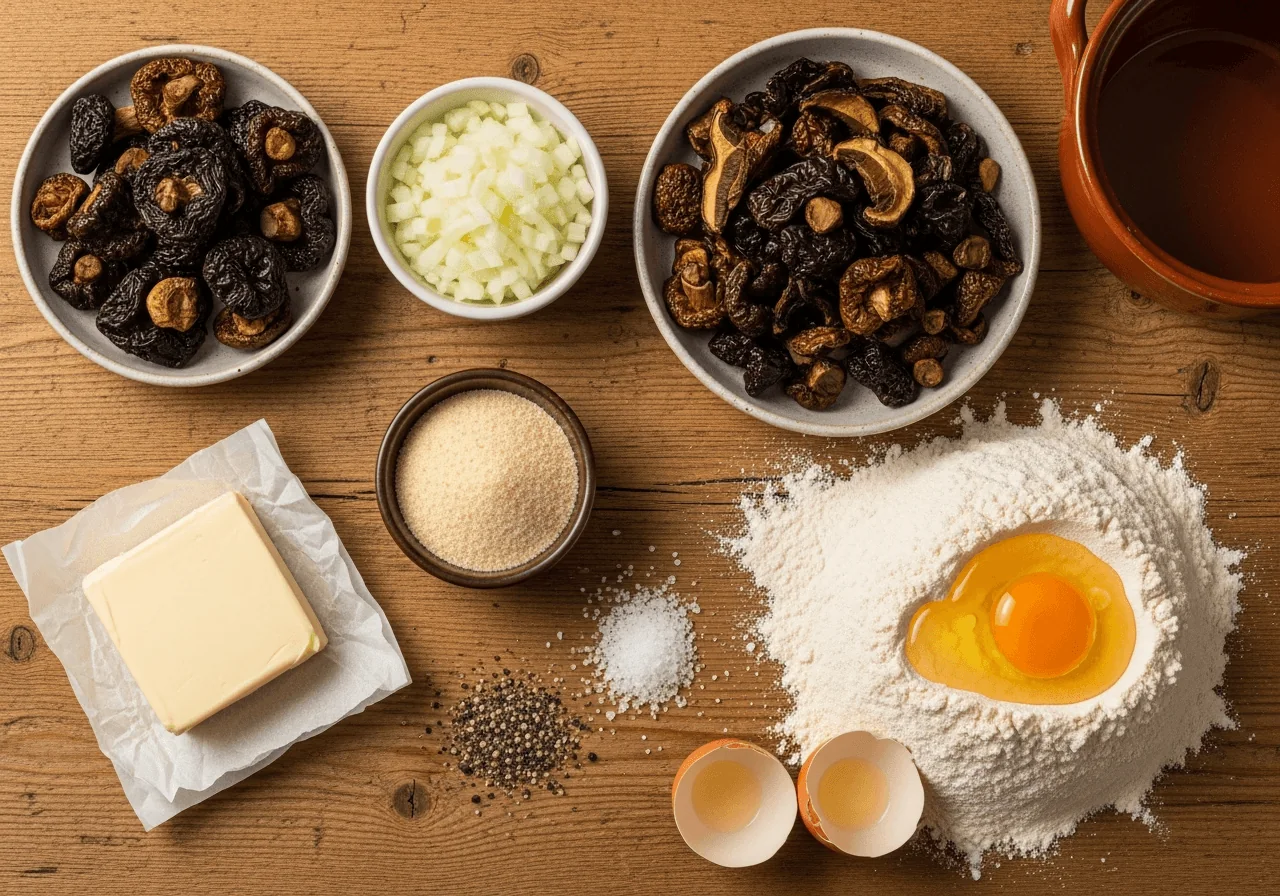
For the dough (yields 50–60 uszka)
- 300g (2½ cups) all-purpose flour, plus extra for dusting
- 1 egg
- 120ml (½ cup) warm water
- 1 tablespoon neutral oil
- A pinch of salt
Instructions
Step 1: Soak the mushrooms — overnight or at least 30 minutes
Place the dried mushrooms in a bowl and cover with cold water. Leave overnight. If you are short on time, use hot water and soak for at least 30 minutes. Drain, but keep the soaking liquid — strain it and set it aside for your barszcz broth. Squeeze the mushrooms gently, then chop them finely.
Step 2: Make the filling
Fry the diced onion in butter over medium-low heat for 5–7 minutes until soft and translucent. Do not let it brown. Add the chopped mushrooms and cook together for another 3–4 minutes. Season with salt and pepper. If the mixture looks wet, add the breadcrumbs and stir through. Remove from heat and leave to cool completely before filling the dumplings — warm filling tears the dough.
Step 3: Make the dough
Combine flour and salt in a large bowl. Add the egg and oil, then pour in the warm water gradually, mixing as you go. Turn out onto a lightly floured surface and knead for about 5 minutes until the dough is smooth and elastic. Cover with a clean cloth and rest for 10 minutes.
Step 4: Shape the uszka
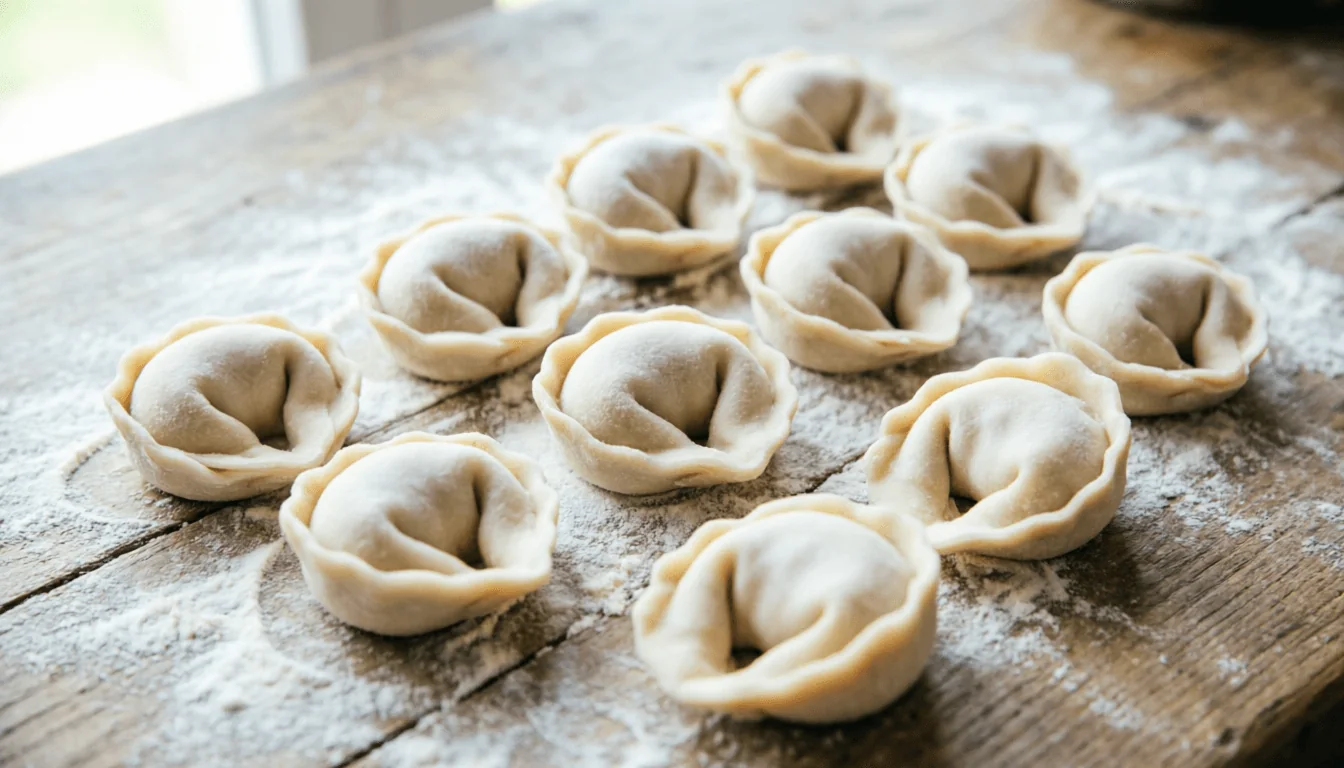
Divide the dough in half and work with one portion at a time — keep the other covered. Roll the dough very thin, around 2mm. Cut into 4cm (1½ inch) squares. Place approximately half a teaspoon of filling in the center of each square. Do not overfill. Fold the square diagonally to form a triangle and press the edges firmly all the way around — no gaps, or they will open in the water. Wrap the triangle around one finger and press the two bottom corners together firmly. This creates the ear shape. Set finished uszka on a floured surface, not touching.
Step 5: Cook
Bring a large pot of salted water to a gentle boil. Add uszka in batches of about 15–20, stirring gently immediately after adding to prevent sticking to the bottom. When they float to the surface, cook for another 1–2 minutes. Remove with a slotted spoon. Serve at once in bowls of hot barszcz czerwony.
Kitchen Tips
On the mushrooms
Dried porcini deliver the deepest flavor. Fresh mushrooms can substitute, but they produce a lighter, less earthy filling with none of the concentrated forest intensity that makes the Christmas Eve version distinctive. If porcini are expensive or hard to find, a combination of dried forest mushrooms with some fresh cremini gets much closer to the traditional result than fresh mushrooms alone.²
On the soaking liquid
Keep the mushroom soaking liquid. Strain it through a fine sieve or cloth to catch any grit and add it to the barszcz: the Christmas soup is often made with a light broth of dried wild mushrooms.5
On the dough
Roll the dough very thin, about 2 mm, or as thin as you can without tearing it.1 Thin dough keeps uszka delicate; thick dough turns them into small, heavy pierogi.
On the seal
Every dumpling that opens in the pot is filling that escapes into the soup and dough that turns soggy. Press the edges firmly and run your fingertip along the seam twice. No flour between the dough layers at the seal — flour on the seam prevents it from closing properly.
On timing
The filling can be made a day ahead and refrigerated. Shaped, uncooked uszka can wait in the refrigerator on a floured tray, covered with a cloth, until the next day. Many cooks make them two or three days before Christmas Eve, or freeze them and cook them straight from frozen.1
Nutritional Information
Values are estimates for one serving of about 5 uszka (without barszcz), calculated from USDA FoodData Central reference data for the flour, egg, oil or butter, onion, and dried mushrooms in the recipe, with 50 to 60 uszka per batch.6 Salt is not included.
- Calories: approximately 130–155 kcal per serving of 5
- Fat: about 3 g (from egg, oil, and butter)
- Carbohydrates: 22–27 g
- Protein: 3.5–4 g
- Fiber: about 1 g
According to a Cleveland Clinic dietitian, mushrooms contain selenium, vitamin B6, riboflavin, niacin, potassium, and zinc. Potassium helps the body control blood pressure, and mushroom antioxidants help protect cells from damage.4 The amount in uszka is small, though: the whole batch uses 30 grams of dried mushrooms, about 3 grams per serving.
Uszka are vegetarian. Made with oil instead of butter in the filling, they are also dairy-free.
Storage
Uncooked uszka freeze well. Arrange them in a single layer on a floured tray, not touching, and freeze until solid — about 2 hours. Transfer to an airtight bag or container and freeze for up to 3 months. Cook directly from frozen in gently simmering salted water, adding about 2 minutes to the cooking time.¹
Cooked uszka are best eaten the same day. Leftovers keep overnight in the refrigerator — reheat by dropping them into simmering water for about a minute, or pan-fry in a little butter until lightly golden. The fried version is, for many, just as good as the original.
Traditional Uszka

Ingredients
For the filling
- 30g (1 oz) dried porcini or other dried forest mushrooms
- 1 medium onion, finely diced
- 1 tablespoon butter or neutral oil
- Salt and freshly ground black pepper
- 1 tablespoon breadcrumbs (optional — helps bind the filling if it is wet)
For the dough (yields 50–60 uszka)
- 300g (2½ cups) all-purpose flour, plus extra for dusting
- 1 egg
- 120ml (½ cup) warm water
- 1 tablespoon neutral oil
- A pinch of salt
Instructions
- Soak dried mushrooms in cold water overnight — the soaking liquid gets added to the barszcz, not the drain
- Cook the filling: chop the soaked mushrooms, fry with onion until the mixture is dry and fragrant, season and cool
- Make the dough: combine flour, egg, warm water, and oil — knead until smooth, rest under a cloth for 10 minutes
- Roll very thin, cut 4cm squares, fill sparingly, fold into a triangle, wrap around a finger and pinch the ends — that creates the ear shape
- Cook in gently boiling salted water until they float, then 1–2 minutes more. Serve immediately in hot barszcz czerwony — three or five per bowl
Frequently Asked Questions
Can I use fresh mushrooms instead of dried?
Yes, but the result will be different. Dried mushrooms have a concentrated, earthy flavor that fresh ones do not match. If you use fresh mushrooms, cook them over high heat until all the moisture has evaporated before mixing with the onion — otherwise the filling will be wet and the uszka will not seal properly. Cremini or baby bella work better than white button mushrooms for flavor. Dried porcini are the traditional choice and the most flavorful.²
How do I get the ear shape right?
After sealing the triangle, place it on the work surface with the long flat edge facing you. Wrap the triangle around your index finger so the two bottom corners meet in front, then press those corners together firmly. It takes a few attempts before the motion becomes automatic. The shape does not have to be perfect — what matters is that the seal is tight.¹
My uszka keep opening in the water. What am I doing wrong?
The two most common causes are flour between the dough layers at the seal, and overfilling. Use a dry fingertip — not a floured one — when pressing the seam. Also cook at a gentle simmer rather than a rolling boil; vigorous boiling puts stress on the seams and can force them open.¹
Can uszka be made ahead of time?
Yes, and most Polish families do exactly this. Shape them the day before, refrigerate on a floured tray covered with a cloth, and cook fresh on Christmas Eve. Alternatively, freeze them uncooked up to 3 months ahead and cook straight from frozen. This is one of the most practical make-ahead holiday dishes in the Polish repertoire.¹
What is the difference between uszka and pierogi?
Both are Polish filled dumplings made from the same dough.1 Pierogi are larger, half-moon shaped, and usually served as a main course or a side. Uszka are tiny and twisted into an ear shape, made to float in soup. For Christmas Eve they are filled with mushrooms or sauerkraut, or a mix of both, never meat.2,5
Can uszka be served with anything other than barszcz czerwony?
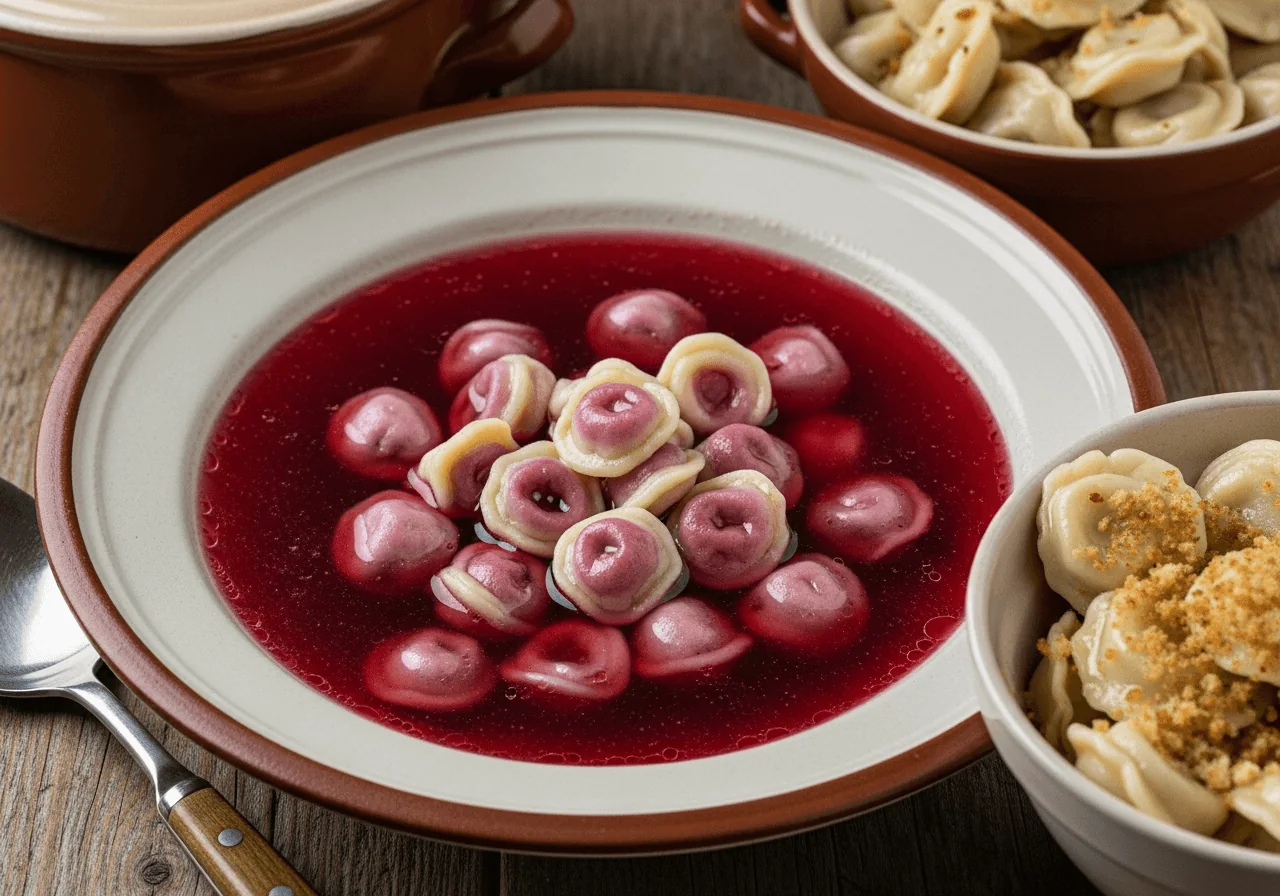
Barszcz is the classic partner, but some cooks add uszka to rosół, Polish chicken soup. They can also be served on their own with melted butter, and leftovers are good fried in butter the next day.1
Further Reading & Sources
The recipe is a compilation based on the published recipes listed here; these links are provided for readers who want to explore further.
- Klesta, Karolina. “Polish Uszka Recipe.” Polish Foodies (16 September 2024).
- Polonist Test Kitchen. “Uszka: Polish Christmas Dumplings (for Barszcz).” The Polonist (6 November 2019, updated 5 June 2023).
- Anna. “Mushroom Dumplings (Uszka z Grzybami).” Polish Your Kitchen (3 December 2017).
- Cleveland Clinic. “7 Impressive Reasons To Eat Mushrooms.” Health Essentials (23 December 2022).
- Kasprzyk-Chevriaux, Magdalena. “The 12 Dishes of Polish Christmas.” Culture.pl (December 2013, updated December 2022).
- U.S. Department of Agriculture. “FoodData Central.” Agricultural Research Service (accessed 16 October 2026).
Disclaimer
This article is for educational and informational purposes only and is not intended as medical or nutritional advice. Nutritional values provided are estimates and may vary depending on specific ingredients used, preparation methods, and serving sizes. If you have specific dietary needs or health conditions, please consult a qualified healthcare provider or registered dietitian before making changes to your diet.
Cook by Occasion
This recipe is part of our Wigilia menu.
You Might Also Like
More heritage recipes from our kitchen



Leave a Reply