
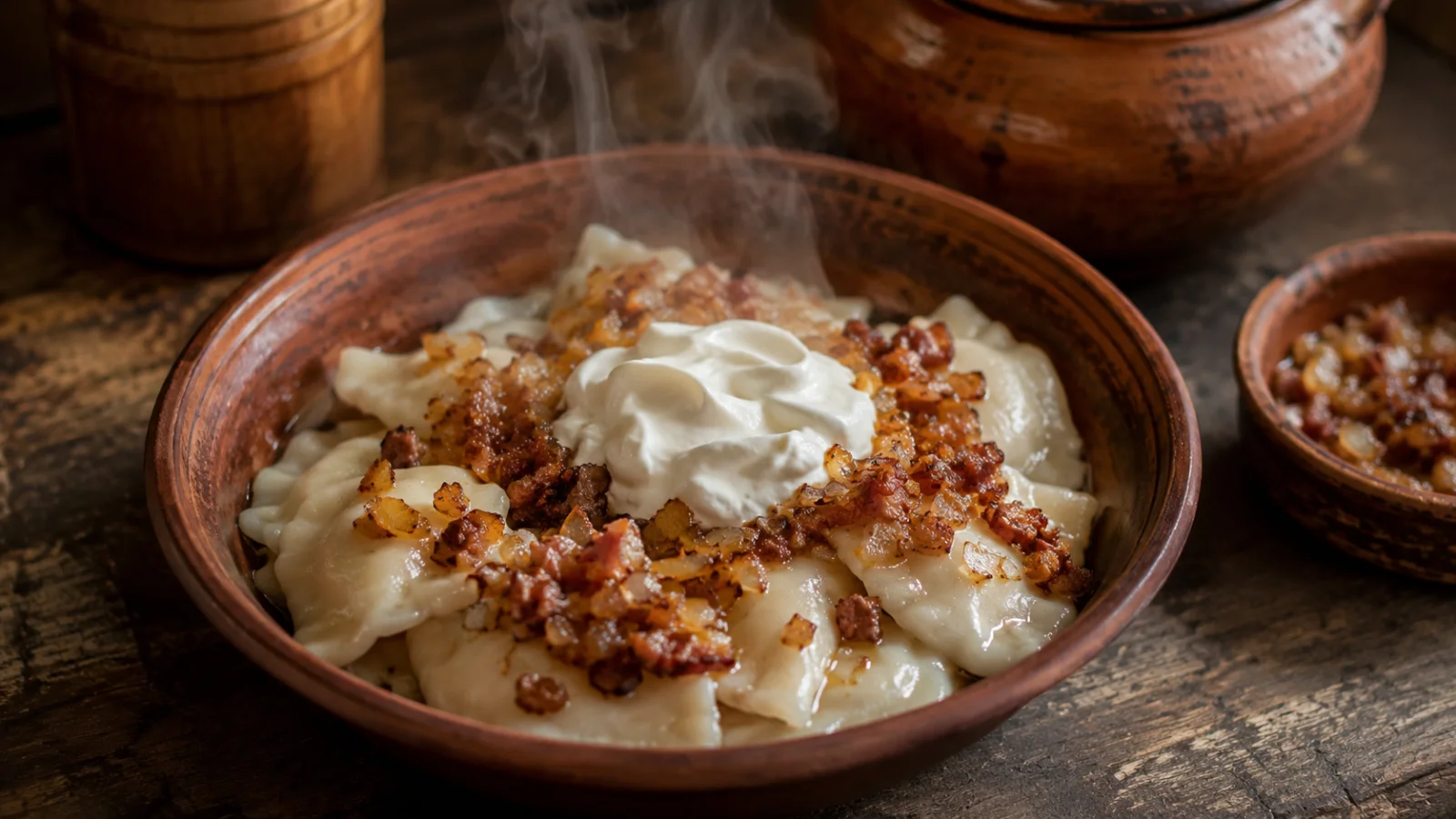
Active time: about 1 hour 15 minutes | Total time: about 1 hour 45 minutes | Serves: 8 (about 80–90 small dumplings) | Difficulty: Medium
Quick Overview
- Knead a plain dough of flour, egg, and water and let it rest
- Mix raw ground pork with grated onion, egg, and seasoning
- Roll the dough very thin and cut small rounds with a glass
- Fill, fold into half-moons, and pinch the edges shut
- Boil until they float, then 5–6 minutes more
- Serve with fried bacon and onion and sour cream
What Koldūnai Are
Koldūnai are small boiled dumplings: a thin dough of flour, egg, and water folded around a raw filling, most often ground meat. They are made about one bite in size, and the filling cooks inside the sealed dough, so the juices stay in.⁶ They are usually served with spirgučiai, smoked bacon fried with onion, and sour cream, or simply tossed in melted butter.⁴˒⁵˒⁶ For Kūčios, Lithuania’s Christmas Eve supper, families make a meatless version with a dried wild mushroom filling; its recipe follows the main one.⁸˒⁹
History and Origins
No one knows exactly when koldūnai became popular in Lithuania. Vilnius’s tourism agency notes that some of the recipes arrived in the 14th and 15th centuries with Tatar, Karaite, and Jewish settlers.¹˒² The Karaims of Lithuania still make koldunlar, meat dumplings, and describe the dish as having come to the country with the Karaims and Tatars.³
The fillings followed the season and what the farm or forest offered: mushrooms, curd cheese, potatoes, and berries as well as meat. Koldūnai might be served floating in broth, or with browned butter, sour cream, or cracklings.²
On the Kūčios Table
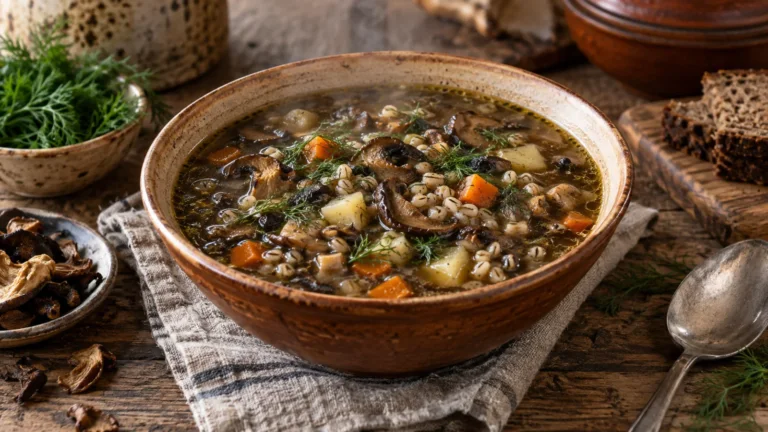
Mushroom dumplings are a fixture of Kūčios. A culinary teacher writing in the local paper Trakų žemė says that many families can’t imagine the Kūčios table without them. In Aukštaitija they are boiled dumplings of unleavened dough, called virtiniai, while in Dzūkija similar mushroom pies are usually baked from a yeast dough.⁸ Some families call them auselės, “little ears,” and make them in different ways: boiled small, like koldūnai, or large and fried.⁹˒¹⁰ The Kūčios recipes use no egg, butter, or sour cream; the dough is made with hot water and oil.⁸˒⁹
Traditional Recipe
This recipe was compiled by Heritage Healthy Kitchen from a comparison of published recipes; the sources are listed at the end of this article. Figures that are Heritage Healthy Kitchen’s own estimates rather than taken from a published source are marked as such.
Published recipes use roughly 1 to 1.8 parts meat to 1 part flour, a dough of flour and water with or without egg, and a short boil once the dumplings float, from 3 to 10 minutes.⁴˒⁵˒⁶˒⁷ The quantities below sit inside those ranges. The size of the rounds, the number of dumplings, and the serving size are Heritage Healthy Kitchen’s estimates.
Ingredients (Serves 8, About 80–90 Small Dumplings)
For the Dough
- 400 g (about 3⅓ cups) all-purpose flour, plus extra for dusting
- 1 large egg
- 170 ml (¾ cup) lukewarm water
- ½ tsp salt

For the Filling
- 450 g (1 lb) ground pork, not too lean
- ½ medium onion (about 75 g/2.5 oz), finely grated
- 1 large egg
- 1 tsp salt
- ⅛ tsp black pepper, or to taste
- 1 tsp dried marjoram, optional
For the Spirgučiai and Serving
- 150 g (5 oz) smoked bacon, finely diced
- 1 medium onion (about 150 g/5 oz), finely chopped
- 200 g (about ¾ cup) sour cream, for serving
Instructions
- Make the dough. Mix the flour and salt in a large bowl. Beat the egg with the lukewarm water, pour it into the flour, and knead until the dough is smooth and doesn’t stick to your hands, adding a little more flour or water if needed.⁵˒⁷ Cover and let it rest for at least 30 minutes.⁴
- Make the filling. Mix the pork with the grated onion, egg, salt, pepper, and marjoram, if using, until evenly combined.⁴˒⁵˒⁶
- Roll and cut. Roll the dough out on a floured board, one portion at a time, until it is very thin, about 2–3 mm (⅛ inch).⁵˒⁶ Keep the rest covered. Cut out rounds with a small glass, about 5–6 cm (2–2½ inches) across, a Heritage Healthy Kitchen estimate.⁴˒⁷
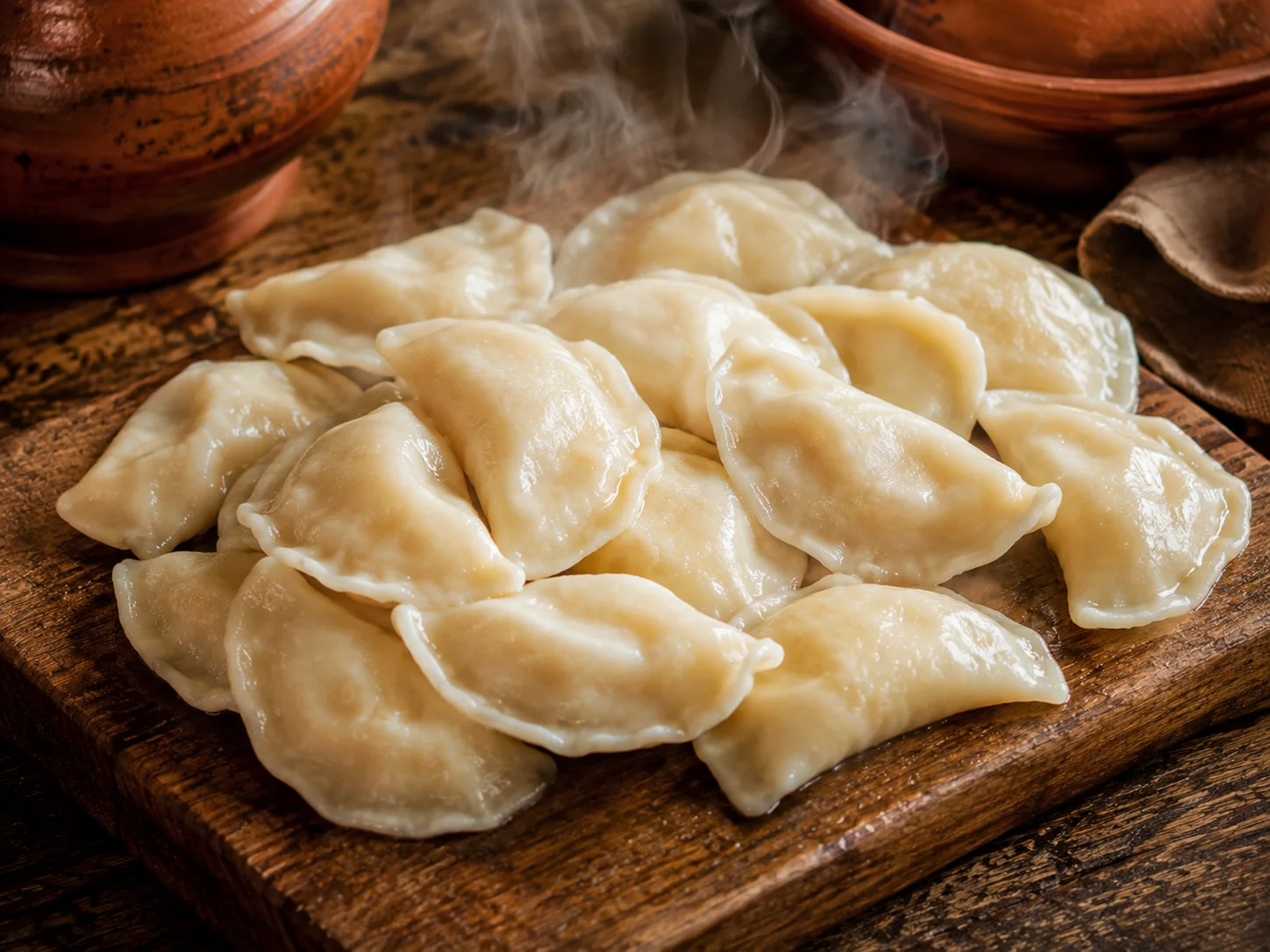
- Fill and seal. Put about a teaspoon of filling on each round, fold it into a half-moon, and pinch the edges firmly shut.⁶˒⁷ The dumplings should be small, about one bite each.⁶
- Boil. Bring a large pot of plenty of salted water to a boil, so the dumplings don’t stick together.⁶ Add them a few at a time and stir gently. Once they float, cook them for another 5–6 minutes.⁵ Lift them out with a slotted spoon.
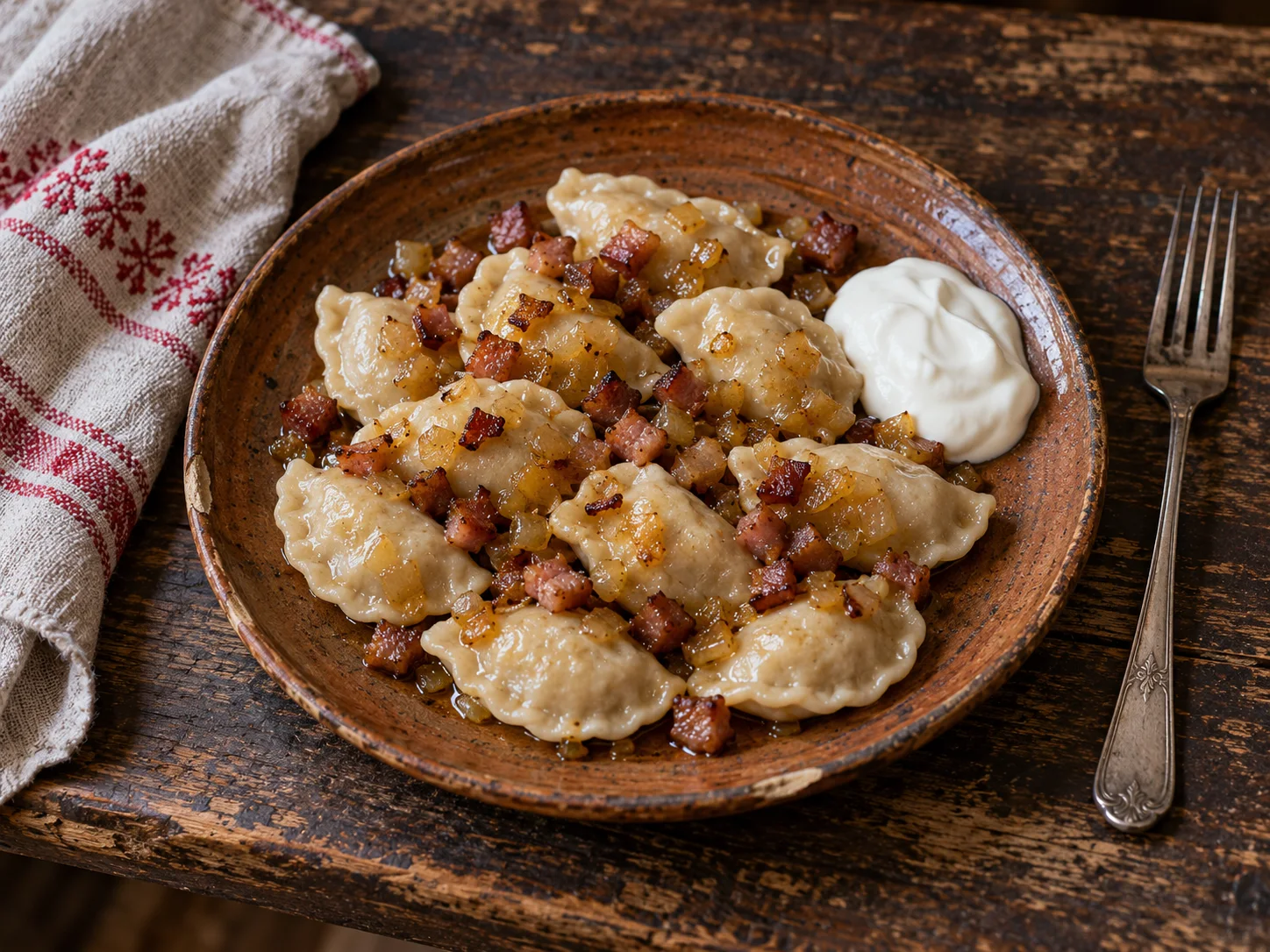
- Make the spirgučiai. While the dumplings cook, fry the bacon in a dry pan until crisp, then add the onion and cook until soft and golden.⁴
- Serve. Spoon the bacon, onion, and pan fat over the hot koldūnai and serve with sour cream,⁴˒⁶ or simply toss them in melted butter.⁵
Mushroom Koldūnai for Kūčios (Lithuanian Christmas Eve)
This meatless version follows the published Kūčios recipes: a dough of flour, very hot water, and oil, and a filling of dried wild mushrooms with onion, carrot, garlic, and thyme.⁸˒⁹ The weight of the mushrooms and the number of servings are Heritage Healthy Kitchen’s estimates.

Ingredients (Serves 6 as One of the Kūčios Dishes, About 60 Dumplings)
For the Dough
- 350 g (about 2¾ cups) all-purpose flour, plus extra for dusting
- 200 ml (¾ cup + 1 tbsp) very hot water
- 2 tbsp sunflower or rapeseed oil
- A pinch of salt
For the Filling
- 50 g (1.75 oz) dried porcini or other dried wild mushrooms, about 3 handfuls (weight is a Heritage Healthy Kitchen estimate)
- 1 medium onion, finely chopped
- 1 medium carrot, coarsely grated
- 2 garlic cloves, minced
- ½ tsp dried thyme, or a few sprigs fresh
- Salt and black pepper, to taste
- 2 tbsp sunflower or rapeseed oil, for frying
For the Topping
- 1 medium onion, sliced into rings
- 2 tbsp sunflower or rapeseed oil
Instructions
- Prepare the mushrooms. Soak the dried mushrooms in cold water overnight, then rinse them well. If you forgot, cover them with a little boiling water until they swell. Cover with fresh water and boil: a few minutes for mushrooms soaked overnight, 15–20 minutes for the quick-soaked ones. Rinse again, drain, and chop finely or put through a grinder.⁸
- Make the dough. Mix the flour, salt, and oil in a bowl, pour in the very hot water, and stir with a spoon. When the dough is cool enough to handle, knead it until soft, elastic, and not sticky. Cover and let it rest for about 30 minutes.⁸
- Make the filling. Fry the onion in the oil until soft and lightly golden. Add the carrot and a little salt and fry, stirring, then add the garlic, thyme, and mushrooms. Cook until all the liquid has evaporated, season with pepper, and let the filling cool to room temperature.⁸
- Shape. Roll the dough out thinly and cut rounds with a glass, or cut it into squares. Put a little filling on each piece and press or fold the edges closed.⁸
- Boil. Bring a pot of lightly salted water to a boil, add the dumplings one by one, and once they float, cook them for about 5 minutes more.⁸
- Serve. Fry the onion rings in the oil until golden, spoon them over the drained dumplings, and serve.⁸
Kitchen Tips
Let the dough rest. Thirty minutes under a cover relaxes it, so it rolls out thin without springing back.⁴
Seal every dumpling well. The filling goes in raw and releases juices as it cooks; a weak seam lets them out into the pot.
For a coarser filling, chop the meat and onion by hand with a very sharp knife. One recipe recommends this over a meat grinder, which crushes the ingredients.⁶
Use plenty of water and cook in batches, so the dumplings don’t stick together.⁶
For the mushroom filling, start soaking the dried mushrooms the night before; well-soaked mushrooms need only a few minutes of boiling.⁸
Nutritional Information
Pork Koldūnai, Per Serving (1 of 8, About 10–11 Dumplings with Spirgučiai and Sour Cream)
- Calories: approximately 420–510 kcal
- Protein: approximately 18–22g
- Total fat: approximately 22–26g
- Saturated fat: approximately 8–10g
- Carbohydrates: approximately 38–46g
- Dietary fiber: approximately 2g
- Sodium: approximately 560–685mg
Mushroom Koldūnai for Kūčios, Per Serving (1 of 6, with Fried Onion)
- Calories: approximately 350–425 kcal
- Protein: approximately 7–8g
- Total fat: approximately 13–16g
- Saturated fat: approximately 1g
- Carbohydrates: approximately 51–63g
- Dietary fiber: approximately 3–4g
- Sodium: approximately 245–300mg
Nutritional values are estimates based on standard ingredient databases (USDA FoodData Central), without the salt absorbed from the cooking water. They will vary with the fat content of the pork and bacon.
Storage and Reheating
Uncooked koldūnai freeze well.⁷ Freeze them in a single layer on a floured tray, then bag them. Boil them straight from frozen, adding a few minutes to the cooking time; they keep for about 2 months, a Heritage Healthy Kitchen estimate.
Cooked koldūnai keep in a covered container in the refrigerator for up to 2 days, also an estimate. Reheat them in a pan with a little fat or in simmering water, and add the toppings fresh.
Traditional Koldūnai

Ingredients
- Dough
- 400 g (about 3⅓ cups) all-purpose flour, plus extra for dusting
- 1 large egg
- 170 ml (¾ cup) lukewarm water
- ½ tsp salt
- Filling
- 450 g (1 lb) ground pork, not too lean
- ½ medium onion (about 75 g/2.5 oz), finely grated
- 1 large egg
- 1 tsp salt
- ⅛ tsp black pepper, or to taste
- 1 tsp dried marjoram, optional
- Spirgučiai and serving
- 150 g (5 oz) smoked bacon, finely diced
- 1 medium onion (about 150 g/5 oz), finely chopped
- 200 g (about ¾ cup) sour cream, for serving
Instructions
- Make the dough: Mix the flour and salt in a large bowl. Beat the egg with the lukewarm water, pour it into the flour, and knead until the dough is smooth and doesn’t stick to your hands, adding a little more flour or water if needed. Cover and let it rest for at least 30 minutes.
- Make the filling: Mix the pork with the grated onion, egg, salt, pepper, and marjoram, if using, until evenly combined.
- Roll and cut: Roll the dough out on a floured board, one portion at a time, until it is very thin, about 2–3 mm (⅛ inch). Keep the rest covered. Cut out rounds with a small glass, about 5–6 cm (2–2½ inches) across, a Heritage Healthy Kitchen estimate.
- Fill and seal: Put about a teaspoon of filling on each round, fold it into a half-moon, and pinch the edges firmly shut. The dumplings should be small, about one bite each.
- Boil: Bring a large pot of plenty of salted water to a boil, so the dumplings don’t stick together. Add them a few at a time and stir gently. Once they float, cook them for another 5–6 minutes. Lift them out with a slotted spoon.
- Make the spirgučiai: While the dumplings cook, fry the bacon in a dry pan until crisp, then add the onion and cook until soft and golden.
- Serve: Spoon the bacon, onion, and pan fat over the hot koldūnai and serve with sour cream, or simply toss them in melted butter.
Mushroom Koldūnai for Kūčios
Ingredients
- Dough
- 350 g (about 2¾ cups) all-purpose flour, plus extra for dusting
- 200 ml (¾ cup + 1 tbsp) very hot water
- 2 tbsp sunflower or rapeseed oil
- A pinch of salt
- Filling
- 50 g (1.75 oz) dried porcini or other dried wild mushrooms, about 3 handfuls (weight is a Heritage Healthy Kitchen estimate)
- 1 medium onion, finely chopped
- 1 medium carrot, coarsely grated
- 2 garlic cloves, minced
- ½ tsp dried thyme, or a few sprigs fresh
- Salt and black pepper, to taste
- 2 tbsp sunflower or rapeseed oil, for frying
- Topping
- 1 medium onion, sliced into rings
- 2 tbsp sunflower or rapeseed oil
Instructions
- Prepare the mushrooms: Soak the dried mushrooms in cold water overnight, then rinse them well. If you forgot, cover them with a little boiling water until they swell. Cover with fresh water and boil: a few minutes for mushrooms soaked overnight, 15–20 minutes for the quick-soaked ones. Rinse again, drain, and chop finely or put through a grinder.
- Make the dough: Mix the flour, salt, and oil in a bowl, pour in the very hot water, and stir with a spoon. When the dough is cool enough to handle, knead it until soft, elastic, and not sticky. Cover and let it rest for about 30 minutes.
- Make the filling: Fry the onion in the oil until soft and lightly golden. Add the carrot and a little salt and fry, stirring, then add the garlic, thyme, and mushrooms. Cook until all the liquid has evaporated, season with pepper, and let the filling cool to room temperature.
- Shape: Roll the dough out thinly and cut rounds with a glass, or cut it into squares. Put a little filling on each piece and press or fold the edges closed.
- Boil: Bring a pot of lightly salted water to a boil, add the dumplings one by one, and once they float, cook them for about 5 minutes more.
- Serve: Fry the onion rings in the oil until golden, spoon them over the drained dumplings, and serve.
Frequently Asked Questions
How are koldūnai different from cepelinai and kibinai?
They are three different dishes. Cepelinai are large dumplings made from grated potato, and kibinai are baked pastries made from a yeast or shortcrust dough. Koldūnai are small dumplings of plain flour dough, boiled in water.
What are spirgučiai?
Fried bits of smoked bacon or pork fat, usually cooked with onion. With sour cream, they are the standard topping for meat koldūnai.⁴˒⁶
Why shouldn’t you cut koldūnai open?
Because the filling goes in raw, it releases juices as it cooks, and they stay sealed inside the dough. Cutting a dumpling lets them run out, which is why koldūnai are made one bite in size.⁶ In some places they are still eaten with a teaspoon so none of the broth is lost.²
Can I use other kinds of meat?
Yes. Published recipes use beef mixed with pork or lamb, chicken, and game such as venison or wild boar.⁵˒⁶˒⁷ Leaner meat gives a drier filling.
Why is there no egg or butter in the Kūčios version?
The Kūčios recipes make the dough from flour, hot water, and oil, fry the filling in oil, and top the dumplings with onion fried in oil rather than sour cream.⁸˒⁹
Can koldūnai be frozen?
Yes. Freeze the shaped, uncooked dumplings and boil them straight from the freezer.⁷
Looking for a Lighter Version?
The healthy koldūnai recipe keeps the same shape and boiling method, with a leaner filling, part whole wheat dough, less bacon, and yogurt instead of sour cream.
Further Reading & Sources
The recipe is a compilation based on the published recipes listed here; these links are provided for readers who want to explore further.
- “10 Foods that Represent Vilnius.” Go Vilnius, the official tourism agency of Vilnius, no author or date given. govilnius.lt
- Vedeikaitė, Ugnė. “The Return of Tradition: Why Lithuania Is Falling in Love With Dumplings Again.” Falstaff, 26 May 2026. falstaff.com
- “National dishes.” Karaims of Lithuania, the Lithuanian Karaim cultural community, no author or date given. karaim.eu
- Nicholson, Beata. “Viduklės koldūnai.” Beatos virtuvė, 27 October 2012. beatosvirtuve.lt
- Šilbajoris, Alex. “Making Koldunai.” Draugas News, 15 March 2015. draugas.org
- “Dailininko A. Vozbino koldūnai su mėsa.” TV3.lt, recipe from Valstietis.lt, no date given. tv3.lt
- Valerija. “Receptas. Labai paprasti koldūnai.” TV3.lt, recipe from Gaspadine.lt, 16 February 2022. tv3.lt
- Veličkienė, Jolanta. “Ant Kūčių vakarienės stalo – virtiniai su grybais.” Trakų žemė, 21 December 2023. traku-zeme.lt
- “„Beatos virtuvėje“ – senovinis receptas Kūčių stalui: traškios auselės su grybais lyg iš krosnies.” LRT.lt, Beatos virtuvė, 16 December 2022. lrt.lt
- Lideikytė, Viktorija. “Larisos Kalpokaitės Kūčių stalo pažiba – grybų auselės pagal Molėtų krašto receptą.” LRT.lt, 20 December 2023. lrt.lt
Disclaimer
The information in this article is provided for educational and informational purposes only. Heritage Healthy Kitchen makes no representations or warranties regarding the accuracy or completeness of any content on this site. Nutritional values are estimates only and will vary depending on the specific ingredients, brands, and measurements used. This content is not intended as dietary, medical, or professional nutritional advice. Always consult a qualified healthcare provider regarding any dietary needs or health conditions. Heritage Healthy Kitchen is not responsible for any outcomes resulting from the use of recipes or information published on this site.
Cook by Occasion
The mushroom koldūnai are part of our Kūčios menu.
You Might Also Like
More heritage recipes from our kitchen

Leave a Reply