

Active time: about 1 hour | Total time: about 1 hour 45 minutes | Serves: 6 (about 50 dumplings) | Difficulty: Medium
Quick Overview
- Make a dough from whole wheat and all-purpose flour, the same way as the traditional recipe
- Mix a filling of lean ground beef, shredded cabbage, and onion
- Roll, fill, and boil the dumplings exactly as in the traditional method
- Cut the bacon back sharply and bulk the topping out with extra onion and a little olive oil
- Serve with plain Greek yogurt instead of sour cream
What This Version Changes — and What It Keeps
The shape, the filling ratio, and the boiling method stay exactly as they are in the traditional recipe: a thin dough folded around a filling and boiled in salted water rather than fried. That cooking method was already the lightest part of the dish, so there was nothing to fix there.
What changes is the weight the dish carries on top of that base. A leaner, vegetable-stretched filling, a fraction of the bacon, part of the flour swapped for whole wheat, and plain Greek yogurt standing in for sour cream bring the saturated fat and sodium down substantially, while the dish stays recognizably the same recipe.
Why These Swaps Work
The dough uses half whole wheat flour and half all-purpose. Whole wheat flour keeps the bran and germ that milling strips out of white flour, which is where most of a grain’s fiber lives; diets built around whole grains rather than refined ones are linked to a lower risk of heart disease and type 2 diabetes.1 A dough made entirely of whole wheat flour tends to be denser and more prone to tearing, since whole wheat flour develops less gluten structure than refined white flour once the bran is mixed in. This version splits the difference: enough whole wheat to add real fiber, enough all-purpose to keep the dough workable.
The filling swaps in lean ground beef and folds in shredded cabbage. Red meat is one of the main dietary sources of saturated fat, and choosing a leaner cut is one of the most direct ways to bring that number down without changing the dish’s character.2,3 Ninety-three percent lean ground beef in place of a standard, fattier blend cuts the fat by more than half, and the cabbage stretches the filling further on less meat while adding fiber and volume that meat alone doesn’t supply.4
On top, the bacon drops to a fraction of what the traditional recipe uses, backed up by extra onion and a little olive oil. Bacon falls squarely into the processed meat that Harvard’s own Healthy Eating Plate recommends limiting or avoiding, and it’s the single largest source of both saturated fat and sodium in the traditional recipe.5 Cutting it from 150 grams to 50 grams removes most of that load while keeping enough smokiness to notice. The extra onion and a spoonful of olive oil fill out the volume the bacon fat used to provide, without the same saturated fat cost.2
Sour cream gives way to plain Greek yogurt. Harvard’s Nutrition Source specifically recommends substituting plain yogurt for sour cream, and the two make a close swap in texture and tang.6 Straining removes much of the water and lactose from yogurt while concentrating its protein.7 Gram for gram, standard nutrition data for both puts plain nonfat Greek yogurt at close to four times the protein of regular sour cream and a small fraction of the fat.
Salt drops throughout the recipe too. With most of the bacon gone, the dish no longer needs as much salt elsewhere to taste balanced, so both the dough and the filling use half the salt of the traditional recipe. Excess sodium is linked to high blood pressure and heart disease, and current guidance caps healthy adults at 2,300 milligrams a day.8
Healthy Recipe
This recipe was developed independently by Heritage Healthy Kitchen; the sources cited throughout support the specific health claims made about each swap.
Ingredients (Serves 6, About 50 Dumplings)

For the Dough
- 250g (2 cups) whole wheat flour
- 250g (2 cups) all-purpose flour, plus extra for dusting
- 1 large egg
- 250ml (1 cup) warm water
- ½ tsp salt
For the Filling
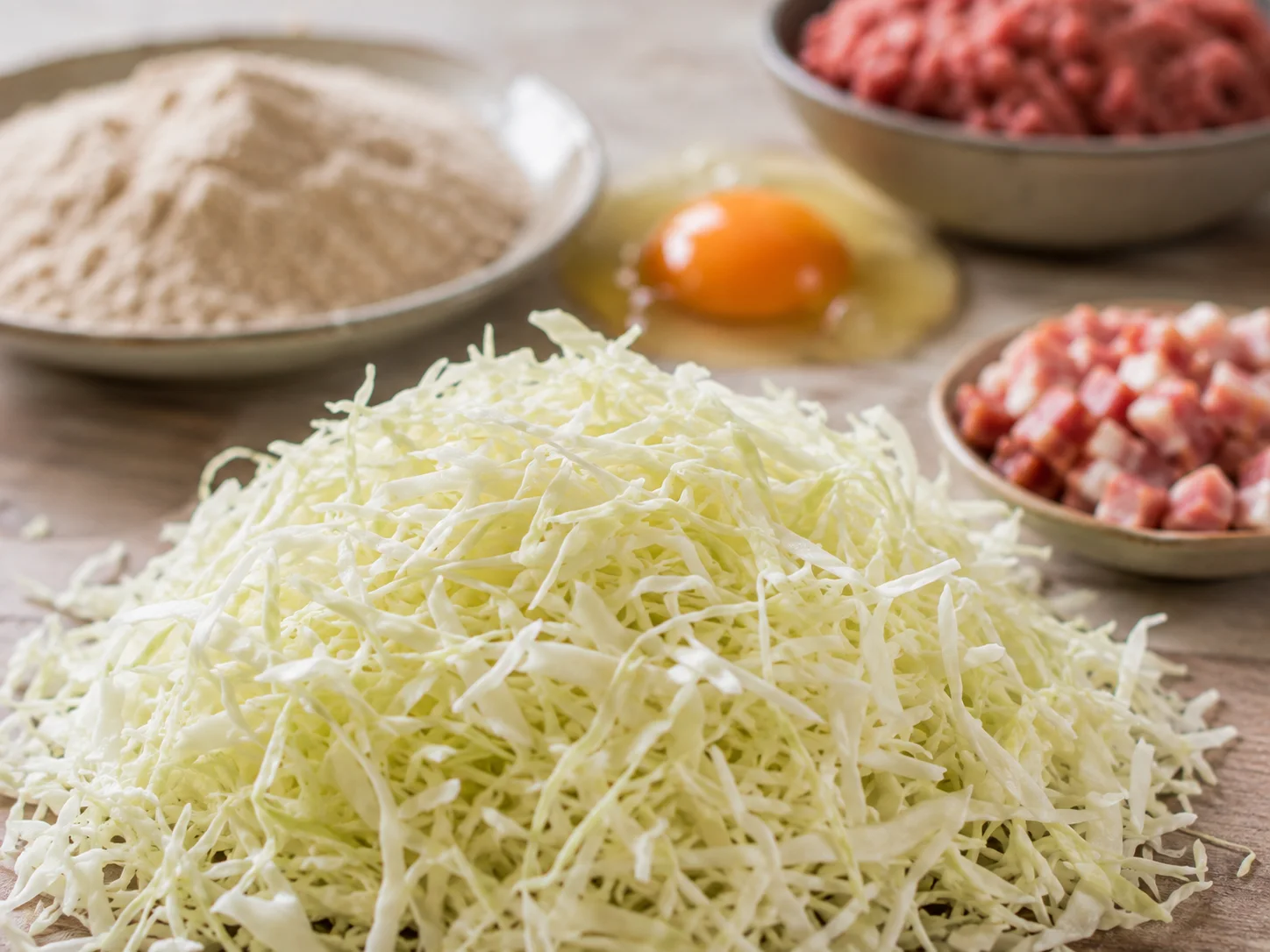
- 400g (14 oz) lean ground beef (93% lean or leaner)
- 100g (3.5 oz) cabbage, finely shredded
- 1 large onion, finely grated or minced
- ½ tsp salt
- ½ tsp black pepper
- 2 tbsp cold water
For the Topping
- 50g (1.75 oz) bacon, diced small
- 2 onions, finely chopped
- 1 tbsp olive oil
To Serve
- Plain nonfat or low-fat Greek yogurt (about 180ml/¾ cup total)
Instructions

- Make the dough. Whisk both flours and the salt together in a large bowl. Make a well in the center, add the egg and warm water, and bring together into a rough dough. Knead by hand for 8–10 minutes; a whole wheat blend takes a little longer to smooth out and feels coarser than an all-white-flour dough. Cover and rest for 30 minutes.
- Make the filling. Combine the ground beef, shredded cabbage, grated onion, salt, pepper, and cold water in a bowl. Mix thoroughly by hand.
- Roll and cut. Divide the rested dough into 2–3 pieces. Roll each piece out thinly, about 2mm, and cut rounds roughly 6cm (2½ inches) across.
- Fill and seal. Place a small teaspoon of filling in the center of each round. Fold into a half-moon and pinch the curved edge firmly shut along its full length.
- Boil. Bring a large pot of generously salted water to a boil. Drop the dumplings in a few at a time, stirring gently. Cook for 5–7 minutes from when they rise to the surface.
- Make the topping. Heat the olive oil in a pan, add the bacon, and fry until crisp. Add the chopped onion and cook until softened and lightly golden.
- Serve. Drain the dumplings and divide among bowls. Spoon the bacon and onion over the top, and finish with a spoonful of plain Greek yogurt.
Variation: Mushroom or Curd Cheese Filling
The same lighter swaps apply here: the whole wheat and all-purpose flour dough above works for either filling, and both are finished with Greek yogurt rather than sour cream where sour cream would traditionally go.
Mushroom Filling (For the Same Batch of Dough)
- 40g (1.4 oz) dried wild mushrooms, such as porcini
- 2 onions, finely chopped
- 1 tbsp olive oil
- Salt and pepper, to taste
Curd Cheese Filling (For the Same Batch of Dough)
- 500g (1.1 lb) low-fat curd cheese (tvorog)
- 1 egg yolk
- ½ tsp salt
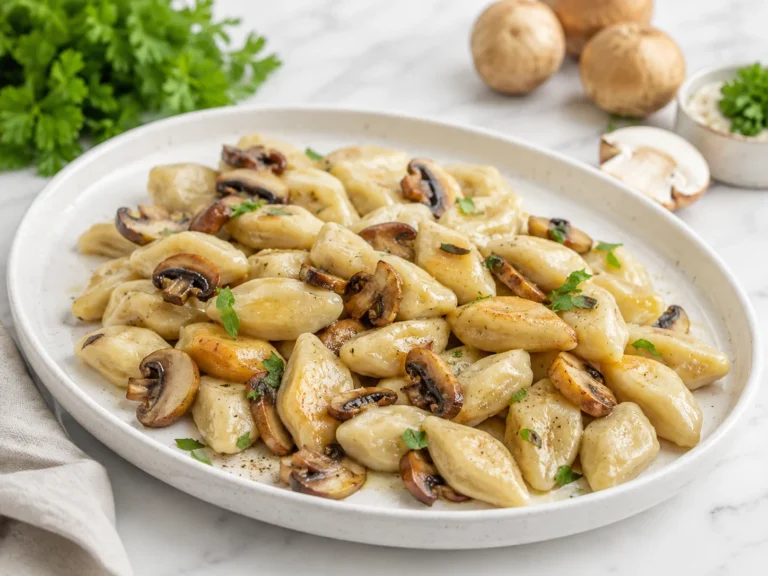
For the mushroom filling: soak the dried mushrooms in warm water for 30 minutes, then drain and chop finely. Heat the olive oil in a pan, add the onion, and cook until soft. Stir in the mushrooms and cook a few minutes more. Season with salt and pepper, then cool completely before filling. Using oil instead of butter here follows the same logic as the topping above: a lighter source of fat for a similar result.2
For the curd cheese filling: combine the curd cheese, egg yolk, and salt in a bowl, mixing until smooth. Choosing a low-fat curd cheese trims some of the saturated fat that full-fat dairy carries, without changing how the filling behaves once sealed inside the dough.2
Fill, seal, and boil exactly as with the meat version above. Finish mushroom-filled koldūnai with a light drizzle of olive oil or a little melted butter, and cheese-filled ones with a spoonful of plain Greek yogurt.
Nutritional Comparison
| Nutrient (per serving) | Traditional | This Version |
|---|---|---|
| Calories | 660–800 kcal | 465–570 kcal |
| Protein | 25–31g | 27–33g |
| Total fat | 33–40g | 12–14g |
| Saturated fat | 13–16g | 4–5g |
| Carbohydrates | 63–77g | 64–78g |
| Dietary fiber | 3g | 7–9g |
| Sodium | 305–375mg | 141–172mg |
Values for this version are estimates calculated the same way as the traditional recipe’s: from the specific ingredient quantities used here, with standard reference values and a margin for variation in the exact products used.
The biggest shift is in saturated fat and sodium, both driven mostly by the topping. Less bacon, no butter-based sauce, and Greek yogurt instead of sour cream take saturated fat down by roughly two-thirds, and a single serving now falls comfortably under half of the American Heart Association’s daily limit rather than sitting at or above it.3 Fiber more than doubles, thanks to the whole wheat flour and the cabbage folded into the filling, neither of which the traditional recipe includes at all.
Storage and Reheating
Store cooked koldūnai in an airtight container in the refrigerator for up to 3 days, without the yogurt.
Reheat by pan-frying briefly in a little olive oil, or by microwaving until hot through. Add the bacon-onion topping and yogurt fresh each time.
Uncooked dumplings freeze well. Arrange them in a single layer on a floured tray until solid, then transfer to a freezer bag for up to 2 months. Boil straight from frozen, adding 2–3 minutes to the cooking time.
Healthy Koldūnai

Ingredients
Ingredients (Serves 6, About 50 Dumplings)
- 250g (2 cups) whole wheat flour
- 250g (2 cups) all-purpose flour, plus extra for dusting
- 1 large egg
- 250ml (1 cup) warm water
- ½ tsp salt
For the Filling
- 400g (14 oz) lean ground beef (93% lean or leaner)
- 100g (3.5 oz) cabbage, finely shredded
- 1 large onion, finely grated or minced
- ½ tsp salt
- ½ tsp black pepper
- 2 tbsp cold water
For the Topping
- 50g (1.75 oz) bacon, diced small
- 2 onions, finely chopped
- 1 tbsp olive oil
To Serve
- Plain nonfat or low-fat Greek yogurt (about 180ml/¾ cup total)
Variation: Mushroom or Curd Cheese Filling
- 40g (1.4 oz) dried wild mushrooms, such as porcini
- 2 onions, finely chopped
- 1 tbsp olive oil
- Salt and pepper, to taste
Curd Cheese Filling (For the Same Batch of Dough)
- 500g (1.1 lb) low-fat curd cheese (tvorog)
- 1 egg yolk
- ½ tsp salt
Instructions
- Make the dough. Whisk both flours and the salt together in a large bowl. Make a well in the center, add the egg and warm water, and bring together into a rough dough. Knead by hand for 8–10 minutes; a whole wheat blend takes a little longer to smooth out and feels coarser than an all-white-flour dough. Cover and rest for 30 minutes.
- Make the filling. Combine the ground beef, shredded cabbage, grated onion, salt, pepper, and cold water in a bowl. Mix thoroughly by hand.
- Roll and cut. Divide the rested dough into 2–3 pieces. Roll each piece out thinly, about 2mm, and cut rounds roughly 6cm (2½ inches) across.
- Fill and seal. Place a small teaspoon of filling in the center of each round. Fold into a half-moon and pinch the curved edge firmly shut along its full length.
- Boil. Bring a large pot of generously salted water to a boil. Drop the dumplings in a few at a time, stirring gently. Cook for 5–7 minutes from when they rise to the surface.
- Make the topping. Heat the olive oil in a pan, add the bacon, and fry until crisp. Add the chopped onion and cook until softened and lightly golden.
- Serve. Drain the dumplings and divide among bowls. Spoon the bacon and onion over the top, and finish with a spoonful of plain Greek yogurt.
Frequently Asked Questions
Does this taste noticeably different from the traditional version?
The dumpling itself is close, since the dough, shape, and boiling method are unchanged. The biggest difference is on top: less bacon and yogurt instead of sour cream both come through in the first bite, though the lean beef and extra onion carry enough flavor that the dish still reads clearly as koldūnai.
Why not cut the bacon completely instead of just reducing it?
A little goes a long way for flavor, and cutting it entirely would mean losing the smoky note that’s part of the dish’s character. Fifty grams split across six servings is a modest amount per portion, and it’s the drop from 150 grams that does most of the work in bringing saturated fat down.5
Can ground turkey or chicken replace the lean beef?
Yes, and either would lower saturated fat further; Harvard’s Healthy Eating Plate guidance favors poultry over red meat for that reason.5 The filling may need an extra pinch of salt or pepper, since poultry has a milder flavor than beef.
Will regular yogurt work instead of Greek yogurt?
It will, though the result will be thinner and tangier, since regular yogurt hasn’t been strained the way Greek yogurt has.7 Look for a plain, unsweetened variety either way.
Can the dough be made entirely with whole wheat flour?
Yes, though it turns denser and more prone to tearing, which is why this recipe splits it evenly with all-purpose flour. A fully whole wheat dough holds together better if rolled slightly thicker than usual.
Do the same swaps apply to the mushroom and curd cheese variation?
Yes. It uses the same lighter dough, olive oil in place of butter, low-fat curd cheese instead of full-fat, and Greek yogurt for the cheese-filled version.
Can this version be made ahead and frozen?
Yes, the same way as the traditional recipe: freeze the shaped, uncooked dumplings on a tray before bagging them, and boil straight from frozen rather than thawing first.
Is this version suitable for someone watching their sodium intake?
It’s meaningfully lower in sodium than the traditional recipe, but it isn’t built as a dedicated low-sodium dish on its own, since the remaining bacon, added salt, and salted boiling water all still contribute.8 Cutting the bacon further or salting the boiling water more lightly would bring it down further for anyone tracking sodium closely.
Which filling ends up lightest: meat, mushroom, or curd cheese?
Mushroom is naturally the leanest of the three, since it has no meat or bacon at all once finished with a drizzle of oil rather than butter. Curd cheese falls somewhere between the two, depending on how low-fat a variety is used.
More Traditional Koldūnai
This is the lighter counterpart to Heritage Healthy Kitchen’s Traditional Koldūnai article, which covers the dish’s history, the classic recipe, and its own mushroom and curd cheese variation in full.
Further Reading & Sources
The following sources support the specific health claims behind each swap in this recipe.
- “How important are whole grains in my diet?” Harvard Health Publishing. health.harvard.edu — whole wheat flour as a whole grain, its fiber content relative to refined white flour, and the association between whole-grain diets and lower risk of heart disease and type 2 diabetes.
- “Fats and Cholesterol.” The Nutrition Source, Harvard T.H. Chan School of Public Health. nutritionsource.hsph.harvard.edu — red meat and full-fat dairy as major dietary sources of saturated fat, and healthy oils as a lower-saturated-fat alternative to butter.
- “Saturated Fats.” American Heart Association. heart.org — the recommendation to choose lean meats and the daily saturated fat limit of about 13 grams.
- “Vegetables and Fruits.” The Nutrition Source, Harvard T.H. Chan School of Public Health. nutritionsource.hsph.harvard.edu — vegetables as a source of fiber and nutrients within an overall healthy diet.
- “Healthy Eating Plate.” The Nutrition Source, Harvard T.H. Chan School of Public Health. nutritionsource.hsph.harvard.edu — the guidance to limit red meat and avoid processed meats such as bacon and sausage.
- “Yogurt.” The Nutrition Source, Harvard T.H. Chan School of Public Health. nutritionsource.hsph.harvard.edu — the specific recommendation to substitute plain yogurt for sour cream in recipes.
- “Greek yogurt: Health benefits, protein content, and how to choose the best option.” Harvard Health Publishing. health.harvard.edu — how straining concentrates Greek yogurt’s protein and fat relative to unstrained dairy products.
- “Salt and Sodium.” The Nutrition Source, Harvard T.H. Chan School of Public Health. nutritionsource.hsph.harvard.edu — the link between excess sodium and high blood pressure and heart disease, and the recommended daily sodium limit.
Disclaimer
The information in this article is provided for educational and informational purposes only. Heritage Healthy Kitchen makes no representations or warranties regarding the accuracy or completeness of any content on this site. Nutritional values are estimates only and will vary depending on the specific ingredients, brands, and measurements used. This content is not intended as dietary, medical, or professional nutritional advice. Always consult a qualified healthcare provider regarding any dietary needs or health conditions. Heritage Healthy Kitchen is not responsible for any outcomes resulting from the use of recipes or information published on this site.
You Might Also Like
More heritage recipes from our kitchen



Leave a Reply