
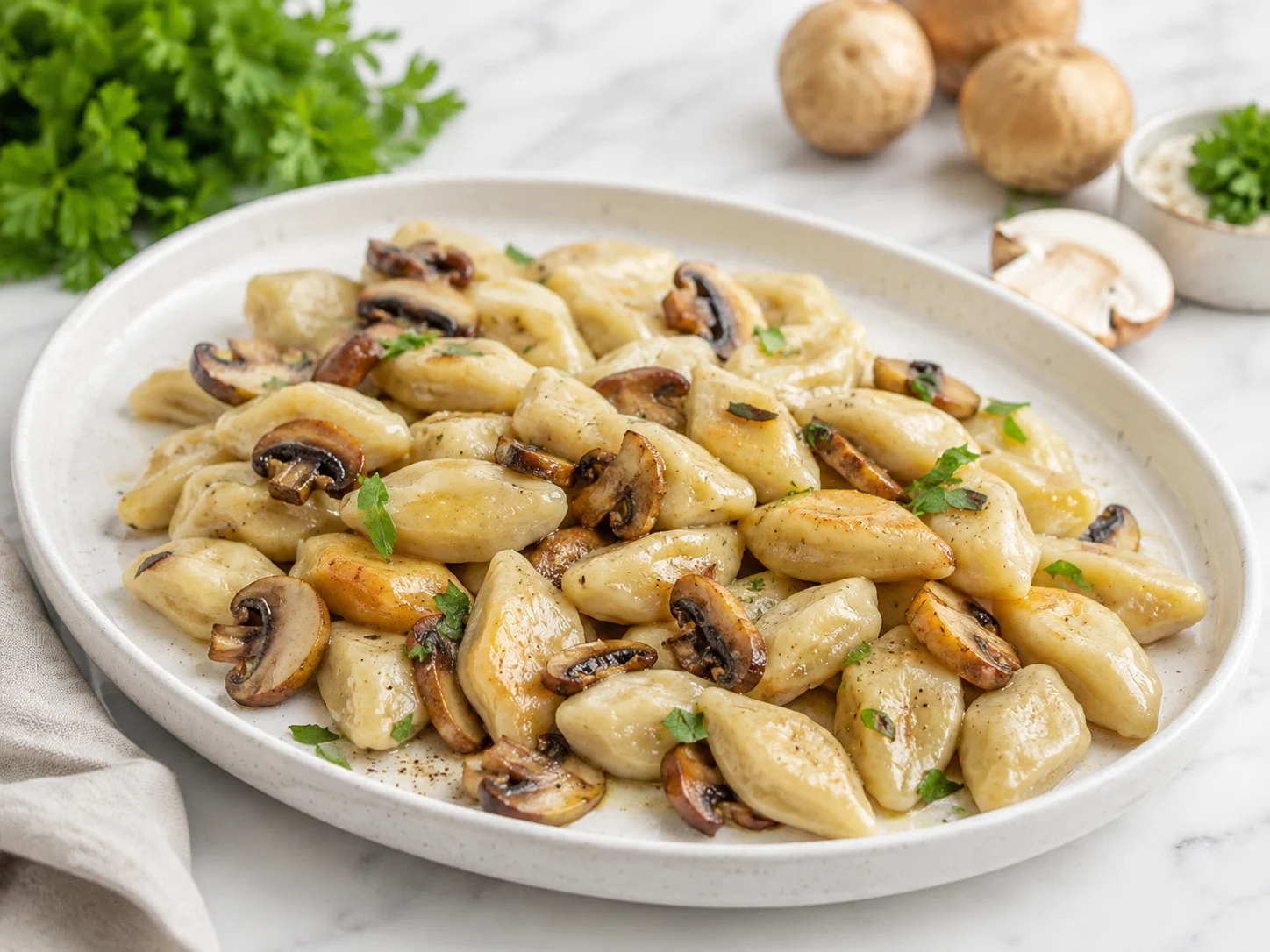
Prep time: 25 minutes | Cook time: 30 minutes | Serves: 8 | Difficulty: Easy
Quick Overview
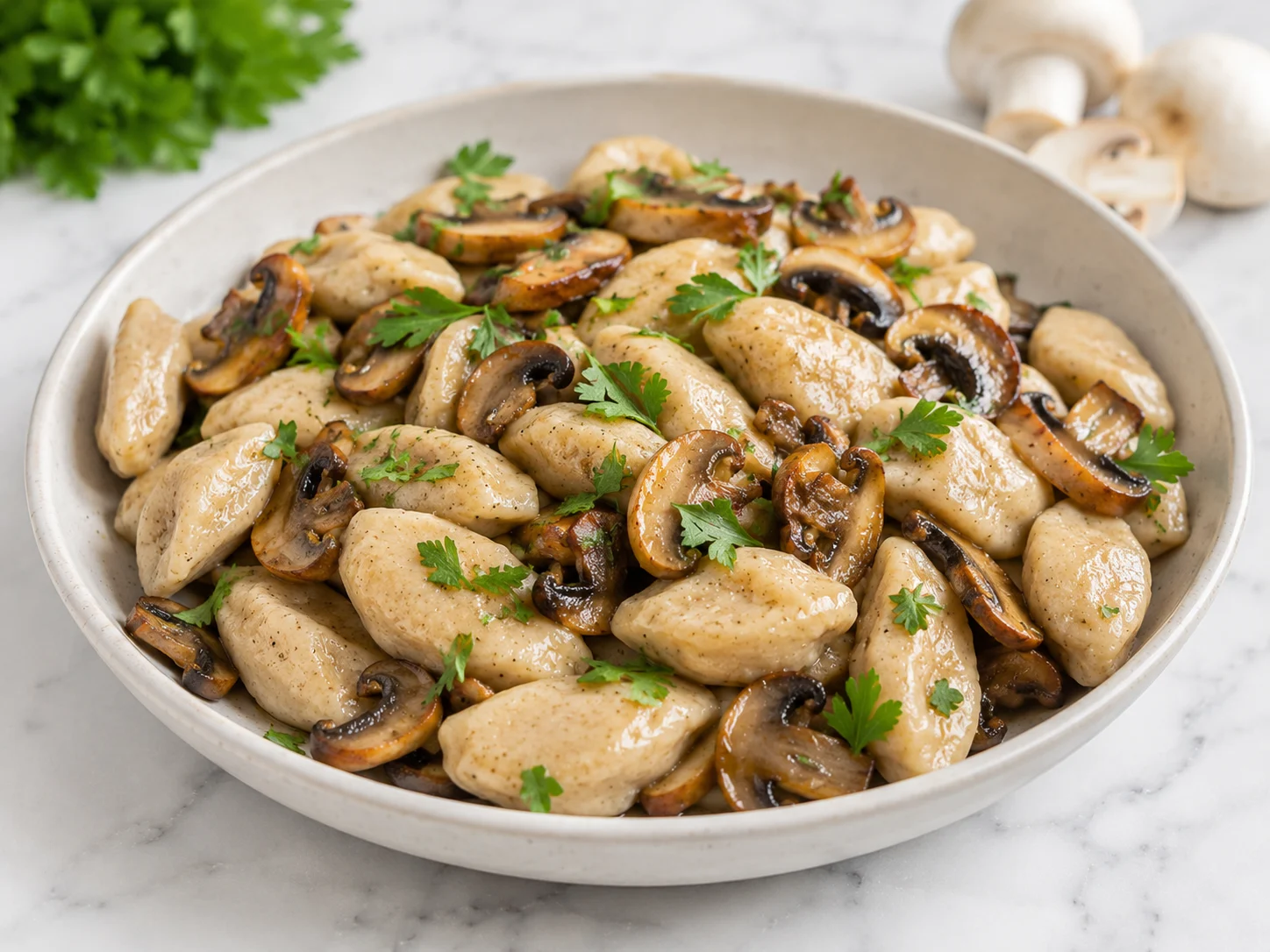
- Boil potatoes whole in their skins until tender, then peel and rice them while still warm
- Sprinkle in whole wheat and all-purpose flour with egg and salt, and fold into a soft dough
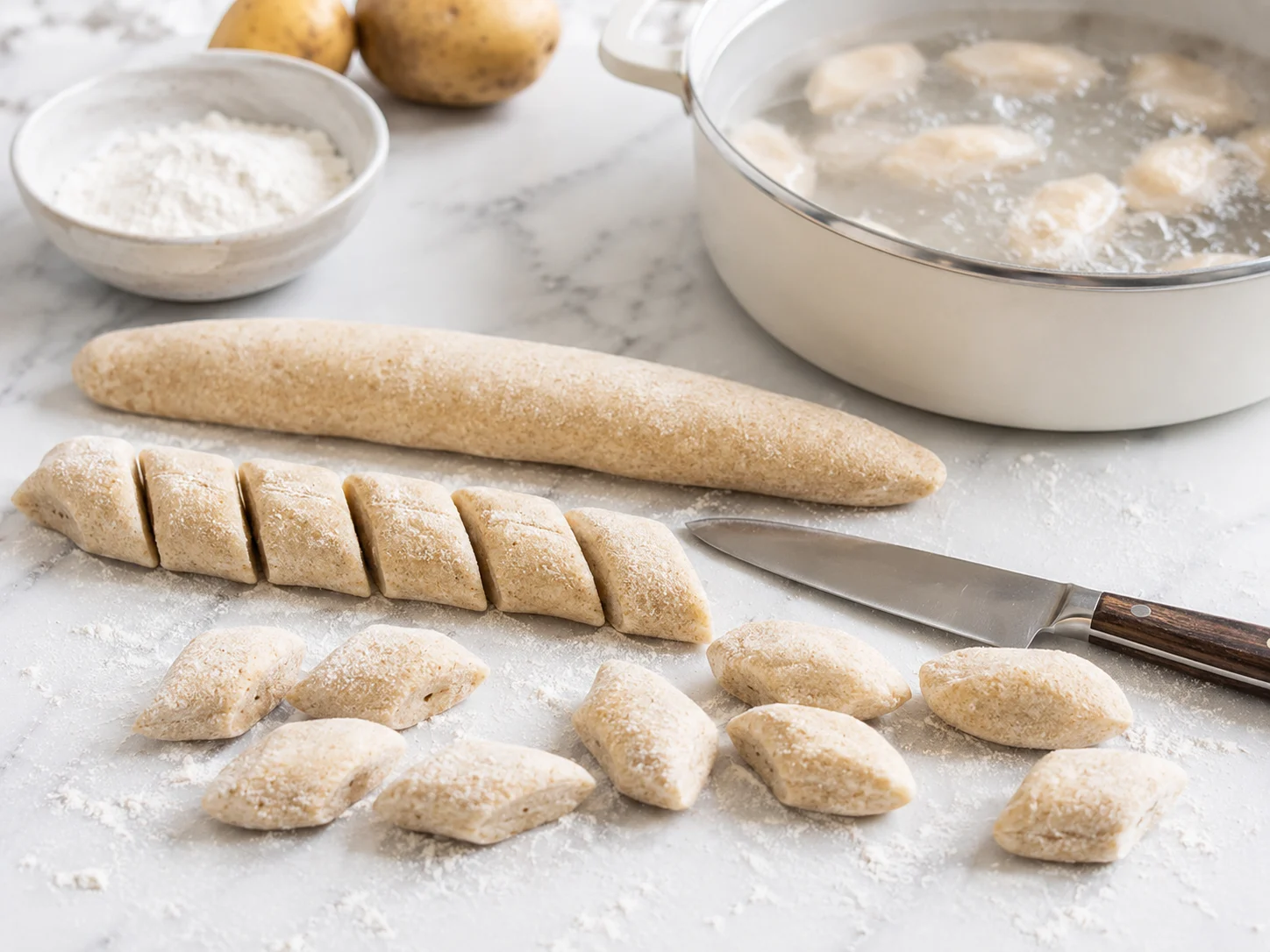
- Roll into ropes and cut on the diagonal into small hoof-shaped pieces, then boil until they float
- Sauté onion and mushrooms in olive oil while the kopytka cook
- Toss the drained kopytka with the mushroom topping, finish with fresh dill, and serve immediately
What This Version Changes — and What It Keeps
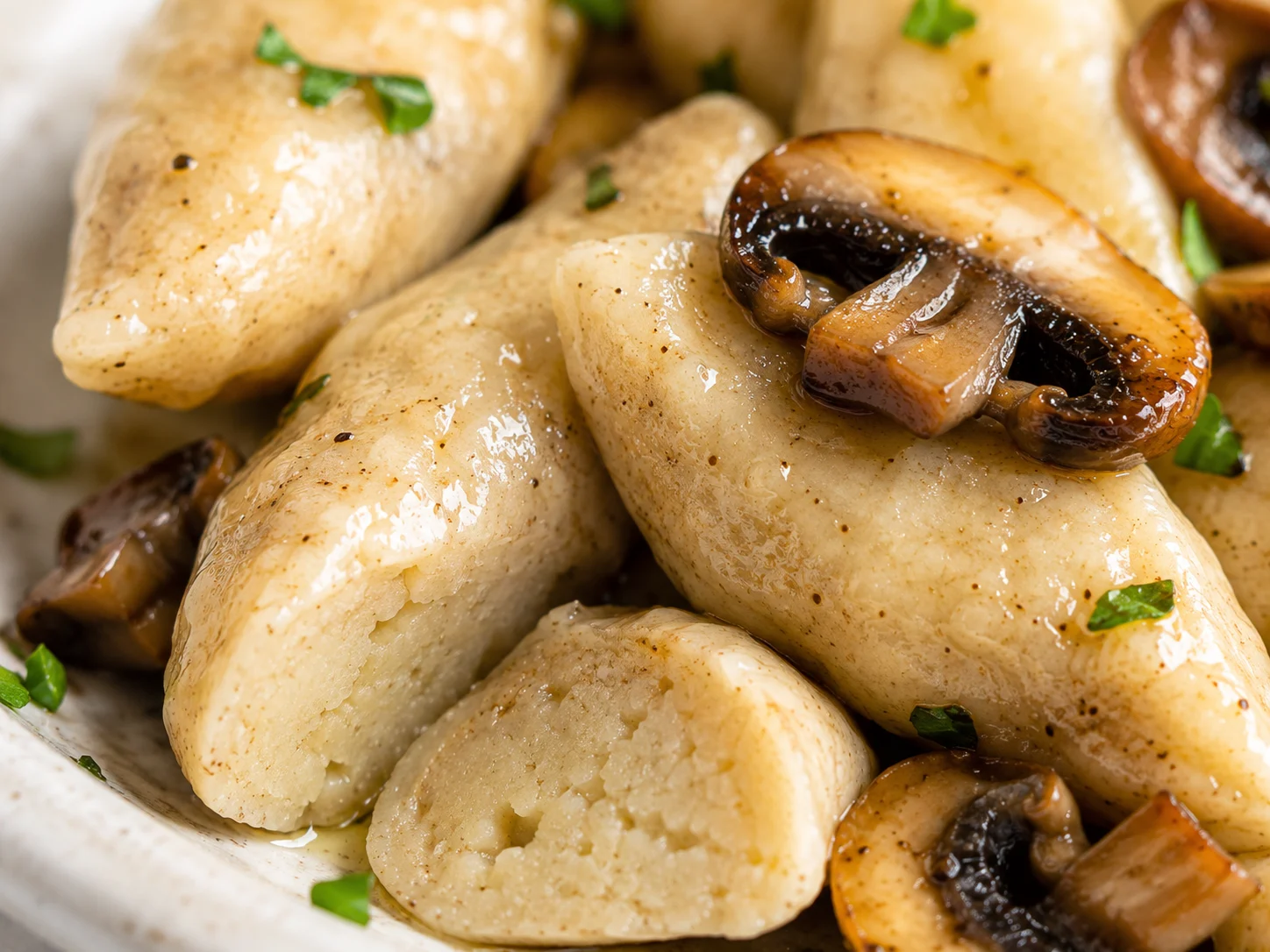
Kopytka’s calorie and fat profile comes almost entirely from two places: the flour and the topping. The potato itself is not the problem — fresh potato is close to fat-free and contributes meaningful potassium and fiber, especially when boiled in its skin the way this recipe already does.1 The potato, the egg, the basic ratio, and the boiling method all stay exactly as they are in the traditional recipe.
What changes is targeted. Half the flour becomes whole wheat. The butter-and-breadcrumb topping becomes a sautéed mushroom and olive oil topping. Added salt is reduced. Nothing about the shaping, the boiling, or the amount of potato is touched — this is still kopytka, just built with a few different building blocks.
Why These Swaps Work
Swapping half the flour for whole wheat matters because of what refining removes. Milling strips away the bran and germ and leaves only the starchy endosperm, which takes out more than half of wheat’s B vitamins, about 90 percent of its vitamin E, and nearly all of its fiber.2 That fiber isn’t cosmetic — bran slows the breakdown of starch into glucose, producing a steadier blood sugar response instead of a sharp spike, and in the Harvard-based Nurses’ Health Study, women who ate 2 to 3 servings of whole grains daily were 30% less likely to have a heart attack or die from heart disease over a 10-year period than women who ate less than one serving a week.2 A full swap to 100% whole wheat makes the dough noticeably denser, so this recipe uses a 50/50 blend.
Replacing butter and breadcrumbs with sautéed mushrooms and olive oil addresses the biggest single source of saturated fat in the dish. Butter is about 60% saturated fat; olive oil is about 13% saturated and mostly monounsaturated fat instead, the kind linked to lower LDL cholesterol and reduced heart disease risk when it replaces saturated fat.3 Mushrooms add volume and flavor for very little cost: a cup of cremini mushrooms runs about 15 calories with roughly 2 grams of protein and nearly a gram of fiber, and they’re naturally low in sodium and fat.4 Cleveland Clinic dietitian Joyce Prescott notes that substituting mushrooms for meat or heavier ingredients keeps the nutrients and flavor while cutting calories, sodium, and cholesterol.4 Sautéed until browned in a small amount of olive oil, they bring the same savory weight that browned butter does, without carrying nearly as much saturated fat.
Cutting the added salt roughly in half addresses sodium specifically, which the fat and flour swaps don’t touch. The American Heart Association recommends no more than 2,300 milligrams of sodium a day, with 1,500 milligrams as the more protective target for most adults, and notes that the salt shaker is a minor contributor next to sodium already baked into packaged and restaurant food — more than 70% of the sodium Americans eat comes from those sources, not home cooking.5 A homemade dish like kopytka already starts from a lower sodium baseline than packaged food, and trimming the added salt keeps that advantage intact.
Healthy Kopytka Recipe
Recipe developed independently by Heritage Healthy Kitchen. Sources for further reading are listed at the end of this article.
Ingredients
For the dough
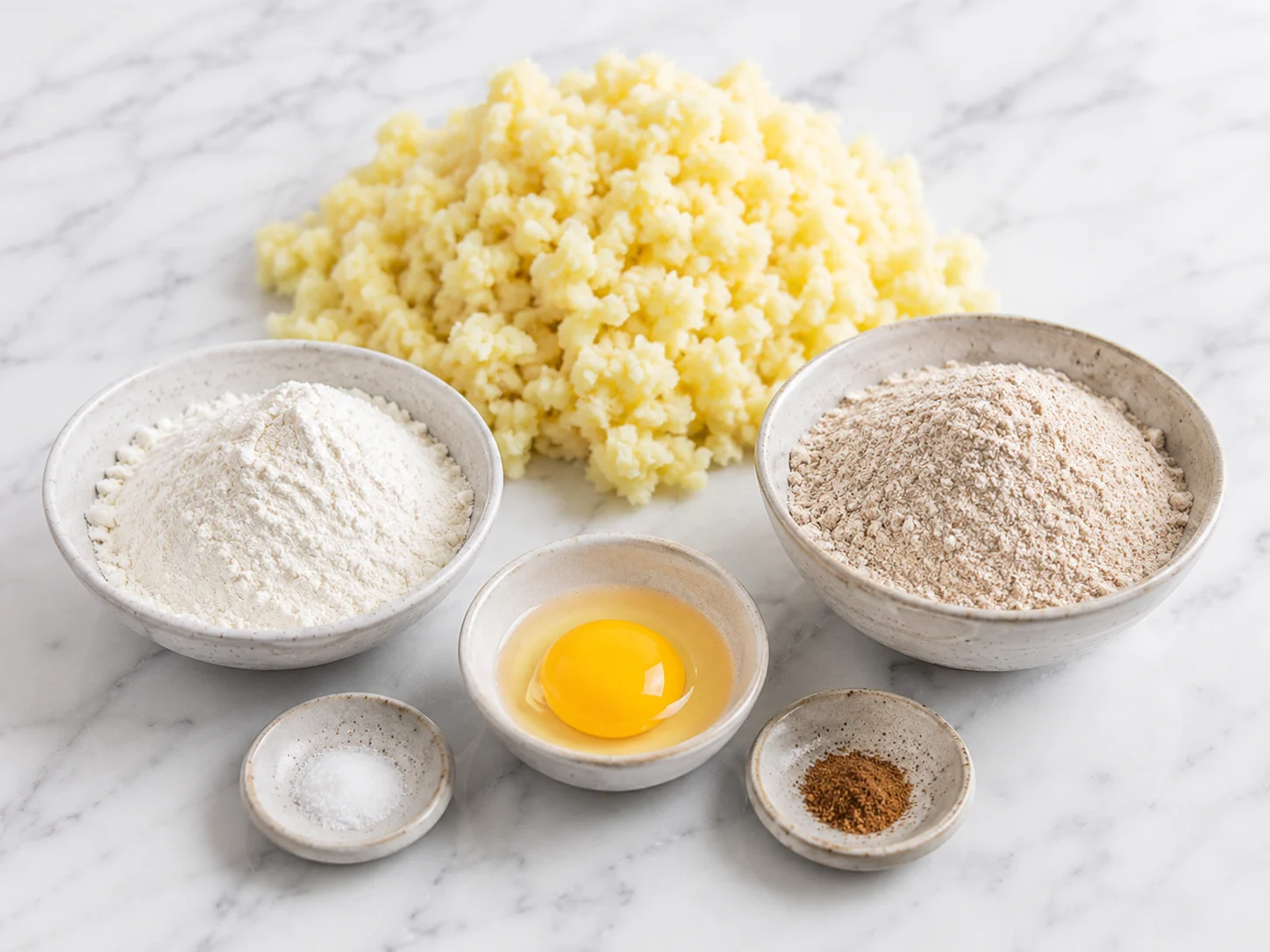
- 1 kg (2.2 lbs) starchy potatoes (Russet or similar), boiled in their skins and riced while warm
- 150g (about 1¼ cups) whole wheat flour
- 150g (about 1¼ cups) all-purpose flour
- 1 large egg
- ½ teaspoon fine salt, plus more for the boiling water
- Pinch of nutmeg or white pepper (optional)
For the mushroom-olive oil topping
- 200g (about 7 oz) cremini or button mushrooms, sliced
- 2 tablespoons olive oil
- 1 small onion, finely chopped
- 2 tablespoons chopped fresh dill (or parsley)
- Black pepper, to taste
Instructions
Step 1: Boil and rice the potatoes
Boil the potatoes whole, in their skins, until a knife slides in easily — about 20–25 minutes. Peel while still warm and pass through a potato ricer onto a floured surface, exactly as in the traditional recipe.
Step 2: Form the dough
Sprinkle both flours over the riced potato, crack the egg on top, and add the salt. Fold together by hand just until it comes together into a soft dough. The whole wheat flour absorbs slightly more moisture than all-purpose alone, so if the dough feels dry, work in a teaspoon of water rather than more flour.
Step 3: Shape and boil
Divide the dough into four or five portions, roll each into a rope about 2 cm thick on a floured surface, and cut on the diagonal into 2 cm hoof-shaped pieces. Boil in batches in well-salted water so the pot doesn’t overcrowd; once they float, reduce the heat and cook 4–5 minutes more, then lift out with a slotted spoon.
Step 4: Make the mushroom topping
While the kopytka boil, heat the olive oil in a wide pan over medium heat. Add the onion and cook until soft, about 3 minutes. Add the mushrooms and cook, stirring occasionally, until browned and any released liquid has evaporated, 8–10 minutes. Season with black pepper.
Step 5: Combine and serve
Toss the drained kopytka directly in the pan with the mushrooms, or spoon the mushroom topping over the dumplings in individual bowls. Finish with the fresh dill and serve immediately.
Nutritional Comparison
Estimates for one serving (1/8 of the recipe, approximately 165–170g). Both traditional and healthy figures are approximate and will vary with exact ingredients and portion size.
| Nutrient | Traditional Kopytka | This Version |
|---|---|---|
| Calories | ~305 kcal | ~285 kcal |
| Protein | ~7g | ~8g |
| Total fat | ~6g | ~5g |
| Saturated fat | ~3g | ~0.8g |
| Carbohydrates | ~56g | ~54g |
| Fiber | ~3g | ~5g |
| Potassium | ~525mg | ~645mg |
| Sodium | ~200mg | ~90mg |
The biggest shift is saturated fat, down by roughly three-quarters. Fiber and potassium both rise, sodium falls by more than half, and total calories drop only modestly — the real change here is in the composition of the dish, not a large calorie cut.
Storage and Reheating
Keeps in the refrigerator in an airtight container for a day or two, same as the traditional version. Store the mushroom topping separately from the dumplings if planning ahead. Reheat in a pan with a little olive oil until warmed through.
Uncooked, shaped dumplings freeze the same way as the traditional version: spread in a single layer until solid, then bag them and boil directly from frozen. The mushroom topping is best made fresh, since mushrooms lose texture when frozen and reheated.
Healthy Kopytka

Ingredients
For the dough
- 1 kg (2.2 lbs) starchy potatoes (Russet or similar), boiled in their skins and riced while warm
- 150g (about 1¼ cups) whole wheat flour
- 150g (about 1¼ cups) all-purpose flour
- 1 large egg
- ½ teaspoon fine salt, plus more for the boiling water
- Pinch of nutmeg or white pepper (optional)
For the mushroom-olive oil topping
- 200g (about 7 oz) cremini or button mushrooms, sliced
- 2 tablespoons olive oil
- 1 small onion, finely chopped
- 2 tablespoons chopped fresh dill (or parsley)
- Black pepper, to taste
Instructions
- Boil potatoes whole in their skins until tender, then peel and rice them while still warm
- Sprinkle in whole wheat and all-purpose flour with egg and salt, and fold into a soft dough
- Roll into ropes and cut on the diagonal into small hoof-shaped pieces, then boil until they float
- Sauté onion and mushrooms in olive oil while the kopytka cook
- Toss the drained kopytka with the mushroom topping, finish with fresh dill, and serve immediately
Frequently Asked Questions
Will the whole wheat flour make the dumplings taste noticeably different?
Slightly — whole wheat flour has a mild nutty flavor that comes through more in a 50/50 blend than it would with just a spoonful. It’s not a strong flavor, and it works well with the mushroom topping’s earthiness. A full switch to 100% whole wheat pushes the flavor further and makes the dough denser; the 50/50 blend here is a middle ground.
Can I use a different mushroom variety?
Yes. Cremini, button, and portobello all work well; shiitake or oyster mushrooms bring a stronger, earthier flavor if you want more depth. Any variety follows the same basic nutritional profile — low calorie, low sodium, low fat.4
Is this version still appropriate if I’m watching sodium closely?
It’s a meaningful improvement over the traditional version, but individual sodium targets vary, especially for anyone managing high blood pressure. Check with a healthcare provider about what target fits your situation rather than relying on any single recipe.5
Can I skip the topping and just eat the dumplings plain?
Yes, and it lowers the total fat and calories further, though the dish is intentionally built around the mushroom topping for flavor and texture. A drizzle of plain olive oil with black pepper is a lighter middle option.
Does boiling the potatoes in their skins actually matter for this version?
Yes, for the same reason it matters in the traditional recipe. Boiling potatoes unpeeled keeps them from absorbing extra water and preserves more fiber, since most of it sits in the skin.1 This step wasn’t changed because it was already working in the traditional version’s favor.
Can this be made gluten-free?
Not easily without changing the dough’s behavior. A 1:1 gluten-free flour blend can be substituted for both flours, but the dough will be more fragile and may need careful handling during boiling. This hasn’t been tested extensively in this recipe, so treat it as a starting point rather than a guarantee.
The Traditional Version
For the full recipe with all-purpose flour, butter and breadcrumbs, and the history behind the dish’s name and origins, see our Traditional Kopytka article.
Further Reading & Sources
The following sources were consulted for the nutritional information and health context in this article. Heritage Healthy Kitchen’s recipe was developed independently; these links are provided for readers who want to explore further.
- “Are Potatoes Healthy?” The Nutrition Source, Harvard T.H. Chan School of Public Health. nutritionsource.hsph.harvard.edu/potatoes — potato’s fat content, potassium, and fiber concentration in the skin.
- “Whole Grains.” The Nutrition Source, Harvard T.H. Chan School of Public Health. nutritionsource.hsph.harvard.edu — nutrient loss from refining wheat, fiber’s role in blood sugar regulation, and disease-risk associations with whole grain intake.
- “Types of Fat.” The Nutrition Source, Harvard T.H. Chan School of Public Health. nutritionsource.hsph.harvard.edu — saturated fat percentage of butter versus olive oil, and health effects of replacing saturated with unsaturated fat.
- “7 Impressive Reasons To Eat Mushrooms.” Cleveland Clinic Health Essentials. health.clevelandclinic.org — registered dietitian commentary on mushroom calorie, protein, fiber, and sodium content, and their use as a substitute for heavier ingredients.
- “How Much Sodium Should I Eat Per Day?” American Heart Association. heart.org — recommended daily sodium limits and the share of sodium coming from packaged versus home-cooked food.
Disclaimer
The information in this article is provided for educational and informational purposes only. Heritage Healthy Kitchen makes no representations or warranties regarding the accuracy or completeness of any content on this site. Nutritional values are estimates only and will vary depending on the specific ingredients, brands, and measurements used. This content is not intended as dietary, medical, or professional nutritional advice. Always consult a qualified healthcare provider regarding any dietary needs or health conditions. Heritage Healthy Kitchen is not responsible for any outcomes resulting from the use of recipes or information published on this site.
You Might Also Like
More heritage recipes from our kitchen


Leave a Reply