
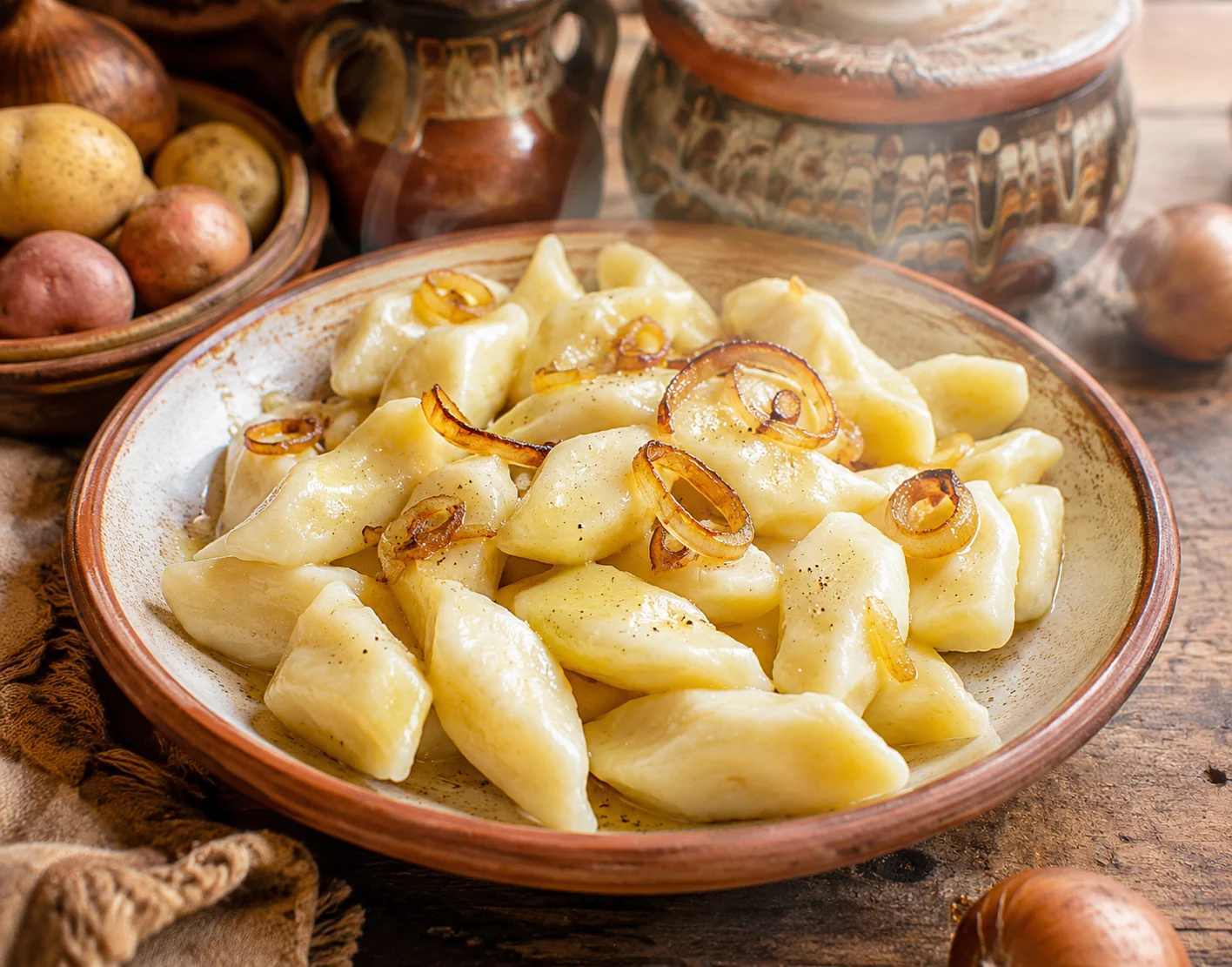
Prep time: 20 minutes | Cook time: 30 minutes | Serves: 8 | Difficulty: Easy
Quick Overview
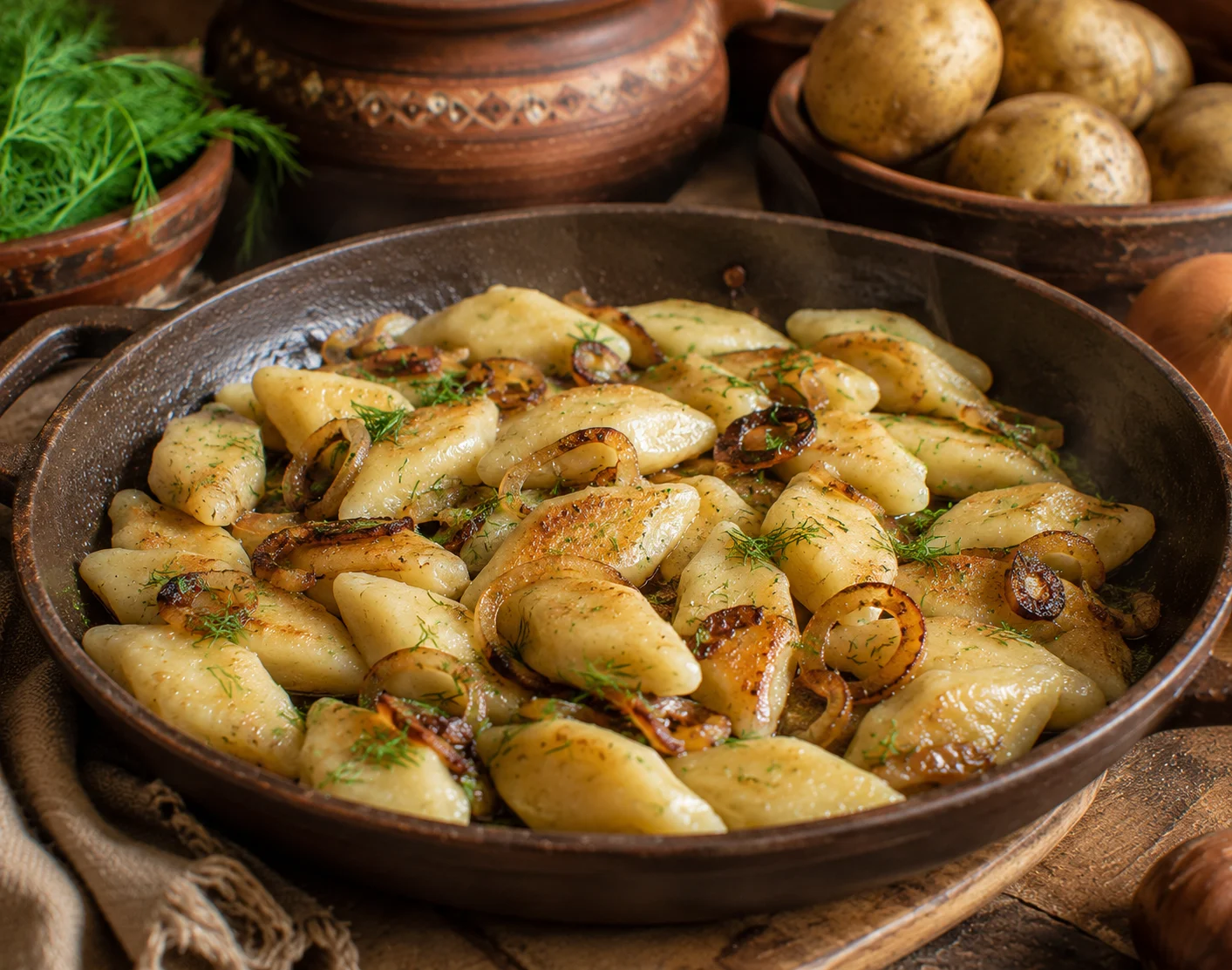
- Boil potatoes whole in their skins until tender, then peel and rice or mash them while still warm
- Mix the mash with flour, egg, and salt into a soft dough, working it as little as possible
- Roll the dough into ropes and cut them on the diagonal into small hoof-shaped pieces
- Drop the pieces into boiling salted water and simmer briefly until they float to the surface
- Drain and serve immediately, traditionally with melted butter and golden breadcrumbs
What Kopytka Is
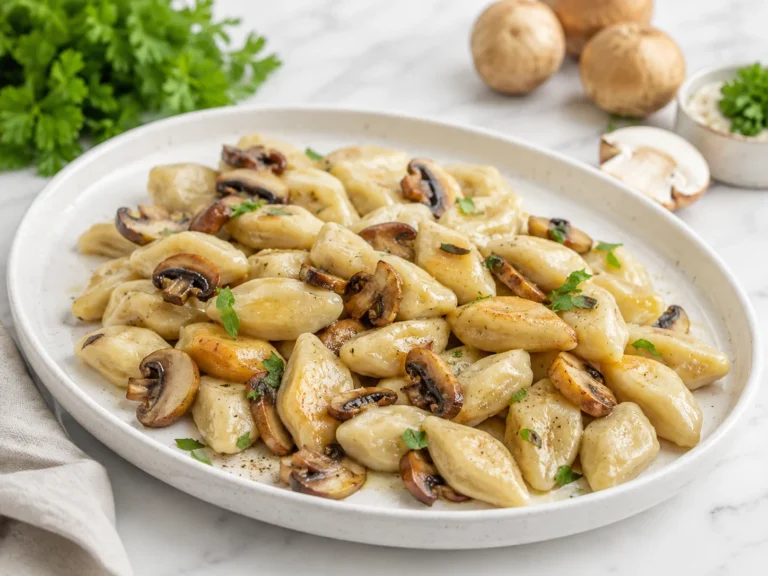
Kopytka (pronounced koh-PIT-kah) are Polish potato dumplings made from cooked, mashed potato bound with flour and egg, then cut into small diamond or oval pieces before boiling. The name means “little hooves,” a nod to the shape each piece takes on after the dough rope is sliced on an angle.¹
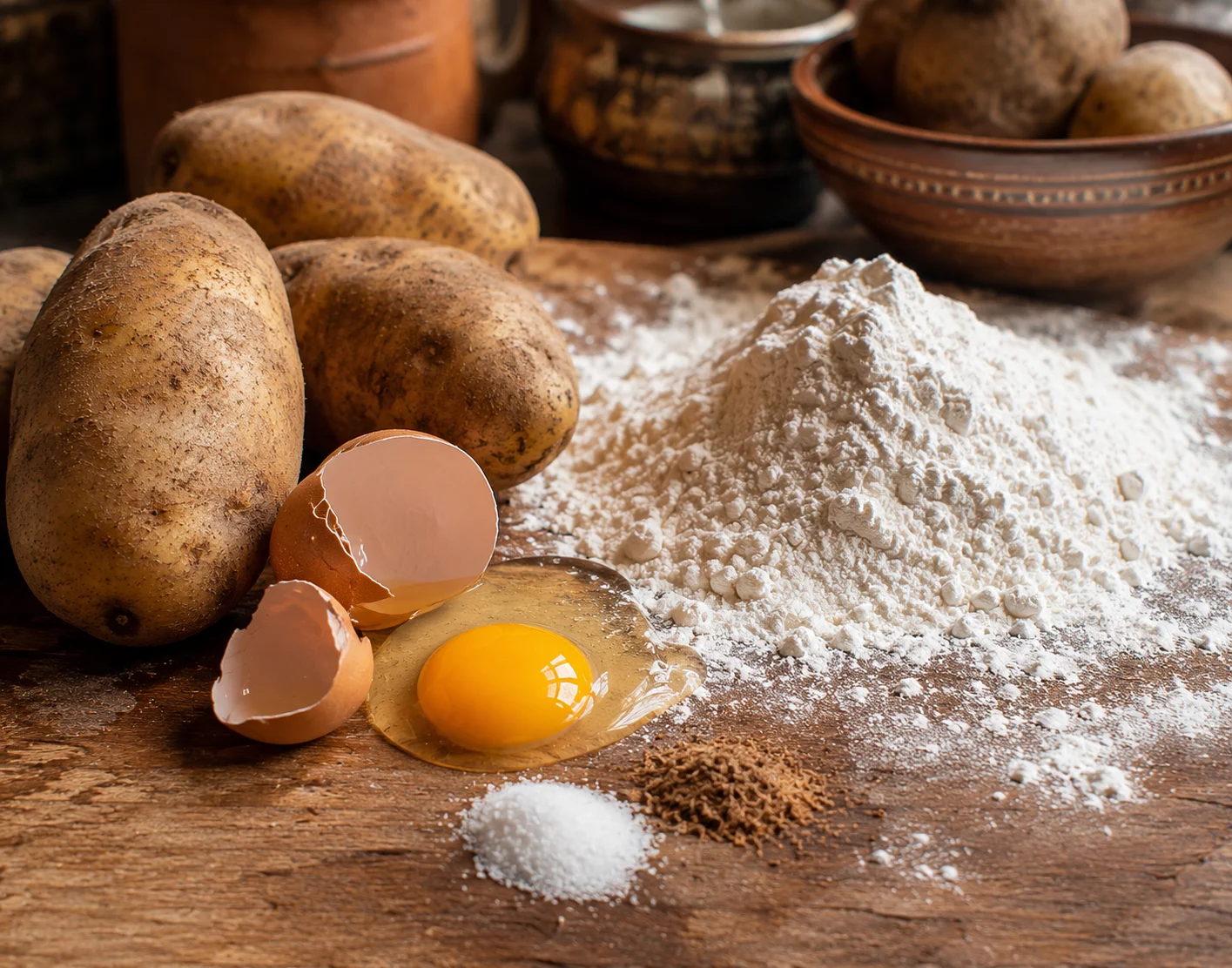
The ingredient list is short on purpose: potato, flour, egg, salt. Nothing else is traditional, though some households add a pinch of nutmeg or white pepper. The potatoes need to be dry and floury rather than waxy, since excess moisture forces more flour into the dough and makes the finished dumplings heavy instead of light.¹
Kopytka are often compared to Italian gnocchi, and the comparison holds up in technique — both start with cooked potato riced into flour and egg to form a soft dough that’s rolled, cut, and boiled.⁴ Where they part ways is shape and finish. Gnocchi are typically rolled into short cylinders; kopytka are cut into flatter, angular pieces that taper at the ends like a cloven hoof, and they’re rarely dressed in tomato or pesto sauce the way gnocchi are in Italy.¹ ⁴
Kopytka are also frequently confused with kluski śląskie, the round, dimpled potato dumplings from Silesia. The two are cousins, not the same dish. Kluski śląskie are made with potato flour rather than wheat flour, and each dumpling is pressed into a round shape with a thumbprint indentation designed to hold sauce. Kopytka use wheat flour and are cut into flat, angular pieces with no indentation — a firmer dumpling with a noticeably different bite.⁷
Origins: Potatoes, a King, and a Story That Doesn’t Quite Hold Up
Every Polish potato dish eventually runs into the same origin story, and kopytka is no exception. According to popular legend, King Jan III Sobieski brought potatoes back to Poland after his 1683 victory over the Ottoman forces at Vienna, sending them to his wife, Marie d’Arquien, to be planted as a curiosity in the gardens at Wilanów.² ³ It’s a good story, tied to a real king and a real place. But historians who’ve gone looking for evidence to support it have come up short — there’s no documentation from Sobieski’s lifetime, and the first confirmed records of potato planting in the Polish-Lithuanian Commonwealth date to roughly half a century after his death in 1696.² Whatever role the royal gardens at Wilanów played was likely modest and limited to the region around Warsaw.³
The real spread happened later and less romantically. Jędrzej Kitowicz, writing during the reign of King August III (1733–1763), recorded that potatoes first took hold on royal estates run by German Saxon administrators, then spread outward through peasant migration and ordinary trade rather than royal decree.² ³ By the end of August III’s reign, the crop was reportedly known across Poland, Lithuania, and Ruthenia² — and by the 19th century it had become the backbone of the Polish peasant diet, cheap and forgiving of poor soil. Kopytka grew directly out of that reality: there was rarely a reason to boil potatoes specifically for dumplings, since kopytka were simply what people made from yesterday’s leftovers instead of letting them go to waste.¹ That frugal origin is part of why kopytka never became a fixed course at Wigilia the way barszcz and uszka did: in most of Poland they are ordinary weeknight food. In two regions they are not.
Why “Little Hooves”
The name comes directly from the shape. A rope of dough is cut on the diagonal into short lengths, and the tapered, angled pieces resemble a cloven hoof closely enough that Polish home cooks settled on the name generations ago.¹ Gnocchi took the same basic idea in a different direction: the name comes from the Venetian dialect word gnocco, “knuckle,” borrowed from the German Knöchel — a reference to the dumpling’s rounded shape.⁴ Two cuisines, working with the same core ingredients roughly a century apart, ended up naming the same kind of dumpling after two different parts of the body.
On the Holiday Table
In Mazowsze the dumplings are rolled long and spindle-shaped for Christmas Eve and called rwaki, or kłosy — ears of grain — served with butter stirred through poppy seeds, or with cabbage and mushrooms.⁸ ⁹ Podhale puts the same potato dumplings on the Wigilia table under a different name, bukty.⁸
Traditional Kopytka Recipe
Recipe developed independently by Heritage Healthy Kitchen, drawing on traditional Polish culinary methods. Sources for further reading are listed at the end of this article.¹ ⁶
Ingredients
- 1 kg (2.2 lbs) starchy potatoes — Russet or a similar high-starch, floury variety works best¹
- 300g (about 2½ cups) all-purpose flour, plus extra for the work surface
- 1 large egg
- 1 teaspoon fine salt, plus more for the boiling water
- Pinch of nutmeg or white pepper (optional, traditional in some households)
For the Classic Topping
- 3 tablespoons butter
- 3 tablespoons breadcrumbs
- Pinch of black pepper
Instructions
Step 1: Boil the Potatoes
Wash the potatoes and boil them whole, in their skins, until a knife slides in easily — about 20–25 minutes depending on size. Boiling unpeeled potatoes keeps them from absorbing excess water, which matters more here than in almost any other potato dish.⁶
Step 2: Rice While Warm
Peel the potatoes while they’re still hot enough to handle comfortably, then pass them through a potato ricer onto a floured work surface. A ricer gives a smoother, lump-free mash than mashing by hand or fork; lumps in the dough become tough spots in the finished dumplings.¹ Let the riced potato cool slightly before moving on.
Step 3: Form the Dough
Sprinkle the flour over the potato, crack the egg on top, and add the salt. Fold everything together by hand just until it comes together into a soft, slightly tacky dough. Do not knead it the way you would bread dough — overworking develops the flour’s gluten and turns the dumplings dense and chewy instead of light.¹
Step 4: Shape the Kopytka
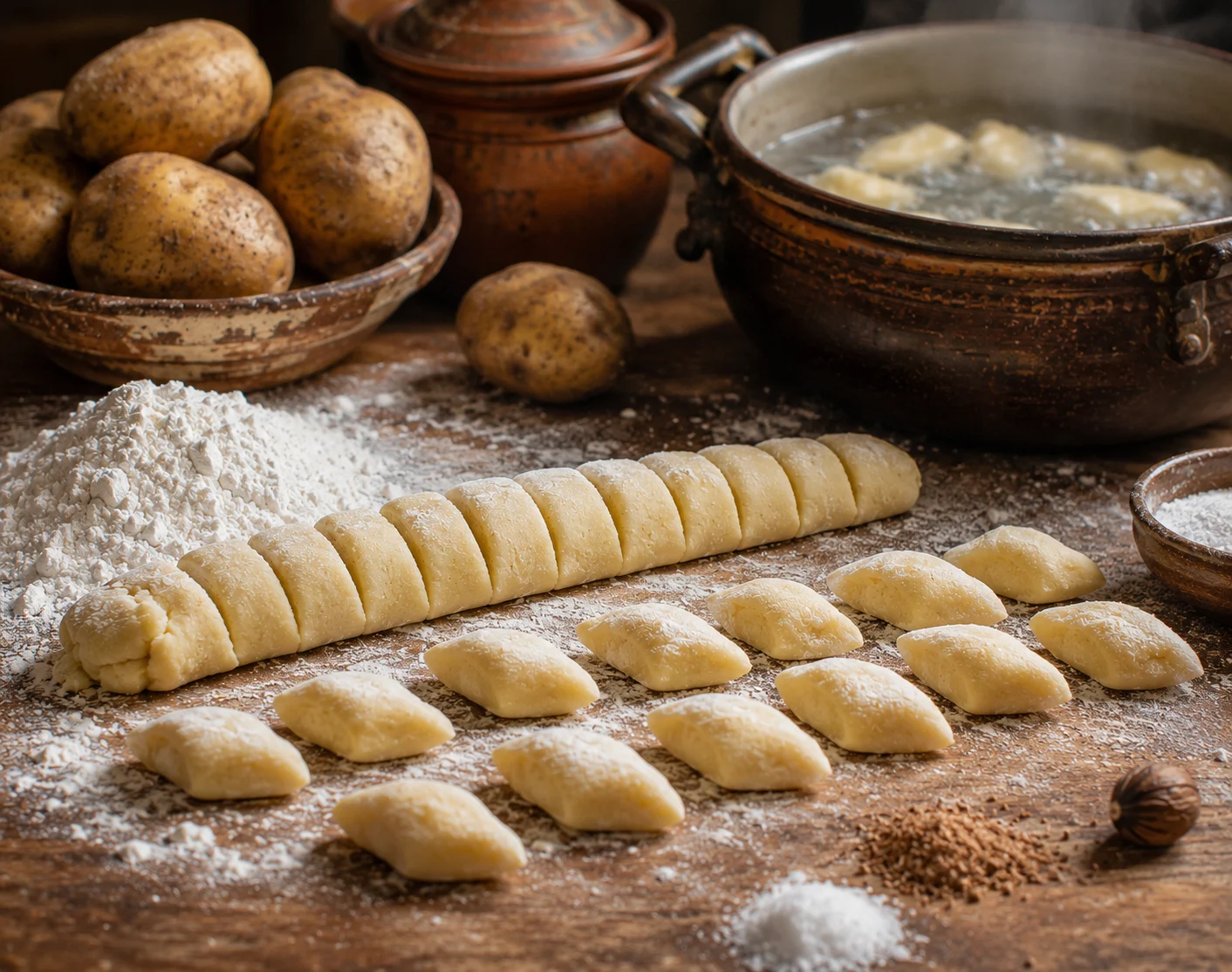
Divide the dough into four or five portions. Roll each portion into a rope about 2 cm (¾ inch) thick on a floured surface. Using a knife, cut the rope on a diagonal into pieces roughly 2 cm long, turning out the characteristic hoof shape.¹
Step 5: Boil
Bring a large pot of well-salted water to a boil. Drop the kopytka in a few at a time, stirring gently so they don’t stick to the bottom or each other. Once they float to the surface, reduce the heat and let them cook for another 4–5 minutes until soft, then lift them out with a slotted spoon.¹
Step 6: Make the Topping and Serve
Melt the butter in a small pan over low heat, add the breadcrumbs, and cook, stirring, until golden — a minute or two, watching closely so they don’t burn. Toss the drained kopytka in the browned butter and breadcrumbs and serve immediately.¹
Kitchen Tips
Choose a floury potato, not a waxy one. Russet or another high-starch variety mashes drier, which means less flour is needed to bind the dough — and less flour means lighter dumplings. Waxy potatoes hold onto moisture and force the dough toward stodgy.¹
Never start with leftover mashed potatoes that already contain milk or butter. The added fat and liquid throw off the potato-to-flour ratio and the dough won’t hold its shape properly when cut. Kopytka need plain potato, cooked in its skin and riced dry.⁶
Work the dough as little as possible. The temptation is to knead it smooth the way you would with bread, but potato dough toughens quickly under handling. Bring it together just until it holds, then stop.¹
Boil in batches. Overcrowding the pot drops the water temperature and the dumplings stick together before they’ve had a chance to firm up on the outside. A large pot with plenty of water, and kopytka added a few at a time, gives a much more even result.⁶
Serve kopytka the moment they’re drained. They’re at their best hot and soft, and they firm up as they cool — which is why this is a dish you eat straight from the pot rather than plate ahead of time.
Nutritional Information
The following values are estimates for one serving (about 1/8 of the recipe, roughly 165–170g of dumplings with butter-breadcrumb topping). Actual values will vary with potato variety, exact flour ratio, and portion size. These figures are for informational purposes only and are not a substitute for medical or dietary guidance.
| Nutrient | Per Serving |
|---|---|
| Calories | ~305 kcal |
| Carbohydrates | ~56g |
| Protein | ~7g |
| Fat | ~6g |
| Fiber | ~3g |
| Potassium | ~525mg |
| Sodium | ~200mg (varies with added salt) |
Potatoes are a meaningful source of potassium and provide a modest amount of fiber. Most of that fiber sits in the skin, which is why boiling kopytka’s potatoes unpeeled keeps more of it than peeling first would.⁵ Potato starch digests quickly and raises blood sugar at a rate comparable to other refined carbohydrates, something worth factoring in if portion size or blood sugar response is a concern.⁵ Boiling and cooling potatoes before mashing, as this recipe does, also increases resistant starch slightly compared to eating them hot, which can modestly soften that blood sugar impact.⁵
Storage and Reheating
Cooked kopytka keep in a sealed container in the refrigerator for a day or two. They firm up and lose some of their initial softness as they cool, which is normal and not a sign anything went wrong.¹
To reheat, either a quick turn in the microwave or a gentle pan-fry in butter will work — frying is the better choice, since it leaves the outside lightly crisp rather than just warmed through.¹
Uncooked, shaped kopytka freeze well. Spread them on a tray in a single layer so they don’t touch, freeze until solid, then transfer to a bag. Boil directly from frozen, adding a minute or two to the cooking time.⁶
Traditional Polish Kopytka

Ingredients
For the Dough
- 1 kg (2.2 lbs) starchy potatoes, such as Russet
- 300g (about 2½ cups) all-purpose flour, plus extra for the work surface
- 1 large egg
- 1 teaspoon fine salt, plus more for the boiling water
- Pinch of nutmeg or white pepper (optional)
For the Classic Topping
- 3 tablespoons butter
- 3 tablespoons breadcrumbs
- Pinch of black pepper
Instructions
- Boil potatoes whole in their skins until tender, then peel and rice or mash them while still warm
- Mix the mash with flour, egg, and salt into a soft dough, working it as little as possible
- Roll the dough into ropes and cut them on the diagonal into small hoof-shaped pieces
- Drop the pieces into boiling salted water and simmer briefly until they float to the surface
- Drain and serve immediately, traditionally with melted butter and golden breadcrumbs
Frequently Asked Questions
Why did my kopytka fall apart in the water?
Almost always too much moisture in the potato. If the potatoes weren’t riced or mashed dry enough, or if leftover milk-and-butter mashed potatoes were used instead of plain boiled ones, the dough won’t hold together under boiling water. Start with potatoes boiled in their skins and riced while warm, and add flour gradually until the dough just holds its shape.¹ ⁶
Can I use leftover mashed potatoes instead of boiling fresh ones?
Not if that mash already contains milk, butter, or cream — the extra fat and liquid change the ratio the recipe depends on and the dough turns unworkable. Plain leftover potatoes that were boiled and mashed without additions can work in a pinch, though freshly riced potato gives a lighter result.⁶
What’s the actual difference between kopytka and kluski śląskie?
Kluski śląskie, the Silesian dumplings, are made with potato flour rather than wheat flour and pressed into a round shape with a thumbprint indentation — a design meant specifically to hold sauce or gravy. Kopytka use wheat flour and are cut into angular, hoof-shaped pieces with no indentation. Both are potato dumplings and both are Polish, but they come from different regional traditions and land differently on the plate.⁷
Are kopytka just Polish gnocchi?
They’re close relatives rather than the same dish. Both start from riced potato bound with flour and egg, but the shape and finish diverge — gnocchi are rolled into short cylinders and usually served with tomato, pesto, or butter-and-cheese sauces in the Italian style, while kopytka are cut into flatter hoof shapes and traditionally finished with butter and breadcrumbs, fried onion, or a meat sauce.¹ ⁴
Can kopytka be made ahead and frozen?
Yes, but freeze them uncooked. Shape the dumplings, freeze them in a single layer on a tray until solid, then bag them. Boil straight from frozen rather than thawing first, adding a little extra time to the pot. Cooked kopytka don’t freeze well — the texture turns mushy on thawing.⁶
What potato variety works best for kopytka?
A starchy, floury potato — Russet is the easiest to find outside Poland. Starchy varieties mash dry, which keeps the flour ratio low and the dumplings light. Waxy potatoes hold too much moisture and push the dough toward dense and gummy.¹
What to Try Next
Kopytka’s simple ingredient list — potato, flour, egg — leaves real room for a lighter version without losing what makes the dish work. A forthcoming Healthy Kopytka article on this site will cover whole wheat flour, portion adjustments, and lighter toppings like a mushroom sauce in place of butter and breadcrumbs.
Further Reading & Sources
This recipe was developed independently by Heritage Healthy Kitchen. The following sources are provided for further reading on the cultural history, culinary technique, and nutritional science referenced in this article.
- Polonist Test Kitchen. Kopytka: Polish Potato Dumplings Recipe. The Polonist. https://www.polonist.com/polish-kopytka-dumplings/ — Technique, name meaning and pronunciation, traditional toppings, and storage guidance.
- Jakubowski, Melchior. How Potatoes Conquered Poland. Polish History (Museum of Polish History). https://polishhistory.pl/how-potatoes-conquered-poland/ — Documented history of potato cultivation in Poland, the Sobieski legend and its lack of evidence, and Jędrzej Kitowicz’s 18th-century account of the potato’s spread.
- The Potato History of Europe. Herito (International Cultural Centre, Kraków), No. 45, 2022. https://herito.pl/en/artykul/the-potato-history-of-europe/ — Further detail on the Sobieski/Wilanów legend, the role of royal Saxon administrators under August III, and the broader spread of potato cultivation across Central Europe.
- McNamee, Gregory Lewis. Gnocchi. Encyclopaedia Britannica. https://www.britannica.com/topic/gnocchi — Origin, etymology, and traditional preparation of Italian potato gnocchi, referenced for comparison with kopytka.
- The Nutrition Source Editorial Team. Are Potatoes Healthy? Harvard T.H. Chan School of Public Health. https://nutritionsource.hsph.harvard.edu/potatoes/ — Research-based overview of potato nutrition, including potassium and fiber content, glycemic impact, and the effect of cooking and cooling on resistant starch.
- Britton, Lois. Kopytka – Polish Potato Dumplings. Polish Housewife. https://polishhousewife.com/kopytka-polish-potato-dumplings/ — Technique notes on using dry-boiled potatoes rather than leftover mashed potatoes, batch-boiling to avoid overcrowding, and freezing raw dumplings.
- Polonist Test Kitchen. Kluski Śląskie: Silesian Potato Kluski. The Polonist. https://www.polonist.com/kluski-slaskie-silesian-dumplings/ — Direct comparison of kluski śląskie (potato flour, round shape with indentation) against kopytka (wheat flour, no indentation).
- “Kulinarny przekrój Polski. Czy znasz tradycyjne dania wigilijne swojego regionu?” LIBRUS Rodzina. portal.librus.pl — regional Christmas Eve dishes: Mazovian rwaki, once called kłosy, and Podhale bukty, both potato dumplings of the kopytka type.
- Kucewicz, Anna. “Where Do Your Wigilia (Christmas Eve) Dishes Come From?” Polish at Heart. polishatheart.com — rwaki, a type of kopytki served with cabbage and mushrooms, as the Mazowsze contribution to the Wigilia table.
Disclaimer
This article is for educational and informational purposes only and does not constitute medical or nutritional advice. All nutritional values listed are estimates and will vary depending on ingredients, quantities, and preparation methods. If you have a health condition that requires dietary management, consult a qualified healthcare provider or registered dietitian before making changes to your diet.
Cook by Occasion
This recipe is part of our Wigilia menu.
You Might Also Like
More heritage recipes from our kitchen


Leave a Reply