

Active time: about 1 hour 30 minutes | Total time: about 2 hours 10 minutes, plus cooling the boiled potatoes | Serves: 4 (8 dumplings) | Difficulty: Advanced
Quick Overview
- Boil some of the potatoes ahead of time and let them cool
- Grate the raw potatoes, squeeze them dry, and keep the settled starch
- Knead both kinds of potato and the starch into a dense dough
- Wrap the dough around a pork filling or a curd cheese and herb filling
- Simmer the dumplings gently for 30–40 minutes
- Serve with a bacon and sour cream sauce, or with melted butter and sour cream
What Cepelinai Is
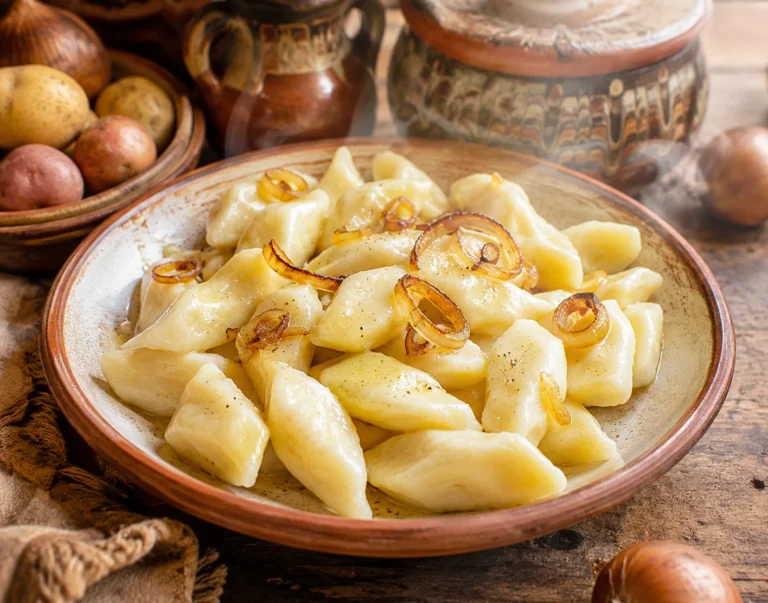
Cepelinai are large oval dumplings made from grated raw potato and mashed boiled potato, wrapped around a filling of raw ground meat and cooked in water.¹ Other traditional fillings include curd cheese, salt pork, mushrooms, and stewed carrots, and the dumplings come to the table with a sauce of rendered fat, cracklings, and sour cream.¹ Lithuania’s official tourism website calls cepelinai the national dish.⁴ The name comes from the Zeppelin airship they resemble, and the older Lithuanian name is didžkukuliai, “big dumplings.”¹˒³
This article gives two versions, each with its own recipe card: pork dumplings with a bacon and sour cream sauce, and curd cheese dumplings with melted butter and sour cream.⁵
History and Origins
Cepelinai are younger than their fame suggests. Lithuania’s national encyclopedia says they spread into the country from East Prussia at the start of the 20th century.¹˒² A specialist in ethnic culture interviewed by LRT traces them further back, to Lower Saxony and Prussia, and notes that the first Lithuanian recipes appeared only in the 1930s; the first Lithuanian cookbook doesn’t include them at all.³
The dish took off after the Second World War. It was cheap and filling, and the canteens of large Soviet-era factories had many workers to feed.³ When restaurant menus were standardized across the Soviet Union, cepelinai were among the dishes cooks were allowed to serve.⁵ Because the dish spread so recently, it varies little from region to region. Potato dishes in general were more common in Sūduva, Žemaitija, and Lithuania Minor, regions once close to Prussia, while in Aukštaitija, in the east, potato pancakes were more usual than cepelinai.³
Since 2014, the dish has had its own day, World Cepelinai Day, marked every February.⁶
Traditional Recipe
This recipe was compiled by Heritage Healthy Kitchen from a comparison of published recipes; the sources are listed at the end of this article. Figures that are Heritage Healthy Kitchen’s own estimates rather than taken from a published source are marked as such.
Published recipes agree on the method and differ mostly in proportions. Boiled potato makes up anywhere from about a tenth to a third of the potatoes,⁵˒⁶˒⁷˒⁸ and cooking times run from 15–20 minutes to about 40.⁵˒⁶˒⁷˒⁸˒⁹ The quantities below sit inside those ranges. The weight of dough left after squeezing, the number of dumplings, and the cooking times for the onion and sauces are Heritage Healthy Kitchen’s estimates.
Potato Dough (Makes Dough for 8 Dumplings)
Ingredients
- 1.5 kg (3.3 lb) starchy, floury potatoes, peeled (such as russet in North America or Maris Piper in the UK, or any other floury variety)
- 250 g (9 oz) potatoes, boiled in their skins ahead of time, cooled and peeled
- 1 tsp salt
- 1 tbsp potato starch, optional

Instructions
- Boil and cool. Boil the 250 g of potatoes in their skins, then cool, peel, and mash or rice them until smooth. They can be boiled a day ahead.⁵˒⁷
- Grate. Finely grate the raw potatoes on the fine holes of a box grater or in a food processor.⁵˒⁷
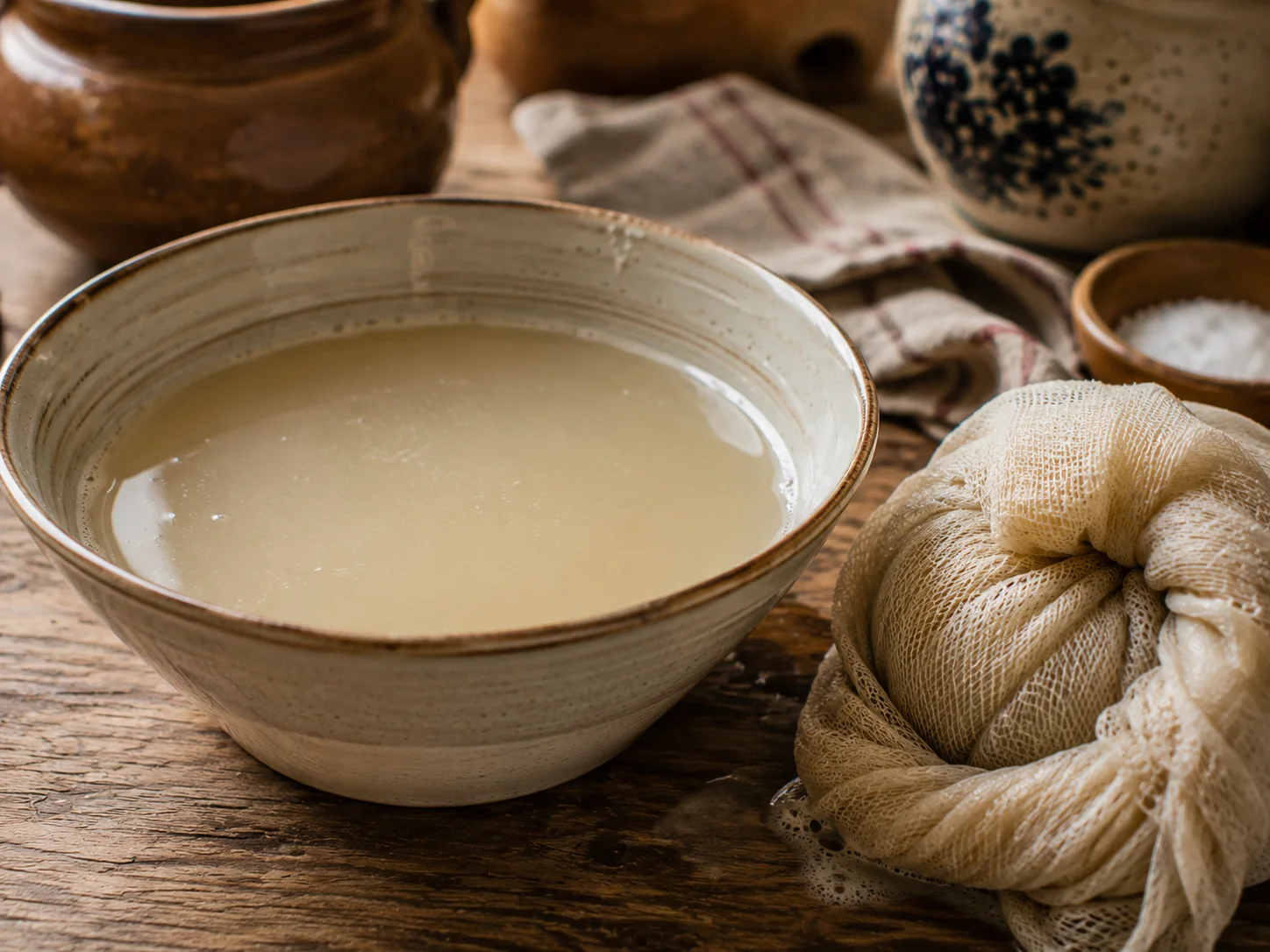
- Squeeze and keep the starch. Wrap the grated potato in a clean cloth and wring out as much liquid as you can over a bowl. Let the liquid stand for a few minutes, pour it off carefully, and keep the white starch that settles at the bottom.⁵˒⁷
- Make the dough. Combine the squeezed potato, the mashed potato, the reserved starch, the salt, and the extra starch if using. Knead by hand until dense and even. More mashed potato makes a softer dough, more grated potato a firmer one.⁵
Meat Filling
Ingredients
- 400 g (14 oz) ground pork, not lean
- 1 medium onion, finely chopped
- 1 tsp salt
- ½ tsp black pepper
- ½ tsp dried marjoram
- A little oil, for the onion
Instructions
- Soften the onion. Cook the onion in a little oil over medium heat until translucent, about 4 minutes, then let it cool completely.⁷˒⁹
- Mix the filling. Combine the raw pork with the cooled onion, salt, pepper, and marjoram. The meat goes into the dumplings raw and cooks inside them.¹˒⁷
Curd Cheese Filling (Vegetarian)
Ingredients
- 350 g (12 oz) dry curd cheese, well drained (varškė in Lithuania; elsewhere, farmer’s cheese, German quark, or any other dry, crumbly curd cheese)
- 1 egg
- 2 tbsp sour cream
- 1 tbsp fresh dill, chopped
- 1 tsp fresh tarragon or mint, chopped
- ½ tsp salt
Instructions
- Mix the filling. Crumble the curd cheese and mix it with the egg, sour cream, dill, tarragon or mint, and salt.⁵˒⁹ The filling should hold together when pressed; if it feels wet, drain the curd cheese further before mixing. The amounts of sour cream and herbs are Heritage Healthy Kitchen’s estimates.
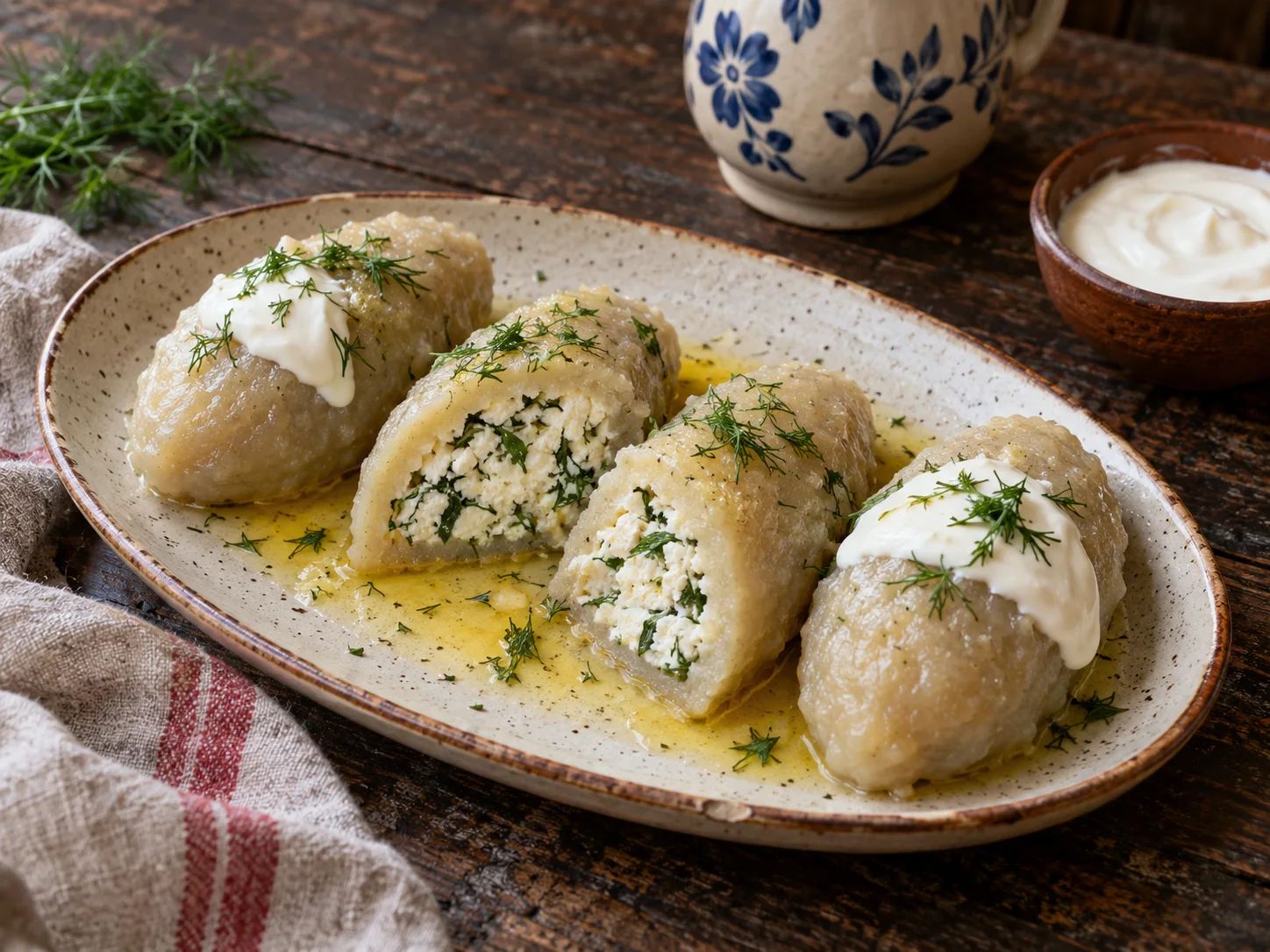
For a mixed batch, make half of each filling, enough for four dumplings of each kind.
Shaping and Cooking the Dumplings
Instructions
- Portion the dough. Divide the dough into 8 portions of about 150–170 g each. With wet hands, flatten one portion into a disc about 1 cm thick in your palm.⁷
- Fill and shape. Roll the filling into 8 balls of about 50–70 g.⁷ Place one in the center of the disc, fold the dough up around it, pinch the seam closed, and shape into an oval. Repeat with the rest.
- Cook. Bring a wide pot of salted water to the boil; one published recipe stirs a little potato starch into the water first.⁷ Lower the dumplings in one at a time, keep the water at a gentle simmer, and stir gently now and then so they don’t stick. Once they float, cook for another 15–20 minutes, about 30–40 minutes in all.⁵˒⁶˒⁷
- Drain. Lift the dumplings out with a slotted spoon and drain briefly.
Sauce for Meat Cepelinai
Ingredients
- 150 g (5 oz) smoked bacon or pork belly, diced small
- 1 small onion, finely chopped
- 200 ml (a scant cup) full-fat sour cream
Instructions
- Fry the bacon slowly in a dry pan until the fat renders and the pieces turn crisp, about 8 minutes.
- Add the onion for the last 2 minutes and cook until softened.
- Spoon the bacon, onion, and fat over the dumplings and serve with the sour cream, or take the pan off the heat, let it cool slightly, and stir the sour cream in.⁵˒⁸
Sauce for Curd Cheese Cepelinai
Ingredients
- 45 g (3 tbsp) butter
- 200 ml (a scant cup) full-fat sour cream
- Fresh dill, chopped, to finish (optional)
Instructions
- Melt the butter over low heat.
- Spoon the warm butter over the dumplings, add the sour cream, and finish with dill if you like.⁵˒⁹
Kitchen Tips
Squeeze the grated potato harder than feels necessary. Leftover moisture makes a soft dough that is more likely to split in the pot, so the squeezed potato should feel fairly dry before it goes in.
Keep the water at a gentle simmer once the dumplings are in, and stir now and then so they don’t stick to the bottom or to each other.⁵˒⁷ A hard boil can break them open.
Grated potato darkens quickly in the air, so grate and squeeze without long pauses. One published recipe adds a crushed vitamin C tablet to keep the dough white.¹⁰
Curd cheese fillings vary by household. Tarragon, dill, and mint are the herbs named in published recipes, and some cooks add fried bacon to the curd cheese, which makes the filling no longer vegetarian.⁵˒⁹
Nutritional Information
Meat Cepelinai, Per Serving (2 Dumplings with Bacon and Sour Cream Sauce, 1 of 4 Servings)
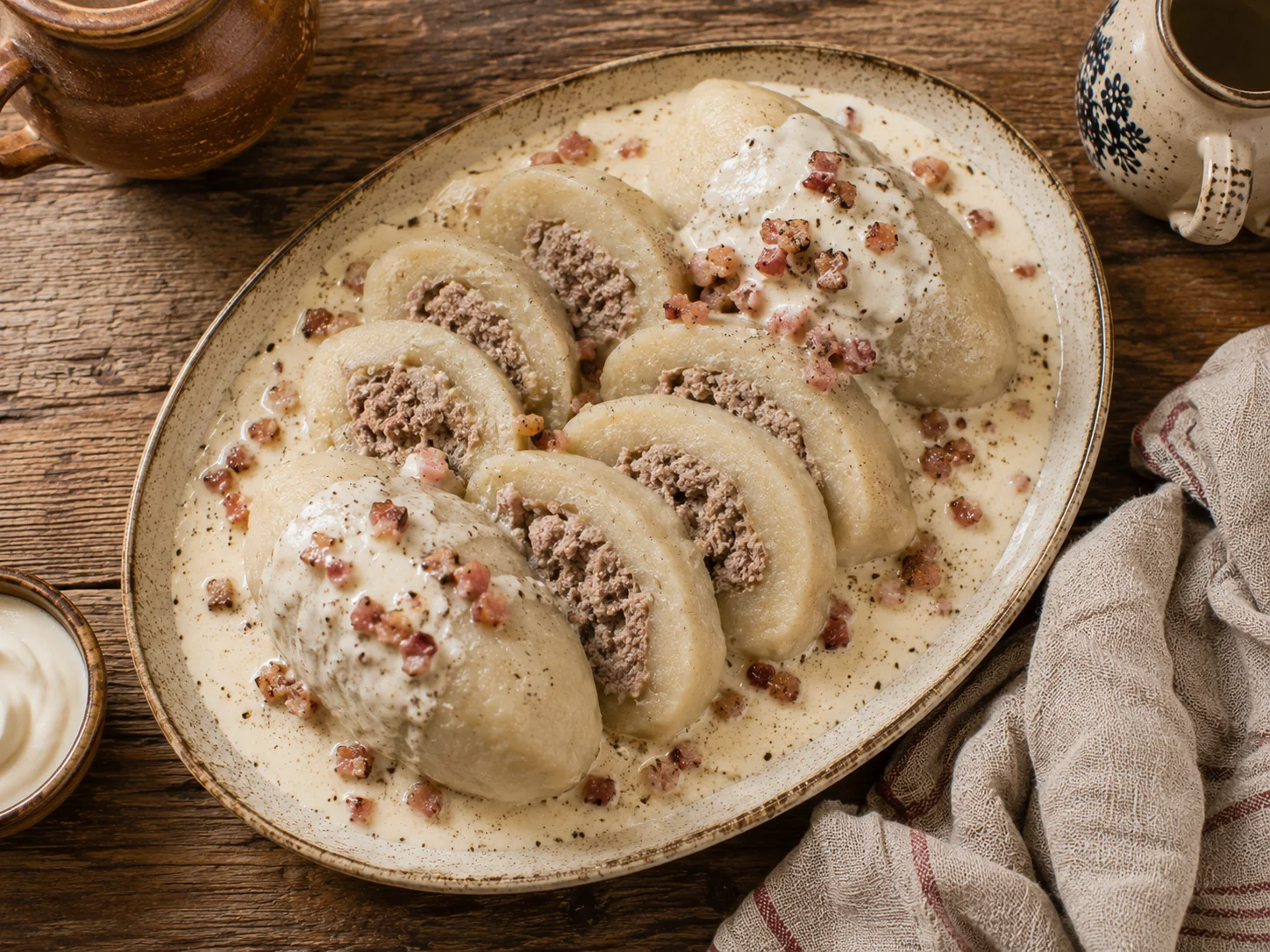
- Calories: approximately 790–960 kcal
- Protein: approximately 30–36g
- Total fat: approximately 42–52g
- Saturated fat: approximately 16–20g
- Carbohydrates: approximately 75–91g
- Dietary fiber: approximately 9–11g
- Sodium: approximately 1,650–2,020mg
Curd Cheese Cepelinai, Per Serving (2 Dumplings with Butter and Sour Cream, 1 of 4 Servings)
- Calories: approximately 570–700 kcal
- Protein: approximately 20–24g
- Total fat: approximately 23–29g
- Saturated fat: approximately 12–15g
- Carbohydrates: approximately 74–90g
- Dietary fiber: approximately 8–10g
- Sodium: approximately 1,350–1,650mg
Nutritional values are estimates based on standard ingredient databases (USDA FoodData Central). They will vary with the cut of pork, the fat content of the curd cheese, and how much sauce is served.
The dough is the same in both versions, so the difference comes from the filling and the sauce. Halving the bacon and using a lower-fat sour cream brings a serving of the meat version down to roughly 770 kcal and 14 g of saturated fat, a Heritage Healthy Kitchen estimate.
Storage and Reheating
The storage guidance below is Heritage Healthy Kitchen’s own estimate rather than taken from the published recipes.
Cooked cepelinai keep in the refrigerator for up to 3 days in an airtight container. Store the sauce separately so the dumplings don’t turn soggy.
Raw dumplings can be frozen: freeze them on a tray until solid, then pack them into a bag, and cook them straight from frozen, adding about 10 minutes to the cooking time.
Reheat cooked dumplings gently, in a covered pan with a splash of water over low heat or in the microwave in short bursts. Strong heat toughens the dough.
Traditional Cepelinai

Ingredients
Potato Dough
- 1.5 kg (3.3 lb) starchy, floury potatoes, peeled (such as russet in North America or Maris Piper in the UK, or any other floury variety)
- 250 g (9 oz) potatoes, boiled in their skins ahead of time, cooled and peeled
- 1 tsp salt
- 1 tbsp potato starch, optional
Meat Filling
- 400 g (14 oz) ground pork, not lean
- 1 medium onion, finely chopped
- 1 tsp salt
- ½ tsp black pepper
- ½ tsp dried marjoram
- A little oil, for the onion
Bacon and Sour Cream Sauce
- 150 g (5 oz) smoked bacon or pork belly, diced small
- 1 small onion, finely chopped
- 200 ml (a scant cup) full-fat sour cream
Instructions
- Make the dough: Grate the raw potatoes finely and wring them dry in a cloth. Let the liquid stand a few minutes, pour it off, and keep the starch. Mix the squeezed potato with the cooled, mashed boiled potatoes, the starch, and the salt, and knead into a dense dough.
- Make the filling: Cook the onion in a little oil until translucent, about 4 minutes, and let it cool. Mix with the raw pork, salt, pepper, and marjoram.
- Shape the dumplings: Divide the dough into 8 portions of about 150–170 g. With wet hands, flatten each into a disc about 1 cm thick, place a 50–70 g ball of meat filling in the center, fold the dough around it, pinch the seam closed, and shape into an oval.
- Cook: Lower the dumplings into a wide pot of gently simmering salted water and stir now and then. Once they float, cook another 15–20 minutes, about 30–40 minutes in all, then drain.
- Make the sauce: Fry the diced bacon slowly until crisp, about 8 minutes, adding the onion for the last 2 minutes.
- Serve: Spoon the bacon, onion, and fat over the hot dumplings and serve with the sour cream, or stir the sour cream into the slightly cooled pan.
Curd Cheese Cepelinai
Ingredients
Potato Dough
- 1.5 kg (3.3 lb) starchy, floury potatoes, peeled (such as russet in North America or Maris Piper in the UK, or any other floury variety)
- 250 g (9 oz) potatoes, boiled in their skins ahead of time, cooled and peeled
- 1 tsp salt
- 1 tbsp potato starch, optional
Curd Cheese Filling
- 350 g (12 oz) dry curd cheese, well drained (varškė in Lithuania; elsewhere, farmer’s cheese, German quark, or any other dry, crumbly curd cheese)
- 1 egg
- 2 tbsp sour cream
- 1 tbsp fresh dill, chopped
- 1 tsp fresh tarragon or mint, chopped
- ½ tsp salt
Butter and Sour Cream
- 45 g (3 tbsp) butter
- 200 ml (a scant cup) full-fat sour cream
- Fresh dill, chopped, to finish (optional)
Instructions
- Make the dough: Grate the raw potatoes finely and wring them dry in a cloth. Let the liquid stand a few minutes, pour it off, and keep the starch. Mix the squeezed potato with the cooled, mashed boiled potatoes, the starch, and the salt, and knead into a dense dough.
- Make the filling: Crumble the curd cheese and mix it with the egg, sour cream, dill, tarragon or mint, and salt.
- Shape the dumplings: Divide the dough into 8 portions of about 150–170 g. With wet hands, flatten each into a disc about 1 cm thick, place a 50–70 g ball of curd cheese filling in the center, fold the dough around it, pinch the seam closed, and shape into an oval.
- Cook: Lower the dumplings into a wide pot of gently simmering salted water and stir now and then. Once they float, cook another 15–20 minutes, about 30–40 minutes in all, then drain.
- Make the sauce: Melt the butter over low heat.
- Serve: Spoon the warm butter over the hot dumplings, add the sour cream, and finish with dill if you like.
Frequently Asked Questions
What does cepelinai taste like?
Mild and starchy on the outside, with a dense, slightly chewy bite that is closer to an oversized gnocchi than to a thin dumpling wrapper. The filling carries most of the seasoning; the potato dough itself is kept plain.
Why are cepelinai named after an airship?
Their long oval shape resembles a Zeppelin airship, and the name stuck.³ The older Lithuanian name is didžkukuliai, “big dumplings,” and the encyclopedia lists the dish under that name.¹
Do I have to add extra potato starch?
The starch that settles out of the squeezed potato liquid always goes back into the dough, since it helps hold the dumplings together. Extra potato starch is optional; one published recipe adds 50 g to a larger batch of dough and stirs more into the cooking water.⁷
Can cepelinai be made ahead and frozen?
Yes. Shape the raw dumplings, freeze them on a tray until solid, then pack them into a bag, and cook them straight from frozen without thawing. This is Heritage Healthy Kitchen’s suggestion rather than a step from the published recipes.
What kind of potatoes work best?
Starchy, floury varieties, such as russet in North America or Maris Piper in the UK. Starchy potatoes are high in starch and low in water, while waxy potatoes have less starch and cook up firm and moist.¹¹ A wetter, less starchy dough is more likely to fall apart in the pot.
Is there a lighter version of this recipe?
The curd cheese version has its own recipe card and comes to roughly 640 kcal per serving, against about 875 kcal for the meat version. With either filling, less sauce or a lower-fat sour cream makes the plate lighter without changing the dumplings themselves. These figures are Heritage Healthy Kitchen estimates.
Further Reading & Sources
The recipe is a compilation based on the published recipes listed here; these links are provided for readers who want to explore further.
- “didžkukuliai.” Visuotinė lietuvių enciklopedija (Universal Lithuanian Encyclopaedia), no author named. vle.lt/straipsnis/didzkukuliai
- Milius, Vacys. “lietuvių valgiai.” Visuotinė lietuvių enciklopedija. vle.lt/straipsnis/lietuviu-valgiai
- LRT TV naujienų tarnyba. “Cepelinai, a not so traditional staple of Lithuanian cuisine.” LRT English, 5 February 2023. lrt.lt
- “Cepelinai.” Lithuania Travel, official tourism website of Lithuania, no author or date given. lithuania.travel
- Tchea, Michelle. “Cepelinai dumplings help tell the story of Lithuania’s past.” SBS Food, 8 June 2023 (recipe by Rita Kersulyte-Ryckova). sbs.com.au
- Šuliokas, Justinas. “World Cepelinai Day – how make the potato royalty dish at home.” LRT English, 7 February 2021. lrt.lt
- “Lithuanian flavours: Cepelinai.” In Your Pocket Vilnius, no author or date given (recipe by chef Ramūnas Giraitis). inyourpocket.com
- “Cepelinai.” TV3.lt, recipe from Mama.lt, no author or date given. tv3.lt
- “Soul Food: Zeppelins (Cepelinai, Didžkukuliai)…” Draugas News, Let’s Cook Lithuanian column, 15 July 1999, no author named on the page. draugas.org
- “You say potato…we say bulvė.” Draugas News, 15 September 2003, no author named on the page. draugas.org
- “Potatoes.” The Nutrition Source, Harvard T.H. Chan School of Public Health. nutritionsource.hsph.harvard.edu
Disclaimer
The information in this article is provided for educational and informational purposes only. Heritage Healthy Kitchen makes no representations or warranties regarding the accuracy or completeness of any content on this site. Nutritional values are estimates only and will vary depending on the specific ingredients, brands, and measurements used. This content is not intended as dietary, medical, or professional nutritional advice. Always consult a qualified healthcare provider regarding any dietary needs or health conditions. Heritage Healthy Kitchen is not responsible for any outcomes resulting from the use of recipes or information published on this site.
You Might Also Like
More heritage recipes from our kitchen


Leave a Reply