
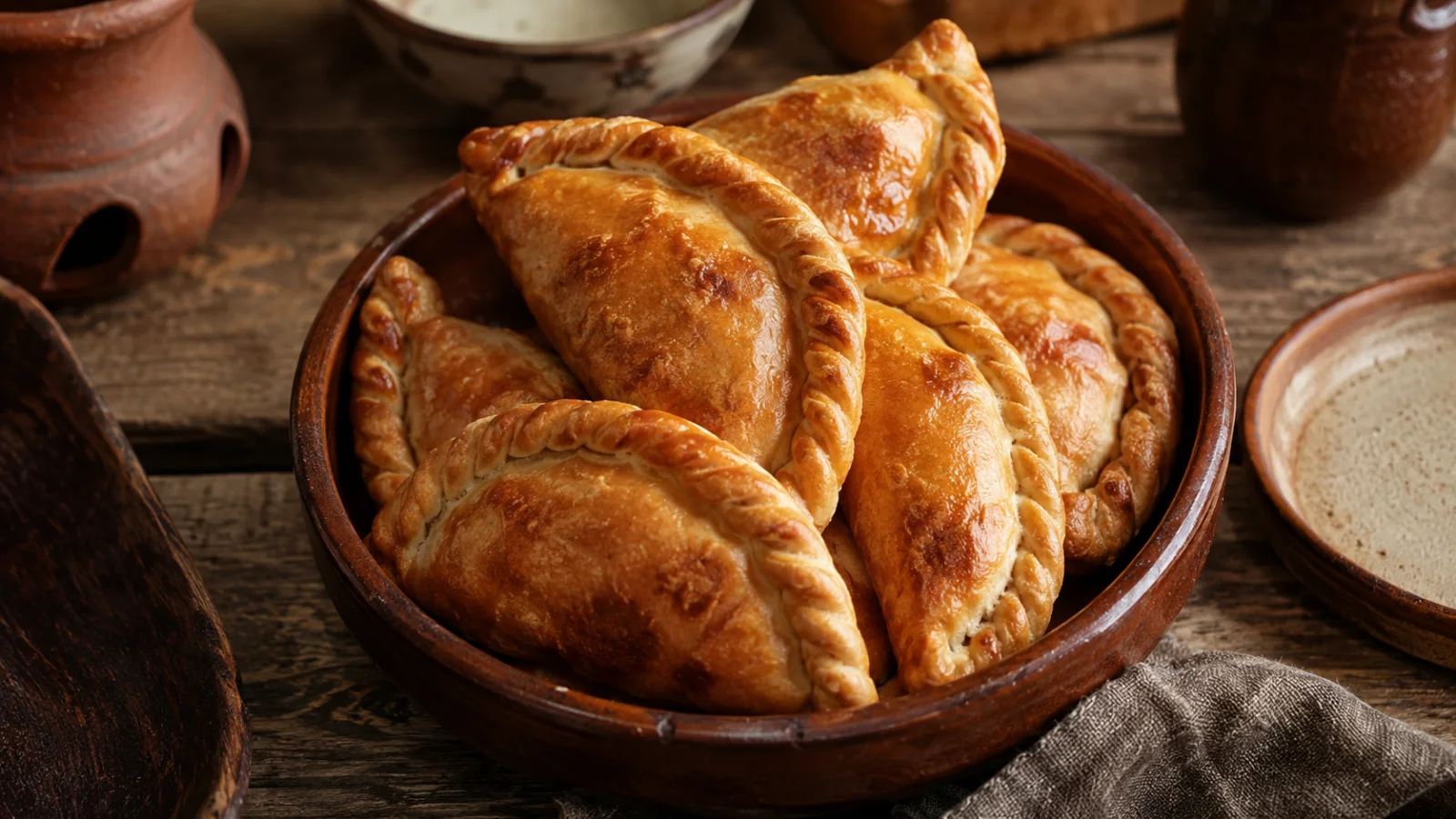
Active time: ~40 minutes | Total time: ~3 hours (with rising) | Serves: 6 (about 12 kibinai) | Difficulty: Medium
Quick Overview
- Make a simple leavened dough with flour, yeast, water, oil, and egg, then let it rise
- Mix finely chopped lamb with onion, salt, and pepper for the filling
- Divide the risen dough, roll each piece, and fold it over a spoonful of filling
- Crimp the curved edge tightly to seal the juices inside
- Bake until deep golden brown
- Serve hot, traditionally with a small cup of broth on the side
What Kibinai Is
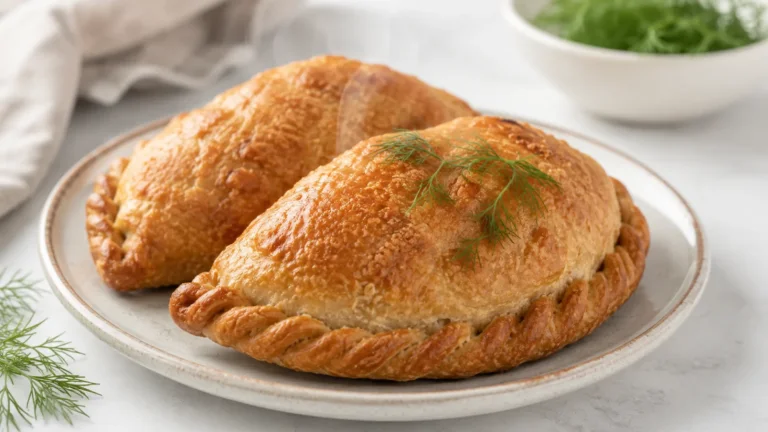
Kibinai are crescent-shaped hand pies: a plain leavened dough folded over a filling of finely chopped meat and onion, sealed along the curved edge, and baked until deep gold. In the Karaim language they’re called kybyn, plural kybynlar.2 The filling goes in raw and cooks inside the closed pastry during baking, which is part of why a tight seal along the edge matters so much to the finished pie.
The dish belongs to the Karaites, or Karaims, a small Turkic ethnic and religious minority whose community in Lithuania is centered on the lakeside town of Trakai.1 Karaite cuisine also includes cheburek, a fried pastry, and koldunai, a meat-and-dough dish — both, like kibinai, part of a food tradition the Karaites and the Tatars carried with them from the Crimean steppe.2 Kibinai is the best known of the three, and the one most closely tied to Karaite identity in Lithuania today.2
A version of the same dish, called et ayaklak, is also made by the Karaite minority of Melitopol in Ukraine; the tradition of preparing it was added to Ukraine’s National Register of Elements of the Intangible Cultural Heritage in 2018.9 Kibinai, in other words, belongs to Karaite communities beyond Trakai as well, not to Lithuania alone.
History and Cultural Roots
The Karaites trace their faith to Karaism, a form of Judaism built solely on the written Tanakh rather than the Talmud and later rabbinic tradition.4 Lithuanian sources place its origins in 8th-century Iraq, from where it later spread into Eastern Europe.7 Linguistically and ethnically, Lithuania’s Karaites descend from Turkic Kipchak tribes of the Crimean steppe.2 Their everyday vernacular was Tatar, with Hebrew reserved for liturgical use.8 Over the centuries the Lithuanian Karaite community came to define itself as ethnically and religiously distinct from Ashkenazi Jews, a separation formalized in Russian imperial law by 1795.8
Karaite tradition holds that Grand Duke Vytautas the Great brought several hundred Karaite families to Lithuania from Crimea at the close of the 14th century, following his campaigns against Tatar forces near Azov and in Crimea around 1397 and 1398.1,2,3 Estimates of the number of families range from roughly 380 to 400.1,3,6 They were settled in Trakai, between the Grand Duke’s two castles, first as guards and court servants, later branching into farming, crafts, and trade.1,3 Vytautas and later rulers rewarded their loyalty with self-governing privileges; a surviving record from 1441 documents the community’s right to Magdeburg self-government, administered separately from the rest of the town.3 The Karaites built their own house of worship, a kenesa, and Trakai has remained the community’s administrative and spiritual center ever since.2,3
Kibinai is remembered as one of the Karaites’ oldest everyday dishes, distinct from the ritual foods tied to specific religious holidays.2 Local tradition holds that Karaite households baked the pies for the men guarding Trakai’s castles, and that Vytautas himself came to favor them, making kibinai a regular dish at the ducal table.6 Karaite dietary law follows a form of kashrut, the Jewish dietary code, that permits lamb and beef but not pork, so the original filling was mutton or lamb.2,5,6 Kashrut also does not allow meat and dairy to be combined in the same dish,10 and the Karaite cultural association’s own description of kybyn is a plain leavened dough, with no mention of butter or sour cream — a description independently matched by a Trakai kibinai producer’s account of the traditional recipe.2,6 The butter-and-sour-cream pastry common in commercial kibinai and food blogs today is a later departure from that description, one that spread alongside the same shift toward pork as the dish moved beyond the Karaite community.5
The Lithuanian Karaite community has always been tiny, and it has grown smaller. The 2021 national census counted 192 people identifying as Karaim in all of Lithuania, down from 423 a decade earlier.8 Only a few dozen still live in Trakai itself.1 Even so, Trakai remains the center of Karaite life, and Karaite-run restaurants still operate along Karaimų Street, the historic heart of the community, keeping kibinai a living dish rather than a museum piece.1
Traditional Recipe
This recipe was developed independently by Heritage Healthy Kitchen; the sources cited throughout are for further reading on the dish’s history and background, not the basis of the recipe itself. It follows the plain leavened dough described in Karaite sources rather than the butter-and-sour-cream version common in many modern recipes; see the FAQ below for why.
Ingredients (Makes About 12 Kibinai, Serves 6)
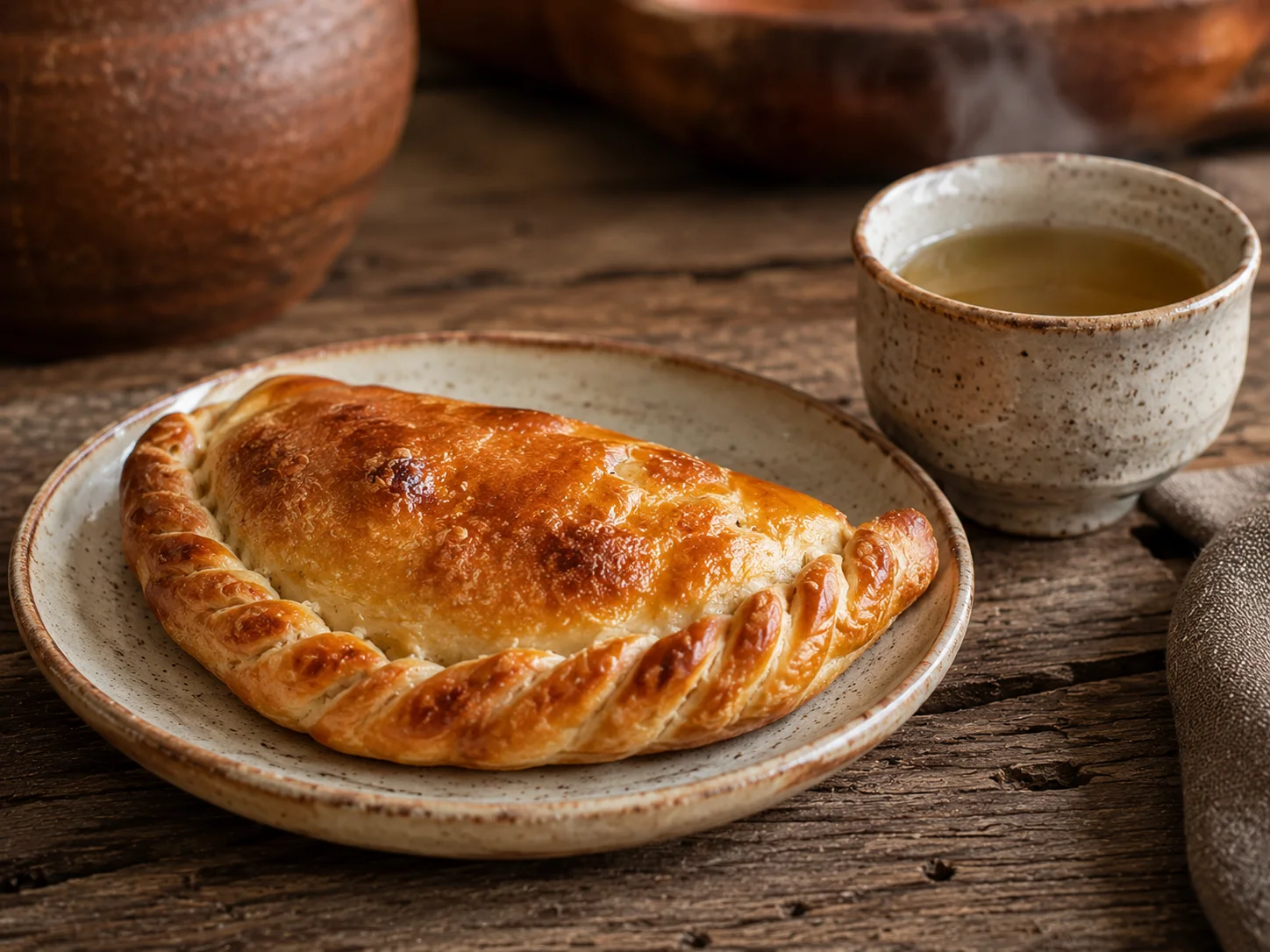
For the Dough
- 500g (4 cups) bread flour or all-purpose flour
- 7g (2¼ tsp) instant yeast
- 1 tsp sugar
- 1 tsp salt
- 300ml (1¼ cups) warm water
- 3 tbsp (45ml) neutral vegetable oil, such as sunflower or canola
- 1 large egg
- 1 egg, beaten, for egg wash
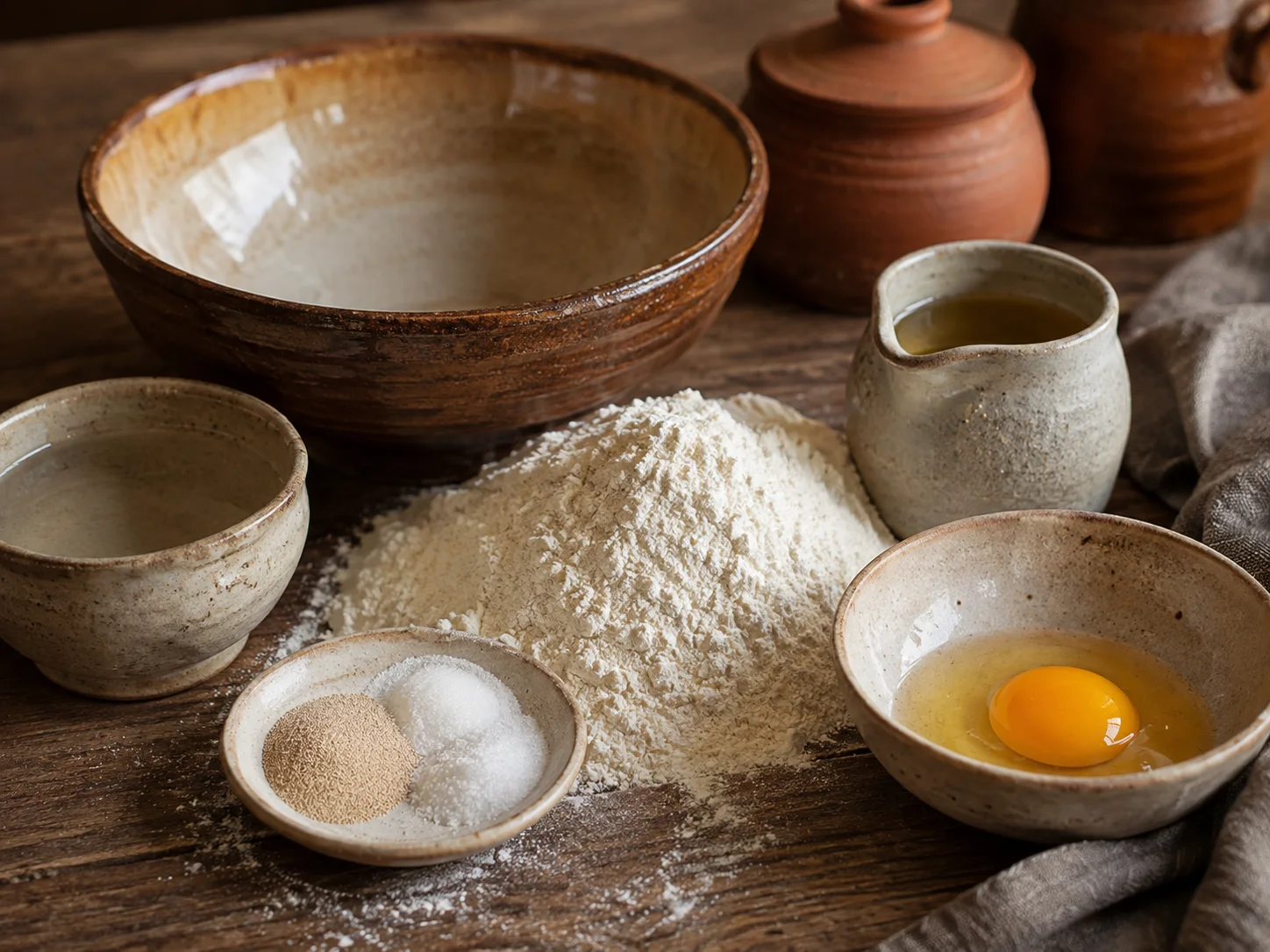
For the Filling
- 500g (1.1 lb) lamb shoulder, finely chopped by hand (not ground)
- 1 large onion, finely chopped
- 1 tsp salt
- ½ tsp black pepper
- 2 tbsp cold water
Instructions
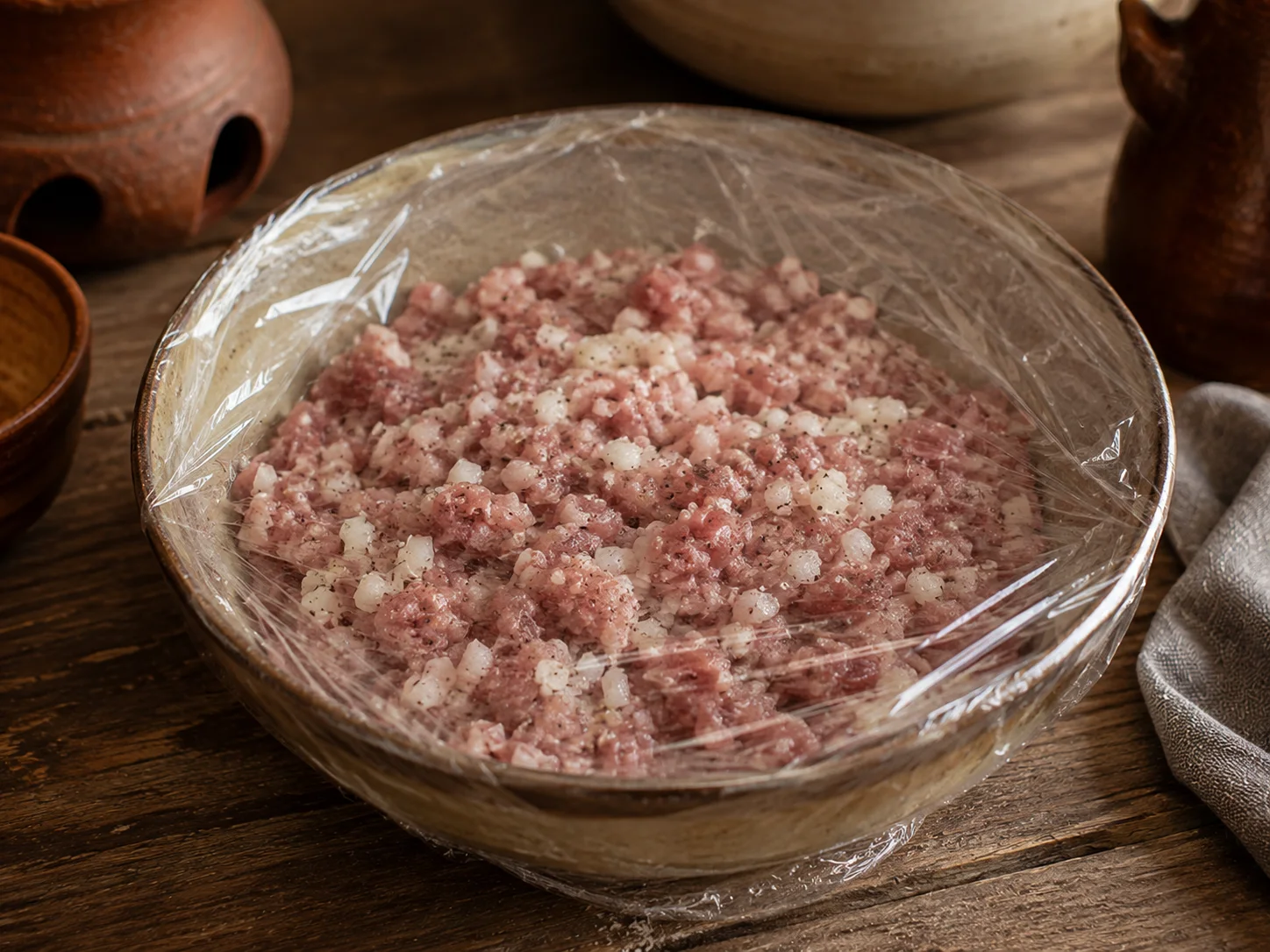
- Make the dough. Whisk the flour, yeast, sugar, and salt together in a large bowl. Add the warm water, oil, and egg, and bring together into a dough. Knead by hand or with a dough hook for 8–10 minutes, until smooth and elastic.
- Let it rise. Place the dough in a lightly oiled bowl, cover, and set in a warm spot until roughly doubled, about 1 to 1½ hours.
- Make the filling. Combine the finely chopped lamb, onion, salt, pepper, and cold water in a bowl. Mix well by hand until evenly combined; the water helps keep the filling juicy as it cooks inside the pastry.
- Divide and rest. Punch down the risen dough and divide into 12 equal pieces. Shape each into a ball and let rest, covered, for 10 minutes.
- Roll and fill. Roll each piece into a thin circle, about 12–14cm (5 inches) across. Place a heaped tablespoon of filling on one half, leaving a small border, then fold the other half over to form a half-moon and press the edges together.
- Crimp the seal. Working along the curved edge, pinch and twist the dough into a tight, even crimp from one end to the other. A secure seal is what keeps the meat juices inside during baking.
- Bake. Preheat the oven to 200°C (390°F) and line two baking sheets with parchment. Arrange the kibinai with space between them, brush with the beaten egg, and bake for 25–30 minutes, until deep golden brown.
- Serve. Rest for 5 minutes, then serve hot, traditionally with a small cup of hot broth on the side.
Kitchen Tips
Knead the dough until it’s smooth and springs back gently when pressed. That’s how the gluten develops, and it’s what gives the baked pastry its structure without any butter to fall back on.
Don’t rush the rise. A dough that hasn’t properly doubled will bake into something denser and less tender than it should be.
Chop the lamb by hand rather than using a mincer. Finely diced meat holds more texture than ground meat and stays juicier through the bake, since less of its structure has been broken down before it goes in the oven.
Don’t skip the crimp. A loose or incomplete seal along the curved edge is the most common reason kibinai split open and leak their filling during baking.
Nutritional Information
Estimated values per serving (2 kibinai):
- Calories: approximately 550–680 kcal
- Protein: approximately 23–28g
- Total fat: approximately 24–30g
- Saturated fat: approximately 8–9g
- Carbohydrates: approximately 58–71g
- Dietary fiber: approximately 3–4g
- Sodium: approximately 770–940mg
Nutritional values are estimates calculated from the specific ingredient quantities in this recipe, using standard reference values. They will vary depending on the lamb’s fat content, the type of oil used, and portion size.
Built on a plain yeast dough rather than a butter-enriched one, this version comes in noticeably lighter than the butter-and-sour-cream kibinai found in most restaurants and recipe blogs. A two-piece serving’s saturated fat runs to roughly two-thirds of the American Heart Association’s suggested daily limit of about 13 grams, coming mostly from the lamb itself rather than the dough.12 Red meat is one of the food sources the Harvard T.H. Chan School of Public Health names as a major contributor of saturated fat in a typical diet, alongside butter and full-fat dairy — the ingredients this dough leaves out entirely.11 Sodium is the figure most worth watching here, since the dough, the filling, and the traditional broth on the side are all salted separately.
Storage and Reheating
Store baked kibinai in an airtight container in the refrigerator for up to 3 days.
Reheat in a 180°C (350°F) oven for about 10 minutes, until hot again. Microwaving works in a pinch but leaves the pastry soft rather than lightly crisp.
Unbaked kibinai freeze well: arrange them on a tray until solid, then transfer to a freezer bag for up to 2 months. Bake straight from frozen, adding about 8–10 minutes to the baking time.
Traditional Kibinai

Ingredients
Ingredients (Makes About 12 Kibinai, Serves 6)
- 500g (4 cups) bread flour or all-purpose flour
- 7g (2¼ tsp) instant yeast
- 1 tsp sugar
- 1 tsp salt
- 300ml (1¼ cups) warm water
- 3 tbsp (45ml) neutral vegetable oil, such as sunflower or canola
- 1 large egg
- 1 egg, beaten, for egg wash
For the Filling
- 500g (1.1 lb) lamb shoulder, finely chopped by hand (not ground)
- 1 large onion, finely chopped
- 1 tsp salt
- ½ tsp black pepper
- 2 tbsp cold water
Instructions
- Make the dough. Whisk the flour, yeast, sugar, and salt together in a large bowl. Add the warm water, oil, and egg, and bring together into a dough. Knead by hand or with a dough hook for 8–10 minutes, until smooth and elastic.
- Let it rise. Place the dough in a lightly oiled bowl, cover, and set in a warm spot until roughly doubled, about 1 to 1½ hours.
- Make the filling. Combine the finely chopped lamb, onion, salt, pepper, and cold water in a bowl. Mix well by hand until evenly combined; the water helps keep the filling juicy as it cooks inside the pastry.
- Divide and rest. Punch down the risen dough and divide into 12 equal pieces. Shape each into a ball and let rest, covered, for 10 minutes.
- Roll and fill. Roll each piece into a thin circle, about 12–14cm (5 inches) across. Place a heaped tablespoon of filling on one half, leaving a small border, then fold the other half over to form a half-moon and press the edges together.
- Crimp the seal. Working along the curved edge, pinch and twist the dough into a tight, even crimp from one end to the other. A secure seal is what keeps the meat juices inside during baking.
- Bake. Preheat the oven to 200°C (390°F) and line two baking sheets with parchment. Arrange the kibinai with space between them, brush with the beaten egg, and bake for 25–30 minutes, until deep golden brown.
- Serve. Rest for 5 minutes, then serve hot, traditionally with a small cup of hot broth on the side.
Frequently Asked Questions
What does the word “kibinai” mean?
It comes from the Karaim word kybyn (plural kybynlar), the name Karaites still use for the dish in their own language.2 “Kibinai” is simply the Lithuanian form of the same word.
Why doesn’t this recipe use butter or sour cream in the dough, like many kibinai recipes online?
Because the filling is meat, and Karaite dietary law, like other forms of kashrut, does not allow meat and dairy to be combined in the same dish.10 The Karaite cultural association’s own description of kybyn is a plain leavened dough, not a butter-and-sour-cream one, and this recipe follows that description.2,6 The many butter-and-sour-cream kibinai recipes in circulation today reflect how the dish was adapted after it spread beyond the Karaite community, alongside the same shift that introduced pork as a filling.5
Is kibinai the same thing as a Cornish pasty or Polish pierogi?
Related in spirit, not in origin. English-language travel guides have compared kibinai to a Cornish pasty,9 but all three are best understood as pastries that each developed independently around a sealed filling; kibinai’s closest relatives are actually cheburek and koldunai, the other pastries Karaites and Tatars brought from Crimea.2
Why is lamb considered the “authentic” filling if most kibinai today use pork?
Karaite dietary law permits lamb and beef but not pork, so the original Karaite kibinai used mutton or lamb exclusively.2,5,6 Pork became common only after the dish spread to the wider Lithuanian population, which is why ordering lamb kibinai in Trakai today is the closest match to the historical version.
Why does the crimped edge matter so much?
The filling is raw when it goes into the oven and cooks inside the sealed pastry, so a tight, even crimp is what keeps the meat’s juices from escaping during baking. A weak seal is the most common reason homemade kibinai split open.
Can kibinai be made without meat?
Vegetarian versions exist today, often filled with cheese, spinach, or mushrooms, and are common on restaurant menus.1 They’re a modern accommodation rather than a traditional Karaite dish, which historically centered on meat.
Where’s the best place to try traditional kibinai?
Trakai is the center of kibinai tradition, and Karaite-run restaurants and bakeries operate along and near Karaimų Street, the historic core of the Karaite community.1 Kibinai are also widely available elsewhere in Lithuania, though quality and authenticity vary.
What’s the traditional way to eat kibinai?
Hot, ideally within minutes of coming out of the oven, with a small cup of hot broth served alongside for sipping between bites.
Looking for a Lighter Version?
This traditional recipe is already leaner than the butter-and-sour-cream versions sold in most bakeries, but it’s still a substantial, meat-forward dish built for a full meal rather than a snack. The Healthy Kibinai article on this site covers a leaner filling, whole-grain dough options, and lower-sodium adjustments, while keeping the crescent shape and the crimped seal intact.
Further Reading & Sources
The following sources were consulted in researching the history, technique, and cultural background of traditional kibinai. Heritage Healthy Kitchen’s recipe was developed independently; these links are provided for readers who want to explore further.
- “Kibinai.” Atlas Obscura / Gastro Obscura, Susie Armitage. atlasobscura.com/foods/kibinai-kybynlar-karaim-karaite — origin of kibinai among Trakai’s Karaim minority, the c. 400 families Vytautas brought from Crimea, current Karaim population estimate, and the existence of Karaite-run restaurants in Trakai.
- “History” and “National Dishes.” KARAIMS of Lithuania (Asociacija Lietuvos karaimų kultūros bendrija, the official Karaite cultural association). karaim.eu/en/history and karaim.eu/en/traditions/national-dishes — Kipchak Turkic origins of the Karaite community, the 1397–1398 arrival in Lithuania, and kybyn’s description as a leavened, half-moon-shaped lamb or beef pie, alongside related dishes cheburek and koldunlar.
- “Karaites’ Street Called the Small Town (Mažasis Miestas).” Trakai Tourism and Business Information Centre. trakai-visit.lt — the c. 380 Karaite families settled in Trakai in 1398, the 1441 record of Magdeburg self-governance, and the Karaite kenesa.
- “Karaite Judaism.” Wikipedia. en.wikipedia.org/wiki/Karaite_Judaism — definition of Karaism as a Jewish religious movement based solely on the written Tanakh.
- “Lithuanian Kibinai – Lithuanian Meat Pies With Pork.” Taste of Lithuania, Ieva. tasteoflithuania.com/lithuanian-meat-pies-kibinai — the shift from lamb to pork as kibinai spread beyond the Karaite community, and the existence of butter-and-sour-cream pastry versions in modern circulation.
- “Kibinai – National Heritage.” Kibinai Trakuose, a Trakai kibinai producer. kibinaitrakuose.lt/en/kibbehs-national-heritage — the tradition that kibinai were originally baked for Karaite castle guards and later became a dish served at Grand Duke Vytautas’s table, the description of kybyn as a yeast dough with lamb or beef filling, and Karaite dietary law restricting the community to mutton as kosher meat.
- “Karaism in Lithuania.” True Lithuania. truelithuania.com/karaism-in-lithuania-104 — Karaism’s origins and its status as a faith distinct from Rabbinic Judaism in the eyes of Lithuania’s Karaite community.
- “History of the Jews in Lithuania.” Wikipedia. en.wikipedia.org/wiki/History_of_the_Jews_in_Lithuania — 2021 census population figures for Lithuania’s Karaim community, the Karaite vernacular and liturgical language, and the community’s legal and historical separation from the Jewish community.
- “Kibinai.” Wikipedia. en.wikipedia.org/wiki/Kibinai — the Cornish pasty comparison used in English-language travel guides, and the related et ayaklak tradition among the Karaite minority of Melitopol, Ukraine.
- “Kashrut.” Wikipedia. en.wikipedia.org/wiki/Kashrut — the general Jewish dietary law principle that meat and dairy products may not be mixed or cooked together.
- “Fats and Cholesterol.” The Nutrition Source, Harvard T.H. Chan School of Public Health. nutritionsource.hsph.harvard.edu — red meat and butter as major dietary sources of saturated fat.
- “Saturated Fats.” American Heart Association. heart.org — recommended daily limit for saturated fat intake.
Disclaimer
The information in this article is provided for educational and informational purposes only. Heritage Healthy Kitchen makes no representations or warranties regarding the accuracy or completeness of any content on this site. Nutritional values are estimates only and will vary depending on the specific ingredients, brands, and measurements used. This content is not intended as dietary, medical, or professional nutritional advice. Always consult a qualified healthcare provider regarding any dietary needs or health conditions. Heritage Healthy Kitchen is not responsible for any outcomes resulting from the use of recipes or information published on this site.
You Might Also Like
More heritage recipes from our kitchen


Leave a Reply