

Dough time: 30 minutes + 20 minutes rest | Filling prep: 20–30 minutes | Shaping and boiling: ~1 hour | Serves: 4–6 | Difficulty: Intermediate
Quick Overview
- Make the dough, cover, and rest for at least 20 minutes — this is not optional, the gluten needs to relax
- Prepare your filling while the dough rests
- Roll dough thin (2–3mm), cut circles, fill, and seal — work in batches so the dough doesn’t dry out
- Boil in salted water for 3–5 minutes after they float to the surface
- Serve immediately with sour cream and fried onions (savory) or sugar and sour cream (sweet)
What varenyky are
Varenyky (вареники) are Ukrainian stuffed dumplings made from unleavened dough. The name comes from the verb varyty (to boil), which is exactly how they are cooked.¹ They are known internationally by their Polish name, pierogi, but in Ukraine they are older, smaller, and rarely eaten without a generous spoonful of sour cream on the side.
The dough is simple: flour, warm water, salt, and optionally an egg. The fillings are anything but simple. Traditional varenyky come in savory versions (potato, sauerkraut with mushrooms, farmer’s cheese, meat, cabbage) and sweet versions (sour cherries, blueberries, strawberries, fresh cheese, poppy seeds). That range is not unusual — it is exactly the point. The same dough, the same folding technique, and you have dinner or dessert depending on what goes inside.¹ ²
History and cultural roots
By the 16th and 17th centuries, varenyky were already a fixture in Ukrainian village cooking, but the dish is almost certainly older.² Made from flour, water, and whatever the season provided, they were a practical solution to feeding people without waste. What grew in the garden or came from the cellar went into the dough.
The crescent shape was not accidental. Ukrainian ancestors associated varenyky with the young moon, and the dish carried ritual significance in pre-Christian tradition. Cheese-filled varenyky were offered near spring wells as a sacrifice. Farmers took them to the fields at harvest, believing they would bring strength to the reapers.² Women brought varenyky as gifts to new mothers, wishing the baby would grow “as plump as a varenyk.” The shape, the filling, the act of making them together — all of it meant something.
Mykola Gogol wrote about them more than once. In Evenings on a Farm Near Dikanka, a character swallows varenyky with cheese and sour cream whole, which tells you something about how the dish was regarded: as pure pleasure, without ceremony.² The Jewish poet Saul Chernikhivsky, who lived in Ukraine in the late 19th century, liked them enough to dedicate a poem to them specifically.²
In Western Ukraine, varenyky are still sometimes called pyrohy or pedaheh — regional names with Galician roots. In Canada, in the town of Glendon in Alberta, there stands a 9-meter stone monument to the varenyk weighing nearly three tons. It is the city’s official symbol.²
Varenyky vs. pierogi: not quite the same
The dishes share the same idea: dough wrapped around a filling, boiled. The technique is close enough that the names are often used interchangeably outside of Poland and Ukraine. The differences are real, though. Ukrainian varenyky tend to be smaller than Polish pierogi and use thinner dough. The most noticeable cultural difference is sour cream: in Ukraine, it is obligatory, not optional.¹ You do not eat varenyky without it.
Varenyky and vareniki (the Russian spelling) are the same dish by different transliterations. Ukrainian and Russian-speaking Ukrainians both make them; the recipe is identical.¹
The two worlds of varenyky: savory and sweet
This is the part that surprises people who only know varenyky from Polish-restaurant menus. Sweet varenyky are not a modern addition or a compromise. They are just as traditional as the potato ones — and in some regions, more so.²
Savory fillings
Potato with fried onion is the most widely recognized savory filling, and the recipe below uses it. But it is far from the only option. The following fillings are all traditional across different Ukrainian regions:
- Potato and farmer’s cheese (syr) — creamier, richer than potato alone
- Sauerkraut with dried mushrooms — the classic meatless version, mandatory on Christmas Eve
- Fresh farmer’s cheese (syr) with no sweetener — simple, clean, a Western Ukrainian favorite
- Minced pork or beef — pan-fried before filling, seasoned with onion and pepper
- Cabbage — braised until soft and slightly caramelized
- Mushrooms only — earthy, simple, often made in forest-adjacent regions
- Buckwheat with cheese — a Poltava specialty, filling and unusual

Sweet fillings
Sweet varenyky are served as dessert, as breakfast, or alongside savory ones at a large table. The sour cream goes on top regardless of whether sugar is involved. Traditional sweet fillings include:
- Sour cherries — the classic sweet filling; pitted fresh or jarred, they release juice during cooking that becomes a sauce inside the dumpling
- Blueberries — smaller berries, less messy than cherries, equally traditional
- Strawberries — summer filling, softer and more perishable
- Sweetened farmer’s cheese (syr) with raisins or vanilla — mild, almost like a dessert pierogi in character
- Poppy seeds with honey — dense, sweet, and deeply traditional, especially at Christmas
- Apple with cinnamon — a late-autumn filling used when apples were abundant
- Mashed prunes or dried fruits — old fillings from before refrigeration
How sweet and savory varenyky are served differently
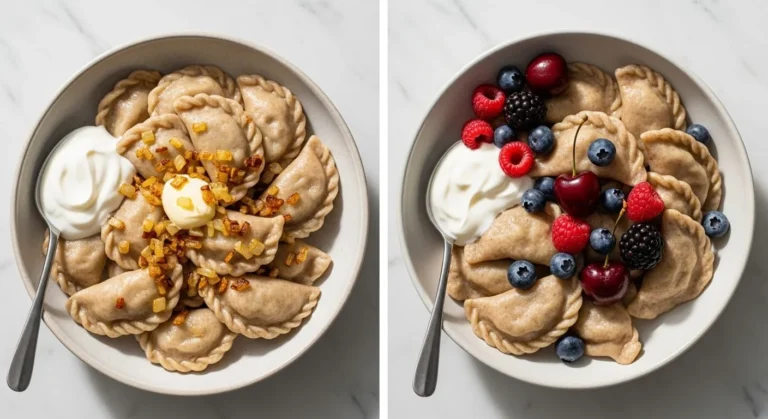
Savory varenyky go straight from the pot into a bowl with fried onions, melted butter, and sour cream. Sweet varenyky are drained gently, placed on a plate, and served with a spoonful of sour cream, a dusting of sugar, or both. Some families add berry syrup or honey over the top instead of sugar. The sour cream, always cold against the hot dumpling, is the constant.¹
Regional variations
Western Ukraine (Halychyna and the Carpathians) leans toward potato-and-cheese and fruit varenyky. This is where you are most likely to find sweet fillings at a restaurant table alongside savory ones as part of the same meal.¹
Central Ukraine favors cabbage and mushroom fillings, as well as the sauerkraut-mushroom combination that appears at every Christmas Eve table. Southern Ukraine has a stronger tradition of meat-filled varenyky. The Poltava region is famous for unusually stuffed versions: mashed peas with viburnum berries, buckwheat with cheese, and other combinations that do not appear elsewhere.²
On the Holiday Table
Two more winter dates belong to varenyky. They go on the Malanka table on 13 January, the Old New Year, next to kutia and holubtsi,⁴ and again through Maslyana, the last week before Great Lent, when meat is already set aside but cheese and eggs are not — the week cheese-filled varenyky belong to.⁵
Traditional varenyky recipe
Recipe developed independently by Heritage Healthy Kitchen, drawing on traditional Ukrainian culinary methods. Sources for further reading are listed at the end of this article.¹²³
The recipe below gives you one dough and two fillings: the classic potato-and-onion savory version and the sour cherry sweet version. Make both in the same session and serve them together — this is how a traditional Ukrainian table works.
The dough
Ingredients (makes approximately 35–40 varenyky)
- 400g (3⅓ cups) all-purpose flour, plus extra for dusting
- 180ml (¾ cup) warm water — not boiling, around 45°C / 113°F
- 1 teaspoon salt
- 1 tablespoon neutral oil (sunflower or vegetable)
- 1 egg, lightly beaten (optional — gives a firmer, more elastic dough)
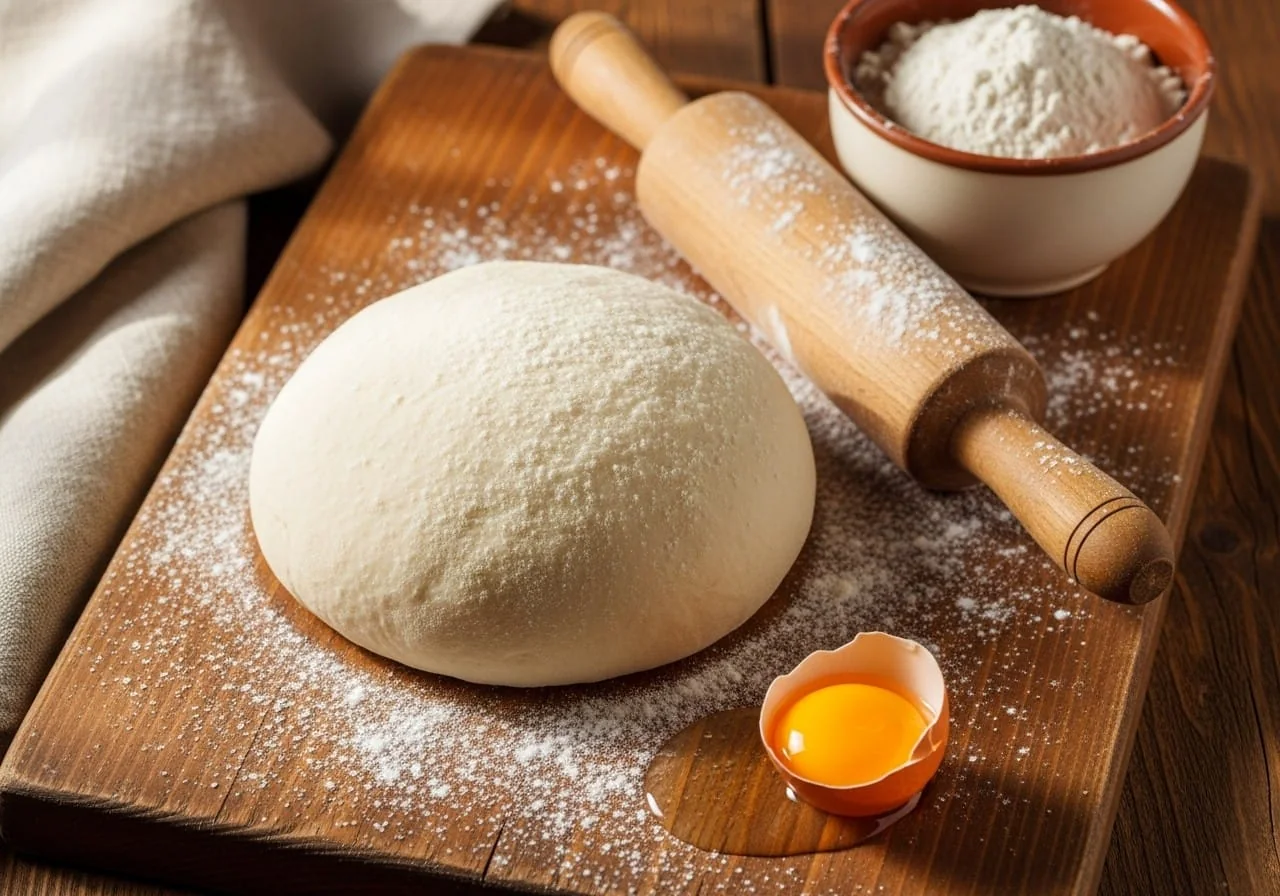
How to make the dough
- Whisk together the warm water, salt, oil, and egg (if using) in a large bowl. Add the flour gradually, mixing with a fork first, then switching to your hands when it becomes too stiff.
- Knead on a lightly floured surface for 5–7 minutes until the dough is smooth and no longer sticky. It should feel like soft earlobe — pliable but not sticky.
- Cover with a bowl or wrap tightly in cling film. Rest at room temperature for at least 20 minutes. Do not skip this step.
Filling one: potato and fried onion (savory)
Ingredients
- 500g (1.1 lb) starchy potatoes (Russet or similar), peeled and quartered
- 2 large onions — 1 for the filling, 1 for serving
- 50g (3.5 tablespoons) unsalted butter
- 100g (3.5 oz) farmer’s cheese or cottage cheese, drained (optional, but traditional in Western Ukraine)
- Salt and white pepper to taste
- 2 tablespoons neutral oil or butter for frying
How to make the filling
- Boil the potatoes in salted water until completely tender, about 20 minutes. Drain thoroughly.
- While the potatoes cook, dice one onion finely and fry in butter over medium heat until golden and soft, about 10–12 minutes. Do not rush this — undercooked onion in the filling tastes raw and sharp.
- Mash the hot potatoes with the fried onion (and butter from the pan), farmer’s cheese if using, salt, and pepper. The filling should be smooth and hold its shape. Taste and adjust seasoning. Cool to room temperature before filling the dumplings.
- Fry the second onion separately, in oil, until deep golden-brown and fragrant. Set aside for serving — these go on top of the finished varenyky.
Filling two: sour cherry (sweet)
Ingredients
- 400g (14 oz) pitted sour cherries — fresh, frozen (fully defrosted and drained), or jarred in juice
- 3 tablespoons sugar, or more to taste
- 1 tablespoon cornstarch (keeps the cherry juice from flooding the dumplings during boiling)
How to make the filling
- Drain the cherries thoroughly. If using frozen, defrost completely and squeeze out excess juice — save the juice to serve as a sauce later.
- Toss cherries with sugar and cornstarch. Do not cook them. The filling goes in raw and cooks inside the dough.
- Do not overfill — 2–3 cherries per dumpling is enough. Cherry varenyky burst if they are stuffed too generously.
How to shape and cook varenyky
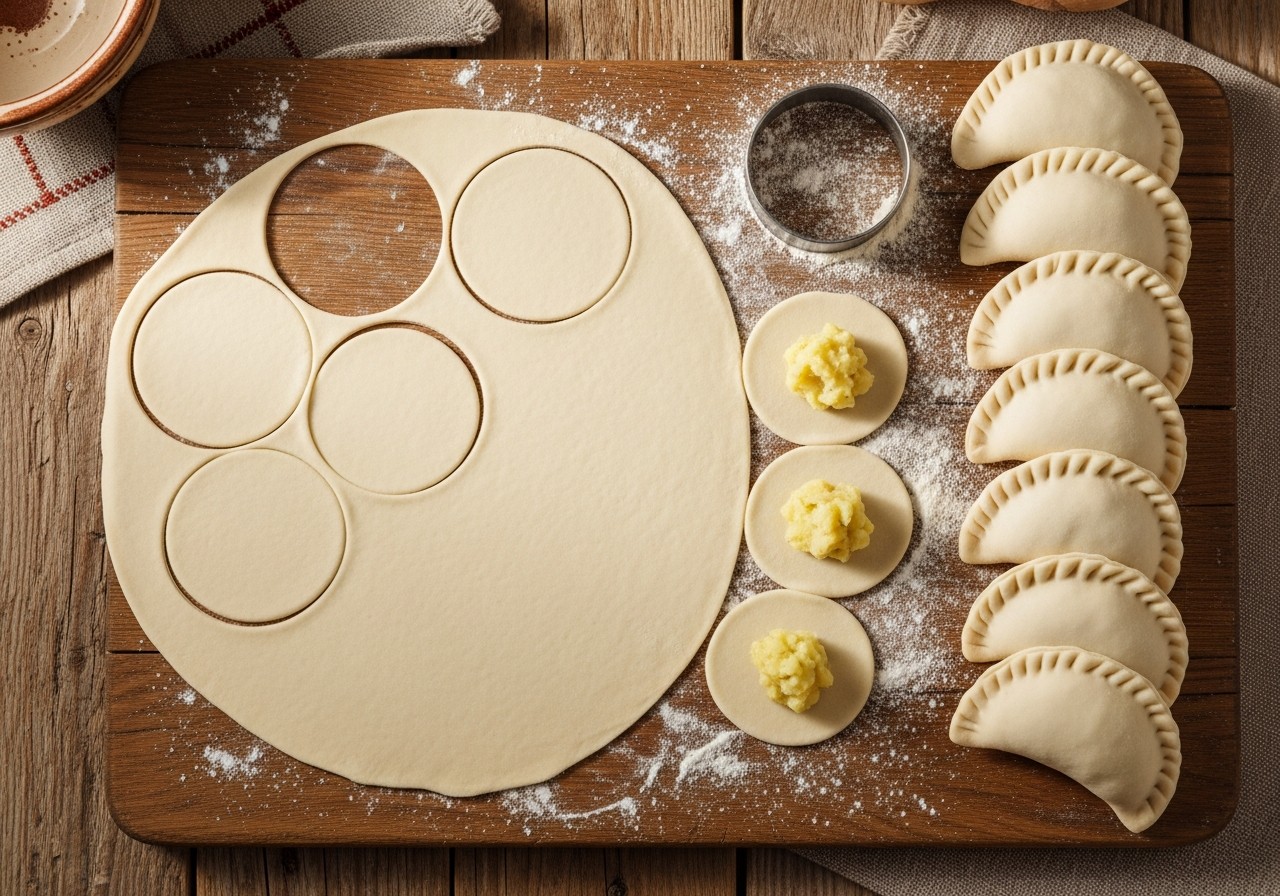
Shaping
- Divide the rested dough into thirds. Keep two-thirds covered while working with the first.
- Roll the dough on a lightly floured surface to 2–3mm thickness. Thinner than you think is right.
- Cut circles using a 7–8cm (3-inch) round cutter or the rim of a glass. Re-roll the scraps once — twice makes the dough tough.
- Place a small amount of filling in the center of each circle: about 1 teaspoon for potato, 2–3 cherries for the sweet version.
- Fold the circle in half and press the edges firmly together, working from the center outward to push out any air. Seal with a tight pinch and a traditional braided border — or just a firm press if you are going for function over form.
- Place finished varenyky on a lightly floured tray or parchment paper. Do not let them touch or they will stick.
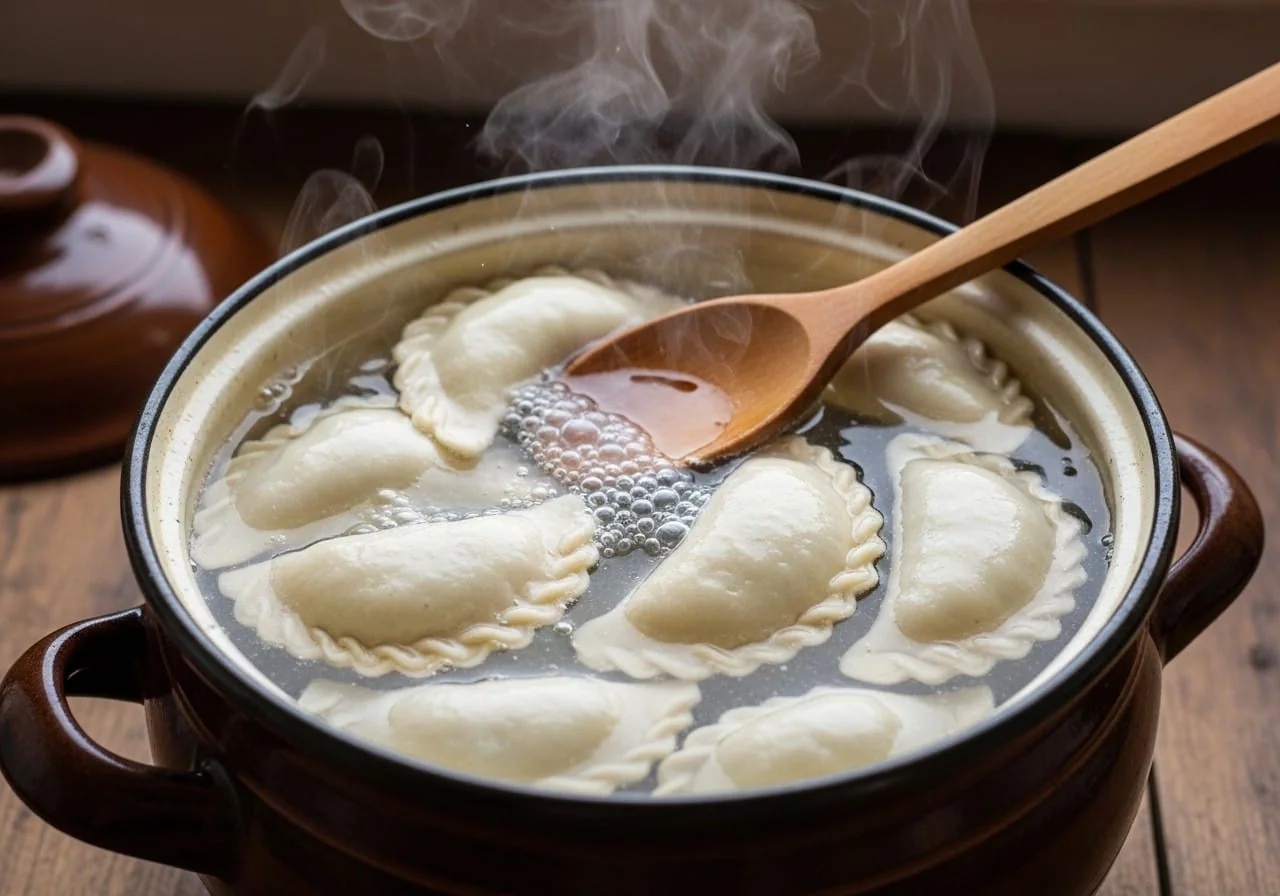
Boiling
- Bring a large pot of generously salted water to a full boil. Work in batches of 8–10.
- Drop varenyky in gently. Stir once immediately to prevent sticking to the bottom.
- When they float to the surface, cook for another 3–4 minutes for potato-filled, 2–3 minutes for cherry-filled. Cherry varenyky cook faster because the filling is raw and soft.
- Remove with a slotted spoon. Savory varenyky go directly into a bowl with the reserved fried onions and a knob of butter. Toss gently to coat — this prevents sticking between dumplings.
- Sweet varenyky go onto a warmed plate. Serve immediately with cold sour cream and a spoonful of the reserved cherry juice, heated with a little sugar to make a quick syrup.
Kitchen Tips
The dough rest matters. Twenty minutes of rest is the minimum; 30–40 is better. Gluten in under-rested dough snaps back when you roll it and tears at the edges when you seal it. Rested dough cooperates.³
Roll thinner than feels comfortable. Most first-timers leave the dough too thick, and the varenyky end up doughy and heavy. At 2–3mm, the boiled dumpling will have a tender, silky texture. Test one piece before rolling the whole batch.
For sweet varenyky, drain the fruit well and do not skip the cornstarch. Wet cherries or blueberries will flood the inside during boiling and burst the seal. A properly drained and starch-coated cherry stays together until you eat it — the juice releases when you bite in.¹
Fry your varenyky after boiling if you want a second texture option. Melt butter in a wide pan over medium heat, add the boiled and drained varenyky in a single layer, and cook until the bottom is golden and slightly crisp — about 3 minutes per side. Do not crowd the pan. This works for savory varenyky; most people do not fry sweet ones.³
To make ahead: shape the varenyky and freeze them raw on a floured tray. Once frozen solid, transfer to a bag. Cook from frozen in boiling water, adding 2 extra minutes. This is how most Ukrainian families have them available year-round.³
Nutritional Information
Savory potato varenyky — per serving (5 pieces, approximately 200g boiled)
- Calories: approximately 250–280 kcal
- Protein: ~7g
- Total fat: ~7g (when served with butter and fried onions)
- Carbohydrates: ~42g
- Dietary fiber: ~3g
- Sodium: ~380–450mg (varies with salt used in dough and filling)
Sweet cherry varenyky — per serving (5 pieces, approximately 185g boiled)
- Calories: approximately 210–240 kcal
- Protein: ~5g
- Total fat: ~2g (without added butter)
- Carbohydrates: ~46g
- Natural sugars: ~14g (from cherries, before added sugar)
- Dietary fiber: ~2g
Nutritional values are estimates based on standard ingredient databases. They will vary depending on exact dough thickness, portion size, type of potato, and whether additional butter or sour cream is included.
Storage and freezing
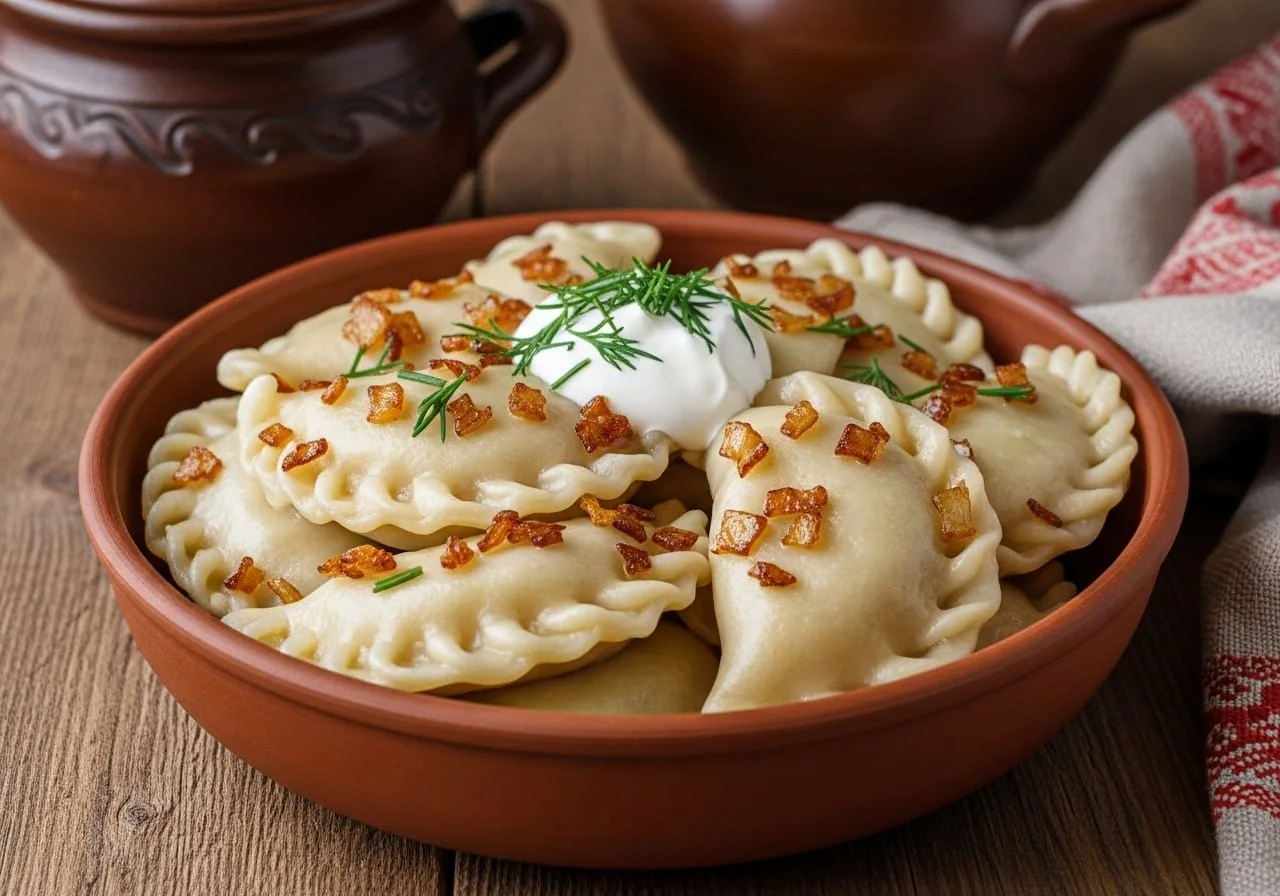
Boiled varenyky keep in the refrigerator for 2–3 days. Store in a sealed container with a light coating of oil or butter to prevent sticking. Reheat in a buttered pan over medium heat until warmed through and lightly crisped, or steam gently for 3–4 minutes. Microwaving works but makes the dough soft and slightly gummy.
Raw, uncooked varenyky freeze very well for up to 3 months. Freeze them in a single layer on a floured tray first, then transfer to a sealed bag once frozen. Cook directly from frozen — do not defrost first, as they turn sticky and hard to handle. Add 2–3 minutes to the boiling time.
Sweet varenyky do not refrigerate as well as savory ones because the fruit continues to release juice and softens the dough. Freeze them raw if you want to make a large batch ahead of time, and cook as needed.¹
Savory Potato Varenyky

Ingredients
For the dough
- 400g (3⅓ cups) all-purpose flour, plus extra for dusting
- 180ml (¾ cup) warm water (about 45°C / 113°F)
- 1 teaspoon salt
- 1 tablespoon neutral oil (sunflower or vegetable)
- 1 egg, lightly beaten (optional, for a firmer dough)
For the potato and onion filling
- 500g (1.1 lb) starchy potatoes, peeled and quartered
- 2 large onions (1 for the filling, 1 for serving)
- 50g (3.5 tbsp) unsalted butter
- 100g (3.5 oz) farmer’s cheese or cottage cheese, drained (optional)
- Salt and white pepper, to taste
- 2 tablespoons oil or butter, for frying
For serving
- Reserved deep-golden fried onions
- A knob of butter
- Sour cream
Instructions
- Make the dough: Whisk the warm water, salt, oil and egg. Add the flour gradually, then knead 5–7 minutes until smooth and no longer sticky. Cover and rest at room temperature for at least 20 minutes.
- Make the filling: Boil the potatoes in salted water until tender, about 20 minutes, and drain. Fry one finely diced onion in butter for 10–12 minutes until golden. Mash the potatoes with the fried onion, farmer’s cheese, salt and pepper; cool to room temperature.
- Fry the topping: Fry the second onion in oil until deep golden-brown and set aside for serving.
- Shape: Roll the rested dough to 2–3mm, cut 7–8cm circles, place about 1 teaspoon of filling in each, fold in half and seal the edges firmly.
- Boil: Cook in batches of 8–10 in salted boiling water; once they float, cook 3–4 minutes more, then lift out with a slotted spoon.
- Serve: Toss the hot varenyky with the reserved fried onions and butter. Serve with sour cream.
Sweet Sour Cherry Varenyky
Ingredients
For the dough
- 400g (3⅓ cups) all-purpose flour, plus extra for dusting
- 180ml (¾ cup) warm water (about 45°C / 113°F)
- 1 teaspoon salt
- 1 tablespoon neutral oil (sunflower or vegetable)
- 1 egg, lightly beaten (optional, for a firmer dough)
For the sour cherry filling
- 400g (14 oz) pitted sour cherries (fresh, or frozen and well drained)
- 3 tablespoons sugar, or more to taste
- 1 tablespoon cornstarch
For serving
- Cold sour cream
- Reserved cherry juice warmed with a little sugar, for a quick syrup
Instructions
- Make the dough: Whisk the warm water, salt, oil and egg. Add the flour gradually, then knead 5–7 minutes until smooth and no longer sticky. Cover and rest at room temperature for at least 20 minutes.
- Make the filling: Drain the cherries well, saving the juice. Toss the cherries with the sugar and cornstarch — do not cook them; they cook inside the dough.
- Shape: Roll the rested dough to 2–3mm, cut 7–8cm circles, place 2–3 cherries in each (do not overfill), fold in half and seal the edges firmly.
- Boil: Cook in batches in salted boiling water; once they float, cook 2–3 minutes more, then lift out with a slotted spoon.
- Serve: Serve on a warm plate with cold sour cream and a quick syrup made from the reserved cherry juice warmed with a little sugar.
Frequently Asked Questions
What is the difference between varenyky and pierogi?
The concept is the same: unleavened dough wrapped around a filling and boiled. Ukrainian varenyky are traditionally smaller and use thinner dough than Polish pierogi. The cultural distinction that matters most to Ukrainians is the sour cream — it is not a condiment but a requirement. Polish pierogi are sometimes served with butter or sauerkraut; varenyky come with sour cream, period.¹
Can I make the dough without eggs?
Yes. An egg-free dough uses only flour, water, salt, and a little oil. It produces a softer, slightly easier-to-shape dumpling. An egg-based dough is firmer and holds its shape better, with more of a bite when cooked. Both are traditional. If this is your first time making varenyky, the egg-free version is slightly more forgiving.¹
How do I prevent varenyky from sticking together after boiling?
Toss them immediately in melted butter or oil as soon as they come out of the water. This is standard practice in Ukrainian kitchens, not a workaround. For sweet varenyky, toss lightly in butter or simply spread them in a single layer on the serving plate — do not pile them or they will stick.³
My cherry varenyky kept bursting while boiling. What went wrong?
Two likely causes: the filling was too wet, or the dough was sealed with too little pressure. For cherries, drain thoroughly and coat with cornstarch before filling. When sealing, press firmly along the entire edge and check that there are no gaps, especially at the corners. A good seal should hold without any visible open seam.¹
Can sweet and savory varenyky be served at the same meal?
In Ukraine, this is completely standard. A traditional spread might include a bowl of potato varenyky with fried onions and a separate plate of cherry ones with sour cream and sugar. Guests take from both. The two types are made from the same dough in the same session.²
What do I do with leftover filling?
Potato filling: serve as mashed potatoes alongside the varenyky, or use it in potato pancakes (deruny) the next day. Cherry filling: warm the juice with sugar until it thickens into a syrup and pour it over ice cream or porridge. Nothing gets wasted in a traditional Ukrainian kitchen.²
Is there a Christmas Eve version of varenyky?
Yes, and it is one of the twelve dishes of Svyata Vecherya (Holy Evening). The Christmas Eve varenyky are always meatless: the most common filling is sauerkraut with dried mushrooms. Some families also serve sweet varenyky with poppy seeds and honey as part of the same meal. The tradition of twelve dishes, all served without meat, is observed in Ukrainian Orthodox and Greek Catholic households.²
Looking for a lighter version?
Traditional varenyky dough is already relatively lean — the calories come mainly from the filling and the butter and sour cream at serving. Our Healthy Varenyky article covers reduced-fat filling options, whole wheat dough variations, and how to cut the serving additions without losing what makes the dish worth making.
Further Reading & Sources
The following sources were consulted in researching the history, technique, and cultural background of traditional Ukrainian varenyky. Heritage Healthy Kitchen’s recipe was developed independently; these links are provided for readers who want to explore further.
- “Ukrainian Varenyky with Potato Filling and Fried Onions.” The New Baguette. thenewbaguette.com — recipe technique, dough variations, and cultural notes from a Ukrainian author.
- “History and 10 Facts About Ukrainian Varenyky.” Ukrainian Recipes. ukrainian-recipes.com — historical background, ritual significance, full range of traditional fillings, and cultural facts.
- “Ukrainian Varenyky (Potato Dumplings).” Fine Foods Blog. finefoodsblog.com — detailed technique guide for shaping, storing, freezing, and reheating from a Ukrainian family recipe.
- Kosoy, Daniel. “What’s All the Hype About Ukraine’s Wild Pagan New Year Party?” UNITED24 Media. united24media.com — the Malanka table on 13 January: kutia, varenyky and holubtsi.
- “Fasting & Fast-Free Seasons of the Church.” Orthodox Church in America. oca.org — Cheesefare Week: meat set aside after Meatfare Sunday, dairy and eggs still permitted until Great Lent begins.
Disclaimer
The information in this article is provided for educational and informational purposes only. Heritage Healthy Kitchen makes no representations or warranties regarding the accuracy or completeness of any content on this site. Nutritional values are estimates only and will vary depending on the specific ingredients, brands, and measurements used. This content is not intended as dietary, medical, or professional nutritional advice. Always consult a qualified healthcare provider regarding any dietary needs or health conditions. Heritage Healthy Kitchen is not responsible for any outcomes resulting from the use of recipes or information published on this site.
Cook by Occasion
This recipe is part of our Sviata Vecheria menu, our Malanka feast, and our Maslyana table.
You Might Also Like
More heritage recipes from our kitchen


Leave a Reply