
Cultural Heritage & Historical Context
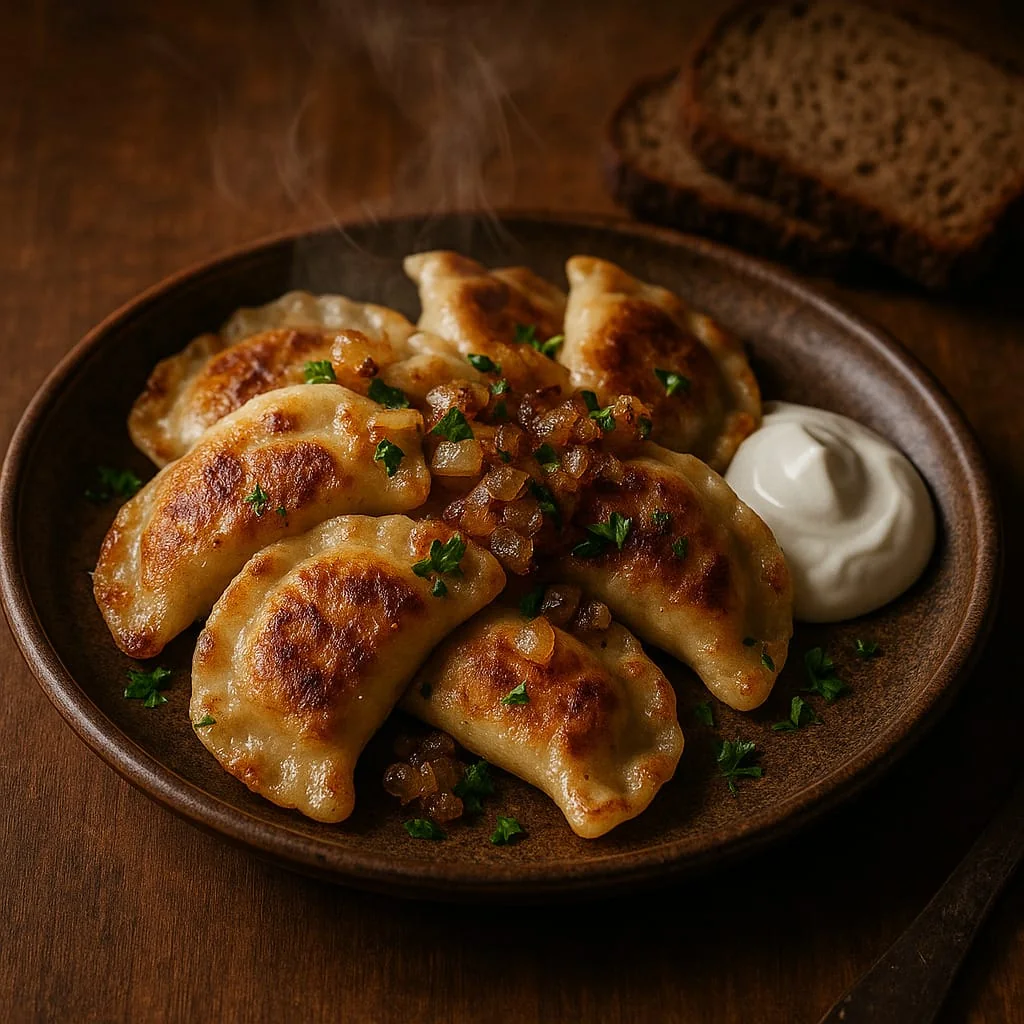
Pierogi represent one of Poland’s most treasured culinary traditions, with the earliest documented recipe appearing in the “Compendium ferculorum” manuscript from 1682, as researched by Prof. Jarosław Dumanowski from Nicolaus Copernicus University¹. The Polish Academy of Gastronomy recognizes pierogi as a cornerstone of authentic Polish gastronomy, distinguishing the traditional “pierogi ruskie” (Ruthenian-style, not Russian) as a regional specialty².
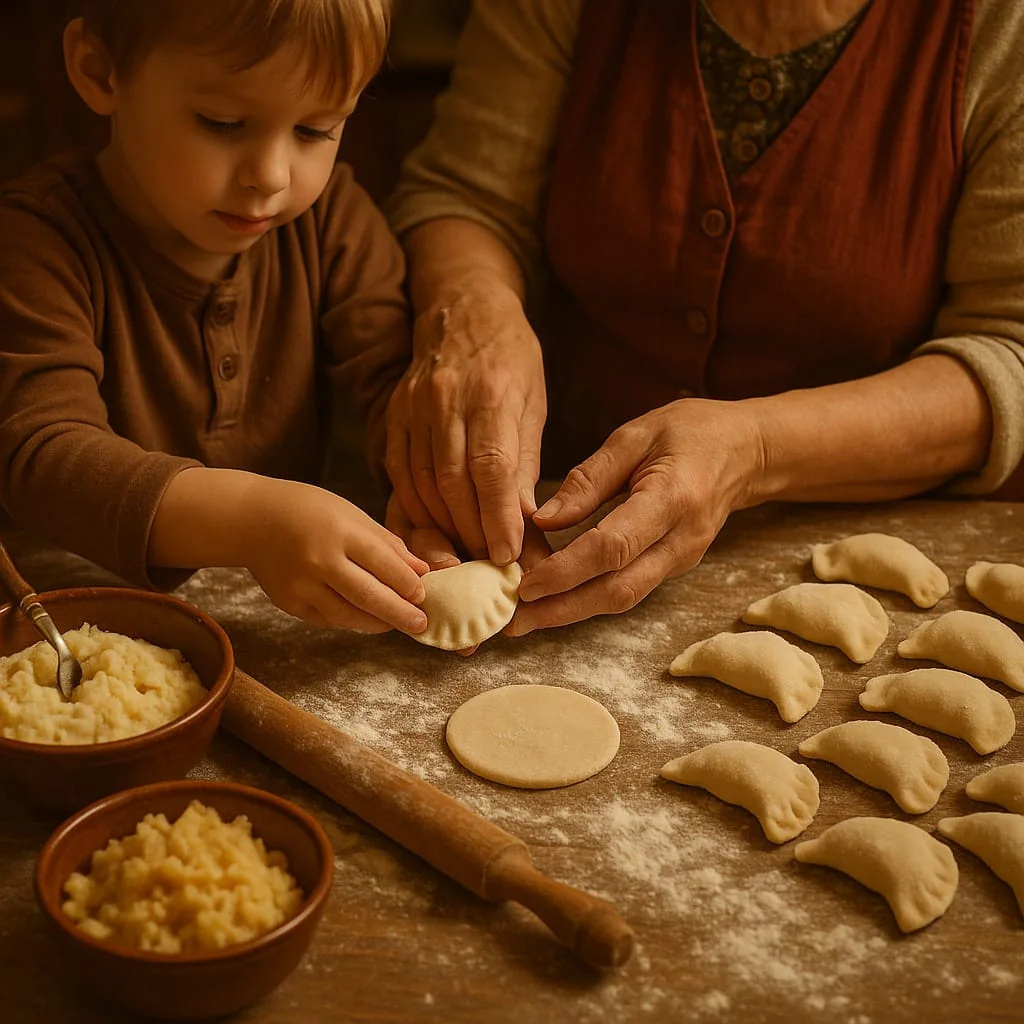
According to cultural historians at Wilanów Palace Museum, pierogi-making represents an intangible cultural practice that strengthens family bonds and preserves culinary memory across generations³.
Recipe Overview
Prep Time: 45 minutes Cook Time: 15 minutes Total Time: 60 minutes Serves: 6-8 people Difficulty: Intermediate
Ingredients
For the Dough:
- 3 cups (360g) all-purpose flour, sifted
- 1 large egg, room temperature
- 1 cup (240ml) full-fat sour cream
- 1/2 cup (120ml) warm water
- 1/2 teaspoon fine sea salt
- 2 tablespoons (30g) unsalted butter, melted
For Traditional Potato-Cheese Filling:
- 2 pounds (900g) starchy potatoes
- 8 oz (225g) twaróg cheese or farmer’s cheese
- 1 large yellow onion, finely diced
- 3 tablespoons (45g) butter
- Salt and white pepper to taste
- Fresh chives for garnish
Instructions
Step 1: Prepare the Dough (15 minutes)
1. Combine dry ingredients: Whisk flour and salt in large bowl, creating a well in center.
2. Mix wet components: Beat egg with sour cream and warm water until smooth.
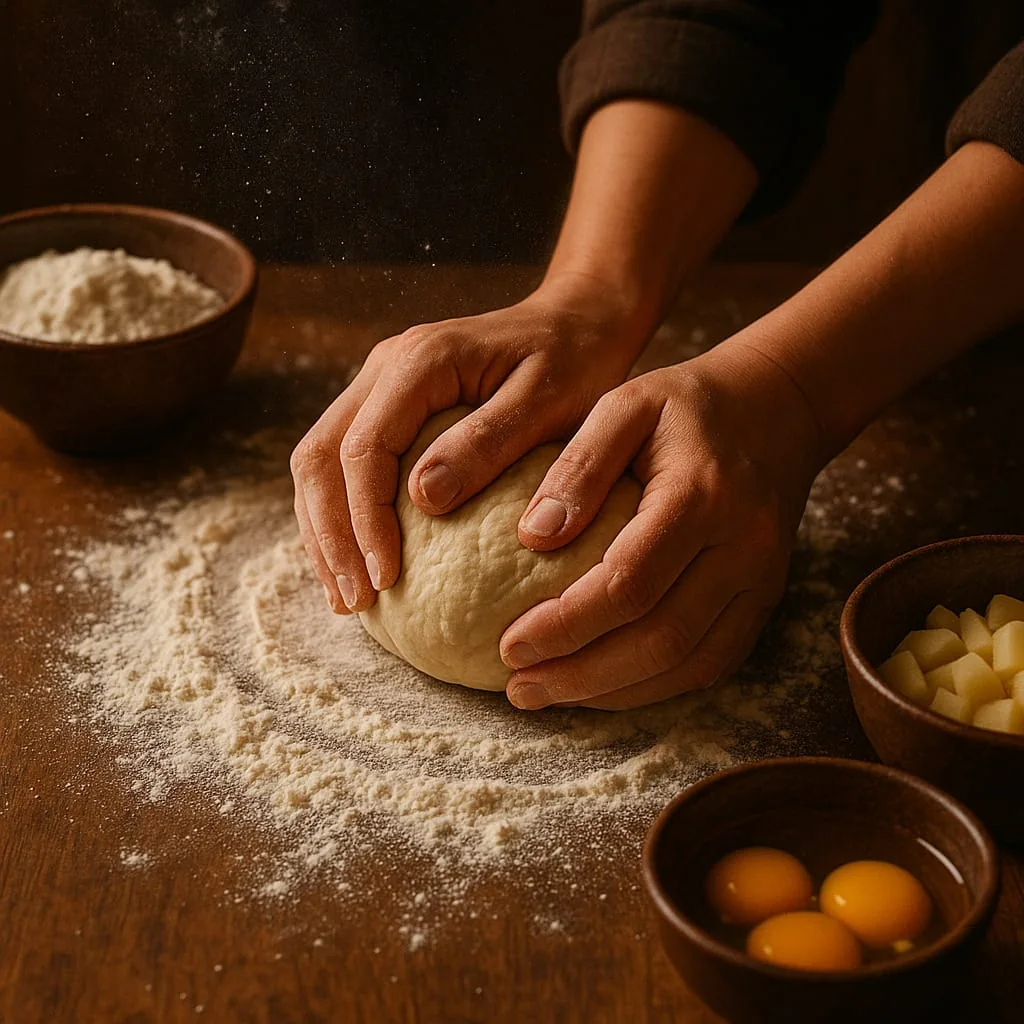
3. Form dough: Pour wet mixture into flour well. Mix with wooden spoon, gradually incorporating flour. Add melted butter.
4. Knead: Work dough by hand for 8-10 minutes until silky and elastic.
5. Rest: Wrap in damp towel and rest 30 minutes for gluten relaxation.
Step 2: Create the Filling (25 minutes)
1. Cook potatoes: Boil whole potatoes in salted water until fork-tender (25-30 minutes).
2. Prepare onions: Sauté diced onions in butter over medium heat until golden (8-10 minutes).
3. Combine filling: Rice warm potatoes, fold in cheese, sautéed onions with butter, salt, and pepper.
Step 3: Assemble Pierogi (30 minutes)
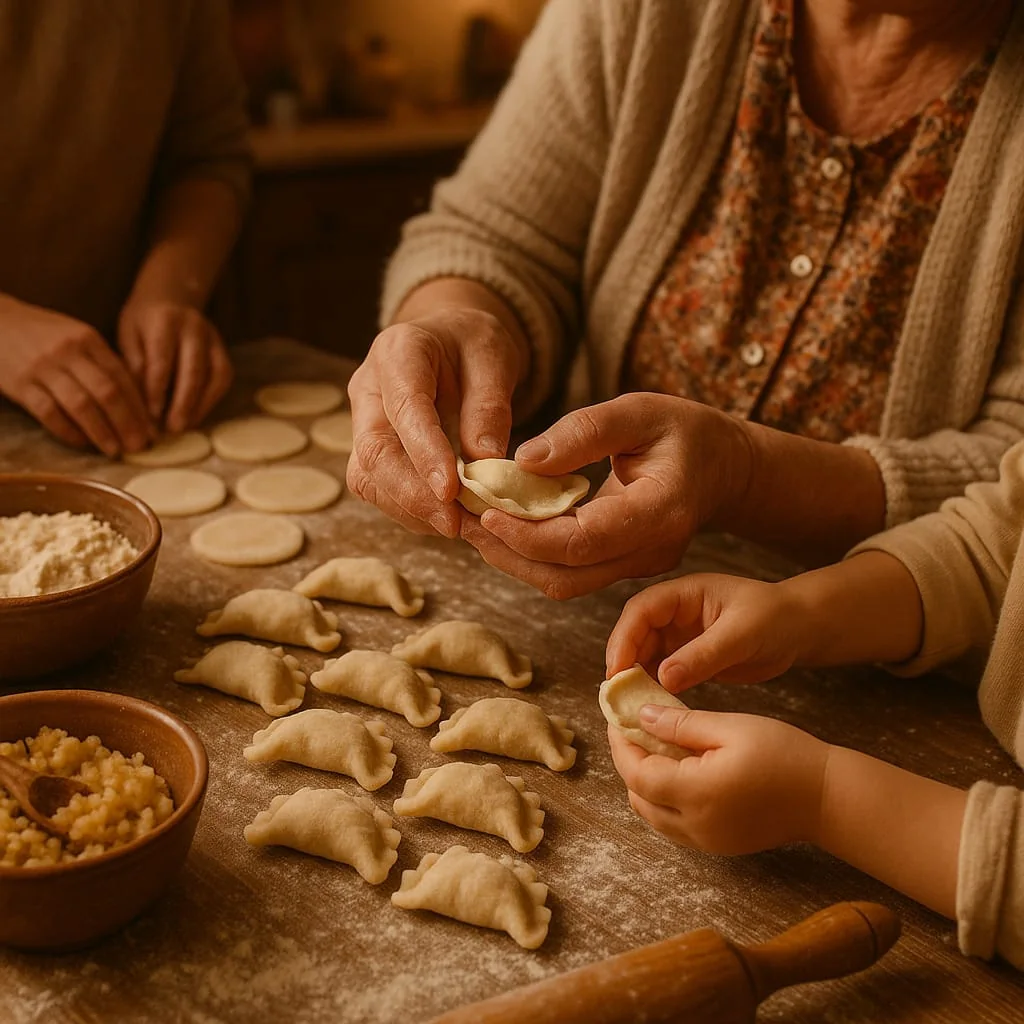
1. Roll dough: On floured surface, roll to 1/8-inch thickness.
2. Cut circles: Use 3-inch cutter to create rounds.
3. Fill and seal: Place 1 tablespoon filling in center, brush edges with water, fold into half-moon, and crimp edges firmly.
Step 4: Cook (15 minutes)
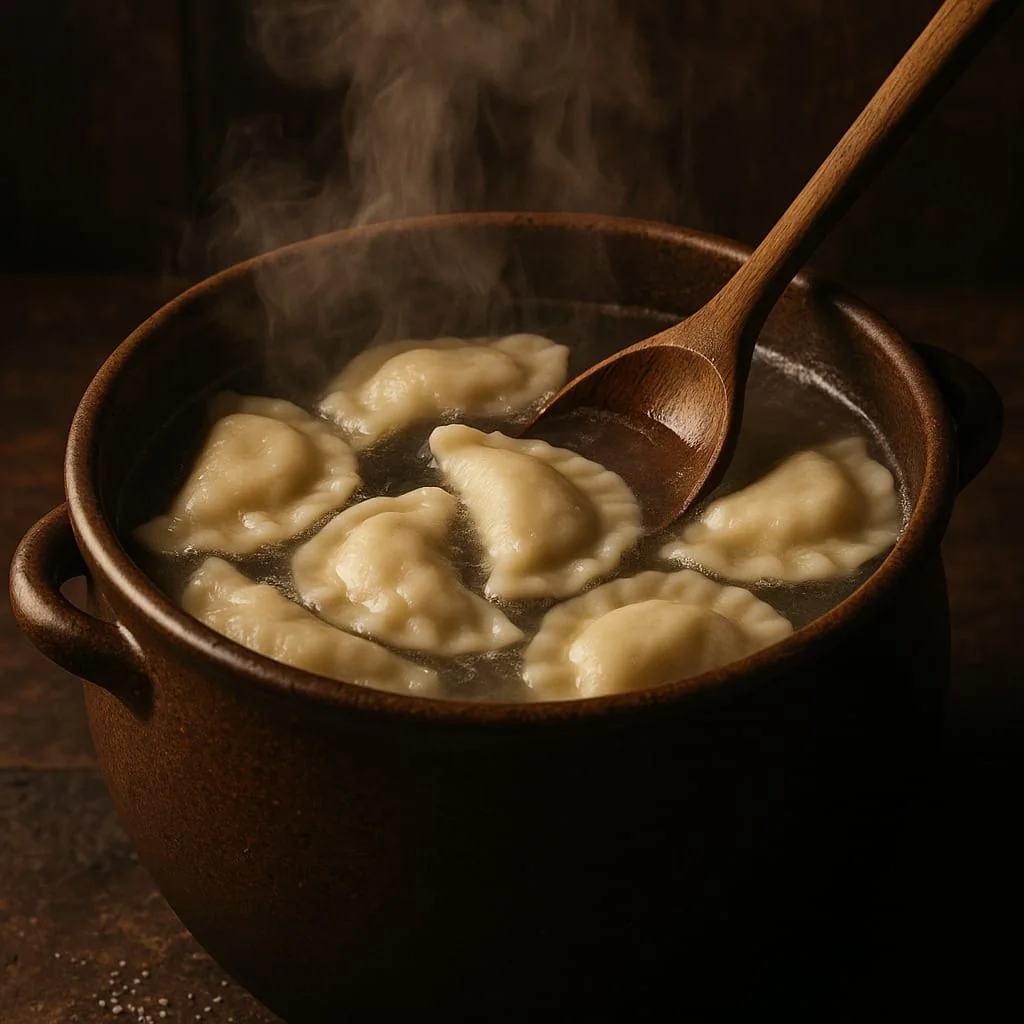
1. Boil: Add pierogi to gently boiling salted water in batches. When they float (3-4 minutes), they’re done.
2. Pan-finish: Heat butter in skillet, pan-fry boiled pierogi until golden on both sides (2-3 minutes per side).
Expert Tips from Polish Tradition
- Dough texture: Should feel like silk after proper kneading
- Filling balance: Traditional ratio is 2:1 potato to cheese
- Sealing technique: Water on edges ensures proper adhesion
- Cooking method: Gentle simmer prevents bursting
Nutritional Information
Per serving (6 pierogi):
- Calories: 285
- Carbohydrates: 42g
- Protein: 12g
- Fat: 8g
- Fiber: 3g
Storage Instructions
Fresh: Refrigerate up to 2 days Frozen: Flash-freeze on trays, then store in bags up to 3 months Reheating: Pan-fry from frozen, adding 2-3 extra minutes
Traditional Variations
- Pierogi ruskie: Potato, onion, and cheese (most traditional)
- Pierogi z kapustą: Sauerkraut and mushroom
- Pierogi z mięsem: Ground meat with onions
—
Sources: 1. Dumanowski, J. (2019). Polish Culinary Manuscripts Research, Nicolaus Copernicus University 2. Polish Academy of Gastronomy. (2023). Authentic Polish Gastronomy Standards 3. Wilanów Palace Museum. (2022). Cultural Heritage and Culinary Traditions
Explore more healthy adaptations in our companion article: “Healthy Pierogi Variations: Keto, Gluten-Free & Plant-Based Options”
On the Holiday Table
One of those fillings keeps a date. Pierogi z kapustą i grzybami, sauerkraut with wild mushrooms, are among the twelve meatless dishes of Wigilia, the Polish Christmas Eve supper, and they turn up on our Wigilia menu after the barszcz and uszka.
Looking for a Lighter Version?
If you want a lighter take on this dish, see our Healthy Pierogi Variations: Keto, Gluten-Free & Plant-Based Options.
Traditional Polish Pierogi Ruskie

Ingredients
Dough
- 3 cups (360g) all-purpose flour, sifted
- 1 large egg, room temperature
- 1 cup (240ml) full-fat sour cream
- ½ cup (120ml) warm water
- ½ tsp fine sea salt
- 2 tbsp (30g) unsalted butter, melted
Potato-Cheese Filling
- 2 lbs (900g) starchy potatoes
- 8 oz (225g) twaróg or farmer’s cheese
- 1 large yellow onion, finely diced
- 3 tbsp (45g) butter
- Salt and white pepper to taste
To Serve
- Butter for pan-frying
- Full-fat sour cream
- Caramelized onions
- Fresh chives
Instructions
- Dough: Whisk flour and salt. Beat egg with sour cream and warm water. Combine, add melted butter. Knead 8-10 min until silky. Rest 30 min wrapped in damp towel.
- Filling: Boil whole potatoes until fork-tender (25-30 min). Sauté onions in butter until golden (8-10 min). Rice warm potatoes, fold in cheese, onions, salt, and white pepper.
- Assemble: Roll dough to 1/8-inch. Cut 3-inch circles. Place 1 tbsp filling in center, brush edges with water, fold into half-moon, crimp edges firmly.
- Boil: Add to gently boiling salted water in batches. When they float (3-4 min), they’re done.
- Pan-fry: Heat butter in skillet. Fry boiled pierogi until golden on both sides, 2-3 min per side. Serve with sour cream and caramelized onions.
Frequently Asked Questions
What are Polish pierogi?
Polish pierogi are stuffed dumplings made from unleavened dough filled with various savory or sweet fillings, then boiled and often pan-fried in butter. The earliest documented Polish pierogi recipe appears in the Compendium ferculorum manuscript from 1682. They are everyday food in Poland, and have been for long enough that the 1682 cookbook already assumed the reader knew what they were.
What is the traditional filling for pierogi ruskie?
Despite the name meaning ‘Ruthenian-style’ (not Russian), pierogi ruskie are filled with mashed potatoes, twaróg (Polish farmer’s cheese), and caramelized onions. The traditional potato-to-cheese ratio is 2:1. Season with salt and white pepper. Twaróg can be substituted with farmer’s cheese or dry cottage cheese if unavailable.
How do you seal pierogi so they don’t burst during cooking?
The key: brush the dough edge with water before folding, press firmly along the entire edge, then crimp with a fork or pinch using the traditional rope-twist technique. Do not overfill — 1 tablespoon of filling per 3-inch circle is correct. Cook in gently simmering (not rapidly boiling) water to avoid bursting.
Can Polish pierogi be frozen?
Yes. Flash-freeze assembled uncooked pierogi on a flour-dusted tray until solid, then transfer to freezer bags. They keep 3 months frozen. Cook directly from frozen — add 2–3 extra minutes to the boiling time. Pre-cooked pierogi can also be frozen, though texture is slightly better when frozen uncooked.
What is the difference between boiled and pan-fried pierogi?
Boiled pierogi cook through in 3–4 minutes in salted water (they’re done when they float). Pan-frying in butter after boiling is optional but traditional — it creates a golden, crispy exterior while keeping the inside soft. Many Polish families serve them both ways, with sour cream and caramelized onions.
How long does it take to make pierogi from scratch?
Making pierogi from scratch takes approximately 60 minutes total: 15 minutes for dough, 30 minutes resting time (essential for gluten relaxation), 25 minutes for filling, and 30 minutes for assembly and cooking. An experienced pierogi maker can assemble about 40–50 pierogi per hour. Making them is traditionally a family activity in Poland.
Cook by Occasion
This recipe is part of our Wigilia menu.
You Might Also Like
More heritage recipes from our kitchen


Leave a Reply