
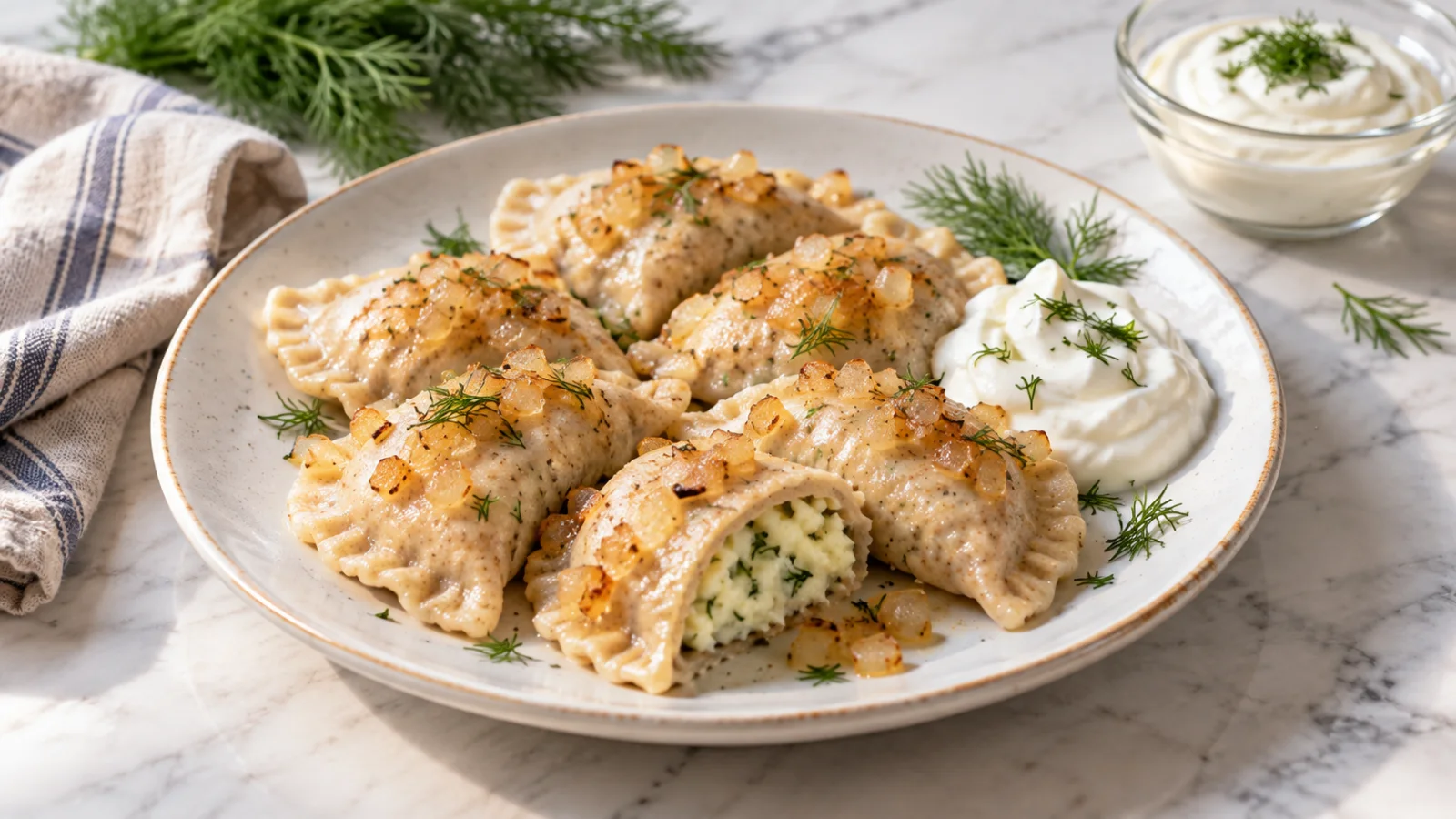
Lighter Pierogi Ruskie — Active time: ~1 hour 15 min | Total time: ~2 hours | Serves: 8 (about 48 pierogi) | Difficulty: Medium
Gluten-Free Pierogi — Active time: ~1 hour 15 min | Total time: ~2 hours 15 min | Serves: 8 (about 48 pierogi) | Difficulty: Medium
Plant-Based Pierogi — Active time: ~1 hour 15 min | Total time: ~2 hours, plus 4 hours soaking | Serves: 8 (about 48 pierogi) | Difficulty: Medium
Quick Overview
- Make the dough with half whole wheat flour and only a spoonful of olive oil
- Fill it with potato, low-fat curd cheese and onion softened in olive oil
- Boil the pierogi and serve them without frying, with Greek yogurt and the rest of the onion
- For gluten-free pierogi, use a certified gluten-free flour blend and a kitchen kept free of gluten
- For plant-based pierogi, leave the egg out of the dough and fill it with potato and cashew cream
What This Version Changes — and What It Keeps
The lighter pierogi ruskie keep everything that makes the dish recognizable: a thin dough folded into half-moons, a potato and curd cheese filling, onion, and boiling as the main cooking method. What changes is the fat. The dough takes half whole wheat flour and only a spoonful of oil, full-fat curd cheese becomes a low-fat one, the onion is softened in olive oil instead of butter, and the pierogi are served boiled rather than fried, with Greek yogurt on the plate instead of sour cream. They still eat like pierogi ruskie: the dough is a shade darker and nuttier, and the filling tastes fresher and a little less rich.
The other two versions are for different needs. The gluten-free one changes only the flour, so it is no lighter than the traditional recipe, but it makes pierogi possible for someone with celiac disease. The plant-based one leaves out the egg, the cheese and the butter. It has a little less saturated fat than the traditional recipe, although the cashews and olive oil put its calories above the original.
Why These Swaps Work
Whole wheat flour for half the white flour. Refining wheat strips away the bran and germ and removes more than half of its B vitamins, about 90% of its vitamin E and nearly all of its fiber. The bran and fiber of whole grains slow the breakdown of starch into glucose, which keeps blood sugar steadier.¹ Using half whole wheat rather than all of it keeps the dough elastic enough to roll thin.
Less oil in the dough. Published pierogi doughs use several spoonfuls of oil, but the author of one notes that the oil is not essential and a basic dough needs only flour, water and salt.¹⁰ This version keeps a single tablespoon.
Greek yogurt in place of sour cream. Greek yogurt is strained, which makes it thick and gives it about twice the protein of regular yogurt, and Cleveland Clinic suggests it as a replacement for some of the sour cream in dips, dressings and soups.² Here it takes the place of the spoonful of sour cream served with the pierogi.
Olive oil in place of butter. The butter for the onion is the largest single source of saturated fat in the traditional pierogi ruskie. Replacing saturated fat with unsaturated fats, such as those in olive oil, lowers LDL cholesterol.³
Low-fat curd cheese. Low-fat cottage cheese provides about 11 grams of protein per 100 grams. Cleveland Clinic’s dietitian recommends full-fat or low-fat rather than nonfat, because nonfat cottage cheese has less protein and is less satisfying, and points out that cottage cheese can be high in sodium.⁴ That is why this filling uses a low-fat curd cheese, well drained, and less added salt than the traditional recipe.
A certified gluten-free flour blend (gluten-free). Gluten is found in wheat and its relatives such as spelt and semolina, and in barley, rye and triticale; for people with celiac disease, a gluten-free diet can relieve symptoms and heal damage to the small intestine.⁵ The flour is not the only risk. Cross-contact, when gluten-free food comes into contact with foods or products that contain gluten, can happen while food is prepared or served,⁵ so a clean board, rolling pin and pot matter as much as the flour.
No egg in the plant-based dough. Pierogi dough does not need an egg: Polonist’s published recipe uses only flour, hot water, oil and salt,⁹ and the plant-based version follows it.
Cashew cream and nutritional yeast in place of twaróg (plant-based). Soaked and blended, cashews give the potato filling the creamy body that the curd cheese used to supply. Nuts are high in unsaturated fats, which help lower LDL cholesterol.⁶ Nutritional yeast adds a savory, cheese-like flavor, along with protein and B vitamins.⁷
This recipe was compiled by Heritage Healthy Kitchen from published recipes and the sources for the swaps, all listed at the end of this article. Figures that are Heritage Healthy Kitchen’s own estimates rather than taken from a published source are marked as such.
The base is the traditional pierogi ruskie on this site, compiled from published recipes.⁹˒¹⁰˒¹¹ The amounts of whole wheat flour, oil and water, the gluten-free dough and the plant-based filling are Heritage Healthy Kitchen’s estimates.
Lighter Pierogi Ruskie
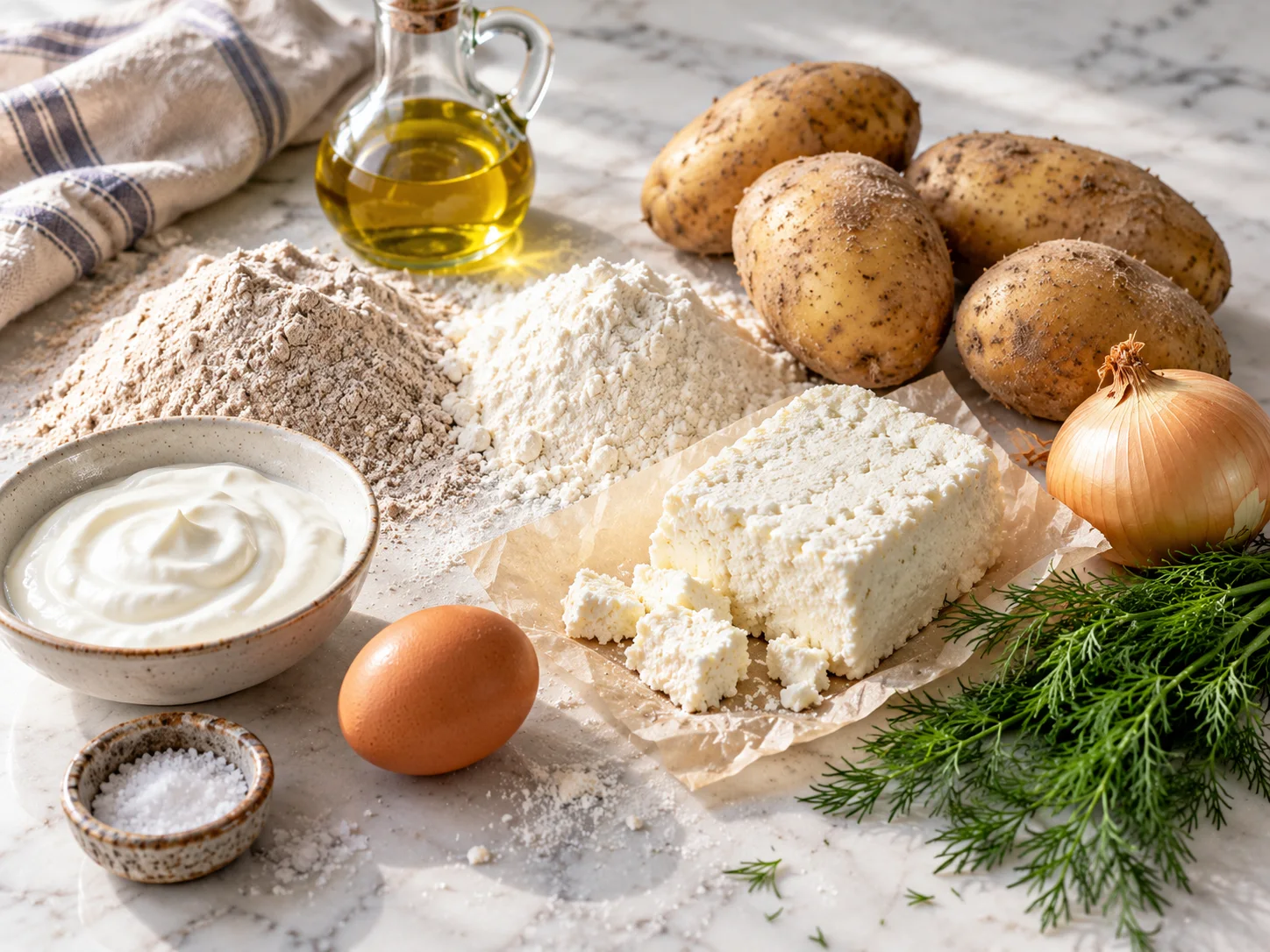
Ingredients (serves 8, about 48 pierogi)
For the dough
- 200g (about 1⅔ cups) whole wheat flour
- 200g (about 1⅔ cups) all-purpose flour, plus more for rolling
- 1 large egg
- 200–220ml (about ¾–1 cup) warm water
- 1 tbsp (15ml) olive oil
- ½ tsp salt
For the filling
- 600g (about 1.3 lb) floury potatoes, such as russet
- 300g (about 10 oz) low-fat twaróg, or low-fat (1–2%) farmer’s cheese or cottage cheese, well drained
- 1 large onion (about 200g), finely diced
- 1 tbsp (15ml) olive oil
- ½ tsp salt
- ¼ tsp black pepper
- 2 tbsp chopped dill or chives
To serve
- Plain low-fat Greek yogurt, about 2 tablespoons per serving
- The reserved onion
Instructions
- Make the dough. Whisk both flours and the salt in a large bowl. Beat the egg with most of the warm water, pour it in with the olive oil and stir. Knead until smooth and soft, adding the rest of the water if the dough feels dry; whole wheat flour usually needs a little more. Cover and rest for 20–30 minutes.
- Cook the potatoes. Boil the potatoes in their skins in lightly salted water until tender, 25–30 minutes. Drain, peel while warm and mash until smooth.
- Soften the onion. Warm the olive oil in a nonstick pan and cook the onion over medium-low heat until soft and golden, 10–12 minutes, stirring often. If it starts to catch, add a spoonful of water.
- Mix the filling. Crumble the drained cheese into the potatoes, add about two thirds of the onion, the salt, pepper and herbs, and mix well. Cool completely; keep the rest of the onion for serving.
- Roll, fill and seal. Roll the dough to 2–3mm thick, a quarter at a time, and cut 7cm (2¾-inch) rounds. Put about 20g of filling on each, fold into a half-moon, press out the air and pinch the edges firmly shut.
- Boil. Cook in batches of 10–12 in salted water at a gentle boil, 1–3 minutes after they float. Lift out with a slotted spoon.
- Serve. Top with the reserved onion and a spoonful of Greek yogurt.
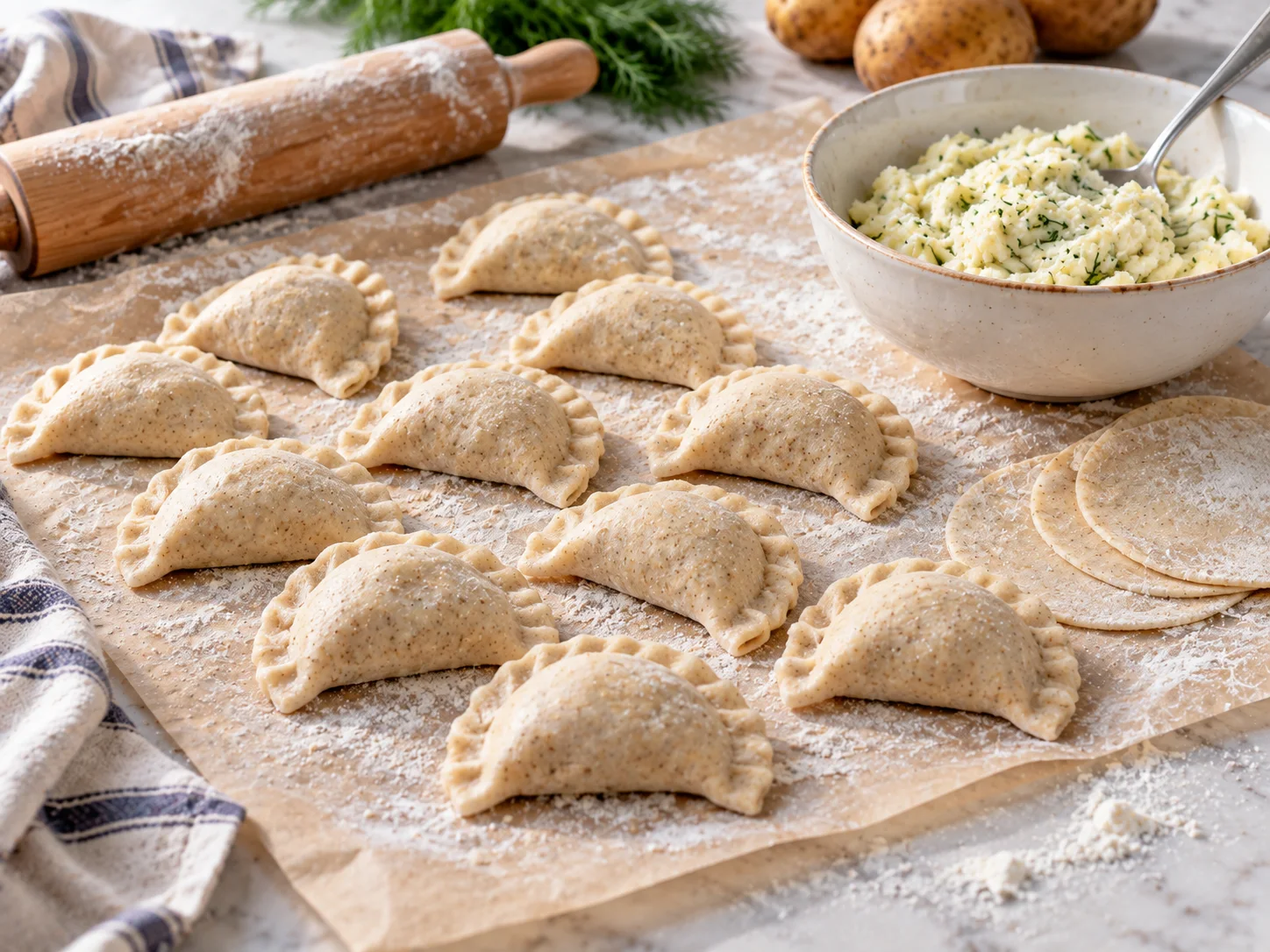
Gluten-Free Pierogi
Ingredients (serves 8, about 48 pierogi)
For the dough
- 400g (about 3⅓ cups) certified gluten-free all-purpose flour blend that contains xanthan gum, plus more for dusting
- 1 tsp xanthan gum
- 1 large egg
- About 200ml (¾ cup) warm water
- 3 tbsp (45ml) sunflower or other neutral oil
- ½ tsp salt
For the filling
- 600g (about 1.3 lb) floury potatoes
- 300g (about 10 oz) twaróg or farmer’s cheese
- 1 large onion (about 200g), finely diced, fried in 45g (3 tbsp) butter
- ¾ tsp salt and ¼ tsp pepper
Instructions
- Make the dough. Whisk the flour blend, xanthan gum and salt. Beat the egg with most of the warm water, stir it into the flour with the oil, and knead briefly until smooth, adding the rest of the water if needed.
- Rest the dough. Wrap it and leave for 45 minutes. Gluten-free flour takes longer than wheat flour to absorb water.
- Make the filling. Boil the potatoes in their skins until tender, peel and mash. Mix in the crumbled twaróg, about two thirds of the fried onion, the salt and pepper, and cool completely.
- Roll, fill and seal. Roll small portions of dough between sheets of parchment or on a surface dusted with gluten-free flour, to 2–3mm. Cut 7cm rounds, fill each with about 20g of filling, fold and pinch the edges firmly shut.
- Boil. Cook in batches in a pot of salted water at a gentle boil, 1–3 minutes after they float. Serve with the rest of the onion.
Plant-Based Pierogi
Ingredients (serves 8, about 48 pierogi)
For the dough
- 400g (about 3⅓ cups) all-purpose flour, plus more for rolling
- About 200ml (¾ cup) hot water
- 3 tbsp (45ml) olive or sunflower oil
- ½ tsp salt
For the filling
- 150g (about 1 cup) raw cashews, soaked in water for 4 hours
- 15g (about ¼ cup) nutritional yeast
- 2 tbsp lemon juice
- 600g (about 1.3 lb) floury potatoes
- 1 large onion (about 200g), finely diced
- 2 tbsp (30ml) olive oil
- ¾ tsp salt and ¼ tsp black pepper
Instructions
- Make the dough. Whisk the flour and salt, add most of the hot water and the oil, and stir until it comes together, adding the rest of the water if needed. Knead until smooth, cover and rest for 15–20 minutes.
- Blend the cashew cream. Drain the cashews and blend them with the nutritional yeast, lemon juice and 3–4 tablespoons of water until completely smooth.
- Make the filling. Boil the potatoes in their skins until tender, peel and mash. Fry the onion in the olive oil until golden. Mix the potatoes with the cashew cream, the onion, salt and pepper, taste, and cool completely.
- Roll, fill and seal. Roll the dough to 2–3mm, cut 7cm rounds, fill each with about 20g of filling, fold and pinch the edges shut.
- Boil. Cook in batches in salted water at a gentle boil, 1–3 minutes after they float. Serve plain or with more fried onion.

Kitchen Tips
Drain the curd cheese well. Low-fat twaróg and cottage cheese hold more water than full-fat ones, and a wet filling makes the dough soggy and hard to seal. Press it in a sieve lined with a clean cloth for at least 30 minutes.
Give the whole wheat dough its full rest. The bran absorbs water more slowly than white flour, and a dough rolled too soon feels dry and cracks at the edges.
Soften the onion slowly. With only a tablespoon of oil, high heat burns the onion before it turns sweet; medium-low heat and a splash of water when needed give the same golden result.
Blend the cashews longer than seems necessary. Any grit left in the cream stays grainy in the filling. A high-speed blender does it in a minute or two; a regular one takes longer and a little more water.
Nutritional Comparison
| Nutrient | Traditional | Lighter pierogi ruskie | Plant-based |
|---|---|---|---|
| Calories | ~330–400 kcal | ~275–335 kcal | ~395–480 kcal |
| Protein | ~11–13g | ~11–14g | ~10–12g |
| Total fat | ~10–12g | ~5g | ~16–19g |
| Saturated fat | ~3.5g | ~1.2g | ~2.5g |
| Carbohydrates | ~49–60g | ~49–59g | ~55–67g |
| Dietary fiber | ~2.5g | ~4.5g | ~4g |
| Sodium | ~450–545mg | ~380–460mg | ~335–410mg |
Values are per serving of about 6 boiled pierogi, one of 8 servings, before toppings and without the salt absorbed from the cooking water. Nutritional values are estimates based on standard ingredient databases (USDA FoodData Central).⁸ The gluten-free version is not listed separately: it uses the traditional dough and filling with a different flour, so its values stay close to the traditional column, depending on the blend.
The saving in the lighter version comes almost entirely from fat: saturated fat drops by about two thirds, and the whole wheat flour adds about 2 grams of fiber per serving. Plant-based pierogi have a little less saturated fat than the traditional ones, but the cashews and olive oil put their calories above them.
Storage and Reheating
All three versions keep in the refrigerator in a covered container for up to 2 days. Reheat them in a covered pan with a spoonful of water over medium heat, or in a nonstick pan with a few drops of oil.
To freeze, lay uncooked pierogi on a floured tray so they don’t touch, freeze until firm and transfer them to bags. They keep for up to 3 months. Cook them straight from frozen, adding 2–3 minutes to the boiling time.
Lighter Pierogi Ruskie

Ingredients
Dough
- 200g (about 1⅔ cups) whole wheat flour
- 200g (about 1⅔ cups) all-purpose flour
- 1 large egg
- 200–220ml warm water
- ½ tsp salt · 1 tbsp olive oil
Filling
- 600g (about 1.3 lb) floury potatoes
- 300g (about 10 oz) low-fat twaróg or 1–2% farmer’s cheese, drained
- 1 large onion (about 200g), diced
- 1 tbsp olive oil
- ½ tsp salt · ¼ tsp pepper · 2 tbsp dill or chives
To serve
- Low-fat Greek yogurt, about 2 tbsp per serving
- Reserved onion
Instructions
- Dough: Mix both flours and salt; add egg beaten with most of the water, then oil. Knead until smooth. Rest 20–30 min.
- Potatoes: Boil in their skins 25–30 min, peel and mash.
- Onion: Soften in olive oil over medium-low heat until golden, 10–12 min.
- Filling: Mix potatoes, drained cheese, two thirds of the onion, salt, pepper and herbs. Cool.
- Shape: Roll to 2–3mm, cut 7cm rounds, add about 20g filling, fold and pinch shut.
- Boil: Cook in batches at a gentle boil; 1–3 min after they float.
- Serve: With the reserved onion and Greek yogurt.
Gluten-Free Pierogi
Ingredients
Dough
- 400g certified gluten-free flour blend with xanthan gum
- 1 tsp xanthan gum
- 1 large egg
- About 200ml warm water
- ½ tsp salt · 3 tbsp neutral oil
Filling
- 600g floury potatoes
- 300g twaróg or farmer’s cheese
- 1 large onion, fried in 45g (3 tbsp) butter
- ¾ tsp salt · ¼ tsp pepper
Instructions
- Dough: Mix flour blend, xanthan and salt; add egg, water and oil. Knead briefly. Rest 45 min.
- Filling: Boil, peel and mash the potatoes; mix with cheese, two thirds of the onion, salt and pepper. Cool.
- Shape: Roll small portions between parchment to 2–3mm, cut 7cm rounds, fill with about 20g, seal.
- Boil: Cook in a clean pot of fresh salted water, 1–3 min after they float. Serve with the rest of the onion.
Plant-Based Pierogi
Ingredients
Dough
- 400g all-purpose flour
- About 200ml hot water
- 3 tbsp olive or sunflower oil · ½ tsp salt
Filling
- 150g raw cashews, soaked 4 hours
- 15g nutritional yeast · 2 tbsp lemon juice
- 600g floury potatoes
- 1 large onion, diced, fried in 2 tbsp olive oil
- ¾ tsp salt · ¼ tsp black pepper
Instructions
- Dough: Mix flour and salt; add hot water and oil. Knead until smooth. Rest 15–20 min.
- Cashew cream: Blend drained cashews with yeast, lemon juice and 3–4 tbsp water until smooth.
- Filling: Mix mashed potatoes with cashew cream, fried onion, salt and pepper. Cool.
- Shape and boil: Roll to 2–3mm, cut 7cm rounds, fill with about 20g, seal; boil 1–3 min after they float.
Frequently Asked Questions
Can I use nonfat cottage cheese?
You can, but low-fat is the better choice. Nonfat cottage cheese has less protein and is less satisfying,⁴ and it makes a wetter, blander filling. Whichever you use, drain it well.
Can I make the dough with all whole wheat flour?
You can, but the dough will be stiffer and harder to roll thin, and the edges are more likely to crack. Half whole wheat is a good balance between fiber and a dough that behaves like the traditional one.
Can someone with celiac disease eat these pierogi?
The gluten-free version is made for that, as long as every ingredient is gluten-free and nothing in the kitchen brings gluten into contact with it. Use a flour blend labeled gluten-free, clean equipment and fresh cooking water.⁵
Can pierogi dough be made without egg?
Yes. Some published pierogi doughs use only flour, hot water, oil and salt,⁹ and the plant-based recipe here is made that way. Keep the dough covered while you work so it doesn’t dry out.¹¹
Can I make the plant-based filling without cashews?
Yes. Mash the potatoes with the fried onion, a little more olive oil and the nutritional yeast, which gives a savory, cheese-like flavor on its own.⁷ The filling will be less creamy but lower in fat.
Looking for the Traditional Version?
For the classic dough and filling, the history of the dish and the Christmas Eve pierogi with sauerkraut and mushrooms, see the traditional pierogi ruskie.
Further Reading & Sources
The recipe is a compilation based on the published recipes listed here and the sources for the swaps; these links are provided for readers who want to explore further.
- “Whole Grains.” The Nutrition Source, Harvard T.H. Chan School of Public Health. nutritionsource.hsph.harvard.edu — what refining removes from wheat, and how bran and fiber affect blood sugar.
- “Is Yogurt Good for You?” Cleveland Clinic Health Essentials, with registered dietitian Julia Zumpano, RD, LD. health.clevelandclinic.org — Greek yogurt’s protein, and using it in place of some of the sour cream.
- “Types of Fat.” The Nutrition Source, Harvard T.H. Chan School of Public Health. nutritionsource.hsph.harvard.edu — replacing saturated fat with unsaturated fats.
- “7 Reasons Why Cottage Cheese Is Good for You.” Cleveland Clinic Health Essentials, with registered dietitian Julia Zumpano, RD, LD. health.clevelandclinic.org — protein in low-fat cottage cheese, low-fat versus nonfat, and sodium.
- “Eating, Diet, & Nutrition for Celiac Disease.” National Institute of Diabetes and Digestive and Kidney Diseases (NIDDK). niddk.nih.gov — grains that contain gluten, cross-contact, and the gluten-free diet as treatment.
- “Nuts for the Heart.” The Nutrition Source, Harvard T.H. Chan School of Public Health. nutritionsource.hsph.harvard.edu — unsaturated fats in nuts and LDL cholesterol.
- “Nutritional Yeast: What It Is and Benefits.” Cleveland Clinic Health Essentials, with registered dietitian Julia Zumpano, RD, LD. health.clevelandclinic.org — flavor, protein and B vitamins.
- USDA FoodData Central. fdc.nal.usda.gov — nutrient values for the ingredients used in the nutrition estimates.
- Polonist Test Kitchen. “Potato and Cheese Pierogi (Ukraińskie, Ruskie).” Polonist, October 1, 2018, updated June 5, 2023. polonist.com — base recipe; dough of flour, hot water, oil and salt, without egg.
- Klesta, Karolina. “Fail-Proof Pierogi Ruskie Recipe (Just Like Babcia’s).” Polish Foodies, August 4, 2025. polishfoodies.com — base recipe; the author’s note that oil is not essential in the dough.
- “Pierogi wigilijne – przepisy.” Wroclaw.pl (editorial team), December 19, 2017. wroclaw.pl — base recipe for the dough and the ruskie filling (in Polish).
Disclaimer
The information in this article is provided for educational and informational purposes only. Heritage Healthy Kitchen makes no representations or warranties regarding the accuracy or completeness of any content on this site. Nutritional values are estimates only and will vary depending on the specific ingredients, brands, and measurements used. This content is not intended as dietary, medical, or professional nutritional advice. Always consult a qualified healthcare provider regarding any dietary needs or health conditions. Heritage Healthy Kitchen is not responsible for any outcomes resulting from the use of recipes or information published on this site.
Cook by Occasion
This recipe is part of our Wigilia menu.
You Might Also Like
More heritage recipes from our kitchen



Leave a Reply