
Healthy Polish Gołąbki: Lean Turkey or Meatless Buckwheat
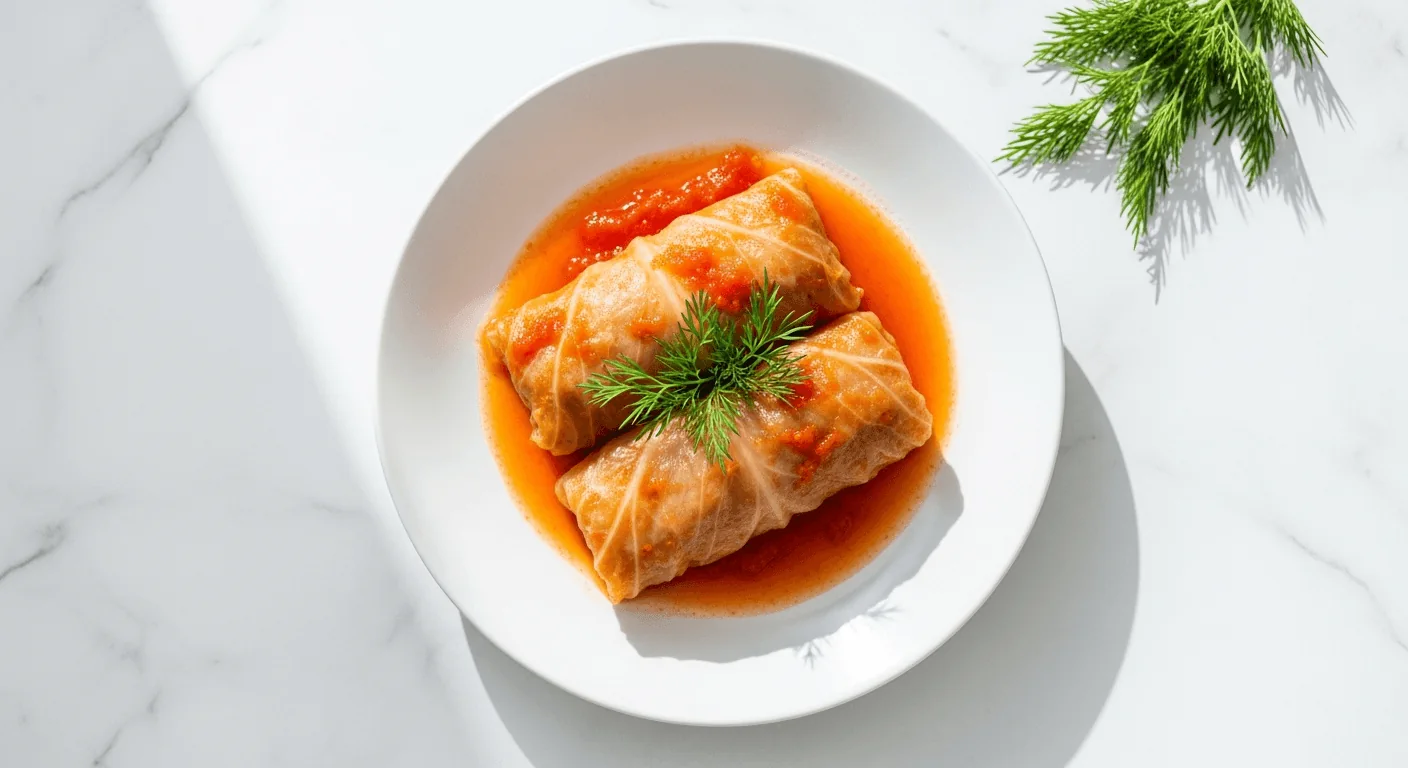
Prep: ~1 hour | Cooking: 1–1.5 hours | Serves: 6–8 | Makes: approximately 16–20 rolls | Difficulty: Intermediate
Quick Overview
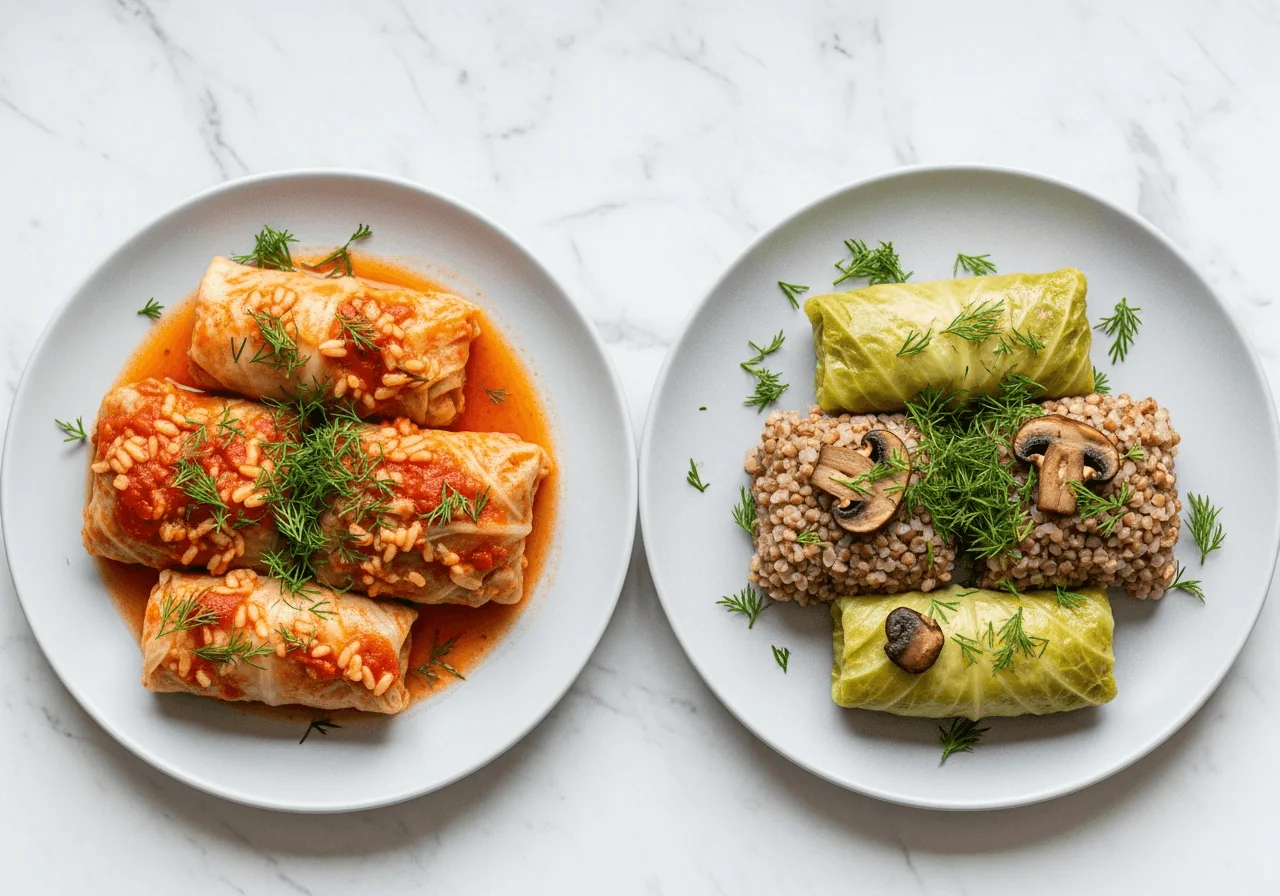
- Two versions here: lean ground turkey with brown rice, or a fully meatless buckwheat-and-mushroom filling
- The cabbage prep and rolling technique are identical to the traditional recipe — nothing changes there
- The turkey version swaps pork for 93% lean ground turkey and white rice for brown rice, half-cooked the same way
- The meatless version leans on buckwheat groats and mushrooms instead of rice and meat, in a light tomato-mushroom sauce
- Both cook the same way as the original: 1–1.5 hours, covered, stovetop or oven
What changes
Traditional gołąbki get their calorie density from ground pork. Raw, it runs around 263 calories and 21 grams of fat per 100 grams, with about 7 grams of that as saturated fat.⁵ Raw 93% lean ground turkey comes in at roughly 150 calories and 8 grams of fat per 100 grams, with about 2 grams saturated — a bigger gap than the percentages alone suggest.⁶ Healthline’s comparison of ground turkey against other ground meats confirms the same pattern more broadly: turkey’s real advantage tends to be in saturated fat specifically, not just total fat.³
White rice swaps for brown rice, which keeps the bran and germ layer that milling strips from white rice. Harvard Health Publishing puts brown rice’s glycemic index at around 68, against 73 for white rice, and links regular whole-grain consumption to lower rates of heart disease and type 2 diabetes.¹ In a filling that simmers for over an hour, the texture difference between the two is barely noticeable. The fiber difference is not.
The cabbage itself needs no adjustment — it was never the problem. A cup of it runs about 22 calories and carries vitamin C, vitamin K, and glucosinolates, compounds tied to anti-inflammatory effects.⁴ The fat and refined carbs were always sitting inside the leaf, not in it.
Version one: lean turkey and brown rice
Recipe developed independently by Heritage Healthy Kitchen, drawing on traditional Polish culinary methods. Sources for further reading are listed at the end of this article.¹²³⁴⁵⁶
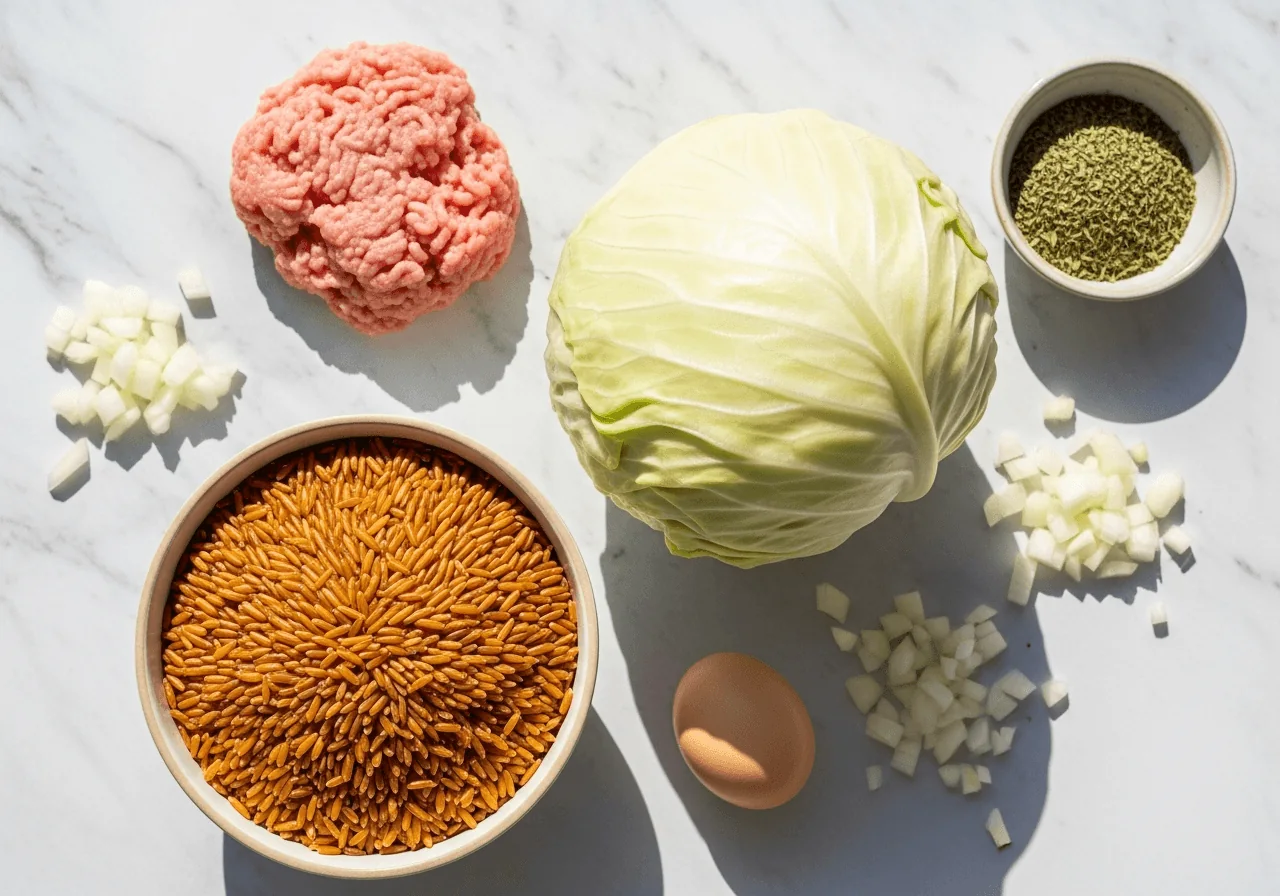
Ingredients
The cabbage
- 1 large head of white cabbage (approximately 1.5–2kg)
The filling
- 600g (1.3 lb) 93% lean ground turkey
- 200g (1 cup) brown rice, half-cooked (see method)
- 1 large onion, diced fine and fried until golden
- 1 tablespoon olive oil, added directly to the raw filling
- 1 egg
- 1.5 teaspoons salt
- 1 teaspoon black pepper
- 1 teaspoon dried marjoram
The sauce
- 500ml (2 cups) tomato passata
- 300ml (1¼ cups) water or light vegetable stock
- 2 bay leaves
- Salt and pepper to taste
Method
Prepare the cabbage leaves exactly as in the traditional recipe: blanch the whole head, peel off 16–20 leaves as they soften, trim the thick rib from each.
Brown rice takes longer to half-cook than white. Rinse it and boil in salted water for 15 minutes, not 7 — it should still have a firm bite at the center. Drain and rinse with cold water to stop the cooking.
Fry the onion in a teaspoon of the olive oil until soft and golden. Cool completely, then mix with the ground turkey, half-cooked rice, the remaining olive oil, egg, salt, pepper, and marjoram. Fry a small test piece before rolling — lean turkey carries less fat to carry flavor, so taste and adjust the seasoning before committing.
Roll, layer, and sauce exactly as in the traditional method. Simmer covered on low heat for 1–1.5 hours, or bake covered at 180°C / 360°F for about an hour. Keep the sauce level topped up; turkey has no natural fat buffer the way pork does, and a dry pot will dry out the filling.
Version two: meatless, buckwheat and mushroom
Buckwheat is naturally gluten-free and, despite the name, not related to wheat at all. Cleveland Clinic dietitian Natalie Crtalic-Lowther describes it as a pseudograin rich in fiber, antioxidants, and plant protein, with research pointing to benefits for blood sugar management and heart health.² This version has no meat and no dairy in the sauce — it is the lightest of the three, and genuinely satisfying on its own.
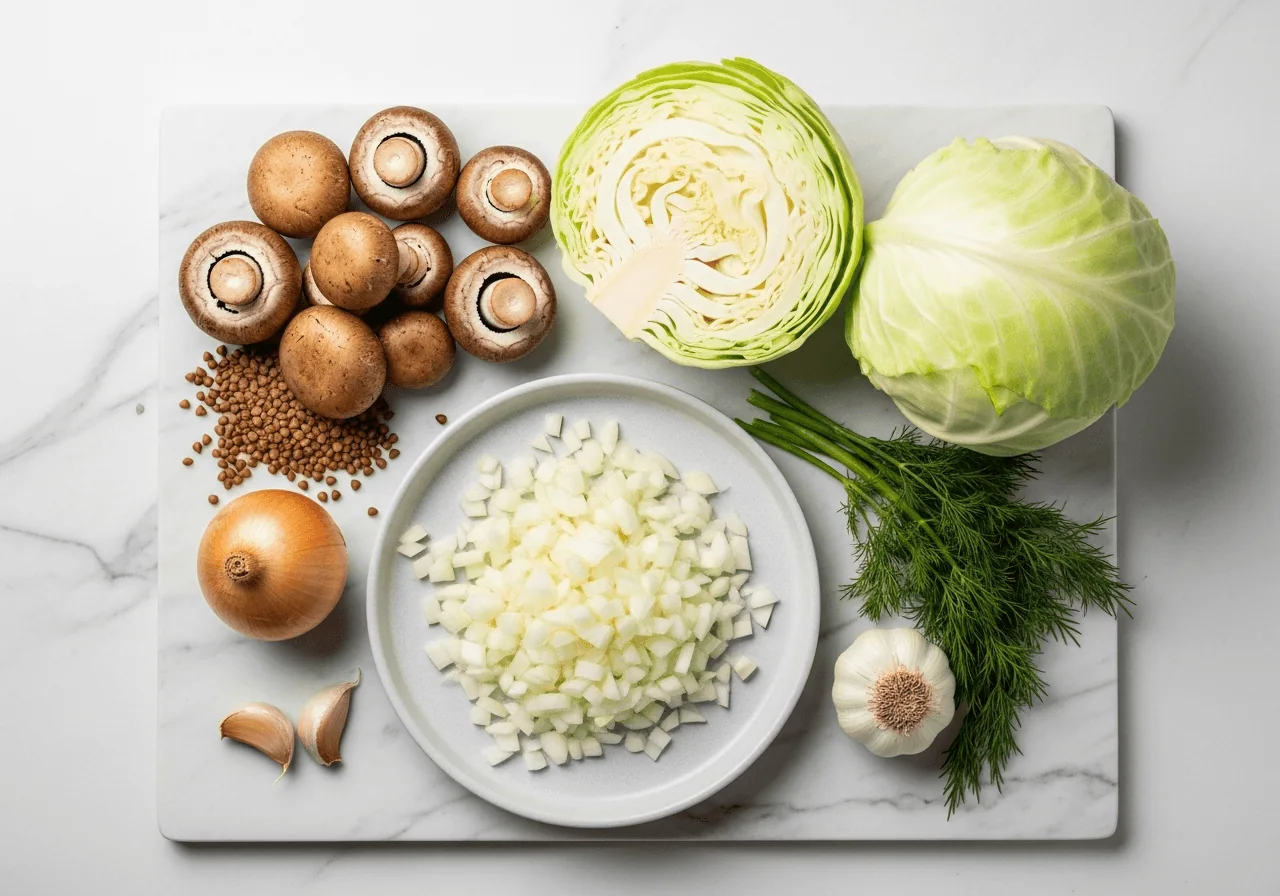
Ingredients
The filling
- 200g (1 cup) buckwheat groats, cooked until just tender and cooled
- 300g (10.5 oz) cremini (brown button) mushrooms, diced and fried until all moisture evaporates
- 1 large onion, diced and fried until golden
- 2 garlic cloves, minced
- 2 tablespoons olive oil
- Salt, black pepper, and fresh dill to taste
The sauce
- 400ml (1⅔ cups) tomato passata
- 200ml (¾ cup) water or mushroom soaking liquid, if using dried mushrooms
- 2 bay leaves
- Salt and pepper to taste
Method
Fry the onion in olive oil until golden, then add the mushrooms and cook over medium-high heat until they release their liquid and it fully evaporates — about 10 minutes. Add the garlic for the last minute. Combine with the cooked buckwheat and seasoning; the mixture should hold together when pressed in a spoon. Cool completely before rolling.
Roll the same way as the turkey version, using 2–3 tablespoons of filling per leaf. Pack the rolls in a pot lined with spare cabbage leaves, cover with the tomato sauce, and simmer covered for 1–1.5 hours. Check the liquid level once or twice; mushroom fillings can dry out a little faster than meat ones.
Kitchen tips
For the turkey version, the olive oil mixed directly into the raw filling is not optional. Without it, lean turkey turns firm and slightly dry over an hour of simmering — pork’s natural fat normally does that job.
For the buckwheat version, dry the mushrooms thoroughly before mixing them in. Any residual moisture makes the filling difficult to roll and causes the leaves to loosen during cooking.
Both versions benefit from the same trick as the traditional recipe: make them a day ahead. The sauce works further into the filling overnight, and both taste noticeably better reheated.
Nutritional comparison
Per serving (2–3 rolls with sauce, approximately 350g)
| Version | Calories | Protein | Fat | Sat. fat | Carbs | Fiber |
|---|---|---|---|---|---|---|
| Traditional (pork + white rice) | ~310–340 kcal | ~20g | ~13g | ~5g | ~28g | ~3g |
| Lean turkey + brown rice | ~250–280 kcal | ~22–24g | ~7–8g | ~2g | ~26g | ~4g |
| Meatless buckwheat + mushroom | ~160–190 kcal | ~5g | ~3g | ~0.5g | ~30g | ~5g |
Values are estimates based on standard ingredient databases and will vary with exact brands, sauce quantity, and portion size.
Storage and freezing
Both versions keep in the refrigerator for up to 3 days in a sealed container with the sauce. Reheat gently in a covered pot over low heat.
Both freeze well, cooked or raw, for up to 3 months. Freeze raw rolls in a single layer before bagging; cook from frozen with 20–25 extra minutes. The meatless version reheats particularly well — buckwheat holds up better through repeated heating than ground meat does.
<
Healthy Gołąbki — Lean Turkey & Brown Rice

Ingredients
The cabbage
- 1 large head of white cabbage (approximately 1.5–2kg)
The filling
- 600g (1.3 lb) 93% lean ground turkey
- 200g (1 cup) brown rice, half-cooked
- 1 large onion, diced fine and fried until golden
- 1 tablespoon olive oil, added directly to the raw filling
- 1 egg
- 1.5 teaspoons salt
- 1 teaspoon black pepper
- 1 teaspoon dried marjoram
The sauce
- 500ml (2 cups) tomato passata
- 300ml (1¼ cups) water or light vegetable stock
- 2 bay leaves
- Salt and pepper to taste
Instructions
- Blanch the whole cabbage head, peel off 16–20 leaves as they soften, and trim the thick rib from each
- Rinse the brown rice and boil in salted water for 15 minutes — it should still have a firm bite at the center — then drain and rinse with cold water
- Fry the onion in a teaspoon of olive oil until golden, cool completely, then mix with the turkey, half-cooked rice, remaining olive oil, egg, salt, pepper, and marjoram; fry a small test piece and adjust seasoning before rolling
- Roll, layer, and sauce as usual; simmer covered on low heat for 1–1.5 hours, or bake covered at 180°C / 360°F for about an hour, keeping the sauce topped up so the lean filling does not dry out
Healthy Gołąbki — Meatless Buckwheat & Mushroom
Ingredients
The cabbage
- 1 large head of white cabbage (approximately 1.5–2kg), prepared the same way as the turkey version
The filling
- 200g (1 cup) buckwheat groats, cooked until just tender and cooled
- 300g (10.5 oz) cremini (brown button) mushrooms, diced and fried until all moisture evaporates
- 1 large onion, diced and fried until golden
- 2 garlic cloves, minced
- 2 tablespoons olive oil
- Salt, black pepper, and fresh dill to taste
The sauce
- 400ml (1⅔ cups) tomato passata
- 200ml (¾ cup) water or mushroom soaking liquid, if using dried mushrooms
- 2 bay leaves
- Salt and pepper to taste
Instructions
- Prepare the cabbage leaves the same way as the turkey version: blanch the whole head, peel off 16–20 leaves, and trim the thick rib from each
- Fry the onion in olive oil until golden, add the mushrooms and cook over medium-high heat until they release their liquid and it fully evaporates (about 10 minutes), then add the garlic for the last minute
- Combine with the cooked buckwheat and seasoning until the mixture holds together when pressed in a spoon; cool completely before rolling
- Roll using 2–3 tablespoons of filling per leaf, pack the rolls in a pot lined with spare cabbage leaves, cover with the tomato sauce, and simmer covered for 1–1.5 hours, checking the liquid level once or twice
Frequently Asked Questions
Does lean turkey actually stay moist through an hour of simmering?
With the olive oil added to the raw filling and a sauce level kept topped up, yes. Without that buffer, lean turkey can turn dry and firm — it lacks the natural fat that protects pork during a long braise.³
Can I use 85% lean turkey instead of 93%?
Yes, and it is more forgiving during cooking. The fat content lands closer to a lean cut of beef, which means less attention is needed to keep the filling moist. If strict fat reduction is not the goal, 85% is a reasonable middle ground.
Is the meatless version filling enough as a main dish?
At around 5 grams of protein per serving, it is lower in protein than either meat version. Pair it with something protein-forward on the side, like a boiled egg, plain yogurt, or a bean salad, if you are eating it as the main course rather than a side.
Why does the brown rice need 15 minutes instead of 7?
The bran layer that gives brown rice its fiber also slows water absorption. Under-cooking it the way you would white rice leaves it too firm to finish properly inside the roll during the simmer.¹
Can I combine turkey and buckwheat in one filling?
Yes. Use 400g ground turkey with 100g cooked buckwheat in place of the rice. The buckwheat adds texture and fiber, the turkey adds protein, and the result holds together well — not traditional, but a genuinely good combination.
Do these freeze and reheat as well as the traditional version?
Yes, with one caveat: the turkey version is more sensitive to high reheating heat and can dry out if rushed. Reheat it gently, covered, over low heat rather than blasting it in a microwave.
The traditional version
The classic recipe, with ground pork, white rice, tomato sauce, and the full history behind the name and the regional variations, is covered in our Traditional Polish Gołąbki article.
Further Reading & Sources
The following sources were consulted for the nutritional claims in this article. Heritage Healthy Kitchen’s recipes were developed independently; these links are provided for readers who want to explore further.
- “Brown Rice versus White Rice: A Head-to-Head Comparison.” Harvard Health Publishing, Harvard Medical School. health.harvard.edu — glycemic index comparison (brown rice ~68 vs white rice ~73), fiber content, and association with reduced risk of heart disease and type 2 diabetes.
- “5 Health Benefits of Buckwheat.” Cleveland Clinic Health Essentials, dietitian Natalie Crtalic-Lowther, RD, LD. health.clevelandclinic.org — buckwheat’s fiber, protein, and antioxidant content, and its role in blood sugar and heart health.
- “Ground Turkey vs. Ground Beef: Is One Healthier?” Healthline, reviewed by Lizzie Streit, MS, RDN, LD. healthline.com — saturated fat comparison between ground turkey and other ground meats.
- “9 Impressive Health Benefits of Cabbage.” Healthline. healthline.com — glucosinolates, vitamin C and K content, and calorie density of cabbage.
- “Pork, fresh, ground, raw — Nutrition Facts.” ReciPal Nutrition Database (USDA-sourced data). recipal.com — raw calorie, fat, and saturated fat content for ground pork.
- “Ground turkey, 93% lean, 7% fat, raw — Nutrition Facts.” ReciPal Nutrition Database (USDA-sourced data). recipal.com — raw calorie, fat, and saturated fat content for 93% lean ground turkey, the direct comparison point for the pork baseline above.
Disclaimer
The information in this article is provided for educational and informational purposes only. Heritage Healthy Kitchen makes no representations or warranties regarding the accuracy or completeness of any content on this site. Nutritional values are estimates only and will vary depending on the specific ingredients, brands, and measurements used. This content is not intended as dietary, medical, or professional nutritional advice. Always consult a qualified healthcare provider regarding any dietary needs or health conditions. Heritage Healthy Kitchen is not responsible for any outcomes resulting from the use of recipes or information published on this site.
You Might Also Like
More heritage recipes from our kitchen


Leave a Reply