
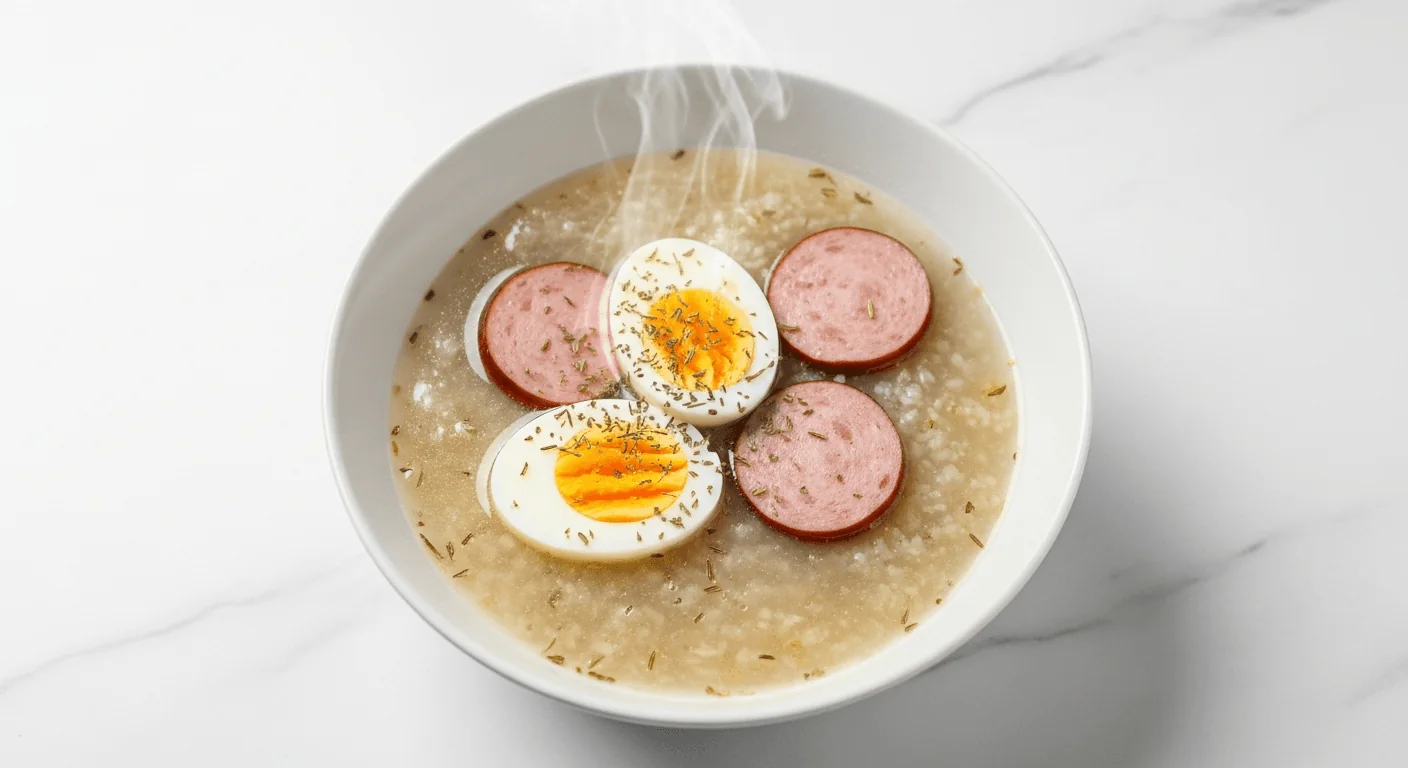
Healthy Żurek: Polish Sour Rye Soup with Less Sodium and Leaner Protein
Zakwas starter: 5–7 days | Soup: 50 min active | Serves: 4–6 | Difficulty: Intermediate
Quick Overview
- Make the zakwas (fermented rye starter) 5–7 days ahead — identical to the traditional method
- Simmer low-sodium broth with turkey kiełbasa until cooked through — 20 minutes
- Add potatoes, leek, parsley root, and root vegetables, cook until tender
- Pour in the zakwas gradually, tasting as you go
- Add garlic and marjoram at the end, serve with halved boiled eggs
An Honest Note Before the Recipe
The fermented rye zakwas at the center of żurek is already one of the more nutritious components of Polish cooking. It provides lactic acid bacteria, B vitamins, and improved mineral bioavailability from the grain.¹ The case for keeping the zakwas exactly as it is, and rethinking everything around it, is straightforward.
What the traditional recipe carries that this version reduces: sodium from pork sausage and commercial broth, and saturated fat from kiełbasa, bacon, and cream. This version uses turkey kiełbasa, homemade or low-sodium broth, no cream, no bacon, and more vegetables throughout.
The soup tastes different from the traditional version. Turkey sausage does not have the same depth as biała kiełbasa, and the absence of pork fat changes the texture. That is the trade-off. It is a good soup on its own terms — not a replacement for the traditional bowl, but a version that works well on a regular basis.
What Changes and Why
The zakwas is unchanged. Research from the University of Eastern Finland, published in the journal Microbiome, found that lactic acid bacteria in fermented rye modify bioactive compounds in the grain, producing branched-chain amino acids and peptides that influence insulin metabolism. Cooking kills most of the live bacteria, but the lactic acid, modified nutrients, and reduced phytic acid all stay in the broth.²
Turkey kiełbasa replaces pork white sausage. The saturated fat drops from roughly 12g per serving in the traditional version to around 3g here. Turkey sausage is milder and less fatty than biała kiełbasa, but it holds up alongside the sourness of the zakwas and the marjoram.³
Homemade low-sodium broth or a low-sodium store-bought version replaces standard broth. This is where the biggest sodium reduction comes from. The sausage still contributes salt; the broth should not add more than necessary.
The vegetable component expands: leek, parsley root, and celeriac join the standard potato and carrot. More vegetables mean more fiber, more potassium, and a more filling soup without additional calories. No cream. No bacon. The egg stays — it is one of the most nutritious ingredients in the bowl.³
Healthy Żurek Recipe
Recipe developed independently by Heritage Healthy Kitchen, based on traditional Polish żurek methods. Sources listed at the end of this article.¹²³
Part One: Zakwas (Fermented Rye Starter)
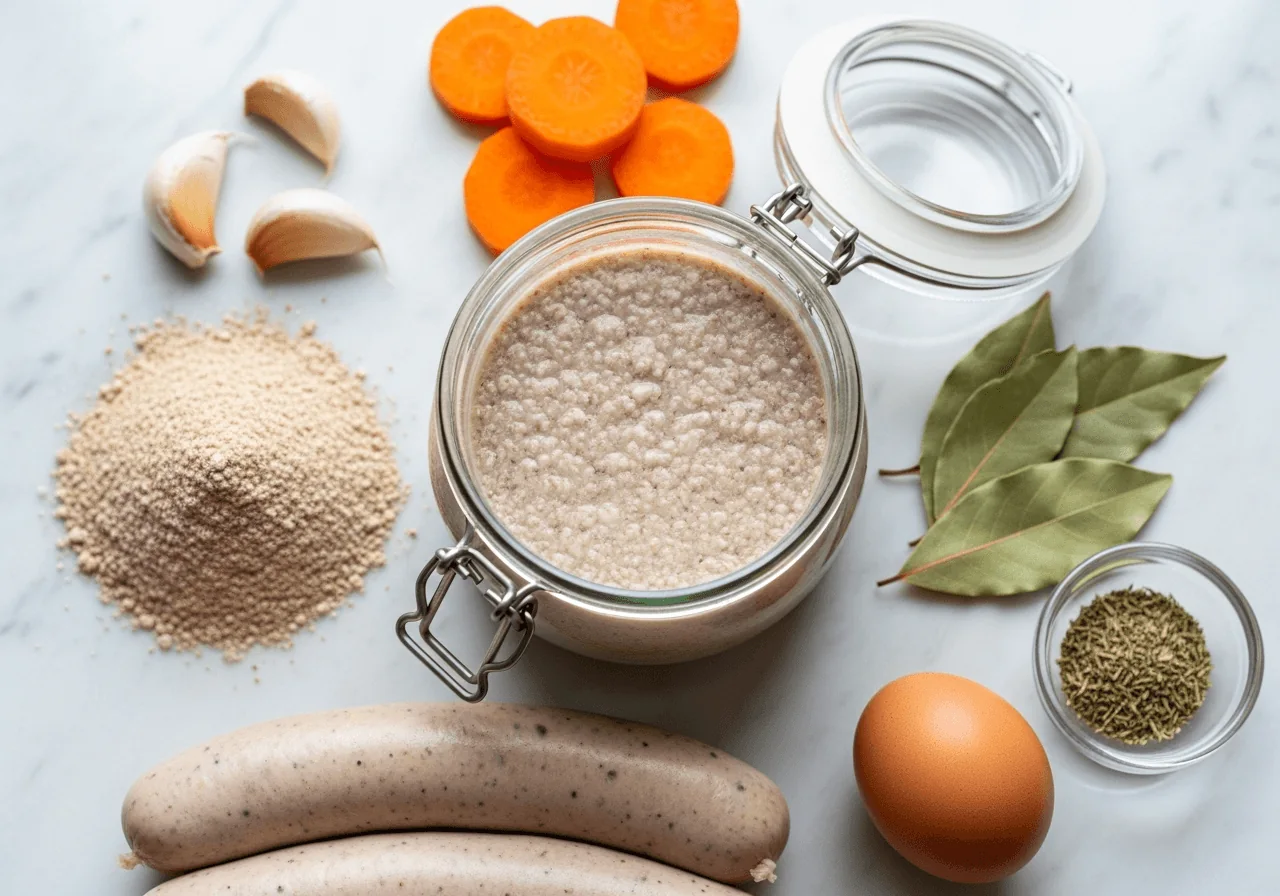
The zakwas recipe is identical to the traditional version. Make it 5–7 days ahead using 4 tablespoons (40g) whole grain dark rye flour, 400ml cooled boiled water, garlic, bay leaves, allspice, and optionally a piece of rye bread crust. See the full Traditional Żurek article for step-by-step zakwas instructions. Nothing changes here.
Part Two: The Soup
Ingredients
- 1.5 liters (6 cups) low-sodium chicken broth — homemade is better, aim for under 100mg sodium per cup
- 300–450ml (1¼–2 cups) zakwas — start with less, add to taste
- 350g (12 oz) turkey kiełbasa or smoked turkey sausage — good quality, check sodium content on the label
- 2 medium potatoes, peeled and cubed (2cm pieces)
- 1 medium leek, white and light green parts, sliced into rounds
- 1 parsley root (or 1 large parsnip), peeled and diced
- 1 medium carrot, peeled and diced
- ½ small celeriac, peeled and diced (about 100g)
- 4 large eggs, hard-boiled and halved lengthwise
- 1 large onion, finely diced
- 4 garlic cloves, minced
- 2 teaspoons dried marjoram
- 3 bay leaves
- 5 allspice berries
- 1 teaspoon white pepper
- Salt to taste — add carefully at the end, the zakwas and sausage both contribute salt
- 1 teaspoon olive oil or rapeseed oil for sautéing
Instructions
- Cook the turkey sausage. Place the turkey kiełbasa in the broth with bay leaves and allspice. Bring to a gentle simmer and cook 18–20 minutes until the sausage is cooked through. Remove, slice into rounds, and set aside. Keep the broth.
- Sauté the aromatics. In a soup pot, heat the oil over medium heat. Add the diced onion and leek. Cook, stirring occasionally, for 8–10 minutes until soft. Add the garlic and cook 1 more minute.
- Add the vegetables and broth. Pour the sausage-infused broth into the pot. Add the potato, carrot, parsley root, and celeriac. Bring to a simmer and cook 18–20 minutes until all vegetables are tender.
- Remove bay leaves and allspice. Fish them out before adding the zakwas.
- Add the zakwas. Stir the zakwas thoroughly before pouring it in — the starchy sediment at the bottom is part of the flavor and body of the soup. Add 300ml first, taste, then add more until the sourness is where you want it. Do not boil hard after this point.²
- Add marjoram and season. Stir in the dried marjoram. Simmer gently for 4–5 minutes. Taste now before adding any salt — the turkey sausage and zakwas have likely added enough.
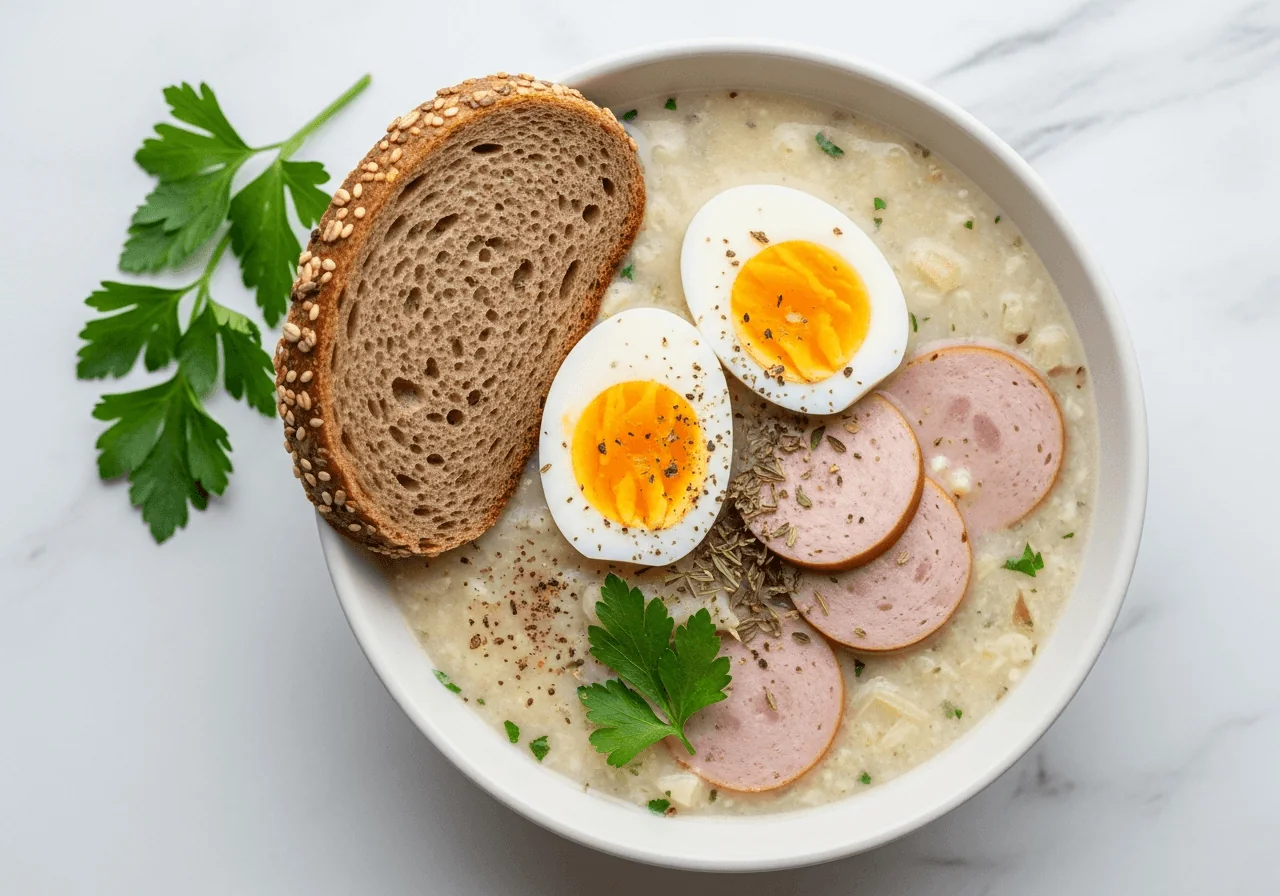
- Serve. Return the sliced sausage to the pot and warm through. Ladle into bowls and place two boiled egg halves in each bowl. Finish with a pinch of fresh marjoram if available.
Kitchen Tips and Pro Tips
Read the sodium label on your turkey kiełbasa before buying. Turkey sausage varies wildly by brand — some are nearly as salty as pork kiełbasa, which defeats the purpose. Look for a version with under 400mg sodium per 80g serving.³
Make your own broth if you can. A chicken carcass, carrot, parsley root, onion, and bay leaf simmered in water for 90 minutes and strained gives you full control over sodium and far more depth than any commercial carton. Freeze it in portions.³
The vegetable expansion is not decoration. Leek adds sweetness, celeriac a nutty earthiness, and parsley root ties the vegetables to the marjoram. Together they add substance that compensates for the reduced sausage portion.³
Add the zakwas in stages. This version has more vegetables than the traditional one, which dilutes the sourness slightly. You may need a little more zakwas than usual to reach the same tartness. Taste after every 50ml.²
Season at the very end. Turkey kiełbasa has salt, the zakwas has acidity that reads as salt, and the celeriac has a naturally mineral quality. The soup often needs less added salt than you expect.³
The Lenten (vegetarian) version of this soup is the most nutritious of all. Replace the sausage with a generous handful of dried forest mushrooms, soaked and chopped, and use vegetable or mushroom stock. It has no saturated fat, lower sodium, and the mushroom umami holds up well against the sourness of the zakwas. This version is entirely traditional — not a modern invention.¹
Nutritional Comparison
Per serving (1 bowl, approximately 400ml)
| Nutrient | Traditional Żurek | This Version |
|---|---|---|
| Calories | ~370–400 kcal | ~250–280 kcal |
| Protein | ~22g | ~24g |
| Total fat | ~20g | ~8g |
| Saturated fat | ~10–12g (pork sausage + cream) | ~2–3g (turkey sausage, no cream) |
| Carbohydrates | ~28g | ~26g |
| Dietary fiber | ~2.5g | ~4g (more vegetables) |
| Sodium | ~700–800mg | ~420–500mg |
All values are estimates based on standard ingredient databases and will vary depending on the specific sausage brand, broth, and portion sizes used.
Storage and Reheating
Store in the refrigerator for up to 3 days. Keep the boiled eggs separate — they become rubbery in stored hot liquid. Reheat gently over medium-low heat without boiling.
This version freezes slightly better than the traditional one, because there is no cream to separate. Freeze without the eggs. Potatoes do become softer after thawing — freeze the soup without potatoes if texture matters, and add freshly cooked potato when reheating.
Leftover zakwas keeps in the refrigerator for up to 2 weeks. It can be used again for the next batch of soup, or for any other fermented rye application.
Healthy Żurek

Ingredients
Ingredients
- 1.5 liters (6 cups) low-sodium chicken broth — homemade is better, aim for under 100mg sodium per cup
- 300–450ml (1¼–2 cups) zakwas — start with less, add to taste
- 350g (12 oz) turkey kiełbasa or smoked turkey sausage — good quality, check sodium content on the label
- 2 medium potatoes, peeled and cubed (2cm pieces)
- 1 medium leek, white and light green parts, sliced into rounds
- 1 parsley root (or 1 large parsnip), peeled and diced
- 1 medium carrot, peeled and diced
- ½ small celeriac, peeled and diced (about 100g)
- 4 large eggs, hard-boiled and halved lengthwise
- 1 large onion, finely diced
- 4 garlic cloves, minced
- 2 teaspoons dried marjoram
- 3 bay leaves
- 5 allspice berries
- 1 teaspoon white pepper
- Salt to taste — add carefully at the end, the zakwas and sausage both contribute salt
- 1 teaspoon olive oil or rapeseed oil for sautéing
Instructions
- Make the zakwas (fermented rye starter) 5–7 days ahead — identical to the traditional method
- Simmer low-sodium broth with turkey kiełbasa until cooked through — 20 minutes
- Add potatoes, leek, parsley root, and root vegetables, cook until tender
- Pour in the zakwas gradually, tasting as you go
- Add garlic and marjoram at the end, serve with halved boiled eggs
Frequently Asked Questions
Does this version still have the probiotic benefits of żurek?
The lactic acid fermentation byproducts remain in the soup after cooking. Heat kills most of the live bacteria, but research shows that heat-killed probiotics (called postbiotics) and the fermentation byproducts such as lactic acid and modified nutrients still act in the gut.² The fermented rye base is worth keeping intact regardless of the version you make.
What brand of turkey kiełbasa should I use?
There is no single recommended brand — this depends on your country and local availability. The key is to check the sodium on the label before buying. Some turkey sausages are actually saltier than their pork equivalents. Look for under 400mg sodium per 80g serving. Polish and Central European delicatessens sometimes carry smoked turkey sausage with authentic flavoring. That is usually the best choice.³
Can I make this version fully vegetarian?
Yes, and it is worth trying. Use mushroom or vegetable stock as the base. Soak 30g of dried porcini or mixed forest mushrooms, chop them, and add both the mushrooms and their soaking liquid (strained through cloth to remove grit) to the soup. Skip the sausage and increase the egg portion. The result is lower in fat and sodium than this turkey version, and the mushroom umami stands up well against the sourness of the zakwas.¹
Why is the vegetable list longer than in the traditional recipe?
More vegetables replace some of the caloric and textural role of pork sausage and fat. Leek adds sweetness, celeriac adds earthiness, parsley root connects the vegetables to the marjoram. The soup becomes more filling per calorie, which is the practical goal of the adaptation.³
Can I use the same zakwas from the traditional recipe?
Yes, exactly the same. The zakwas does not change between the two versions. If you have leftover starter from making the traditional żurek, use it directly here.²
Will the sodium reduction be noticeable in the taste?
Slightly. The sourness of żurek masks a lot of what salt normally does in a savory dish, which is one reason the healthy version works better here than in many other soups. Most people do not notice the sodium reduction if the zakwas is properly sour and the marjoram and garlic are not held back.²
Is this version suitable for people on a low-sodium diet?
It is lower in sodium than the traditional recipe, but at 420–500mg per serving it is not a medical low-sodium diet. People following a strict physician-prescribed low-sodium diet should consult their healthcare provider before eating this version. The vegetarian mushroom version has the lowest sodium of any żurek preparation.¹
Looking for the Traditional Version?
For the classic full-fat method and cultural history, see our Traditional Polish Żurek.
For the full history, cultural background, and authentic recipe with biała kiełbasa and all the regional variations, see our Traditional Polish Żurek article.
Further Reading & Sources
The following sources were consulted in researching the nutritional properties of fermented rye and developing this healthier adaptation. Heritage Healthy Kitchen’s recipe was developed independently; these links are for further reading.
- “Rye is Healthy, Thanks to an Interplay of Microbes.” ScienceDaily, reporting on a study from the University of Eastern Finland published in Microbiome. sciencedaily.com — peer-reviewed research on lactic acid bacteria and rye health benefits.
- “Żurek Recipe: Polish Fermented Rye Soup.” Figaro Shakes. figaroshakes.com — notes on fermentation science, postbiotics, and phytic acid reduction.
- “Polish Żurek Soup Recipe.” Everyday Healthy Recipes. everydayhealthyrecipes.com — healthy żurek preparation, notes on reducing fat through sausage moderation.
Disclaimer
The information in this article is provided for educational and informational purposes only. Heritage Healthy Kitchen makes no representations or warranties regarding the accuracy or completeness of any content on this site. Nutritional values are estimates only and will vary depending on the specific ingredients, brands, and measurements used. References to probiotic activity, postbiotics, lactic acid bacteria, or gut health are for general informational purposes and should not be interpreted as medical or dietary advice. Always consult a qualified healthcare provider regarding any dietary needs or health conditions. Heritage Healthy Kitchen is not responsible for any outcomes resulting from the use of recipes or information published on this site.
You Might Also Like
More heritage recipes from our kitchen

Leave a Reply