
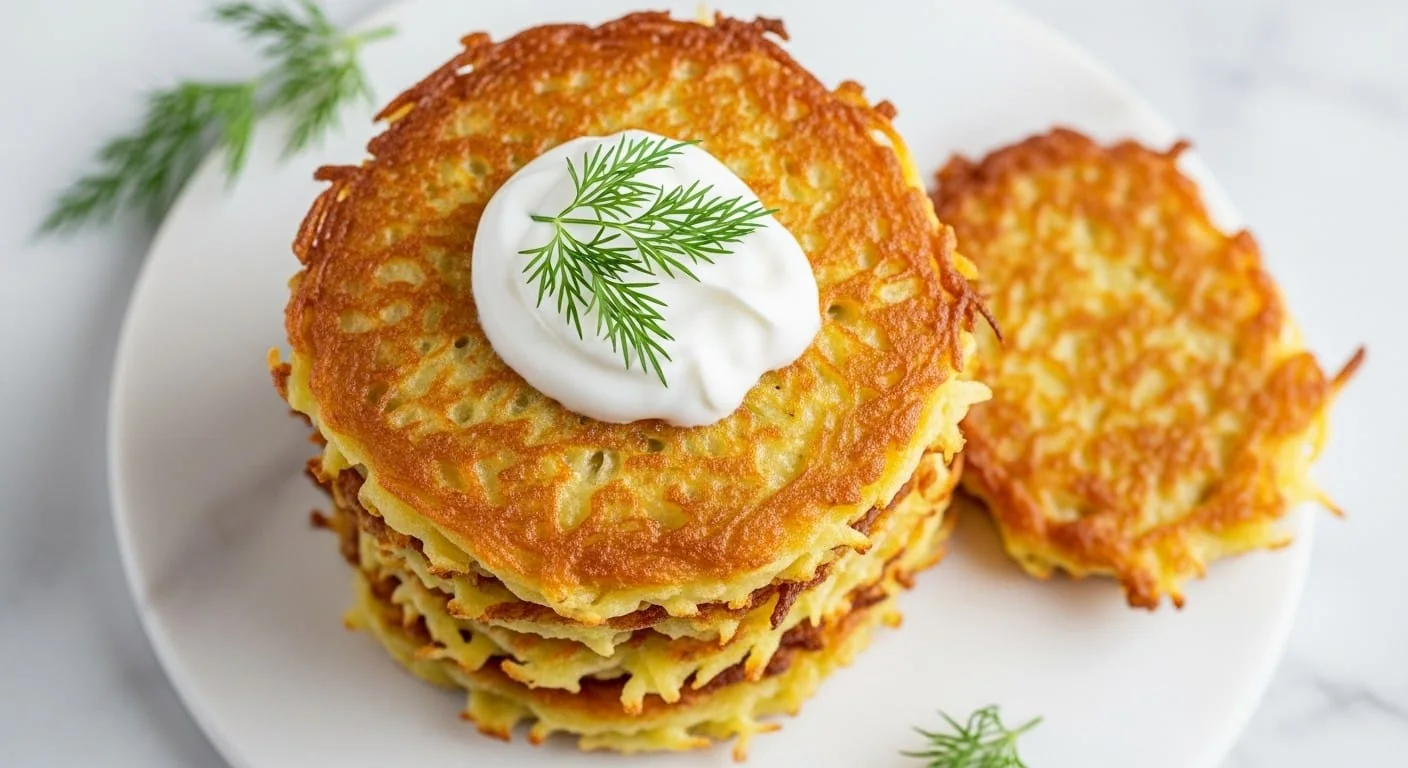
Active time: ~25 minutes | Total time: ~40 minutes | Serves: 3–4 (about 14–16 pancakes) | Difficulty: Easy
Quick Overview
- Bake or air-fry instead of pan-frying — a fraction of the oil, the crispy edge mostly stays
- Use whole wheat flour instead of all-purpose — adds fiber without changing how the recipe works
- Top with plain Greek yogurt instead of sour cream — more protein, much less saturated fat
- A light spray or brush of oil is enough; the batter doesn’t need to swim in it
- A zucchini-and-carrot variation is included for anyone who wants a lower-starch version
What This Version Changes — and What It Keeps
Traditional placki ziemniaczane get most of their calories from one source: the oil they absorb during frying. The potato batter itself contributes almost no fat — raw potatoes are virtually fat-free.⁴ The cooking method drives the calorie difference, not the potato.
The swaps in this version are specific. Pan-frying in a generous layer of oil becomes baking or air-frying with a light coat. All-purpose flour becomes whole wheat. Sour cream on top becomes Greek yogurt. The grating technique, the starch-recovery step, the onion, the egg, the proportions — all of that stays the same. The result is still recognizably placki.
Why These Swaps Work
Switching from pan-frying to baking or air-frying is the biggest change here, and it’s where the most fat reduction comes from. According to Cleveland Clinic registered dietitian Julia Zumpano, RD, LD, using an air fryer — which requires about a tablespoon of oil — may cut the calories you’d get from deep frying by up to 80%, because most of the added calories in fried food come from oil the food absorbs, not from the food itself.¹ Traditional placki are pan-fried rather than deep-fried, which already uses less oil than a deep fryer — so the realistic reduction from this particular swap is smaller than that 80% figure. But a generous layer of oil in a pan is still considerably more than the light brush or spray needed for a hot oven or an air fryer basket, and the pancakes absorb correspondingly less.
Whole wheat flour matters here more than its small quantity suggests. When wheat is refined into white flour, the process strips away more than half of its B vitamins, 90 percent of the vitamin E, and virtually all of its fiber.² The bran and fiber in whole wheat flour slow the breakdown of starch into glucose, which produces a steadier blood sugar response instead of a sharp spike.² In a dish built almost entirely around starch, adding fiber where you can — even in a few tablespoons of flour — is worth doing.
The Greek yogurt swap makes a real difference in the numbers. Full-fat Greek yogurt contains about 97 calories, 5 grams of fat, and 9 grams of protein per 100g. The same amount of full-fat sour cream contains 198 calories, 19 grams of fat, and 6 grams of protein.³ Per serving of two tablespoons, the numbers are smaller, but the pattern holds: Greek yogurt brings more protein and considerably less saturated fat for a similar tangy, creamy result. Taste-wise, full-fat plain Greek yogurt is the closest match to sour cream. Nonfat versions are noticeably thinner and more acidic on a hot pancake.
Healthy Placki Ziemniaczane Recipe
Recipe developed independently by Heritage Healthy Kitchen, drawing on traditional Polish culinary methods. Sources for further reading are listed at the end of this article.¹²³⁴⁵
Ingredients
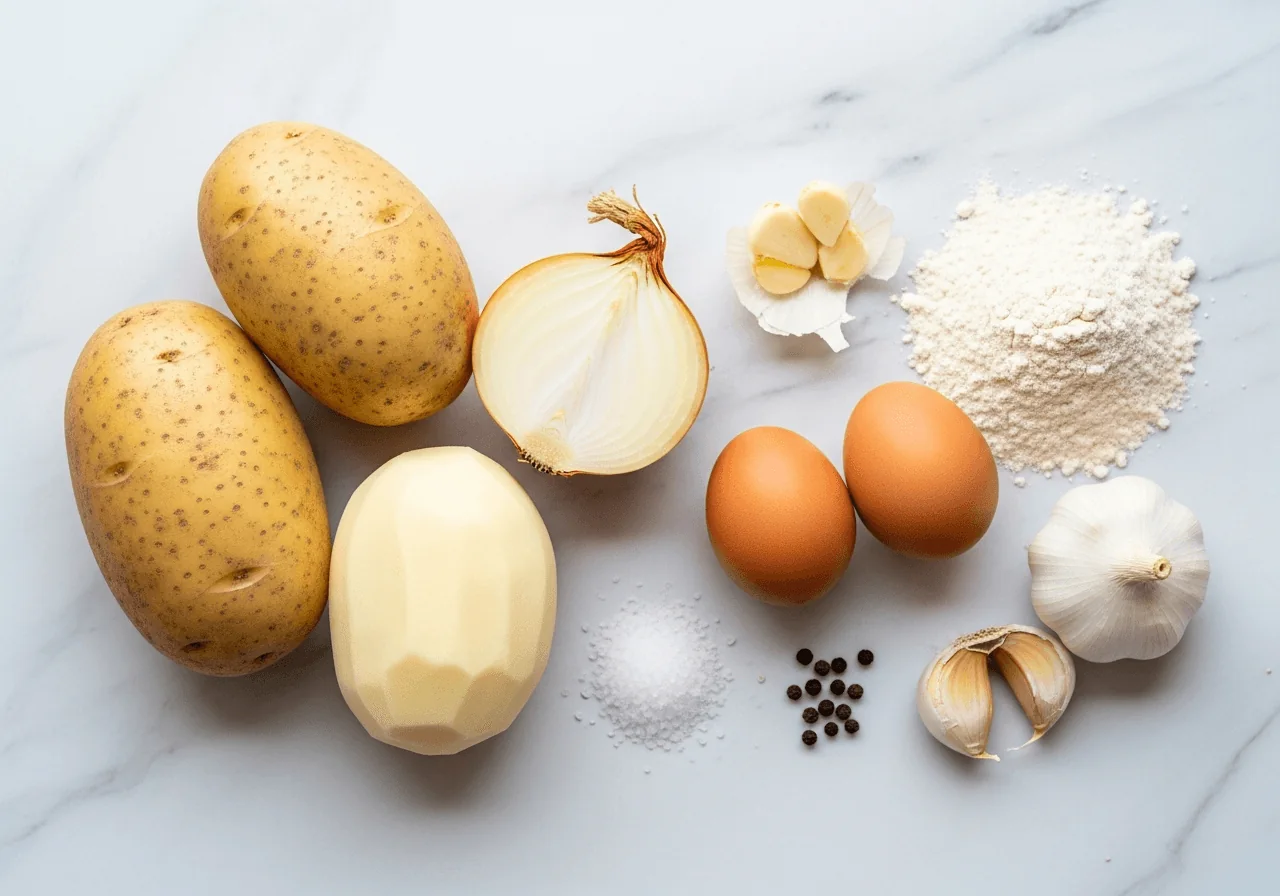
For the batter (serves 3–4, about 14–16 pancakes)
- 1 kg (2.2 lbs) starchy potatoes — Russet, Idaho, or any high-starch floury variety, peeled
- 1 medium yellow or white onion (about 120g / 4 oz), peeled
- 2 large eggs
- 2 tablespoons whole wheat flour (or 1 tablespoon whole wheat + 1 tablespoon oat flour)
- ½ teaspoon fine salt, plus more to taste
- Black pepper, freshly ground
- 1–2 garlic cloves, minced (optional)
- Olive oil spray, or 1–2 tablespoons olive oil for brushing
For serving
- Plain full-fat Greek yogurt — about 2 tablespoons per serving
- Fresh dill or chives, finely chopped
Instructions
Step 1: Grate and drain
Grate the potatoes and onion using the medium holes of a box grater, alternating between them so the onion juice keeps the potato from browning. Transfer to a clean kitchen cloth or fine-mesh strainer set over a bowl and squeeze out as much liquid as possible. Let the squeezed liquid sit for 2–3 minutes, pour off the water carefully, and scrape the white starch sediment back into the potato mixture. The starch-recovery step is just as important here as in the traditional recipe.
Step 2: Mix the batter
Add the eggs, whole wheat flour, salt, and pepper to the drained potato mixture. Add garlic if using. Stir to combine. Whole wheat flour absorbs slightly more moisture than all-purpose, so if the batter seems too dry after mixing, add a teaspoon of water. If it’s too wet, add a small amount of additional flour. The batter should hold its shape when pressed.
Step 3a: Air-fry
Preheat the air fryer to 200°C (400°F). Lightly spray the basket with olive oil. Working in batches, drop heaped tablespoons of batter into the basket, leaving space between each, and flatten to about 0.5–0.7 cm thick. Spray the tops lightly with oil. Air-fry for 10–12 minutes, flipping halfway, until the edges are deep golden and crispy.
Step 3b: Oven-bake
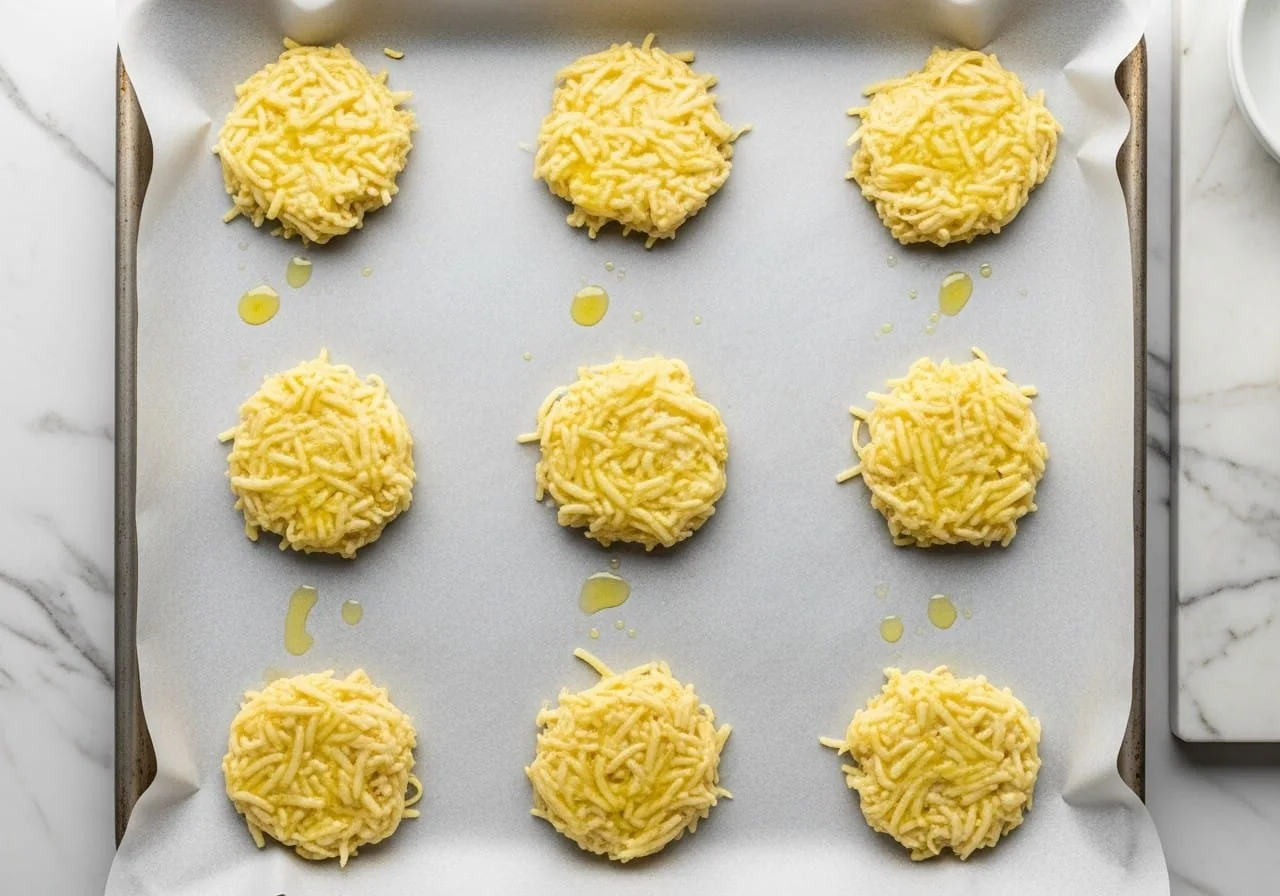
Preheat the oven to 220°C (430°F). Line a baking sheet with parchment and brush lightly with olive oil. Spoon the batter onto the sheet in mounds, flatten to about 0.5–0.7 cm thick, and brush the tops with a little oil. Bake for 12–15 minutes, flip, then bake another 10–12 minutes until golden and crisp at the edges.
Step 4: Serve
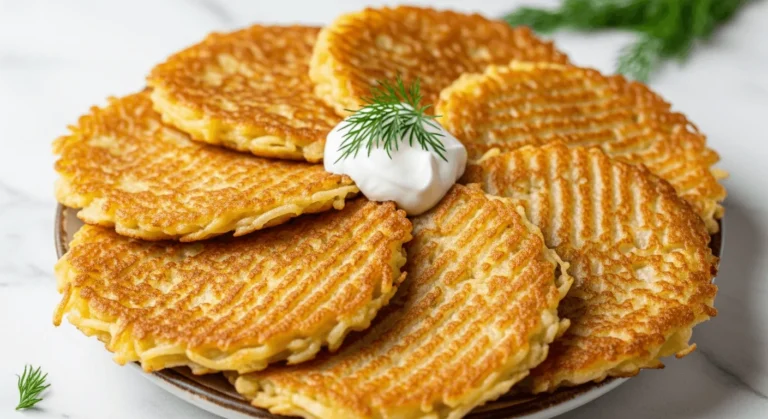
Serve immediately, topped with a spoonful of Greek yogurt and a scattering of fresh dill or chives.
Healthy Polish Placki Ziemniaczane

Ingredients
For the batter (serves 3–4, about 14–16 pancakes)
- 1 kg (2.2 lbs) starchy potatoes — Russet, Idaho, or any high-starch floury variety, peeled
- 1 medium yellow or white onion (about 120g / 4 oz), peeled
- 2 large eggs
- 2 tablespoons whole wheat flour (or 1 tablespoon whole wheat + 1 tablespoon oat flour)
- ½ teaspoon fine salt, plus more to taste
- Black pepper, freshly ground
- 1–2 garlic cloves, minced (optional)
- Olive oil spray, or 1–2 tablespoons olive oil for brushing
For serving
- Plain full-fat Greek yogurt — about 2 tablespoons per serving
- Fresh dill or chives, finely chopped
Instructions
- Bake or air-fry instead of pan-frying — a fraction of the oil, the crispy edge mostly stays
- Use whole wheat flour instead of all-purpose — adds fiber without changing how the recipe works
- Top with plain Greek yogurt instead of sour cream — more protein, much less saturated fat
- A light spray or brush of oil is enough; the batter doesn’t need to swim in it
- A zucchini-and-carrot variation is included for anyone who wants a lower-starch version
Zucchini and Carrot Variation
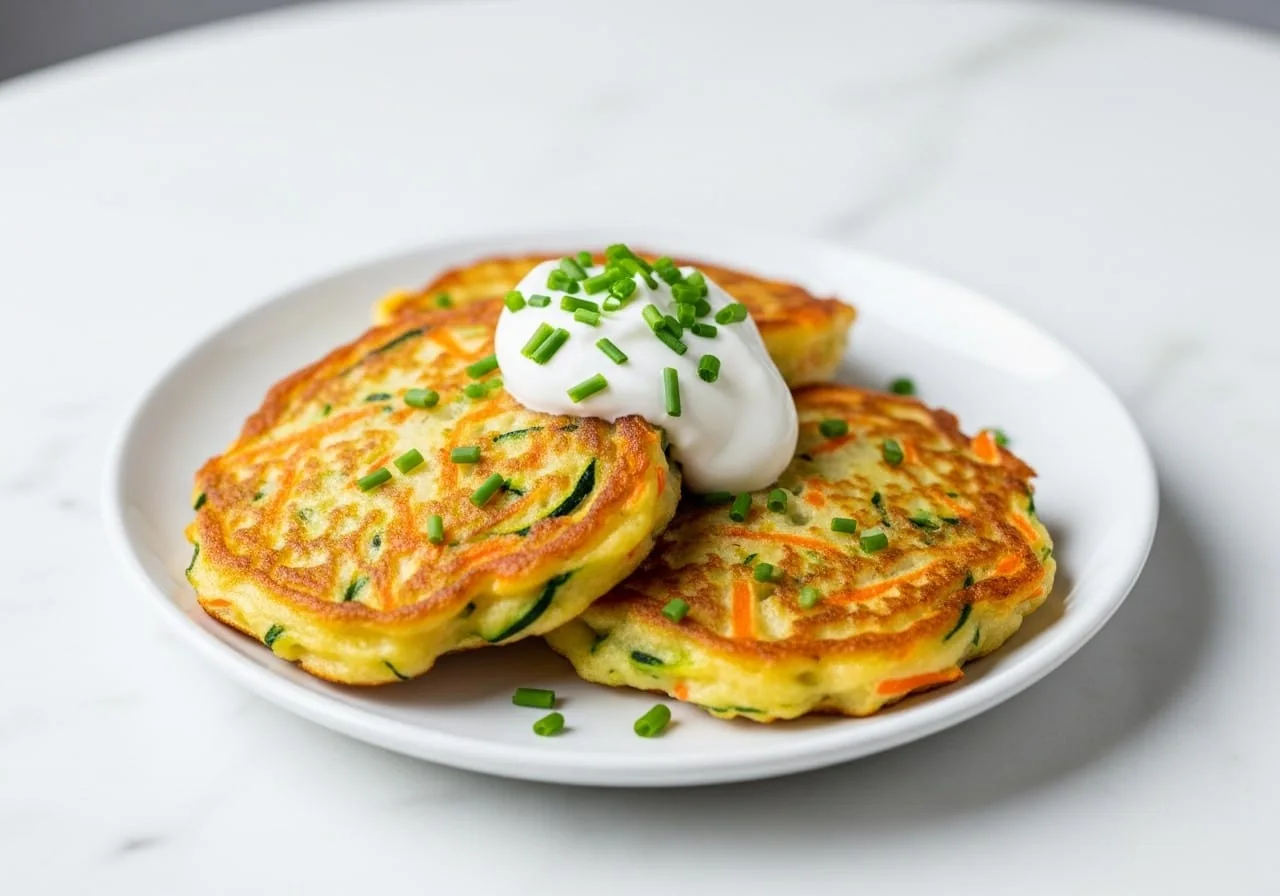
Replacing part of the potato with grated zucchini and carrot reduces the overall starch load per serving and adds a bit of fiber and color without making the pancakes feel like an entirely different dish. The result is lighter and slightly sweeter — worth knowing upfront, since it’s a different eating experience than traditional placki.
What changes in the batter
Replace 250–300g of the potato with 150g of grated zucchini (squeezed very dry) and 100–150g of grated carrot. Keep everything else the same. Zucchini releases considerably more water than potato, even after squeezing, so drain the mixed batter more aggressively and expect it to be wetter overall. Add an extra tablespoon of flour or potato starch if needed to hold the batter together.
What changes in cooking
Zucchini-based batters don’t hold structure quite as firmly as pure potato, so make the pancakes slightly thinner and slightly smaller — about 0.5 cm and 1–2 tablespoons of batter each. They cook a little faster in the air fryer (9–10 minutes) and may need slightly more time in the oven to crisp up. Keep a close watch in the first batch.
What to expect on the plate
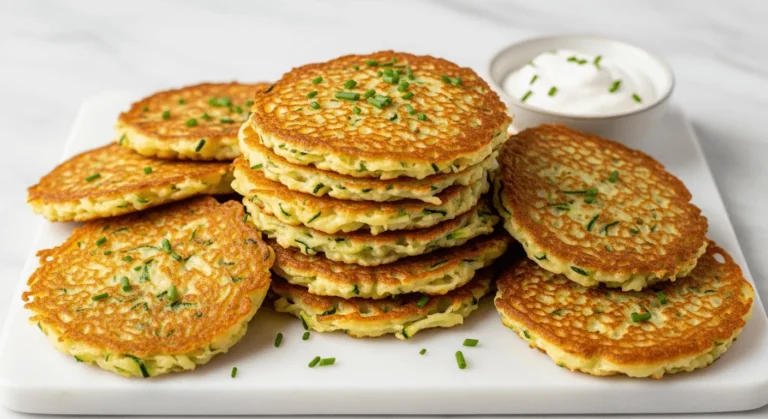
The texture is softer than a pure-potato pancake, with a faint sweetness from the carrot. The edges still crisp; the center doesn’t firm up quite as much. Serve with Greek yogurt and fresh dill, as with the main recipe. This version pairs particularly well with a cucumber salad on the side.
Zucchini and Carrot Placki Ziemniaczane (Variation)
Ingredients
For the batter (serves 3-4)
- 700-750g (1.5-1.7 lbs) starchy potatoes, peeled
- 150g (5.3 oz) zucchini, grated and squeezed very dry
- 100-150g (3.5-5.3 oz) carrot, grated
- 1 medium yellow or white onion (about 120g / 4 oz), peeled
- 2 large eggs
- 2-3 tablespoons whole wheat flour or potato starch (use the extra tablespoon if the batter feels too wet)
- ½ teaspoon fine salt, plus more to taste
- Black pepper, freshly ground
- 1-2 garlic cloves, minced (optional)
- Olive oil spray, or 1-2 teaspoons oil for brushing
For serving
- Plain full-fat Greek yogurt — about 2 tablespoons per serving
- Fresh dill, plus a cucumber salad on the side if desired
What Changes From the Main Recipe
- Replace 250-300g of the potato with the grated zucchini and carrot; keep every other ingredient the same
- Drain the batter more aggressively — zucchini releases more water than potato, even after squeezing
- Shape the pancakes thinner and smaller, about 0.5 cm and 1-2 tablespoons of batter each, since this batter holds together less firmly
- Air-fry for 9-10 minutes; give it slightly more time in the oven to crisp up
- Expect a softer texture with a faint sweetness from the carrot — serve with Greek yogurt and dill, or alongside a cucumber salad
Pro Tips
Squeeze harder than you think you need to. The biggest difference between a crispy baked pancake and a soggy one isn’t the oven temperature — it’s how much moisture is still in the batter when it goes in. Potatoes hold water stubbornly. The drier the batter, the crisper the result.
A hot oven matters. 220°C (430°F) sounds high, but it’s what gets you a proper crisp edge without extended cooking time. A lower temperature dries the pancakes out before they brown, which is the opposite of what you want. If your oven runs cool, go as high as it will safely go and extend the time slightly.
Air fryers outperform a standard oven here. The hot circulating air gets the edges crispier faster, and the result is closer to pan-fried than what you get from a static oven. If you have one, use it for this recipe. The oven method is a solid alternative, not a worse one — just slightly different.
Whole wheat flour absorbs more liquid than all-purpose. If you’re switching to whole wheat for the first time, the batter may feel thicker than expected. Don’t add water immediately — let the batter sit for 1–2 minutes first. Often the moisture from the potato distributes and the texture corrects itself.
Greek yogurt separates slightly if it sits on a hot surface too long. Spoon it onto the pancakes just before eating, not the moment they come off the heat.
Nutritional Comparison
Per serving — approximately 3 pancakes with 2 tablespoons of topping (one of 4 servings)
| Nutrient | Traditional placki (pan-fried, sour cream) | This version (baked, Greek yogurt) |
|---|---|---|
| Calories | ~265 kcal | ~170–190 kcal |
| Protein | ~6g | ~8–9g |
| Total fat | ~10g | ~3–4g |
| Saturated fat | ~2g | ~0.8g |
| Carbohydrates | ~36g | ~34g |
| Dietary fiber | ~3g | ~4–5g |
| Sodium | ~330mg | ~200–240mg |
All values are estimates, calculated from standard ingredient data. Values will vary depending on potato variety, how thoroughly the batter is drained, the specific oil quantity used, and how much topping is added. The traditional version figures are carried from the Traditional Placki Ziemniaczane article on this site. Nutritional baseline data for raw ingredients is sourced from USDA FoodData Central.⁵
Storage and Reheating
These baked pancakes hold up better in storage than their pan-fried counterparts. They refrigerate well for up to 3 days in a sealed container, and they reheat more successfully too — the oven or air fryer at 175°C (350°F) for 6–8 minutes brings back most of the crispness. A microwave will warm them through but leaves the edges soft.
They freeze well for up to 2 months. Layer cooled pancakes between sheets of parchment before freezing, and reheat directly from frozen in the air fryer or oven without thawing.
The uncooked batter behaves the same as in the traditional recipe: keep it refrigerated for up to 24 hours with plastic wrap pressed directly on the surface, re-drain before using, and re-season.
Frequently Asked Questions
Does baking really produce a crispy result?
Yes, with the right conditions: very hot oven, well-drained batter, and thin pancakes. The crispness from a 220°C oven with a light oil brush is real — not quite identical to a pan-fried edge, but close enough to satisfy. Air-frying gets you even closer to the fried texture. The difference is most noticeable in the center, which stays slightly softer in the baked version.¹
How much fat does baking save compared to pan-frying?
The reduction is meaningful but hard to put an exact number on, since oil absorption in pan-frying varies depending on temperature and batter moisture. The traditional recipe absorbs roughly 3 tablespoons of oil across a full batch; this recipe uses 1–2 tablespoons total for the entire batch. At roughly 120 calories per tablespoon of oil, that’s a real difference per serving, reflected in the comparison table above.¹
Will whole wheat flour change the taste?
Only slightly. Because the flour is such a small proportion of the batter — 2 tablespoons in 1 kg of potato — the contribution is subtle, a faint nuttiness rather than anything assertive. The texture stays close to the original. Whole wheat flour absorbs a touch more liquid, which this recipe accounts for.²
Is full-fat Greek yogurt better than nonfat here?
For this application, yes. Full-fat Greek yogurt is creamier and less sharp than nonfat, and it holds together better on a hot pancake. The difference in calories and fat between full-fat and nonfat Greek yogurt is smaller than the difference between either version and sour cream, so you’re still well ahead nutritionally with the full-fat version.³
Is the zucchini-carrot version lower in carbohydrates?
Yes, modestly. Replacing 250–300g of potato (roughly 44–53g of carbohydrates) with zucchini and carrot (roughly 14–19g of carbohydrates for the same weight, depending on how much carrot you use) reduces carbs per serving by around 5–7g. The total is still in the range of 27–30g per serving — a real reduction, but this is not a low-carb dish by any definition.
Is this version suitable for someone managing blood sugar?
The changes in this recipe — baking instead of frying, adding whole wheat flour, reducing the potato ratio in the zucchini variation — move the dish in a more favorable direction for blood sugar management.¹² Placki remain potato-based and starchy, however, and individual carbohydrate needs vary significantly with health status and medication. Anyone managing diabetes or prediabetes should discuss portion sizes and overall fit with a doctor or registered dietitian rather than relying on a single recipe modification.
Can I make these vegan?
The egg is the harder substitution, since it helps bind the batter. A flax egg — 1 tablespoon ground flaxseed mixed with 3 tablespoons water, rested for 5 minutes — works reasonably well as a replacement. For the topping, a plain unsweetened plant-based yogurt with a comparable protein level to dairy Greek yogurt gives the closest result; several soy-based options qualify.
The Traditional Version
If you want the full pan-fried version with all-purpose flour, classic sour cream, and the deep-brown edges that only come from a generous layer of hot oil, the Traditional Polish Placki Ziemniaczane article covers that in detail, including the dish’s full cultural history and technique.
Further Reading and Sources
This recipe was developed independently by Heritage Healthy Kitchen. The following sources are provided for further reading on the nutritional science and health context referenced in this article.
- Zumpano, Julia, RD, LD. Are Air Fryers Healthy? Cleveland Clinic Health Essentials. https://health.clevelandclinic.org/are-air-fryers-healthy — Registered dietitian explanation of how air frying reduces oil absorption and calorie content compared to frying, including the mechanism behind fat reduction in cooked foods.
- The Nutrition Source Editorial Team. Whole Grains. Harvard T.H. Chan School of Public Health. https://nutritionsource.hsph.harvard.edu/what-should-you-eat/whole-grains/ — Overview of whole grain composition, including the role of bran and fiber in moderating blood sugar response and the specific nutrients lost during wheat refining.
- Kubala, Jillian, MS, RD; reviewed by Richter, Amy, MS, RD. The 7 Best Substitutes for Sour Cream. Healthline. https://www.healthline.com/nutrition/sour-cream-substitutes — Calorie, fat, and protein comparison between full-fat Greek yogurt (97 kcal, 5g fat, 9g protein per 100g) and full-fat sour cream (198 kcal, 19g fat, 6g protein per 100g), sourced from USDA FoodData Central.
- The Nutrition Source Editorial Team. Are Potatoes Healthy? Harvard T.H. Chan School of Public Health. https://nutritionsource.hsph.harvard.edu/potatoes/ — Research overview of potatoes and health, including fat content of raw potatoes and glycemic load considerations.
- U.S. Department of Agriculture, Agricultural Research Service. FoodData Central. https://fdc.nal.usda.gov/ — Nutritional composition data for raw potatoes, zucchini, carrot, and Greek yogurt used as the basis for estimates in this article.
Disclaimer
The information in this article is provided for educational and informational purposes only and does not constitute medical or nutritional advice. All nutritional values are estimates and will vary depending on ingredients, brands, quantities, and preparation methods. This content is not intended as dietary guidance for any specific health condition. Anyone with diabetes, prediabetes, or other conditions requiring dietary management should consult a qualified healthcare provider or registered dietitian before making changes to their diet. Heritage Healthy Kitchen is not responsible for any outcomes resulting from the use of recipes or information published on this site.
You Might Also Like
More heritage recipes from our kitchen

Leave a Reply