
Active time: about 25 minutes | Total time: about 2 hours 15 minutes, including cooling and chilling | Serves: 4 | Difficulty: Easy
Quick Overview
- Cook the beets, or use ready-cooked or pickled ones
- Grate the beets and chop the cucumbers, green onions, dill, and eggs
- Stir everything into cold kefir and season
- Chill the soup for at least an hour
- Boil the potatoes just before serving
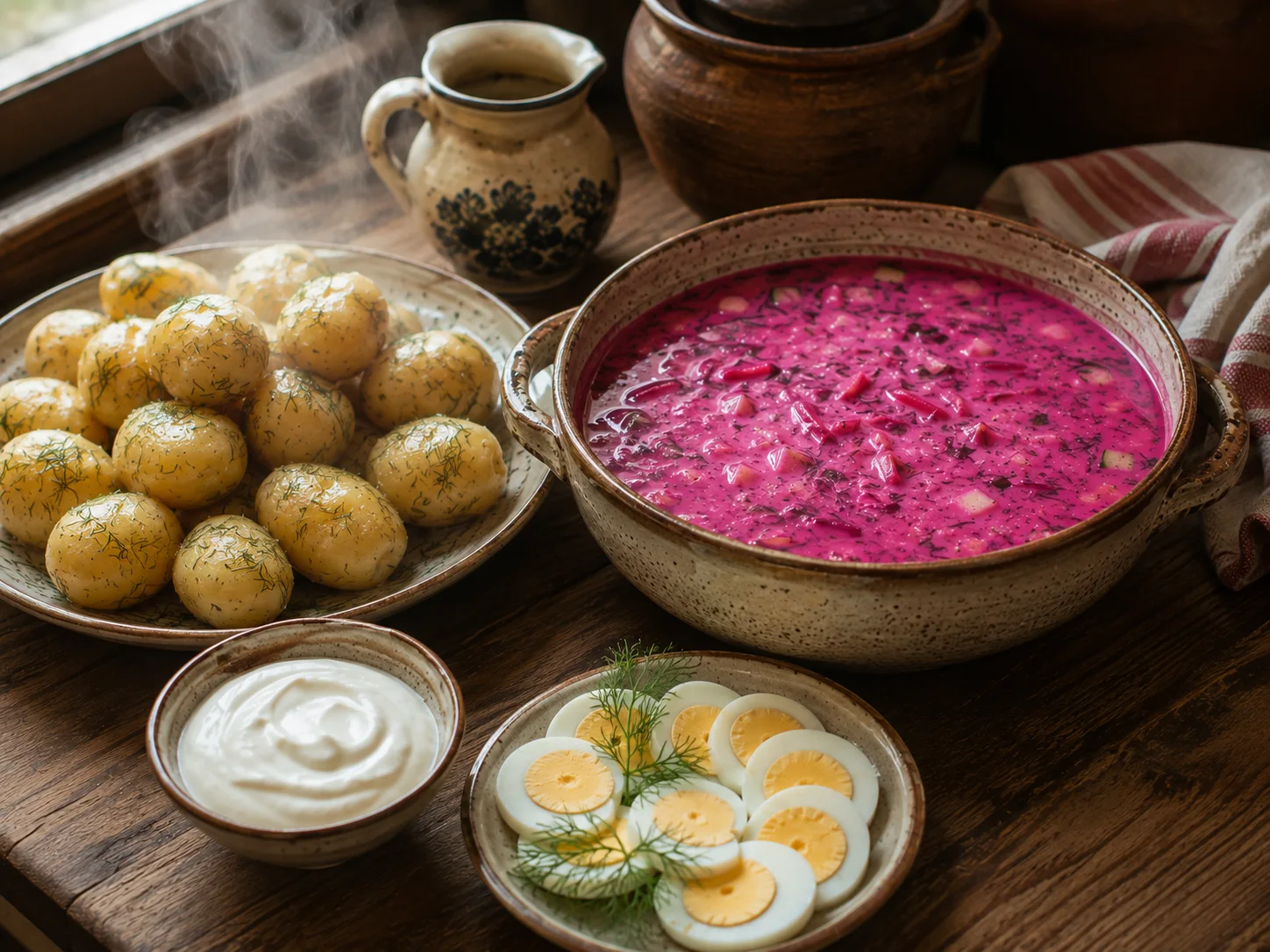
- Serve the cold soup with the hot potatoes on the side
What Šaltibarščiai Is
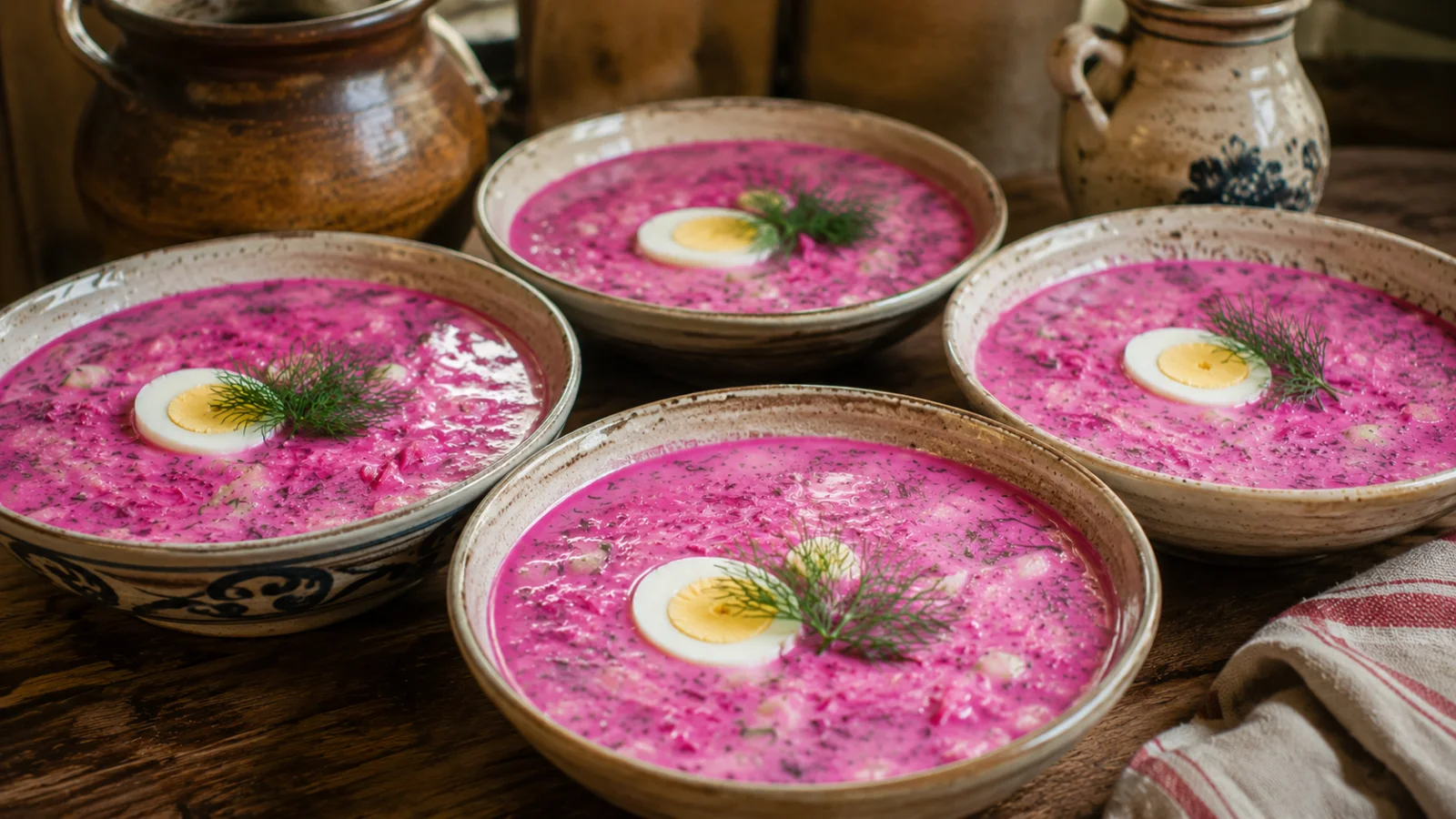
Šaltibarščiai is a cold soup of kefir and cooked beets with cucumber, green onions, dill, and hard-boiled egg, served with hot potatoes on a separate plate.³˒⁴ The name means “cold borscht,” and the beets turn the kefir a bright pink. In Lithuania it is a summer staple: sales of kefir and beets rise with the warm weather, though some households make it all year.¹
History and Origins
Šaltibarščiai belongs to a family of cold soups found around the Baltic, related to Polish chłodnik litewski and to Latvian cold soups, though each tastes different.¹ Lithuanians trace it to the Grand Duchy of Lithuania, a state that reached far beyond present-day Lithuania, and Poland and Belarus are among those who contest its heritage.²
The soup began with the leaves rather than the root. A historian at Vilnius University told LRT that wild beet leaves were boiled or fermented long before the Lithuanian state existed, and that the earliest recipes for a cold soup of the leaves date to the late 18th or early 19th century. In the 19th century the root took the place of the leaves, kefir or sour milk later replaced the sourdough base, and the soup took its modern form between the two world wars.¹ Older versions could be richer, with cooked meat, fish, grits, or crayfish tails.³
Households still make regional versions, with sorrel in Aukštaitija or as girienė in Dzūkija, which is sour milk thinned with water and seasoned with green onions and dill.⁸ Vilnius now holds an annual Pink Soup Fest in its honor.⁴
Traditional Recipe
This recipe was compiled by Heritage Healthy Kitchen from a comparison of published recipes; the sources are listed at the end of this article. Figures that are Heritage Healthy Kitchen’s own estimates rather than taken from a published source are marked as such.
Published recipes agree on the ingredients and differ in proportions. For each liter of kefir they use two or three beets or a jar of pickled beets, two to five eggs, and one or two cucumbers.⁴˒⁵˒⁶˒⁸ The quantities below sit inside those ranges. The weight of the beets, the potato portion, and the cooking and chilling times are Heritage Healthy Kitchen’s estimates.
Ingredients (Serves 4)
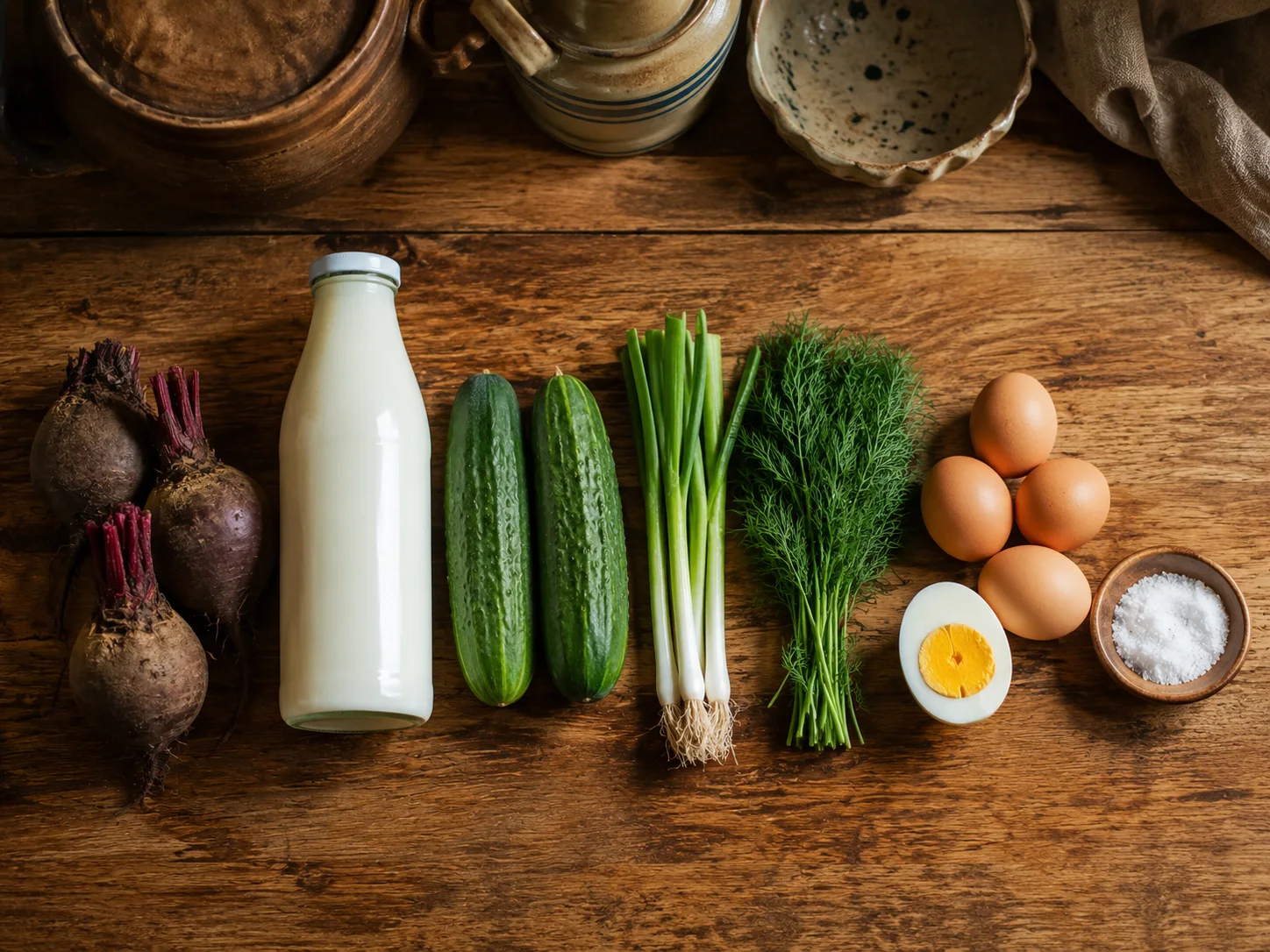
- 350 g (12 oz) beets, 2–3 medium, unpeeled; or about 300 g (10.5 oz) ready-cooked or pickled beets, drained
- 1 liter (4 cups) plain kefir, well chilled (or buttermilk)
- 2 medium cucumbers (about 300 g/10.5 oz)
- 4–5 green onions (scallions, about 30 g/1 oz), thinly sliced
- 1 small bunch fresh dill (about 20 g/0.7 oz), finely chopped, plus more for garnish
- 4 large eggs
- 1 tsp salt, or to taste
- 1 tbsp lemon juice or 1–2 tsp apple cider or white wine vinegar, optional
- Cold water or cooled beet cooking liquid, as needed to thin
- 800 g (1.75 lb) small waxy potatoes (new potatoes or any other small waxy variety), for serving
- Sour cream, for serving, optional
Instructions
- Cook the beets. Boil the whole, unpeeled beets in water until a knife slides through easily, 35–45 minutes depending on size. Alternatively, peel and halve them and simmer in just enough water to cover for about 15 minutes, then keep the cooking liquid for the soup.⁵ Let the beets cool, peel them if needed, and grate them coarsely or cut them into thin matchsticks.⁴˒⁹ If you use ready-cooked or pickled beets, drain and grate them.⁶
- Boil the eggs. Simmer the eggs for about 9 minutes, cool them in cold water, peel, and chop. Keep a few halves or slices for the top.
- Prepare the vegetables. Dice or coarsely grate the cucumbers, thinly slice the green onions, and finely chop the dill.⁴˒⁵
- Mix the soup. Pour the kefir into a large bowl and stir in the beets, cucumbers, green onions, dill, and most of the chopped egg. Season with the salt, and with lemon juice or vinegar if using.⁴˒⁶˒⁹ Thin with a little cold water or beet cooking liquid if the soup seems too thick.⁵
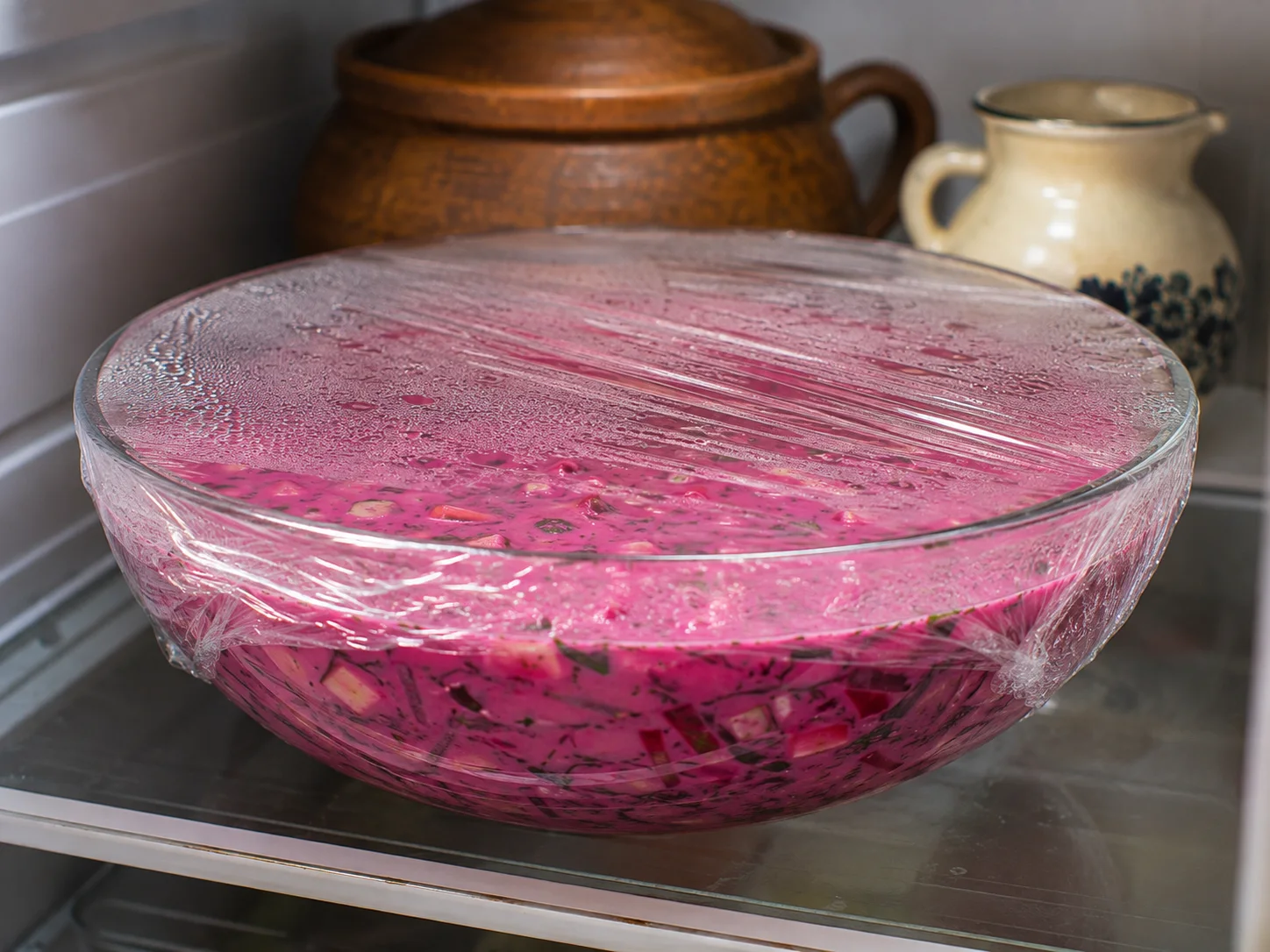
- Chill. Refrigerate for at least 1 hour, until the soup is well chilled.
- Boil the potatoes. Shortly before serving, boil the potatoes in lightly salted water until tender, 15–20 minutes for small potatoes. Some cooks toss them with a little butter or fry them.⁴˒⁵
- Serve. Ladle the cold soup into bowls, top with the reserved egg and some dill, and serve the hot potatoes on a separate plate.⁴˒⁵˒⁹
Kitchen Tips
Use good plain kefir. The soup is mostly kefir, so a thin or bland one gives a thin, bland soup.⁷
Keep the beet cooking liquid if you boil peeled beets. It deepens both the color and the flavor of the soup and can be used instead of water to thin it.⁵
If the soup will be eaten over a day or two, add the chopped egg to each bowl rather than to the whole pot.³
Other greens work too. Households add sorrel, chard, or young beet leaves, which is closer to the oldest form of the soup.¹˒⁸
Nutritional Information
Šaltibarščiai with Boiled Potatoes, Per Serving (1 of 4 Servings)
- Calories: approximately 410–500 kcal
- Protein: approximately 20–25g
- Total fat: approximately 13–16g
- Saturated fat: approximately 6–7g
- Carbohydrates: approximately 53–65g
- Dietary fiber: approximately 6–7g
- Sodium: approximately 740–910mg
Nutritional values are estimates based on standard ingredient databases (USDA FoodData Central), for full-fat kefir and without the salt in the potato water or the optional sour cream. They will vary with the kefir and the size of the eggs.
A Lighter Way to Make It
The soup is already light, and a few small changes lower the fat and salt further. Using 1% kefir instead of full-fat brings the fat down from about 14 g to about 8 g per serving and the saturated fat from about 7 g to about 3.5 g. The NHS suggests 1% or skimmed milk for people cutting down on fat, since much of the fat in dairy is saturated.¹²
Halving the salt and adding a squeeze of lemon lowers the sodium from about 825 mg to about 535 mg per serving. Harvard’s Nutrition Source notes that most people don’t notice a salt reduction of about 30% and that citrus and sodium act on the same taste sensors, so less salt is needed when they are combined.¹¹ Adding an extra cucumber makes the soup thinner and lighter,³ and boiling the potatoes in their scrubbed skins keeps most of their fiber, which sits in the peel.¹⁰ Together these changes bring a serving to roughly 410 kcal instead of 455. These figures are Heritage Healthy Kitchen estimates.
Storage and Reheating
Keep the soup in the refrigerator and don’t leave it out in the heat longer than necessary.³ It keeps for up to 2 days in a covered container, a Heritage Healthy Kitchen estimate.
Don’t freeze it: kefir separates once thawed and the cucumber turns watery.
The soup is never reheated, since it is eaten cold. Boil the potatoes fresh for serving; leftover potatoes can be reheated separately.
Traditional Šaltibarščiai

Ingredients
- 350 g (12 oz) beets, 2–3 medium, unpeeled; or about 300 g (10.5 oz) ready-cooked or pickled beets, drained
- 1 liter (4 cups) plain kefir, well chilled (or buttermilk)
- 2 medium cucumbers (about 300 g/10.5 oz)
- 4–5 green onions (scallions, about 30 g/1 oz), thinly sliced
- 1 small bunch fresh dill (about 20 g/0.7 oz), finely chopped, plus more for garnish
- 4 large eggs
- 1 tsp salt, or to taste
- 1 tbsp lemon juice or 1–2 tsp apple cider or white wine vinegar, optional
- Cold water or cooled beet cooking liquid, as needed to thin
- 800 g (1.75 lb) small waxy potatoes (new potatoes or any other small waxy variety), for serving
- Sour cream, for serving, optional
Instructions
- Cook the beets: Boil the whole, unpeeled beets in water until a knife slides through easily, 35–45 minutes depending on size. Alternatively, peel and halve them and simmer in just enough water to cover for about 15 minutes, then keep the cooking liquid for the soup. Let the beets cool, peel them if needed, and grate them coarsely or cut them into thin matchsticks. If you use ready-cooked or pickled beets, drain and grate them.
- Boil the eggs: Simmer the eggs for about 9 minutes, cool them in cold water, peel, and chop. Keep a few halves or slices for the top.
- Prepare the vegetables: Dice or coarsely grate the cucumbers, thinly slice the green onions, and finely chop the dill.
- Mix the soup: Pour the kefir into a large bowl and stir in the beets, cucumbers, green onions, dill, and most of the chopped egg. Season with the salt, and with lemon juice or vinegar if using. Thin with a little cold water or beet cooking liquid if the soup seems too thick.
- Chill: Refrigerate for at least 1 hour, until the soup is well chilled.
- Boil the potatoes: Shortly before serving, boil the potatoes in lightly salted water until tender, 15–20 minutes for small potatoes. Some cooks toss them with a little butter or fry them.
- Serve: Ladle the cold soup into bowls, top with the reserved egg and some dill, and serve the hot potatoes on a separate plate.
Frequently Asked Questions
What does šaltibarščiai taste like?
Tangy and cool, with the earthy sweetness of beets against the sour taste of kefir. The dill and green onions add a sharp, fresh note, and the soup is meant to be refreshing rather than filling; the potatoes on the side make it a meal.
Why are the potatoes served on a separate plate?
That is how the soup is served in Lithuania: cold soup in the bowl, hot potatoes alongside.³˒⁴ Keeping them apart also stops the potatoes from warming the soup.⁹
Can I use buttermilk instead of kefir?
Yes. Published recipes give buttermilk as an alternative to kefir, and plain Greek yogurt thinned with water also works.⁴˒⁷
Can I use pickled or ready-cooked beets?
Yes. Some recipes call for a jar of pickled beets, with a little apple cider vinegar for sharpness.⁶ Vacuum-packed cooked beets are also widely used today.³ Drain them before grating.
Is šaltibarščiai the same as Polish chłodnik?
They are related. Polish chłodnik litewski and Latvian cold soups belong to the same family, but each tastes different.¹
Is šaltibarščiai vegetarian?
Yes. It contains kefir and eggs but no meat or fish, so it is vegetarian but not vegan.
Further Reading & Sources
The recipe is a compilation based on the published recipes listed here; these links are provided for readers who want to explore further.
- Lideikytė, Viktorija. “Lietuvių šlovinamų šaltibarščių sezonas – atidarytas: savo receptą turi kone kiekvienas.” LRT.lt, 9 April 2020. lrt.lt
- Agence France-Presse. “Lithuania Capital Turns Pink for Love of Beetroot Soup.” VOA News, 10 June 2023. voanews.com
- “Making and savouring Lithuania’s iconic pink soup: tips from a food expert.” LRT English, 30 May 2025, no author named. lrt.lt
- “What is pink soup?” Go Vilnius, the official tourism agency of Vilnius, no author or date given. govilnius.lt
- “Išbandžiusi daug šaltibarščių receptų atrado patį geriausią: „Šis man – skonio etalonas“.” TV3.lt, recipe from the Kūmutės virtuvė blog, 26 May 2026. tv3.lt
- Nicholson, Beata. “Už lango – saulė, ant stalo – šaltibarščiai: išbandykite su „prancūziškomis“ bulvėmis.” LRT.lt, Beatos virtuvė, 10 May 2020. lrt.lt
- Satkūnaitė, Audinga. “Beata Nicholson atskleidė slaptus šaltibarščių ingredientus: pabandykite ir jūs.” LRT.lt, 23 April 2019. lrt.lt
- “Rašytojų šaltibarščių receptai: nuo bajoriškos prabangos iki vaikystės nostalgijos.” LRT.lt, prepared with Vilnius UNESCO City of Literature, 12 July 2026. lrt.lt
- “Šaltibarščiai.” Recipe card, EU-Conexus, no author or date given. eu-conexus.eu
- “Are Potatoes Healthy?” The Nutrition Source, Harvard T.H. Chan School of Public Health. nutritionsource.hsph.harvard.edu
- “Take Action on Salt.” The Nutrition Source, Harvard T.H. Chan School of Public Health. nutritionsource.hsph.harvard.edu
- “Dairy and alternatives in your diet.” NHS, page last reviewed 11 December 2023. nhs.uk
Disclaimer
The information in this article is provided for educational and informational purposes only. Heritage Healthy Kitchen makes no representations or warranties regarding the accuracy or completeness of any content on this site. Nutritional values are estimates only and will vary depending on the specific ingredients, brands, and measurements used. This content is not intended as dietary, medical, or professional nutritional advice. Always consult a qualified healthcare provider regarding any dietary needs or health conditions. Heritage Healthy Kitchen is not responsible for any outcomes resulting from the use of recipes or information published on this site.
You Might Also Like
More heritage recipes from our kitchen

Leave a Reply