Healthy Ukrainian Holubtsi: Lighter Filling, Same Slow-Cooked Character
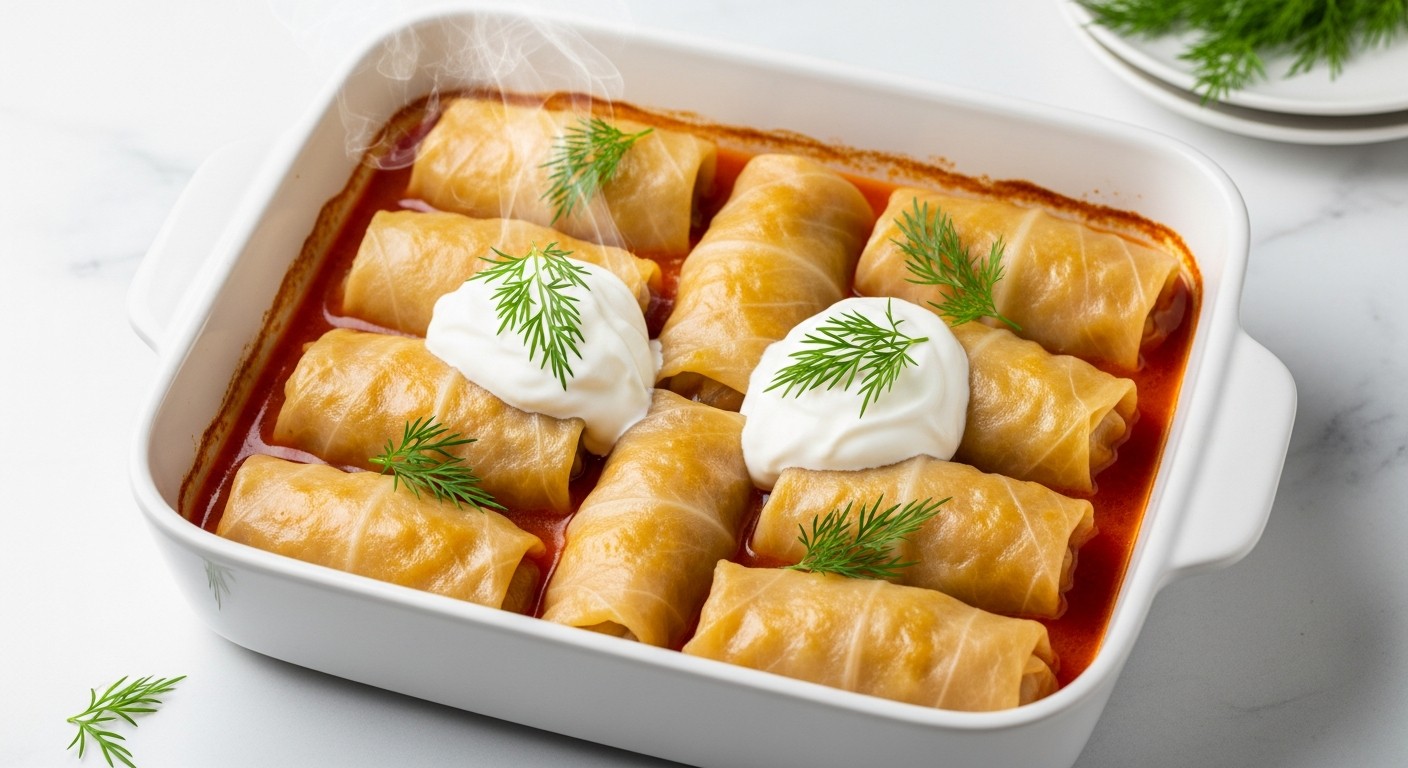
Prep: ~1 hour | Cooking: 1.5 hours | Serves: 6–8 | Makes: approximately 20–24 rolls | Difficulty: Intermediate
Quick Overview
- The cabbage preparation is identical to the traditional version — blanch, peel, and trim the ribs
- Replace ground pork with 93% lean ground turkey; replace white rice with brown rice, half-cooked in the same way
- The sauce changes the most: this version uses tomato passata with a small amount of low-fat sour cream — or none at all if you want the leanest result
- Cooking method and time are the same: 1.5 hours covered, stovetop or oven
- A meatless version using buckwheat and mushrooms is included as a separate option below
What changes and what stays the same
The traditional holubtsi recipe gets its calorie density from three places: ground pork (which runs about 21 grams of fat per 100g raw), full-fat sour cream in the sauce, and white rice. This version changes all three without touching the technique, the cooking time, or what makes the dish recognizable.
What stays the same: the cabbage leaf, the shaping, the slow braise, the bay leaves and the onion-carrot base in the filling. These carry most of what makes holubtsi taste like holubtsi. The filling swap and the lighter sauce are real changes, honest ones, and the result is a noticeably different dish in the bowl, leaner and with less richness. Whether that trade is worth it depends on what you are cooking for.
What each substitution does
Brown rice instead of white
Brown rice and white rice contain a similar number of calories per cup. The difference is what comes with them. Brown rice retains the bran and germ layers removed in milling, which means it delivers more fiber, magnesium, potassium, iron, and B vitamins than white rice. Harvard Health Publishing notes that a diet rich in whole grains like brown rice is associated with reduced risk of heart disease and type 2 diabetes, and that brown rice has a glycemic index of approximately 68 compared to 73 for white rice — a meaningful difference for people managing blood sugar.¹
Cleveland Clinic’s registered dietitian Beth Czerwony notes that the higher fiber content of brown rice means it digests more slowly, keeping you fuller for longer and helping with appetite control.² In a dish like holubtsi, where the rice is mixed through a dense filling and slow-cooked for 1.5 hours, the texture difference between brown and white rice is subtle after the long braise.
Lean ground turkey instead of ground pork
Standard ground pork contains approximately 21 grams of fat and around 8 grams of saturated fat per 100 grams raw (USDA data). Ninety-three percent lean ground turkey contains approximately 11–12 grams of fat and about 2.5–3 grams of saturated fat per 100 grams. Healthline’s comparison of ground turkey and ground beef (both leaner than standard ground pork) confirms that ground turkey’s key advantage is in saturated fat, not total fat: “Turkey has lower levels of saturated fat, making it a better choice for heart health.”³
In a holubtsi filling, lean turkey behaves somewhat differently from pork. It is less forgiving: without the natural fat in pork to keep the filling moist during the long braise, the texture can become firm and slightly dry if the sauce is too thin or the heat too high. Adding one tablespoon of olive oil to the filling and keeping the sauce generously covering the rolls throughout cooking prevents this.
The cabbage itself
Cabbage is nutritionally underestimated. One cup of shredded raw cabbage contains approximately 22 calories while providing vitamin C, vitamin K, dietary fiber, and a group of compounds called glucosinolates. These sulfur-containing compounds are converted in the body to isothiocyanates and sulforaphane, which have been studied for anti-inflammatory properties and potential protective effects on cell health.⁴ Cooking reduces vitamin C content and partially reduces glucosinolates, but the fiber and vitamin K are largely retained in the cooked leaf.
In a standard portion of holubtsi, a significant amount of cabbage goes into the pot. The leaves wrapping the rolls, the leaves lining the bottom of the pot, and the sauce absorbing the cabbage’s water and flavor over 1.5 hours — the vegetable is doing real nutritional work throughout the dish.⁴
Healthy holubtsi recipe
Recipe developed independently by Heritage Healthy Kitchen, drawing on traditional Ukrainian culinary methods. Sources for further reading are listed at the end of this article.¹²³⁴⁵
Ingredients
The cabbage
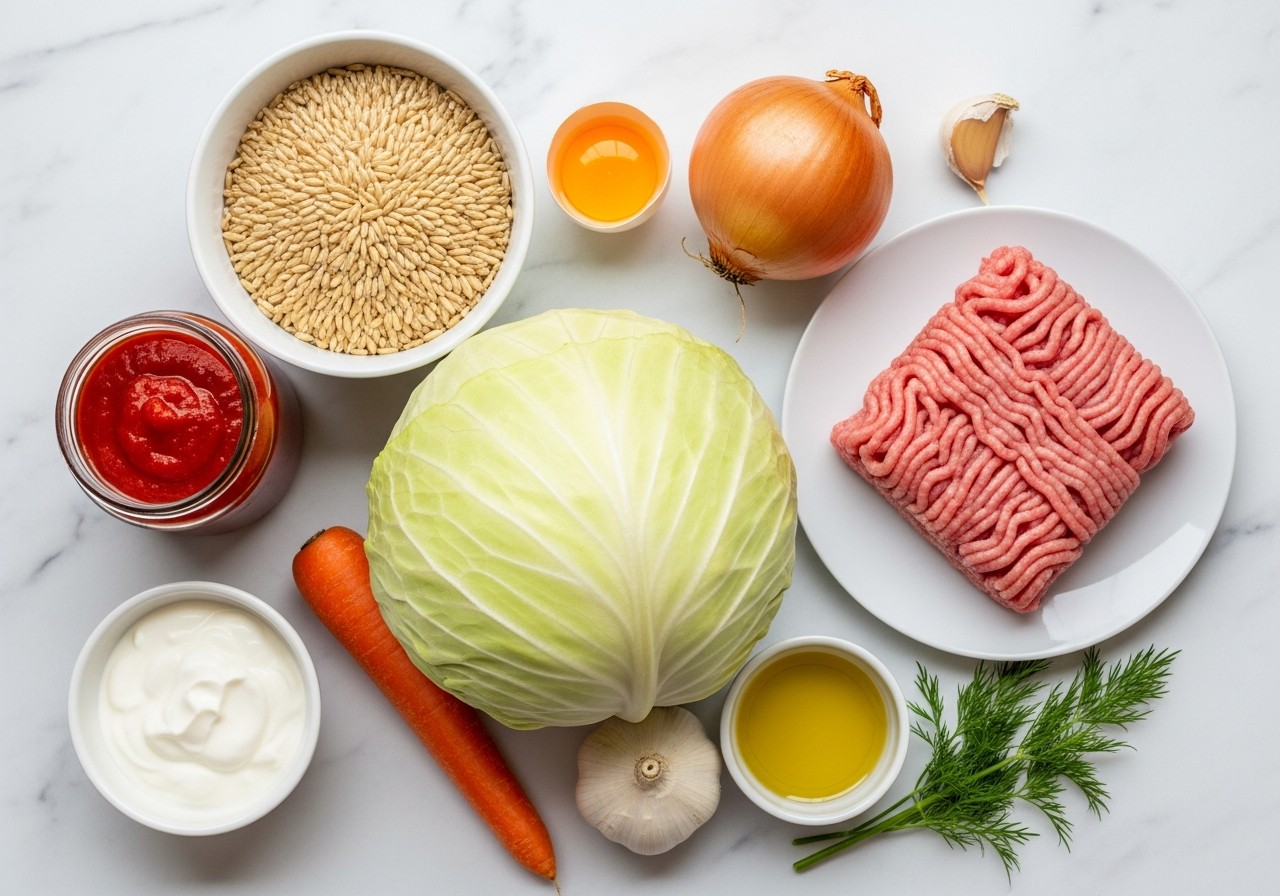
- 1 large head of white cabbage (approximately 1.5–2kg) — same as the traditional version
The filling
- 600g (1.3 lb) 93% lean ground turkey
- 200g (1 cup) long-grain or medium-grain brown rice, half-cooked (see method)
- 1 large onion, diced fine and fried until golden
- 1 medium carrot, grated and fried with the onion
- 3 garlic cloves, minced
- 1 tablespoon olive oil (added directly to the raw filling — keeps the turkey moist during cooking)
- 1 egg
- 1.5 teaspoons salt
- 1 teaspoon black pepper
- 1 tablespoon fresh dill or parsley, chopped
The sauce
- 500ml (2 cups) tomato passata
- 300ml (1¼ cups) water or light vegetable stock
- 3–4 tablespoons low-fat sour cream or plain Greek yogurt (optional — omit for the leanest version)
- 2 bay leaves
- Salt and pepper to taste
Method
Step 1: Prepare the cabbage leaves
Bring a large pot of water to a full boil. Cut a deep cone around the core of the cabbage to loosen the leaves. Lower the whole head into the boiling water. Peel the outer leaves off with tongs as they soften (every 2–3 minutes), transferring them to a colander. Continue rotating and peeling until you have 20–24 whole leaves. Trim or flatten the thick central rib from each leaf before filling.
Step 2: Half-cook the brown rice
Rinse the brown rice under cold water. Brown rice requires a longer pre-cook than white rice: boil in salted water for 15 minutes (compared to 7 minutes for white rice), then drain and rinse with cold water. The rice should be about half done — still with a firm bite in the center. It will finish cooking inside the rolls during the 1.5-hour braise. Fully cooked brown rice turns mushy in the filling.
Step 3: Make the filling
Fry the onion and carrot in a teaspoon of olive oil over medium heat for 10–12 minutes until soft and lightly caramelized. Cool completely before adding to the meat.
Combine the ground turkey, half-cooked brown rice, cooled onion-carrot mixture, garlic, the remaining olive oil, egg, salt, pepper, and herbs. Mix thoroughly with your hands. Fry a small test piece and taste for seasoning before rolling — lean turkey needs adequate salt and the olive oil helps carry the flavor. Adjust as needed.
Step 4: Roll the holubtsi
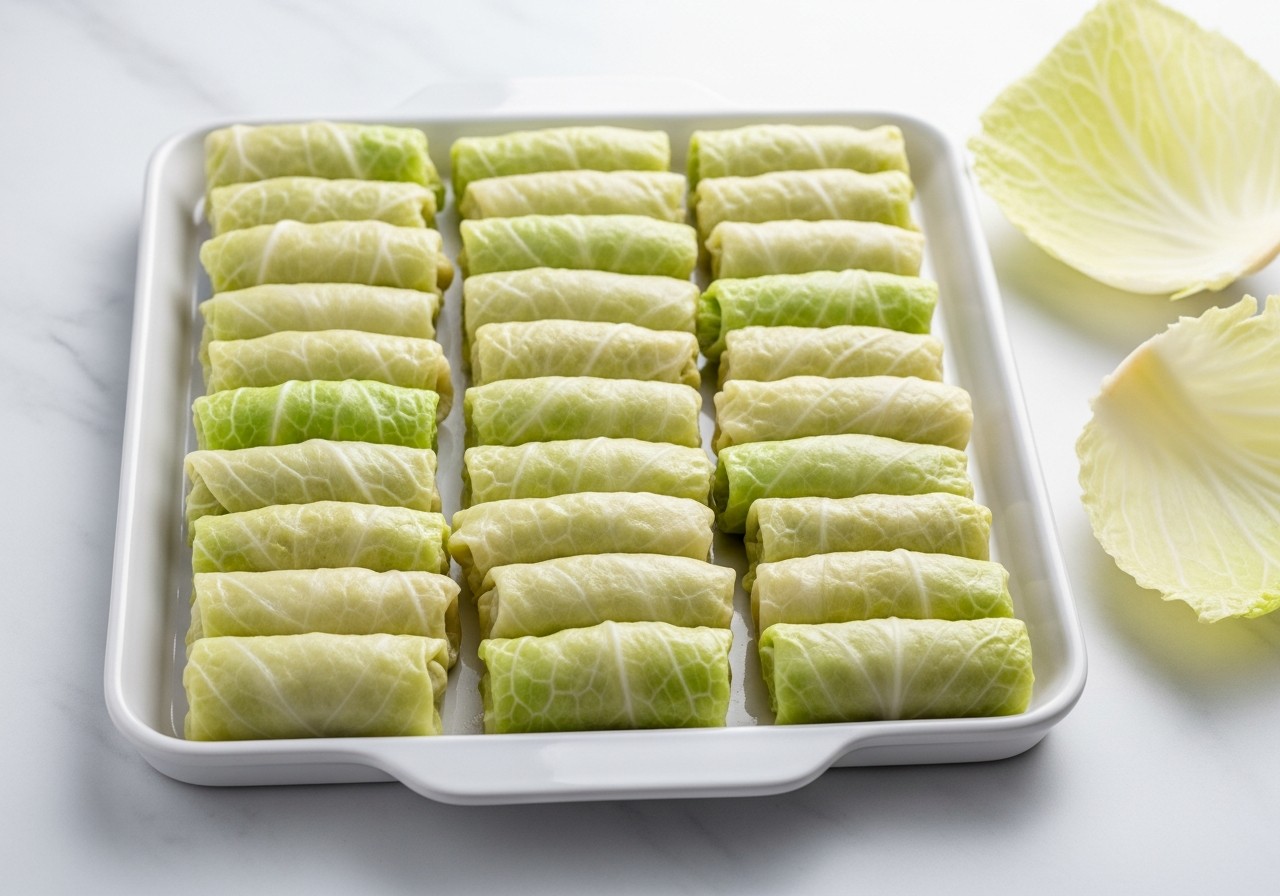
Place a cabbage leaf on a flat surface, inner side up, stem end toward you. Spoon 2–3 tablespoons of filling onto the lower third of the leaf. Fold the sides over the filling, then roll firmly from the stem upward, tucking as you go. The roll should be snug. Patch any tears with spare leaf pieces.
Step 5: Layer and cook
Line the bottom of a heavy pot or deep baking dish with spare cabbage leaves. Arrange the rolls in tight layers, seam side down.
For the sauce: whisk together the tomato passata, stock, and sour cream or yogurt if using. Pour over the rolls until just covered. Add the bay leaves. The sauce should be predominantly tomato — the sour cream or yogurt here is an accent, not a base.
Stovetop: bring to a gentle boil, reduce to very low heat, cover and simmer for 1.5 hours. Check occasionally and add a splash of water if the sauce reduces too much.
Oven: cover tightly with a lid or foil. Bake at 180°C / 355°F for 1.5–2 hours, removing the cover for the last 15 minutes.
Step 6: Rest before serving
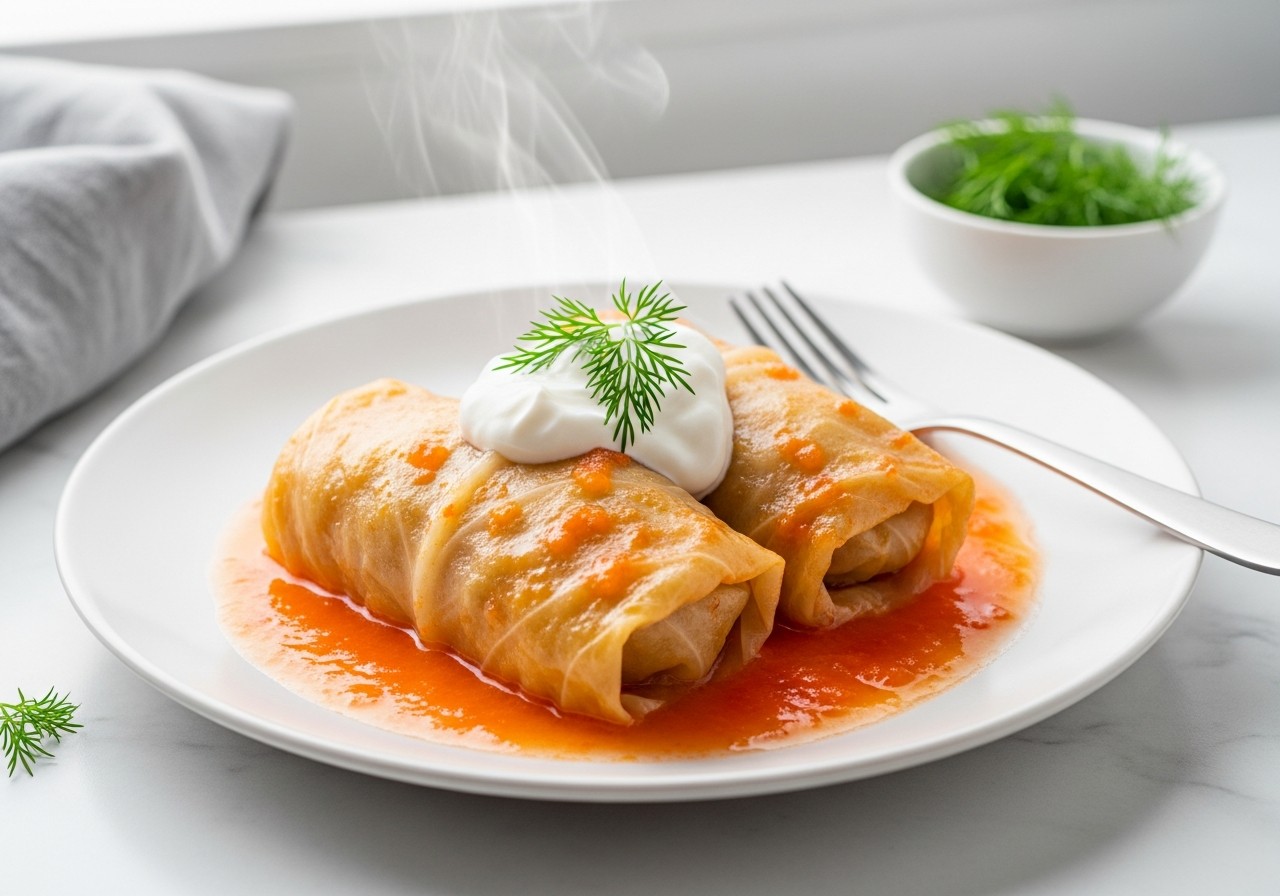
Rest covered for 15 minutes off the heat. The rolls firm up and the sauce thickens slightly. Serve with a small spoonful of cold plain Greek yogurt on the side. It is tangier and slightly thinner than sour cream, but in a bowl of hot holubtsi the difference is smaller than you might expect.
Meatless version: buckwheat and mushroom holubtsi
This is the version Ukrainian families make for Christmas Eve (Sviata Vecheria), but it works just as well year-round. Buckwheat and dried forest mushrooms produce a filling with significant depth, and the absence of meat is not felt as a loss — the mushrooms carry enough umami to hold the dish together.
The sauce for this version is purely tomato, without any dairy. No sour cream, no yogurt — the meatless version is lighter than the turkey one and genuinely one of the lower-calorie ways to eat this dish. One cup of cooked buckwheat groats contains approximately 4–5 grams of fiber, around 6 grams of protein, and meaningful amounts of magnesium and manganese.
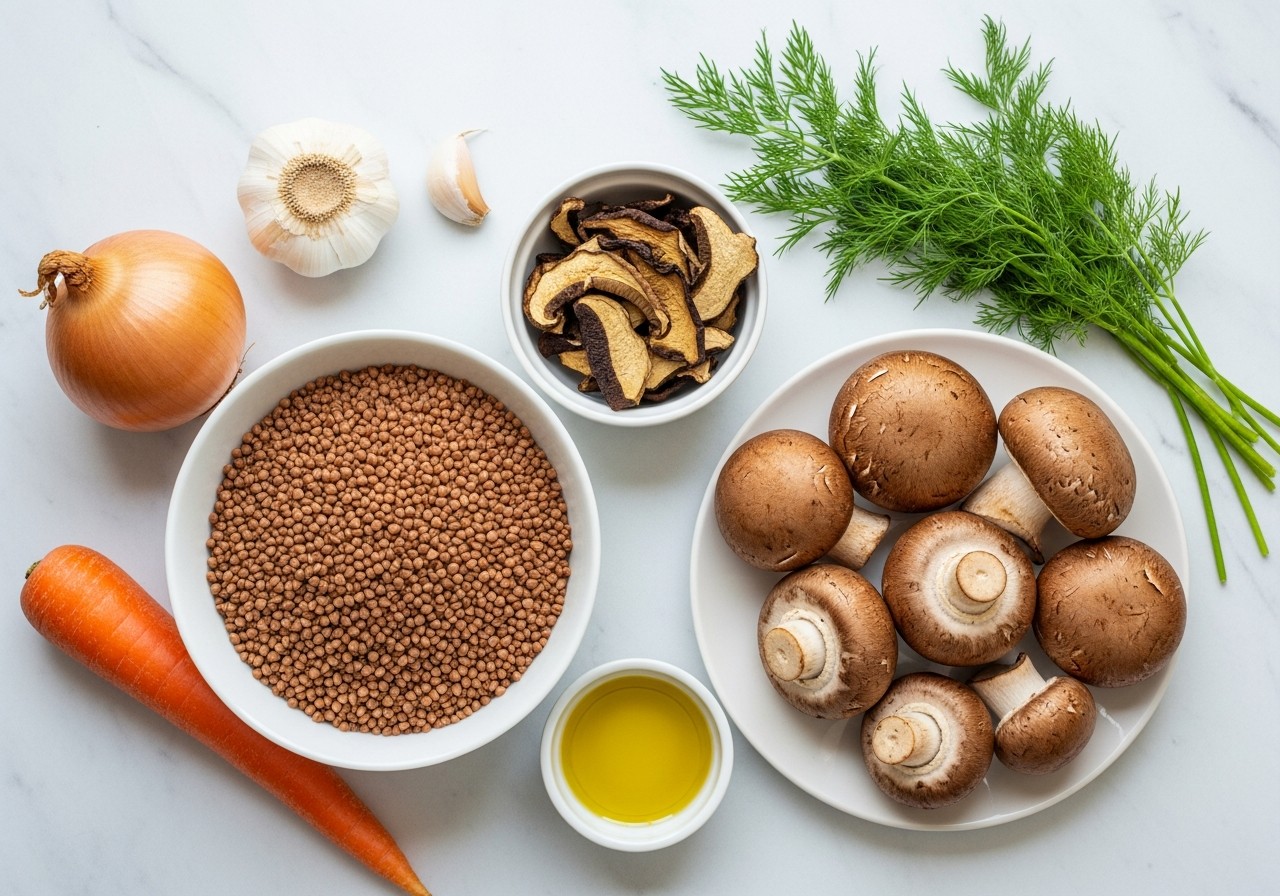
Meatless filling ingredients (fills 20–24 rolls)
- 200g (1 cup) buckwheat groats, cooked until just tender and cooled
- 30g (1 oz) dried porcini mushrooms, soaked overnight and roughly chopped (keep the soaking liquid)
- 200g (7 oz) fresh mushrooms (chestnut or button), diced and fried until all moisture evaporates
- 1 large onion, diced and fried until golden
- 1 medium carrot, grated and fried with the onion
- 2 garlic cloves, minced
- 2 tablespoons olive oil
- Salt, black pepper, and fresh dill to taste
Meatless filling method
- Soak the dried porcini in 300ml of cold water overnight or for at least 4 hours. Strain the soaking liquid through a fine sieve and reserve — it goes into the sauce.
- Fry the onion and carrot in olive oil until golden. Add the fresh mushrooms and cook over medium-high heat until all moisture has evaporated and the mushrooms begin to color — about 10 minutes. Add the garlic and cook for 1 more minute.
- Combine the cooked buckwheat, all the mushroom mixture, the drained porcini, and seasoning. Taste carefully — buckwheat can absorb salt quickly, so adjust gradually.
- Cool completely before rolling. The filling should hold together when pressed.
Meatless sauce
Use 400ml tomato passata, 300ml of the strained porcini soaking liquid (topped up with water if needed), salt, pepper, and bay leaves. No dairy. Pour over the rolls and cook exactly as the turkey version.
Kitchen tips
Brown rice takes longer to half-cook than white rice. Budget 15 minutes at a rolling boil, not 7. Under-cooked brown rice in the filling will still be firm after the braise; overcooked brown rice will turn the filling into paste. Aim for a grain that has some give but a visible white center.²
Lean turkey filling must not cook in a dry pot. The fat that pork adds naturally is not there to protect the filling from heat. Keep the sauce level high enough that the rolls are submerged throughout — check twice during cooking and add hot water if needed. The rolls should emerge from the pot moist and cohesive, not compressed and crumbly.
For the meatless version, squeeze the soaked porcini before chopping to remove excess water. Too much moisture in the buckwheat filling makes it difficult to roll and causes the leaves to loosen during cooking. The filling should be dry enough to hold its shape in a spoon.⁴
Fry a small test piece of the turkey filling before rolling, every time. Lean turkey has less fat to carry flavor, and what tastes adequately seasoned raw will taste flat after 1.5 hours in an acidic tomato sauce. The test piece takes two minutes and saves the whole batch.
Nutritional comparison
Per serving of 3–4 holubtsi with sauce (approximately 350g)
| Version | Calories | Protein | Total fat | Sat. fat | Carbs | Fiber |
|---|---|---|---|---|---|---|
| Traditional (pork + white rice + full-fat sauce) | ~350–370 kcal | ~22g | ~14g | ~5g | ~30g | ~4g |
| Healthy turkey + brown rice + light sauce | ~270–320 kcal | ~24g | ~6g | ~1.5g | ~25g | ~5g |
| Meatless buckwheat + mushroom + tomato sauce | ~170–210 kcal | ~4–5g | ~4g | ~0.5g | ~34g | ~6g |
All figures are estimates based on standard ingredient databases. They will vary depending on the fat content of the turkey, the exact amount of olive oil used, whether sour cream is included in the sauce, and portion size. The meatless version’s higher carbohydrate figure reflects the buckwheat, which is a nutritionally dense grain despite the higher carb count.
Storage and freezing
Both versions keep in the refrigerator for 4–5 days in a sealed container with the sauce. Reheat gently in a covered pot over low heat with a splash of water. The turkey version is more sensitive to high reheating heat than the pork version — it will dry out if rushed.
Both versions freeze well raw (up to 3 months) or cooked (up to 3 months). Freeze raw rolls in a single layer on a floured tray first, then transfer to bags. Cook from frozen in a covered pot with sauce, adding 25–30 minutes to the standard cooking time.
The meatless version reheats particularly well because buckwheat is more stable through multiple heat cycles than ground meat. The porcini flavor deepens each time it is reheated — the meatless version is one of those dishes that is genuinely better on day three.
Healthy Turkey Holubtsi

Ingredients
The Cabbage
- 1 large head of white cabbage (1.5–2kg)
The Filling
- 600g (1.3 lb) 93% lean ground turkey
- 200g (1 cup) brown rice, half-cooked (15 min)
- 1 large onion, diced and fried until golden
- 1 medium carrot, grated and fried with the onion
- 3 garlic cloves, minced
- 1 tablespoon olive oil
- 1 egg
- 1.5 teaspoons salt, 1 teaspoon black pepper
- 1 tablespoon fresh dill or parsley, chopped
The Sauce
- 500ml (2 cups) tomato passata
- 300ml (1¼ cups) water or light vegetable stock
- 3–4 tablespoons low-fat sour cream or Greek yogurt (optional)
- 2 bay leaves, salt and pepper to taste
Instructions
- Prepare the cabbage: Boil the whole head, core cut out, and peel off 20–24 leaves as they soften. Trim the thick ribs.
- Half-cook the rice: Boil the brown rice in salted water for 15 minutes, drain and rinse. It should keep a firm bite.
- Make the filling: Mix the turkey, rice, cooled fried onion and carrot, garlic, olive oil, egg, salt, pepper and herbs. Fry a small test piece and adjust seasoning.
- Roll: Place 2–3 tablespoons of filling on each leaf, fold the sides in and roll firmly from the stem end.
- Layer and cook: Line the pot with spare leaves, pack the rolls seam side down, pour over the whisked sauce and add bay leaves. Simmer covered 1.5 hours (or bake at 180°C / 355°F).
- Rest and serve: Rest covered for 15 minutes. Serve with a spoonful of cold Greek yogurt.
Buckwheat and Mushroom Holubtsi (Meatless)
Ingredients
The Filling
- 200g (1 cup) buckwheat groats, cooked until just tender
- 30g (1 oz) dried porcini, soaked and chopped (keep the liquid)
- 200g (7 oz) fresh mushrooms, diced and fried dry
- 1 large onion, diced and fried until golden
- 1 medium carrot, grated and fried with the onion
- 2 garlic cloves, minced
- 2 tablespoons olive oil
- Salt, black pepper and fresh dill to taste
The Sauce
- 400ml tomato passata
- 300ml strained porcini soaking liquid
- 2 bay leaves, salt and pepper — no dairy
Instructions
- Soak the porcini: Soak in 300ml cold water overnight (or 4+ hours). Strain and reserve the liquid for the sauce.
- Fry the vegetables: Fry the onion and carrot until golden, add the fresh mushrooms and cook until dry and coloring, then add the garlic for 1 minute.
- Combine: Mix the buckwheat, mushroom mixture, porcini and seasoning. Cool completely — the filling should hold together when pressed.
- Roll: Fill and roll the blanched cabbage leaves exactly as in the turkey version.
- Cook: Pour over the tomato-porcini sauce and simmer covered for 1.5 hours, keeping the rolls submerged.
Frequently Asked Questions
Does lean turkey really stay moist in a long braise?
It can, but it requires two things: the tablespoon of olive oil mixed directly into the raw filling, and enough liquid in the pot throughout cooking. Standard ground pork contains natural fat that protects the meat from drying out during a 1.5-hour simmer. Lean turkey has no such buffer. Keep the sauce covering the rolls fully, check at the 45-minute mark, and add hot water if the level has dropped. The result should be moist — not as rich as pork, but not dry.³
Can I use 85% lean turkey instead of 93%?
Yes, and it produces a richer, more forgiving filling. The fat content will be closer to lean beef than to the very lean 93% turkey. If you do not need strict fat reduction and just want something lighter than pork, 85% lean turkey is a good middle ground that requires less attention during cooking.³
Why use brown rice — does the texture hold up after 1.5 hours of braising?
It does. Brown rice is actually slightly more resilient than white rice in a long braise because the bran layer slows moisture absorption. Half-cook it for 15 minutes before using, and it will finish cooking inside the roll without turning soft. The key is not to over-pre-cook it. A firm, underdone grain going into the roll is exactly what you want.¹ ²
Does replacing the sour cream sauce with tomato sauce significantly change the flavor?
Yes, it changes the character of the dish. The tomato-sour cream combination in traditional holubtsi provides richness and a rounded, slightly creamy acidity. A pure tomato sauce is brighter, less rich, more forward. Neither is wrong — they are different dishes. The 3–4 tablespoons of Greek yogurt in the sauce is a middle ground: it adds a small amount of creaminess without the calorie load of 200ml of full-fat sour cream.
Is the meatless version suitable as the main protein source in a meal?
At approximately 4–5 grams of protein per serving, the buckwheat-mushroom version is lower in protein than the meat versions. If you are eating this as a main dish, consider serving it alongside a high-protein accompaniment — boiled eggs, a yogurt-based dip, or a legume side. Buckwheat contains all essential amino acids, which is relatively uncommon for a grain, but the amounts per portion are modest.
Can I combine turkey and buckwheat in the same filling?
Yes, and it works well. Use 400g ground turkey and 100g cooked buckwheat groats in place of the full 600g turkey and 200g rice. The buckwheat adds texture, fiber, and earthiness while the turkey provides the protein. This combination is not strictly traditional but produces a filling that holds together well and has more nutritional variety than either ingredient alone.
Does blanching the cabbage remove its nutritional value?
The main water-soluble vitamin reduced by blanching is vitamin C. Fiber and vitamin K are largely retained, because fiber is structurally stable and vitamin K is fat-soluble. Glucosinolates are partially reduced by heat and water, so some are lost during blanching — a brief dip (2–3 minutes) loses less than prolonged boiling. Blanching is necessary for the leaves to roll without cracking; there is no workable alternative for this dish.⁴
The traditional version
The full pork and white rice version, with the traditional tomato-sour cream sauce and all regional variations from Carpathian sauerkraut to grape leaves, is covered in our Traditional Ukrainian Holubtsi article.
Further Reading & Sources
The following sources were consulted for the nutritional claims and cooking guidance in this article. Heritage Healthy Kitchen’s recipes were developed independently; these links are provided for readers who want to explore further.
- “Brown Rice versus White Rice: A Head-to-Head Comparison.” Harvard Health Publishing, Harvard Medical School. health.harvard.edu — glycemic index data (brown rice GI 68 vs white rice GI 73), fiber and nutrient comparison, and association with reduced risk of type 2 diabetes and heart disease.
- “5 Reasons to Consider Switching to Brown Rice.” Cleveland Clinic Health Essentials, dietitian Beth Czerwony, RD, LD. health.clevelandclinic.org — satiety benefits of brown rice fiber, blood sugar management, and nutritional comparison with white rice.
- “Ground Turkey vs. Ground Beef: Is One Healthier?” Healthline, reviewed by Lizzie Streit, MS, RDN, LD. healthline.com — saturated fat comparison between ground turkey and other ground meats, cardiac health implications, lean protein data.
- “9 Impressive Health Benefits of Cabbage.” Healthline. healthline.com — glucosinolates and anti-inflammatory properties of cabbage, vitamin C and K content, fiber contribution, calorie density.
- “Health Benefits of Rice.” WebMD. webmd.com — brown rice nutritional profile (fiber, phenols, antioxidants), diabetes risk reduction, and comparison with white rice.
Disclaimer
The information in this article is provided for educational and informational purposes only. Heritage Healthy Kitchen makes no representations or warranties regarding the accuracy or completeness of any content on this site. Nutritional values are estimates only and will vary depending on the specific ingredients, brands, and measurements used. This content is not intended as dietary, medical, or professional nutritional advice. Always consult a qualified healthcare provider regarding any dietary needs or health conditions. Heritage Healthy Kitchen is not responsible for any outcomes resulting from the use of recipes or information published on this site.
You Might Also Like
More heritage recipes from our kitchen
Leave a Reply