
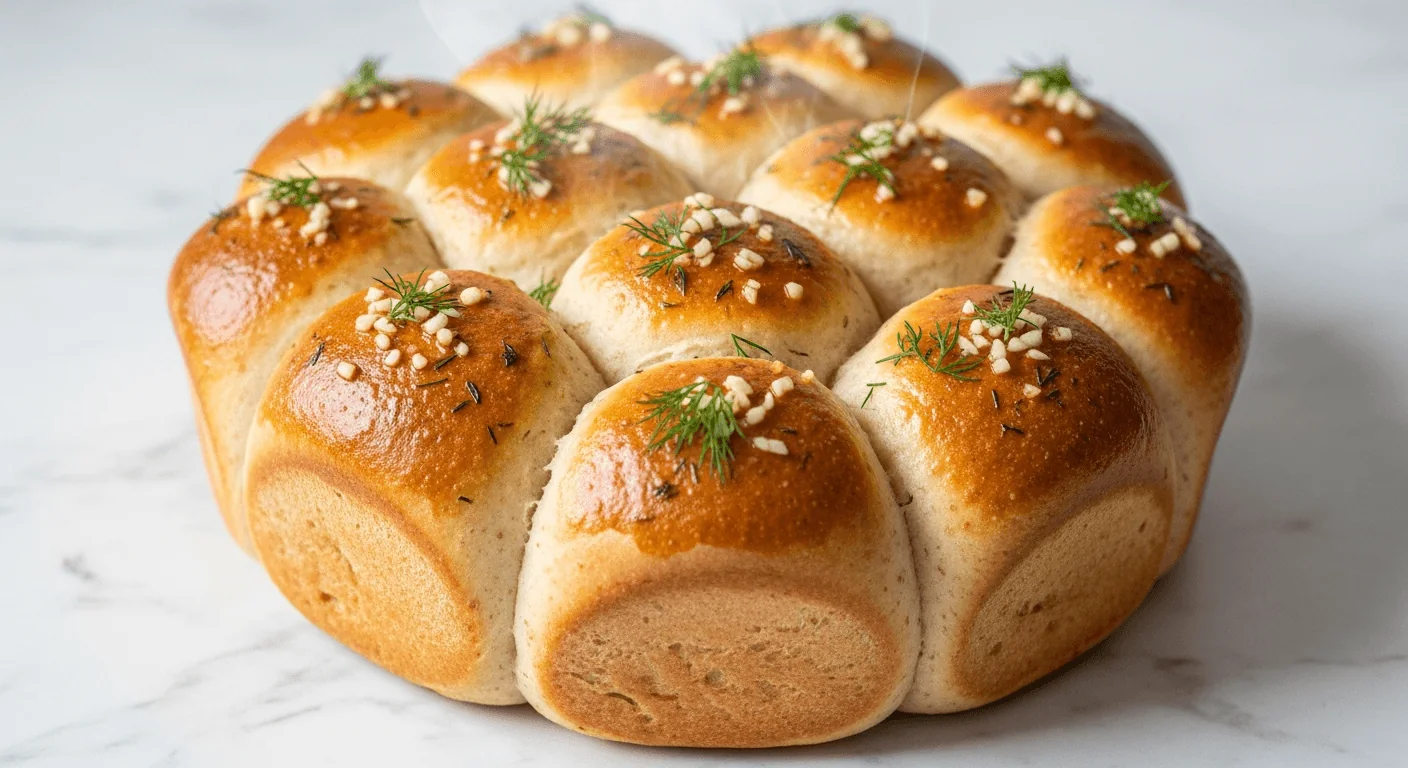
Total Time: 2 hours 30 min (40 min active) | Makes: 12 rolls | Difficulty: Intermediate
Quick Overview
- Proof yeast in warm milk with honey — 10 minutes
- Mix 50/50 whole wheat and all-purpose flour with eggs and olive oil
- Knead 12–14 minutes — whole wheat dough needs a bit more time
- First rise until doubled — 1 to 1.5 hours
- Shape, second rise 35–45 minutes, bake, brush with olive oil garlic topping
A Note on What Works and What Doesn’t
Swapping in whole wheat flour without thinking through the adjustments is the most common reason these rolls turn out dense and heavy. Whole wheat flour absorbs more water than white flour and produces a tighter crumb — so you can’t just replace the flour and expect the same result.¹
This recipe uses a 50/50 blend of whole wheat and all-purpose flour, with slightly more liquid to compensate for the extra absorption. The rolls have more fiber and a better fat profile than the traditional version. They’re a little more substantial — that’s the honest truth — but they’re genuinely soft, they pull apart properly, and the garlic topping is identical to the original.²
A 100% whole wheat version is possible, but the technique changes significantly. More liquid, longer kneading, different rise times. That’s a separate project. This blend is where to start.
What Changes and Why
Half the flour is whole wheat. This adds dietary fiber, B vitamins, and minerals without collapsing the gluten structure that keeps the rolls soft. Go above 50% whole wheat and the texture starts to suffer noticeably.¹
Honey replaces the granulated sugar. In whole wheat dough, honey adds moisture and helps the crumb stay tender after baking. The flavor works well with the nuttiness of the whole wheat flour.²
Extra virgin olive oil replaces the refined sunflower oil, both in the dough and in the garlic topping. The flavor is different — olive oil is more assertive alongside raw garlic — but it works. If you prefer a milder topping, use light (refined) olive oil there and save the cold-pressed oil for the dough.³
The liquid amount goes up by about 20ml. Whole wheat flour is thirstier than white flour, and a dry whole wheat dough bakes dense. Do not reduce the milk to make the dough feel easier to handle.
Healthy Pampushky Recipe
Recipe developed independently by Heritage Healthy Kitchen, drawing on traditional Ukrainian pampushky methods and whole grain baking sources. Links provided at the end for further reading.¹²³
Ingredients
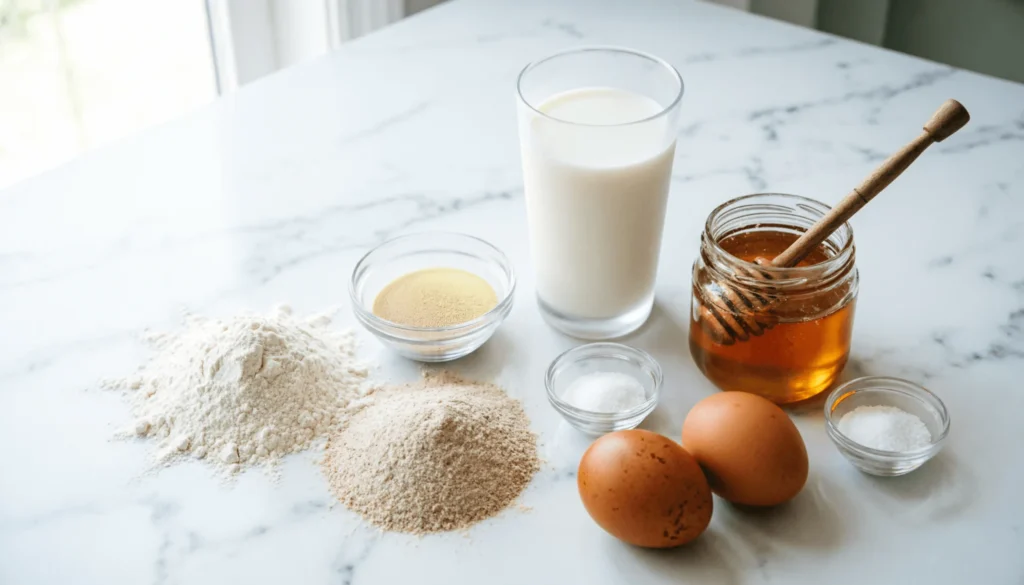
For the Dough
- 1¾ cups (220g) whole wheat flour
- 1¾ cups (220g) all-purpose flour, plus a little extra for dusting
- 2¼ tsp (7g / 1 packet) active dry yeast
- 1 cup + 1 tbsp (260ml) warm whole milk (~38°C / 100°F)
- 1½ tbsp honey
- 1 tsp fine sea salt
- 2 large eggs, room temperature
- 3 tbsp cold-pressed extra virgin olive oil, plus extra for greasing
For the Garlic Topping
- 4–5 garlic cloves, pressed or very finely minced
- 3 tbsp extra virgin olive oil
- 2 tbsp warm water
- ½ tsp fine sea salt
- 3 tbsp fresh dill and/or flat-leaf parsley, finely chopped
For Finishing
- 1 egg yolk mixed with 1 tbsp milk (egg wash for glazing)
Instructions
- Proof the yeast. Combine warm milk, honey, and yeast in a small bowl. Stir once and leave for 8–10 minutes. The surface should turn foamy. If nothing happens after 10 minutes, the yeast is dead — start with a fresh packet before going any further.
- Mix the dough. Whisk the whole wheat flour, all-purpose flour, and salt together in a large bowl. Make a well in the center. Pour in the yeast mixture, eggs, and olive oil, and stir with a wooden spoon until a rough dough comes together.
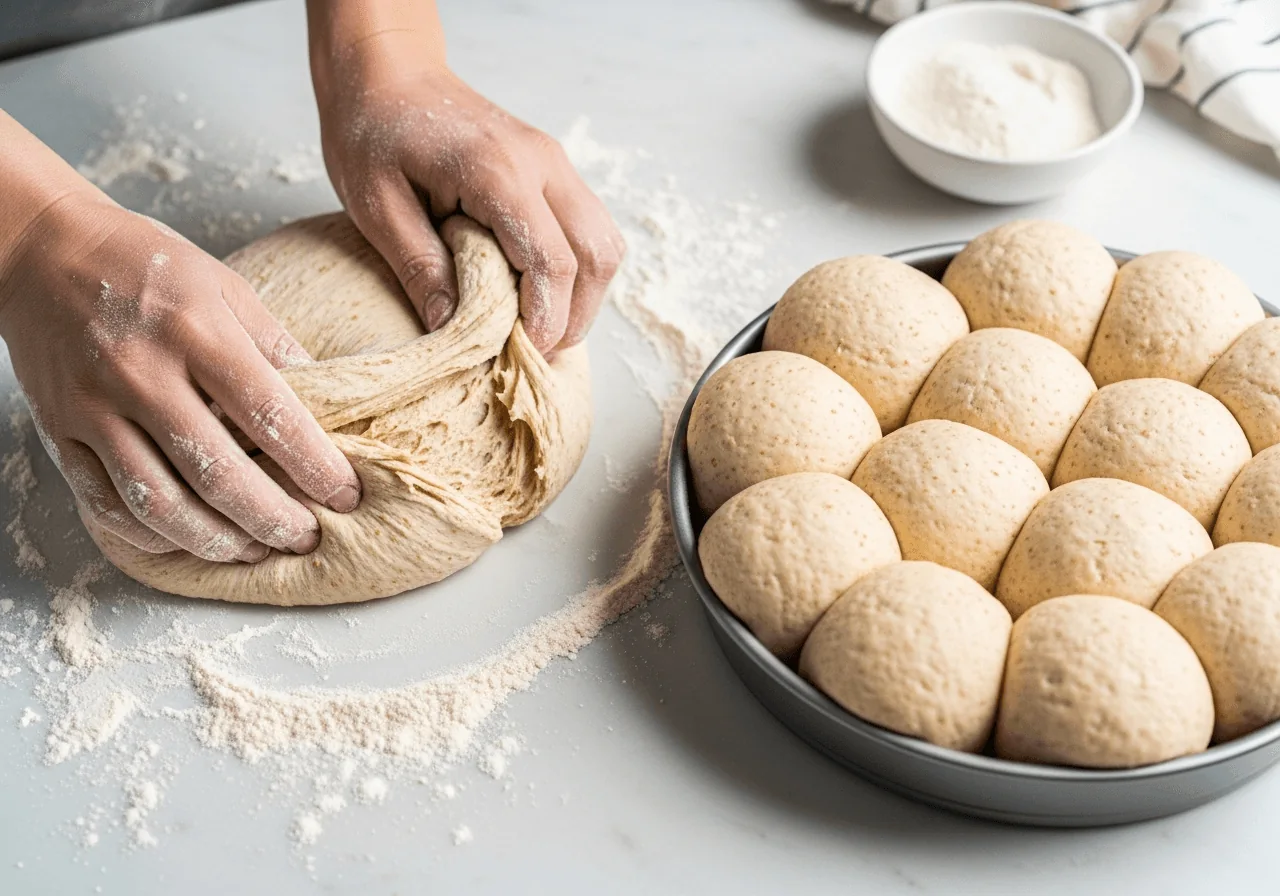
- Knead thoroughly. Turn onto a lightly floured surface and knead for 12–14 minutes. Whole wheat dough takes longer to smooth out than white dough and never looks quite as silky. What you’re after: a dough that holds together, feels slightly tacky, and springs back slowly when pressed. Do not add more flour if it sticks a little — keep kneading.²
- First rise. Shape into a ball, place in a lightly oiled bowl, cover with a clean towel, and leave in a warm spot for 1 to 1.5 hours until doubled. Whole wheat dough sometimes rises more slowly than white dough — give it the full time.
- Shape the rolls. Punch down the dough gently. Divide into 12 equal pieces, about 65–70g each. Roll each piece into a tight ball using a cupped palm and short circular motions on the work surface.
- Second rise. Lightly oil a 25cm (10-inch) round baking pan. Arrange the balls snugly so they touch each other. Cover loosely and leave 35–45 minutes — a bit longer than the traditional version. The rolls should be visibly puffed; a gentle press with a fingertip should leave an indent that fills in slowly.¹
- Glaze and bake. Preheat the oven to 185°C (365°F) — slightly lower than the traditional 190°C, which helps the whole wheat crumb cook through before the crust darkens. Brush the risen rolls with egg wash. Bake 22–25 minutes until golden brown and hollow-sounding when tapped underneath.
- Garlic topping. While the rolls bake, whisk together the garlic, olive oil, warm water, and salt. Stir in the herbs. Keep at room temperature until needed.
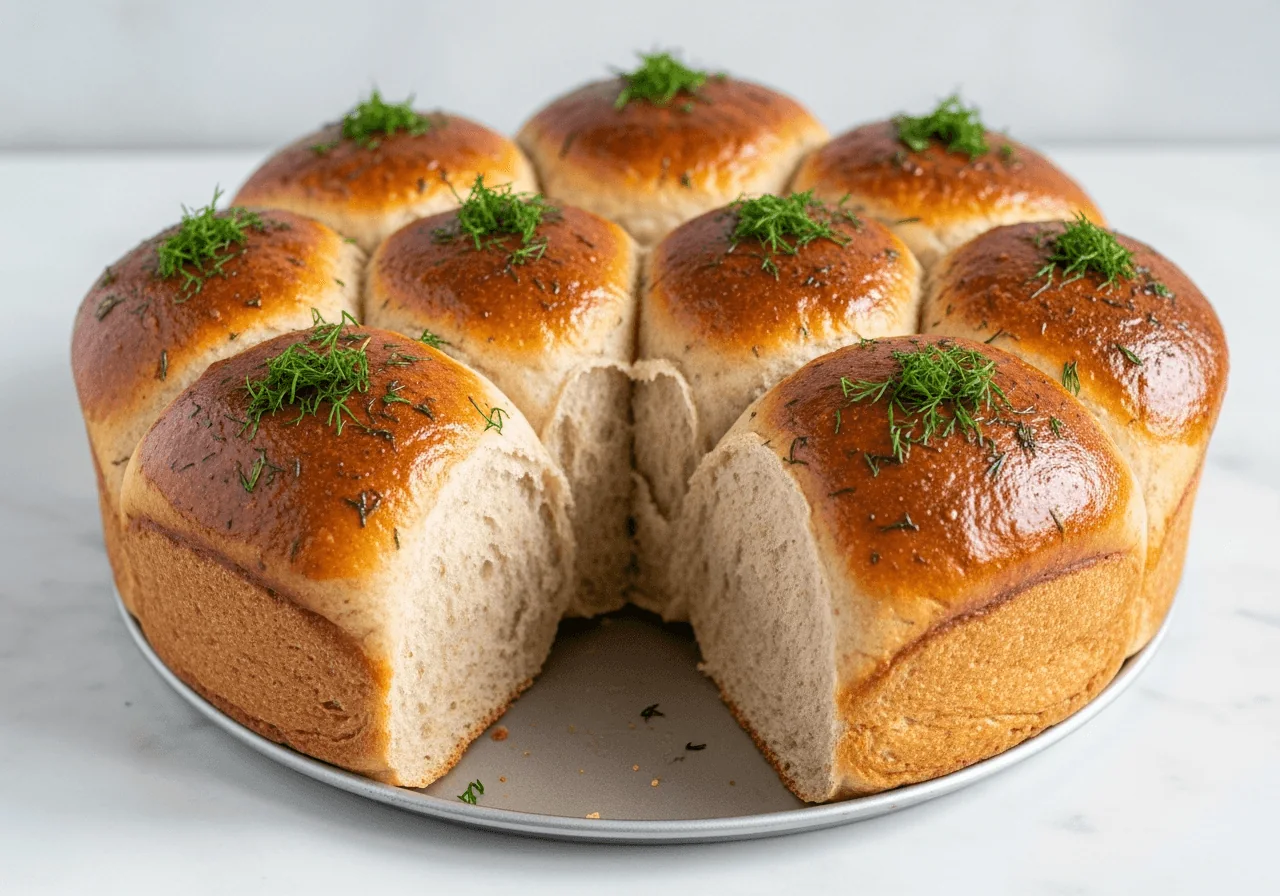
- Brush immediately. The moment the rolls come out of the oven, brush all of the garlic topping over them while they’re still steaming. Serve right away alongside borscht.
Kitchen Wisdom & Pro Tips
Weigh your flour. The amount of whole wheat flour that fits in a measuring cup varies by 30–40g depending on how packed it is. That difference throws off the hydration balance and can make or break the texture. A kitchen scale takes the guesswork out.²
Knead for the full time. Twelve to fourteen minutes feels long, but whole wheat needs that time to hydrate fully and develop enough structure to rise properly. Rolls kneaded for only 8 minutes often come out tight and dense in the middle.¹
Keep the dough slightly tacky. A little stickiness is not a problem. More water in the dough means more steam in the oven, which creates the air pockets that make rolls soft. A stiff dough produces dense rolls — that’s the tradeoff.²
About olive oil in the garlic topping: cold-pressed olive oil has a stronger flavor than unrefined sunflower oil, which is the traditional fat. Alongside a generous amount of raw garlic it works very well. If you find it too pronounced, use light (refined) olive oil in the topping and the cold-pressed oil stays in the dough where its flavor is more subtle.³
Sourdough variation: if you keep a sourdough starter, pampushky are well-suited to one. Use about 150g of active starter in place of the commercial yeast, reduce the milk by 50ml, and let the dough do its first rise in the refrigerator for up to 12 hours. The flavor is more layered, and the longer fermentation breaks down phytic acid in the whole wheat flour, which makes the minerals in the grain more available to the body.⁴
Nutritional Information
Comparison per roll with garlic topping (12 rolls per batch)
| Nutrient | Traditional Pampushky | This Version |
|---|---|---|
| Calories | ~245 kcal | ~230 kcal |
| Protein | 6.5g | 7g |
| Total fat | 9g | 9g |
| Carbohydrates | 34g | 31g |
| Dietary fiber | ~1.2g | ~2.5g |
| Sugar | 2.5g | 2.3g |
| Sodium | 210mg | 210mg |
All values are estimates based on standard ingredient databases and will vary depending on specific ingredients, brands, and measurements used.
Storage and Reheating
Store in an airtight container at room temperature for up to 2 days. Whole wheat rolls hold moisture slightly better than white-flour rolls, so they stay reasonably soft the next day. Do not refrigerate — cold air stales yeasted bread fast.
To freeze: cool completely, freeze without garlic topping in a zip-lock bag for up to 2 months. Always make a fresh garlic topping after reheating — never freeze the topping on.
To reheat from room temperature: wrap loosely in foil, warm at 170°C (340°F) for 8–10 minutes. From frozen: 180°C (355°F) for 16–20 minutes foil-on, then 3 minutes foil-off. Make fresh garlic topping and brush the rolls the moment they come out.
Healthy Pampushky

Ingredients
For the Dough
- 1¾ cups (220g) whole wheat flour
- 1¾ cups (220g) all-purpose flour, plus a little extra for dusting
- 2¼ tsp (7g / 1 packet) active dry yeast
- 1 cup + 1 tbsp (260ml) warm whole milk (~38°C / 100°F)
- 1½ tbsp honey
- 1 tsp fine sea salt
- 2 large eggs, room temperature
- 3 tbsp cold-pressed extra virgin olive oil, plus extra for greasing
For the Garlic Topping
- 4–5 garlic cloves, pressed or very finely minced
- 3 tbsp extra virgin olive oil
- 2 tbsp warm water
- ½ tsp fine sea salt
- 3 tbsp fresh dill and/or flat-leaf parsley, finely chopped
For Finishing
- 1 egg yolk mixed with 1 tbsp milk (egg wash for glazing)
Instructions
- Proof the yeast. Combine warm milk, honey, and yeast in a small bowl. Stir once and leave for 8–10 minutes. The surface should turn foamy. If nothing happens after 10 minutes, the yeast is dead — start with a fresh packet before going any further.
- Mix the dough. Whisk the whole wheat flour, all-purpose flour, and salt together in a large bowl. Make a well in the center. Pour in the yeast mixture, eggs, and olive oil, and stir with a wooden spoon until a rough dough comes together.
- Knead thoroughly. Turn onto a lightly floured surface and knead for 12–14 minutes. Whole wheat dough takes longer to smooth out than white dough and never looks quite as silky. What you’re after: a dough that holds together, feels slightly tacky, and springs back slowly when pressed. Do not add more flour if it sticks a little — keep kneading.²
- First rise. Shape into a ball, place in a lightly oiled bowl, cover with a clean towel, and leave in a warm spot for 1 to 1.5 hours until doubled. Whole wheat dough sometimes rises more slowly than white dough — give it the full time.
- Shape the rolls. Punch down the dough gently. Divide into 12 equal pieces, about 65–70g each. Roll each piece into a tight ball using a cupped palm and short circular motions on the work surface.
- Second rise. Lightly oil a 25cm (10-inch) round baking pan. Arrange the balls snugly so they touch each other. Cover loosely and leave 35–45 minutes — a bit longer than the traditional version. The rolls should be visibly puffed; a gentle press with a fingertip should leave an indent that fills in slowly.¹
- Glaze and bake. Preheat the oven to 185°C (365°F) — slightly lower than the traditional 190°C, which helps the whole wheat crumb cook through before the crust darkens. Brush the risen rolls with egg wash. Bake 22–25 minutes until golden brown and hollow-sounding when tapped underneath.
- Garlic topping. While the rolls bake, whisk together the garlic, olive oil, warm water, and salt. Stir in the herbs. Keep at room temperature until needed.
- Brush immediately. The moment the rolls come out of the oven, brush all of the garlic topping over them while they’re still steaming. Serve right away alongside borscht.
Frequently Asked Questions
Will these taste different from traditional pampushky?
Yes. Whole wheat flour has a nuttier, slightly earthier flavor that is present in the finished roll. The garlic topping is strong enough that most people don’t notice it much on the first bite — but if you put both versions side by side, the difference is there. Most people find this version satisfying. It just has a bit more going on.
Can I use 100% whole wheat flour?
You can, but the technique changes. You need higher hydration (more liquid), a longer rest after mixing to let the flour absorb the water, and a longer rise. The rolls come out more like whole grain dinner rolls than traditional pampushky. It works, but it is not a beginner version of this recipe.²
Can I use spelt flour?
Spelt can replace up to about a third of the total flour. More than that as a straight 1:1 swap tends to produce a sticky dough that is hard to shape without adjusting the liquid ratio. The flavor of spelt is milder and slightly sweeter than whole wheat, and the texture tends to be a bit softer.³
Does the sourdough variation actually make a difference nutritionally?
There’s genuine research behind this. Sourdough fermentation reduces phytic acid in whole wheat flour by around 60%, compared to about 38% with commercial yeast. Phytic acid binds to minerals in the grain and limits absorption. Less phytic acid means more of the magnesium, iron, and zinc in the whole wheat actually becomes available during digestion.⁴ That said, these are still rolls — one or two of them alongside a bowl of soup is not a significant source of minerals either way.
Can I make these dairy-free?
Yes. Substitute oat milk or unsweetened almond milk for the whole milk in equal amounts. The rolls will be slightly less rich but the technique stays the same. For the egg wash, brush with a tablespoon of plant milk instead.
My rolls came out dense. What happened?
Three likely causes: too much flour added during kneading, kneading time cut short, or the dough didn’t get long enough to rise. With whole wheat, any of these mistakes shows up more clearly than with white flour. The dough should feel slightly tacky after kneading, and should genuinely double in size before you shape it.¹
Is the fiber content really that much higher?
The difference is real but modest — about 2.5g per roll versus 1.2g in the traditional version. The daily recommended intake for dietary fiber is around 25–30g. These rolls are a contribution, not a solution. Eat them alongside a vegetable-rich borscht and the meal picture improves considerably.
Looking for the Traditional Version?
If you want classic pampushky with all-purpose flour and the original sunflower oil garlic topping, see our Traditional Ukrainian Pampushky recipe — the authentic method with the full cultural history behind it.
Further Reading & Sources
The following sources were consulted in researching and developing this recipe. Heritage Healthy Kitchen’s recipe was developed independently; links are provided for readers who want to explore further.
- The Pantry Mama. “Sourdough Pampushky — Ukrainian Garlic Bread with Sourdough Starter.” pantrymama.com — includes practical notes on whole wheat flour substitution in pampushky dough.
- Watch What U Eat. “Garlic & Herb Homemade Whole Wheat Dinner Rolls.” watchwhatueat.com — tested 100% whole wheat garlic roll recipe with hydration and egg guidance.
- Girl Versus Dough. “Whole Wheat Dinner Rolls.” girlversusdough.com — technique notes on working with whole wheat and spelt flours in soft dinner rolls.
- The Sourdough School. “Prolonged Fermentation of Whole Wheat Sourdough Reduces Phytate Level and Increases Soluble Magnesium.” thesourdoughschool.com — summary of peer-reviewed research on phytic acid reduction through sourdough fermentation.
Disclaimer
The information in this article is provided for educational and informational purposes only. Heritage Healthy Kitchen makes no representations or warranties regarding the accuracy or completeness of any content on this site. Nutritional values are estimates only and will vary depending on the specific ingredients, brands, and measurements used. Any references to fiber content, glycemic response, phytic acid, or mineral bioavailability are for general informational purposes and should not be interpreted as medical or dietary advice. Always consult a qualified healthcare provider regarding any dietary needs or health conditions. Heritage Healthy Kitchen is not responsible for any outcomes resulting from the use of recipes or information published on this site.
Cook by Occasion
This recipe is part of our Velykden table.
You Might Also Like
More heritage recipes from our kitchen


Leave a Reply