Healthy Polish Bigos: A Lighter Version of the Hunter’s Stew
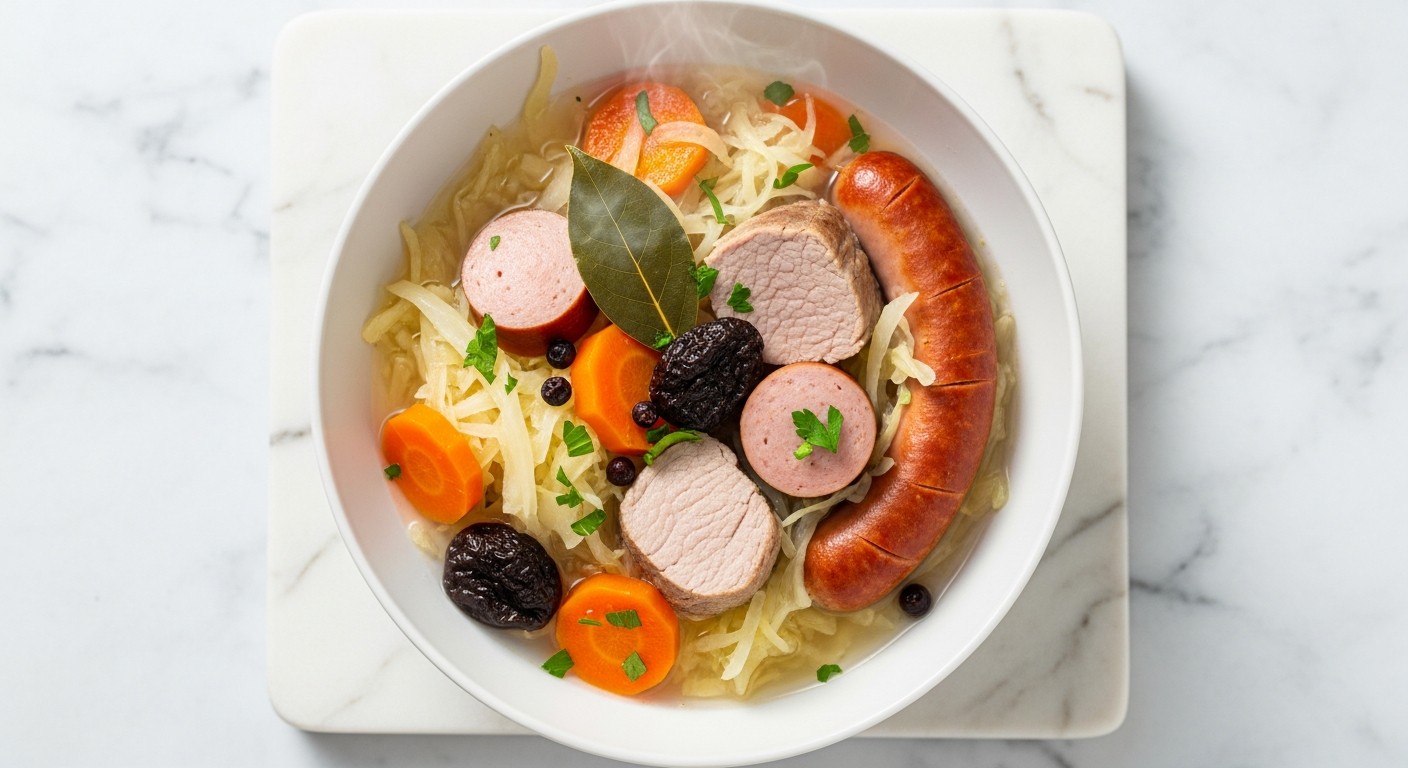
Active time: ~50 minutes | Total simmering time: 2–2.5 hours | Serves: 8–10 | Difficulty: Intermediate
Quick Overview
- Soak dried mushrooms overnight — this step is the same as in traditional bigos, and just as important
- Rinse the sauerkraut under cold water before cooking to reduce sodium by roughly half, then drain
- Use one tablespoon of olive oil to brown the meats — no lard, no rendered bacon fat
- Simmer everything low and slow for 2–2.5 hours — the timing is shorter because the meats are leaner
- Refrigerate overnight before serving, same as the original — it still gets noticeably better the next day
What this version changes — and what it keeps
Traditional bigos was built for cold Polish winters and physical labor. The fat content made sense when the dish was feeding hunters and peasants who needed sustained energy in below-freezing temperatures. For most people making this today, that context doesn’t apply.
The changes here are targeted. Fatty pork shoulder becomes pork tenderloin. Pork kielbasa becomes turkey kielbasa. The 150g of smoked bacon drops to 50g — kept for the smokiness it provides, not cut entirely. Lard goes out; a tablespoon of olive oil goes in. No salt is added at any point, because between the rinsed sauerkraut, the smoked meats, and the turkey kielbasa, there is already enough sodium in the pot.
The sauerkraut, the dried mushrooms, the prunes, and the spices are untouched. These are not the problem ingredients — they are the reason the dish is worth eating. Rinsing the sauerkraut before cooking trims the sodium without changing the flavor in any meaningful way; the acidity from lactic acid fermentation remains.¹
Why the core ingredients are already doing good work
Sauerkraut, despite its reputation as a condiment, is nutritionally substantial. One cup contains roughly 27 calories, 4 grams of fiber, vitamin C, vitamin K1, and iron. The fermentation process generates metabolites that differ from those in raw cabbage and have been studied for their potential to support intestinal barrier function.¹ ³
Dried porcini mushrooms concentrate B vitamins, selenium, and potassium into a small amount of food. They contain beta-glucans, a type of soluble fiber that has been shown to support immune cell activity, including macrophages and natural killer cells.² They are also low in calories: 20–30 grams of dried mushrooms adds essentially no caloric burden to the dish while adding more flavor than any other single ingredient.
Prunes carry fiber, iron, and antioxidants. In bigos they act as a flavor balance: their natural sweetness cuts the sourness of the sauerkraut, and they add roughly 1–2 grams of fiber per serving. Keeping them at 8–10 pieces per batch keeps that benefit without adding meaningful sugar.
Healthy bigos recipe
Recipe developed independently by Heritage Healthy Kitchen, drawing on traditional Polish culinary methods. Sources for further reading are listed at the end of this article.¹²³
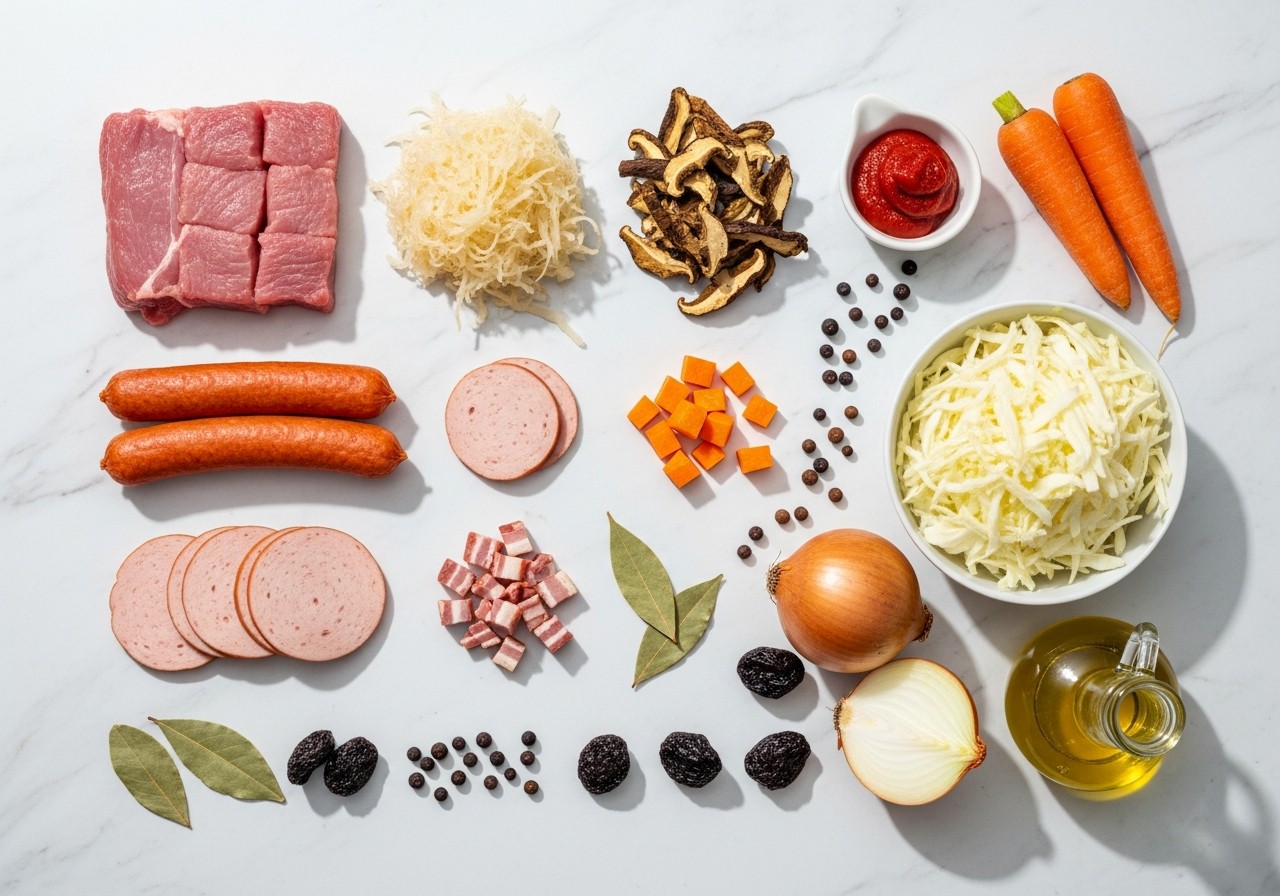
Ingredients
For the stew (serves 8–10)
- 500g (1.1 lb) pork tenderloin, cut into 2cm cubes
- 200g (7 oz) turkey kielbasa, sliced into rounds
- 50g (1.75 oz) smoked bacon, finely diced
- 30g (1 oz) dried porcini mushrooms — 50% more than the traditional version, for depth
- 500g (17 oz) sauerkraut — rinsed under cold water for 1–2 minutes, then drained
- 400g (14 oz) fresh white cabbage, shredded
- 1 large carrot, diced (added for fiber and sweetness)
- 2 medium onions, diced
- 1.5 tablespoons tomato paste
- 8 pitted prunes, roughly chopped
- 3 bay leaves
- 6 allspice berries
- 4 juniper berries, crushed
- 1 teaspoon freshly ground black pepper
- 1 tablespoon olive oil
- No added salt — taste at the end, adjust only if needed
Instructions
Step 1: Soak the mushrooms
Cover the dried mushrooms with 350ml of cold water and soak overnight or for at least 4 hours. Strain the liquid through a fine sieve to remove grit. Chop the mushrooms roughly and set both aside — the soaking liquid goes into the pot.
Step 2: Pre-cook the cabbages
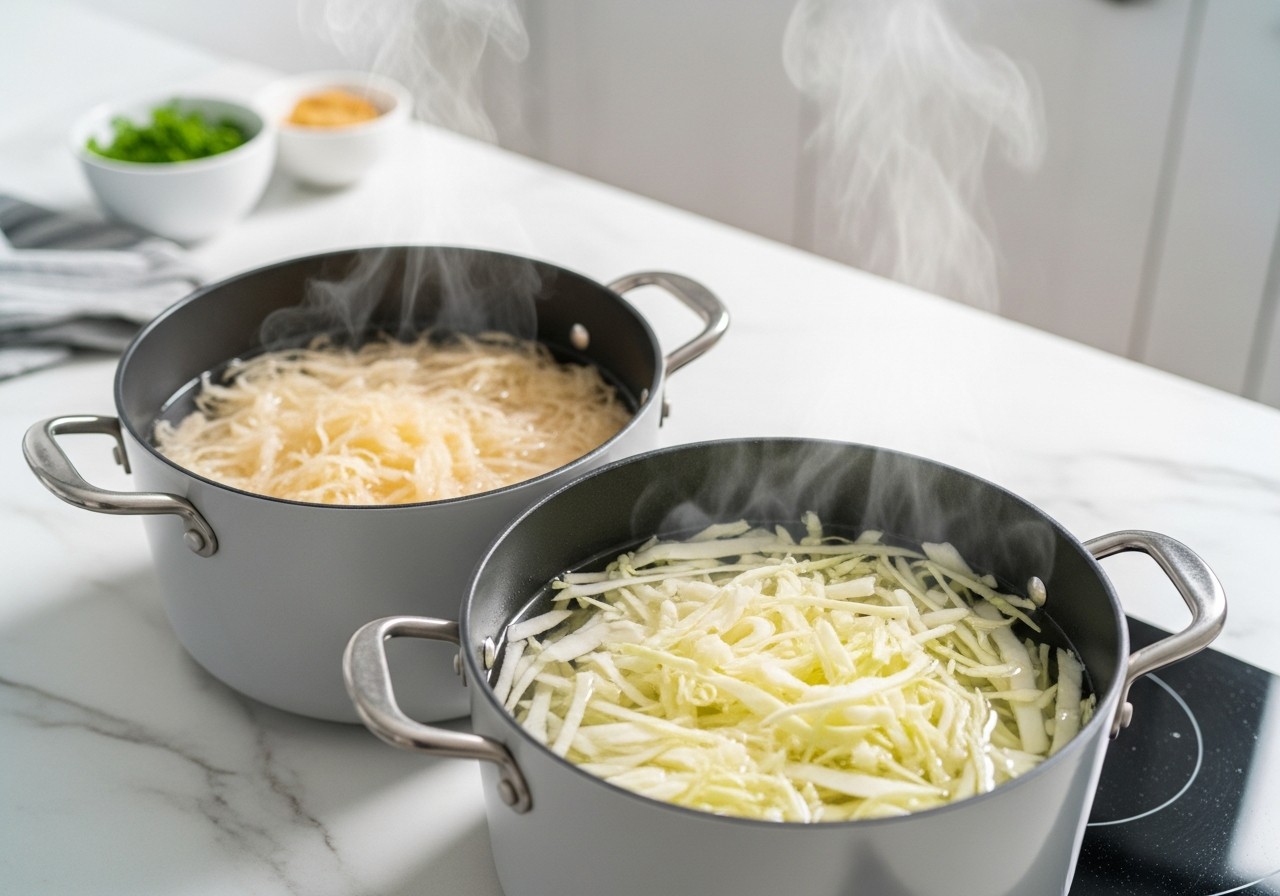
Rinse the sauerkraut under cold running water for 1–2 minutes, then squeeze out excess liquid. This step cuts the sodium without eliminating the lactic acid that drives the flavor. Boil the rinsed sauerkraut in fresh water for 15 minutes, then drain. Shred the fresh cabbage and boil separately in salted water for 15 minutes until softened, then drain.
Step 3: Brown the meats
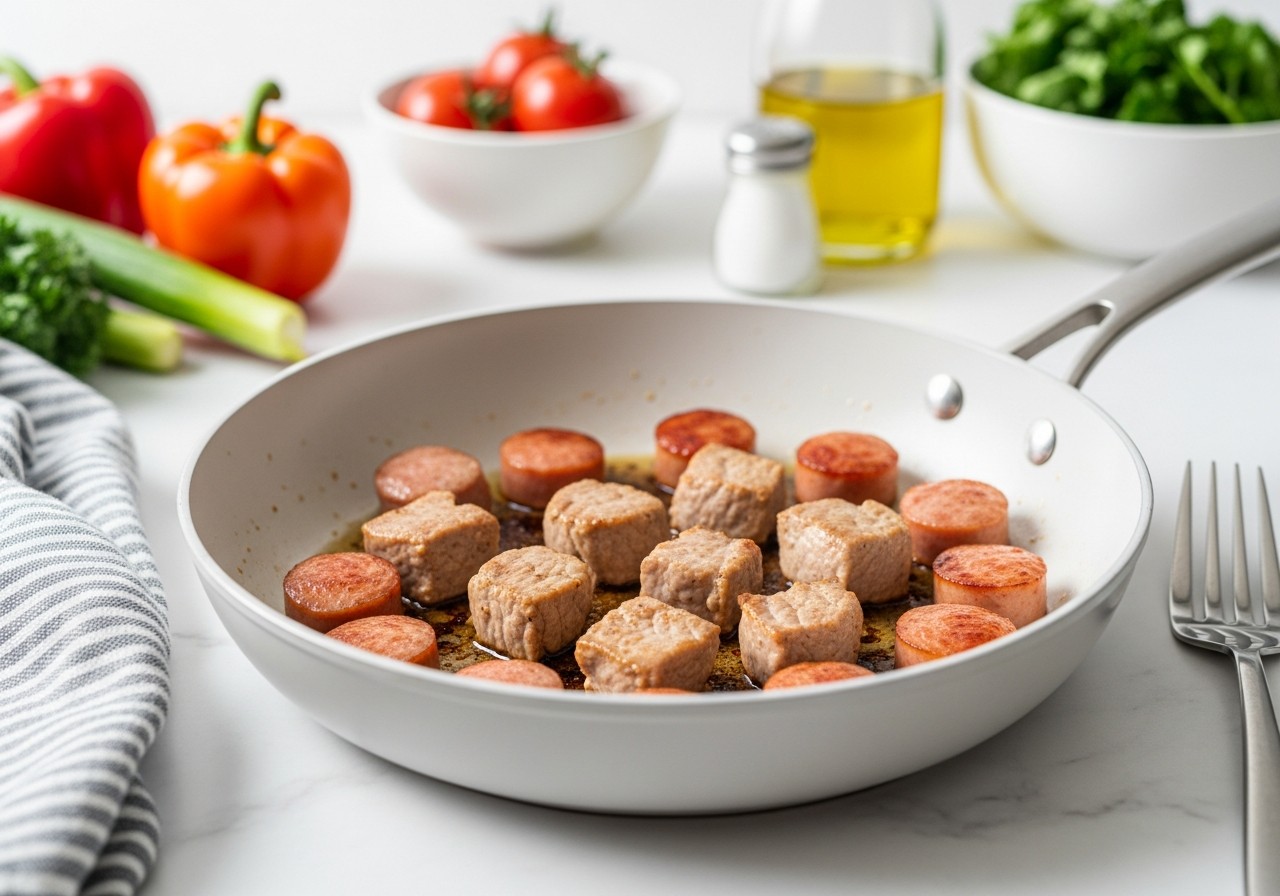
Heat the olive oil in a large, heavy pot over medium-high heat. Add the bacon first and cook for 2–3 minutes until it starts to color and releases some fat. Add the pork tenderloin in batches — don’t crowd the pan. Brown on all sides, about 3 minutes per batch. The tenderloin is much leaner than shoulder, so it browns quickly; don’t cook through at this stage. Set aside. Add the turkey kielbasa slices and cook 2–3 minutes per side. Add the onions and carrot, cook until softened, about 6–7 minutes.
Step 4: Combine everything
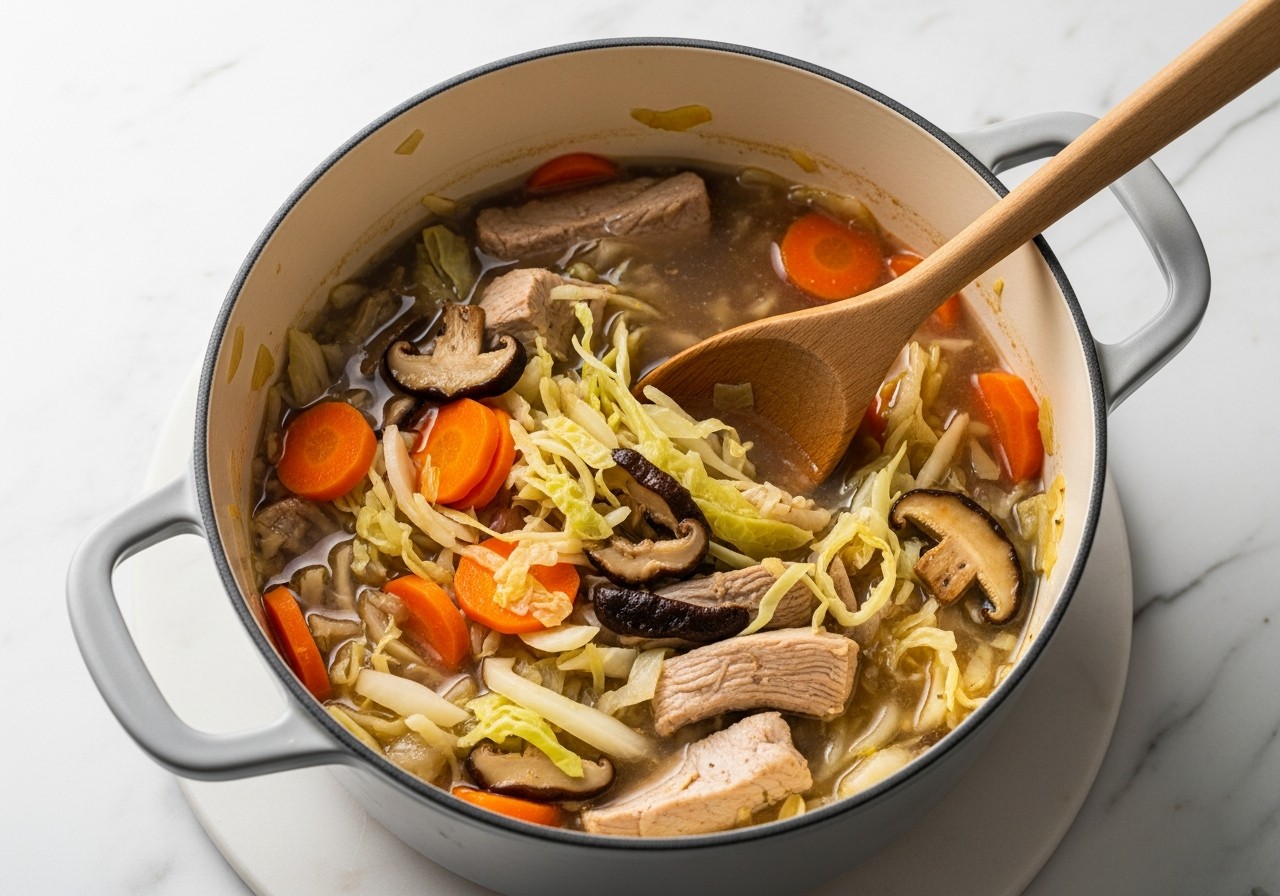
Add both cabbages, all the browned meats, the mushrooms and their strained soaking liquid, the prunes, tomato paste, bay leaves, allspice, juniper berries, and pepper. Stir to combine. The stew should be thick. If it looks dry, add 50–100ml of water — do not add stock, which adds sodium you don’t need.
Step 5: Simmer
Bring to a gentle boil, reduce heat to low. Simmer uncovered for 2–2.5 hours, stirring occasionally. The liquid reduces by about a quarter. In the last 20 minutes, taste carefully. The turkey kielbasa and bacon carry enough salt for most palates; add a small pinch only if the dish genuinely needs it. If the flavor seems flat, a few drops of apple cider vinegar can restore brightness without the sodium of extra sauerkraut brine.
Step 6: Rest and reheat
Cool completely and refrigerate overnight. The next day, reheat slowly over low heat until hot through. The flavor will have deepened. This is still bigos — it still behaves the same way.
Kitchen tips
Pork tenderloin dries out faster than pork shoulder. The browning step should be quick (color on the outside, raw in the middle), because it will finish cooking during the long simmer. If you overcook it at the browning stage, the pieces will be tough by the time the stew is done.
Rinsing sauerkraut is a judgment call. One to two minutes of rinsing under cold water reduces sodium by roughly 40–50% while preserving the lactic acid tang that defines the dish.¹ If you want more acidity at the end, add sauerkraut brine a little at a time rather than skipping the rinse — you get control that way.
Turkey kielbasa has a milder smoke than pork kielbasa and slightly less salt. Both are features here, not problems. The small amount of real smoked bacon compensates for the reduced smoke depth, and the juniper berries pull the flavor in the same direction the pork kielbasa would have taken it.³
The carrot is not traditional, but it belongs. It adds natural sweetness, some fiber, and rounds the sourness of the sauerkraut in the same way the prunes do. Keep it diced small enough that it disappears into the stew rather than standing out.
Nutritional comparison
Per serving — approximately 350g (one of 8–10 servings)
| Nutrient | Traditional bigos | This version |
|---|---|---|
| Calories | ~350–380 kcal | ~210–240 kcal |
| Protein | ~22g | ~24g |
| Total fat | ~19g | ~7g |
| Saturated fat | ~7g | ~2g |
| Carbohydrates | ~18g | ~20g |
| Dietary fiber | ~4g | ~6g |
| Sodium | ~800–1000mg | ~420–550mg |
Nutritional values are estimates based on standard ingredient databases. They will vary depending on the specific brands, sausage type, how thoroughly the sauerkraut is rinsed, and portion size.
Storage and reheating
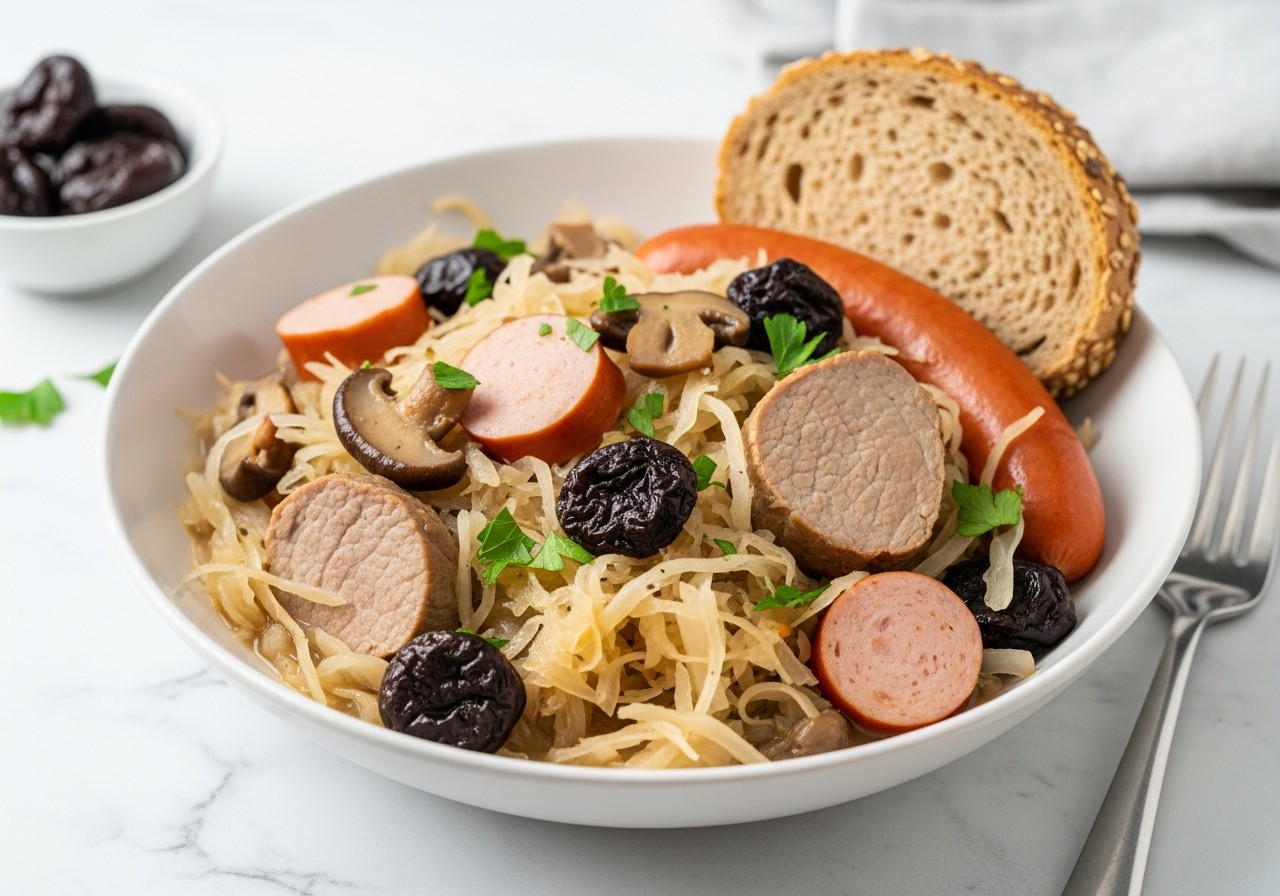
Keeps in the refrigerator for 4–5 days, same as traditional bigos. Store in a sealed container and reheat slowly on the stovetop over low heat. The leaner meats are more prone to drying out when reheated at high heat — add a splash of water to the pot if the stew looks tight.
Freezes well for up to 3 months. Portion before freezing, defrost overnight in the refrigerator, reheat gently. The pork tenderloin holds up to freezing better than you might expect because it’s been thoroughly cooked during the long simmer — the texture doesn’t change much.
Healthy Polish Bigos

Ingredients
For the stew (serves 8–10)
- 500g (1.1 lb) pork tenderloin, cut into 2cm cubes
- 200g (7 oz) turkey kielbasa, sliced into rounds
- 50g (1.75 oz) smoked bacon, finely diced
- 30g (1 oz) dried porcini mushrooms — 50% more than the traditional version, for depth
- 500g (17 oz) sauerkraut — rinsed under cold water for 1–2 minutes, then drained
- 400g (14 oz) fresh white cabbage, shredded
- 1 large carrot, diced (added for fiber and sweetness)
- 2 medium onions, diced
- 1.5 tablespoons tomato paste
- 8 pitted prunes, roughly chopped
- 3 bay leaves
- 6 allspice berries
- 4 juniper berries, crushed
- 1 teaspoon freshly ground black pepper
- 1 tablespoon olive oil
- No added salt — taste at the end, adjust only if needed
Instructions
- Soak the mushrooms: Cover the dried mushrooms with 350ml cold water and soak overnight (or at least 4 hours). Strain and reserve the liquid; chop the mushrooms.
- Pre-cook the cabbages: Rinse the sauerkraut under cold water for 1–2 minutes, then boil in fresh water 15 minutes and drain. Boil the shredded fresh cabbage separately for 15 minutes and drain.
- Brown the meats: Cook the bacon 2–3 minutes, then brown the pork tenderloin in batches and set aside. Brown the turkey kielbasa, then add the onions and carrot and cook 6–7 minutes.
- Combine everything: Add both cabbages, the meats, the mushrooms and their reserved liquid, prunes, tomato paste, bay leaves, allspice, juniper and pepper. Add 50–100ml water if the stew looks dry.
- Simmer: Bring to a gentle boil, reduce to low and simmer uncovered for 2–2.5 hours, stirring occasionally. Taste in the last 20 minutes.
- Rest and reheat: Cool, refrigerate overnight, and reheat slowly the next day — the flavor deepens.
Frequently Asked Questions
Does rinsing the sauerkraut really reduce sodium that much?
Research on rinsed canned and jarred vegetables suggests that 1–2 minutes under cold running water can reduce sodium content by 40–50%.¹ The sour flavor comes mostly from lactic acid, which is not water-soluble the way salt is. So rinsing cuts salt without erasing the tang — which is exactly what you want here.
Why use pork tenderloin instead of turkey or chicken?
Pork tenderloin is one of the leanest cuts of pork, comparable to skinless chicken breast in fat content, while still holding up to a 2-hour simmer without falling apart. Turkey and chicken breast both work, but they need to go in later (during the last 45 minutes) or they turn stringy. Tenderloin is the easiest lean swap that doesn’t require changing the cooking method.
Can I make this vegetarian?
Yes. Skip all the meats and increase the dried mushrooms to 50g. Add a 400g can of white beans or chickpeas in the last 30 minutes — they add protein and a creamy texture that helps fill in the space the meat occupied. Use a small amount of smoked paprika (half a teaspoon) to approximate the smokiness from the kielbasa. This is closer to the traditional Wigilia (Christmas Eve) bigos, which was always meatless.³
Is the flavor noticeably different from the traditional version?
Honestly, yes — but less than you’d expect. The biggest difference is a lighter body: the fat from pork shoulder and lard created a richness that is not fully replicated. The mushrooms and prunes compensate some of that. A side-by-side comparison shows the difference; a bowl of this on its own is a good, satisfying bigos. The sauerkraut, spice profile, and reheating behavior are identical.¹ ²
Can I use chicken sausage instead of turkey kielbasa?
Yes. Look for smoked chicken sausage with garlic — the smokiness matters more than the specific protein. Avoid unsmoked fresh sausages; they don’t provide the depth that kielbasa does. Check the label for sodium: some chicken sausages are actually higher in sodium than turkey kielbasa, which would undercut the rinsing effort.
What if I want even fewer calories?
The bacon is the easiest cut — skip it entirely and substitute half a teaspoon of smoked paprika. This shaves another 30–40 calories per serving and about 100mg of sodium. The smoke flavor becomes gentler, but the dish is still recognizably bigos. Beyond that, the remaining ingredients are all relatively lean; further calorie reduction would mean reducing portion size rather than changing the recipe.²
Does heating sauerkraut kill the probiotics?
Yes — cooking kills most live bacteria. The health value of cooked sauerkraut shifts from probiotic to the metabolites produced during fermentation, which survive heating and have been shown in cell studies to support intestinal function.³ This does not make the sauerkraut nutritionally worthless; it simply means the benefit mechanism is different from raw sauerkraut.
The traditional version
If you want the full, unreduced version (fatty pork shoulder, pork kielbasa, lard, no rinsing), our Traditional Polish Bigos recipe covers that in detail, including the cultural history and the cooking logic behind each ingredient.
Further Reading & Sources
The following sources were consulted for the nutritional information and health context in this article. Heritage Healthy Kitchen’s recipe was developed independently; these links are provided for readers who want to explore further.
- “Sauerkraut: Nutrition, Benefits, Recipe, Shopping Tips, FAQ, and More.” Healthline. healthline.com — nutritional profile of sauerkraut, fiber and vitamin C content, probiotic activity, and sodium considerations.
- “A Nutritionist’s Guide to the Health Benefits of Porcini Mushrooms.” Nutritionist Meets Chef. nutritionistmeetschef.com — beta-glucan content, immune-modulating properties, and nutritional profile of porcini mushrooms.
- “Is Sauerkraut Good for You?” Cleveland Clinic Health Essentials. health.clevelandclinic.org — registered dietitian commentary on sauerkraut’s probiotic content, gut health benefits, and role in a balanced diet.
Disclaimer
The information in this article is provided for educational and informational purposes only. Heritage Healthy Kitchen makes no representations or warranties regarding the accuracy or completeness of any content on this site. Nutritional values are estimates only and will vary depending on the specific ingredients, brands, and measurements used. This content is not intended as dietary, medical, or professional nutritional advice. Always consult a qualified healthcare provider regarding any dietary needs or health conditions. Heritage Healthy Kitchen is not responsible for any outcomes resulting from the use of recipes or information published on this site.
You Might Also Like
More heritage recipes from our kitchen
Leave a Reply