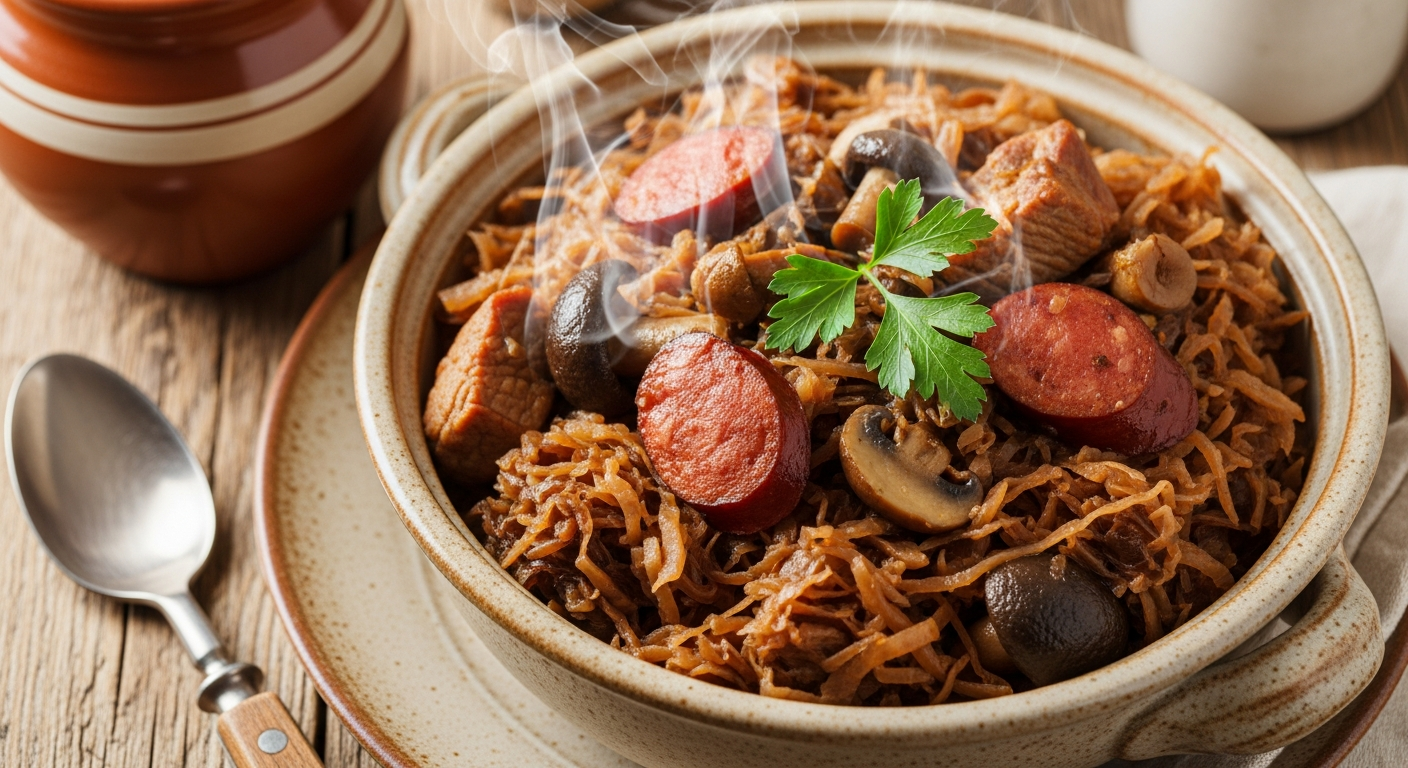
Traditional Polish Bigos Recipe: Hunter’s Stew That Gets Better Every Day
Active time: ~1 hour | Total simmering time: 2.5–3 hours | Serves: 8–10 | Difficulty: Intermediate
Quick Overview
- Soak dried mushrooms overnight — the soaking liquid becomes part of the broth, don’t pour it out
- Brown all meats separately before combining — this is where the flavor base comes from
- Pre-cook the sauerkraut and fresh cabbage in separate pots, then drain both
- Combine everything and simmer low and slow for 2.5–3 hours, uncovered
- Refrigerate overnight — bigos is always better the next day, plan for that
What Bigos Is
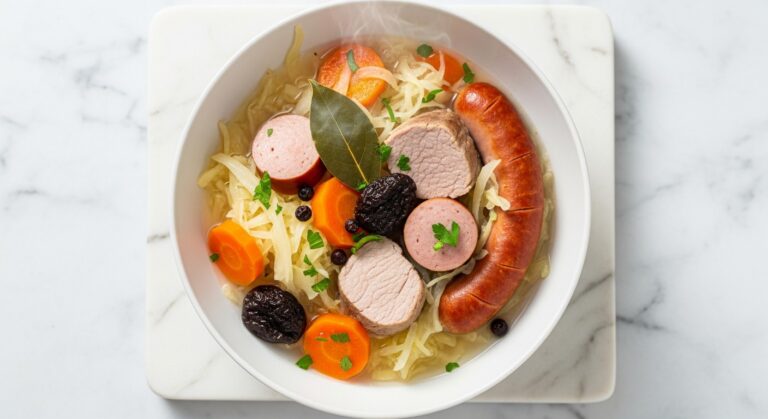
Bigos is Poland’s national dish — a slow-cooked stew of sauerkraut, fresh cabbage, mixed meats, smoked kielbasa, dried forest mushrooms, and prunes. The combination sounds odd until you taste it: sour from the fermented cabbage, smoky from the sausage, earthy from the mushrooms, with a quiet sweetness from the prunes that keeps the sharpness from going too far.¹
No two bigos recipes are identical, and that is the whole point. The dish was built for whatever you had. After centuries of that — different households, different regions, different budgets — you end up with a stew that tastes completely different from kitchen to kitchen and still reads as unmistakably Polish.²
The word “bigos” in Old Polish meant fine chopping with a knife. The name predates the modern dish by a good margin. Early preparations looked very little like what goes in the pot today.¹
History and Cultural Roots
Bigos goes back to medieval Poland, possibly as far as the 14th century. Early accounts credit Lithuanian Grand Duke Jogaila — who later became King of Poland — with serving a version of it to hunting party guests. Those early preparations were acidified with vinegar, not sauerkraut, and the meat was chopped finely rather than cut into pieces.¹
The first written recipes appear in 1682, in Stanisław Czerniecki’s Compendium ferculorum — the first printed Polish cookbook. Czerniecki’s “bigosek” used meat or seafood with onions, vinegar, and spices. No sauerkraut anywhere in the recipes.¹
In the 18th century, something shifted. Vinegar was expensive; fermented cabbage was not. Peasants made the substitution, and that one swap changed everything. Sauerkraut added shelf life, depth, and the structural acidity that every traditional version now depends on. Without it, bigos would have remained a nobleman’s dish instead of becoming a Polish one.¹
By the 19th century, bigos had made it into Poland’s national epic. Adam Mickiewicz wrote it into Pan Tadeusz (1834) — Book Four, after a bear hunt: hunters who had left that morning on empty stomachs, fires built in the middle of the forest, and a pot whose taste “mere words cannot tell.” Whether bigos earned its status as the national dish and then appeared in the poem, or whether the poem helped make it the national dish — that question has no clean answer.³
Nobles ate it after hunts. Peasants ate it through winter because it kept, fed a crowd, and got better with every reheating. The dish spread across the Polish-Lithuanian Commonwealth and left traces in Lithuanian, Ukrainian, and Belarusian cooking that are still there today.²
Why Bigos Improves Over Time
Every time you reheat bigos, the flavor deepens. The sauerkraut acid mellows, the mushrooms release more into the broth, the fat from the meats integrates. A pot on day three is a genuinely different dish from what came off the stove on day one. Not better in some abstract sense — actually more complex, more cohesive, more worth eating.²
Traditional Polish cooks made bigos in large quantities specifically for this reason. The “forever stew” — a pot kept through the winter, with new ingredients added as old ones were eaten — was common in medieval households and is still practiced.² That’s why bigos works for large gatherings: Christmas Eve (Wigilia), weddings, name days. You make it two days ahead and the dish does the rest.
Traditional Bigos Recipe
Recipe developed independently by Heritage Healthy Kitchen, drawing on traditional Polish culinary methods. Sources for further reading are listed at the end of this article.¹²³
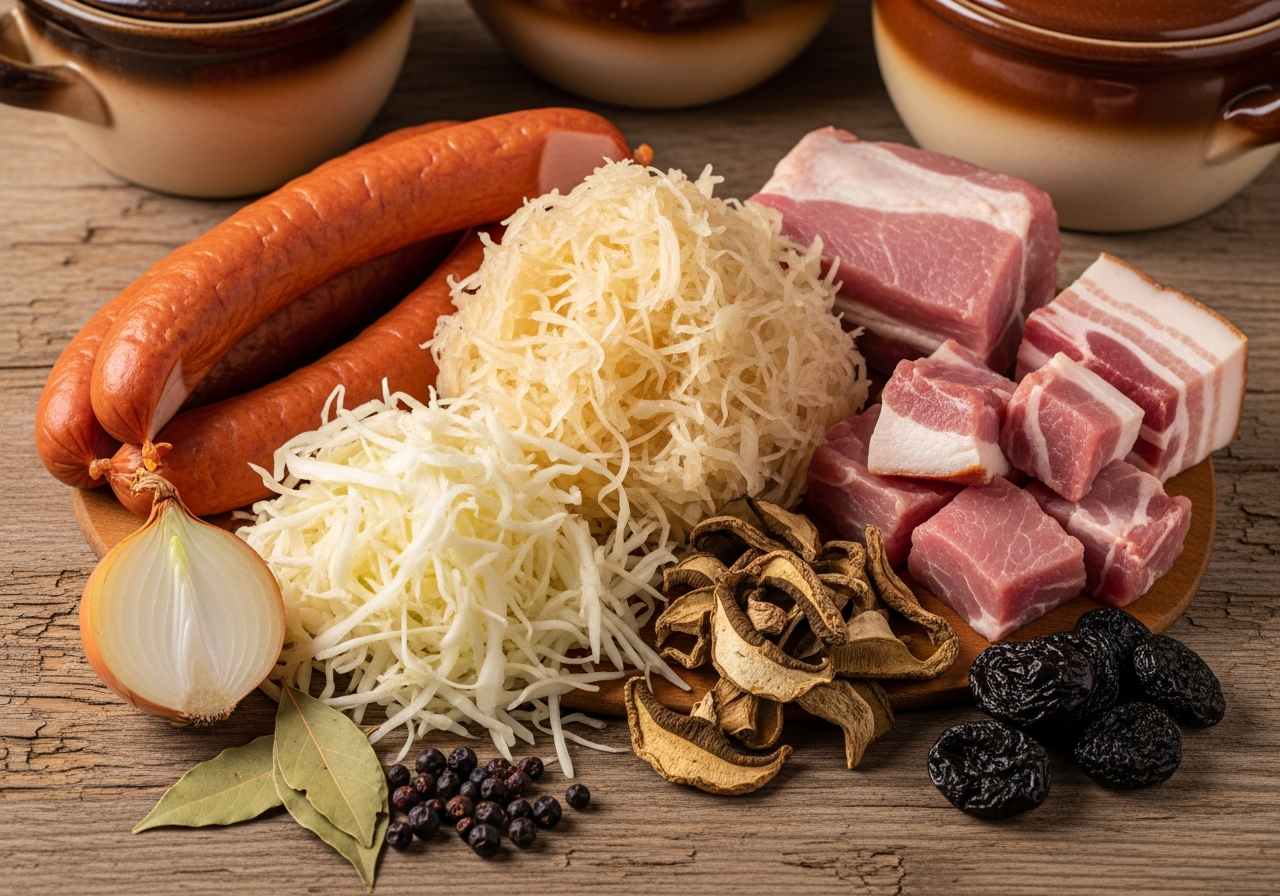
Ingredients
For the stew (serves 8–10)
- 500g (1.1 lb) pork shoulder, cut into 2cm cubes
- 250g (9 oz) smoked kielbasa (kiełbasa myśliwska or krakowska), sliced into rounds
- 150g (5 oz) smoked bacon or lardons
- 20g (0.7 oz) dried porcini mushrooms (or Polish dried forest mushrooms if available)
- 500g (17 oz) sauerkraut, drained — reserve the brine
- 400g (14 oz) fresh white cabbage, shredded
- 2 medium onions, diced
- 2 tablespoons tomato paste
- 100ml (3.5 fl oz) dry red wine (optional, but it adds depth)
- 10 pitted prunes, roughly chopped
- 3 bay leaves
- 6 allspice berries
- 4 juniper berries, crushed with the flat of a knife
- 1 teaspoon freshly ground black pepper
- Salt to taste
- 2 tablespoons lard or neutral oil for browning
Instructions
Step 1: Soak the mushrooms
Place the dried mushrooms in a bowl and cover with 300ml of cold water. Soak overnight, or for at least 4 hours. Do not discard the liquid — strain it through a fine sieve or cheesecloth to remove grit, then set aside. Roughly chop the rehydrated mushrooms.
Step 2: Pre-cook the cabbages
Shred the fresh cabbage and place it in a large pot with enough water to cover. Boil for 20 minutes until softened, then drain. In a separate smaller pot, cook the sauerkraut in its own brine for 20–25 minutes, then drain. Keep a cup of the sauerkraut liquid — you may want it at the end.
Step 3: Brown the meats
Heat the lard or oil in a large, heavy pot or Dutch oven over medium-high heat. Brown the pork shoulder in batches — don’t crowd the pan or it will steam rather than sear. Season lightly with salt and pepper. Set aside. In the same pan, cook the bacon until it starts to color. Add the kielbasa slices and cook for 3–4 minutes. Add the diced onions and cook until soft and lightly golden, about 8 minutes.
Step 4: Combine everything
Add both cabbages, all the browned meats, the mushrooms with their strained soaking liquid, the prunes, tomato paste, wine (if using), bay leaves, allspice, juniper berries, and pepper. Stir to combine. The stew should be thick, not soupy — if it looks too dry, add a splash of the reserved sauerkraut brine or water.
Step 5: Simmer
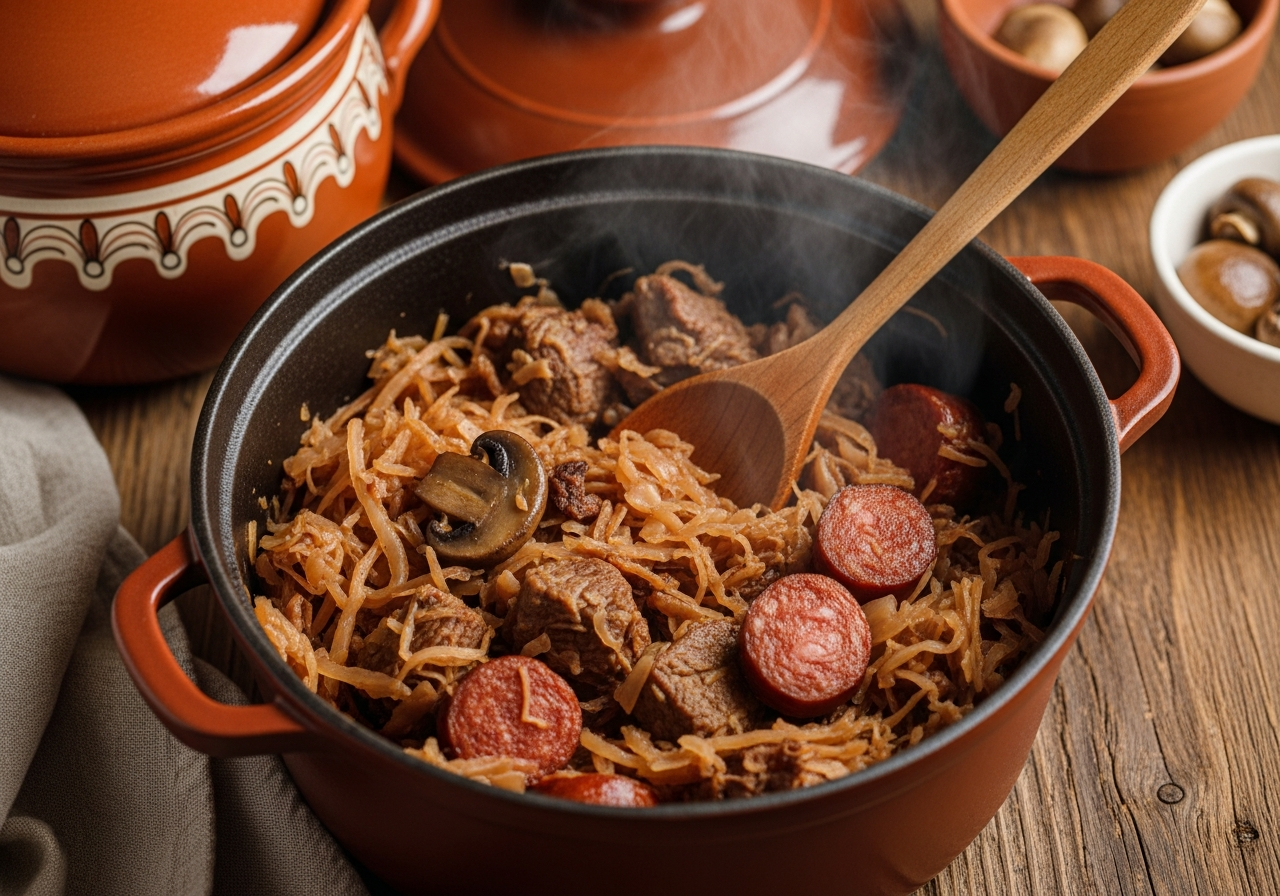
Bring to a gentle boil, then reduce heat to low. Simmer uncovered for 2.5–3 hours, stirring occasionally. The liquid will reduce by roughly a third. In the last 30 minutes, taste and adjust: salt as needed, a splash of sauerkraut brine for extra sharpness, or a small pinch of sugar if the sourness is too aggressive.
Step 6: Rest before serving
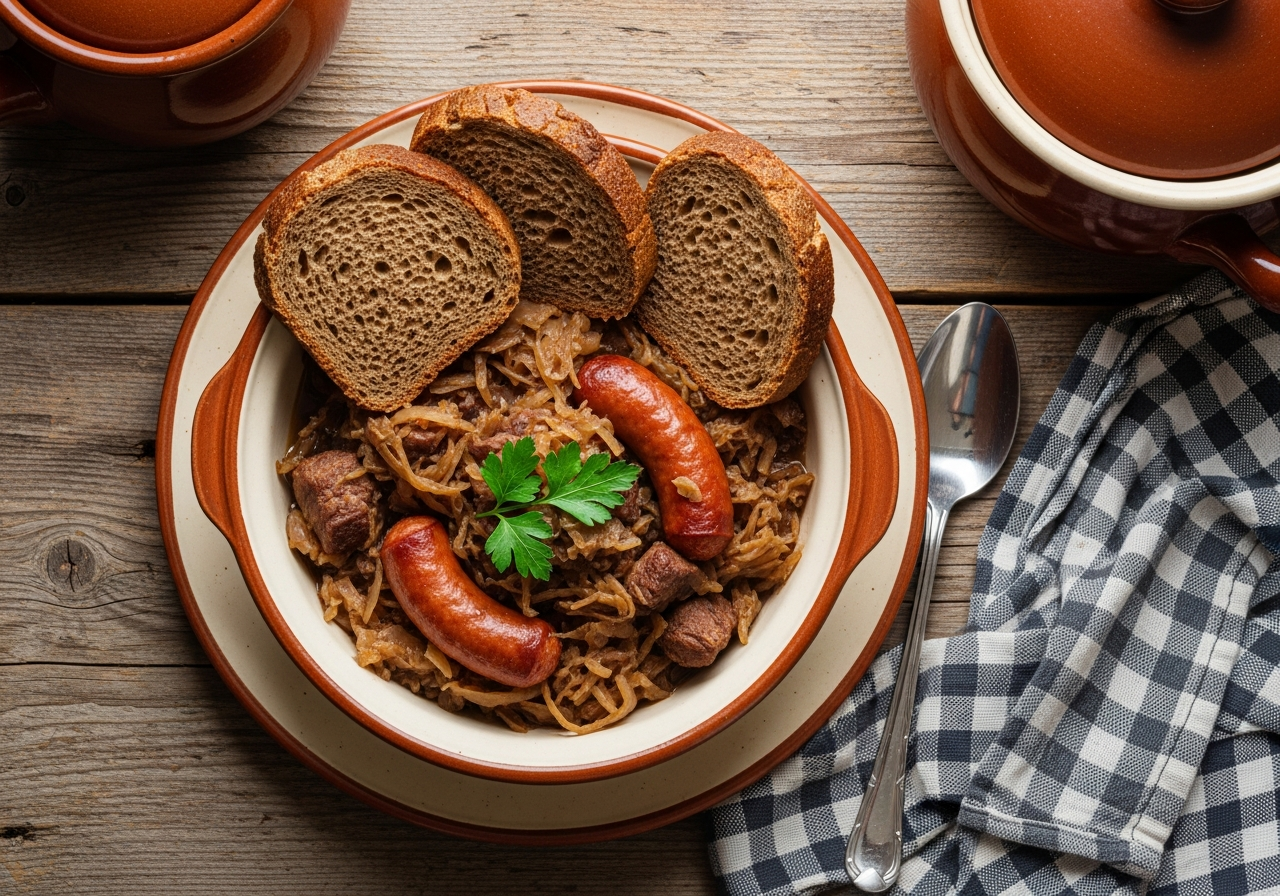
Remove from heat and cool completely. Refrigerate overnight. The next day, reheat slowly over low heat with the lid on, stirring occasionally, until hot through. Serve with thick rye bread.
Kitchen Tips
Use dried mushrooms, not fresh. Dried porcini — or Polish dried forest mushrooms (grzyby leśne) from a Polish deli — give bigos its earthiness in a way fresh mushrooms simply cannot match. The soaking liquid is nearly as important as the mushrooms themselves. Use all of it.¹
Don’t rush the simmer. The 2.5–3 hours are doing real work: breaking down the cabbage, pulling flavor out of the bones of the dish, and softening the sauerkraut’s sharpness into something rounder. Turn the heat up and you get a stew that tastes like its parts rather than a whole.
Juniper berries are easy to skip and not worth skipping. Crush them before adding — four berries in a large pot won’t announce themselves, but you will notice their absence. They add something slightly forested and resinous that fits the hunting origins of the dish.¹
If the finished stew tastes too sour, stir in a tablespoon of tomato paste and simmer another 15 minutes. If it tastes flat, add sauerkraut brine — one tablespoon at a time, tasting as you go. Adjust acid the way you would adjust salt.
Nutritional Information
Per serving (approximately 350g, one of 8–10 servings)
- Calories: approximately 320–380 kcal
- Protein: ~22g
- Total fat: ~19g
- Saturated fat: ~7g
- Carbohydrates: ~18g
- Dietary fiber: ~4g
- Sodium: ~800–1000mg (varies significantly with sausage salt content and sauerkraut brand)
Nutritional values are estimates based on standard ingredient databases. They will vary depending on specific ingredients, brands, sausage fat content, and portion size.
Storage and Reheating
Bigos keeps in the refrigerator for 4–5 days, and the flavor keeps developing over that time. Store in a sealed container. Reheat in a pot over low heat with the lid on, stirring occasionally. Microwaving a large batch heats unevenly and toughens the meat — use the stovetop.
The stew freezes well. Portion into freezer-safe containers before freezing and it will keep for up to 3 months. Defrost overnight in the refrigerator and reheat slowly. Add a splash of water if it looks too thick after thawing.
Bigos freezes better than most meat stews because the sauerkraut doesn’t go mushy the way fresh vegetables do. Polish home cooks often make large batches in autumn specifically for the freezer, pulling out portions through winter.²
Traditional Polish Bigos

Ingredients
For the stew (serves 8–10)
- 500g (1.1 lb) pork shoulder, cut into 2cm cubes
- 250g (9 oz) smoked kielbasa (kiełbasa myśliwska or krakowska), sliced into rounds
- 150g (5 oz) smoked bacon or lardons
- 20g (0.7 oz) dried porcini mushrooms (or Polish dried forest mushrooms if available)
- 500g (17 oz) sauerkraut, drained — reserve the brine
- 400g (14 oz) fresh white cabbage, shredded
- 2 medium onions, diced
- 2 tablespoons tomato paste
- 100ml (3.5 fl oz) dry red wine (optional, but it adds depth)
- 10 pitted prunes, roughly chopped
- 3 bay leaves
- 6 allspice berries
- 4 juniper berries, crushed with the flat of a knife
- 1 teaspoon freshly ground black pepper
- Salt to taste
- 2 tablespoons lard or neutral oil for browning
Instructions
- Soak dried mushrooms overnight — the soaking liquid becomes part of the broth, don’t pour it out
- Brown all meats separately before combining — this is where the flavor base comes from
- Pre-cook the sauerkraut and fresh cabbage in separate pots, then drain both
- Combine everything and simmer low and slow for 2.5–3 hours, uncovered
- Refrigerate overnight — bigos is always better the next day, plan for that
Frequently Asked Questions
What meats go into traditional bigos?
Historically, whatever the hunt brought back — venison, wild boar, pheasant — alongside whatever smoked or cured meats were in the house. The modern standard is pork shoulder for texture, smoked bacon for fat and depth, and kielbasa for seasoning. Using only one type of meat produces a flat result. The dish is built on contrast: different textures, different fats, different levels of smoke.¹
Does bigos have to include sauerkraut?
The oldest versions used vinegar instead. But since the 18th century, sauerkraut has been structural to the dish — it provides acidity, texture, and a specific fermented depth that no substitute replicates. Without it, you have something else. A 50/50 split of sauerkraut and fresh cabbage is traditional and gives a milder result; going below that changes the character of the dish noticeably.¹
Can bigos be made without alcohol?
Yes. The red wine adds richness but is not essential. If you skip it, add an extra tablespoon of tomato paste and a little more mushroom soaking liquid. Some traditional regional recipes never included wine at all — the dish long predates its use in Polish stews.³
Why does freshly made bigos taste harsh, but better the next day?
Right off the stove, the sauerkraut acidity is still assertive. Overnight, it mellows and the mushroom and prune flavors come forward. This is expected — not a sign that something went wrong. Polish cooks have always made bigos ahead for exactly this reason. Making it the morning you plan to serve it is working against the dish.²
Is bigos a Christmas dish?
Bigos is one of the traditional twelve dishes of Wigilia (Christmas Eve supper). But the Christmas Eve version is vegetarian — those twelve dishes are always meatless. That bigos is built from mushrooms, sauerkraut, fresh cabbage, and dried fruit. Lighter, different. The full meat version returns on Christmas Day.²
What do you serve with bigos?
Thick rye bread, used to mop the broth, is the standard accompaniment. Bigos also appears alongside kopytka (Polish potato dumplings) or as part of a larger holiday spread. It holds well at room temperature for a couple of hours, which makes it practical for buffet-style service.²
Can I use a slow cooker?
Yes, with one condition: brown the meats on the stovetop first. The slow cooker won’t produce the sear that browning creates, and that step isn’t optional. After browning, transfer everything to the slow cooker and cook on low for 7–8 hours. The result is good, though the liquid reduces less than on the stovetop and the flavors stay slightly more separate. Still worth doing if a long stovetop simmer isn’t practical.³
Looking for a Lighter Version?
Traditional bigos is calorie-dense because it was built to be — fat and protein kept hunters and peasants warm through Polish winters. A leaner version is possible without gutting what makes the dish work. Our Healthy Bigos article covers lower-fat meat options, sodium reduction, and how to keep the fermented base intact while cutting what a modern diet doesn’t need.
More Polish classics from our kitchen: Traditional Polish Pierogi and Traditional Polish Żurek.
Further Reading & Sources
The following sources were consulted in researching the history, technique, and cultural background of traditional Polish bigos. Heritage Healthy Kitchen’s recipe was developed independently; these links are provided for readers who want to explore further.
- “The Polish Bigos Recipe That Tastes Like Home.” Polish Foodies. polishfoodies.com — historical background including Maria Dembińska’s food history research and Czerniecki’s 1682 Compendium ferculorum.
- “Bigos: A Hearty Polish ‘Forever’ Stew.” Folkways Today. folkways.today — cultural context, Christmas traditions, and the dish’s presence across former Polish-Lithuanian Commonwealth territory.
- “Polish Bigos Recipe and the Battle of Vienna: A Stew Forged by Forests, Winter, and War.” Eats History. eatshistory.com — historical narrative of bigos from medieval origins through the 17th-century Polish campaigns.
Disclaimer
The information in this article is provided for educational and informational purposes only. Heritage Healthy Kitchen makes no representations or warranties regarding the accuracy or completeness of any content on this site. Nutritional values are estimates only and will vary depending on the specific ingredients, brands, and measurements used. This content is not intended as dietary, medical, or professional nutritional advice. Always consult a qualified healthcare provider regarding any dietary needs or health conditions. Heritage Healthy Kitchen is not responsible for any outcomes resulting from the use of recipes or information published on this site.
You Might Also Like
More heritage recipes from our kitchen
Leave a Reply