
Traditional Polish Gołąbki Recipe: Little Pigeons, Big History
Prep: ~1 hour | Cooking: 1–1.5 hours | Serves: 6–8 | Makes: approximately 16–20 rolls | Difficulty: Intermediate
Quick Overview
- Blanch the cabbage leaves until pliable, then trim the thick rib from each one
- Mix the filling raw: ground pork, half-cooked rice, fried onion, salt, pepper, marjoram
- Roll each leaf around a spoonful of filling, tucking the ends in
- Layer the rolls in a heavy pot, cover with tomato sauce, and simmer or bake for 1–1.5 hours
- Let them rest before serving — gołąbki are noticeably better on the second day
What gołąbki are
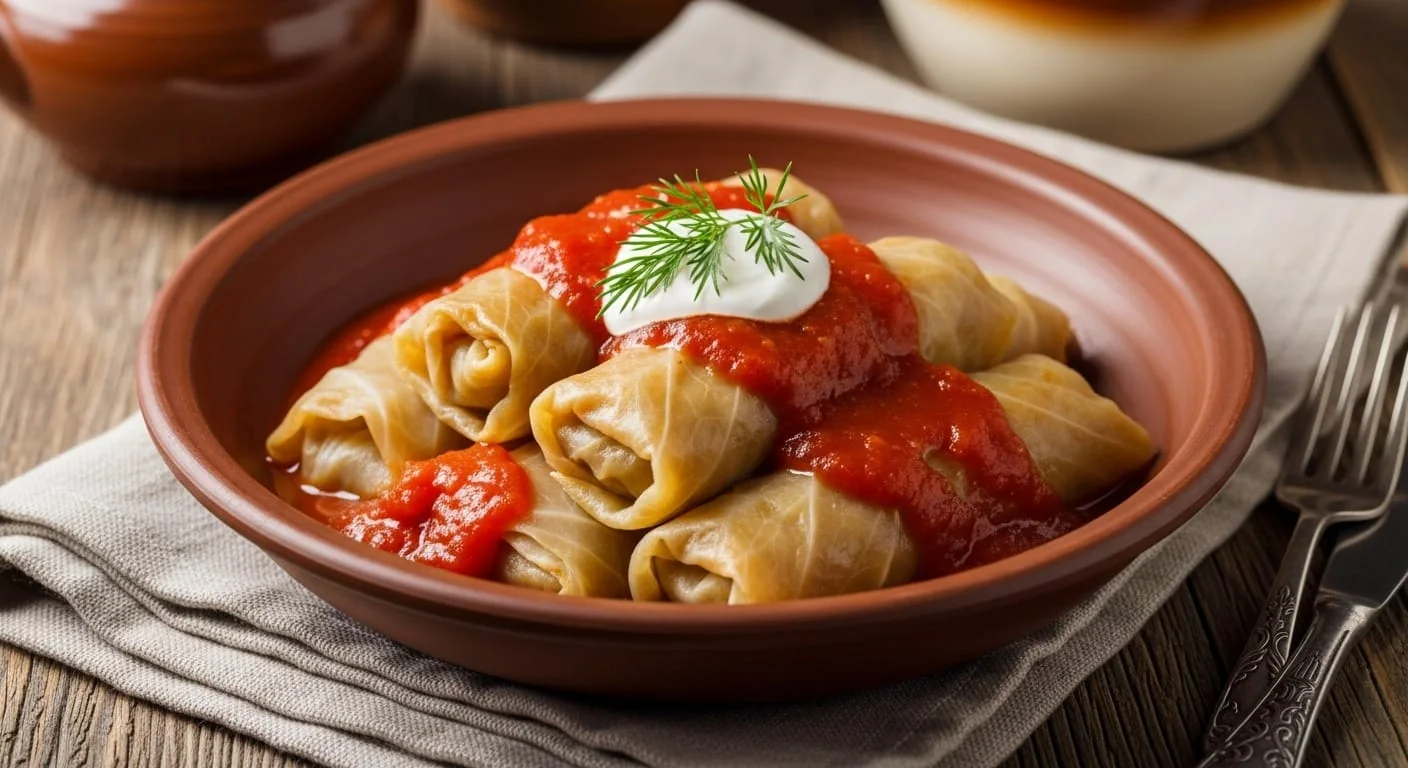
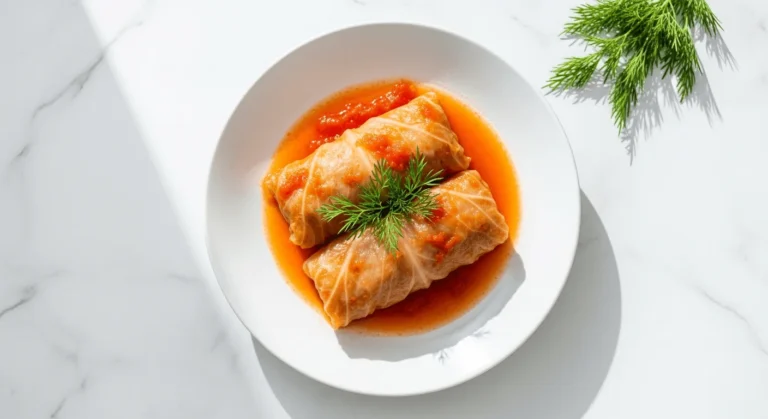
Gołąbki are Poland’s stuffed cabbage rolls: blanched cabbage leaves wrapped around a filling of rice and minced pork, simmered or baked in tomato or mushroom sauce until everything turns tender. The name means “little pigeons” or “little doves,” and the dish is plural by default — you would never describe a single roll as “a gołąbki.” That word is a gołąbek.¹ ²
Ask a Polish person where gołąbki rank among national dishes and you will likely hear bigos, pierogi, and gołąbki named in the same breath. Food critic Piotr Bikont once described them as quintessential homemade food, the kind better-restaurants leave off the menu because it is considered too humble for an elegant table.¹ He was not wrong, and most Poles would not really want it any other way. Gołąbki belong in a home kitchen.
History
Nobody fully agrees on where the name comes from. The standard story says the rolled, tucked-in leaf looks like a small bird, so it got called “little pigeon.” Linguist Max Vasmer accepted that without much fuss. Polish linguist Marek Stachowski disagrees: he thinks it is actually a much older borrowing from Persian or Armenian words for cabbage, later reshaped by folk etymology to sound like a bird. Neither theory has been confirmed.²
According to Culture.pl, run by Poland’s Adam Mickiewicz Institute, it is not clear whether Poland owes gołąbki to Turkish, Armenian, or Jewish influence, but the dish first appears in 19th-century cookbooks from the Eastern Borderlands. One of those, Maria Marciszewska’s Kucharka szlachecka, describes “stuffed cabbage, also called gołąbki,” filled with groats or rice and meat from duck, goose, chicken, or pork. Similar dishes turn up across the region under different names: holubky in Czech and Slovak, holubtsi in Ukrainian, holishkes in Jewish cooking, grape-leaf versions further south in Turkey and the Balkans.¹ ²
There is also a sourer cousin worth knowing about. In parts of the Eastern Borderlands, whole cabbage heads were fermented before the leaves were peeled and used — no blanching needed, and a noticeably tangier roll. Cookbook author Maria Ochorowicz-Monatowa called this version “ruskie.”¹
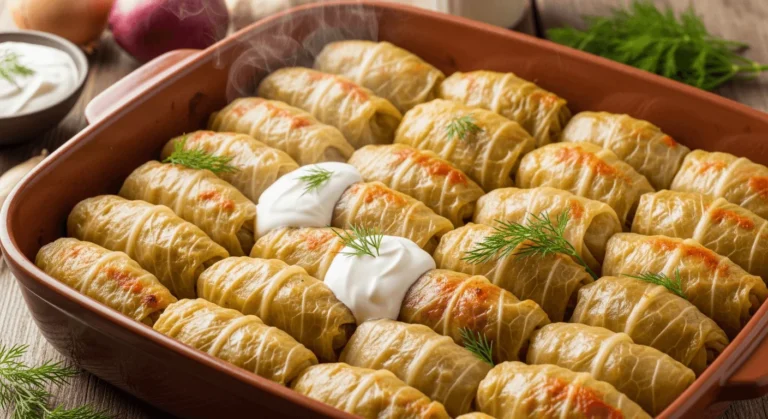
And before pork and rice took over, gołąbki in much of Poland had no meat in them at all, just buckwheat groats and potato, which made the dish a natural fit for Christmas Eve, when Catholic tradition calls for a meatless meal. The Lublin region still makes something close to that original version, with a cream-and-mushroom sauce instead of tomato.³ ⁴
Traditional gołąbki recipe (rice and pork, tomato sauce)
Recipe developed independently by Heritage Healthy Kitchen, drawing on traditional Polish culinary methods. Sources for further reading are listed at the end of this article.¹²³⁴⁵
This is the version most commonly eaten in Poland today — the one a Polish grandmother is most likely to make on a Sunday. It is not the oldest version, but it is the one that defines the dish for most people now.
Ingredients
The cabbage
- 1 large head of white cabbage (approximately 1.5–2kg / 3.3–4.4 lb)
The filling
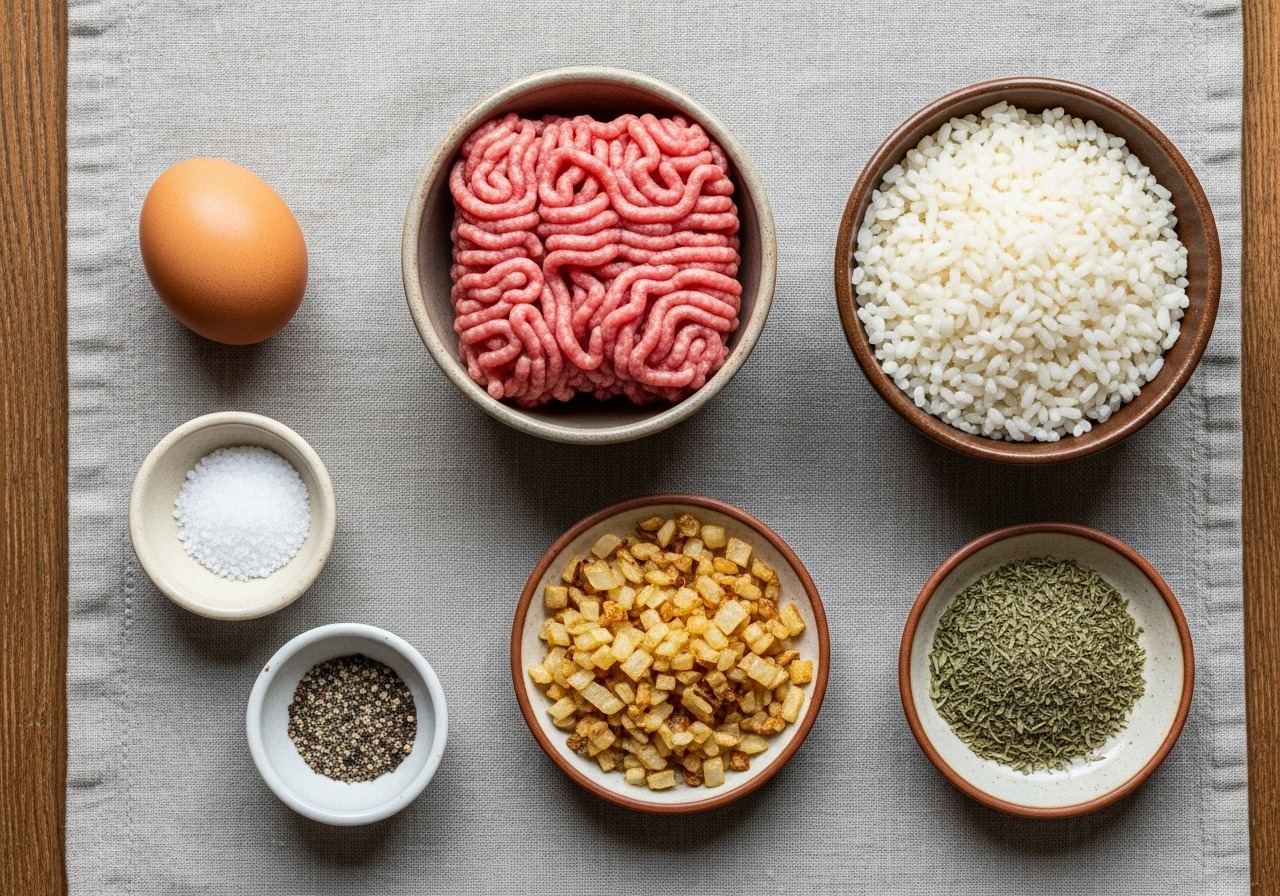
- 600g (1.3 lb) ground pork, or a mix of pork and beef
- 200g (1 cup) short or medium-grain rice, half-cooked (see method)
- 1 large onion, diced fine and fried until golden
- 1 egg
- 1.5 teaspoons salt
- 1 teaspoon black pepper
- 1 teaspoon dried marjoram — distinctly Polish, and worth not skipping
The sauce
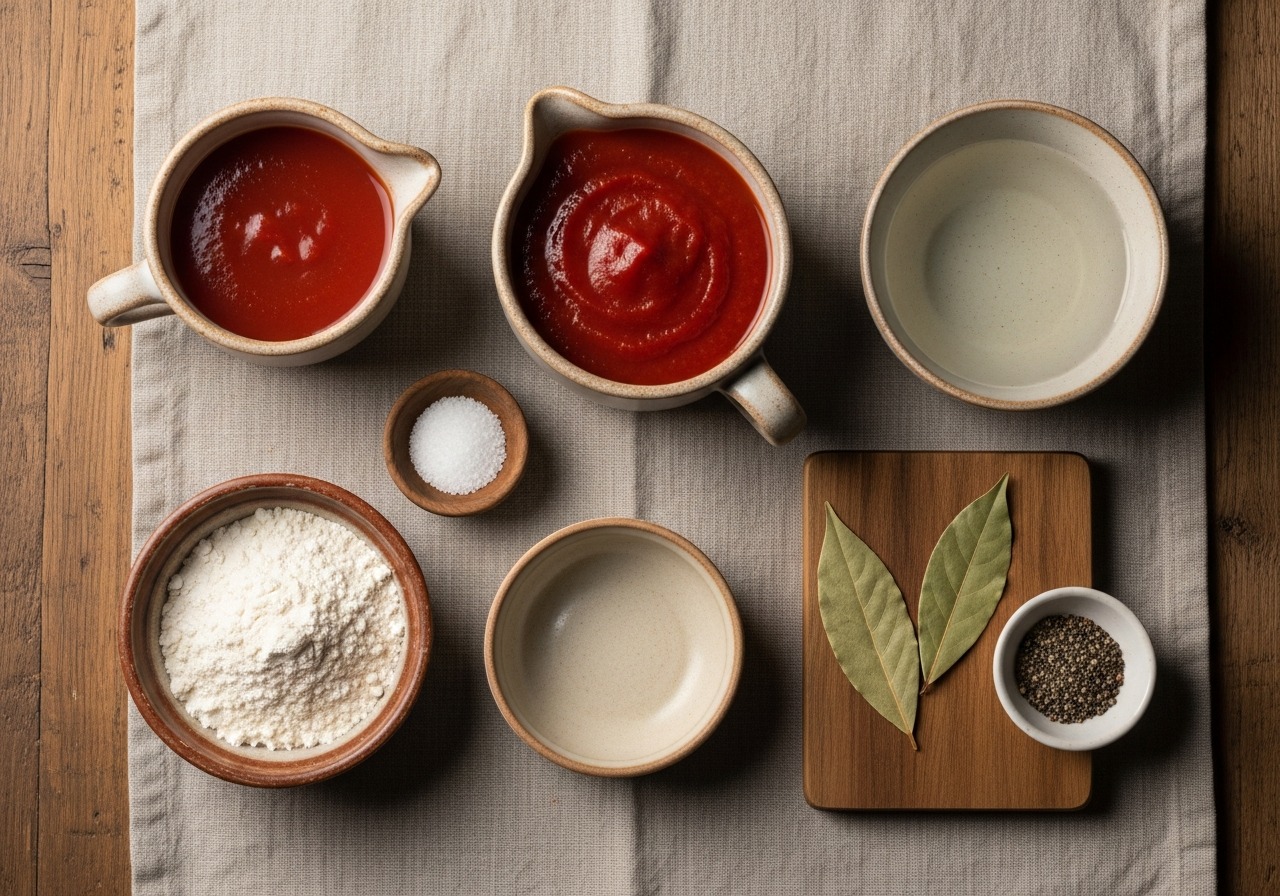
- 500ml (2 cups) tomato passata, or 3 tablespoons tomato paste diluted in 400ml water
- 300ml (1¼ cups) water or light stock
- 1 tablespoon all-purpose flour, mixed with a little cold water (thickener, optional)
- 2 bay leaves
- Salt and pepper to taste
Method
Step 1: Prepare the cabbage leaves
Bring a large pot of salted water to a boil. Cut a deep cone around the core to loosen the leaves, then lower the whole head into the boiling water. As the outer leaves soften, after about 2–3 minutes, peel them off with tongs and transfer to a colander. Keep rotating the head and removing leaves as they become pliable. You will need 16–20 whole, unbroken leaves. Trim or flatten the thick central rib on each one — this is what lets the leaf roll without cracking.
Step 2: Half-cook the rice
Rinse the rice, then boil in salted water for about 7 minutes — noticeably underdone, with a firm bite remaining. Drain and rinse with cold water to stop the cooking. It finishes inside the roll during the long simmer; fully cooked rice turns the filling mushy.
Step 3: Make the filling
Fry the diced onion in a little oil until soft and golden, about 8–10 minutes. Cool completely before combining with the meat — hot onion against raw pork cooks it unevenly.
Mix the ground pork, half-cooked rice, cooled onion, egg, salt, pepper, and marjoram thoroughly by hand. Fry a small test piece and taste before rolling — this is the only chance to adjust seasoning before everything goes into the pot and stays there for over an hour.
Step 4: Roll the gołąbki
Lay a cabbage leaf flat, inner side up, stem end toward you. Spoon 2–3 tablespoons of filling onto the lower third. Fold the sides in over the filling, then roll from the stem end up, tucking firmly as you go. The roll should be snug, not bursting. Patch any tears with a spare piece of leaf.
Step 5: Layer and cook
Line the bottom of a heavy pot with leftover cabbage leaves to prevent scorching. Pack the gołąbki in tight rows, seam side down — loose rolls have a tendency to come undone in the sauce.
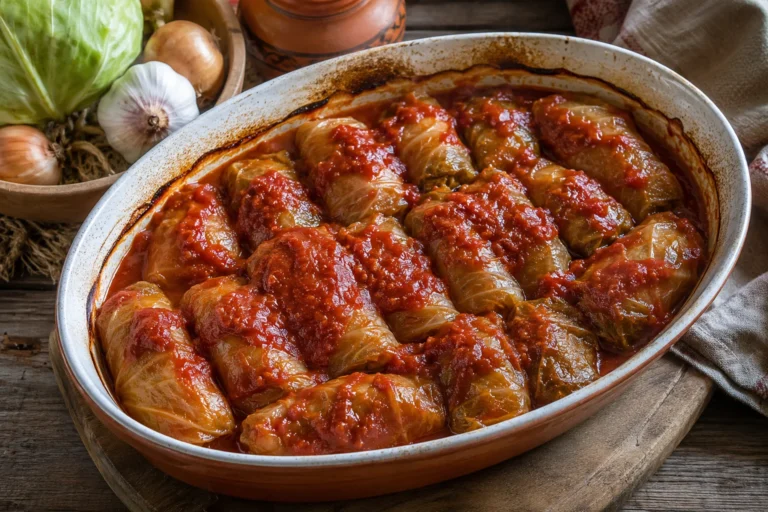
Mix the tomato passata, stock, and bay leaves. Pour over the rolls until just covered. Bring to a gentle simmer on the stovetop, cover, and cook on low heat for 1–1.5 hours, checking occasionally and topping up with water if the liquid drops too low. Alternatively, bake covered at 180°C / 360°F for about an hour. If you want a thicker sauce, stir the flour-water slurry in during the last 15 minutes.
Step 6: Rest before serving
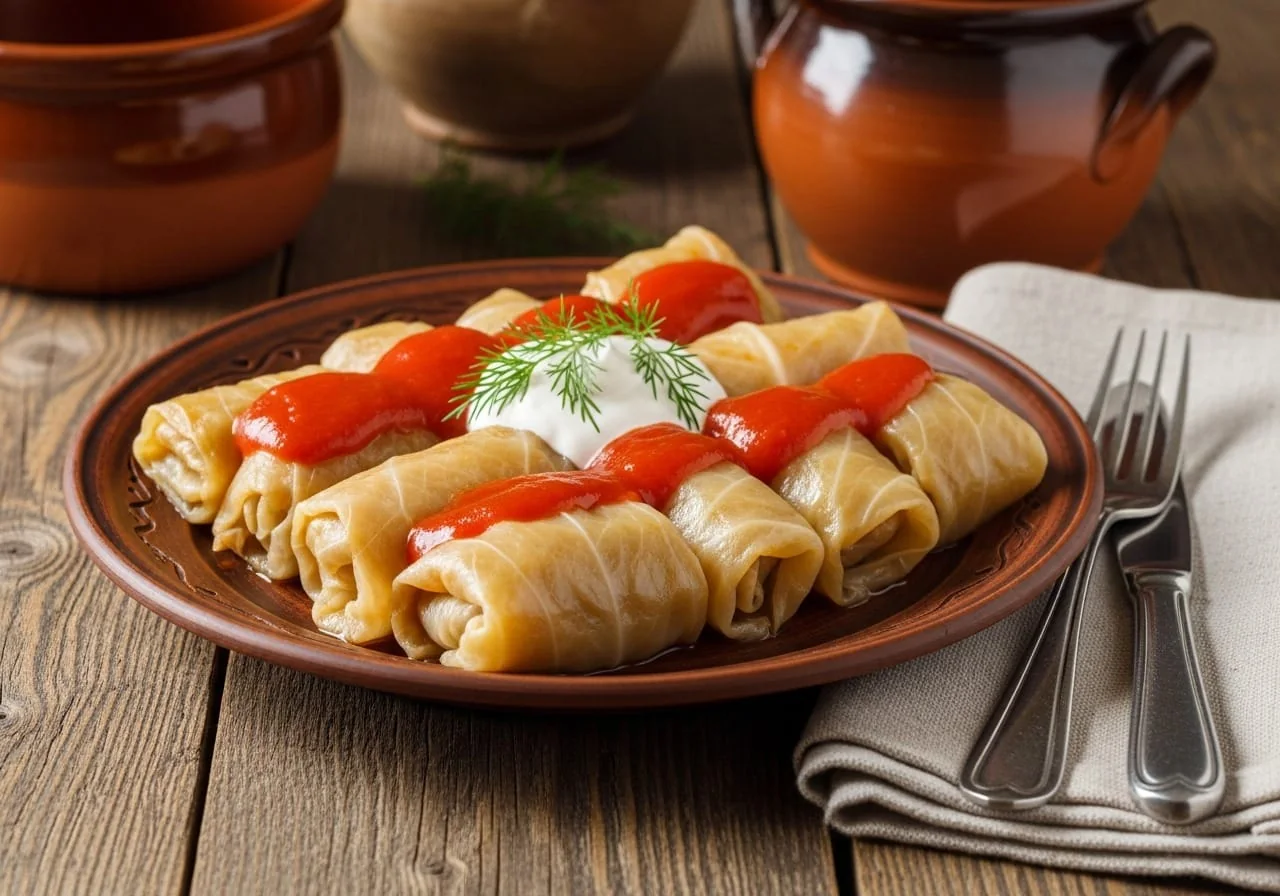
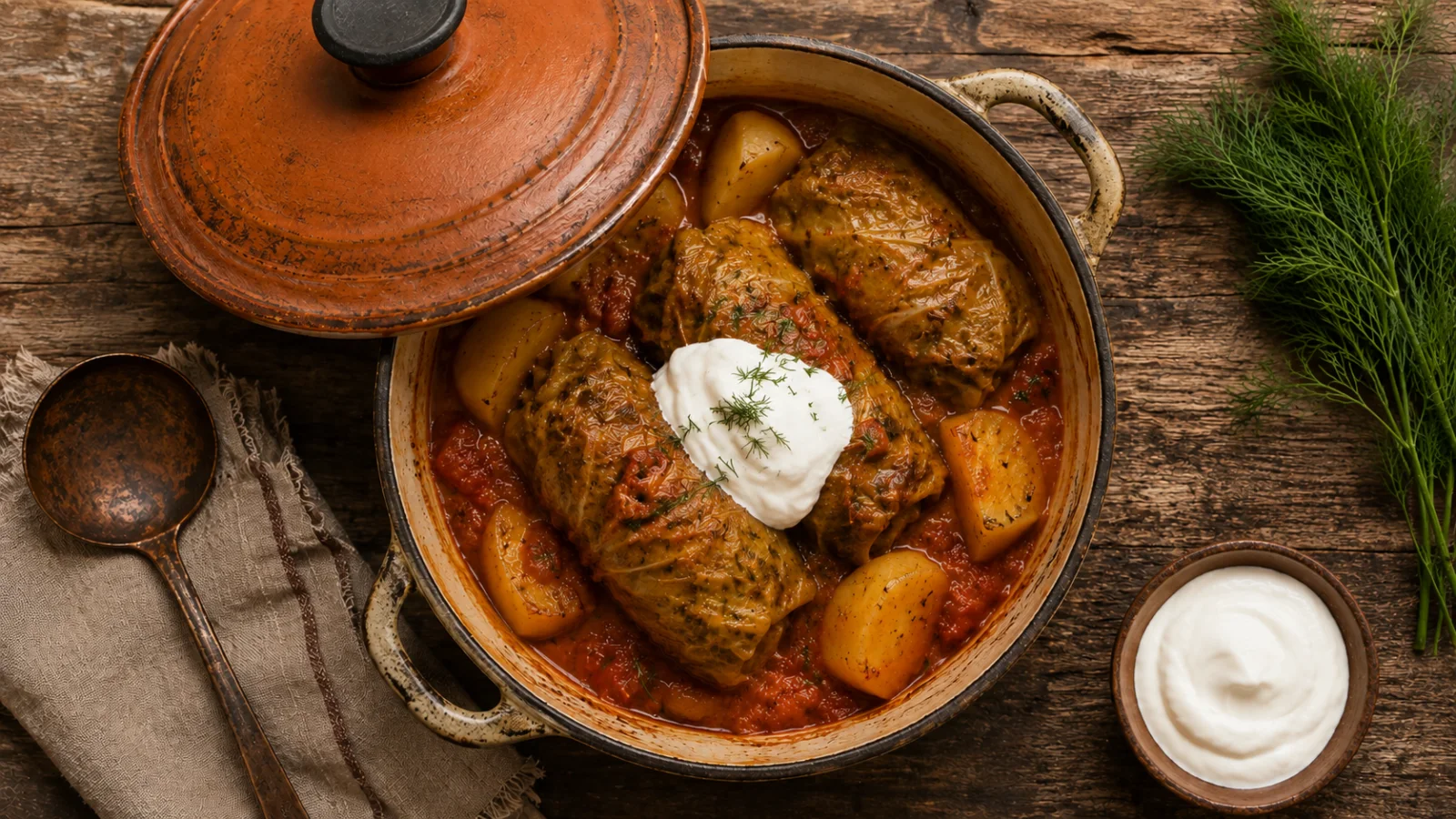
Let the pot stand off the heat, covered, for 15 minutes. Serve with mashed potatoes, a spoonful of the sauce, and fresh dill if you have it. As with most slow-braised stuffed-cabbage dishes, gołąbki taste noticeably better reheated the next day — the flavors settle and the sauce works its way further into the filling.
Kitchen tips
Marjoram is the seasoning that separates Polish cooking from its Ukrainian and Czech neighbors in this dish. It is subtle and easy to underuse — a full teaspoon for this quantity of filling is not too much.
Test-fry the filling before committing to a full batch. There is no way to adjust seasoning once the gołąbki are rolled and simmering; that decision gets made once, at the raw-filling stage.
The rib is the part of the leaf most likely to split during rolling. Take the extra two minutes to trim it flat with a knife rather than fighting a leaf that keeps cracking down the middle.
Nutritional Information
Per serving (2–3 gołąbki with sauce, approximately 350g)
- Calories: approximately 310–340 kcal
- Protein: ~20g
- Total fat: ~13g
- Saturated fat: ~5g
- Carbohydrates: ~28g
- Dietary fiber: ~3g
- Sodium: ~550–700mg (varies with seasoning and stock)
Values are estimates based on standard ingredient databases. They will vary depending on the fat content of the pork, the exact sauce quantity, and serving size.
Storage and freezing
Cooked gołąbki keep in the refrigerator for up to 3 days in a sealed container with the sauce. Reheat gently in a covered pot over low heat, or in the oven covered with foil. Once served, leftovers should go in the fridge within a few hours rather than sitting out.⁵
Gołąbki freeze well, cooked or raw. For cooked rolls, wrap them individually in foil and freeze the sauce separately in its own container, or freeze everything together in one dish — either approach works.⁵ Label with the date; frozen gołąbki keep their quality for a few months. Defrost in the refrigerator overnight before reheating.
Traditional Polish Gołąbki

Ingredients
The filling
- 600g (1.3 lb) ground pork, or a mix of pork and beef
- 200g (1 cup) short or medium-grain rice, half-cooked (see method)
- 1 large onion, diced fine and fried until golden
- 1 egg
- 1.5 teaspoons salt
- 1 teaspoon black pepper
- 1 teaspoon dried marjoram — distinctly Polish, and worth not skipping
The sauce
- 500ml (2 cups) tomato passata, or 3 tablespoons tomato paste diluted in 400ml water
- 300ml (1¼ cups) water or light stock
- 1 tablespoon all-purpose flour, mixed with a little cold water (thickener, optional)
- 2 bay leaves
- Salt and pepper to taste
Instructions
- Blanch the cabbage leaves until pliable, then trim the thick rib from each one
- Mix the filling raw: ground pork, half-cooked rice, fried onion, salt, pepper, marjoram
- Roll each leaf around a spoonful of filling, tucking the ends in
- Layer the rolls in a heavy pot, cover with tomato sauce, and simmer or bake for 1–1.5 hours
- Let them rest before serving — gołąbki are noticeably better on the second day
Frequently Asked Questions
What is the actual difference between “stuffed cabbage” and gołąbki?
Historically, not much — 19th-century cookbooks used the terms interchangeably. Modern Polish cooking treats them as separate dishes: gołąbki are individually rolled leaves, while “stuffed cabbage” more often refers to a casserole-style dish with shredded cabbage mixed through the filling.¹
Why do some versions use sour, pickled cabbage instead of fresh?
This is the Ruskie or Eastern Borderlands tradition, where whole cabbage heads were fermented before the leaves were peeled and used. It produces a noticeably tangier roll and needs no blanching, since fermentation has already softened the leaves.¹
Is the meatless buckwheat-and-potato version actually traditional, or a modern health adaptation?
It is traditional, and arguably closer to the original than the rice-and-pork version most people know now. Buckwheat and potato were what poor rural households had on hand; meat was for special occasions. The Lublin region still makes this version with a cream-and-mushroom sauce, and it remains the standard Christmas Eve gołąbki across much of Poland, since Catholic tradition calls for a meatless fast-day meal that night.³ ⁴
Why does the recipe call for marjoram specifically?
It is one of the defining seasonings in Polish home cooking, used in gołąbki, bigos, and countless soups. Its flavor is herbal with a faint bitterness, distinct from the parsley or dill more common in neighboring cuisines. Skipping it won’t ruin the dish, but the flavor will drift from what most Polish cooks would call authentic.
Can I use a different grain instead of rice?
Yes — historically this was common. Barley, pearl barley, millet, and buckwheat groats are all traditional substitutes in various regional recipes. Buckwheat holds its shape better than rice during the long simmer; barley adds a chewier bite.
Why are my gołąbki bursting open while cooking, and is it true they taste better the next day?
Bursting usually comes from overfilling, an under-softened leaf, or loose packing in the pot — blanch thoroughly, fill conservatively, and pack the rolls tight enough to support each other. As for the next-day question: yes. Overnight, the sauce works further into the cabbage and filling, and the flavors settle into something more cohesive than what comes straight off the stove.
Looking for a lighter version?
Traditional gołąbki carry their calorie density mainly through the pork filling and any added fat in the sauce. A lighter version using lean poultry, brown rice or buckwheat, and a reduced-fat sauce is genuinely workable without losing what makes the dish recognizable. Our Healthy Gołąbki article covers that adaptation in detail.
Further Reading & Sources
The following sources were consulted in researching the history, etymology, regional variations, and technique of traditional Polish gołąbki. Heritage Healthy Kitchen’s recipe was developed independently; these links are provided for readers who want to explore further.
- “Polish Food 101 ‒ Gołąbki.” Culture.pl, published by the Adam Mickiewicz Institute. culture.pl — history, the 19th-century cookbook record, related dishes across Europe, and the Ruskie gołąbki tradition with direct citation of Maria Ochorowicz-Monatowa’s Uniwersalna książka kucharska.
- “Gołąbki.” Wikipedia. en.wikipedia.org/wiki/Gołąbki — etymology theories including Max Vasmer’s pigeon-shape explanation and Marek Stachowski’s competing Persian/Armenian linguistic borrowing theory, and names for related dishes across Central and Eastern Europe.
- “Authentic Polish Gołąbki Recipe – Stuffed Cabbage Rolls.” Polish Foodies, by Karolina Klesta. polishfoodies.com — origin summary and the meatless buckwheat-and-potato Christmas Eve tradition.
- “Flavor of Poland – Regional Stuffed Cabbage Rolls.” Flavor of Poland. flavorofpoland.com — the original buckwheat-and-potato Lublin region recipe with mushroom cream sauce, presented as the dish’s earliest documented form.
- “Gołąbki: Polish Stuffed Cabbage Rolls with Tomato Sauce.” The Polonist, Polonist Test Kitchen. polonist.com — standard rice-and-pork technique, serving suggestions, refrigeration and freezing guidance.
Disclaimer
The information in this article is provided for educational and informational purposes only. Heritage Healthy Kitchen makes no representations or warranties regarding the accuracy or completeness of any content on this site. Nutritional values are estimates only and will vary depending on the specific ingredients, brands, and measurements used. This content is not intended as dietary, medical, or professional nutritional advice. Always consult a qualified healthcare provider regarding any dietary needs or health conditions. Heritage Healthy Kitchen is not responsible for any outcomes resulting from the use of recipes or information published on this site.
Cook by Occasion
This recipe is part of our Wigilia menu.
You Might Also Like
More heritage recipes from our kitchen
Leave a Reply