
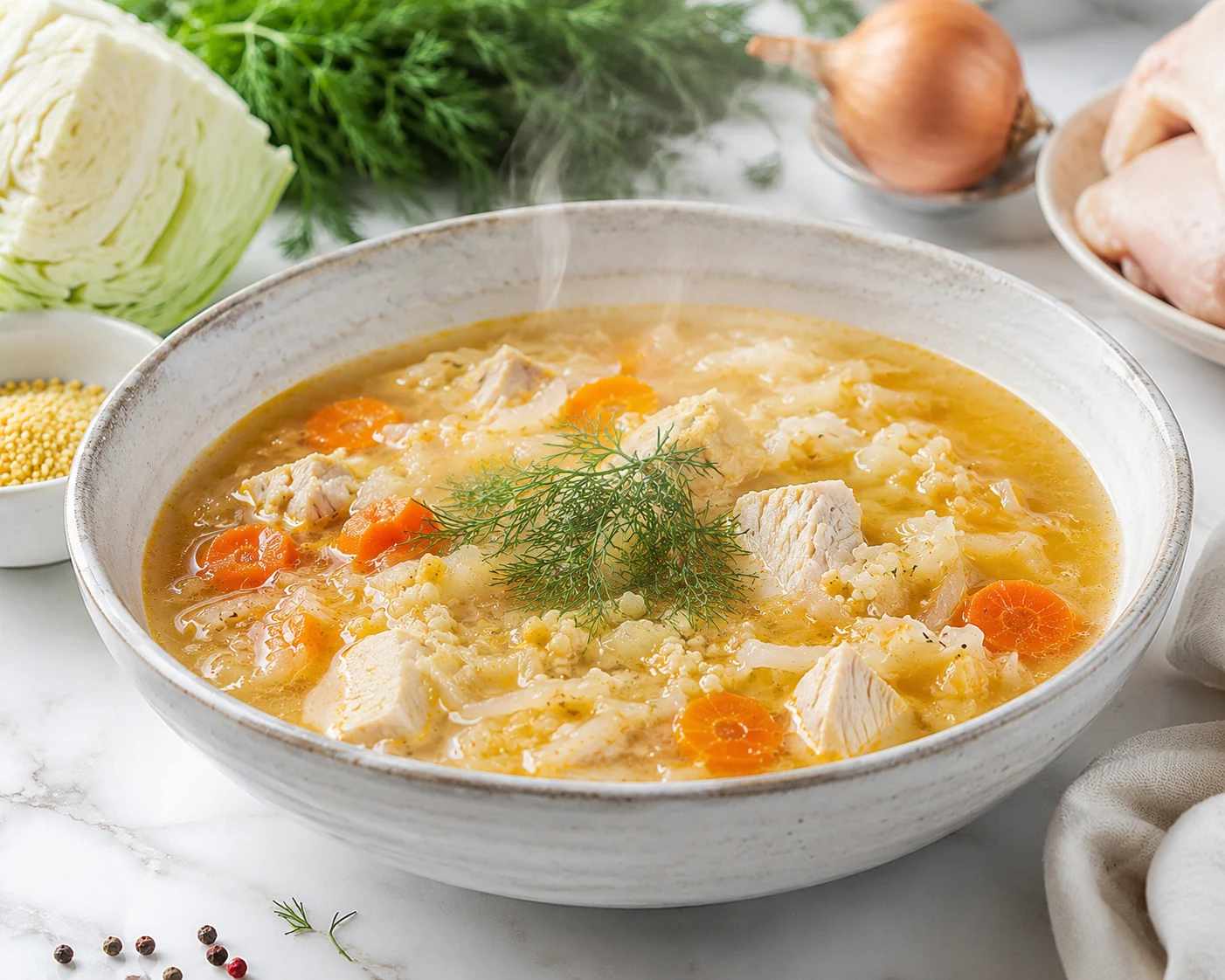
Prep time: 15 minutes | Cook time: 50 minutes | Serves: 6 | Difficulty: Easy
Quick Overview
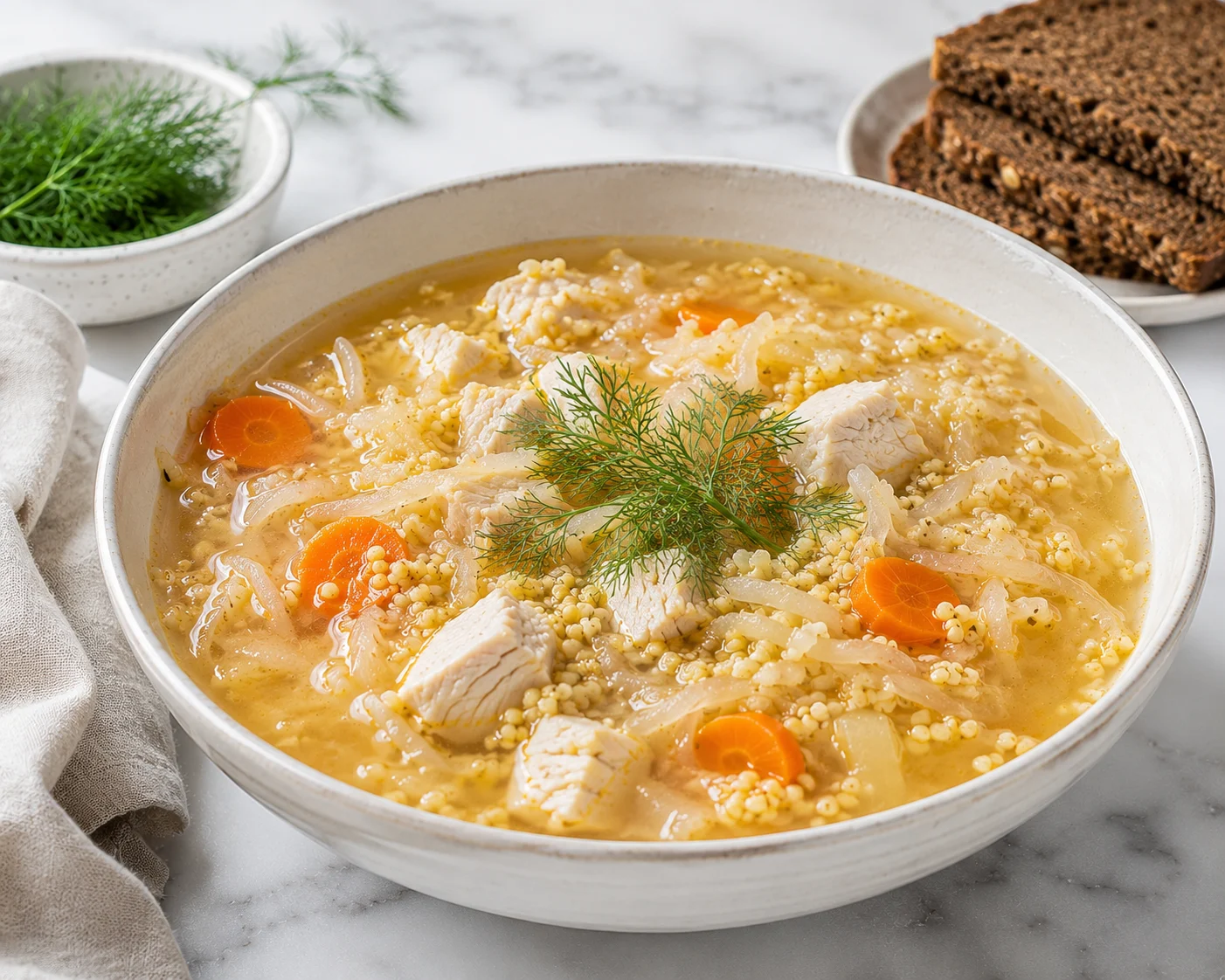
- Swap the pork ribs for lean turkey breast, which cooks in a fraction of the time
- Build the same millet-and-sauerkraut base as the traditional recipe, at full quantity
- Sauté the vegetables in a lighter hand of oil
- Simmer everything together with no added salt
- Adjust the sourness with reserved sauerkraut juice, exactly as in the traditional version
- Finish with garlic, dill, and parsley
What This Version Changes — and What It Keeps
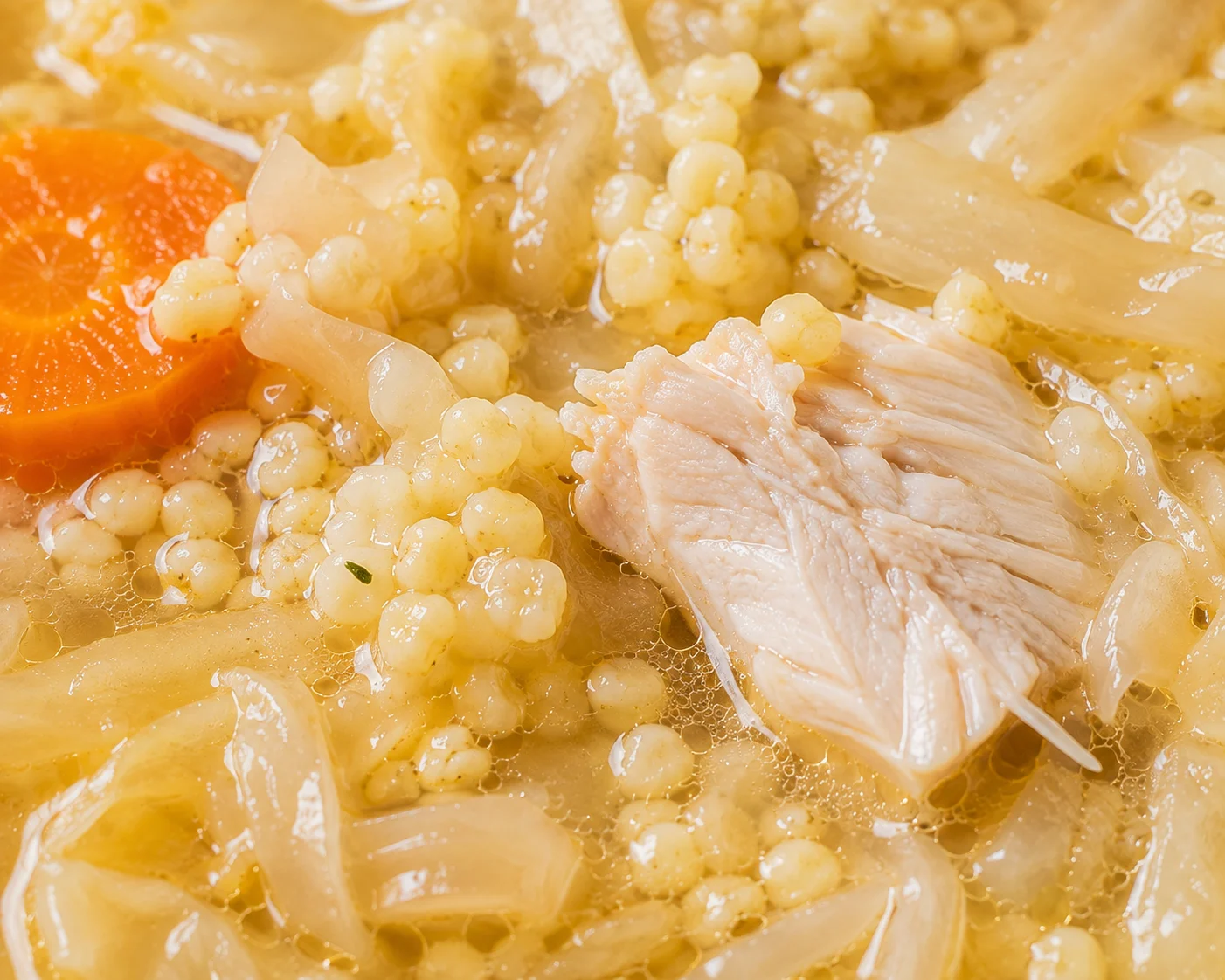
The sauerkraut stays at the same full quantity as the traditional recipe, and so does the millet. Both are already doing healthy work on their own: the sauerkraut is a fermented, low-calorie source of vitamin C and vitamin K,4 and its live cultures are part of the growing research interest in fermented foods and gut health.5 The millet is a naturally gluten-free whole grain that contributes fiber and magnesium.6 The method stays close to the original too — build a broth, sauté the aromatics, simmer everything together, finish with the sauerkraut’s own juice.
What changes is the protein and the salt. Pork ribs are replaced with skinless turkey breast, which cuts the saturated fat sharply and also shortens the cooking time, since turkey breast needs only 15 to 18 minutes to cook through instead of the traditional recipe’s hour-long rib simmer. No salt is added during cooking, and the oil is trimmed from 2 tablespoons to 1.
Why These Swaps Work
Turkey breast in place of pork ribs is the biggest change here. The American Heart Association names pork among the animal-based foods that carry saturated fat, and recommends choosing lean meats and skinless poultry instead when meat is on the menu.1 Pork spareribs run close to 30 grams of fat per 100 grams once cooked, most of it saturated, while skinless turkey breast comes in at close to 2 grams of fat for the same weight, with more protein per calorie besides, based on standard reference values for each cut. Swapping in turkey keeps the dish just as filling while removing most of the saturated fat that pork ribs bring to the pot.
Skipping added salt is a more modest change than it might sound, and it deserves an honest explanation rather than a marketing one. Sauerkraut is inherently salty — fermentation depends on a fairly high salt concentration to work, and a university food-safety extension service notes that people watching their sodium need to account for that when planning meals around sauerkraut.3 Because the sauerkraut alone supplies most of the sodium in this soup, no amount of skipping the saltshaker turns kapusniak into a low-sodium dish. What skipping added salt does accomplish is straightforward: it stops the total from climbing any higher than the fermented base already puts it, which matters given the American Heart Association’s daily sodium targets of under 2,300 milligrams, with an ideal goal closer to 1,500.2
Healthy Kapusniak Recipe
Recipe developed independently; links for further reading appear at the end of this article.
Ingredients
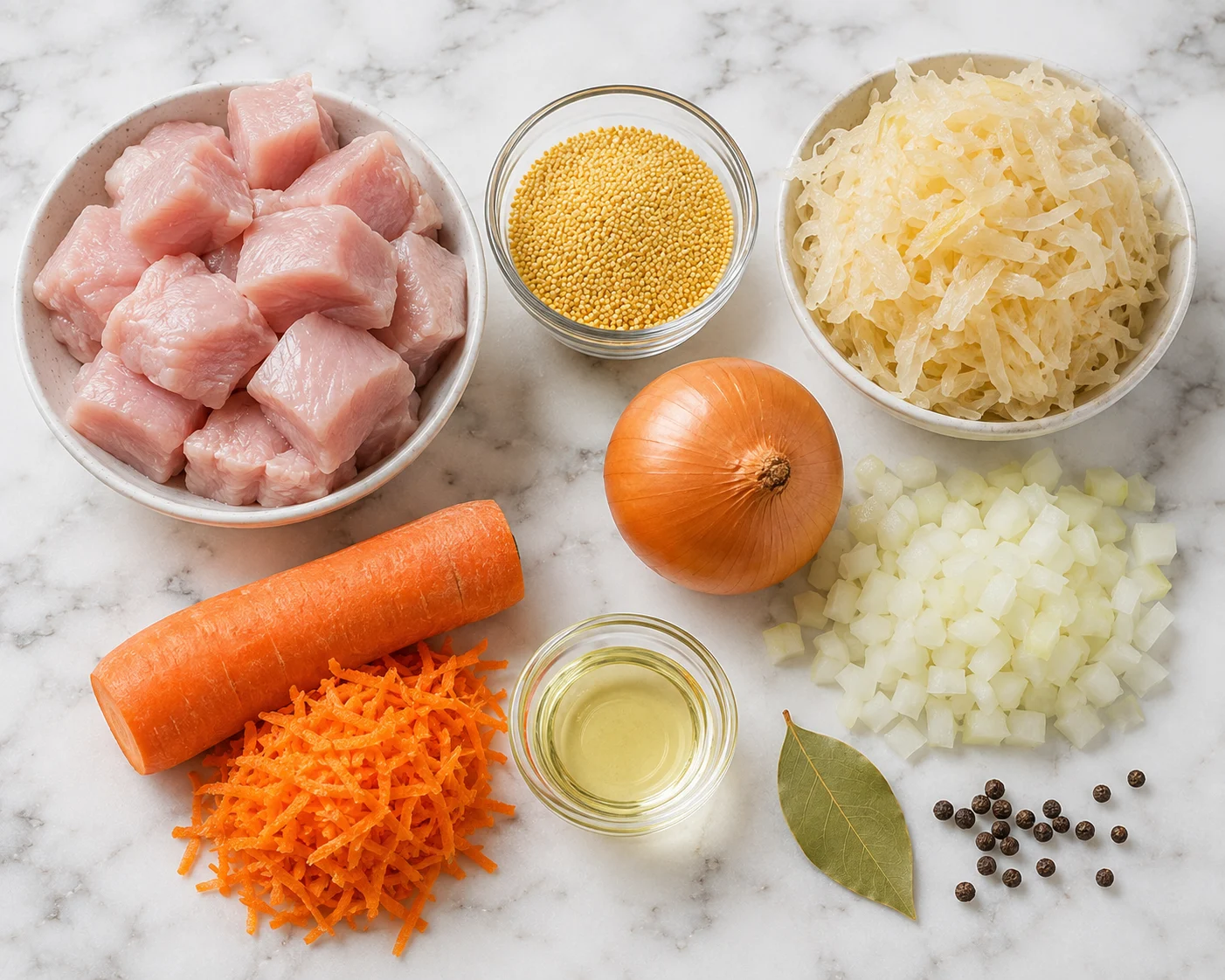
- 500 g (1.1 lb) skinless turkey breast, cut into bite-size cubes
- 2 liters (8 cups) low-sodium chicken broth or water
- 1 bay leaf
- 6 whole black peppercorns
- 1 tbsp (15 ml) vegetable oil
- 1 medium onion, finely diced
- 1 large carrot, grated
- 450 g (1 lb) potatoes, peeled and diced
- 60 g (⅓ cup) millet
- 500 g (about 3½ cups, drained) sauerkraut, juice reserved
- 2 garlic cloves, minced
- Freshly ground black pepper, to taste (no added salt)
- Fresh dill and parsley, chopped, for garnish
Method
- Cook the turkey. Combine the turkey, broth or water, bay leaf, and peppercorns in a large pot. Bring to a simmer and cook for 15–18 minutes, until the turkey is just cooked through.
- Set the turkey aside. Lift the turkey out with a slotted spoon and set it aside. Keep the broth at a low simmer.
- Rinse the millet. Wash the millet under running water until the water runs clear.
- Sauté the vegetables. Heat the oil in a skillet and cook the diced onion and grated carrot until softened, about 5 minutes.
- Cook the potatoes. Add the diced potatoes to the simmering broth and cook for 10 minutes.
- Combine. Stir the sautéed vegetables, millet, and sauerkraut into the pot. Simmer for 20–25 minutes, until the millet is tender and the potatoes are fully cooked.
- Season. Return the turkey to the pot and heat through. Taste and adjust the sourness with reserved sauerkraut juice, then add pepper to taste — no salt should be needed.
- Finish. Stir in the garlic during the last minute of cooking. Ladle into bowls and garnish with fresh dill and parsley.
Nutritional Comparison
| Per serving (1 of 6) | Traditional | This Version |
|---|---|---|
| Calories | 335–415 kcal | 225–280 kcal |
| Protein | 17–20 g | 22–26 g |
| Total fat | 19–23 g | 4–5 g |
| Carbohydrates | 26–32 g | 26–32 g |
| Dietary fiber | 5–6 g | 5–6 g |
| Sodium | 555–680 mg | 570–700 mg |
Nutritional values are estimates calculated from the specific ingredient quantities in each recipe, using standard reference values. They will vary depending on the sauerkraut brand and broth used.
The biggest shift is in fat: swapping turkey for pork ribs cuts total fat by close to 80% while protein goes up, not down. Sodium is the one number that does not improve — it stays essentially flat, and by the ranges above may even land a touch higher, since sauerkraut supplies the large majority of it in both versions and turkey breast is not meaningfully lower in sodium than pork.3 Carbohydrates and fiber stay the same in both versions since the potatoes, millet, and sauerkraut are unchanged.
Storage and Reheating
This version keeps for up to 4 days in the refrigerator in an airtight container, the same as the traditional recipe. Turkey breast is leaner than pork, so it can turn slightly dry if reheated at too high a heat.
Reheat gently on the stovetop over medium-low heat, stirring occasionally, until just hot throughout. The soup freezes well for up to 3 months, though freezing without the potatoes and adding freshly cooked ones at reheating time keeps the best texture.
Healthy Kapusniak

Ingredients
Ingredients
- 500 g (1.1 lb) skinless turkey breast, cut into bite-size cubes
- 2 liters (8 cups) low-sodium chicken broth or water
- 1 bay leaf
- 6 whole black peppercorns
- 1 tbsp (15 ml) vegetable oil
- 1 medium onion, finely diced
- 1 large carrot, grated
- 450 g (1 lb) potatoes, peeled and diced
- 60 g (⅓ cup) millet
- 500 g (about 3½ cups, drained) sauerkraut, juice reserved
- 2 garlic cloves, minced
- Freshly ground black pepper, to taste (no added salt)
- Fresh dill and parsley, chopped, for garnish
Instructions
- Cook the turkey. Combine the turkey, broth or water, bay leaf, and peppercorns in a large pot. Bring to a simmer and cook for 15–18 minutes, until the turkey is just cooked through.
- Set the turkey aside. Lift the turkey out with a slotted spoon and set it aside. Keep the broth at a low simmer.
- Rinse the millet. Wash the millet under running water until the water runs clear.
- Sauté the vegetables. Heat the oil in a skillet and cook the diced onion and grated carrot until softened, about 5 minutes.
- Cook the potatoes. Add the diced potatoes to the simmering broth and cook for 10 minutes.
- Combine. Stir the sautéed vegetables, millet, and sauerkraut into the pot. Simmer for 20–25 minutes, until the millet is tender and the potatoes are fully cooked.
- Season. Return the turkey to the pot and heat through. Taste and adjust the sourness with reserved sauerkraut juice, then add pepper to taste — no salt should be needed.
- Finish. Stir in the garlic during the last minute of cooking. Ladle into bowls and garnish with fresh dill and parsley.
Frequently Asked Questions
Why doesn’t the sodium go down at all if the pork was swapped for turkey?
Because sauerkraut, not the meat, supplies most of the sodium here, as explained above.3 Pork and turkey are not far apart in sodium content, so the protein swap was never going to move that number in any meaningful way.
Can the sauerkraut be rinsed to cut the sodium further?
Yes. A university food-safety extension service notes that rinsing fermented sauerkraut in cold water removes some of its salt, though it also reduces — without eliminating — the probiotic content, so it is a genuine trade-off rather than a free upgrade.3
Can chicken breast be used instead of turkey?
Yes, in the same quantity. Skinless chicken breast is nutritionally very similar to skinless turkey breast, lean and low in saturated fat, so the swap works without changing the method.
Is this version low-carb or keto-friendly?
No. The potatoes and millet both contribute meaningful carbohydrates, and neither is reduced in this version since they are not the ingredients driving the traditional recipe’s saturated fat or calorie count. Someone following a low-carb diet would need a different starting point than this recipe.
Can this be made vegetarian?
The Traditional Kapusniak article on this site covers a meatless, mushroom-based version that has its own long history in Ukrainian cooking, particularly during Lent. That version can be paired with this article’s no-added-salt approach if a lighter, meatless kapusniak is the goal.
Is this version suitable for someone managing blood pressure or heart health?
The much lower saturated fat is a genuine improvement for heart health,1 but the sodium remains elevated regardless of the swaps made here, largely because of the sauerkraut itself.2,3 Anyone managing high blood pressure or heart disease should factor that sodium content into their day and check with a doctor or registered dietitian about how this dish fits their diet.
Looking for the Full Story?
This article focuses on the swaps and the reasoning behind them, not on retelling kapusniak’s Cossack history and cultural background. For the full story and the traditional recipe this version is based on, see the Traditional Kapusniak article on this site.
Read the Traditional Kapusniak article
Further Reading & Sources
The following sources support the health claims behind each swap in this article. Heritage Healthy Kitchen’s recipe was developed independently; these links are provided for readers who want to explore further.
- “Saturated Fats.” American Heart Association. heart.org/en/healthy-living/healthy-eating/eat-smart/fats/saturated-fats — pork as a saturated fat source, and guidance to choose lean meats and skinless poultry.
- “How Much Sodium Should I Eat Per Day?” American Heart Association. heart.org/en/healthy-living/healthy-eating/eat-smart/sodium/how-much-sodium-should-i-eat-per-day — daily sodium targets of 2,300 mg, with an ideal goal near 1,500 mg.
- “Sauerkraut.” University of Alaska Fairbanks Cooperative Extension Service. uaf.edu/ces/publications/database/food/sauerkraut — sauerkraut’s inherent sodium content, and the sodium/probiotic trade-off of rinsing.
- “Sauerkraut.” Wikipedia. en.wikipedia.org/wiki/Sauerkraut — sauerkraut’s vitamin C and vitamin K content and low calorie density.
- “Fermented foods can add depth to your diet.” Harvard Health Publishing. health.harvard.edu/healthy-aging-and-longevity/fermented-foods-can-add-depth-to-your-diet — fermented foods, probiotics, and gut health.
- “Millet: Types, benefits, uses, and more.” Medical News Today, medically reviewed by Kim Chin, RD. medicalnewstoday.com/articles/what-is-millet — millet’s fiber, magnesium, and gluten-free profile.
Disclaimer
The information in this article is provided for educational and informational purposes only. Heritage Healthy Kitchen makes no representations or warranties regarding the accuracy or completeness of any content on this site. Nutritional values are estimates only and will vary depending on the specific ingredients, brands, and measurements used. This content is not intended as dietary, medical, or professional nutritional advice. Always consult a qualified healthcare provider regarding any dietary needs or health conditions. Heritage Healthy Kitchen is not responsible for any outcomes resulting from the use of recipes or information published on this site.
You Might Also Like
More heritage recipes from our kitchen

Leave a Reply