
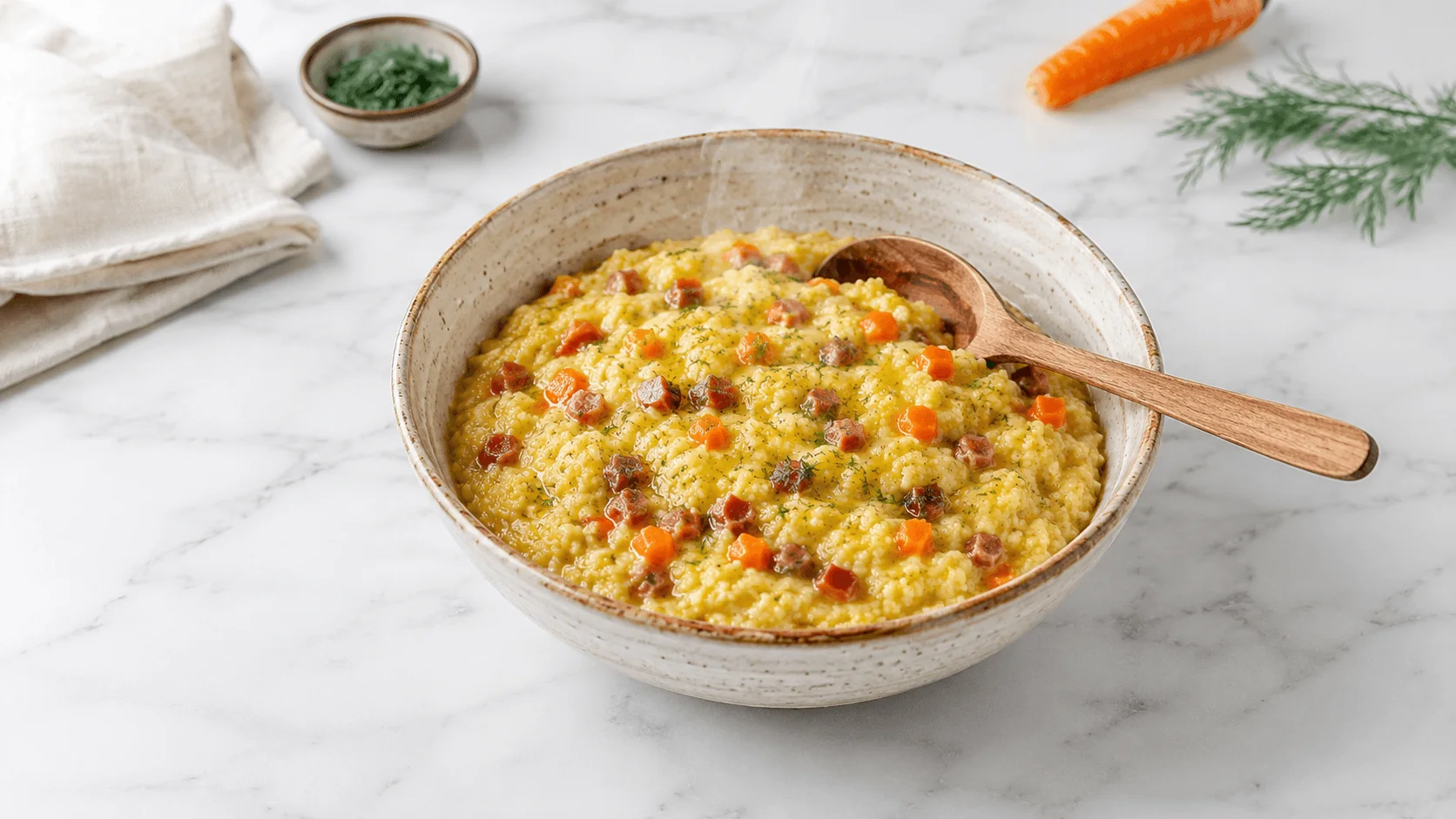
Active time: ~15 minutes | Total time: ~40 minutes | Serves: 4 | Difficulty: Easy
Quick Overview
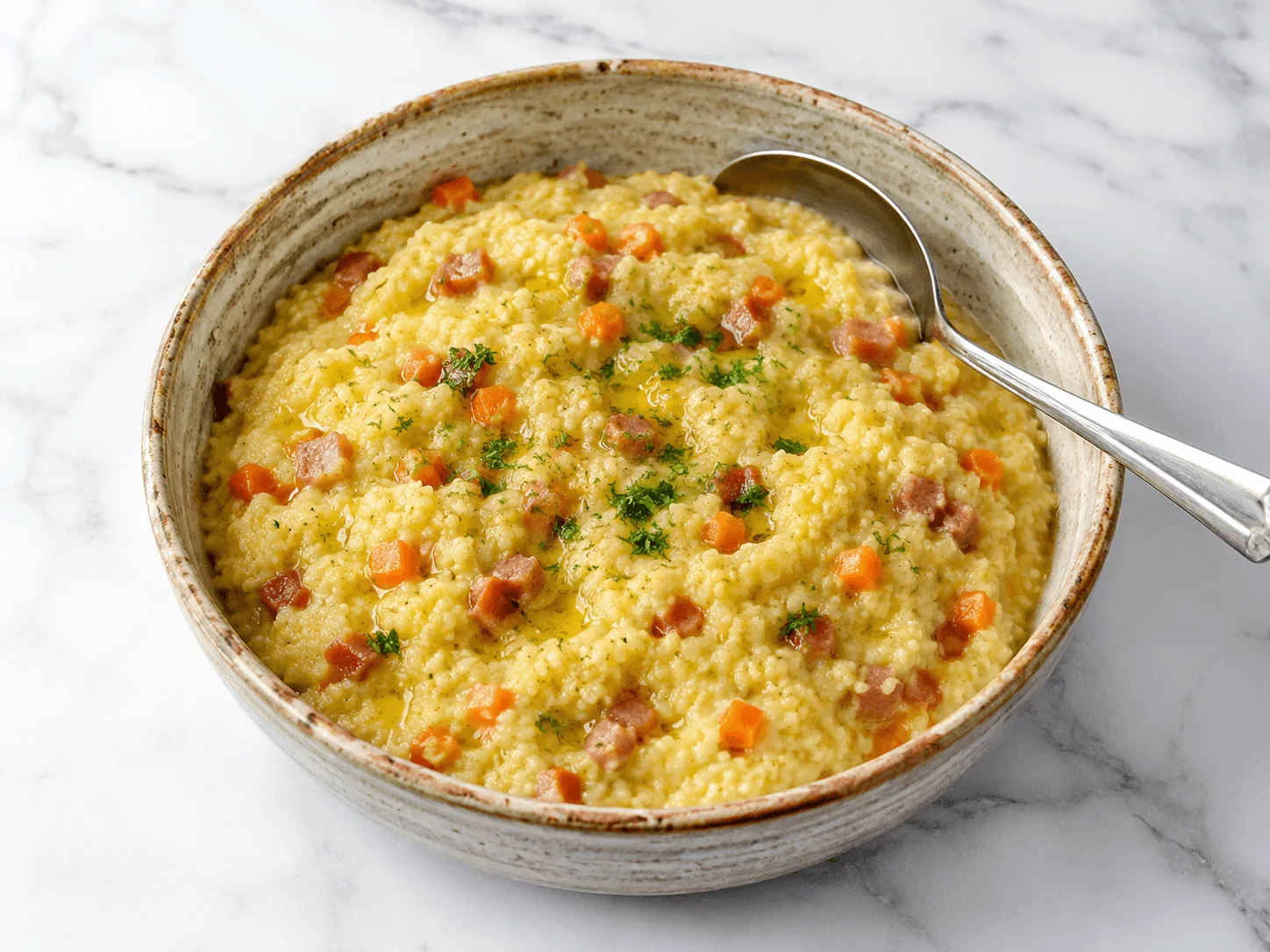
- Replace most of the rendered lard with olive oil, keeping a small amount of bacon for flavor rather than cutting it entirely
- Add diced carrot along with the onion, for color, fiber, and a bit of natural sweetness
- Use low-sodium broth and go lighter with added salt, since the bacon already contributes some on its own
- Leave the millet exactly as it is; it was already the healthiest ingredient in the pot
- Finish with plenty of fresh dill or parsley for both flavor and a bit of extra color on the plate
What This Version Changes — and What It Keeps
Traditional kulish gets its richness almost entirely from one place: rendered lard or bacon fat, used generously to coat the millet and carry the flavor of the whole pot. That’s not a flaw, it’s the reason the dish worked so well for men who needed a lot of calories fast, but a modern bowl built the same way carries more saturated fat and sodium than most people need in a single meal.
This version doesn’t touch the one ingredient that didn’t need fixing. Millet stays exactly as it was: same grain, same simmering method, same amount. What changes is the fat and what surrounds it. Olive oil takes over most of the job lard used to do, a small amount of bacon stays in for flavor rather than disappearing entirely, and diced carrot joins the onion to add fiber, color, and volume to the pot without changing what kulish fundamentally is.
Why These Swaps Work
Millet itself needed no adjustment, because it was already doing the healthy work in this dish. One cooked cup provides about 207 calories, 6 grams of protein, 2.2 grams of fiber, and roughly a fifth of the daily value for magnesium, along with a meaningful amount of phosphorus.1 It’s also naturally gluten-free, which makes traditional kulish a reasonable fit for a gluten-free diet as long as the broth used alongside it is gluten-free too.1 None of that changes based on how the millet is cooked, so there was nothing to swap here.
The fat is where the real difference lives. Lard and other rendered animal fats are classified as saturated fat, and a diet heavy in saturated fat is linked to higher cholesterol and greater heart disease risk.2 Olive oil, by contrast, is mostly monounsaturated fat, and substituting monounsaturated fat for saturated fat can help improve blood cholesterol levels and lower that risk.2 Harvard’s Healthy Eating Plate guidance points in the same direction: choose healthy plant oils like olive oil for cooking, and limit red meat while avoiding processed meats such as bacon.3 Keeping a small amount of bacon rather than removing it completely is a deliberate compromise, enough to carry the traditional smoky flavor into the pot without it being the main event.
To put the bacon reduction in concrete terms, a single medium strip contains about 43 calories, 3 grams of fat, and 162 milligrams of sodium.5 This version uses roughly a third of the bacon or salo called for in the traditional recipe, which is most of where the calorie, fat, and sodium reduction in the comparison table below comes from, without asking the dish to give up the smoky richness bacon provides entirely.
Adding carrot alongside the onion addresses something the traditional recipe never really had: vegetables. Harvard’s guidance is straightforward on this point, the more vegetables in a meal and the more variety among them, the better.3 Carrot brings fiber and a mild sweetness that plays well against the savory bacon and olive oil, and it turns what was originally a grain-and-fat dish into something with a bit more nutritional range without changing the dish’s basic character. Because carrot cooks down quickly alongside the onion, it doesn’t add any extra time to the recipe either, it simply rides along in the same pan.
Cutting back on added salt, and leaning on low-sodium broth rather than a heavily salted one, matters because the bacon is already doing some of that seasoning work on its own. The American Heart Association recommends no more than 2,300 milligrams of sodium a day, with an ideal target closer to 1,500 milligrams for most adults, and notes that most people underestimate how much sodium they’re actually eating.4 Since a rendered fat and salt-cured meat like bacon already carries sodium before any salt is added to the pot, using a low-sodium broth and tasting before reaching for the salt shaker keeps the dish from stacking salt on top of salt. Even a small pinch added at the start, rather than salting generously throughout, makes a meaningful difference by the time the pot is done.
Healthy Kulish Recipe
Recipe developed independently by Heritage Healthy Kitchen, drawing on traditional Cossack culinary methods. Sources for further reading are listed at the end of this article.
Ingredients
For the porridge (serves 4)
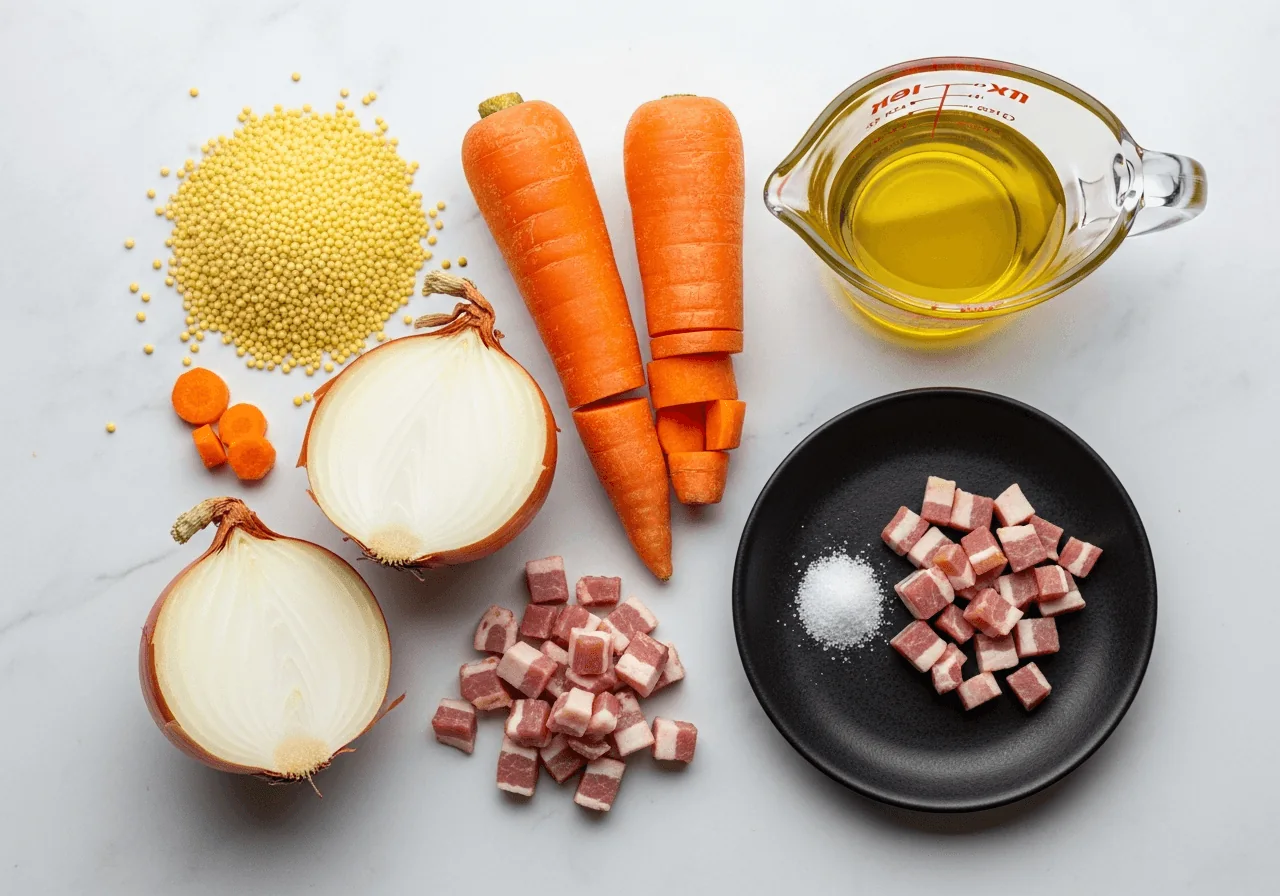
- 1 cup (about 200g) millet
- 2 tablespoons olive oil
- 1 oz (about 30g) bacon, diced (roughly a third of the traditional amount)
- 1 medium onion, finely chopped
- 1–2 medium carrots, diced
- 2½–3 cups low-sodium broth or water
- Salt, to taste, added sparingly
- Freshly ground black pepper
- 1 bay leaf (optional)
Optional additions
- 2 cloves garlic, minced
- Fresh dill or parsley, chopped, for serving
Instructions
Step 1: Rinse the millet
Rinse the millet under hot water several times, rubbing the grains gently between your hands, until the water runs clear rather than cloudy. This removes the bitterness that a poorly rinsed batch carries into the finished dish.
Step 2: Render a little bacon, then bring in the oil
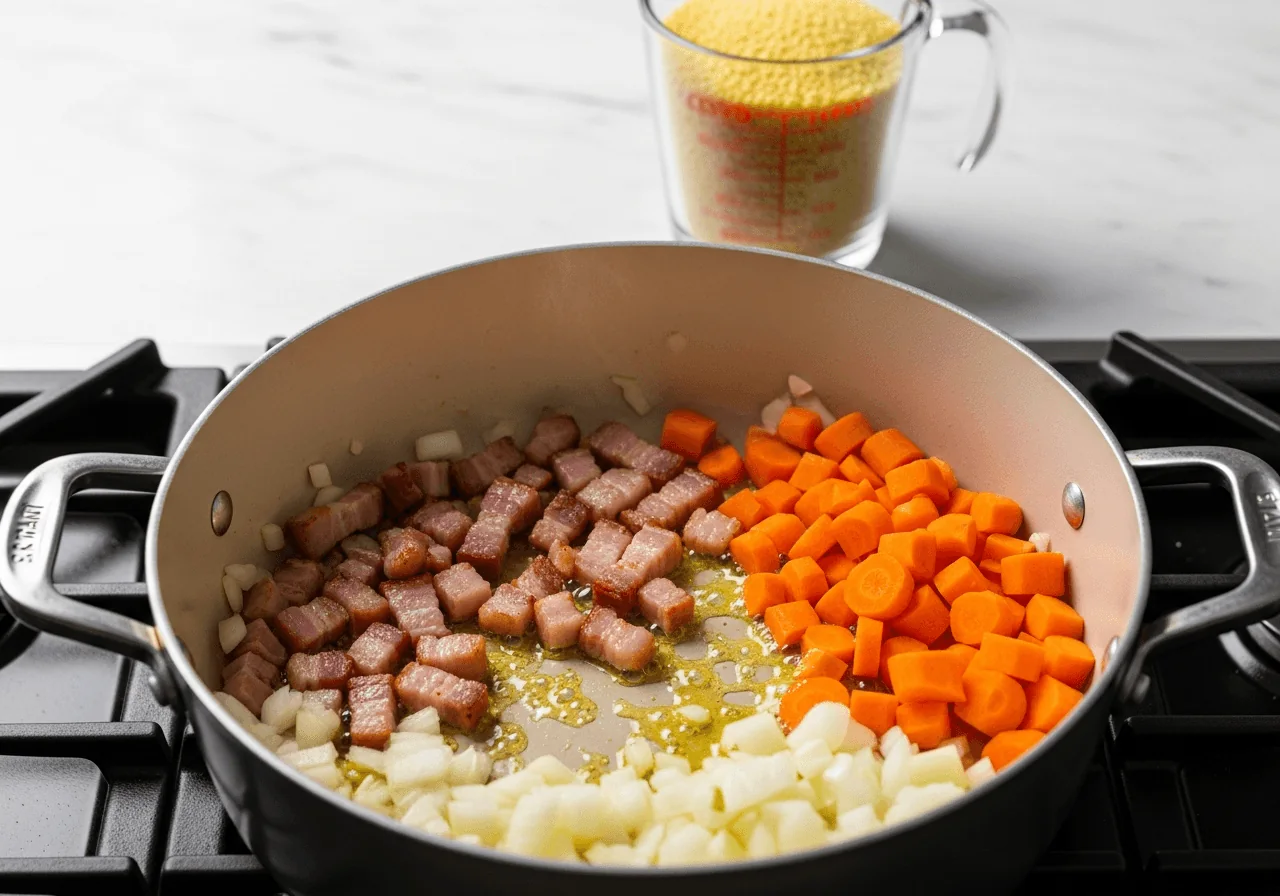
In a heavy pot, cook the diced bacon over medium heat for a minute or two, just until it releases some fat and turns lightly golden. Add the olive oil to the pot along with the rendered bacon fat; there’s no need to remove the bacon pieces first, since a little bit of texture from them is part of the appeal.
Step 3: Build the base
Add the chopped onion and diced carrot to the pot and cook until the onion turns soft and translucent and the carrot begins to soften, about 5 minutes, stirring occasionally so nothing sticks or browns too quickly. Stir in the garlic, if using, and cook for about 30 seconds, just until fragrant.
Step 4: Cook the millet
Stir the rinsed millet into the pot, coating it thoroughly in the oil and vegetables. Pour in the low-sodium broth or water, add a small pinch of salt, black pepper, and the bay leaf if using, and bring to a gentle simmer.
Step 5: Simmer to a porridge
Cook uncovered over low heat for 20–25 minutes, stirring every few minutes, until the millet is fully tender and the liquid has thickened into a glossy, spoonable porridge. Add a splash of hot water or broth if it thickens too quickly before the millet is done; the carrot should be soft enough to yield easily to a spoon by the time the millet is ready.
Step 6: Serve
Remove the bay leaf, taste, and add a little more salt only if needed. Serve hot, topped generously with fresh dill or parsley.
Nutritional Comparison
| Nutrient (per serving) | Traditional | This version |
|---|---|---|
| Calories | ~320–380 kcal | ~250–290 kcal |
| Protein | ~7–9g | ~8–10g |
| Total fat | ~15–20g | ~9–12g |
| Carbohydrates | ~38–42g | ~40–44g |
| Dietary fiber | ~2–3g | ~4–5g |
| Sodium | ~350–500mg | ~150–220mg |
Nutritional values are estimates based on standard ingredient databases. They will vary depending on the broth used, the exact amount of bacon and olive oil, the size of the carrots, and how much salt is added.
Storage and Reheating
Store the porridge in an airtight container in the refrigerator for up to 3 days, the same guidance that applies to the traditional version. Because millet keeps absorbing liquid as it sits, expect it to thicken noticeably by the second day.
To reheat, warm it gently in a saucepan with a splash of broth or water, stirring often until it loosens back to a spoonable consistency. This version also freezes reasonably well for up to a month, though the carrot softens further on thawing.
Healthy Kulish

Ingredients
For the porridge (serves 4)
- 1 cup (about 200g) millet
- 2 tablespoons olive oil
- 1 oz (about 30g) bacon, diced (roughly a third of the traditional amount)
- 1 medium onion, finely chopped
- 1–2 medium carrots, diced
- 2½–3 cups low-sodium broth or water
- Salt, to taste, added sparingly
- Freshly ground black pepper
- 1 bay leaf (optional)
Instructions
- Replace most of the rendered lard with olive oil, keeping a small amount of bacon for flavor rather than cutting it entirely
- Add diced carrot along with the onion, for color, fiber, and a bit of natural sweetness
- Use low-sodium broth and go lighter with added salt, since the bacon already contributes some on its own
- Leave the millet exactly as it is; it was already the healthiest ingredient in the pot
- Finish with plenty of fresh dill or parsley for both flavor and a bit of extra color on the plate
Frequently Asked Questions
Can I leave out the bacon entirely?
Yes. Use olive oil alone for the base, and add a pinch of smoked paprika if you want to keep some of the smoky character the bacon would otherwise provide. The dish will be a little leaner but still recognizably kulish.
Why not just use less olive oil too, if less fat is better?
Fat quality matters more than simply minimizing fat. Harvard’s guidance specifically encourages healthy plant oils in moderation rather than a maximum limit on fat itself, and low-fat doesn’t automatically mean healthier.3 The goal here is shifting the balance from saturated to unsaturated fat, not stripping the dish of fat altogether.
Does adding carrot change the flavor much?
It adds a mild sweetness that balances the savory bacon and olive oil without competing with them. Most people notice the added color before they notice any change in taste.
Is this version still gluten-free?
Yes, as long as the broth used is gluten-free. Millet itself is naturally gluten-free, and none of the other swaps in this recipe introduce gluten.1
Can I use a different vegetable instead of carrot?
Yes. Diced celery or bell pepper works well in the same step, added alongside the onion. The goal is simply to add some vegetable volume and variety to a dish that traditionally had none, so the exact choice matters less than including something.
What broth works best if I can’t find a low-sodium option?
A homemade broth gives the most control, since you can leave it unsalted entirely and season the finished dish to taste instead. If using a regular store-bought broth, skip the added salt in the recipe and taste before adding any at the end.
Can I make this vegetarian?
Yes. Skip the bacon, use olive oil alone, and consider adding a few sliced mushrooms along with the carrot for extra savoriness and volume.
Is this a good option for someone managing their blood pressure?
Individual sodium needs vary, particularly for anyone with high blood pressure, so it’s worth checking specific targets with a doctor or registered dietitian rather than relying on any single recipe.4 If sodium is a specific concern, swapping the broth for a homemade, unsalted version and skipping the bacon entirely would lower it further still.
The Traditional Version
If you want the full version with rendered lard, the Cossack history behind the dish, and the story of how it got its name, our Traditional Kulish article covers all of that in detail.
Further Reading & Sources
The following sources were consulted for the nutritional information and health context in this article. Heritage Healthy Kitchen’s recipe was developed independently; these links are provided for readers who want to explore further.
- “What Is Millet? Nutrition, Benefits, and More.” Healthline. healthline.com/nutrition/what-is-millet — millet’s calorie, protein, fiber, and mineral content per cooked cup, and its status as a gluten-free grain.
- “Fast Facts on Fats & Heart Health.” Mayo Clinic Health System. mayoclinichealthsystem.org — Fast Facts on Fats & Heart Health — classification of lard as a saturated fat and olive oil as a monounsaturated fat, and the cholesterol benefit of substituting one for the other.
- “Healthy Eating Plate.” The Nutrition Source, Harvard T.H. Chan School of Public Health. nutritionsource.hsph.harvard.edu/healthy-eating-plate — guidance to choose healthy plant oils, limit red meat, avoid processed meats such as bacon, and maximize vegetable variety.
- “How Much Sodium Should I Eat Per Day?” American Heart Association. heart.org — How Much Sodium Should I Eat Per Day — recommended daily sodium limits and how easily sodium intake is underestimated.
- “Bacon: Health Benefits, Nutrients, Preparation, and More.” WebMD, medically reviewed by Zilpah Sheikh, MD. webmd.com — Health Benefits of Bacon — calorie, fat, and sodium content per standard serving of bacon.
Disclaimer
The information in this article is provided for educational and informational purposes only. Heritage Healthy Kitchen makes no representations or warranties regarding the accuracy or completeness of any content on this site. Nutritional values are estimates only and will vary depending on the specific ingredients, brands, and measurements used. This content is not intended as dietary, medical, or professional nutritional advice. Always consult a qualified healthcare provider regarding any dietary needs or health conditions. Heritage Healthy Kitchen is not responsible for any outcomes resulting from the use of recipes or information published on this site.
You Might Also Like
More heritage recipes from our kitchen

Leave a Reply