

Active time: ~30 minutes | Total time: ~40 minutes | Serves: 4–5 (about 16–18 pancakes) | Difficulty: Easy
Quick Overview

- Air-fry or oven-bake instead of pan-frying in a pool of oil — same crisp edge, a fraction of the fat
- Swap part of the matzo meal for whole wheat flour, and replace about a third of the potato with grated zucchini for more fiber
- Top with Greek yogurt instead of sour cream — more protein, much less saturated fat
- Cut the added salt and let a squeeze of lemon do some of the flavor work instead
- A cauliflower-based, lower-carb variation is included for anyone watching carbs closely
What This Version Changes — and What It Keeps
Traditional latkes get most of their calories from one place: the oil. A generous pan-fry is what gives them that dark, lacy edge, and the oil absorbed during frying is where the bulk of the fat and calories come from. Fresh potatoes themselves are virtually fat-free.1 The frying method is the lever worth pulling here, not the potato.
The changes are targeted rather than total. Pan-frying becomes air-frying or oven-baking, which uses a small fraction of the oil. Part of the potato becomes grated zucchini, adding fiber and vitamin C without changing the basic technique. Part of the matzo meal becomes whole wheat flour. Sour cream becomes Greek yogurt. The grating, the onion, the egg, the basic ratios — all of that stays the same. This is still latkes; it’s just built a little differently. The same approach — keep the technique, lighten the inputs — shapes our Healthy Noodle Kugel too.
Why These Swaps Work
Air-frying or baking instead of pan-frying is the single biggest change here, and it’s backed by more than habit. Cleveland Clinic registered dietitian Julia Zumpano points out that an air fryer gets by on roughly a tablespoon of oil, and that switching to one from deep frying can trim as much as 80% of the calories the food would otherwise soak up.2 Traditional latkes are pan-fried rather than deep-fried, which already uses less oil, so the realistic reduction here falls short of that 80% figure — but a “generous layer” of oil in a skillet is still far more than the light mist an air fryer or oven needs.
Replacing part of the potato with grated zucchini adds nutrients that potato alone doesn’t carry in the same amounts. One medium zucchini has about 33 calories, 2 grams of fiber, and 35 milligrams of vitamin C — nearly 40% of a day’s recommended intake — most of it concentrated in the skin, so there’s no reason to peel it.3 Cleveland Clinic dietitian Lara Whitson points out that zucchini’s fiber also feeds the gut microbiome, while its vitamin C supports immune function.3 Folding it into the batter doesn’t change the cooking method or shape of the pancake; it just lightens the load potato alone would otherwise carry.
Whole wheat flour matters more than its small quantity in the recipe might suggest. Standard matzo meal, like all-purpose white flour, is made from plain wheat flour rather than the whole-grain version — whole wheat matzo exists, but it’s the specialty option, not the default. That distinction matters because refining wheat down to its soft, fast-cooking endosperm strips out more than half its B vitamins, roughly 90% of its vitamin E, and nearly all of its fiber.4 That fiber isn’t just a number on a label — bran slows the breakdown of starch into glucose, producing a steadier blood sugar response instead of a sharp spike.4 In a dish built largely around starch, that’s a meaningful place to intervene, even with just a few tablespoons of flour.
Swapping sour cream for Greek yogurt is one of the more dramatic changes on a per-spoonful basis. Full-fat Greek yogurt contains about 97 calories, 5 grams of fat, and 9 grams of protein per 100 grams; the same amount of full-fat sour cream contains about 198 calories, 19 grams of fat, and 6 grams of protein.5 Cleveland Clinic dietitian Julia Zumpano specifically recommends swapping in Greek yogurt for sour cream in dips and toppings, noting it carries roughly twice the protein of regular yogurt.6
Cutting back on added salt addresses a different problem than fat or carbohydrate. The American Heart Association sets 2,300 milligrams a day as the upper bound for most adults, with 1,500 as the more protective target, and points out that the salt shaker is a minor contributor next to the sodium baked into packaged and restaurant food — over 70% of what people actually eat comes from those sources.7 A homemade dish like latkes already starts from a lower baseline than packaged food, and trimming the added salt by even a quarter teaspoon, then leaning on black pepper, lemon, or fresh herbs instead, keeps that advantage intact.
Healthy Latkes Recipe
Recipe developed independently by Heritage Healthy Kitchen, drawing on traditional Ashkenazi Jewish culinary methods. Sources for further reading are listed at the end of this article.
Ingredients
For the batter (serves 4–5, about 16–18 pancakes)
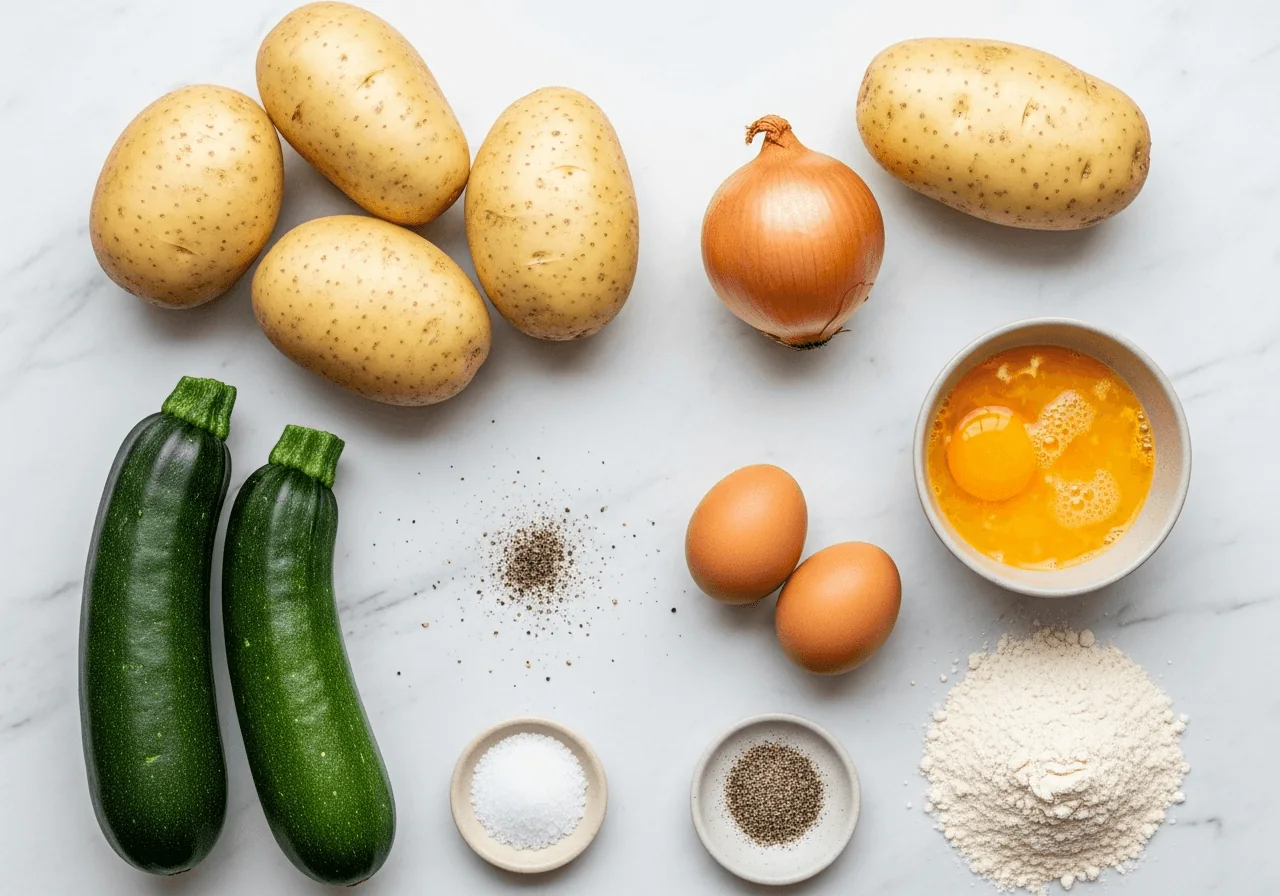
- 1.2 kg (about 2.6 lb) starchy potatoes (russet or similar), peeled
- 2 medium zucchini (about 500g), unpeeled
- 1 medium onion, peeled
- 2 large eggs, beaten
- 2 tablespoons whole wheat flour (or 1 tablespoon whole wheat flour plus 1 tablespoon matzo meal)
- ¾ teaspoon salt, plus more to taste
- ½ teaspoon freshly ground black pepper
- Olive oil spray, or 1 tablespoon olive oil, for the basket or baking sheet
For serving
- Plain Greek yogurt
- Unsweetened applesauce
Instructions
Step 1: Grate the potatoes, zucchini, and onion
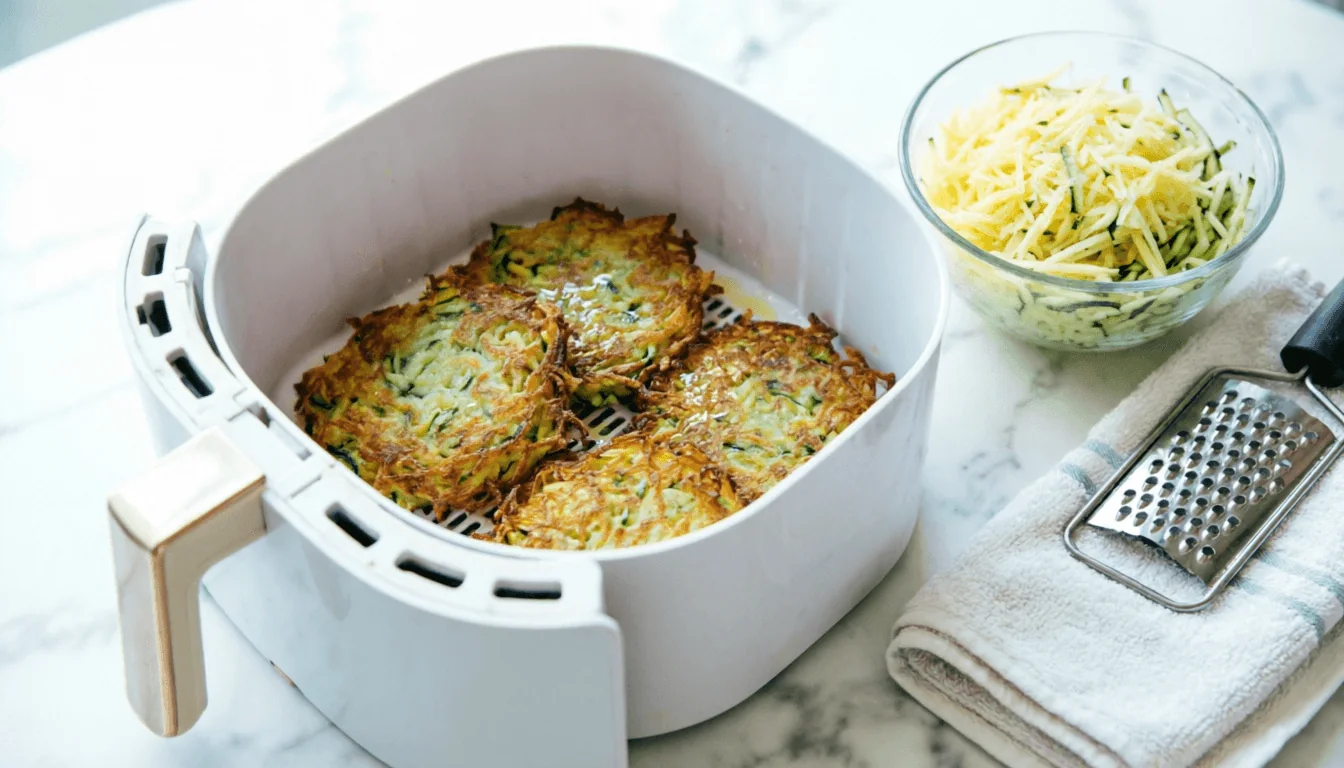
Grate the potatoes, zucchini, and onion using the small or medium holes of a box grater or a food processor’s grating attachment, alternating between them as you go.
Step 2: Squeeze out the liquid
Zucchini releases more water than potato, so this step matters more than usual here. Transfer the grated mixture to a clean kitchen towel or a double layer of cheesecloth, gather the corners, and twist firmly over a bowl until no more liquid comes out.
Step 3: Mix the batter
Add the eggs, whole wheat flour, salt, and pepper to the squeezed mixture and stir until evenly combined. Whole wheat flour absorbs slightly more moisture than matzo meal, so if the batter looks too thick after a minute of resting, loosen it with a teaspoon of water.
Step 4a: Air-fry
Preheat the air fryer to 400°F (200°C). Lightly mist the basket with olive oil spray. Working in batches, drop heaping tablespoons of batter into the basket, leaving space between each, and flatten gently to about 1cm thick. Mist the tops lightly with oil. Air-fry for 10–12 minutes, flipping halfway, until deep golden and crisp at the edges.
Step 4b: Oven-bake (if you don’t have an air fryer)
Preheat the oven to 425°F (220°C). Line a baking sheet with parchment and brush lightly with olive oil. Spoon the batter onto the sheet in mounds, flatten to about 1cm thick, and brush the tops lightly with oil. Bake for 12–15 minutes, flip, then bake another 10–12 minutes until golden and crisp at the edges.
Step 5: Serve
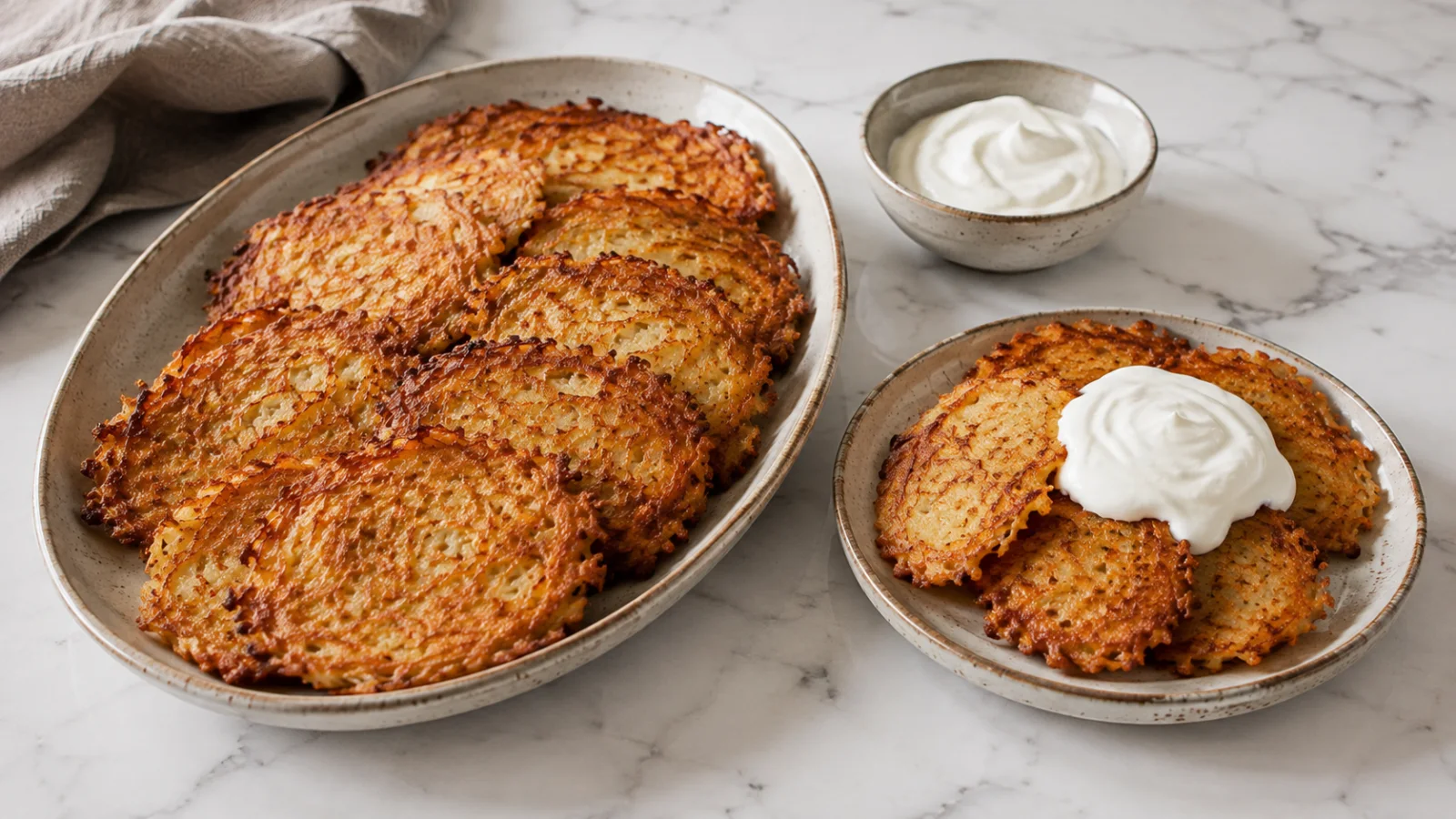
Serve hot, topped with a spoonful of Greek yogurt, unsweetened applesauce, or both.
Keto and Low-Carb Variation
Potato is the main source of carbohydrate in this dish, so a stricter low-carb version means leaning further into vegetables and pulling back on potato altogether. Riced cauliflower is the standard swap: a half-cup serving of riced cauliflower runs about 13 calories, a small fraction of what the same volume of potato would contribute.8 To make the swap, pulse a head of cauliflower in a food processor until it resembles coarse rice, then follow the same draining and mixing steps as the main recipe, replacing some or all of the potato with riced cauliflower and zucchini depending on how strict the carb count needs to be.
The texture shifts somewhat — cauliflower holds less starch than potato, so the pancakes are more delicate and benefit from an extra egg or an additional tablespoon of flour to help them hold together. The flavor is milder too, which is why a generous amount of black pepper, garlic, or fresh dill in the batter helps the cauliflower version taste like more than just “vegetables, fried.”
Keto and other low-carb diets aren’t appropriate for everyone, and individual carbohydrate needs vary with health conditions, medications, and activity level. Anyone considering a significant low-carb shift, especially with diabetes or another condition affected by blood sugar, should talk it through with a doctor or registered dietitian before making the change.
Kitchen Tips
Don’t skip the oil entirely. A light mist or brush still matters for browning and crisping; a completely dry pancake tends to steam rather than crisp, regardless of the cooking method.
Preheat properly, and don’t crowd the basket or sheet. Both need to be fully up to temperature before the batter goes in, and air needs room to circulate around each pancake — crowding causes steaming instead of crisping at the points where pancakes touch.
Squeeze the zucchini and potato together rather than in separate batches. It’s faster, and the starch from the potato helps bind some of the extra moisture zucchini releases.
For a gluten-free version, swap the whole wheat flour for a 1:1 gluten-free flour blend or two tablespoons of cornstarch — both bind the batter without the fiber boost, so if gluten isn’t a concern, whole wheat remains the better choice.
Greek yogurt can split slightly if it sits directly on a very hot pancake for too long. Adding it just before serving keeps it smooth.
Nutritional Comparison
Per serving — approximately 3–4 pancakes with 2 tablespoons of topping (one of 4–5 servings)

| Nutrient | Traditional latkes | This version |
|---|---|---|
| Calories | ~230–270 kcal | ~140–170 kcal |
| Protein | ~6g | ~7–8g |
| Total fat | ~11–13g | ~3–4g |
| Saturated fat | ~1.5g | ~0.8g |
| Carbohydrates | ~28–32g | ~20–24g |
| Dietary fiber | ~3g | ~5–6g |
| Sodium | ~350–450mg | ~200–260mg |
Nutritional values are estimates based on standard ingredient databases. They will vary depending on specific ingredients, brands, oil absorption, and portion size.
Storage and Reheating
Keeps in the refrigerator in an airtight container for up to 3 days, same as the traditional version. Reheat in the air fryer or oven at 375°F (190°C) until warmed through and crisp again; a microwave will work in a pinch but leaves the edges soft.
Freezes well for up to 3 months. Layer cooled pancakes between sheets of parchment before freezing, and reheat directly from frozen in the air fryer or oven, no need to thaw first.
Healthy Latkes

Ingredients
For the batter (serves 4–5, about 16–18 pancakes)
- 1.2 kg (about 2.6 lb) starchy potatoes (russet or similar), peeled
- 2 medium zucchini (about 500g), unpeeled
- 1 medium onion, peeled
- 2 large eggs, beaten
- 2 tablespoons whole wheat flour (or 1 tablespoon whole wheat flour plus 1 tablespoon matzo meal)
- ¾ teaspoon salt, plus more to taste
- ½ teaspoon freshly ground black pepper
- Olive oil spray, or 1 tablespoon olive oil, for the basket or baking sheet
For serving
- Plain Greek yogurt
- Unsweetened applesauce
Instructions
- Grate the potatoes, zucchini, and onion, alternating between them as you go
- Squeeze out as much liquid as possible — zucchini releases more water than potato, so this step matters more than usual here
- Mix in the eggs, whole wheat flour, salt, and pepper until evenly combined
- Air-fry at 400°F for 10–12 minutes, flipping halfway, or oven-bake at 425°F, until deep golden and crisp at the edges
- Serve hot, topped with Greek yogurt, applesauce, or both
Frequently Asked Questions
Does air-frying really cut that much fat compared to pan-frying?
The mechanism is real: most of the added fat in fried food comes from oil the food absorbs while cooking, not from anything intrinsic to the ingredients. The “up to 80%” figure is specifically for switching from deep frying to air-frying.2 Pan-frying, which is what traditional latkes use, already involves less oil than deep frying, so the realistic reduction from this particular swap is smaller than 80% — but a “generous layer” of oil in a pan is still considerably more than a light mist, so the reduction is real and worth having.
Can I bake these in a regular oven if I don’t have an air fryer?
Yes — the oven method in this recipe gets most of the same benefit. The air fryer cooks slightly faster because of the forced air circulation, but a hot oven (425°F/220°C) with a properly oiled, parchment-lined sheet produces a similar crisp edge, just with a few extra minutes of cooking time.
Won’t the zucchini make the batter too watery?
It will if the squeezing step is rushed. Zucchini releases more liquid than potato as it sits, which is exactly why this recipe treats the squeezing stage as non-negotiable rather than optional. Squeeze the potato and zucchini together, twisting harder than feels necessary, and the batter holds together the same way the traditional version does.
Is Greek yogurt actually a good substitute for sour cream here, taste-wise?
It’s tangy and creamy in a similar way, though slightly less rich. Full-fat plain Greek yogurt is the closest match; nonfat versions are noticeably thinner and less satisfying on a hot pancake. If you want a middle ground, mixing equal parts Greek yogurt and sour cream cuts the saturated fat substantially while keeping more of the original richness.
Can the cauliflower version be made ahead of time?
Less successfully than you might hope. Riced cauliflower releases water as it sits, so the batter gets watery faster than even the zucchini version. It’s best mixed and cooked within 15–20 minutes of ricing the cauliflower.
Is this version appropriate for someone managing blood sugar or diabetes?
The changes here — baking instead of frying, more fiber from whole wheat flour and zucchini — generally move a starchy dish like this in a more favorable direction for blood sugar response.1,4 That said, latkes remain a potato-based dish, and individual needs around carbohydrate intake vary significantly with health status and medication. Anyone managing diabetes or prediabetes should check portion sizes and overall fit with a doctor or registered dietitian rather than relying on a single recipe swap.
Can I make this vegan?
The egg is the harder substitution here, since it helps bind the batter; a flax egg (1 tablespoon ground flaxseed plus 3 tablespoons water, rested for 5 minutes) works reasonably well as a replacement. For the topping, a plain unsweetened plant-based yogurt with a protein content similar to dairy Greek yogurt — several soy-based versions qualify — gives the closest result.
The Traditional Version
If you want the full version with pan-frying in plenty of oil, matzo meal, and classic sour cream and applesauce, our Traditional Latkes article covers that in detail, including the dish’s Hanukkah history and cultural background.
Further Reading & Sources
The following sources were consulted for the nutritional information and health context in this article. Heritage Healthy Kitchen’s recipe was developed independently; these links are provided for readers who want to explore further.
- “Are Potatoes Healthy?” The Nutrition Source, Harvard T.H. Chan School of Public Health. nutritionsource.hsph.harvard.edu/potatoes — potato’s fat content and resistant starch differences between cooking methods.
- “Are Air Fryers Healthy?” Cleveland Clinic Health Essentials. health.clevelandclinic.org — registered dietitian commentary on calorie and fat reduction from air-frying versus deep frying.
- “Is Zucchini Good for You?” Cleveland Clinic Health Essentials. health.clevelandclinic.org — registered dietitian commentary on zucchini’s calorie, fiber, and vitamin C content.
- “Whole Grains.” The Nutrition Source, Harvard T.H. Chan School of Public Health. nutritionsource.hsph.harvard.edu — nutrient loss in refined flour and the blood-sugar-stabilizing role of fiber.
- “The 7 Best Substitutes for Sour Cream.” Healthline. healthline.com — calorie, fat, and protein comparison between full-fat Greek yogurt and full-fat sour cream.
- “Is Yogurt Good for You?” Cleveland Clinic Health Essentials. health.clevelandclinic.org — registered dietitian guidance on Greek yogurt’s protein content and use as a sour cream substitute.
- “How Much Sodium Should I Eat Per Day?” American Heart Association. heart.org — recommended daily sodium limits and the share of sodium coming from packaged versus home-cooked food.
- “11 Healthy Rice Substitutes.” Healthline. healthline.com — calorie content of riced cauliflower as a low-carb substitute.
Disclaimer
The information in this article is provided for educational and informational purposes only. Heritage Healthy Kitchen makes no representations or warranties regarding the accuracy or completeness of any content on this site. Nutritional values are estimates only and will vary depending on the specific ingredients, brands, and measurements used. This content is not intended as dietary, medical, or professional nutritional advice. Always consult a qualified healthcare provider regarding any dietary needs or health conditions, particularly before making significant changes such as adopting a ketogenic or other low-carbohydrate diet. Heritage Healthy Kitchen is not responsible for any outcomes resulting from the use of recipes or information published on this site.
Cook by Occasion
This recipe is part of our Hanukkah menu.
You Might Also Like
More heritage recipes from our kitchen



Leave a Reply