

Active time: ~30 minutes | Total time: ~3.5–4 hours | Serves: 6 | Difficulty: Moderate
Quick Overview
- Use skinless chicken thighs and breasts instead of a whole bird with the skin on — the same long simmer, far less saturated fat
- Double the root vegetables and keep a portion of them in the bowl instead of discarding all of them — more fiber, more of the soup actually eaten
- Swap regular egg noodles for whole wheat egg noodles — same texture, meaningfully more fiber
- Cut the added salt back further and chill the broth fully to lift off every trace of fat before serving
- The clarity, the charred onion, the long slow simmer — all of that stays exactly the same
What This Version Changes — and What It Keeps
Traditional rosół already sits on the lighter end of Polish cooking. It’s a clear broth, not a cream soup, and the classic method already calls for skimming fat off the top. The places left to improve are narrower than in a fried dish, but they’re real: the fat that renders out of chicken skin during a multi-hour simmer, the amount of salt added by habit rather than necessity, and how much of the vegetable content actually ends up in the bowl rather than in the compost.
The changes here are targeted, not a rewrite. Skin-on chicken becomes skinless thighs and breasts. The root vegetables double in quantity, and some of them get chopped and returned to the bowl instead of being discarded after straining.
Regular egg noodles become whole wheat egg noodles. Added salt drops by roughly half, and the degreasing step — optional in the traditional recipe — becomes a firm step here.
The charred onion, the cold start, the multi-hour simmer, the herbs, the clarity: none of that changes. This is still rosół.
Why These Swaps Work
Skinless chicken is the biggest lever in this recipe, and it’s a straightforward one. Cleveland Clinic registered dietitian Julia Zumpano lists chicken breast among her preferred protein sources, but adds a specific caveat: skin and visible fat add extra calories as saturated fat, which can raise cholesterol.1 In a soup that simmers for hours, any fat in the pot renders into the liquid itself, so starting with skinless meat and trimming visible fat changes what ends up in the broth, not just what gets skimmed off afterward.
Doubling the vegetables and keeping some of them in the bowl follows advice that applies to any broth-based soup. Harvard-affiliated nutritionist Debbie Krivitsky recommends building a nutritious soup around a low-sodium broth base, plenty of vegetables in a range of colors, and a protein such as chicken, rather than relying on the broth alone for nutrition.2 “It’s an opportunity to eat the rainbow,” she notes, pointing to the value of varying vegetable colors within a single pot.2
Traditional rosół strains out and discards its cooked carrots, parsnip, celeriac, and leek once they’ve given up their flavor. Chopping some of them and returning them to the bowl keeps the fiber and vitamins that would otherwise go in the compost bin, without changing the broth’s clarity or asking the cook to add a single new ingredient.
Whole wheat egg noodles are a small swap with a real payoff. Standard egg noodles are made from refined wheat flour, and a registered dietitian writing for Healthline explains that refined pasta is higher in calories and lower in fiber than the whole-grain kind, which keeps more of the wheat kernel’s bran and germ intact.3 That extra fiber slows digestion and adds bulk without changing how the noodles cook or how they taste in a bowl of hot broth.
Cutting back on added salt addresses a different part of the dish. Krivitsky specifically recommends looking for a broth in the range of 140 to 200 milligrams of sodium per serving as the base for a nutritious soup.2 The American Heart Association sets 2,300 milligrams a day as the upper limit for most adults, with 1,500 as the more protective target, and notes that home-cooked food already starts from a lower baseline than packaged soup, since more than 70% of the sodium most people eat comes from processed and restaurant food rather than the salt shaker.4 A homemade rosół with half the usual added salt, leaning on lovage, allspice, and black pepper instead, keeps that advantage intact.
Making the degreasing step mandatory rather than optional closes the loop on the fat reduction from skinless chicken. Chilling the strained broth overnight lets any remaining fat solidify into a layer that lifts off cleanly, leaving a broth that’s just as golden and clear, with less of the saturated fat that would otherwise stay suspended in the liquid.
Taken together, these changes work on different parts of the same bowl rather than duplicating each other’s effort. The chicken and degreasing steps address fat, the vegetables and whole wheat noodles address fiber, and the reduced salt addresses sodium — three separate levers rather than one change stretched to do everything.
None of this comes at the cost of the nutrients chicken is valued for in the first place. The same Cleveland Clinic guidance notes that chicken breast “provides protein, niacin, selenium, phosphorus and vitamins B6 and B12” regardless of whether the skin is left on.1 Those nutrients live in the meat itself, not in the skin, so removing the skin trims fat without trimming the reasons rosół is built around chicken to begin with.
Healthy Rosół Recipe
Recipe developed independently by Heritage Healthy Kitchen, drawing on traditional Polish culinary methods. Sources for further reading are listed at the end of this article.
Ingredients
For the broth (serves 6)
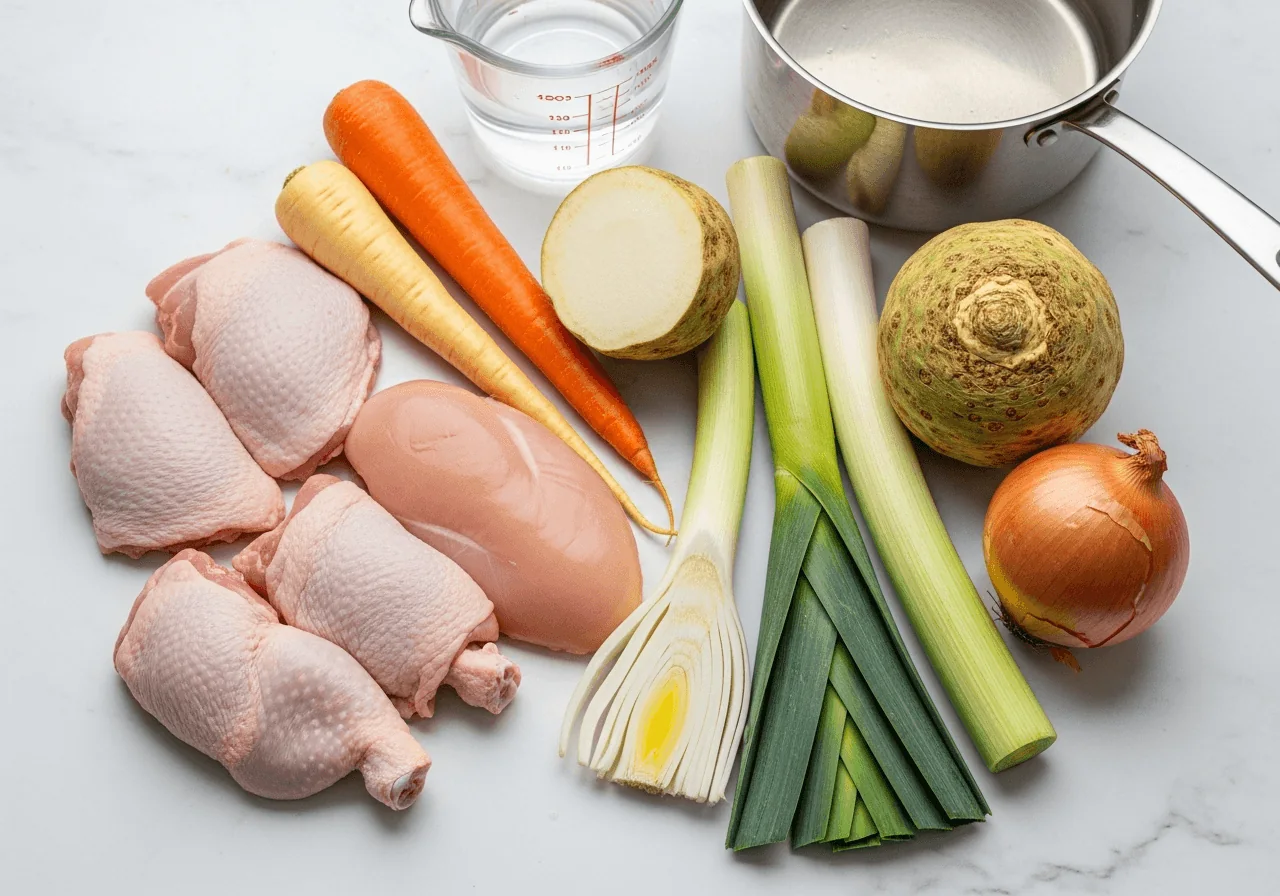
- 1.5 kg (about 3.3 lb) skinless chicken thighs and breasts, bone-in, visible fat trimmed (a mix of both keeps the broth from tasting thin)
- 3.5 liters (about 15 cups) cold water
- 5 medium carrots, peeled
- 2 parsnips (or parsley roots), peeled
- 1 small celeriac (celery root), peeled and halved
- 2 leeks, white and light green parts, halved lengthwise and rinsed well
- 1 medium onion, unpeeled, halved
- A small bunch of fresh lovage, or 1–2 teaspoons dried (substitute a few extra celery leaves if unavailable)
- A small bunch of fresh parsley, stems included
- 8–10 black peppercorns
- 4–5 allspice berries
- 2 bay leaves
- ¼–½ teaspoon salt, added near the end of cooking, plus more to taste only if needed
For serving
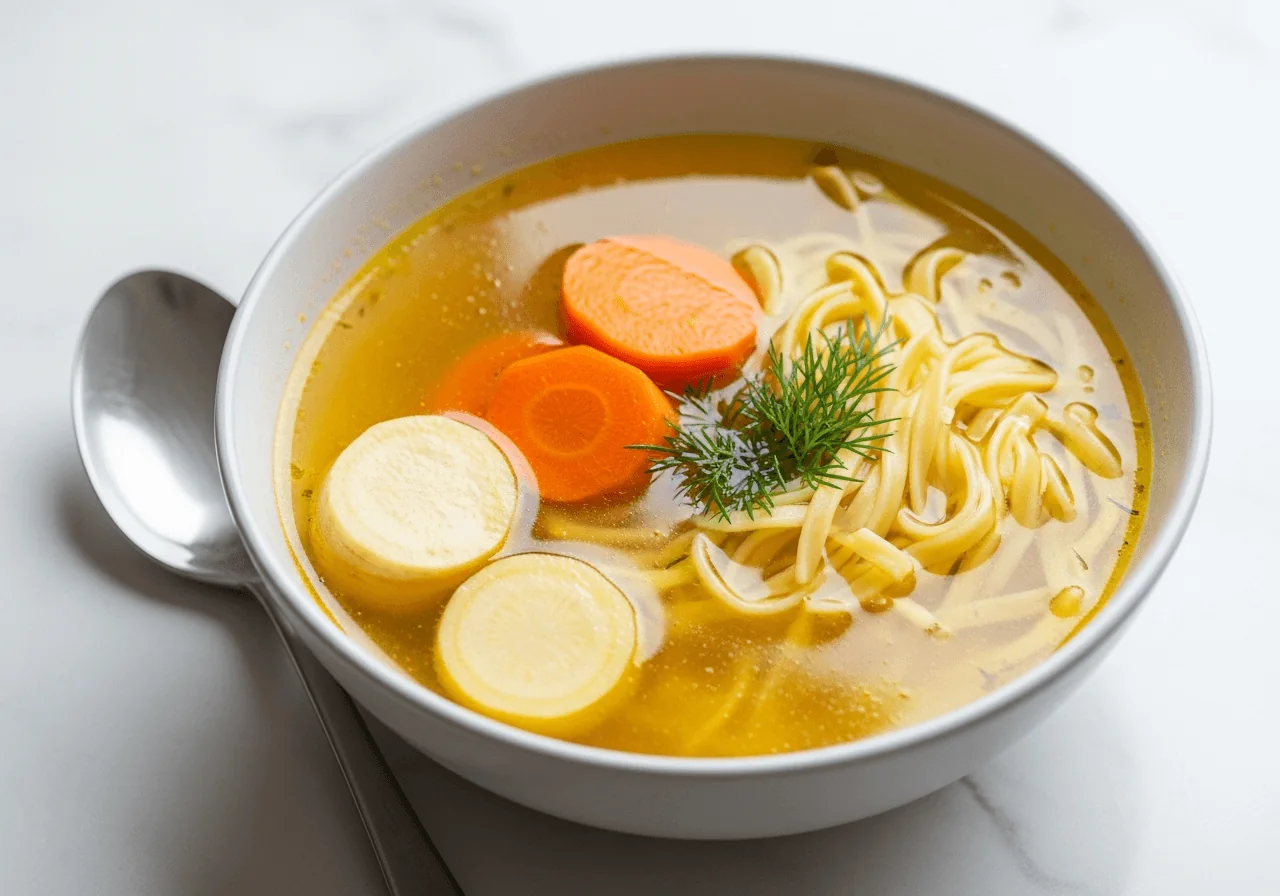
- Whole wheat fine egg noodles
- Chopped fresh parsley
- Cooked chicken meat
- A portion of the reserved carrots, parsnip, and leek from the broth, roughly chopped
Instructions
Step 1: Start the broth cold
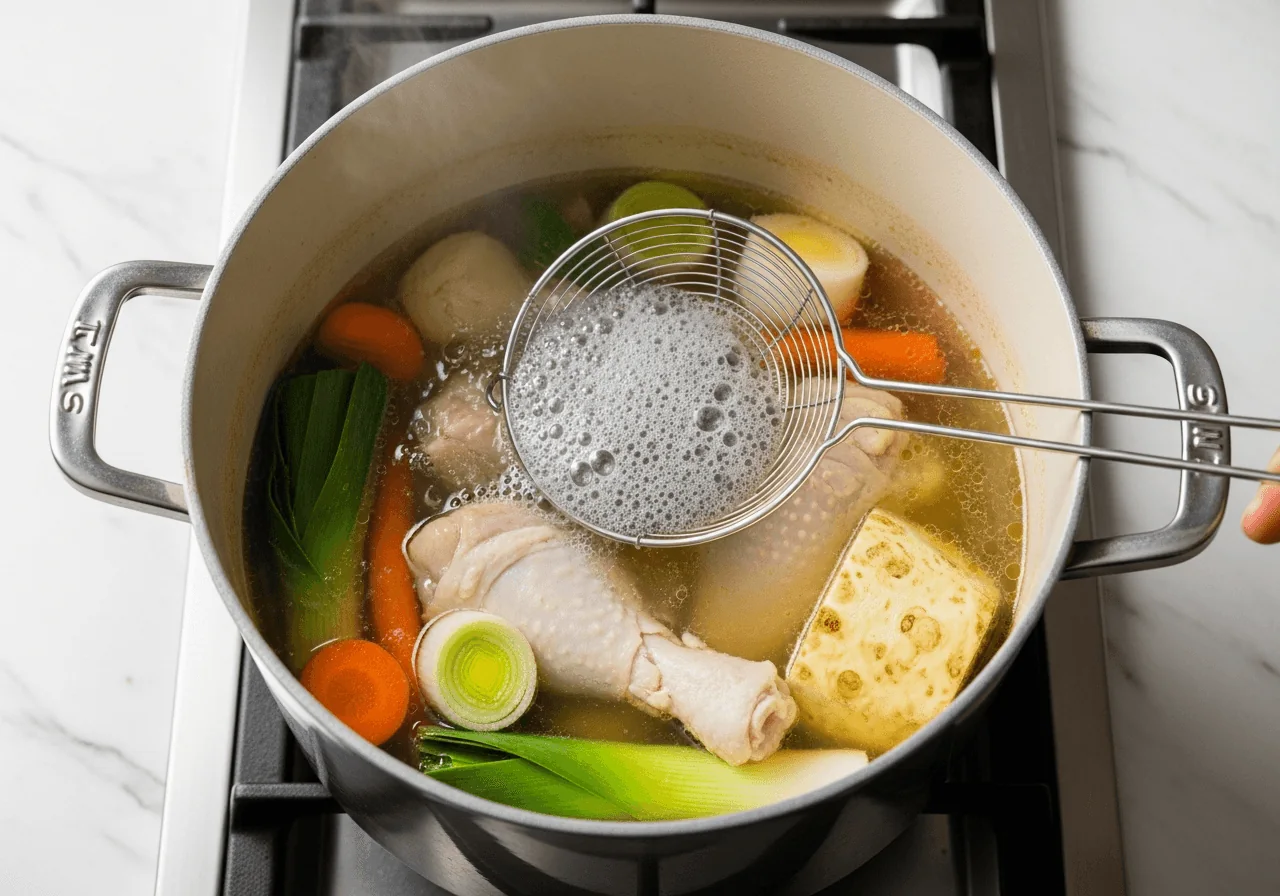
Place the chicken in a large stockpot and cover it with the cold water. Bring it to a bare simmer slowly, over medium-low heat, which should take 15–20 minutes.
Step 2: Skim the foam
As the water heats, foam and impurities rise to the surface. Skim them off with a ladle or slotted spoon for the first 20–30 minutes, the same as with the traditional recipe.
Step 3: Char the onion
While the broth is heating, place the onion halves cut-side down directly on a gas burner or in a dry skillet until the cut surface blackens. This step still gives the broth its golden color, skinless chicken or not.
Step 4: Add the vegetables and simmer
Once most of the foam has been skimmed, add the carrots, parsnips, celeriac, leeks, charred onion, peppercorns, allspice, and bay leaves. Reduce the heat as low as it will go and let it simmer, partially covered, for 2.5–3 hours without stirring.
Step 5: Add fresh herbs
About 30 minutes before the end of cooking, add the lovage and parsley. Add the reduced amount of salt only at this point, then taste before adding any more.
Step 6: Strain, reserve some vegetables, and degrease
Lift out the chicken and set it aside to cool. Strain the broth through a fine-mesh sieve. Set aside a portion of the strained carrots, parsnip, and leek rather than discarding all of them, and chop them roughly for serving.
Refrigerate the strained broth overnight. The next day, lift off the solidified fat layer completely before reheating — this step is not optional in this version, since it’s what carries the fat savings from skinless chicken through to the finished bowl.
Step 7: Serve
Cook the whole wheat noodles separately in salted water, then divide them among bowls. Ladle the hot, degreased broth over the top, add pieces of chicken and the reserved chopped vegetables, and finish with chopped parsley.
Nutritional Information
Per serving — broth, chicken, vegetables, and noodles (one of 6 servings)
| Nutrient | Traditional rosół | This version |
|---|---|---|
| Calories | ~280–340 kcal | ~200–240 kcal |
| Protein | ~24–28g | ~24–27g |
| Total fat | ~10–14g | ~4–6g |
| Saturated fat | ~3–4g | ~1–1.5g |
| Carbohydrates | ~20–24g | ~24–28g |
| Dietary fiber | ~1–2g | ~4–5g |
| Sodium | ~450–600mg | ~220–280mg |
Nutritional values are estimates based on standard ingredient databases. They will vary depending on the specific cuts of chicken used, how much fat is skimmed, and the amount of salt and noodles added.
Storage and Reheating
Refrigerate in an airtight container for 3–4 days, the same as the traditional version.5 Store the noodles separately if possible, since they continue to absorb broth and soften the longer they sit.
Freezes well for 2–3 months.5 Freeze the broth, chicken, and reserved vegetables together, but cook fresh noodles each time rather than freezing them, since noodles turn soft and waterlogged after thawing. Thaw overnight in the refrigerator, then reheat thoroughly until steaming before serving.
Healthy Rosół

Ingredients
For the broth (serves 6)
- 1.5 kg (about 3.3 lb) skinless chicken thighs and breasts, bone-in, visible fat trimmed (a mix of both keeps the broth from tasting thin)
- 3.5 liters (about 15 cups) cold water
- 5 medium carrots, peeled
- 2 parsnips (or parsley roots), peeled
- 1 small celeriac (celery root), peeled and halved
- 2 leeks, white and light green parts, halved lengthwise and rinsed well
- 1 medium onion, unpeeled, halved
- A small bunch of fresh lovage, or 1–2 teaspoons dried (substitute a few extra celery leaves if unavailable)
- A small bunch of fresh parsley, stems included
- 8–10 black peppercorns
- 4–5 allspice berries
- 2 bay leaves
- ¼–½ teaspoon salt, added near the end of cooking, plus more to taste only if needed
For serving
- Whole wheat fine egg noodles
- Chopped fresh parsley
- Cooked chicken meat
- A portion of the reserved carrots, parsnip, and leek from the broth, roughly chopped
Instructions
- Place the chicken in a large stockpot, cover with the cold water, and bring to a bare simmer over medium-low heat (15–20 minutes).
- Skim the foam and impurities off the surface with a ladle for the first 20–30 minutes.
- Char the onion halves cut-side down on a burner or in a dry skillet until blackened, for color and flavor.
- Add the carrots, parsnips, celeriac, leeks, charred onion, peppercorns, allspice, and bay leaves. Simmer partially covered, undisturbed, for 2.5–3 hours.
- About 30 minutes before the end, add the lovage and parsley, plus the reduced salt; taste before adding more.
- Lift out the chicken, strain the broth, and set aside some of the vegetables instead of discarding them. Refrigerate overnight and lift off the solidified fat before reheating.
- Cook the whole wheat noodles separately, divide among bowls, ladle the hot degreased broth over the top, and finish with chicken, reserved vegetables, and parsley.
Frequently Asked Questions
Will skinless chicken make the broth taste thinner or less rich?
Some of the richness in traditional rosół does come from rendered chicken fat, so there’s a real trade-off. Using a mix of bone-in thighs and breasts rather than breast alone helps offset this, since thighs still contribute collagen and flavor even without the skin.
Is it safe to skip the overnight chilling and degreasing step?
The broth is safe to eat without it, but the fat savings in this recipe depend on that step. Skimming while hot removes some fat, but a full overnight chill lets the remaining fat solidify into a layer that comes off far more completely.
Do whole wheat egg noodles change the taste much?
Only slightly — they carry a little more of a nutty flavor than standard egg noodles, but in a bowl of hot, well-seasoned broth the difference is subtle. If they’re not available, whole wheat pasta shapes work as a substitute, though the texture will be less delicate.
Can I use only chicken breast instead of a mix with thighs?
Yes, and it will lower the fat content slightly further, but the broth will taste noticeably leaner and less savory. A mix of skinless thighs and breasts is a better balance between flavor and fat content for most people.
Won’t cutting the salt in half make the broth taste flat?
Less salty, but not flat, since lovage, allspice, and black pepper carry a lot of the flavor here. Taste right before serving and add a small pinch more if needed — it’s easier to add salt than to take it out.
Is this version appropriate for someone managing cholesterol or heart health?
The changes here — skinless chicken, thorough degreasing, less added salt — generally move a chicken soup like this in a more favorable direction for saturated fat and sodium intake.1,4 That said, individual needs vary with health status and medication, so anyone managing a specific condition should check portion sizes and overall fit with a doctor or registered dietitian.
Can the reserved vegetables be skipped if I prefer a clearer, more traditional-looking bowl?
Yes — the fiber benefit is nice to have but not essential to the recipe. Serving the broth without the reserved vegetables still gives a lighter, lower-sodium bowl than the traditional version, just with less fiber per serving.
What if I only have regular egg noodles at home?
The recipe still works fine with them. The broth itself carries most of the health changes in this version — the noodle swap is a smaller, optional layer on top, not something the rest of the recipe depends on.
Can this be made ahead for meal prep during the week?
Yes, and the overnight chill this recipe already calls for makes that easy. Portion the degreased broth and chicken into containers once cooled, keep noodles separate, and reheat portions as needed over the following 3–4 days.
The Traditional Version
If you want the full version with skin-on chicken, a lighter hand with the vegetables, and classic egg noodles, our Traditional Rosół article covers that in detail, including the dish’s Sunday-dinner and wedding traditions and its long history in Polish kitchens.
Further Reading & Sources
The following sources were consulted for the nutritional information and health context in this article. Heritage Healthy Kitchen’s recipe was developed independently; these links are provided for readers who want to explore further.
- “Plate Debate: What Are the Best and Worst Sources of Protein?” Cleveland Clinic Health Essentials. health.clevelandclinic.org — registered dietitian guidance on choosing skinless chicken and trimming visible fat to reduce saturated fat intake.
- “Soup Up Your Meals.” Harvard Health Publishing, Harvard Medical School. health.harvard.edu — nutritionist guidance on building a soup around a low-sodium broth, a wide range of vegetables, and a protein source.
- “Is Pasta Healthy or Unhealthy?” Healthline. healthline.com — registered dietitian comparison of calorie and fiber content between refined and whole-grain pasta.
- “How Much Sodium Should I Eat Per Day?” American Heart Association. heart.org — recommended daily sodium limits and the share of sodium coming from packaged versus home-cooked food.
- “Keep Food Safe! Food Safety Basics.” USDA Food Safety and Inspection Service. fsis.usda.gov — refrigerator and freezer storage times for soups, stews, and meat broth.
Disclaimer
The information in this article is provided for educational and informational purposes only. Heritage Healthy Kitchen makes no representations or warranties regarding the accuracy or completeness of any content on this site. Nutritional values are estimates only and will vary depending on the specific ingredients, brands, and measurements used. This content is not intended as dietary, medical, or professional nutritional advice. Always consult a qualified healthcare provider regarding any dietary needs or health conditions, particularly if managing cholesterol, blood pressure, or another condition affected by sodium or fat intake. Heritage Healthy Kitchen is not responsible for any outcomes resulting from the use of recipes or information published on this site.
You Might Also Like
More heritage recipes from our kitchen

Leave a Reply