

Looking for the traditional recipes? Traditional Polish Barszcz Czerwony | Traditional Polish Uszka
Both traditional dishes are already among the lighter options in Polish cooking — this article focuses on targeted changes that push the nutritional value further without changing what makes them work.
Quick Overview
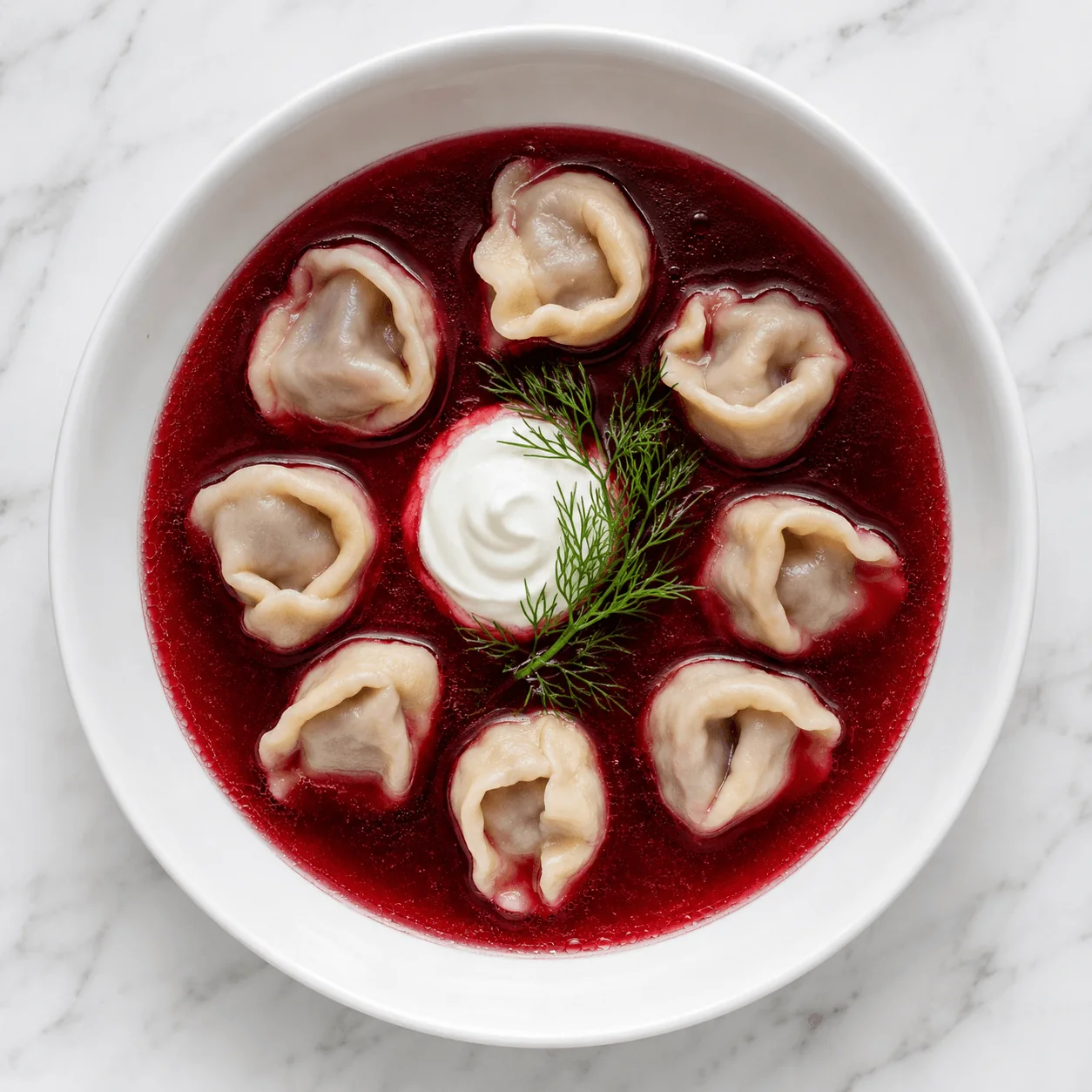
For the Healthy Barszcz Czerwony
- Ferment the zakwas buraczany for a full 7 days at a slightly cooler temperature, giving the live cultures more time to develop before you strain and use it
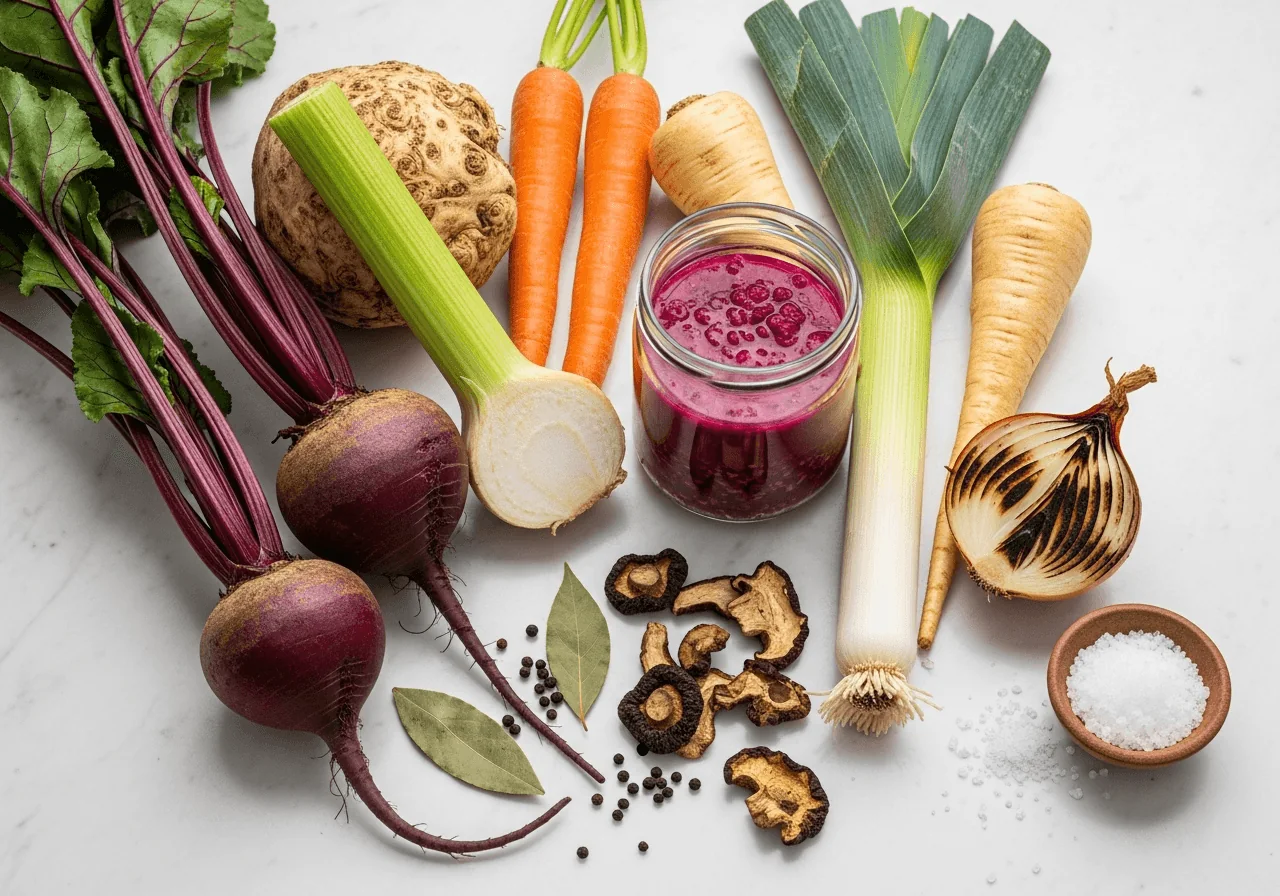
- Expand the vegetable broth base — add parsnip and leek alongside the standard carrots and celery root for more fiber and micronutrients
- Add the salt only at the very end, after combining broth and zakwas, so you season once with full information rather than layering in sodium at each step
- Skip the sugar entirely, or reduce it to a pinch — the beets and a small amount of lemon juice provide enough natural balance
For the Healthy Uszka
- Replace half the all-purpose flour with whole spelt flour — spelt is a whole grain that rolls thin more easily than regular whole wheat, keeping the uszka delicate
- Use neutral oil instead of butter for the filling — same depth of flavor, less saturated fat
- Keep the mushroom filling generous relative to the dough; the dried porcini is the most nutritious component of the dumpling
- Add a tablespoon of finely chopped fresh parsley to the mushroom filling — a small addition that adds folate and vitamin C without changing the character of the dish
Why These Two Dishes Are Already a Good Base
Before any modification, the traditional barszcz czerwony is one of the most nutrient-dense soups in the Polish repertoire. A bowl of clear barszcz carries beet-derived nitrates that support blood flow and arterial health, betalain pigments with anti-inflammatory properties, and folate, potassium, and manganese — all in a broth that runs around 60 calories per serving.¹² The fermented zakwas base also introduces live cultures, similar in principle to sauerkraut or kefir.⁵
Traditional uszka are small, lightly filled dumplings with most of their calories in the dough rather than the filling. The dried mushroom filling brings selenium, B vitamins, potassium, and zinc in a package that stays under 150 calories for five dumplings.³ The dish is naturally vegetarian, dairy-free when oil replaces butter, and meatless by design.
The healthy adaptations below work with this existing nutritional foundation. They do not require specialty ingredients or complicated techniques. The goal is to get more from what is already there.
Healthy Barszcz Czerwony: What Changes and Why
Extend the zakwas fermentation
The traditional recipe calls for five to seven days of fermentation. Allowing the zakwas to ferment for the full seven days, at a slightly cooler room temperature (around 18–20°C / 64–68°F), gives the fermentation more time to develop. Harvard Health notes that naturally fermented foods containing live cultures may help strengthen the gut microbiome — the bacteria and microorganisms that support digestion and immune function.⁵
The key qualifier: do not boil the finished soup. Boiling destroys the live cultures in the zakwas, as well as the betalain pigments responsible for the soup’s red color.¹ Heat gently to just below a simmer, taste and adjust, and serve immediately.
Expand the vegetable base
The standard broth uses beets, carrots, celery root, onion, and a few dried mushrooms. Adding one parsnip and one leek brings additional fiber, potassium, and B vitamins to the broth without changing the soup’s flavor profile. Both vegetables are traditional components of Polish broth cooking and require no sourcing. The beet base remains unchanged — still the foundation of the soup’s color, flavor, and nutritional value.¹
Control the sodium
The traditional recipe layers salt into both the zakwas and the broth, which can make precise sodium control difficult. The simpler approach: use no salt in the zakwas (the fermentation works without it, though slightly more slowly), use an unsalted vegetable broth as the cooking liquid, and season the finished combined soup once, at the end, after tasting. This single-seasoning method gives you full control over the final sodium level while the soup’s character stays intact.
Reduce added sugar
The teaspoon of sugar in the traditional recipe balances the sourness of the zakwas. In the healthy version, reduce it to a pinch or eliminate it entirely, adjusting instead with a squeeze of lemon juice. Lemon juice also helps preserve the soup’s red color — a useful coincidence that means there is no trade-off.¹
Healthy Barszcz: Adapted Recipe at a Glance
All other steps remain the same as the Traditional Polish Barszcz Czerwony recipe. These are the specific changes:
- Ferment zakwas a full 7 days at 18–20°C, allowing the fermentation to develop fully before straining
- Add 1 parsnip and 1 leek to the vegetable broth alongside standard ingredients
- Salt only at the final seasoning stage, after combining broth and zakwas
- Replace 1 teaspoon sugar with a squeeze of fresh lemon juice (1–2 teaspoons)
- Heat to just below boiling — remove from heat before the first bubble
Healthy Uszka: What Changes and Why
Whole spelt dough
The most significant change for uszka is in the dough. Replacing half the all-purpose flour with whole spelt flour adds fiber, B vitamins, and minerals from the grain’s bran and germ — the parts removed during standard milling. Harvard Health notes that whole grains reduce the risk of heart disease and type 2 diabetes, and that people who follow diets rich in whole grains live longer on average compared with those who rely on refined grains.⁴
Spelt tends to produce a more pliable dough than regular whole wheat flour, which makes it easier to roll to the 2mm thickness that uszka require. Standard whole wheat makes the dough noticeably stiffer and harder to work thin without tearing. Start with a 50/50 split — 150g whole spelt and 150g all-purpose flour — and increase the spelt ratio in future batches as you get a feel for the dough.⁴
Oil instead of butter
Replacing the butter in the mushroom filling with a tablespoon of neutral oil — sunflower or light olive — removes most of the saturated fat from the dish while preserving the sautéed onion and mushroom flavor. The result is a filling that tastes nearly identical to the traditional version. For uszka, where the filling quantity per dumpling is small (about half a teaspoon), the difference per portion is small but adds up across the whole batch.
Add fresh parsley to the filling
A tablespoon of finely chopped fresh parsley stirred into the cooled mushroom filling adds folate and vitamin C without changing the texture or compromising the seal. It is a minor addition that requires no sourcing — parsley is a common culinary herb — but it lifts the nutritional contribution of each dumpling slightly.
Healthy Uszka: Adapted Recipe at a Glance
All other steps remain the same as the Traditional Polish Uszka recipe. These are the specific changes:
- Dough: 150g whole spelt flour + 150g all-purpose flour (instead of 300g all-purpose)
- Filling: 1 tablespoon neutral oil instead of butter
- Filling: add 1 tablespoon finely chopped fresh parsley before filling
- Roll slightly thicker than the traditional version — 2.5mm rather than 2mm — to allow for the denser spelt dough
- Everything else: shaping, cooking, serving — unchanged
Nutritional Profile: The Healthy Bowl
Estimates below are for one serving of healthy barszcz czerwony (250ml / 1 cup) plus five healthy uszka. Values are estimates and will vary with specific ingredients and portion sizes.
- Calories: approximately 190–220 kcal per combined serving
- Fat: 4–6g (primarily from the oil in the filling)
- Carbohydrates: 32–38g
- Fiber: 3–5g (higher than traditional version due to spelt and expanded vegetable base)
- Protein: 5–7g
The beet base of the barszcz delivers nitrates, which the body converts to nitric oxide — a compound that relaxes blood vessels and supports healthy blood pressure.¹ Betalain pigments in the same beets carry anti-inflammatory properties.¹ A 100-gram serving of beet provides approximately 20% of the daily recommended folate intake, along with manganese and potassium.²
The mushroom filling in the uszka contributes selenium, riboflavin, niacin, vitamin B6, and zinc — nutrients that support immune function, cardiovascular health, and gut health.³ The spelt dough adds fiber from the bran layer of the grain, which supports digestive health and helps regulate blood sugar response.⁴
The fermented zakwas base introduces live cultures that, according to Harvard Health, may help strengthen the gut microbiome.⁵ This benefit depends on not boiling the finished soup — the same requirement that preserves the color.
Kitchen Tips
On the spelt dough
Let the spelt dough rest for 15 minutes rather than the standard 10 — the longer rest makes the dough easier to roll evenly. If it feels stiff after resting, add a few drops of warm water and knead briefly before rolling.
On the zakwas
The probiotic benefit of the zakwas is entirely lost if the soup reaches a boil. The color goes at the same temperature. These two facts reinforce the same technique from the traditional recipe: heat gently until the soup begins to move, then remove from heat immediately. Taste and serve.¹⁵
On sodium reduction
Salting the soup only at the end requires tasting carefully. The mushroom soaking liquid, if used in the broth, adds its own depth and some sodium from the dried mushrooms. Account for this before adding any additional salt. The combination of beet sweetness, lemon acidity, and mushroom savoriness means less salt is needed than you might expect.
On the mushroom filling
The dried mushrooms are the nutritional anchor of the uszka. If reducing calories elsewhere in the meal, this is not the place to cut: dried porcini by weight is nutritionally dense relative to its calorie count, and the quantity per dumpling is already very small. Keep the filling at the traditional level and let the whole-grain dough carry the fiber contribution.
Storage
Storage guidelines for the healthy versions are identical to the traditional recipes. The healthy barszcz keeps in the refrigerator for up to three days and freezes well for up to three months — reheat gently each time and remove from heat the moment the first bubbles appear, to preserve both the color and the live cultures in the zakwas.
Healthy uszka with spelt dough freeze uncooked for up to three months and are best eaten the same day once cooked. The whole-grain dough holds up well in the freezer and cooks from frozen in the same way as the all-purpose version, with about two minutes added to the cooking time.
Healthy Barszcz Czerwony

Ingredients
For the zakwas buraczany — prepare 7 days ahead
- 1 kg (2.2 lb) raw beets, peeled and sliced into rounds
- 1 litre (4 cups) warm water
- 1 tablespoon fine salt
- 3 garlic cloves, peeled and lightly crushed
- 3 bay leaves
- 4 allspice berries
- 1 small slice of sourdough or rye bread crust (optional — speeds fermentation)
For the broth (serves 6-8)
- 500g (1.1 lb) raw beets, peeled and halved
- 1.5 litres (6 cups) water or light vegetable broth
- 1 medium onion, halved and unpeeled
- 2 carrots, halved lengthwise
- 1 parsnip, halved lengthwise (added for extra fiber)
- 1 leek, white and light green part, split lengthwise (added for extra fiber)
- 1 small parsley root or 2 celery stalks, halved
- 2-3 dried forest mushrooms (porcini or Polish leśne grzyby)
- 3 bay leaves
- 6 allspice berries
- 4 black peppercorns
- 2 garlic cloves
- 1 tablespoon dried marjoram
- 1-2 teaspoons fresh lemon juice (instead of sugar)
- Salt to taste — added only at the final seasoning stage
To serve
- Healthy Uszka dumplings (see second recipe card below)
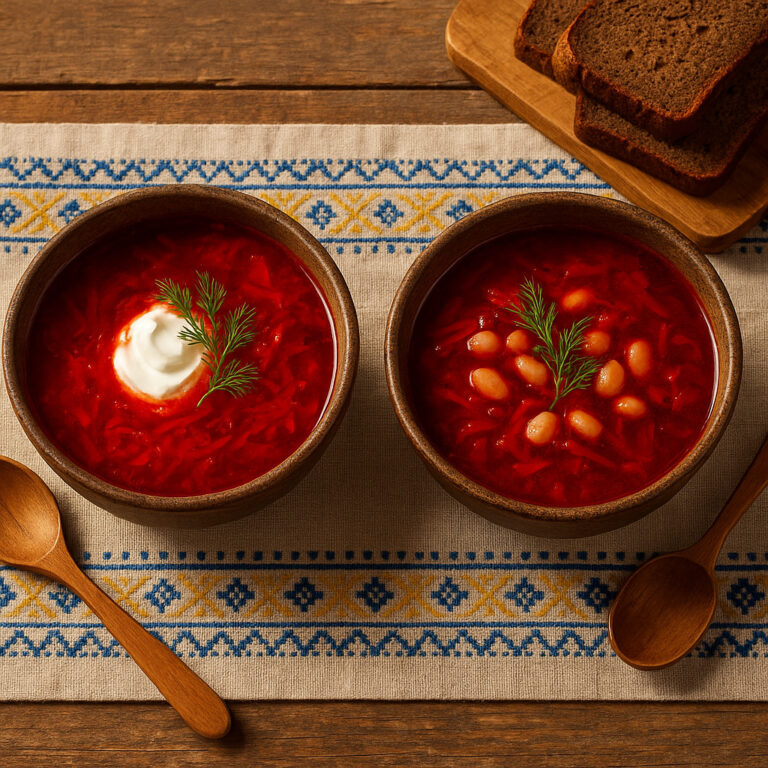
- Or: boiled potatoes, a spoonful of low-fat sour cream, a pinch of fresh dill
Instructions
- Prepare the zakwas buraczany a full 7 days ahead at 18-20°C, letting the fermentation develop completely before straining
- Build the vegetable broth with beets, carrots, parsnip, leek, parsley root, dried mushrooms, and aromatics — do not add salt yet — simmer 45 minutes, then strain clear
- Combine the strained broth and zakwas in a ratio of roughly 3:2, season with lemon juice, then add salt to taste — this is the only point salt is added
- Heat gently and remove from the heat just before the first bubble appears — boiling kills both the color and the flavor
- Serve immediately in warm bowls with Healthy Uszka, or with potatoes and a little sour cream
Healthy Uszka
Ingredients
For the filling
- 30g (1 oz) dried porcini or other dried forest mushrooms
- 1 medium onion, finely diced
- 1 tablespoon neutral oil (instead of butter)
- Salt and freshly ground black pepper
- 1 tablespoon finely chopped fresh parsley
- 1 tablespoon breadcrumbs (optional — helps bind the filling if it is wet)
For the dough (yields 50-60 uszka)
- 150g (1¼ cups) whole spelt flour
- 150g (1¼ cups) all-purpose flour
- 1 egg
- 120ml (½ cup) warm water
- 1 tablespoon neutral oil
- A pinch of salt
Instructions
- Soak dried mushrooms in cold water overnight, or at least 30 minutes in hot water — keep the soaking liquid for the barszcz
- Make the filling: fry the diced onion in oil until soft, add the chopped mushrooms, cook 3-4 minutes, season, stir in the parsley, then cool completely
- Make the dough: combine the spelt and all-purpose flour with the egg, oil, warm water and a pinch of salt — knead until smooth, rest under a cloth for 10 minutes
- Roll to about 2.5mm (slightly thicker than the traditional version, to suit the denser spelt dough), cut 4cm squares, fill sparingly, fold into a triangle and pinch into the ear shape
- Cook in gently boiling salted water in batches until they float, then 1-2 minutes more. Serve immediately in hot Healthy Barszcz Czerwony
Frequently Asked Questions
Does using spelt flour change the texture of the uszka?
A 50/50 spelt and white flour blend produces a slightly denser, more textured dough than pure all-purpose flour. When rolled to 2.5mm (slightly thicker than the traditional 2mm), the uszka hold their shape well in the soup and still cook through in the same time. The difference in texture is noticeable but not dramatic — closer to the feel of fresh pasta made with semolina than a heavy whole-wheat product.
Can I use 100% whole spelt flour?
Yes, though the dough will be noticeably stiffer and harder to roll thin. If you try 100% spelt, increase the water in the recipe by a tablespoon and let the dough rest for 20 minutes before rolling. The uszka will be more rustic in texture but will still work. Start with the 50/50 blend first to get a feel for how the dough responds.⁴
Does the longer zakwas fermentation change the flavor of the barszcz?
A longer fermentation produces a more assertively sour zakwas. This means you may need slightly less of it relative to the broth, or a touch more lemon juice to balance. Taste the combined soup before serving and adjust the ratio. The beet flavor remains the same — it is the sourness and complexity that increase with time.⁵
Is the healthy version still appropriate for Wigilia (Christmas Eve)?
Yes. Both adapted dishes remain meatless, which is the essential requirement for the Wigilia table. The spelt uszka and the extended-fermentation barszcz can replace the traditional versions without any break from the ritual structure of the meal. The flavor is close enough to the original that the change is likely to go unnoticed unless you mention it.
What is the main calorie difference between the traditional and healthy versions?
The barszcz calorie count is essentially unchanged — the soup’s calories come from beets and vegetables, and the adaptations here (expanding the vegetable base, extending fermentation) do not add significant calories. The uszka calorie count per five dumplings changes modestly: replacing butter with oil saves a small amount of saturated fat but not total calories. The main nutritional gain is in fiber (from spelt) and probiotic potential (from longer fermentation), not calorie reduction.
Can the healthy barszcz be made without the zakwas — just vinegar for sourness?
Yes, and this is the quickest version. Build the vegetable broth as usual, season with lemon juice instead of vinegar, and skip the fermentation step. You lose the probiotic benefit entirely and some of the flavor complexity, but the result is still a nutritious, low-calorie beet soup. For the full benefit of the healthy adaptation, the zakwas is worth the planning — but the vinegar version is a practical weeknight option.⁵
Further Reading & Sources
This recipe was developed independently by Heritage Healthy Kitchen. The following sources are provided for further reading on the nutritional context covered in this article.
- Thomsen Ferreira, Sarah, RD. 5 Health Benefits of Beets. Cleveland Clinic Health Essentials. https://health.clevelandclinic.org/the-health-benefits-of-beets — Cardiovascular benefits of beets, nitrate content, betalain pigments, anti-inflammatory properties.
- Coyle, Daisy (APD) and Ajmera, Rachael (MS, RD). Medically reviewed by Jerlyn Jones, MS MPA RDN LD CLT. 9 Impressive Health Benefits of Beets. Healthline. https://www.healthline.com/nutrition/benefits-of-beets — Nutritional profile of beets: folate, manganese, potassium, fiber, blood pressure effects.
- Prescott, Joyce, RD. 7 Impressive Reasons To Eat Mushrooms. Cleveland Clinic Health Essentials. https://health.clevelandclinic.org/benefits-of-mushrooms — Nutritional profile of mushrooms: selenium, B vitamins, potassium, zinc; immune and gut health.
- LeWine, Howard, MD. How Important Are Whole Grains in My Diet? Harvard Health Publishing. https://www.health.harvard.edu/healthy-aging-and-longevity/how-important-are-whole-grains-in-my-diet — Whole grains, fiber, heart disease risk, and type 2 diabetes reduction.
- Bilodeau, Kelly. Fermented Foods for Better Gut Health. Harvard Health Publishing. https://www.health.harvard.edu/blog/fermented-foods-for-better-gut-health-201805161607 — Probiotics in naturally fermented foods and their role in supporting the gut microbiome.
Disclaimer
This article is for educational and informational purposes only and is not intended as medical or nutritional advice. Nutritional values provided are estimates and may vary depending on specific ingredients used, preparation methods, and serving sizes. If you have specific dietary needs or health conditions, please consult a qualified healthcare provider or registered dietitian before making changes to your diet.
Cook by Occasion
This recipe is part of our Wigilia menu.
You Might Also Like
More heritage recipes from our kitchen

Leave a Reply