
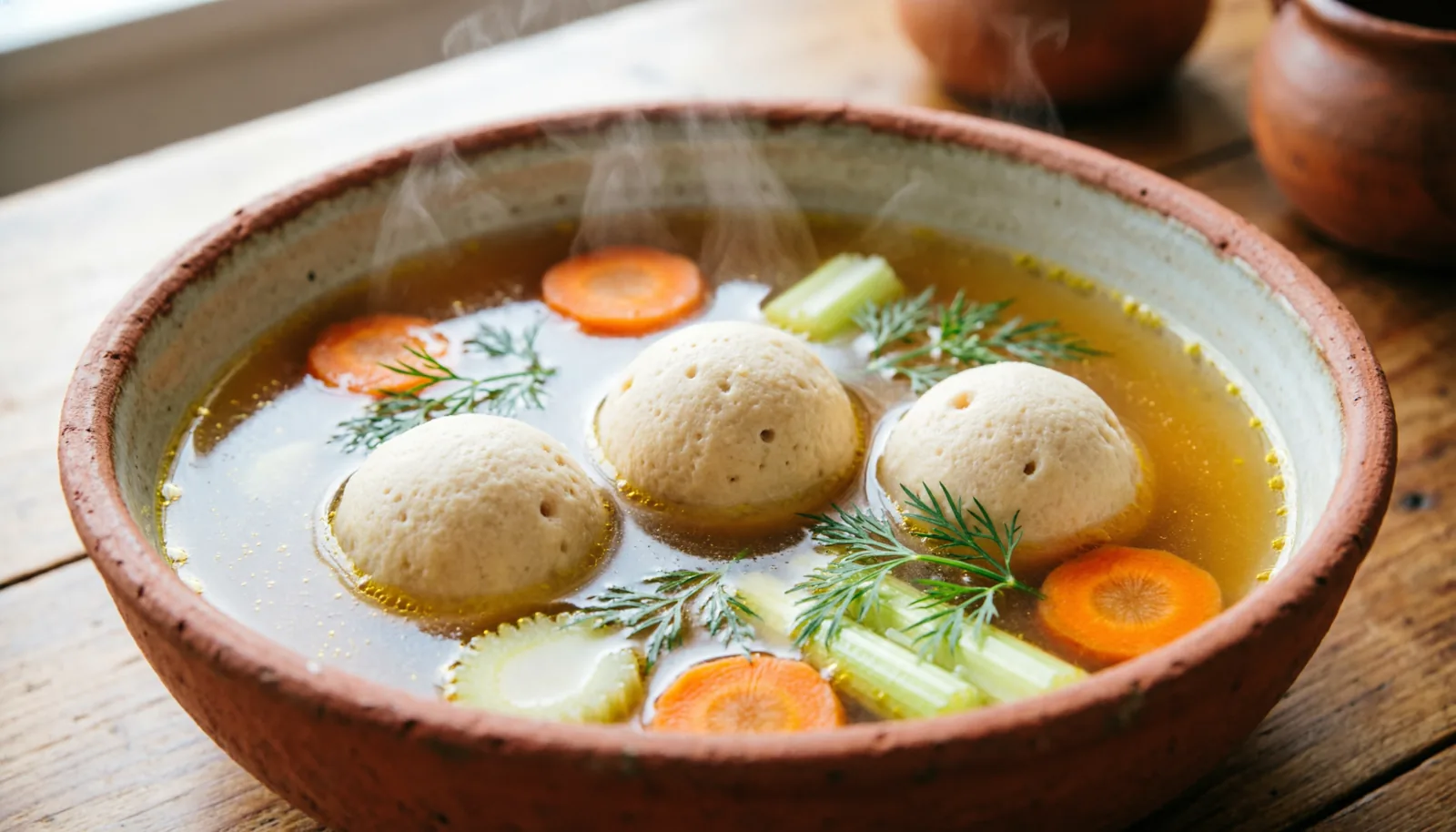
Active time: ~45 minutes | Total time: ~2.5 hours (including chilling time) | Serves: 6 | Difficulty: Moderate
Quick Overview
- Simmer a whole chicken with carrots, celery, onion, and dill into a clear, golden broth
- Mix matzo meal, beaten eggs, and schmaltz or oil into a soft dough, then chill it so it firms up
- Roll the chilled dough into balls and simmer them separately in salted water so the broth stays clear
- Add the cooked matzo balls to the hot broth just before serving
- Finish with fresh dill or parsley and a few pieces of chicken
What Matzo Ball Soup Is
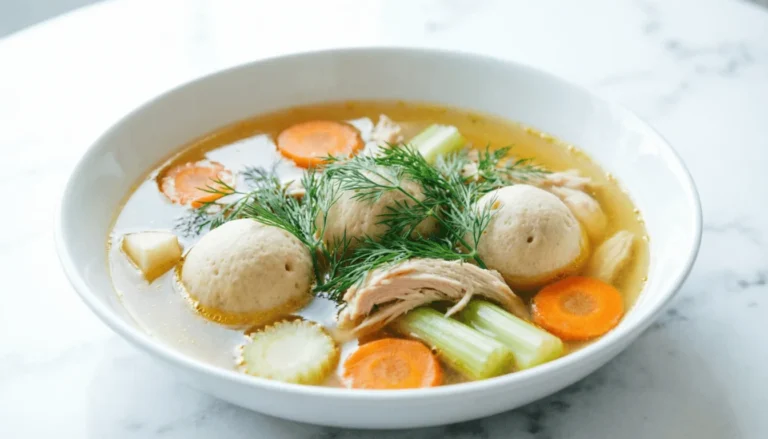
Matzo ball soup is chicken broth built around kneidlach — soft dumplings made from matzo meal, beaten eggs, water, and a fat such as schmaltz, oil, or margarine.1 The dish is a staple of Ashkenazi Jewish cooking, eaten during Passover and, in many households, all year round.1,3
How a matzo ball turns out depends entirely on the cook. Some recipes produce a dense, chewy “sinker,” while others turn out light and airy enough to float.1 Which camp a family belongs to is often a matter of habit passed down at home, and there’s no single correct answer — only the one your grandmother made.
Matzo itself is the flat, unleavened bread eaten during Passover, commemorating the Israelites’ hurried exodus from Egypt, when there was no time to let bread dough rise. Because Passover forbids anything that could become leavened, matzo ball soup gives observant cooks a way to add a starchy, bread-like element to a bowl of broth without breaking that rule.
The soup also fits a wider pattern in Ashkenazi cooking. Jewish communities across Central and Eastern Europe historically built meals around whatever local, affordable ingredients were on hand, shaped by both poverty and the requirements of kashrut.5 A pot of chicken broth stretched further with dumplings made from Passover-approved matzo meal was, in that sense, a practical dish as much as a ceremonial one. The same kitchen logic shows up elsewhere in Ashkenazi cooking on this site, from braided Traditional Challah to sweet, cheese-filled Traditional Blintzes — different dishes built on the same instinct to make a little go a long way.
Where Kneidlach Came From
Nobody can point to the exact moment the matzo ball was invented.1 The dumpling itself, called knaidel in Yiddish, is widely believed to be a matzo-meal adaptation of Knödel, the bread dumplings eaten across German, Austrian, and Central European kitchens.1 German, Austrian, and Alsatian Jews are generally credited with being the first to make them, likely sometime in the 19th century, once Eastern European cooking had already popularized dumplings in soup and Jewish cooks adapted the idea to matzo meal.1 Middle Eastern Jewish communities later introduced their own variations, though the specifics of those adaptations aren’t well documented.1 One of the earliest written recipes for matzo ball soup, made with beef stock rather than chicken, turns up in an 1846 cookbook called The Jewish Manual.1
The Yiddish name itself caused a minor uproar decades later, far from any kitchen. In 2013, “knaidel” was the winning word at the Scripps National Spelling Bee, spelled correctly by contestant Arvind Mahankali according to the Bee’s official dictionary — but even with an official YIVO Institute transliteration system in place, plenty of Yiddish words end up with multiple English spellings in everyday use, and the correctness of “knaidel” over “kneidel” or “knaydel” was disputed almost immediately.1
Regional variation shows up in the details. In Lithuania, some cooks used to tuck a bit of fried schmaltz into the center of each dumpling, a version affectionately called “matzah balls with souls” — though it’s rare to find one filled at all today.2 Because matzo balls are made from matzo, some observant communities are careful about eating them during most of Passover. Getting matzo wet is called gebrokts, and out of caution that a stray unbaked pocket of flour could technically still rise, many families avoid it for the holiday’s first seven days — then serve kneidlach freely on the eighth and final day, when the caution eases.3
The soup’s other nickname, “Jewish penicillin,” points to something a little more universal: chicken soup as the food you’re handed when you’re sick, sad, or cold, in Jewish households and plenty of others. Modern research has looked at whether that reputation holds up. A 2025 systematic review of soup and respiratory infections found that chicken-based soups were linked to modest reductions in symptom severity and illness duration, along with lower levels of certain inflammatory markers in a couple of the trials it reviewed — real effects, though modest ones, and the review’s authors were careful to note the evidence base is still small and needs larger studies to confirm it.4 Nobody is claiming a bowl of kneidlach cures a cold. But the folk wisdom behind the nickname isn’t nothing, either.
On the Holiday Table
Rosh Hashanah has a claim on the pot as well. Matzo ball soup opens the Ashkenazi New Year meal as the first course, ahead of the brisket or the roast chicken.⁶
Traditional Recipe
This recipe was developed independently by Heritage Healthy Kitchen; the sources cited throughout are for further reading on the dish’s history and background, not the basis of the recipe itself.
Ingredients
For the broth:
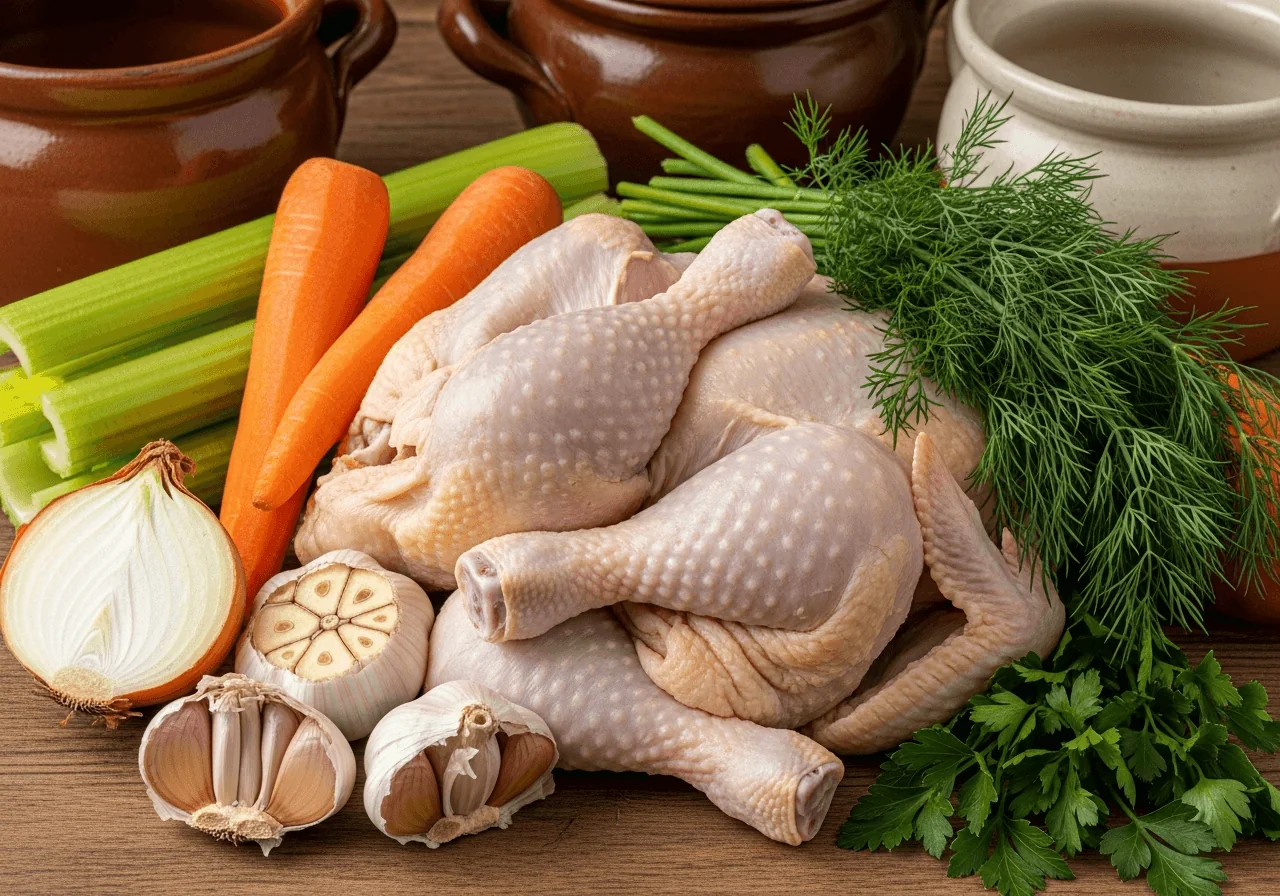
- 1 whole chicken (about 4 lbs), or 3 lbs bone-in chicken thighs and drumsticks
- 3 carrots, peeled and cut into chunks
- 3 celery stalks, cut into chunks
- 1 large onion, quartered
- 3 garlic cloves, smashed
- 1 bunch fresh dill, plus extra for serving
- A few sprigs fresh parsley
- 2 bay leaves
- 1 tablespoon whole black peppercorns
- 12 cups water
- Salt, to taste
For the matzo balls:
- 4 large eggs
- 1/4 cup schmaltz (rendered chicken fat) or vegetable oil
- 1 cup matzo meal
- 1/4 cup broth or seltzer water
- 1 teaspoon salt
- 1/2 teaspoon baking powder (optional, for a lighter texture)
- Freshly ground black pepper, to taste
- 2 tablespoons chopped fresh dill (optional)
Instructions
Step 1: Start the broth
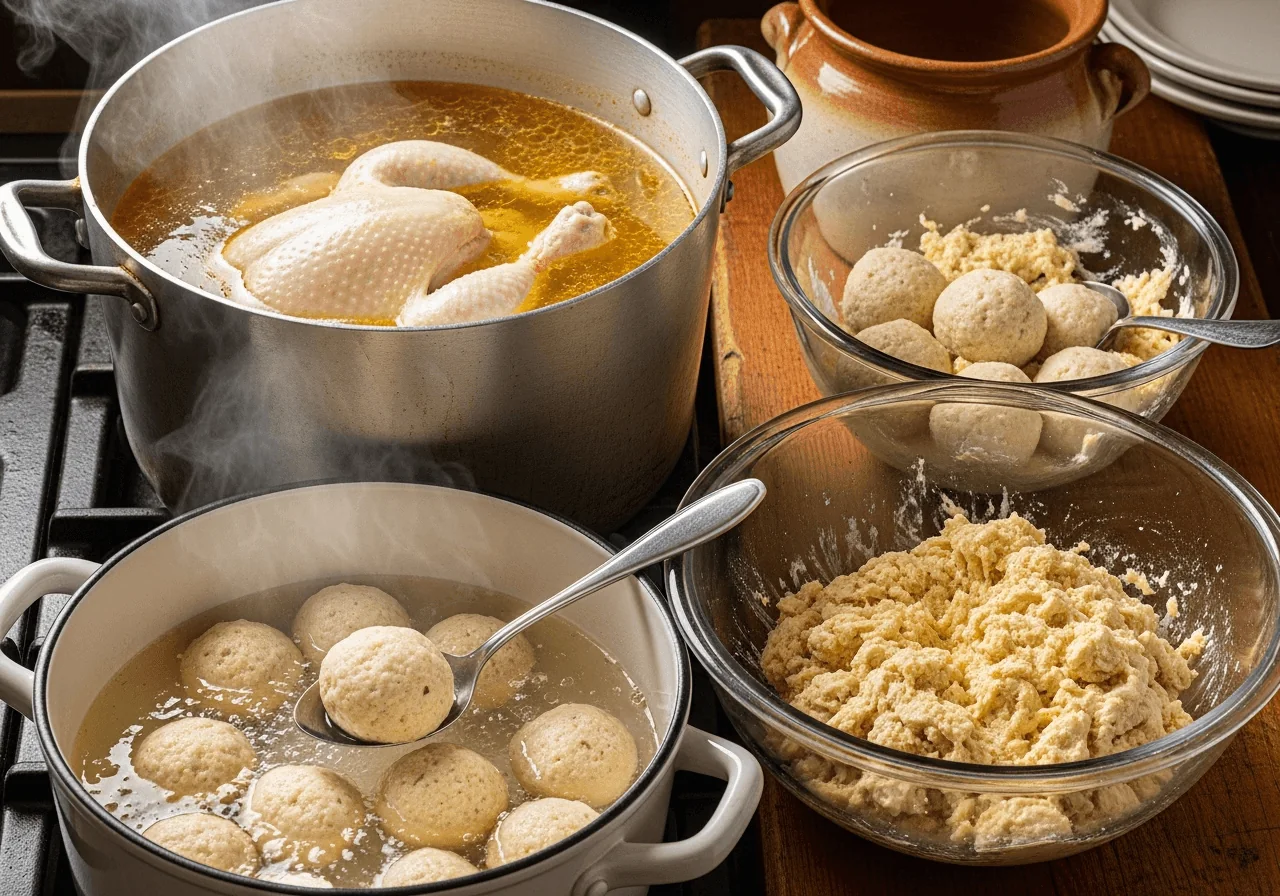
Place the chicken in a large stockpot and cover with the water. Bring to a bare simmer over medium heat, skimming off any foam that rises to the surface.
Step 2: Add the aromatics
Once the foam has been skimmed, add the carrots, celery, onion, garlic, dill, parsley, bay leaves, and peppercorns. Reduce the heat to low and let the broth simmer gently, uncovered or partially covered, for about 1.5 to 2 hours. Avoid a hard boil, which clouds the broth.
Step 3: Strain and season
Remove the chicken and set it aside to cool slightly before shredding or cubing the meat. Strain the broth through a fine-mesh sieve, discarding the cooked vegetables, and season with salt to taste.
Step 4: Make the matzo ball dough
In a mixing bowl, whisk the eggs and schmaltz or oil together until well combined. Stir in the matzo meal, salt, pepper, baking powder if using, and the broth or seltzer. Mix just until combined — overworking the dough makes for a denser matzo ball. Cover and refrigerate for at least 30 minutes, or up to several hours.
Step 5: Roll and cook the matzo balls
Bring a separate large pot of salted water to a boil. With wet hands, roll the chilled dough into balls about 1 inch in diameter — they will roughly double in size as they cook. Gently drop them into the boiling water, reduce the heat to a simmer, cover, and cook for 20 to 30 minutes without lifting the lid.
Step 6: Combine and serve
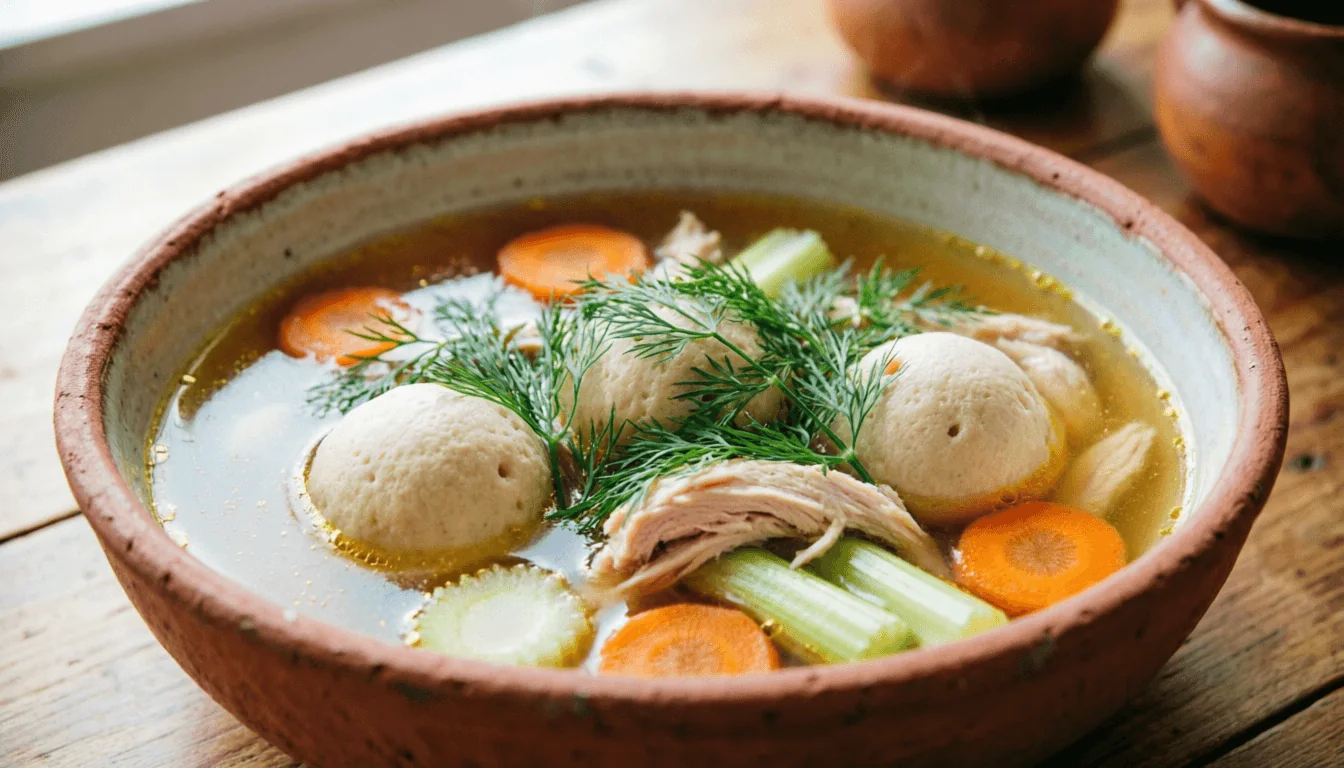
Return the shredded chicken to the strained broth and reheat gently. Ladle the hot broth into bowls, add two or three matzo balls per bowl, and garnish with fresh dill.
Kitchen Tips
Cooking the matzo balls in their own pot of salted water, rather than directly in the broth, keeps the finished soup clear instead of cloudy and starchy. Once they’re done, transfer them into the broth with a slotted spoon right before serving.
Chilling the dough before rolling isn’t optional if a lighter matzo ball is the goal — a rested, cold mixture holds together better and puffs up more evenly in the pot. Wetting your hands before shaping each ball also keeps the dough from sticking and helps it hold a round shape.
Schmaltz gives a deeper, more traditional flavor than vegetable oil, but the two are interchangeable in this recipe. Schmaltz also sidesteps a kashrut concern that butter would raise: butter is a dairy fat, and mixing it into a meat-based chicken broth would violate the prohibition on combining milk and meat, so recipes calling for a fat other than schmaltz typically turn to vegetable oil or margarine instead.1
Keep the matzo balls a consistent size — about 1 inch before cooking — so they finish cooking at the same rate. Oversized balls tend to stay gummy in the center even after 30 minutes at a simmer, while undersized ones can turn tough from overcooking.
Resist the urge to lift the lid and check on the matzo balls while they simmer. Losing steam partway through cooking can leave them dense and uneven, so it’s better to trust the timer and check only once it’s up.
Nutritional Information
The figures below cover a standard bowl of homemade matzo ball soup made with a whole chicken and schmaltz, rather than a lower-fat or store-bought version.
Per serving (broth, chicken, and 2–3 matzo balls, 1 of 6 servings)
- Calories: approximately 270–350 kcal
- Protein: ~20–25g
- Total fat: ~13–19g
- Carbohydrates: ~14–19g
- Sodium: ~500–650mg (varies considerably with added salt)
Nutritional values are estimates based on standard ingredient databases. They will vary depending on the cut of chicken used, the fat chosen for the matzo balls, and the amount of salt added.
Storage and Reheating
Refrigerate the broth and matzo balls in separate airtight containers for up to 3 to 4 days. Storing them apart keeps the matzo balls from soaking up too much liquid and turning soft and waterlogged.
Both the broth and the matzo balls freeze well on their own for up to 2 to 3 months. Thaw overnight in the refrigerator, then reheat the broth on the stovetop until steaming and warm the matzo balls through in the simmering broth for the last few minutes before serving.
Traditional Matzo Ball Soup

Ingredients
For the broth
- 1 whole chicken (about 4 lbs), or 3 lbs bone-in chicken thighs and drumsticks
- 3 carrots, peeled and cut into chunks
- 3 celery stalks, cut into chunks
- 1 large onion, quartered
- 3 garlic cloves, smashed
- 1 bunch fresh dill, plus extra for serving
- A few sprigs fresh parsley
- 2 bay leaves
- 1 tablespoon whole black peppercorns
- 12 cups water
- Salt, to taste
For the matzo balls
- 4 large eggs
- 1/4 cup schmaltz (rendered chicken fat) or vegetable oil
- 1 cup matzo meal
- 1/4 cup broth or seltzer water
- 1 teaspoon salt
- 1/2 teaspoon baking powder (optional, for a lighter texture)
- Freshly ground black pepper, to taste
- 2 tablespoons chopped fresh dill (optional)
Instructions
- Simmer a whole chicken with carrots, celery, onion, and dill into a clear, golden broth
- Mix matzo meal, beaten eggs, and schmaltz or oil into a soft dough, then chill it so it firms up
- Roll the chilled dough into balls and simmer them separately in salted water so the broth stays clear
- Add the cooked matzo balls to the hot broth just before serving
- Finish with fresh dill or parsley and a few pieces of chicken
Frequently Asked Questions
Why do some matzo balls float and others sink?
It comes down to the ratio of fat and egg to matzo meal, how much the dough is handled, and whether baking powder or seltzer is used. Lighter, airier doughs tend to float; denser, more tightly packed doughs sink. Neither is more “correct” — it’s a matter of family preference, and a long-running one at that.
Can I make matzo balls ahead of time?
Yes. The dough can be mixed and refrigerated up to a day in advance, and the cooked matzo balls themselves keep well in the refrigerator for a few days when stored separately from the broth.
What’s the difference between matzo meal and matzo?
Matzo meal is simply matzo crackers ground into fine crumbs. It’s sold separately, though it’s easy enough to make at home by pulverizing whole matzo sheets.
Is matzo ball soup only eaten during Passover?
It’s especially associated with Passover, since matzo is a Passover-approved ingredient, but it’s also a staple many families make year-round.1
What is schmaltz, and do I really need it?
Schmaltz is rendered chicken fat, used traditionally for its flavor. It’s not required — vegetable oil or margarine works fine and is common in modern kitchens — but schmaltz gives the matzo balls a richer, more old-fashioned taste.1
Why do some families avoid matzo balls for part of Passover?
This relates to a custom called gebrokts, where wetted matzo is avoided for the first seven days of Passover out of caution around unbaked flour technically becoming leavened. Many of these same families eat kneidlach freely on the eighth and final day of the holiday.3
Does chicken soup actually help with a cold?
There’s some scientific support for the folk wisdom. A 2025 systematic review found chicken-based soups were associated with modest reductions in symptom severity and illness duration in a handful of clinical trials, though the researchers described the evidence as preliminary and called for larger studies.4 It’s not a cure, but the comfort isn’t purely psychological either.
Can matzo ball soup be made pareve, without any meat or dairy?
Yes. Swapping the chicken broth for a well-seasoned vegetable broth and using oil instead of schmaltz produces a pareve version that keeps the same texture and most of the flavor, minus the chicken itself.
Why is matzo ball soup made with chicken broth today when the earliest recipe used beef?
At least one of the earliest written recipes for the dish used beef stock rather than chicken.1 Tastes shifted since then, and clear chicken broth with kneidlach is now what most people picture when they think of the dish — though the exact reasons for that shift aren’t well documented.
Looking for a lighter take on this recipe? Our Healthy Matzo Ball Soup article covers lower-sodium broth and lighter matzo ball variations, coming soon to Heritage Healthy Kitchen.
Further Reading & Sources
The following sources were consulted in researching the history, technique, and cultural background of traditional matzo ball soup. Heritage Healthy Kitchen’s recipe was developed independently; these links are provided for readers who want to explore further.
- “Matzah Ball.” Wikipedia. en.wikipedia.org/wiki/Matzah_ball — definition, ingredients, 19th-century origin theories, the 1846 Jewish Manual recipe, and the 2013 spelling bee controversy.
- “Ask the Expert: Matzah Balls Vs. Kreplach.” My Jewish Learning. myjewishlearning.com/article/ask-the-expert-matzah-balls-vs-kreplach — kneidlach definition and the Lithuanian “matzah balls with souls” variant.
- “How Traditional Are Matzo Balls? The Unusual History of the Kneidel.” Chabad.org. chabad.org/holidays/passover/pesach_cdo/aid/5068740 — the gebrokts custom and its connection to matzo ball timing during Passover.
- “Were Our Grandmothers Right? Soup as Medicine — A Systematic Review of Preliminary Evidence for Managing Acute Respiratory Tract Infections.” Lucas, S., et al. Nutrients, 2025. mdpi.com/2072-6643/17/13/2247 — peer-reviewed systematic review of chicken soup’s effects on cold and flu symptoms and inflammatory markers.
- “Ashkenazi Cuisine.” My Jewish Learning. myjewishlearning.com/article/ashkenazic-cuisine — the broader historical and culinary context of Ashkenazi Jewish cooking in Eastern Europe.
- “Rosh Hashanah.” Academy of Nutrition and Dietetics. eatright.org — the standard Ashkenazi Rosh Hashanah menu, with matzo ball soup as the first course.
Disclaimer
The information in this article is provided for educational and informational purposes only. Heritage Healthy Kitchen makes no representations or warranties regarding the accuracy or completeness of any content on this site. Nutritional values are estimates only and will vary depending on the specific ingredients, brands, and measurements used. This content is not intended as dietary, medical, or professional nutritional advice. Always consult a qualified healthcare provider regarding any dietary needs or health conditions. Heritage Healthy Kitchen is not responsible for any outcomes resulting from the use of recipes or information published on this site.
Cook by Occasion
This recipe is part of our Rosh Hashanah menu.
You Might Also Like
More heritage recipes from our kitchen
Leave a Reply