

Active time: ~45 minutes | Total time: ~2.5 hours (including chilling time) | Serves: 6 | Difficulty: Moderate
Quick Overview
- Build the broth from skinless chicken breast and thighs, trimmed of visible fat, plus a low-sodium base
- Mix whole wheat matzo meal with a blend of whole eggs and egg whites, plus olive oil instead of schmaltz
- Chill the dough, then simmer the matzo balls separately in salted water, same as the traditional method
- Stir extra carrots and parsnip into the broth for more fiber and body
- Season with herbs and a light hand on the salt, finishing with fresh dill
What This Version Changes — and What It Keeps
This version keeps the format that makes matzo ball soup what it is: a clear broth, dumplings simmered separately to keep that broth clear, and the same aromatics — carrot, celery, onion, dill — that give the dish its familiar flavor. The matzo balls are still made the same way, chilled before rolling and simmered gently without lifting the lid. For the full step-by-step method and background on the dish, see the Traditional Matzo Ball Soup article on this site.
What changes is the fat, the eggs, the grain, and the salt. Schmaltz gives way to olive oil, part of the eggs become egg whites, regular matzo meal becomes whole wheat matzo meal, and the broth leans on a low-sodium base with herbs doing more of the seasoning work. A larger measure of root vegetables goes into the broth itself, adding fiber that the traditional version doesn’t have much of.
None of these changes touch the two things that make this dish recognizable: the floater-versus-sinker texture debate and the ritual of chilling the dough before rolling. A well-made batch of these matzo balls should still hold together, still soak up the broth around them, and still taste like matzo ball soup — just with a different nutritional profile behind it.
Why These Swaps Work
Whole wheat matzo meal instead of regular matzo meal. Whole wheat matzo meal is milled from whole wheat matzo rather than refined flour, so it keeps the bran and germ that regular matzo meal loses in processing. Whole grains retain more fiber, vitamins, and minerals than their refined counterparts, and diets built around whole grains are linked to a lower risk of heart disease and type 2 diabetes.1 The swap is a straightforward one-to-one substitution — no change to the ratio of eggs, fat, or liquid is needed to make it work.
Extra carrots and parsnip in the broth. Root vegetables are a meaningful source of fiber on their own — a cup of cooked carrots supplies close to 5 grams.2 Fiber-rich foods support steadier blood sugar and can help with feeling full, benefits the traditional broth-and-dumpling format doesn’t offer much of on its own.2 The same swap — leaning on more vegetables for body and fiber — shows up in other lightened Ashkenazi dishes on this site, like Healthy Noodle Kugel.
Olive oil instead of schmaltz. Schmaltz is a solid animal fat, and solid fats carry more saturated fat than liquid, nontropical oils like olive oil. Swapping toward oils such as olive, canola, or safflower is a straightforward way to shift a recipe’s fat profile away from saturated fat and toward the monounsaturated and polyunsaturated fats considered better for heart health.3
A mix of whole eggs and egg whites instead of all whole eggs. Nearly all of an egg’s cholesterol is concentrated in the yolk, while the white contributes protein without it — which is why the same source recommends using whites freely if cholesterol is a concern.4 Research has increasingly pointed to saturated fat, not dietary cholesterol itself, as the bigger factor behind elevated blood cholesterol.4 Since fat in an egg is concentrated in the yolk as well, cutting back on yolks in favor of whites is a reasonable way to trim both at once.
Skinless chicken, trimmed of visible fat. Chicken skin and the visible fat around it are concentrated sources of saturated fat, and removing them before the chicken goes into the pot is one of the simplest ways to lighten a chicken-based broth without changing much else about it.4
Low-sodium broth base and a lighter hand with salt. The American Heart Association recommends most adults keep sodium intake under 2,300 milligrams a day, with an ideal target closer to 1,500 milligrams, and notes that the majority of excess sodium in a typical diet comes from prepared and packaged foods rather than the salt shaker at home.5 Building the broth on a low-sodium base and leaning on herbs like dill and parsley for flavor keeps the sodium count down without leaving the soup bland. Salting only at the end, once the broth has already absorbed flavor from the vegetables and aromatics, also makes it easier to use less overall — it’s harder to judge how much salt a dish needs when it’s added throughout a two-hour simmer than when it’s added once, right before tasting.
Healthy Recipe
This recipe was developed independently by Heritage Healthy Kitchen; the sources cited throughout support the health claims made about specific swaps, not the recipe itself.
Ingredients
For the broth:
- 2 lbs boneless, skinless chicken breasts and thighs, visible fat trimmed
- 4 carrots, peeled and cut into chunks (plus 1 extra carrot, diced small, reserved)
- 1 parsnip, peeled and diced small
- 3 celery stalks, cut into chunks
- 1 large onion, quartered
- 3 garlic cloves, smashed
- 1 bunch fresh dill, plus extra for serving
- A few sprigs fresh parsley
- 2 bay leaves
- 1 tablespoon whole black peppercorns
- 8 cups low-sodium chicken broth
- 4 cups water
- Salt, to taste (start with about half of what the traditional recipe calls for)

For the matzo balls:
- 2 large eggs
- 4 large egg whites
- 1/4 cup olive oil
- 1 cup whole wheat matzo meal
- 1/4 cup broth or seltzer water
- 1 teaspoon salt
- 1/2 teaspoon baking powder (optional, for a lighter texture)
- Freshly ground black pepper, to taste
- 2 tablespoons chopped fresh dill (optional)
Instructions
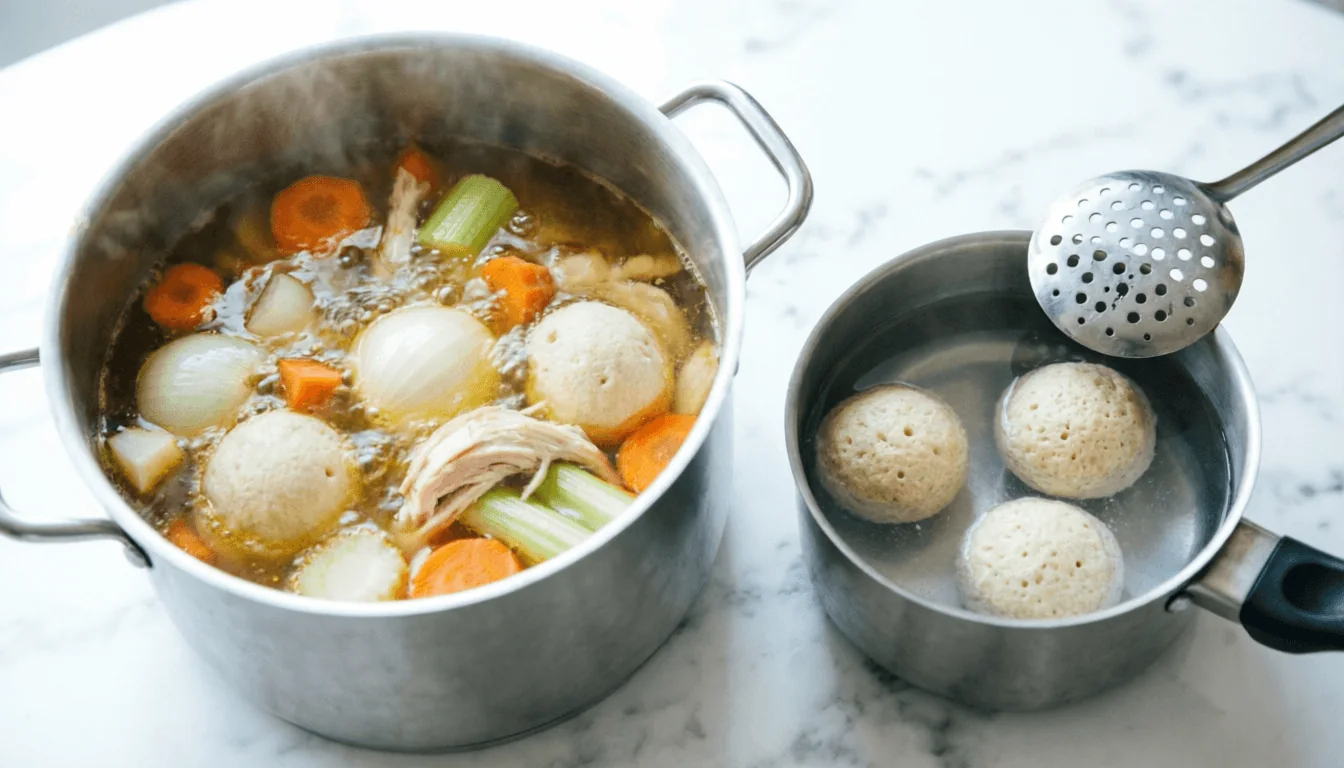
Step 1: Start the broth
Place the chicken in a large stockpot and cover with the low-sodium broth and water. Bring to a bare simmer over medium heat, skimming off any foam that rises to the surface.
Step 2: Add the aromatics
Once the foam has been skimmed, add the 4 chunked carrots, parsnip, celery, onion, garlic, dill, parsley, bay leaves, and peppercorns. Reduce the heat to low and let the broth simmer gently, partially covered, for about 1.5 to 2 hours. Avoid a hard boil, which clouds the broth.
Step 3: Strain, season, and add reserved vegetables
Remove the chicken and set it aside to cool slightly before shredding or cubing the meat. Strain the broth through a fine-mesh sieve, discarding the cooked vegetables. Return the broth to the pot, add the reserved diced carrot, and simmer for 10 minutes until tender. Season with salt to taste, starting light.
Step 4: Make the matzo ball dough
In a mixing bowl, whisk the whole eggs, egg whites, and olive oil together until well combined. Stir in the whole wheat matzo meal, salt, pepper, baking powder if using, and the broth or seltzer. Mix just until combined — overworking the dough makes for a denser matzo ball. Cover and refrigerate for at least 30 minutes, or up to several hours.
Step 5: Roll and cook the matzo balls
Bring a separate large pot of salted water to a boil. With wet hands, roll the chilled dough into balls about 1 inch in diameter — they will roughly double in size as they cook. Gently drop them into the boiling water, reduce the heat to a simmer, cover, and cook for 20 to 30 minutes without lifting the lid.
Step 6: Combine and serve
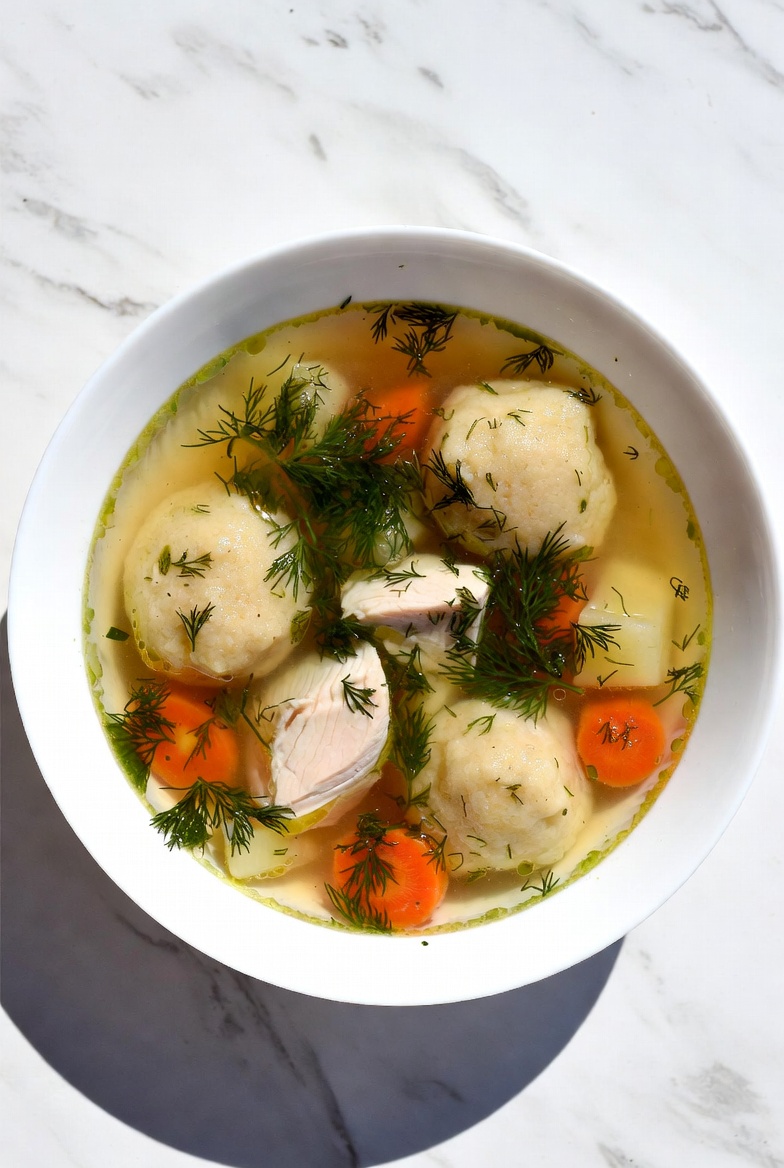
Return the shredded chicken to the broth and reheat gently. Ladle the hot broth into bowls, add two or three matzo balls per bowl, and garnish with fresh dill.
Nutritional Comparison
Per serving (broth, chicken, and 2–3 matzo balls, 1 of 6 servings)
| Nutrient | Traditional | This Version |
|---|---|---|
| Calories | ~270–350 kcal | ~220–290 kcal |
| Protein | ~20–25g | ~22–27g |
| Total fat | ~13–19g | ~8–13g |
| Saturated fat | ~4–6g | ~1.5–2.5g |
| Carbohydrates | ~14–19g | ~14–18g |
| Dietary fiber | ~1–2g | ~3–4g |
| Sodium | ~500–650mg | ~300–400mg |
Nutritional values are estimates based on standard ingredient databases. They will vary depending on the specific cuts of chicken used, the ratio of whole eggs to egg whites, and the amount of salt added.
The biggest shifts are in saturated fat and sodium, which drop by roughly half compared to the traditional version, while protein holds steady or ticks up slightly thanks to the added egg whites. Fiber more than doubles, though it’s still a modest amount per bowl — the extra carrots and whole wheat matzo meal help, but this remains a broth-and-dumpling dish rather than a high-fiber one.
Storage and Reheating
Refrigerate the broth and matzo balls in separate airtight containers for up to 3 to 4 days. Storing them apart keeps the matzo balls from soaking up too much liquid and turning soft and waterlogged. The reserved diced carrot can be stored right in the broth, since it’s meant to soften and blend into the finished soup rather than stay separate.
Both the broth and the matzo balls freeze well on their own for up to 2 to 3 months. Thaw overnight in the refrigerator, then reheat the broth on the stovetop until steaming and warm the matzo balls through in the simmering broth for the last few minutes before serving.
Healthy Matzo Ball Soup

Ingredients
For the broth
- 2 lbs boneless, skinless chicken breasts and thighs, visible fat trimmed
- 4 carrots, peeled and cut into chunks (plus 1 extra carrot, diced small, reserved)
- 1 parsnip, peeled and diced small
- 3 celery stalks, cut into chunks
- 1 large onion, quartered
- 3 garlic cloves, smashed
- 1 bunch fresh dill, plus extra for serving
- A few sprigs fresh parsley
- 2 bay leaves
- 1 tablespoon whole black peppercorns
- 8 cups low-sodium chicken broth
- 4 cups water
- Salt, to taste (start with about half of what the traditional recipe calls for)
For the matzo balls
- 2 large eggs
- 4 large egg whites
- 1/4 cup olive oil
- 1 cup whole wheat matzo meal
- 1/4 cup broth or seltzer water
- 1 teaspoon salt
- 1/2 teaspoon baking powder (optional, for a lighter texture)
- Freshly ground black pepper, to taste
- 2 tablespoons chopped fresh dill (optional)
Instructions
- Build the broth from skinless chicken breast and thighs, trimmed of visible fat, plus a low-sodium base
- Mix whole wheat matzo meal with a blend of whole eggs and egg whites, plus olive oil instead of schmaltz
- Chill the dough, then simmer the matzo balls separately in salted water, same as the traditional method
- Stir extra carrots and parsnip into the broth for more fiber and body
- Season with herbs and a light hand on the salt, finishing with fresh dill
Frequently Asked Questions
Will using egg whites instead of whole eggs change the texture of the matzo balls?
Slightly — a dough with more egg whites and fewer yolks tends to bind a bit less richly, but the olive oil and whole wheat matzo meal help keep the texture soft. Most people find the difference minor once the balls are in a hot bowl of broth.
Can I use all egg whites and skip the whole eggs entirely?
Yes, though the matzo balls will be noticeably lighter in flavor and slightly firmer, since the yolks contribute some richness beyond fat and cholesterol. Two whole eggs plus four whites is a middle ground that keeps most of the traditional taste while still cutting a meaningful amount of saturated fat and cholesterol compared to using four whole eggs.
Is whole wheat matzo meal hard to find?
It’s less common than regular matzo meal but is sold by several major matzo brands, particularly around Passover. If it isn’t available locally, it can usually be ordered online, or regular matzo meal can be used as a fallback with a small reduction in fiber.
Does low-sodium broth taste noticeably different?
On its own, yes — it tastes flatter. But once it’s built up with the aromatics, herbs, and vegetables in this recipe, most of that gap closes. Tasting and adjusting salt at the very end, rather than seasoning heavily throughout cooking, also helps control the total.
Can this version be made pareve, without chicken or dairy?
Yes. Swap the chicken and broth for a low-sodium vegetable broth, and the matzo balls — already built on olive oil rather than schmaltz — stay pareve as written.
Is this version suitable for someone watching their cholesterol?
The changes here — skinless chicken, a higher ratio of egg whites to yolks, and olive oil in place of schmaltz — all work in the direction of less saturated fat and less dietary cholesterol per serving.3,4 That said, individual needs vary, so anyone managing high cholesterol or heart disease should check portion sizes and overall fit with a doctor or registered dietitian.
Do the extra vegetables change the cooking time?
Barely. The reserved diced carrot only needs about 10 minutes to soften once added back to the strained broth, so it adds a small amount of time at the end rather than extending the main simmer.
Why use both chicken breast and thighs instead of just breast meat?
Breast meat alone is leaner, but thighs contribute flavor and a bit more moisture to the broth even with the skin and visible fat removed. The blend keeps the soup from tasting one-note while still landing well below the fat content of a skin-on, all-dark-meat version.
Will the whole wheat matzo meal make the matzo balls taste noticeably different?
There’s a slightly nuttier flavor and a marginally denser bite compared to matzo balls made with regular matzo meal, but the difference is subtle once the balls are simmering in a well-seasoned broth. Most people who aren’t specifically comparing the two side by side don’t notice a major shift.
Looking for the full traditional version? Our Traditional Matzo Ball Soup article covers the history of kneidlach, the classic schmaltz-and-chicken-fat recipe, and the cultural background behind the dish.
Further Reading & Sources
The following sources were consulted for the nutritional information and health context in this article. Heritage Healthy Kitchen’s recipe was developed independently; these links are provided for readers who want to explore further.
- “How Important Are Whole Grains in My Diet?” Harvard Health Publishing, Harvard Medical School. health.harvard.edu/healthy-aging-and-longevity/how-important-are-whole-grains-in-my-diet — the nutritional difference between whole and refined grains, and the link between whole grains and lower risk of heart disease and type 2 diabetes.
- “Foods High in Fiber: Boost Your Health with Fiber-Rich Foods.” Harvard Health Publishing, Harvard Medical School. health.harvard.edu/diet-and-nutrition/foods-high-in-fiber-boost-your-health-with-fiber-rich-foods — fiber content of cooked carrots and other vegetables, and the health benefits of dietary fiber.
- “Healthy Cooking Oils.” American Heart Association. heart.org/en/healthy-living/healthy-eating/eat-smart/fats/healthy-cooking-oils — the difference between solid fats and liquid oils, and guidance on choosing oils lower in saturated fat.
- “Plate Debate: What Are the Best and Worst Sources of Protein?” Cleveland Clinic Health Essentials. health.clevelandclinic.org/best-and-worst-sources-of-protein — registered dietitian guidance on trimming chicken skin and visible fat, and on separating egg whites from yolks to reduce saturated fat and cholesterol intake.
- “How Much Sodium Should I Eat Per Day?” American Heart Association. heart.org/en/healthy-living/healthy-eating/eat-smart/sodium/how-much-sodium-should-i-eat-per-day — recommended daily sodium limits and where most excess sodium in a typical diet comes from.
Disclaimer
The information in this article is provided for educational and informational purposes only. Heritage Healthy Kitchen makes no representations or warranties regarding the accuracy or completeness of any content on this site. Nutritional values are estimates only and will vary depending on the specific ingredients, brands, and measurements used. This content is not intended as dietary, medical, or professional nutritional advice. Always consult a qualified healthcare provider regarding any dietary needs or health conditions, particularly if managing cholesterol, blood pressure, or another condition affected by sodium or fat intake. Heritage Healthy Kitchen is not responsible for any outcomes resulting from the use of recipes or information published on this site.
Cook by Occasion
This recipe is part of our Rosh Hashanah menu.
You Might Also Like
More heritage recipes from our kitchen
Leave a Reply