
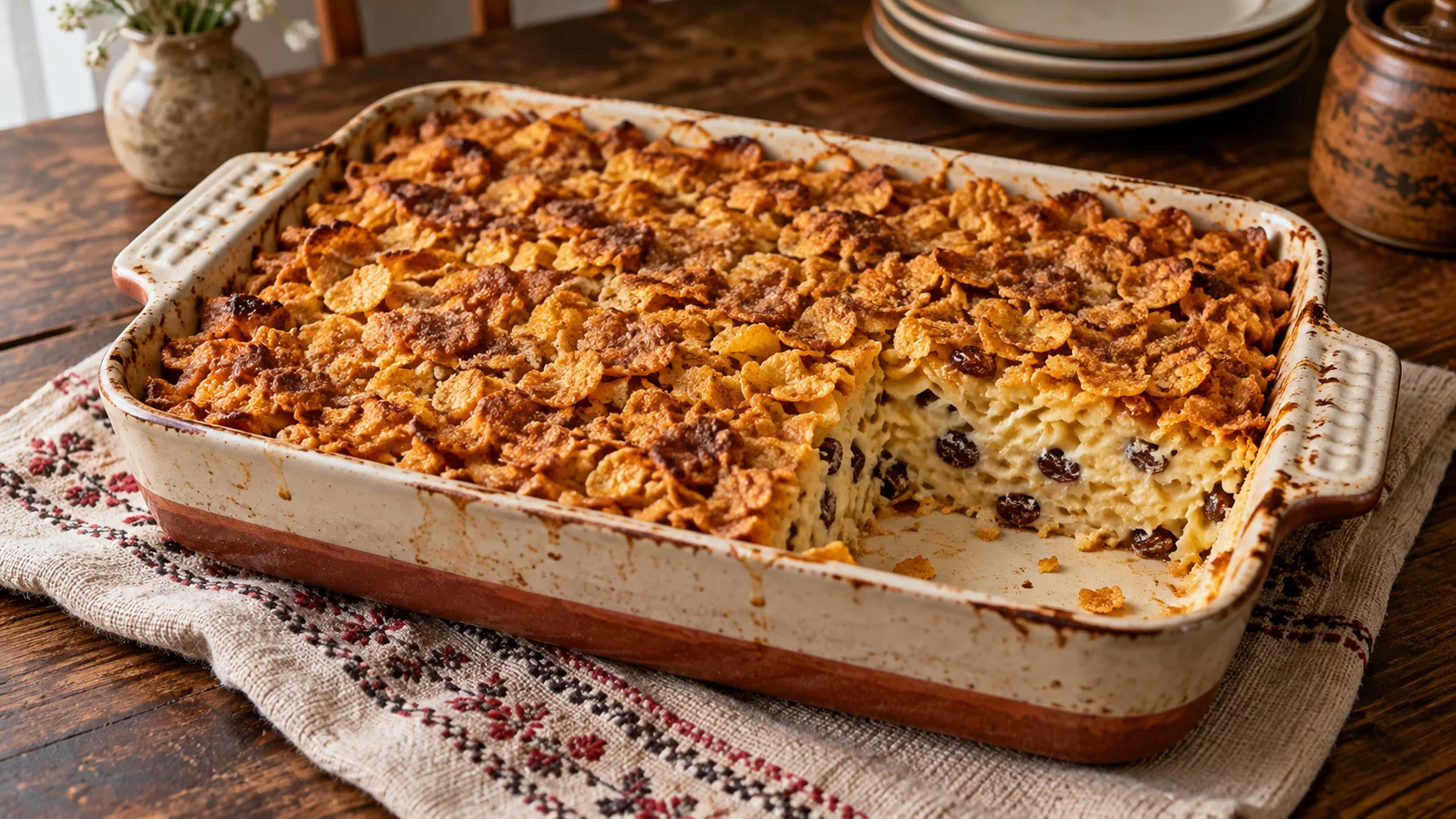
Active time: ~30 minutes | Total time: ~1¾ hours | Serves: 10 | Difficulty: Easy
Quick Overview
- Boil wide egg noodles until just tender
- Whisk eggs, cottage cheese, sour cream, cream cheese and sugar into a custard
- Fold in the noodles and raisins
- Pour into a buttered dish and top with cinnamon-sugar cornflakes
- Bake until golden and set, then rest before cutting
What Noodle Kugel Is
Noodle kugel, also called lokshen kugel, is a baked casserole of egg noodles bound with eggs. The version most often meant by the name is sweet, made with raisins, cinnamon and a custard of cottage cheese, sour cream and cream cheese.3 It belongs to the Ashkenazi Jewish table, and this one is a dairy kugel, the kind made for Shavuot.4
History and Cultural Roots
Kugel began as something simpler than a casserole: batter dumplings dropped into the Shabbat stew on Friday and left to simmer overnight, then served after synagogue.2 The name is the German word for ball,2,3 and the earliest kugels were made mostly from bread dough rather than noodles.1
Noodle kugel appeared around the 1500s, about 300 years before potato kugel.1 Noodles reached Ashkenazi kitchens by two routes: Jewish travelers brought them from Italy into the Franco-German lands in the fourteenth century, and Tatars brought them from Central Asia into the Slavic lands about two centuries later.1
Sugar made kugel sweet. In the early 1800s Polish Jews entered the sugar beet refining industry, and the cheaper sugar went into dishes like noodle kugel.1 Geography still shaped the taste: salt-and-pepper kugel is more common in Lithuania, sweet kugel in Poland and Hungary, the same divide a Yiddish linguist traced in the 1960s for gefilte fish, the “Gefilte Line.”1
Cottage or farmer’s cheese turned the sweet kugel into a dairy dish, and some early Jewish cookbooks gave it for Shavuot only.1 The first published American kugel recipe, in Esther Levy’s cookbook of 1871, is already a sweet noodle kugel with homemade noodles, raisins, eggs and sugar.2 The cornflake topping came later, as a mid-twentieth-century American addition.1
On the Holiday Table
Shavuot, the holiday on which the Torah was received, is the dairy holiday. ReformJudaism.org calls kugel “an especially perfect dish to enjoy during Shavuot” because it is dairy-based. One explanation for eating dairy then is that the Israelites had no separate meat and dairy pots yet; another is that kugel’s sweetness recalls the sweetness of the Torah and the land flowing with milk and honey.4 Our Shavuot menu gathers the other dishes for the holiday.
As written, this kugel is dairy, so it belongs on a dairy table, not next to meat. Some families who keep kosher make a pareve kugel instead for meat meals.5
Traditional Noodle Kugel Recipe
This recipe was compiled by Heritage Healthy Kitchen from a comparison of published recipes; the sources are listed at the end of this article. Figures that are Heritage Healthy Kitchen’s own estimates rather than taken from a published source are marked as such.
Per 450g (1 lb) of noodles, published recipes use 4–6 eggs (one much richer recipe, 16), about ½–1½ cups of sugar, and from about 300g to more than 1kg of cottage cheese, sour cream and cream cheese together.6,7,8,9,10 They bake at 175–190°C (350–375°F), most in a 23×33cm (9×13-inch) dish, for anything from 40 minutes to 1¼ hours.6,7,8,9,10 The amounts below sit inside those ranges; the bake time within them, the weight of the cornflake topping, the rest and the number of servings are Heritage Healthy Kitchen’s estimates.
Ingredients (serves 10)
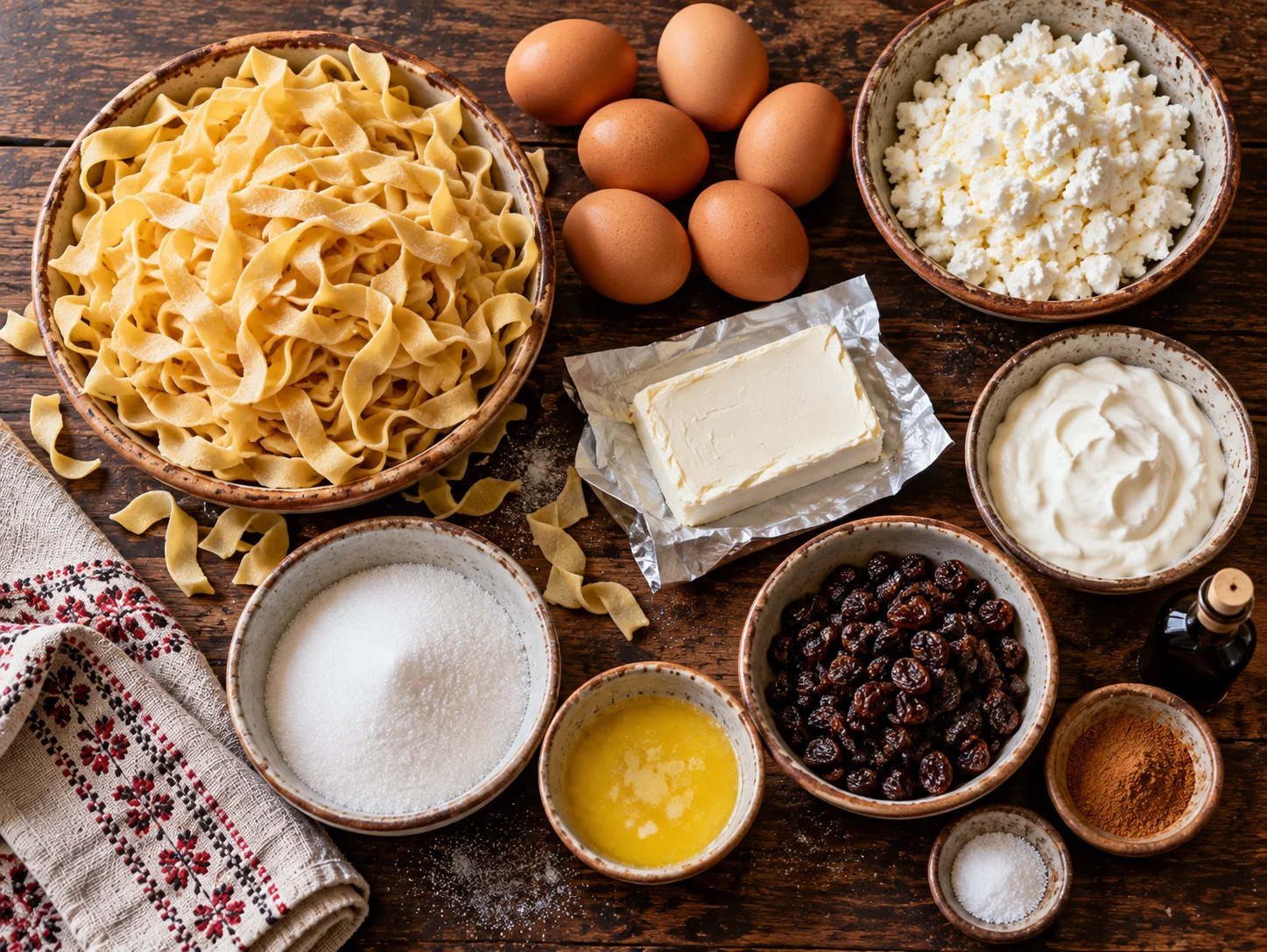
For the kugel
- 450g (1 lb) wide egg noodles
- 6 large eggs
- 450g (2 cups) cottage cheese
- 240g (1 cup) sour cream
- 225g (8 oz) cream cheese, softened
- 150g (¾ cup) granulated sugar
- 115g (½ cup) unsalted butter, melted, divided, plus a little for the dish
- 1 teaspoon vanilla extract
- 1 teaspoon ground cinnamon
- ½ teaspoon fine salt
- 110g (¾ cup) raisins (optional)
For the topping
- 2 cups cornflakes, crushed (about 55g)
- 3 tablespoons granulated sugar
- 1 teaspoon ground cinnamon
- 3 tablespoons unsalted butter, melted

Instructions
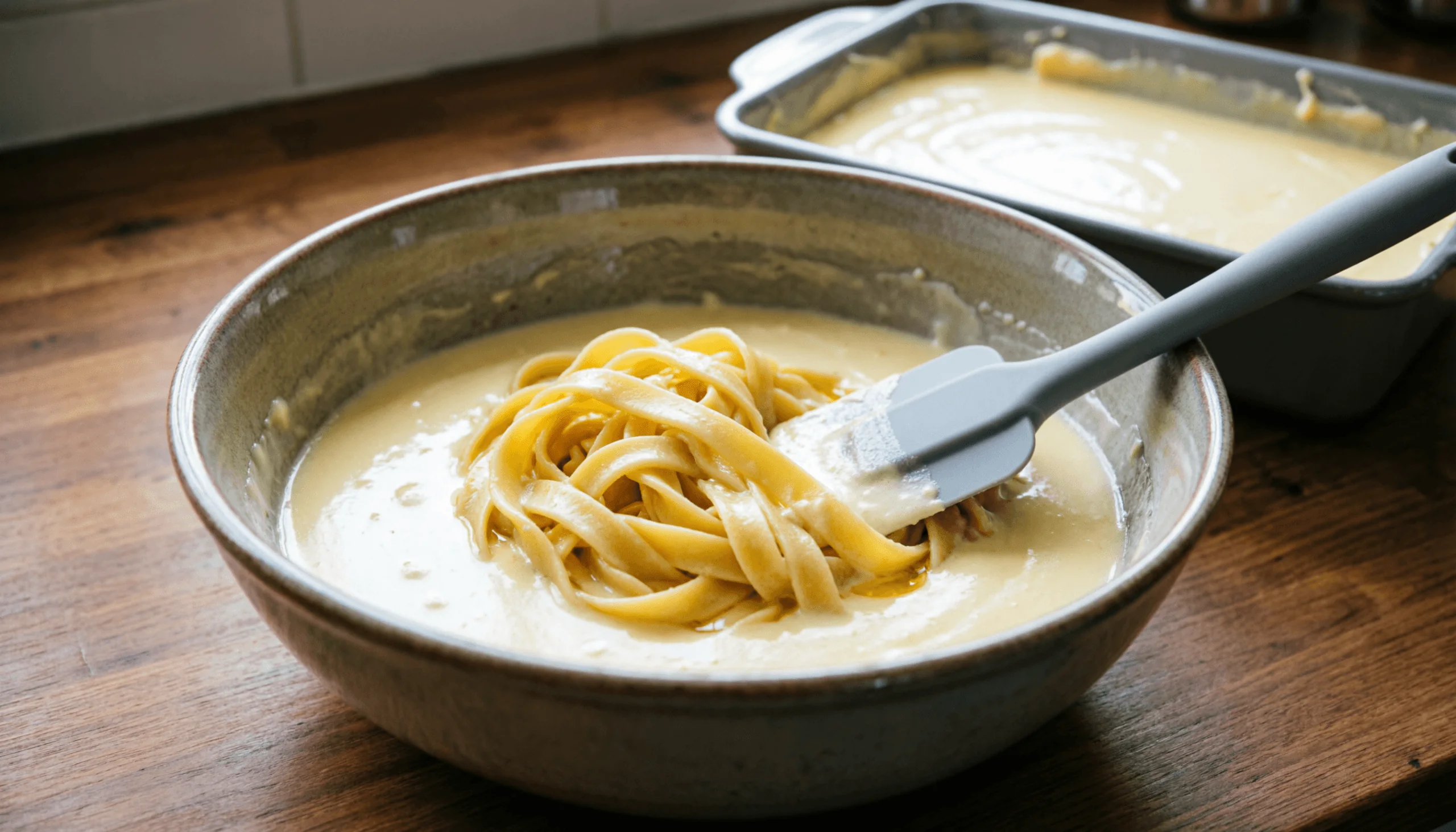
- Boil the noodles. Cook the egg noodles in salted boiling water until just tender, no more than 7 minutes. Drain well, without rinsing, and set aside.6,9
- Make the custard. In a large bowl, beat the eggs, then whisk in the cottage cheese, sour cream, softened cream cheese, sugar, half the melted butter, vanilla, cinnamon and salt until fairly smooth.6,9,10
- Combine. Fold the drained noodles and the raisins into the custard until evenly coated.
- Assemble. Heat the oven to 175°C (350°F). Pour the mixture into a buttered 23×33cm (9×13-inch) baking dish and drizzle the remaining melted butter over the top.6,10
- Top. Mix the crushed cornflakes with the sugar, cinnamon and melted butter, and scatter evenly over the kugel.6,7,10
- Bake. Bake for 50–60 minutes, until the top is golden and a knife inserted in the center comes out clean.6,7,10
- Rest and serve. Let the kugel rest for 10–15 minutes before cutting. Serve warm, at room temperature or cold.
Kitchen Tips
Pull the noodles a little early. They keep cooking in the oven, and one published recipe boils them for no more than 7 minutes.6 Another says not to rinse them.9
Soften the cream cheese before mixing so that it blends into the custard without lumps.
Most published recipes put the cornflakes on before baking.6,7,9,10 One adds its topping 15 minutes before the end,8 which is an option if you would rather the cornflakes spend less time in the oven.
Looking for a Lighter Version?
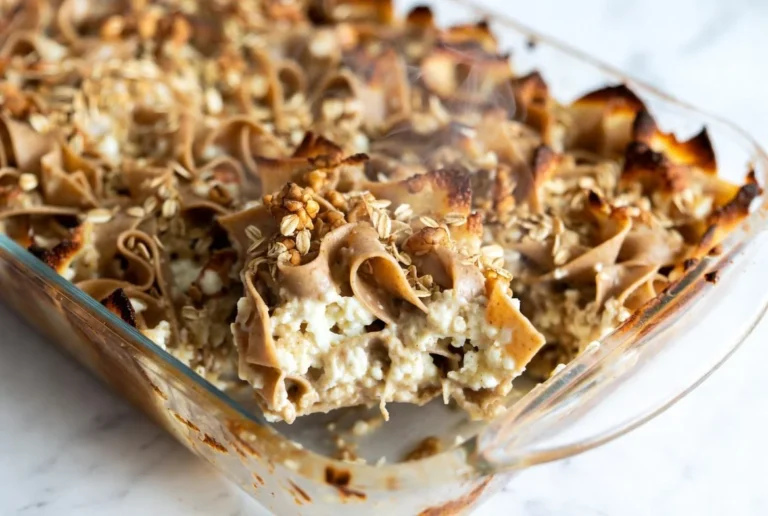
Our Healthy Noodle Kugel recipe uses whole wheat noodles, 2% cottage cheese and Greek yogurt in place of the cream cheese and sour cream, less sugar and butter, and an oat and walnut topping.
Nutritional Information
Per serving (one of 10 servings):

- Calories: approximately 570–695 kcal
- Protein: 16–20g
- Total fat: 29–36g, of which saturated 16–19g
- Carbohydrates: 62–75g
- Fiber: about 2g
- Sodium: 380–465mg
Nutritional values are estimates based on standard ingredient databases (USDA FoodData Central)12 and vary with the brands of dairy and noodles. The weight of the cornflake topping and the butter used to grease the dish are Heritage Healthy Kitchen’s estimates.
Storage and Reheating
Refrigerate leftover kugel within 2 hours of baking. It keeps in the refrigerator for 3 to 4 days, or in the freezer for 3 to 4 months, after which it can lose moisture and flavor.11 Wrap it tightly for the freezer and thaw it in the refrigerator before reheating.
Reheat portions until they reach 74°C (165°F) in the center.11 In a 165°C (325°F) oven this takes about 15–20 minutes for a thawed portion; that time is Heritage Healthy Kitchen’s estimate. A microwave works too, with less crisping on top.
Traditional Noodle Kugel

Ingredients
For the kugel
- 450g (1 lb) wide egg noodles
- 6 large eggs
- 450g (2 cups) cottage cheese
- 240g (1 cup) sour cream
- 225g (8 oz) cream cheese, softened
- 150g (¾ cup) granulated sugar
- 115g (½ cup) unsalted butter, melted, divided, plus a little for the dish
- 1 teaspoon vanilla extract
- 1 teaspoon ground cinnamon
- ½ teaspoon fine salt
- 110g (¾ cup) raisins (optional)
For the topping
- 2 cups cornflakes, crushed (about 55g)
- 3 tablespoons granulated sugar
- 1 teaspoon ground cinnamon
- 3 tablespoons unsalted butter, melted
Instructions
- Noodles: Boil in salted water until just tender, no more than 7 minutes; drain, do not rinse.
- Custard: Beat the eggs; whisk in cottage cheese, sour cream, cream cheese, sugar, half the butter, vanilla, cinnamon, salt.
- Combine: Fold in the noodles and raisins.
- Assemble: Oven at 175°C (350°F). Pour into a buttered 23×33cm (9×13-inch) dish; drizzle with the remaining butter.
- Top: Scatter over the cornflakes mixed with sugar, cinnamon and butter.
- Bake: 50–60 minutes, until golden and a knife comes out clean.
- Rest: 10–15 minutes before cutting; serve warm, at room temperature or cold.
Frequently Asked Questions
What’s the difference between noodle kugel and potato kugel?
Noodle kugel is built on egg noodles and is the older of the two, dating to around the 1500s; potato kugel followed about 300 years later.1 The noodle kind can be sweet or peppery, depending on where a family comes from.1
Why is kugel eaten on Shavuot?
Shavuot is a holiday of dairy foods, and kugel is a dairy-based dish. Two explanations are given for dairy on the holiday: the Israelites had no separate meat and dairy pots when they received the Torah, and kugel’s sweetness recalls the sweetness of the Torah and the land flowing with milk and honey.4
Can noodle kugel be made without dairy?
A pareve kugel exists, and some families who keep kosher make it for meat meals.5 This recipe is a dairy one, and we don’t give a pareve version.
Why does noodle kugel have a cornflake topping?
The cornflake topping is a mid-twentieth-century American addition to sweet kugel.1 Published recipes use anywhere from ½ cup to 2 cups of cornflakes, sometimes dotted with butter.6,7
Can noodle kugel be made ahead?
Yes. One published recipe assembles the kugel, covers it and refrigerates it overnight before baking.8 Baked kugel keeps in the refrigerator for 3 to 4 days.11
Where does the word “kugel” come from?
It is the German word for ball, a reference to the batter dumplings that were kugel’s earliest form, cooked in the Shabbat stew.2,3
Further Reading & Sources
The recipe is a compilation based on the published recipes listed here; these links are provided for readers who want to explore further.
- Joel Haber. (5 April 2021). The Tangled History of Noodle Kugel. The Nosher, My Jewish Learning.
- Yvette Alt Miller. (4 September 2023). Kugel! Aish.
- Yonah Levi. (7 October 2018). A Brief History of Kugel. Aish.
- Chaim Harrison. 11 Delicious Kugel Recipes for Shavuot and Beyond. ReformJudaism.org (no date given).
- Academy of Nutrition and Dietetics. Rosh Hashanah. eatright.org (no author or date given).
- Abbe Odenwalder. Sweet Noodle Kugel. Aish (no date given; reposted by PBS Food, 26 June 2023).
- Shannon Sarna. (28 January 2016). Sweet Noodle Kugel. The Nosher, My Jewish Learning.
- Tina Wasserman. Deluxe Noodle Kugel. ReformJudaism.org (no date given).
- Amy Ettinger. This Amazing Kugel Was the Only Thing My Jewish Mom Could Cook. Kveller (no date given).
- Temple Covenant of Peace Sisterhood, Easton, PA. Aunt Mildred’s Crunchy Noodle Kugel. ReformJudaism.org (no date given).
- U.S. Department of Agriculture, Food Safety and Inspection Service. (updated 31 July 2020). Leftovers and Food Safety.
- U.S. Department of Agriculture. FoodData Central, SR Legacy: egg noodles, dry, enriched (FDC 169731); whole-wheat pasta, dry (169738); cream cheese (173418); cottage cheese, creamed (172179) and low fat 2% (172182); sour cream (171257); Greek yogurt, plain, lowfat (170903); eggs (171287); oats (169705); walnuts (170187).
Disclaimer
The information in this article is provided for educational and informational purposes only. Heritage Healthy Kitchen makes no representations or warranties regarding the accuracy or completeness of any content on this site. Nutritional values are estimates only and will vary depending on the specific ingredients, brands, and measurements used. This content is not intended as dietary, medical, or professional nutritional advice. Always consult a qualified healthcare provider regarding any dietary needs or health conditions. Heritage Healthy Kitchen is not responsible for any outcomes resulting from the use of recipes or information published on this site.
Cook by Occasion
This recipe is part of our Shavuot menu.
You Might Also Like
More heritage recipes from our kitchen
Leave a Reply