
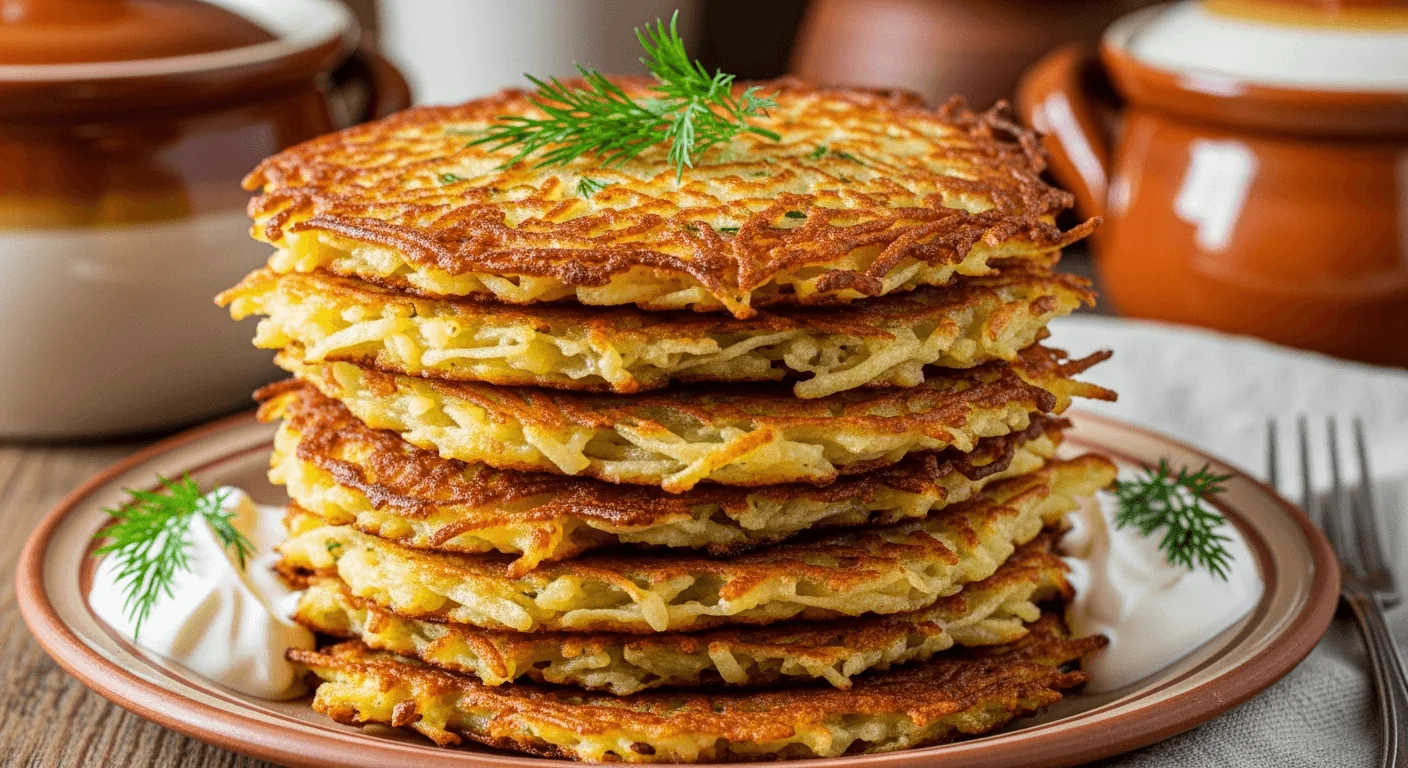
Prep time: 20 minutes | Cook time: 25 minutes | Serves: 3–4 (about 14–16 pancakes) | Difficulty: Easy
Quick Overview
- Peel and grate the potatoes with onion, salt lightly, and let the mixture sit for 10 minutes
- Squeeze out as much water as possible, saving the liquid in a bowl so the starch can settle
- Pour off the water, scrape the white starch sediment back into the potato mixture
- Add eggs and season; add a tablespoon of flour if the batter is too loose
- Fry in hot oil, about 3–5 minutes per side until deeply golden; drain on paper towels and serve immediately with sour cream
What Placki Ziemniaczane Are
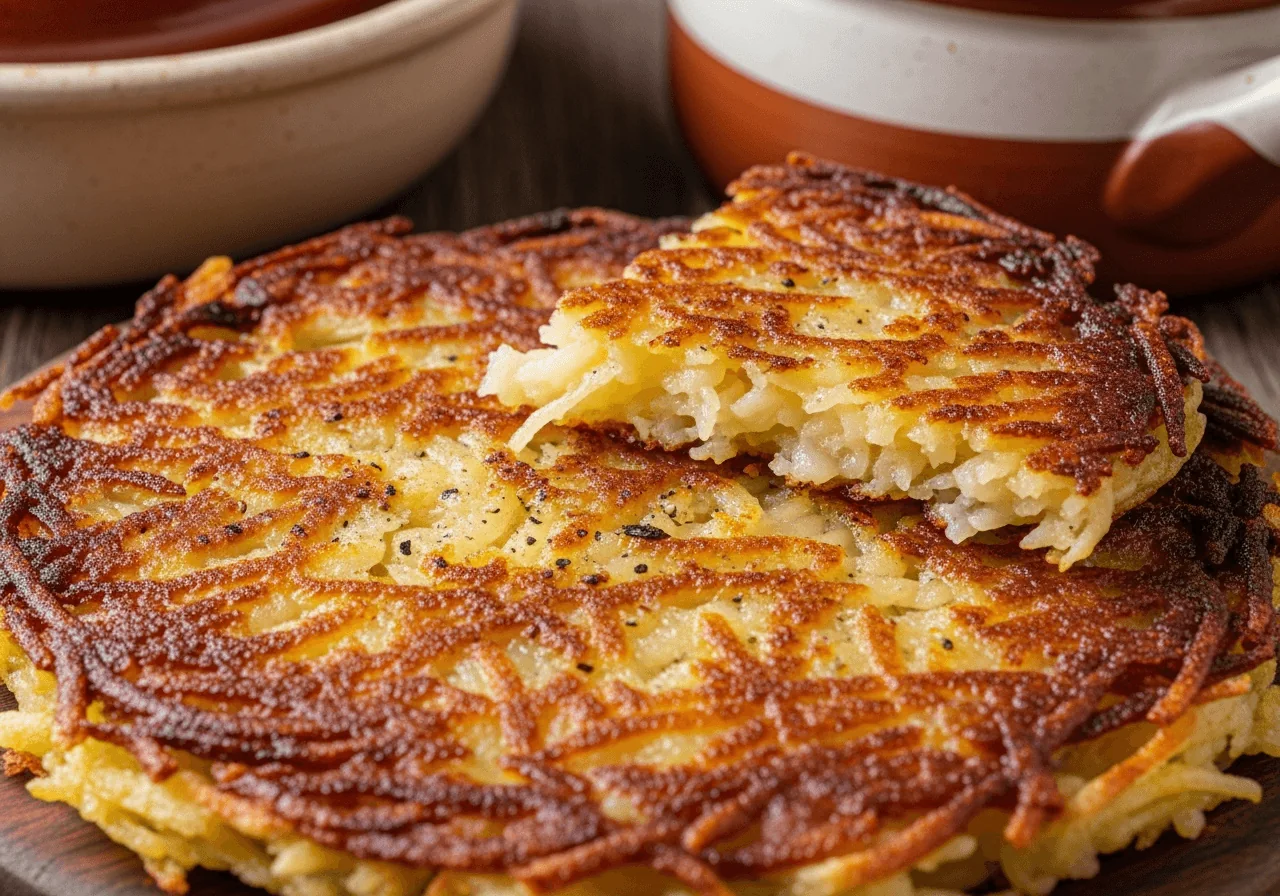
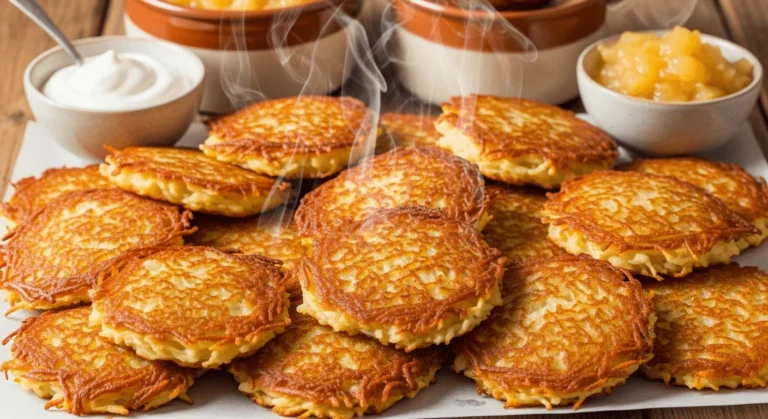
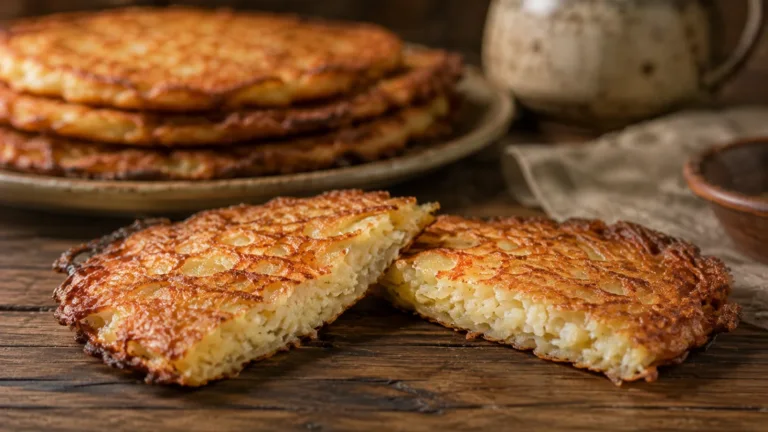
Placki ziemniaczane (pronounced plat-ski zyem-nya-cha-neh) are Polish potato pancakes made from raw grated potatoes, egg, and onion, pan-fried until the edges go dark gold and crispy. The center stays softer, almost custardy if you grate fine, more fritter-like if you grate coarse.¹
They are nothing like hash browns and only superficially related to German Kartoffelpuffer or Swiss Rösti. The egg binds the batter into something with more structure than either of those, and the grated onion caramelizes during frying and adds a sweetness that raw potato alone doesn’t have. The starchy sediment you rescue from the squeezed liquid holds everything together without the dense quality that flour produces.²
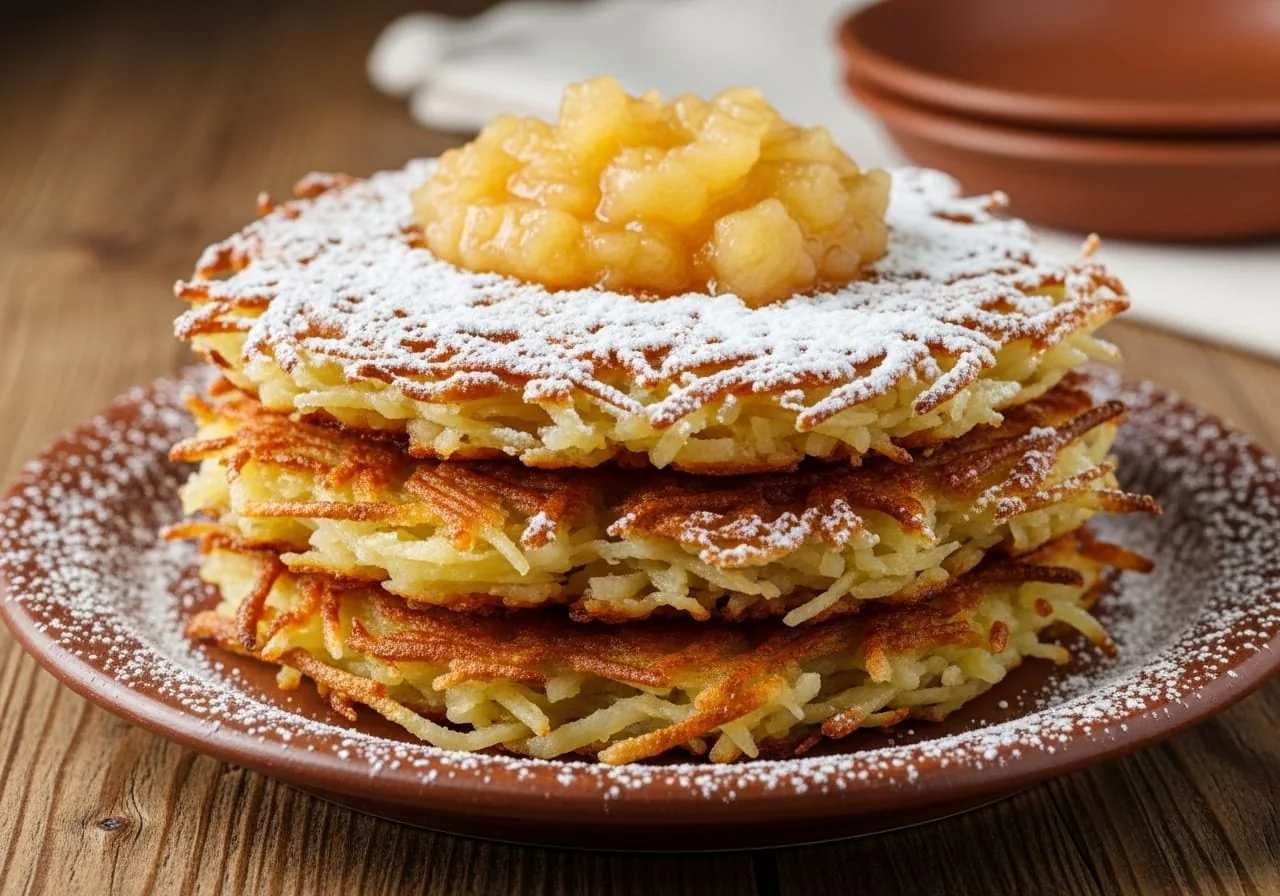
Served savory, they come with sour cream and fresh dill or chives. Served sweet, a dusting of powdered sugar or a spoonful of applesauce. In Polish restaurants, you’ll often see them loaded with goulash — a combination called placek po węgiersku, Hungarian-style pancake, though no one in Hungary would recognize it.¹
History and Cultural Roots
Placki ziemniaczane are documented from the 17th century, when the potato had already become a fixture in the Polish diet. The oldest documented recipe for the dish comes from a monastery in Stoczek Warmiński in the Warmińsko-Mazurskie region: one onion, two eggs, and a spoon of wheat flour per kilogram of potatoes, served only with salt and pepper.² The monks were not writing cuisine. They were writing instructions for feeding many people on a staple that was always available.
Through the 18th and 19th centuries, the potato became the dominant crop in the Polish countryside. During the Partitions, when Poland was divided among Russia, Prussia, and Austria, economic hardship turned potato pancakes into a necessity. When bread was scarce or too expensive, placki replaced it. Peasant households converted low-quality potato crops into something filling; field laborers sometimes fried pancakes on the spot to use potatoes that were beginning to deteriorate.²
The dish also has a well-documented connection to Jewish culinary tradition in Poland. Before World War II, Poland was home to one of the largest Jewish communities in the world, and the Ashkenazi latke, made from grated potato, egg, and onion, fried in oil for Hanukkah, shares the same core technique with placki ziemniaczane. Whether one tradition influenced the other or both developed in parallel from the same regional ingredients has never been settled. Food historians note that influence went in multiple directions, and the distinction between a latke and a placek often comes down to the family making it, not any culinary principle.²
By the communist period, placki ziemniaczane had become a fixture at Polish milk bars, the state-subsidized canteens that fed workers on simple, cheap food. The dish’s reputation as honest, filling, and unglamorous cooking stuck. Older Poles who grew up in that era often describe them with real warmth, not because the milk bar versions were exceptional, but because the smell of frying potatoes and a hot plate of placki meant something reliable when much else was not.¹
Regional Names and Variations
Placki ziemniaczane is the standard name used across Poland, but the dish goes by different local names depending on the region. The preparation varies too — thickness, grating technique, and preferred toppings all shift from one area to the next.¹
The toppings vary as much as the names. Most of Poland defaults to sour cream, sometimes plain, sometimes with chives or dill mixed in. In mountain regions, the pancakes are often served with local cheese. The sweet version with powdered sugar or applesauce also has a long tradition across Poland.¹
The most dramatic variation is placek zbójnicki, the “brigand’s pancake,” from Tatra Mountain tradition. It’s a large, thick potato pancake topped with a rich meat stew. The name refers to the Tatra highlander outlaws of Polish folk tradition. The related placek po węgiersku uses goulash instead of stew: Hungarian-inspired by name, Polish in practice.¹
On the Holiday Table
The pancake itself has a holiday, even if the Polish version does not. Hanukkah pancakes were made of cheese for centuries, and the potato took over only after the crop failures of 1839 and 1840 in Poland and Ukraine left potatoes cheaper than flour;⁶ fried in oil rather than lard, the recipe below is that same pancake.
Traditional Placki Ziemniaczane Recipe
Recipe developed independently by Heritage Healthy Kitchen, drawing on traditional Polish culinary methods. Sources for further reading are listed at the end of this article.¹²³⁴⁵
Ingredients
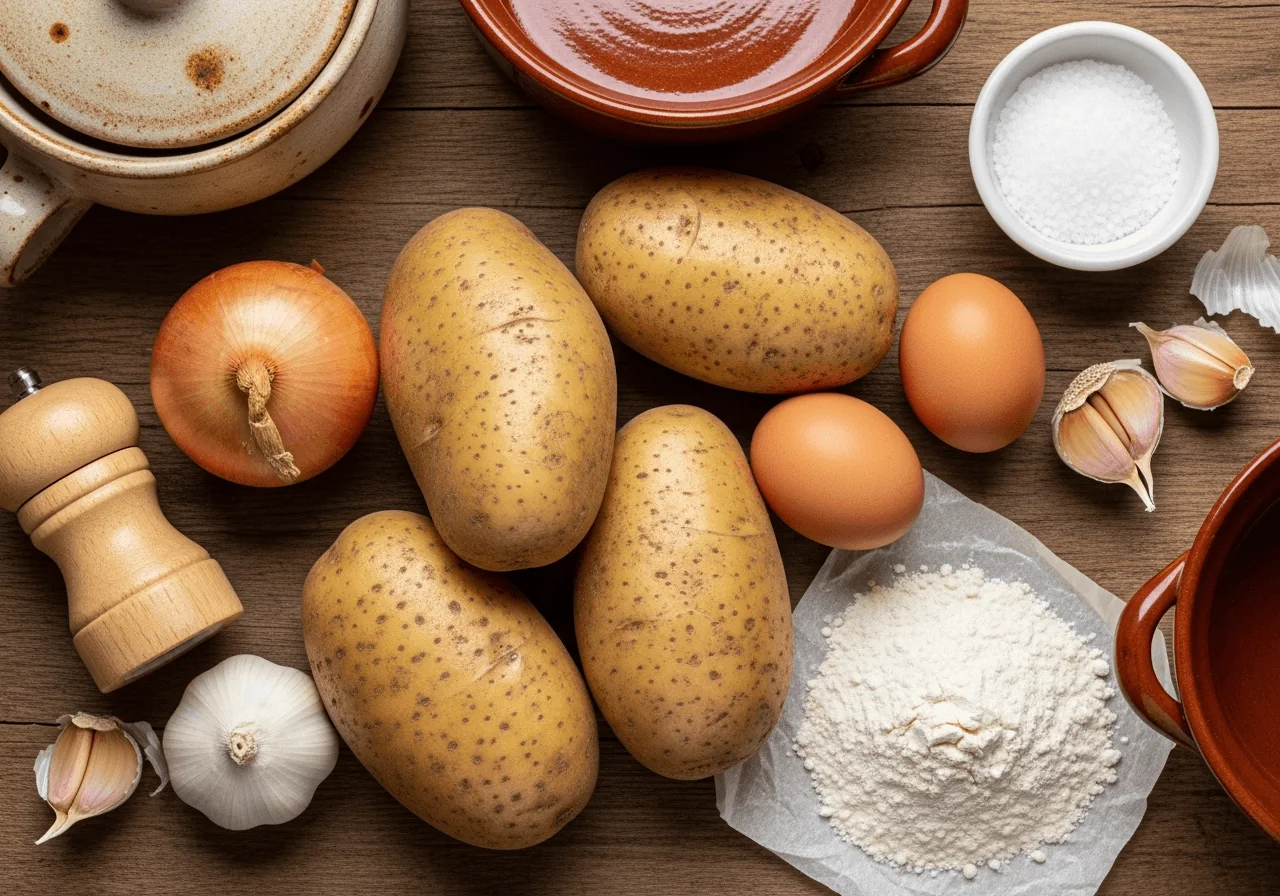
- 1 kg (2.2 lbs) starchy potatoes — Russet, Idaho, or any high-starch floury variety; in Poland, traditional varieties are high-starch local cultivars¹
- 1 medium yellow or white onion (about 120g / 4 oz), grated
- 2 large eggs
- 1–2 tablespoons all-purpose flour or potato starch — only if needed to bind a wet batter
- 1 teaspoon fine salt, plus more to taste
- Black pepper, freshly ground — use plenty
- 1–2 garlic cloves, minced (optional, traditional in many households)
- Neutral oil with a high smoke point for frying — sunflower, canola, or refined rapeseed; lard is the traditional choice and produces an excellent crunch
To Serve (Savory)
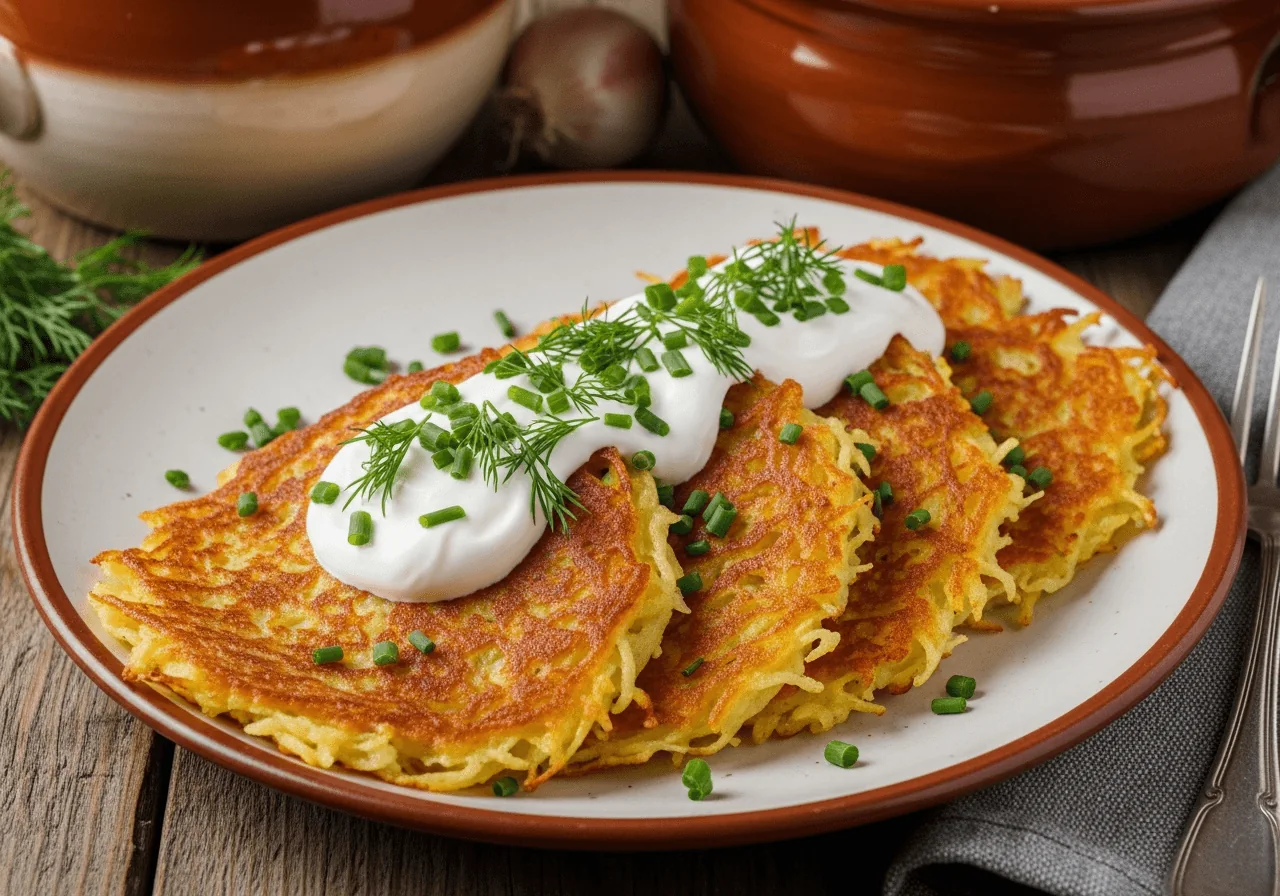
- Sour cream — at least 4 tablespoons per serving
- Fresh dill or chives, finely chopped
To Serve (Sweet)
- Powdered sugar or a spoonful of applesauce
Instructions
Step 1: Grate the Potatoes
Peel the potatoes. Grate them using the medium holes of a box grater. For a softer, more traditional texture, use the fine side; for crispier pancakes closer to a fritter, use the large side. Many Polish cooks split the batch, half grated fine and half coarse, which gives you a soft center with very crispy edges. Grate the onion into the same bowl.³
Step 2: Extract the Starch
Add one teaspoon of salt to the grated potato-onion mixture and stir. Let it sit for 10 minutes — the salt pulls water out of the potato. Then squeeze the mixture firmly in a clean kitchen cloth or fine-mesh strainer set over a bowl. Keep going until you’ve extracted as much liquid as possible. Let the squeezed liquid sit for 2–3 minutes: the white starch will settle to the bottom. Pour off the water carefully and scrape that starchy paste back into your potato mixture.³
Step 3: Make the Batter
Add the eggs to the drained potato mixture along with the reserved starch. Season with salt and plenty of black pepper; add the garlic if using. The batter should hold together when pressed. If it’s still quite wet, add a tablespoon of flour or potato starch and mix. Don’t overdo the flour — too much produces a dense, starchy pancake instead of something light and crispy.¹
Step 4: Fry the Pancakes
Pour enough oil into a heavy-bottomed pan to come at least halfway up the thickness of the pancakes, roughly 3–4 tablespoons per batch. Heat over medium-high until a small drop of batter sizzles immediately on contact. Spoon roughly 2–3 tablespoons of batter per pancake and flatten each to about 0.5 cm (¼ inch) thick. Fry undisturbed for 3–5 minutes until the underside is deep golden and the edges look set, then flip and cook another 3–4 minutes.¹ Cook in batches and don’t crowd the pan — dropping the oil temperature produces soggy pancakes.
Step 5: Drain and Serve
Transfer finished pancakes to a plate lined with paper towels. Serve immediately. Placki ziemniaczane lose their crunch within minutes of leaving the pan, and no amount of time under a heat lamp will restore it.¹
Pro Tips
Potato variety matters more here than in almost any other potato dish. Use starchy potatoes with low moisture content: Russet or Idaho in the US, Maris Piper or King Edward in the UK. Waxy or new potatoes contain too much water and will produce flat, oily results regardless of how hard you squeeze them.¹
Grate by hand if you can. A food processor turns potato into mash rather than strands, and mash-textured batter sticks to the pan and fries unevenly. Hand-grating is genuinely tedious. It matters more than anything else for the texture.³
If the oil isn’t hot when the batter goes in, the pancakes absorb fat instead of crisping. Test with a small drop of batter — it should sizzle and begin to set within seconds. Adjust heat between batches; the pan cools each time you add new batter, and you may need to turn it up briefly before the next round.²
Grated potatoes turn gray-brown on exposure to air. This is harmless, but the color isn’t appealing. To slow browning, grate into a bowl of cold water and drain just before mixing the batter. Some cooks add a squeeze of lemon juice; traditionalists skip it. Either way, the fried pancakes will be golden.¹
Make the batter and fry in one session. The batter can rest in the refrigerator for up to 24 hours — press plastic wrap directly onto the surface to slow oxidation — but it will be considerably wetter the next day and will need squeezing again before frying.³
Nutritional Information
The following values are estimates calculated for one serving of 3 pancakes (approximately 250g total), including roughly 1 tablespoon of sunflower oil absorbed during frying. Values will vary based on potato variety, how thoroughly the batter is drained, oil temperature, and cooking time. These figures are for informational purposes only and should not be used for medical dietary planning. Nutritional baseline data for raw potatoes is sourced from USDA FoodData Central.⁵
| Nutrient | Per Serving (3 pancakes, ~250g) |
|---|---|
| Calories | ~265 kcal |
| Carbohydrates | ~36g |
| Protein | ~6g |
| Fat | ~10g |
| Fiber | ~3g |
| Potassium | ~560mg |
| Vitamin C | ~12mg (heat and draining reduce content from the raw potato baseline) |
| Sodium | ~330mg (varies with how much salt you use) |
Potatoes are a good source of potassium, vitamin C, and vitamin B6.⁵ The primary starch in potatoes is amylopectin, which digests fast and raises blood sugar noticeably — worth knowing if you’re watching carbohydrate intake.⁴ The frying process adds fat; the amount depends on oil temperature and pancake thickness. Thinner pancakes fried in properly hot oil absorb less fat than thick ones cooked at lower temperatures.
Storage
Placki ziemniaczane are best straight from the pan. The crispness fades within 15–20 minutes, and reheating gets you most of the way back but not quite. An oven preheated to 190°C (375°F) for 8–10 minutes, or a dry pan over medium heat, both work reasonably well.³
Cooked pancakes can be refrigerated in a sealed container for up to 48 hours. They will soften. Put a sheet of parchment between layers if you’re stacking them — they tend to stick. Freezing is not recommended; the texture becomes mushy on thawing.³
Uncooked batter can be kept in the refrigerator for up to 24 hours, with plastic wrap pressed directly onto the surface. It will be wetter the next day, so drain it thoroughly and re-season before frying.
Traditional Polish Placki Ziemniaczane

Ingredients
- 1 kg (2.2 lbs) starchy potatoes (Russet or Idaho)
- 1 medium yellow or white onion, grated
- 2 large eggs
- 1–2 tablespoons all-purpose flour or potato starch, if needed
- 1 teaspoon fine salt, plus more to taste
- Black pepper, freshly ground
- 1–2 garlic cloves, minced (optional)
- Neutral oil for frying
To Serve (Savory)
- Sour cream — at least 4 tablespoons per serving
- Fresh dill or chives, finely chopped
To Serve (Sweet)
- Powdered sugar or a spoonful of applesauce
Instructions
- Peel and grate the potatoes with onion, salt lightly, and let the mixture sit for 10 minutes
- Squeeze out as much water as possible, saving the liquid in a bowl so the starch can settle
- Pour off the water, scrape the white starch sediment back into the potato mixture
- Add eggs and season; add a tablespoon of flour if the batter is too loose
- Fry in hot oil, about 3–5 minutes per side until deeply golden; drain on paper towels and serve immediately with sour cream
Frequently Asked Questions
Why do my placki fall apart in the pan?
The batter has too much moisture left in it, or not enough binder. Go back and squeeze harder — a surprising amount of water stays in the grated potato even after a first press. If the batter still won’t hold, add a tablespoon of flour or potato starch. Very watery potatoes (waxy varieties, or young new potatoes) are another common cause; switch to a higher-starch potato next time.¹
My pancakes burn on the outside before they cook through. What’s wrong?
The heat is too high, or the pancakes are too thick. Lower the heat to medium and make them thinner, around 0.5 cm as a target. To check if one is cooked through, cut it open when the outside looks done. If the center is still raw, finish it on lower heat with a lid on for a minute.³
Do I really need to save the starchy sediment?
Yes. The starch that settles at the bottom of the squeezed liquid is a natural binder with no floury taste. Adding it back keeps the pancakes together and keeps them tasting cleanly of potato. Skipping it means you’ll need more flour, which changes the texture.²
Can I make these without eggs?
You can. Replace each egg with an extra tablespoon of flour or potato starch. The pancakes will be slightly less cohesive and may need a little lower heat, but they fry well. Using oil rather than lard makes them fully vegan.³
Are placki ziemniaczane the same as Jewish latkes?
They’re very close. Both use raw grated potatoes, egg, and onion. Latkes sometimes include matzo meal or baking powder, and placki are generally thinner. The difference that matters is the calendar and the frying fat: the latke belongs to Hanukkah and is fried in oil, while placki are everyday food and were traditionally fried in lard. The historical Jewish community in Poland was enormous before World War II, and the overlap in technique is not coincidental — the two dishes developed in close cultural proximity.²
What is placek po węgiersku?
It’s a Polish combination dish: a large potato pancake topped with goulash. Despite the name meaning “Hungarian-style pancake,” it doesn’t exist in Hungary — the goulash is Hungarian-inspired, but the combination is Polish. It originated near the Polish-Slovak border and is now common across Poland as a hearty main course.¹
Can I prepare the batter the night before?
Yes, though the result won’t be quite the same as freshly made batter. Press plastic wrap directly onto the surface before refrigerating. The next day, drain the batter again thoroughly before frying, and re-season with salt and pepper. The cooked pancakes tend to absorb slightly more oil than fresh-made ones.³
What to Try Next
A baked, lighter take on placki ziemniaczane — less oil, more vegetables folded into the batter — is a natural next step for this dish, though we have not published that version yet. In the meantime, our healthy adaptations of other Polish staples follow the same idea: lower fat, same flavor memory. Try our Healthy Pierogi Variations, Healthy Żurek, or Healthy Polish Bigos.
Further Reading and Sources
This recipe was developed independently by Heritage Healthy Kitchen. The following sources are provided for further reading on the cultural history, culinary context, and nutritional science referenced in this article.
- Polonist Test Kitchen. Placki Ziemniaczane: Polish Potato Pancakes. The Polonist. https://www.polonist.com/placki-polish-potato-pancakes/ — Regional names, serving traditions, and cultural context of placki ziemniaczane across Poland.
- Wikipedia contributors. Potato pancake. Wikipedia, The Free Encyclopedia. https://en.wikipedia.org/wiki/Potato_pancake — Historical documentation including the 17th-century Stoczek Warmiński monastery recipe, 19th-century usage during the Partition period, and the relationship between Polish and Jewish potato pancake traditions.
- Aleksandra. Polish Potato Pancakes (placki ziemniaczane). Everyday Delicious. https://www.everyday-delicious.com/potato-pancakes/ — Technique detail, potato variety guidance, grating method comparisons, and storage advice for traditional preparation.
- The Nutrition Source Editorial Team. Are Potatoes Healthy? Harvard T.H. Chan School of Public Health. https://nutritionsource.hsph.harvard.edu/potatoes/ — Research-based overview of potatoes and health outcomes, including glycemic load, potassium content, and the effect of preparation method.
- U.S. Department of Agriculture, Agricultural Research Service. FoodData Central. https://fdc.nal.usda.gov/ — Nutritional composition data for potatoes used as the basis for the estimated values in this article.
- Brodnitz, Susannah. “The Real History of Potato Latkes Will Surprise You.” The Nosher, My Jewish Learning. myjewishlearning.com — cheese pancakes as the older Hanukkah food, and the 1839-1840 crop failures in Poland and Ukraine that made the potato latke the default; draws on Gil Marks, Encyclopedia of Jewish Food.
Disclaimer
This article is for educational and informational purposes only and does not constitute medical or nutritional advice. All nutritional values listed are estimates and will vary depending on ingredients, quantities, and preparation methods. If you have a health condition that requires dietary management, consult a qualified healthcare provider or registered dietitian before making changes to your diet.
Cook by Occasion
This recipe is part of our Hanukkah menu.
You Might Also Like
More heritage recipes from our kitchen


Leave a Reply