
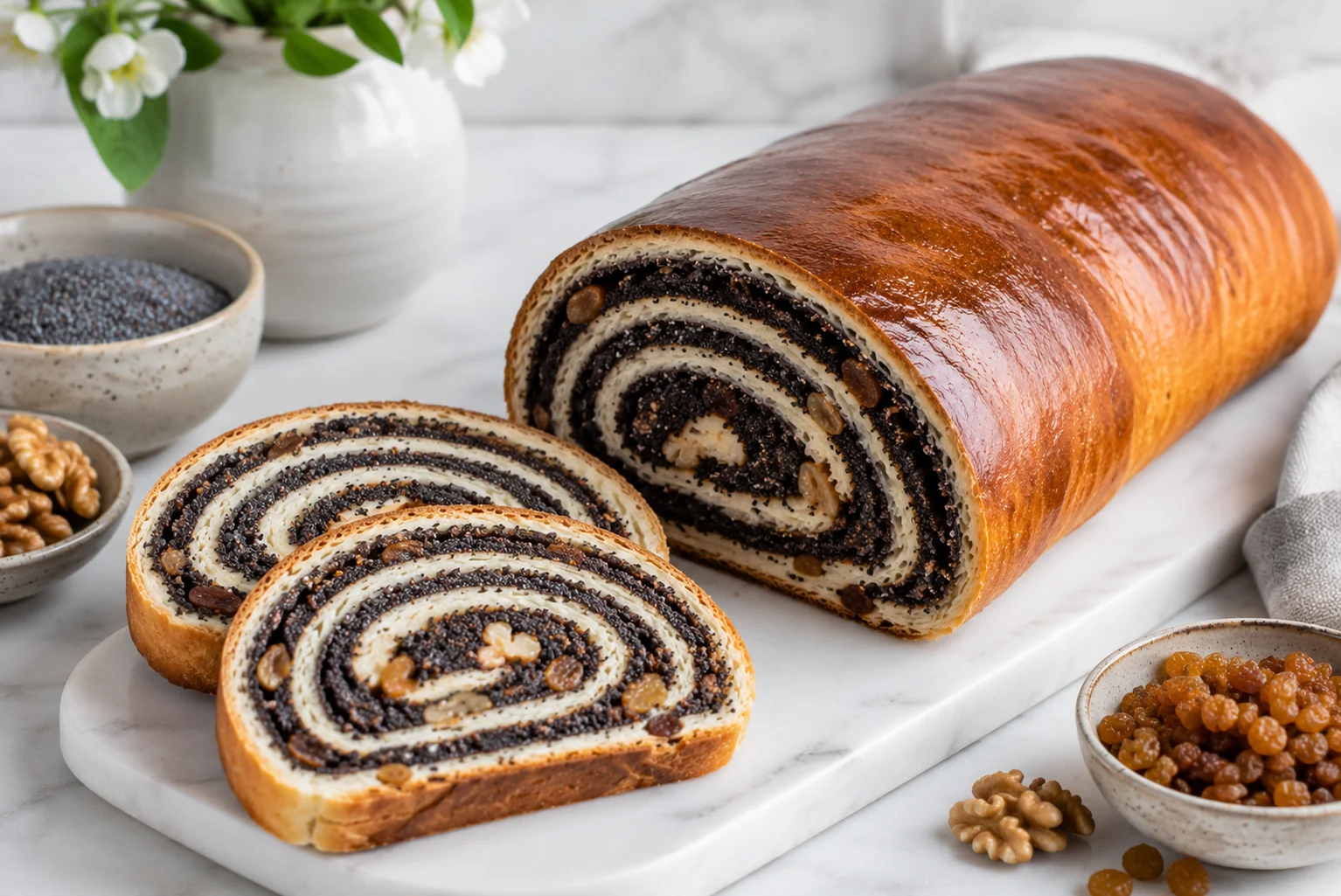
Active time: about 45 minutes | Total time: about 4 hours, plus overnight soaking | Serves: 16 | Difficulty: Moderate
Quick Overview
- Replace half the flour with whole wheat flour for more fiber
- Cut the added sugar in the dough, filling, and glaze, leaning on the honey and fruit already in the recipe
- Trim the butter and swap part of what remains for a neutral oil in the dough
- Soak, grind, and cook the poppy seed filling exactly as in the traditional version, since that part doesn’t change
- Shape, rise, and bake the same way, then finish with a light dusting of powdered sugar instead of a full glaze
What This Version Changes — and What It Keeps
The poppy seed filling stays as it is: the same 300g of seeds, already a meaningful source of calcium and fiber on their own, soaked, ground, and cooked the same way.4 The walnuts, raisins, and egg whites holding it together are unchanged too, including the walnuts’ polyunsaturated fat, already linked to improved cholesterol markers in clinical research.5 The shaping technique, the rise times, and the bake temperature are also unchanged, since none of those affect the nutrition and all of them affect whether the roll still looks and slices like makowiec.
What changes is the flour, the sugar, and the fat. Half the all-purpose flour becomes whole wheat, the sugar is cut in the dough, the filling, and especially the glaze, and part of the butter in the dough is replaced with a neutral oil. None of these swaps are large on their own; together they meaningfully shift the roll’s nutrition without turning it into a different dish.
Why These Swaps Work
Whole wheat flour keeps the bran and germ that milling removes from refined flour, along with the fiber, vitamins, minerals, and other nutrients that come packaged with them.1 Harvard Health Publishing notes that a diet built around whole grains rather than refined ones is linked to a lower risk of heart disease and type 2 diabetes, and to longer life expectancy.1 Using whole wheat for half the flour rather than all of it keeps the dough workable, since an all-whole-wheat version turns noticeably denser and harder to roll into a clean spiral.
The dough, filling, and glaze each carry less sugar here, and the glaze is trimmed to a light dusting rather than a full pour. The American Heart Association recommends keeping added sugar under about 6 percent of daily calories, roughly 100 calories for most women and 150 for most men, since added sugars contribute calories without adding nutritional value.2 That guidance applies to honey as well as table sugar, since the AHA lists honey among the common names sugar goes by, so this version trims the honey slightly alongside the granulated sugar rather than treating it as exempt.2 Poppy seeds, walnuts, and raisins already carry enough natural flavor that the smaller amount of added sugar doesn’t leave the filling tasting bare.
The dough uses less butter overall, with part of what remains swapped for a neutral oil such as canola. The American Heart Association recommends replacing foods high in saturated fat, including butter, with unsaturated fats such as canola, soybean, or olive oil, since doing so can lower the risk of heart disease.3 Butter is solid at room temperature because it’s high in saturated fat, which raises LDL cholesterol, while oils like canola stay liquid because they’re predominantly unsaturated.3 The filling’s butter is reduced too, though kept rather than swapped, since a small amount still helps bind the poppy seed paste.
Healthy Makowiec Recipe
Recipe developed independently by Heritage Healthy Kitchen. Sources for further reading are listed at the end of this article.
Ingredients
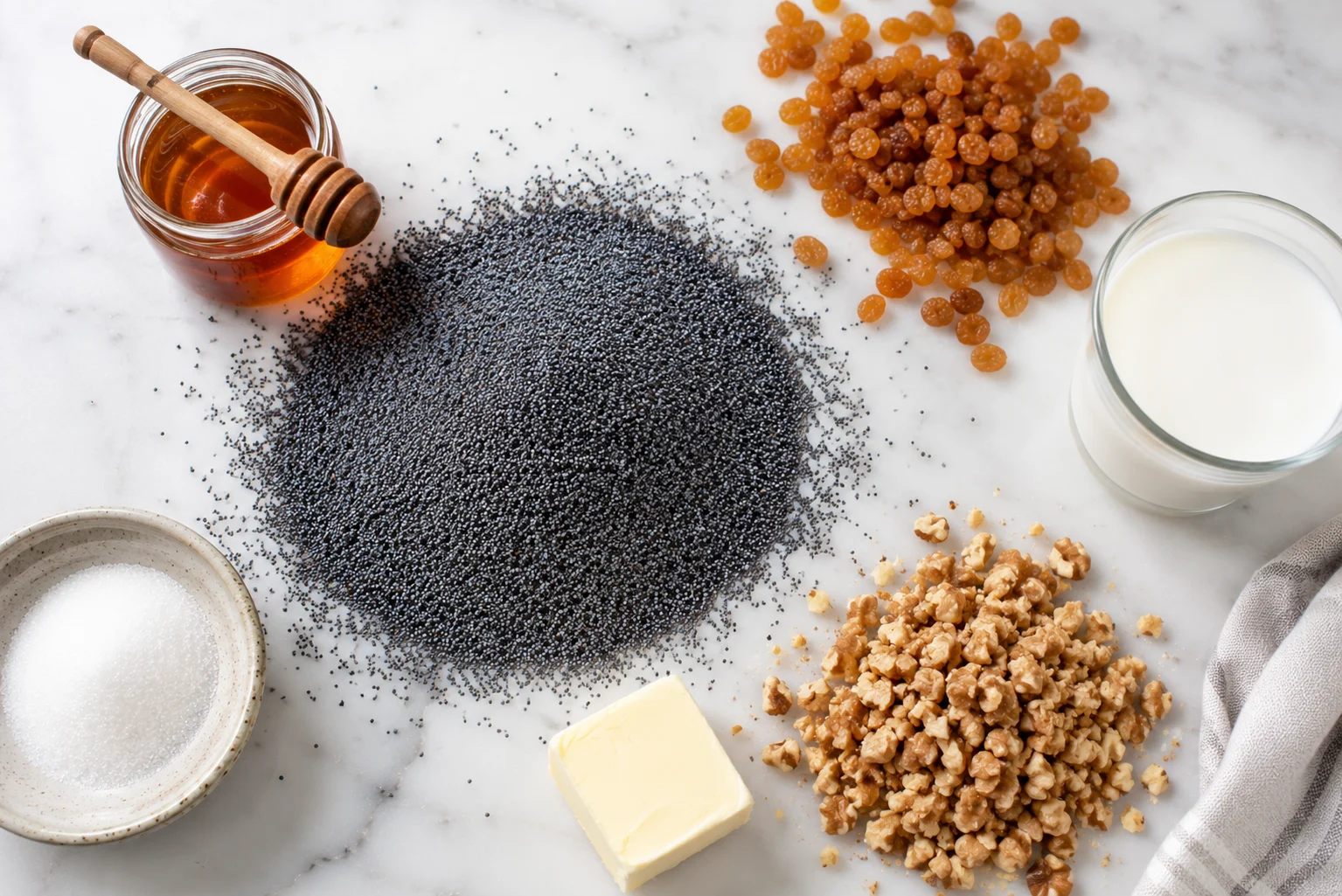
For the Poppy Seed Filling
- 300g (2 cups) poppy seeds
- 200ml (generous ¾ cup) whole milk
- 70g (about 3 tbsp) honey
- 15g (1¼ tbsp) granulated sugar
- 25g (1¾ tbsp) unsalted butter
- 80g (⅔ cup) walnuts, finely chopped
- 80g (generous ½ cup) raisins
- 2 large egg whites
- Zest of ½ lemon
For the Dough
- 250g (2 cups) whole wheat flour
- 250g (2 cups) all-purpose flour
- 30g (2½ tbsp) granulated sugar
- 50g (3½ tbsp) unsalted butter, softened
- 30g (generous 2 tbsp) neutral oil, such as canola or light olive oil
- 2 large egg yolks
- 120ml (½ cup) whole milk, warmed
- 12g (about 4 tsp) active dry yeast
- ½ tsp salt
- Zest of ½ lemon
For Dusting
- 15g (2 tbsp) powdered sugar
Instructions
- Soak the poppy seeds. Bring the milk just to a simmer, pour it over the poppy seeds in a heatproof bowl, cover, and let stand at room temperature for at least 4 hours, or overnight in the refrigerator.
- Grind the filling base. Drain off any liquid the seeds haven’t absorbed, then run the softened seeds through a meat grinder or food processor two to three times, until they form a fine, dark paste.
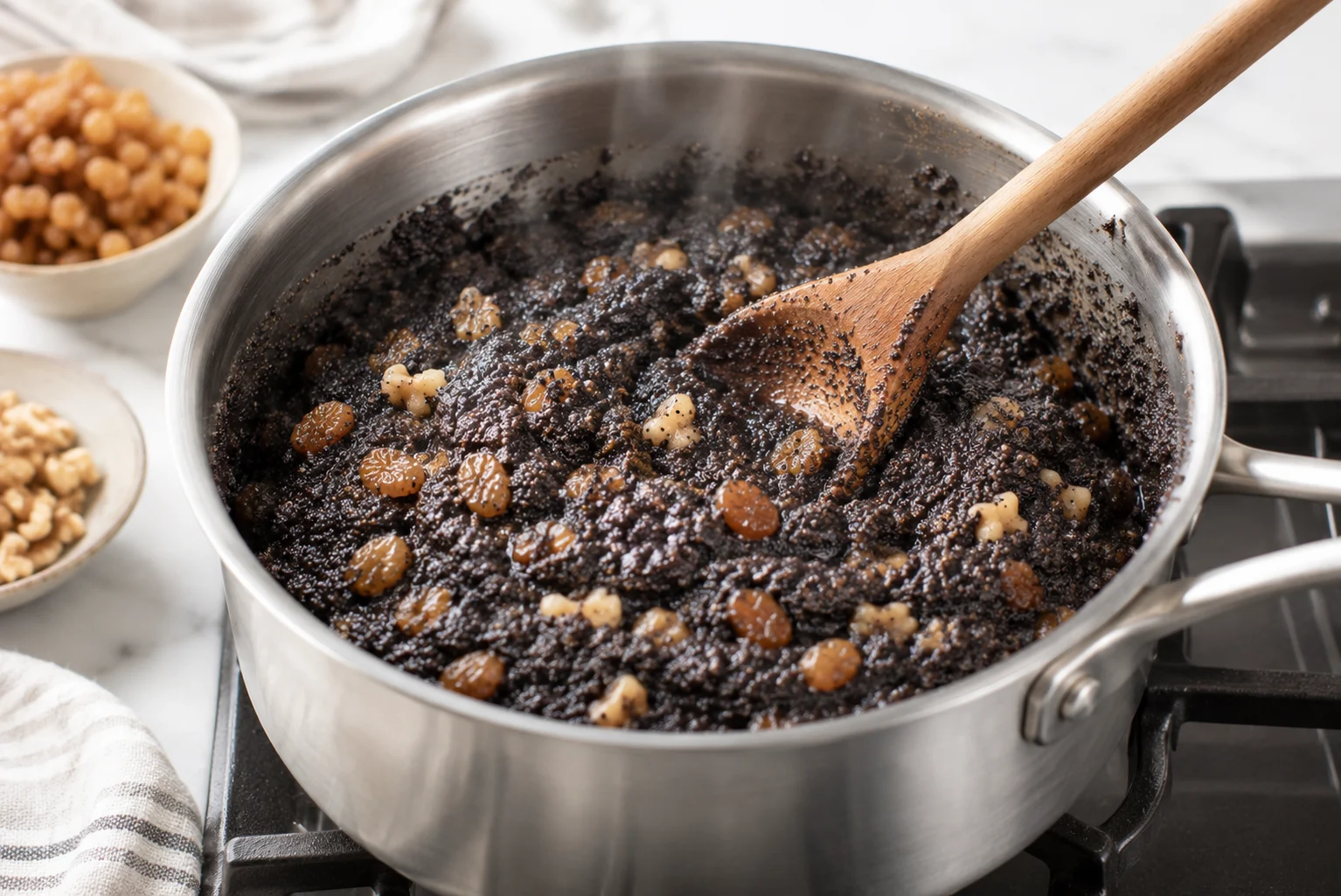
- Cook the filling. Combine the ground poppy seeds, honey, sugar, and butter in a saucepan. Cook over low heat, stirring constantly, for 8–10 minutes until thickened. Off the heat, stir in the walnuts, raisins, and lemon zest. Let cool completely.
- Start the dough. Warm the milk until lukewarm, stir in the yeast with a pinch of the sugar, and let stand until foamy, about 10 minutes.
- Mix and knead. In a large bowl, whisk together the whole wheat flour, all-purpose flour, and salt. Add the yeast mixture, remaining sugar, egg yolks, softened butter, oil, and lemon zest. Knead for about 10 minutes; the dough will feel a little coarser than an all-purpose-only dough but should still turn smooth and elastic.
- First rise. Cover and let rise in a warm place until doubled, about 1.5–2 hours; whole wheat dough can take slightly longer than the traditional version.
- Finish the filling. Whip the egg whites to soft peaks and gently fold them into the cooled poppy seed filling. This keeps the filling from spilling out when the roll is sliced.
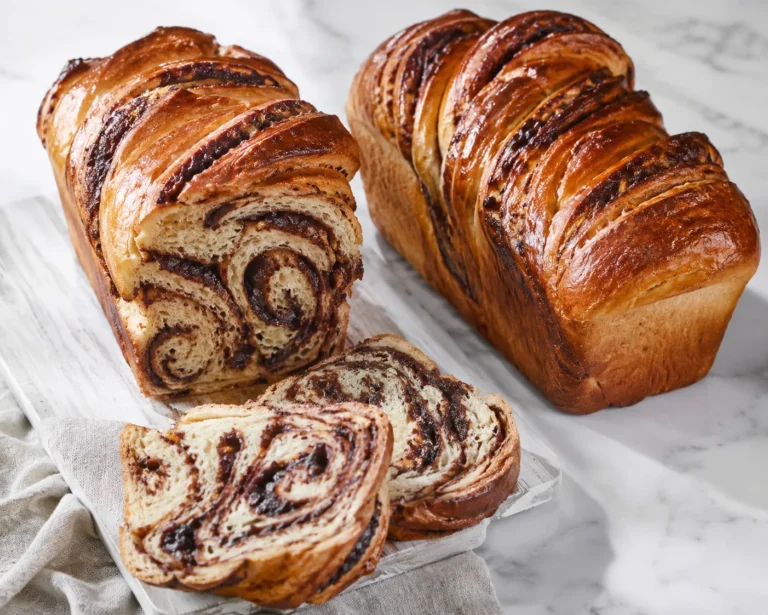
- Assemble the roll. On a floured surface, roll the dough into a rectangle about 1cm thick. Spread the filling evenly, leaving a small border on all sides. Starting from a long edge, roll tightly into a log and pinch the seam to seal.
- Second rise. Place the log seam-side down on a parchment-lined baking sheet, tent loosely with the parchment, and let rise for 20–30 minutes.
- Bake. Bake at 180°C (350°F) for 40–45 minutes, until deeply golden. Tent with foil partway through if the top browns too quickly.
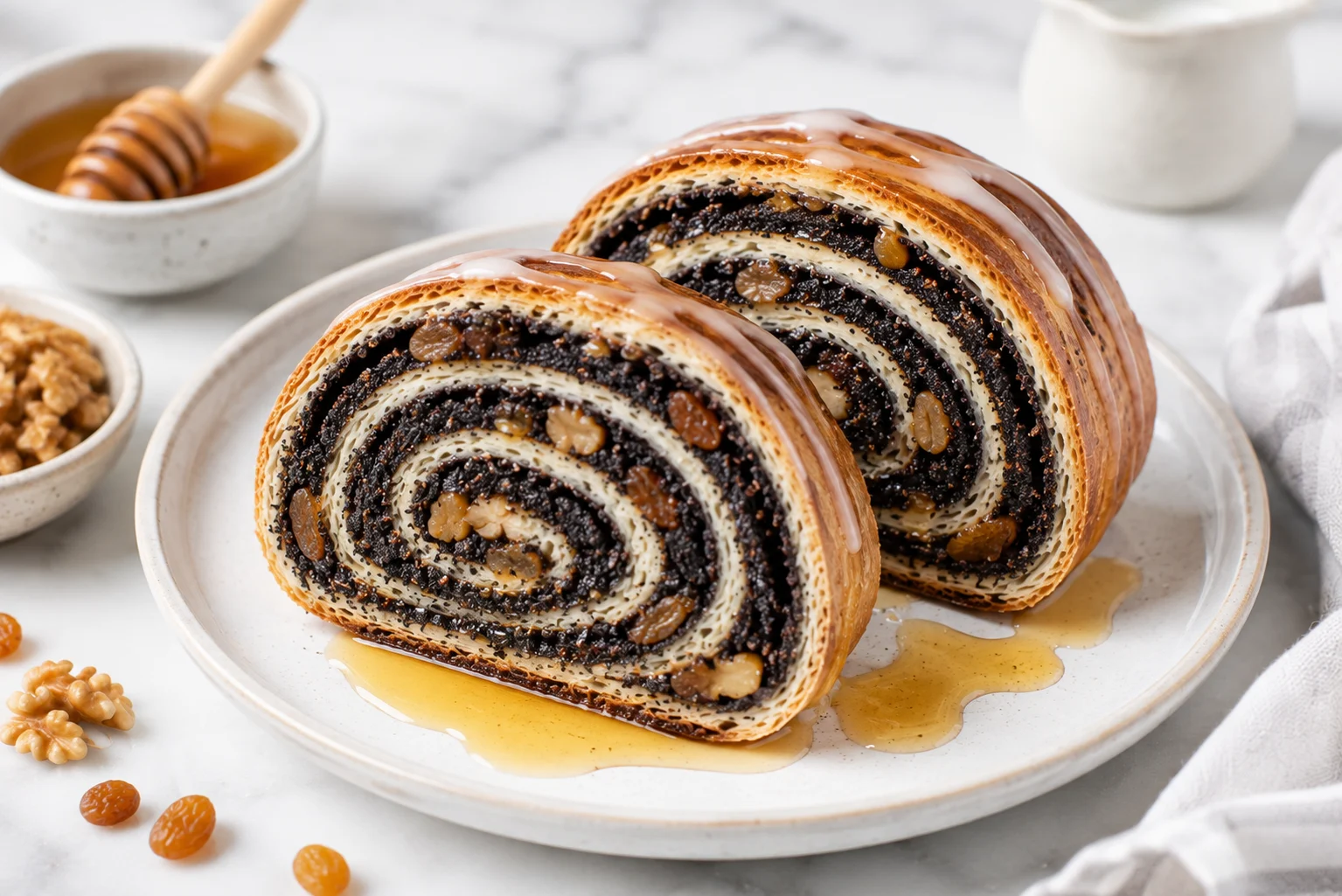
- Cool and dust. Let the roll cool completely on a wire rack before slicing. Dust with the powdered sugar just before serving.
Kitchen Tips
Whole wheat flour keeps absorbing liquid as the dough rests. If the dough feels dry after kneading, add water a teaspoon at a time rather than more flour before judging the texture.
Measure the butter and oil separately rather than melting them together first; working the softened butter into the flour and adding the oil afterward gives a more even dough than combining the fats before mixing.
The filling will look slightly less glossy than the traditional version, since it carries less butter and honey. That’s expected, not a sign anything went wrong.
Dust with powdered sugar only right before serving. It dissolves into the surface within an hour or two, so dusting ahead of time leaves the roll looking bare by the time it’s served.
Nutritional Comparison
Per serving (1 of 16 slices)
| Traditional | This Version | |
|---|---|---|
| Calories | 390–475 kcal | 325–395 kcal |
| Protein | 9–11g | 9–12g |
| Total fat | 18–22g | 16–20g |
| Carbohydrates | 50–62g | 38–46g |
| Dietary fiber | 5–7g | 7–8g |
| Sugars | 23–28g | 11–14g |
| Calcium | 250–305mg | 250–305mg |
| Sodium | 80–100mg | 80–100mg |
Nutritional values are estimates calculated from the specific ingredient quantities in each recipe, using standard reference values. They will vary depending on slice thickness and the exact ratio of filling to dough.
The biggest shifts are in sugar, which drops by roughly half, and saturated fat, which falls by close to a third from the combined effect of less butter and the partial oil swap. Calcium and sodium barely move, which makes sense: the poppy seeds, eggs, and dairy driving those two numbers are unchanged.
Storage and Reheating
Store this version the same way as the traditional roll: wrapped or covered with a towel at room temperature for up to 4 days, with no need to refrigerate unless the kitchen runs hot. It freezes well too, un-dusted, wrapped tightly in plastic.
Thaw at room temperature for about 2 hours and dust with powdered sugar just before serving. As with the traditional version, this roll is meant to be eaten at room temperature rather than reheated.
Healthy Makowiec

Ingredients
For the Poppy Seed Filling
- 300g (2 cups) poppy seeds
- 200ml (generous ¾ cup) whole milk
- 70g (about 3 tbsp) honey
- 15g (1¼ tbsp) granulated sugar
- 25g (1¾ tbsp) unsalted butter
- 80g (⅔ cup) walnuts, finely chopped
- 80g (generous ½ cup) raisins
- 2 large egg whites
- Zest of ½ lemon
For the Dough
- 250g (2 cups) whole wheat flour
- 250g (2 cups) all-purpose flour
- 30g (2½ tbsp) granulated sugar
- 50g (3½ tbsp) unsalted butter, softened
- 30g (generous 2 tbsp) neutral oil, such as canola or light olive oil
- 2 large egg yolks
- 120ml (½ cup) whole milk, warmed
- 12g (about 4 tsp) active dry yeast
- ½ tsp salt
- Zest of ½ lemon
For Dusting
- 15g (2 tbsp) powdered sugar
Instructions
- Soak the poppy seeds. Bring the milk just to a simmer, pour it over the poppy seeds in a heatproof bowl, cover, and let stand at room temperature for at least 4 hours, or overnight in the refrigerator.
- Grind the filling base. Drain off any liquid the seeds haven’t absorbed, then run the softened seeds through a meat grinder or food processor two to three times, until they form a fine, dark paste.
- Cook the filling. Combine the ground poppy seeds, honey, sugar, and butter in a saucepan. Cook over low heat, stirring constantly, for 8–10 minutes until thickened. Off the heat, stir in the walnuts, raisins, and lemon zest. Let cool completely.
- Start the dough. Warm the milk until lukewarm, stir in the yeast with a pinch of the sugar, and let stand until foamy, about 10 minutes.
- Mix and knead. In a large bowl, whisk together the whole wheat flour, all-purpose flour, and salt. Add the yeast mixture, remaining sugar, egg yolks, softened butter, oil, and lemon zest. Knead for about 10 minutes; the dough will feel a little coarser than an all-purpose-only dough but should still turn smooth and elastic.
- First rise. Cover and let rise in a warm place until doubled, about 1.5–2 hours; whole wheat dough can take slightly longer than the traditional version.
- Finish the filling. Whip the egg whites to soft peaks and gently fold them into the cooled poppy seed filling. This keeps the filling from spilling out when the roll is sliced.
- Assemble the roll. On a floured surface, roll the dough into a rectangle about 1cm thick. Spread the filling evenly, leaving a small border on all sides. Starting from a long edge, roll tightly into a log and pinch the seam to seal.
- Second rise. Place the log seam-side down on a parchment-lined baking sheet, tent loosely with the parchment, and let rise for 20–30 minutes.
- Bake. Bake at 180°C (350°F) for 40–45 minutes, until deeply golden. Tent with foil partway through if the top browns too quickly.
- Cool and dust. Let the roll cool completely on a wire rack before slicing. Dust with the powdered sugar just before serving.
Frequently Asked Questions
How much lighter is this version, really?
Expect meaningfully less sugar and saturated fat per slice, somewhat fewer calories, and more fiber, while protein and calcium stay about the same since the poppy seeds, walnuts, and eggs are unchanged. It’s a real improvement, not a dramatic overhaul.
Will the whole wheat flour change the taste or texture noticeably?
It adds a slightly nuttier flavor and a bit more chew, but at a 50/50 ratio with all-purpose flour the roll still reads clearly as makowiec rather than a different bread.
Why not use all whole wheat flour for even more fiber?
An all-whole-wheat dough turns noticeably denser and is harder to roll into a clean spiral without tearing. Splitting the flour keeps the texture close to the traditional roll while still adding meaningful fiber.
Is honey healthier than sugar, so why cut it too?
Honey adds a little more flavor complexity than plain sugar, but nutritionally it still counts as an added sugar, and the American Heart Association’s guidance on limiting added sugar applies to it the same as to table sugar.2 Cutting both together is more accurate than treating honey as exempt.
Why keep any butter at all instead of using all oil?
A small amount of butter still contributes to the dough’s flavor and the filling’s texture. The goal is shifting the overall balance toward unsaturated fat, not eliminating saturated fat entirely.3
Does cutting the sugar affect how the dough rises?
Not meaningfully. Yeast needs only a small amount of sugar to activate, and the honey and the natural sugar in the milk still provide enough for a normal rise.
Can the glaze be brought back to a full glaze instead of a dusting?
Yes, though doing so adds back most of the sugar this version trims. A light dusting was chosen specifically to keep that reduction meaningful rather than symbolic.
Is this version suitable for someone managing blood sugar or heart health concerns?
It’s a modest improvement thanks to the added fiber, reduced sugar, and shift toward unsaturated fat, but a yeasted, honey-sweetened roll remains a carbohydrate-dense food regardless of these swaps. Anyone managing diabetes or a heart condition should discuss portion size with a healthcare provider or registered dietitian.2,3
Looking for the Full Story?
This article focuses on the swaps and the reasoning behind them, not on retelling makowiec’s history and symbolism. For the full cultural background, regional variations, and the traditional recipe this version is based on, see the Traditional Makowiec article on this project.
Read the Traditional Makowiec article
Further Reading & Sources
The following sources support the health claims behind each swap in this article. Heritage Healthy Kitchen’s recipe was developed independently; these links are provided for readers who want to explore further.
- Harvard Health Publishing. “How important are whole grains in my diet?” health.harvard.edu/staying-healthy/how-important-are-whole-grains-in-my-diet — the nutrients whole grains retain that refined flour loses, and the associated health outcomes.
- American Heart Association. “Added Sugars.” heart.org/en/healthy-living/healthy-eating/eat-smart/sugar/added-sugars — daily added sugar limits, and honey’s status as an added sugar.
- American Heart Association. “Saturated Fats.” heart.org/en/healthy-living/healthy-eating/eat-smart/fats/saturated-fats — replacing saturated fat with unsaturated oils to lower heart disease risk.
- “Poppy seeds: Nutrition and health benefits.” Medical News Today, medically reviewed by Sade Meeks, MS, RD. medicalnewstoday.com/articles/poppy-seeds — nutrient profile of poppy seeds, unchanged from the traditional recipe.
- Harvard Health Publishing. “Health benefits of walnuts.” health.harvard.edu/blog/health-benefits-of-walnuts-201808131672 — polyunsaturated fat in walnuts and its association with improved cholesterol markers.
Disclaimer
The information in this article is provided for educational and informational purposes only. Heritage Healthy Kitchen makes no representations or warranties regarding the accuracy or completeness of any content on this site. Nutritional values are estimates only and will vary depending on the specific ingredients, brands, and measurements used. This content is not intended as dietary, medical, or professional nutritional advice. Individual dietary needs and suitability vary, particularly for anyone managing diabetes, heart disease, or other health conditions. Always consult a qualified healthcare provider or registered dietitian regarding any dietary needs or health conditions. Heritage Healthy Kitchen is not responsible for any outcomes resulting from the use of recipes or information published on this site.
Cook by Occasion
This recipe is part of our Wigilia menu.
You Might Also Like
More heritage recipes from our kitchen


Leave a Reply