

Active time: ~55 minutes | Total time: ~2.5 hours (including dough rising) | Serves: 9 (about 18 doughnuts, 2 per serving) | Difficulty: Moderate
Quick Overview
- Air-fry or oven-bake instead of deep-frying — same basic technique, a fraction of the absorbed oil
- Split the flour between all-purpose and white whole wheat for more fiber and a steadier blood sugar response
- Swap half the butter for plain Greek yogurt to cut saturated fat while adding protein
- Cut the dough sugar by more than half and swap the jam for a no-sugar-added fruit spread
- Dust far more lightly with powdered sugar — the visual payoff shows up fast, even with much less
What This Version Changes — and What It Keeps
Frying oil and sugar are doing almost all the damage here. Sufganiyot pick up the bulk of their calories from the oil absorbed during deep frying, and sugar gets added three separate times along the way — once in the dough, once in the jam, and once in the dusting on top. The yeast dough underneath isn’t the issue; it’s what happens to it in the fryer and how much sugar gets layered on before it reaches the table.
The changes here target those two levers rather than rebuilding the recipe from scratch. Deep-frying becomes air-frying or oven-baking. Half the all-purpose flour becomes white whole wheat. Half the butter becomes plain Greek yogurt. The dough sugar gets cut by more than half, the jam becomes a no-sugar-added fruit spread, and the powdered sugar dusting gets much lighter. The yeast, the two rises, the shape, the jam-in-the-middle idea — all of that stays exactly the same. Take away the deep fryer and most of the sugar, and what’s left is still recognizably sufganiyot.
Why These Swaps Work
The single biggest change here is how the dough gets cooked. Traditional sufganiyot are deep-fried, and most of their fat and calories come from the oil the dough absorbs while frying, not from the dough itself. Cleveland Clinic registered dietitian Julia Zumpano puts it plainly: air frying is a healthier option because it essentially eliminates added oils, and an air fryer that runs on about a tablespoon of oil can cut the calories a food would otherwise pick up from deep frying by as much as 80%.1 Baking works on a similar principle, with a light brushing of oil instead of a bath of it. Neither method reproduces the exact crackle of a deep-fried crust — that’s a real tradeoff, not a marketing claim — but both get close enough while leaving out the great majority of the added fat.
Splitting the flour between all-purpose and white whole wheat matters more than the modest quantity might suggest. Refining wheat into white flour strips away more than half its B vitamins, about 90% of its vitamin E, and virtually all of its fiber, according to Harvard T.H. Chan School of Public Health’s Nutrition Source.2 That fiber does real work in a sugar-and-starch-heavy dish like this one: bran and fiber slow the breakdown of starch into glucose, producing a steadier blood sugar response instead of a sharp spike.2 Using whole wheat for half the flour keeps the dough workable while meaningfully raising the fiber content of the finished doughnut.
Replacing half the butter with plain Greek yogurt targets saturated fat specifically, not just fat in general. The fat in butter runs about 60% saturated, one of the higher figures among common cooking fats, and the American Heart Association recommends keeping saturated fat under 7% of daily calories.3 Cleveland Clinic dietitian Julia Zumpano points to swapping Greek yogurt in for some of the fat in a recipe as a way to cut saturated fat while adding protein.4 The dough loses a little of butter’s richness but gains moisture and a slight tang from the yogurt, which mostly disappears once the jam and powdered sugar are in the picture.
Sugar shows up in three separate places in the traditional recipe, and all three add up. The Harvard T.H. Chan Nutrition Source notes that the American Heart Association’s daily added-sugar limit sits at around 24 grams for women and 36 grams for men.5 A traditional two-doughnut serving alone supplies roughly 38 grams of added sugar — already past the full daily allowance for men, and well past it for women. Cutting the dough sugar by more than half, swapping the jam for a no-sugar-added fruit spread, and dusting far more lightly brings the added sugar in this version down to a fraction of that. The fruit spread still carries natural sugar from the fruit itself, so this isn’t a sugar-free doughnut — just a meaningfully lighter one.
Healthy Sufganiyot Recipe
Recipe developed independently by Heritage Healthy Kitchen. Sources for further reading are listed at the end of this article.
Ingredients (makes about 18 doughnuts, serves 9)

For the dough
- 2 cups (250g) all-purpose flour
- 2 cups (250g) white whole wheat flour, plus more for kneading
- 2½ tablespoons (30g) granulated sugar, divided
- 2¼ teaspoons (7g) active dry yeast
- ¾ teaspoon (4g) fine salt
- ¾ cup (180ml) 2% reduced-fat milk, warmed to about 110°F (43°C)
- 2 large eggs, at room temperature
- 2 tablespoons (25g) unsalted butter, softened
- ¼ cup (60g) plain Greek yogurt (2% fat)
- Zest of 1 lemon (optional)

For cooking and finishing
- Olive oil spray, or about 1 tablespoon (15g) neutral oil, for brushing
- ¾ cup (216g) no-sugar-added fruit spread, for filling
- 2 tablespoons (20g) powdered sugar, for dusting
Instructions
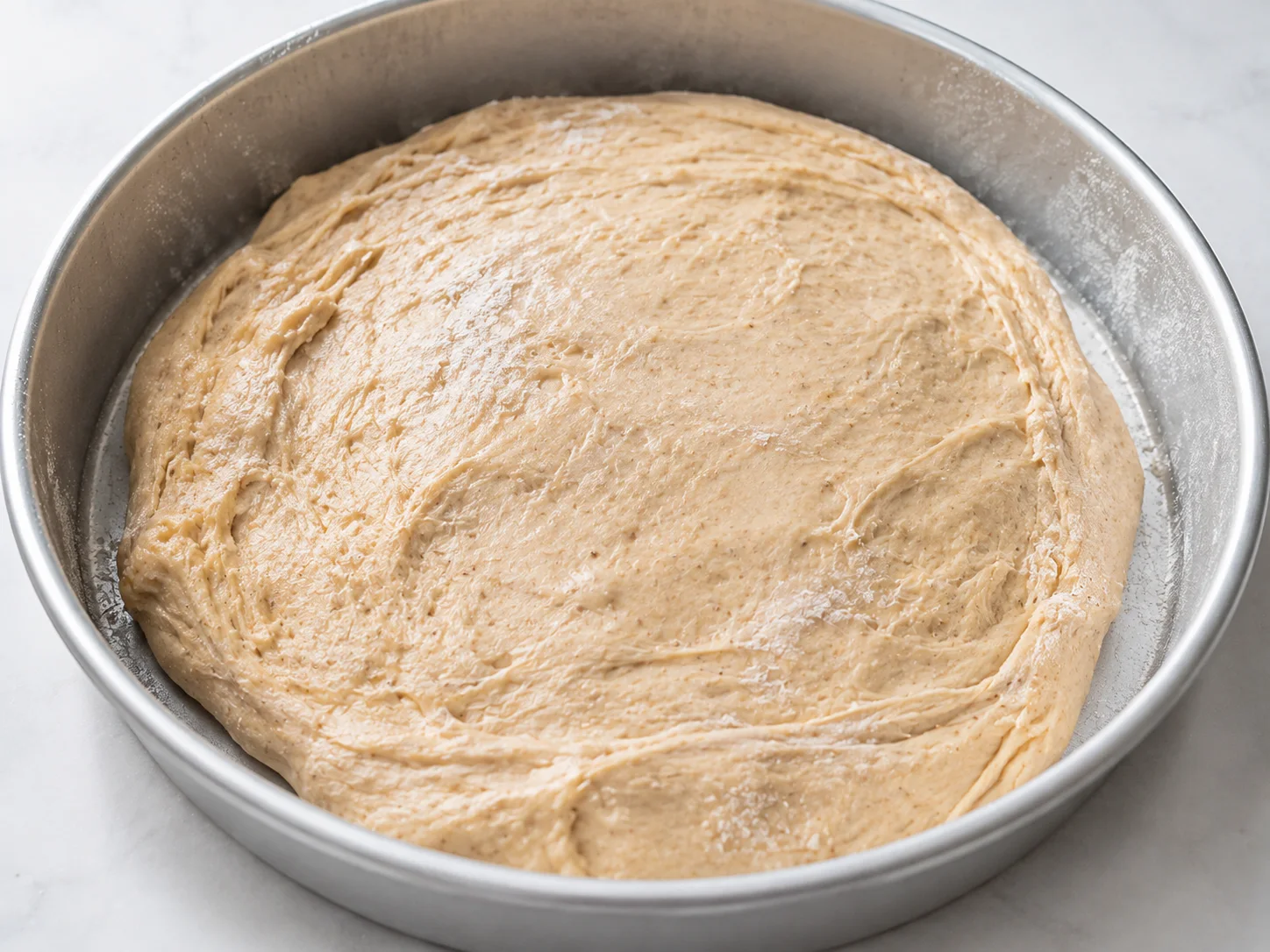
- Bloom the yeast: Stir the warm milk with the yeast and 1 tablespoon of the sugar. Let stand until foamy, about 10 minutes.
- Mix the dough: In a large bowl, whisk the eggs with the remaining sugar, salt, and lemon zest. Stir in the yeast mixture, softened butter, and Greek yogurt, then add the flours gradually, mixing until a soft dough forms. Knead 8–10 minutes, by hand or with a dough hook, until smooth and elastic. Whole wheat flour absorbs more liquid than all-purpose, so the dough may feel slightly firmer than an all-white-flour dough — that’s expected.
- First rise: Place the dough in a greased bowl, cover, and let rise in a warm spot until doubled, about 1–1½ hours.
- Shape: Punch down the dough and divide it into 18 equal pieces (about 50g each). Roll each piece into a smooth, tight ball and set on a floured tray, spaced well apart.
- Second rise: Cover loosely and let rise until visibly puffy, 30–45 minutes.
- Air-fry: Preheat the air fryer to 350°F (175°C). Lightly mist the basket and the dough balls with olive oil spray. Working in batches, air-fry for 8–10 minutes, flipping halfway, until golden and cooked through.
- Or oven-bake (if you don’t have an air fryer): Preheat the oven to 375°F (190°C). Place the dough balls on a parchment-lined baking sheet, spaced apart, and brush lightly with oil. Bake for 12–15 minutes until golden.
- Fill: Let the doughnuts cool for about 10 minutes. Fit a piping bag or squeeze bottle with a narrow tip, fill with the fruit spread, and insert it into the side of each doughnut, piping in about 2 teaspoons.
- Finish: Dust lightly with powdered sugar just before serving.
Kitchen Tips
If the dough feels dry after the first few minutes of kneading, add milk a teaspoon at a time. Whole wheat flour absorbs more liquid than all-purpose, so this dough runs slightly firmer than the traditional version.
Don’t skip the oil brushing or misting entirely. A light coating still matters for browning; a completely dry doughnut tends to look pale and steamed rather than golden, regardless of cooking method.
Preheat the air fryer or oven fully before the dough goes in. Both need to be at temperature from the start for even, golden results.
Let the doughnuts cool before filling, same as the traditional version. Piping fruit spread into a hot doughnut can make the filling weep back out through the hole.
A thin, even layer of powdered sugar reads as “finished” just as well as a thick one. Sift it on right before serving rather than piling it on.
Nutritional Comparison
Per serving — 2 doughnuts (one of 9 servings)
| Nutrient | Traditional sufganiyot | This version |
|---|---|---|
| Calories | ~560–625 kcal | ~300–365 kcal |
| Protein | ~7.5–9g | ~9–11g |
| Total fat | ~22–30g | ~6–7g |
| Saturated fat | ~5–6g | ~2–2.5g |
| Carbohydrates | ~75–88g | ~54–66g |
| Dietary fiber | ~1.5–2.5g | ~4–5g |
| Sodium | ~185–225mg | ~185–225mg |
Added sugar is where the biggest gap shows up, even though it isn’t in the table above. The traditional version’s dough sugar, jam, and dusting together add up to roughly 35–40g of added sugar per serving. This version’s dough sugar and dusting come to somewhere around 5–7g of added sugar per serving — the no-sugar-added fruit spread contributes natural fruit sugar to the carbohydrate count, but not added sugar by the standard definition.
One thing this version does not fix: sodium. The salt in the dough is essentially unchanged between both versions, so there’s no real sodium reduction here. Anyone specifically watching sodium can cut the ¾ teaspoon of salt in the dough by half without affecting the rest of the recipe.
Nutritional values are estimates based on standard ingredient databases. They will vary depending on specific ingredients, brands, fruit spread choice, and portion size.
Storage and Reheating
Best eaten the day they’re made, same as the traditional version — once filled and dusted, the crust softens and the sugar dissolves into the surface within a few hours either way.
For make-ahead planning, cook and cool the doughnuts but hold off on filling and dusting. Store airtight at room temperature for up to a day, or freeze for up to 2 months. Reheat from frozen in the air fryer or a 300°F (150°C) oven until warmed through, then fill and dust just before serving.
Healthy Sufganiyot

Ingredients
Ingredients (makes about 18 doughnuts, serves 9)
- 2 cups (250g) all-purpose flour
- 2 cups (250g) white whole wheat flour, plus more for kneading
- 2½ tablespoons (30g) granulated sugar, divided
- 2¼ teaspoons (7g) active dry yeast
- ¾ teaspoon (4g) fine salt
- ¾ cup (180ml) 2% reduced-fat milk, warmed to about 110°F (43°C)
- 2 large eggs, at room temperature
- 2 tablespoons (25g) unsalted butter, softened
- ¼ cup (60g) plain Greek yogurt (2% fat)
- Zest of 1 lemon (optional)
Instructions
- Bloom the yeast: Stir the warm milk with the yeast and 1 tablespoon of the sugar. Let stand until foamy, about 10 minutes.
- Mix the dough: In a large bowl, whisk the eggs with the remaining sugar, salt, and lemon zest. Stir in the yeast mixture, softened butter, and Greek yogurt, then add the flours gradually, mixing until a soft dough forms. Knead 8–10 minutes, by hand or with a dough hook, until smooth and elastic. Whole wheat flour absorbs more liquid than all-purpose, so the dough may feel slightly firmer than an all-white-flour dough — that’s expected.
- First rise: Place the dough in a greased bowl, cover, and let rise in a warm spot until doubled, about 1–1½ hours.
- Shape: Punch down the dough and divide it into 18 equal pieces (about 50g each). Roll each piece into a smooth, tight ball and set on a floured tray, spaced well apart.
- Second rise: Cover loosely and let rise until visibly puffy, 30–45 minutes.
- Air-fry: Preheat the air fryer to 350°F (175°C). Lightly mist the basket and the dough balls with olive oil spray. Working in batches, air-fry for 8–10 minutes, flipping halfway, until golden and cooked through.
- Or oven-bake (if you don’t have an air fryer): Preheat the oven to 375°F (190°C). Place the dough balls on a parchment-lined baking sheet, spaced apart, and brush lightly with oil. Bake for 12–15 minutes until golden.
- Fill: Let the doughnuts cool for about 10 minutes. Fit a piping bag or squeeze bottle with a narrow tip, fill with the fruit spread, and insert it into the side of each doughnut, piping in about 2 teaspoons.
- Finish: Dust lightly with powdered sugar just before serving.
Frequently Asked Questions
Does air-frying or baking actually get close to the deep-fried texture?
Close, not identical. Both methods produce a golden, lightly crisp exterior, but neither matches the deeper crackle of a true deep-fried crust — that difference is real and worth naming honestly rather than promising a perfect match.
Why split the flour instead of using all whole wheat?
An all-whole-wheat dough is denser and can taste noticeably more like bread than doughnut. Splitting it 50/50 keeps most of the fiber benefit while keeping the dough light enough to still read as a doughnut once it’s filled and dusted.
Can I use a different fruit spread, or make my own?
Yes. Any no-sugar-added or reduced-sugar fruit spread works — apricot and raspberry are both common alternatives to strawberry. A homemade version, simmered fruit with a little lemon juice and no added sugar, works too, though it may be looser and need extra cooking down before piping.
Does the Greek yogurt swap change the taste?
Slightly — plain Greek yogurt adds a faint tang that butter alone doesn’t have. It’s mild enough that most people won’t identify it once the fruit filling and powdered sugar are part of the bite.
Is this version appropriate for someone managing diabetes or blood sugar?
The changes here — more fiber, meaningfully less added sugar, baking instead of frying — generally move this dish in a more favorable direction for blood sugar response.2,5 That said, this remains a sweet, starch-based treat, and individual carbohydrate tolerance varies significantly with health status and medication. Anyone managing diabetes or prediabetes should check portion size and overall fit with a doctor or registered dietitian rather than relying on a single recipe swap.
Can I make this vegan?
The eggs and dairy are the harder substitutions here. A flax egg (1 tablespoon ground flaxseed plus 3 tablespoons water, rested 5 minutes) can replace the eggs, a plant-based milk can replace the 2% milk, and a plain unsweetened plant-based yogurt can replace the Greek yogurt, though the dough’s structure and richness will shift somewhat with all three changes at once.
The Traditional Version
If you want the full version with deep-frying, classic strawberry jam, and the dish’s Hanukkah history and cultural background, our Traditional Sufganiyot article covers that in detail.
Further Reading & Sources
The following sources were consulted for the nutritional information and health context in this article. Heritage Healthy Kitchen’s recipe was developed independently; these links are provided for readers who want to explore further.
- “Are Air Fryers Healthy?” Cleveland Clinic Health Essentials. health.clevelandclinic.org — registered dietitian commentary on calorie and fat reduction from air-frying versus deep frying.
- “Whole Grains.” The Nutrition Source, Harvard T.H. Chan School of Public Health. nutritionsource.hsph.harvard.edu — nutrient loss in refined flour and the blood-sugar-stabilizing role of fiber.
- “Types of Fat.” The Nutrition Source, Harvard T.H. Chan School of Public Health. nutritionsource.hsph.harvard.edu — saturated fat content of butter versus other fats, and American Heart Association saturated fat guidance.
- “Is Yogurt Good for You?” Cleveland Clinic Health Essentials. health.clevelandclinic.org — registered dietitian guidance on Greek yogurt’s protein content and use as a fat substitute.
- “Added Sugar.” The Nutrition Source, Harvard T.H. Chan School of Public Health. nutritionsource.hsph.harvard.edu — American Heart Association recommended daily limits on added sugar intake.
Disclaimer
The information in this article is provided for educational and informational purposes only. Heritage Healthy Kitchen makes no representations or warranties regarding the accuracy or completeness of any content on this site. Nutritional values are estimates only and will vary depending on the specific ingredients, brands, and measurements used. This content is not intended as dietary, medical, or professional nutritional advice. Always consult a qualified healthcare provider regarding any dietary needs or health conditions. Heritage Healthy Kitchen is not responsible for any outcomes resulting from the use of recipes or information published on this site.
Cook by Occasion
This recipe is part of our Hanukkah menu.
You Might Also Like
More heritage recipes from our kitchen



Leave a Reply