

Part of our Heritage Kitchen Glossary – short guides to the ingredients and techniques behind Eastern European cooking.
The short answer
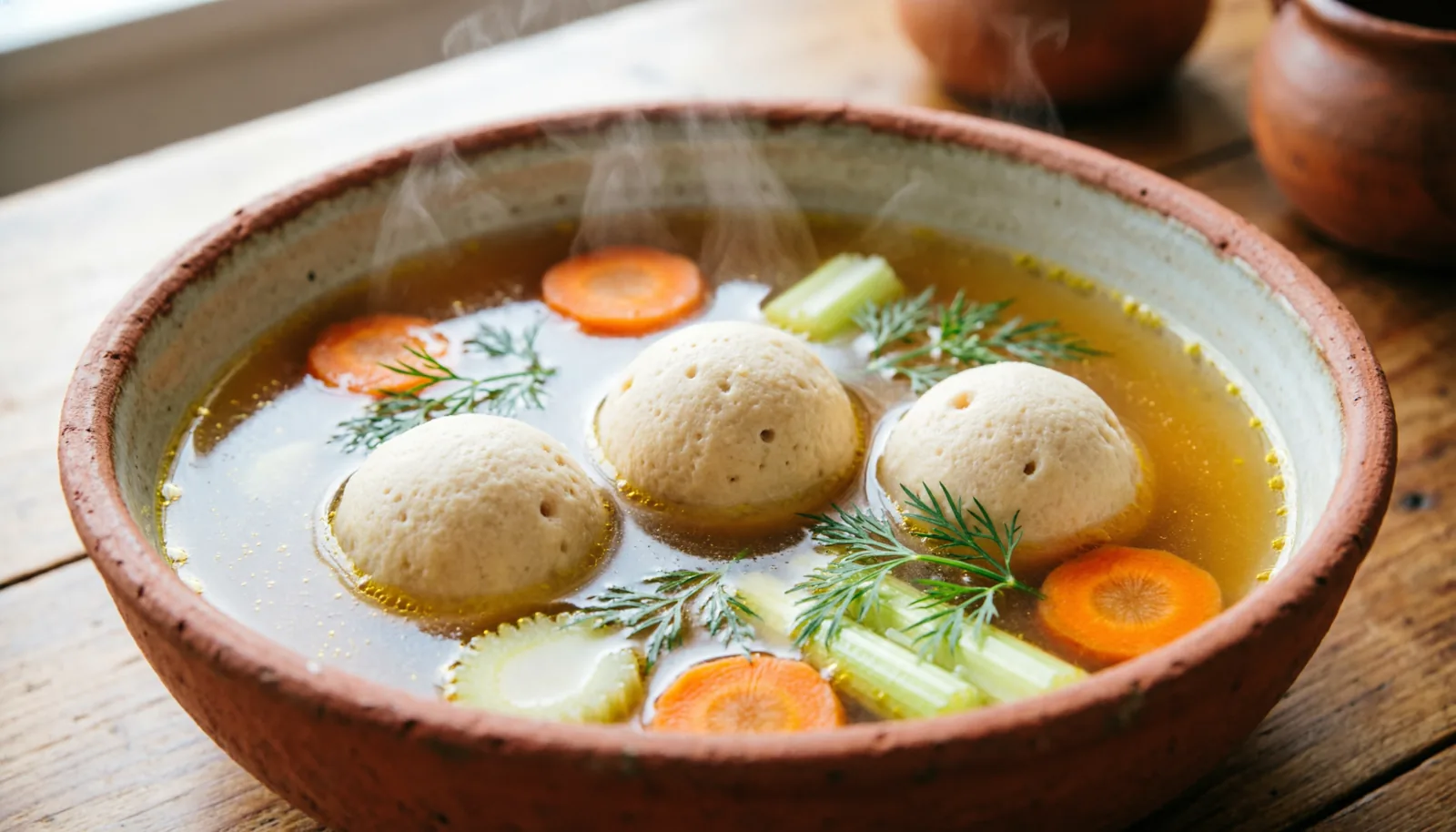
Kneidlach are the soft dumplings that give matzo ball soup its name – round balls made from matzo meal, beaten eggs, a fat such as schmaltz or oil, and a little liquid, simmered until tender. In Yiddish, “kneidel” (plural kneidlach) simply means dumpling; in English the same food is usually called a “matzo ball.” Whichever name is used, this dumpling is the anchor of Ashkenazi Jewish chicken soup, especially around Passover.
Where the word – and the dumpling – came from
Kneidlach are widely believed to be a matzo-meal adaptation of Knödel, the bread dumplings found across German, Austrian, and Central European kitchens. German, Austrian, and Alsatian Jewish cooks are generally credited with making that leap sometime in the 19th century, once Eastern European cooking had already popularized dumplings in soup, swapping in matzo meal so the dumpling would work for Passover, when leavened bread and flour are off the table. One of the earliest written recipes for the dish, made with beef stock rather than chicken, appears in an 1846 cookbook called The Jewish Manual – tastes have since shifted firmly toward clear chicken broth, which is what most people picture today.
The Yiddish name made an unlikely appearance far from any kitchen in 2013, when “knaidel” was the winning word at the Scripps National Spelling Bee. Its correct English spelling was disputed almost immediately, since Yiddish words routinely pick up more than one accepted spelling once they cross into English – “kneidel” and “knaydel” both show up in print as well.
Floaters vs. sinkers
Ask two Jewish grandmothers how a kneidel should turn out and expect two different answers. Some households prize a dense, chewy “sinker”; others want a kneidel light and airy enough to float. The difference comes down to the ratio of fat and egg to matzo meal, how much the dough gets handled, and whether baking powder or seltzer goes in. Neither camp is more correct – it’s a matter of family habit passed down at home, not a fixed rule, and a long-running debate at that.
Why matzo meal in the first place
Passover forbids anything that could leaven, which rules out ordinary bread dumplings for the week. Matzo meal – matzo crackers ground to fine crumbs – gives cooks a starchy, bread-like dumpling that still respects the holiday’s restrictions. Because kneidlach are made from matzo, some observant families avoid eating them wet during most of Passover, a custom called gebrokts, out of caution that a stray unbaked pocket of flour could technically still rise. Many of the same families serve kneidlach freely on the eighth and final day of the holiday, once that caution eases. The soup built around them also picked up the nickname “Jewish penicillin” – chicken soup as the dish handed to anyone who’s sick, sad, or cold, in Jewish households and plenty of others besides.
How they’re made, in short
The dough itself is simple: eggs, a fat (traditionally schmaltz, or plain vegetable oil), matzo meal, a little liquid, and salt, chilled before rolling so it firms up enough to hold a ball shape. The balls are simmered gently in their own pot of salted water, kept separate from the broth, so the finished soup stays clear rather than cloudy and starchy. The full method and timing are laid out in our Traditional Matzo Ball Soup.
Lighter versions
Kneidlach adapt easily to a lighter kitchen. Swapping olive oil for schmaltz, using a mix of egg whites and whole eggs instead of all whole eggs, and moving to whole wheat matzo meal all trim saturated fat and add a bit more fiber, without changing the shape, the chilling step, or the separate-pot method that keeps the broth clear. See our Healthy Matzo Ball Soup for the specific swaps and how they shift the nutrition numbers.
The same instinct behind kneidlach – a starchy dumpling built to stretch a pot of broth into a full meal – turns up elsewhere in Ashkenazi cooking on this site, from braided Traditional Challah to gently poached Traditional Gefilte Fish. Different dishes, same habit of making a little go a long way.
Further Reading & Sources
This entry draws on the sources below and on the recipes it links to elsewhere on this site. They are listed for readers who want to go further.
- “Ask the Expert: Matzah Balls vs. Kreplach.” My Jewish Learning. myjewishlearning.com — where kneidlach sit among the other dumplings of the Ashkenazi table.
- “How Traditional Are Matzo Balls?” Chabad.org. chabad.org — the Passover context and how old the practice actually is.
- “Ashkenazic Cuisine.” My Jewish Learning. myjewishlearning.com — background on the cuisine the dumpling comes from.
Leave a Reply