
Active time: about 45 minutes | Total time: about 4½ hours (longer if the poppy seeds soak overnight) | Serves: 16 | Difficulty: Moderate
Quick Overview
- Soak the poppy seeds in hot milk, then grind them two or three times into a fine paste
- Cook the paste with honey, sugar and butter, then stir in walnuts, raisins and orange zest
- Make an enriched yeast dough with butter, egg yolks and milk, and let it rise until doubled
- Fold whipped egg whites into the cooled filling, spread it over the rolled-out dough and roll up tightly
- Wrap the roll loosely in parchment, let it rise briefly, then bake until golden
- Cool completely before glazing and slicing
What Makowiec Is
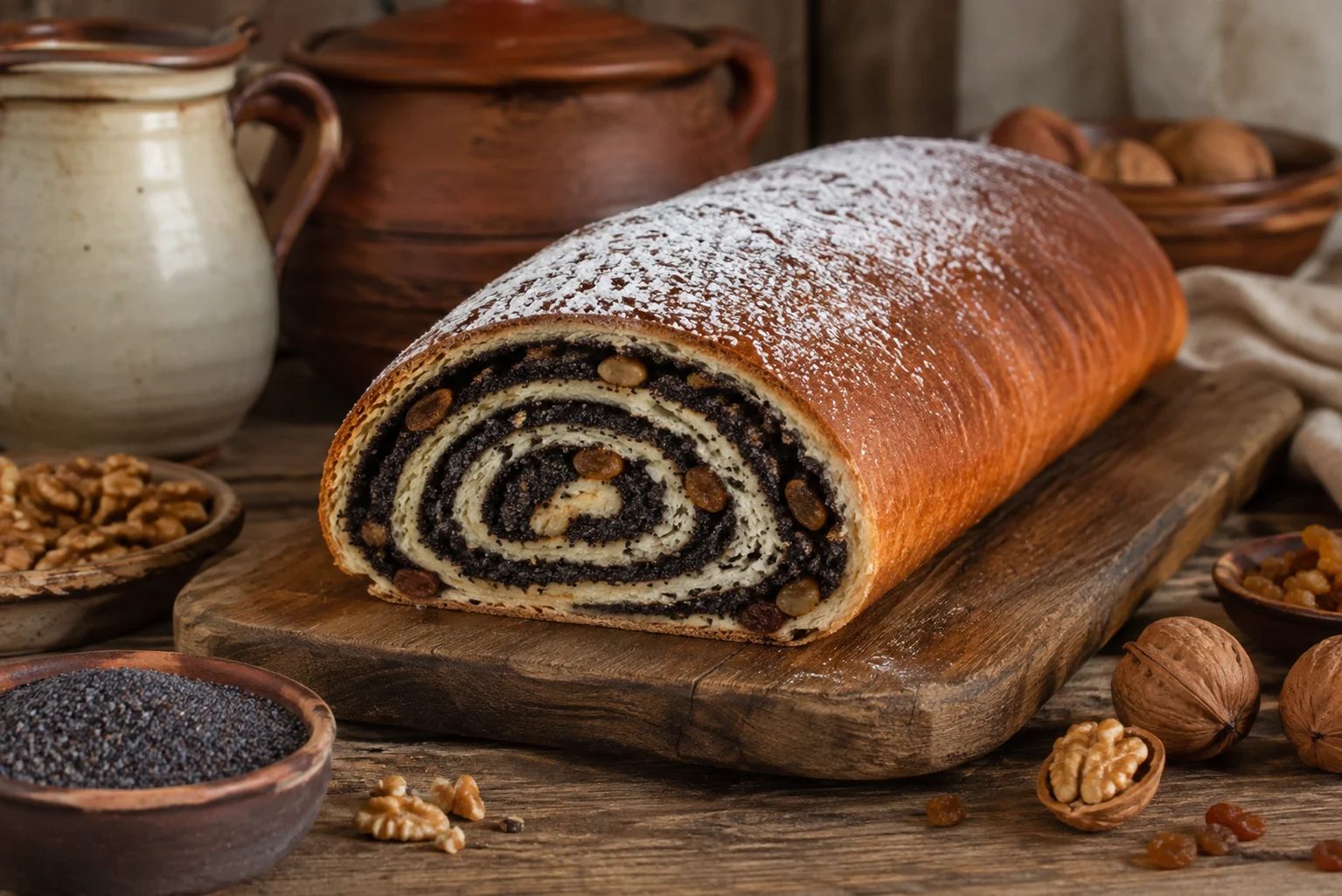
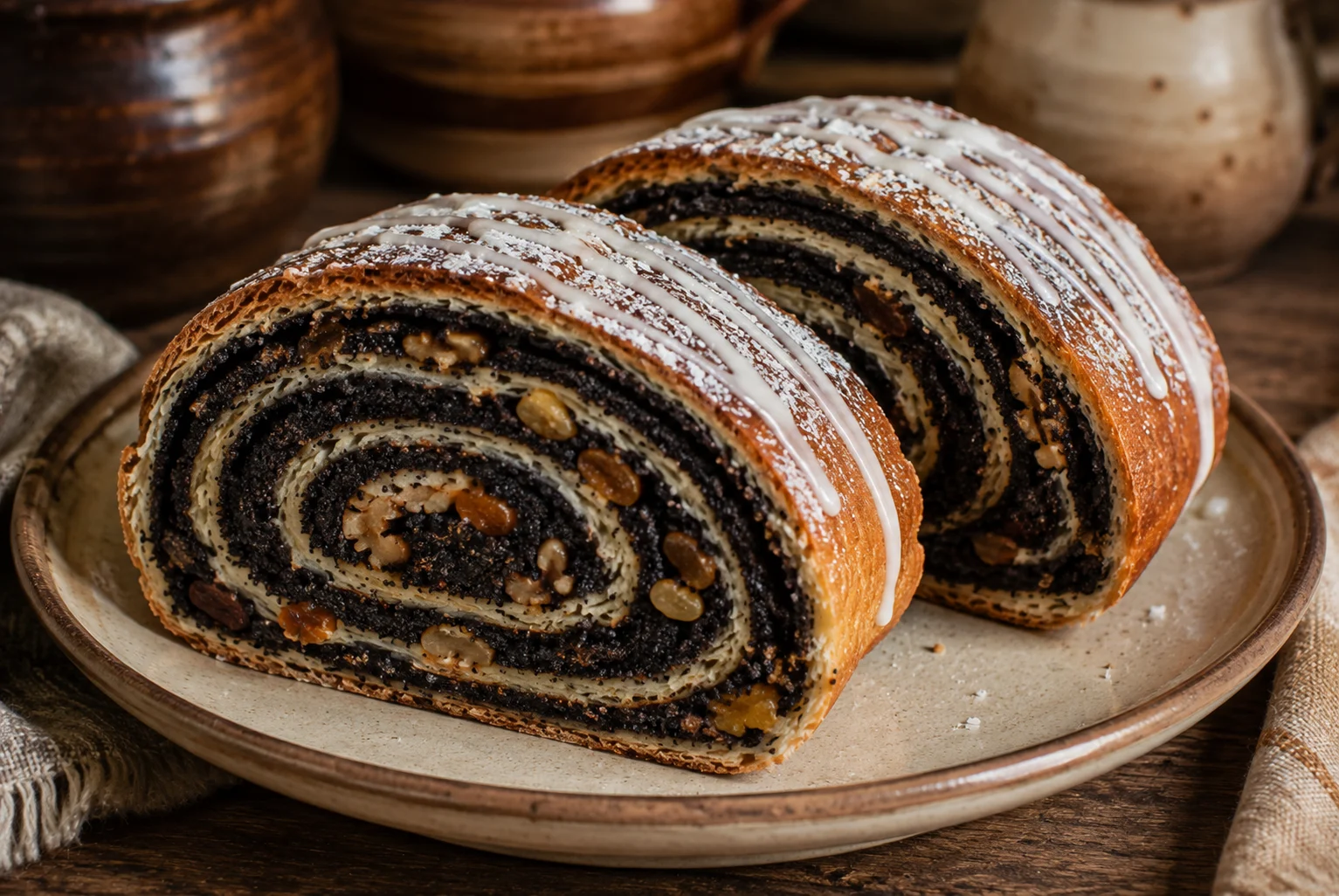
Makowiec (pronounced mah-KOH-vyets) is a Polish yeast roll wrapped around a thick filling of ground poppy seeds cooked with honey, sugar and butter, usually with nuts, raisins and citrus peel stirred in.7,8,12 The dough is rolled out, spread with the filling and rolled up like a Swiss roll, so every slice shows a dark spiral.7
In Poland it is a Christmas and Easter cake.1 On Christmas Eve it is one of the sweet dishes at Wigilia, the supper that opens the holiday.4,5 Outside the holidays, people often eat small versions as a snack, sometimes even for breakfast.1
History and Cultural Roots
Poppy seeds appear on Polish tables on many festive occasions, from Christmas and Easter to weddings and funerals.2 The custom is usually traced to old beliefs. The Slavs saw the poppy as a plant that let one cross the boundary between life and death, and used its seeds in dishes for the dead, who were believed to come back now and then to visit the living.2 Christianity added a legend of its own: apocryphal stories held that poppies sprouted where the blood of Jesus fell during the crucifixion.1,2
The cake has a royal anecdote too. Culture.pl notes that in 1681 the royal baker of King Jan III Sobieski is said to have made a huge makowiec.1 Regional versions differ mostly in how much filling the dough carries. Makowiec lubartowski, from the area around Lubartów in eastern Poland, is almost all poppy seeds with local honey, nuts and raisins; Poland’s Ministry of Agriculture and Rural Development describes it as a thin layer of dough around a thick layer of filling.1,2
On the Holiday Table
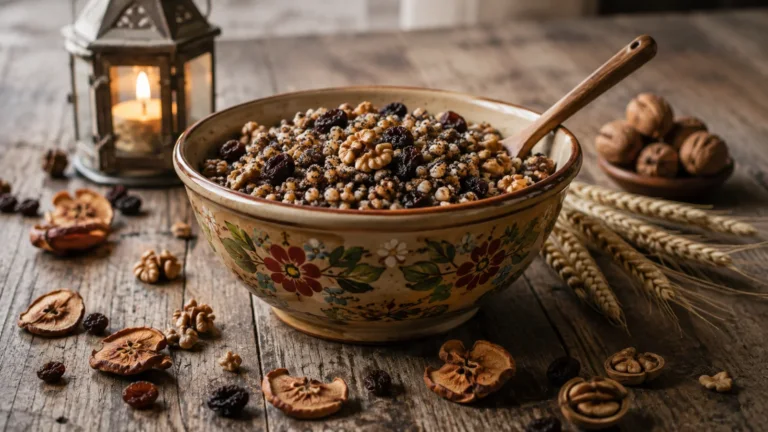
At Wigilia, the sweet dishes include kluski z makiem (noodles with poppy seeds), makowiec, sernik (cheesecake) and piernik (honey cake), and in eastern Poland kutia, a pudding of wheat or groats with poppy seeds, honey and dried fruit.4 The poppy seed has a meaning of its own here. It stands for prosperity, which is why a dish with it has to be on the Christmas menu,3 and recipe writers call makowiec a must on the Christmas table.11 The same cake comes back a few months later as one of the Easter cakes.1,10
Traditional Makowiec Recipe
This recipe was compiled by Heritage Healthy Kitchen from a comparison of published recipes; the sources are listed at the end of this article. Figures that are Heritage Healthy Kitchen’s own estimates rather than taken from a published source are marked as such.
Published recipes agree on the basics: a dough of 500–600g of flour enriched with butter, sugar, egg yolks and milk,7,9,10,11,12 and a filling of soaked or simmered, finely ground poppy seeds cooked with sugar, honey and butter and lightened with whipped egg whites.8,9,10,12 They differ mostly in how rich each part is: the dough carries 50–113g of butter and 15–250g of sugar, and a batch of filling uses 250–400g of poppy seeds.7,8,9,10,11,12 The quantities below sit inside those ranges. The number of slices, the weight of the orange zest, the yeast foaming time and the cooling and browning advice are Heritage Healthy Kitchen’s estimates.
Ingredients
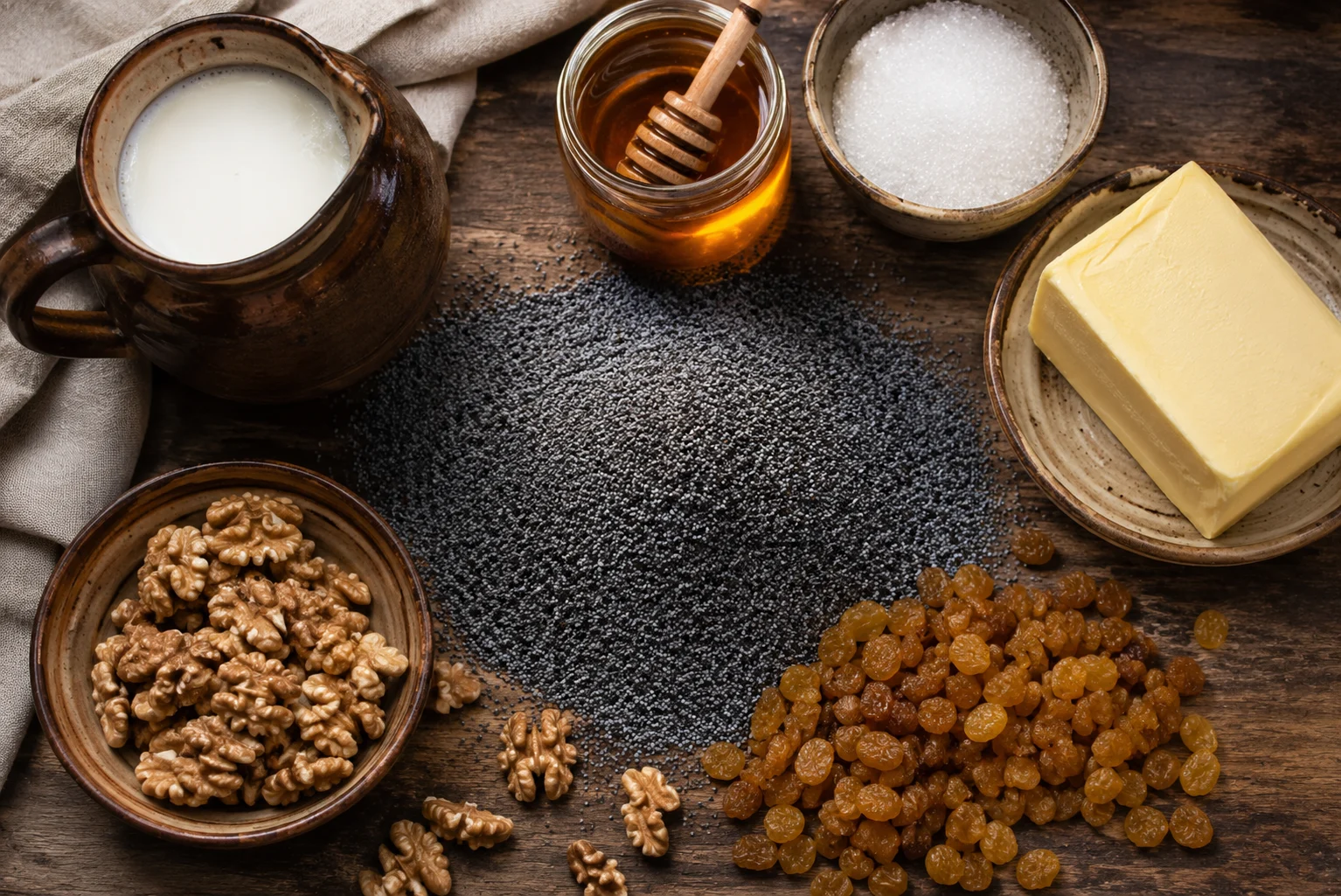
For the Poppy Seed Filling
- 300g (2 cups) poppy seeds
- 200ml (generous ¾ cup) whole milk
- 100g (⅓ cup) honey
- 50g (¼ cup) granulated sugar
- 50g (3½ tbsp) unsalted butter
- 80g (⅔ cup) walnuts, finely chopped
- 80g (generous ½ cup) raisins
- Finely grated zest of ½ orange
- 2 large egg whites
For the Dough
- 500g (4 cups) all-purpose flour
- 100g (½ cup) granulated sugar
- 100g (7 tbsp) unsalted butter, softened
- 2 large egg yolks
- 120ml (½ cup) whole milk, warmed
- 12g (about 4 tsp) active dry yeast, or 40g fresh yeast
- ½ tsp salt
For the Glaze (optional)
- 100g (¾ cup plus 2 tbsp) powdered sugar
- 1 tbsp fresh lemon juice
- 1–2 tsp water, as needed
Instructions
- Soak the poppy seeds. Bring the milk just to a simmer and pour it over the poppy seeds in a heatproof bowl. Cover and leave for at least 30 minutes, or overnight in the refrigerator.8,10
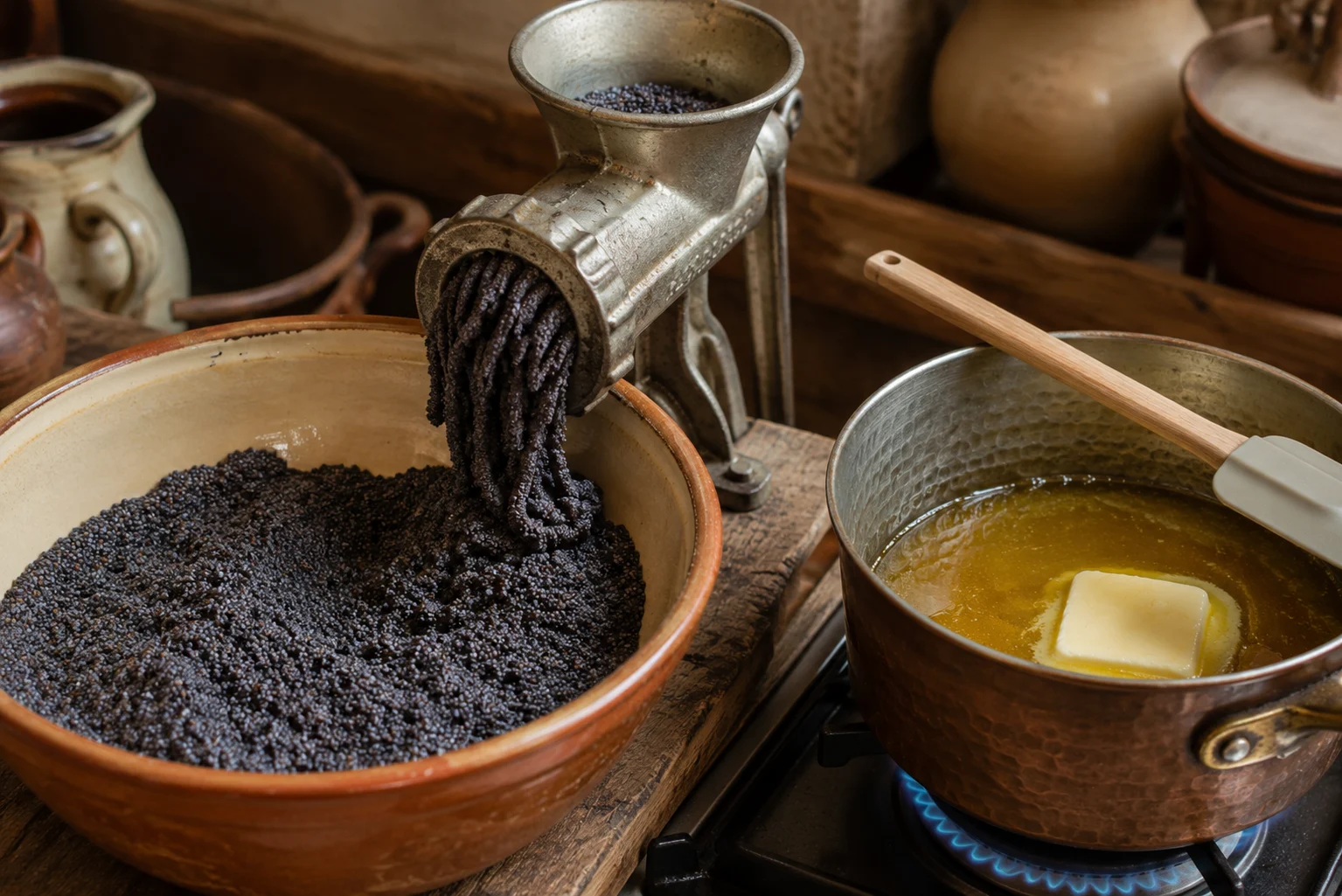
- Grind the poppy seeds. Tip the seeds into a fine sieve and press out the milk they haven’t absorbed. Grind them two or three times through the finest disc of a meat grinder, until they turn into a dark, sticky paste.8,12 A food processor also works, but the paste comes out looser and lumpier.8
- Cook the filling. Put the ground poppy seeds, honey, sugar and butter in a saucepan and cook over low heat, stirring all the time, for about 10 minutes, until thick.12 Off the heat, stir in the walnuts, raisins and orange zest. Let the filling cool completely.
- Start the dough. Warm the milk until lukewarm, stir in the yeast with a pinch of the sugar and leave until foamy, about 10 minutes.11
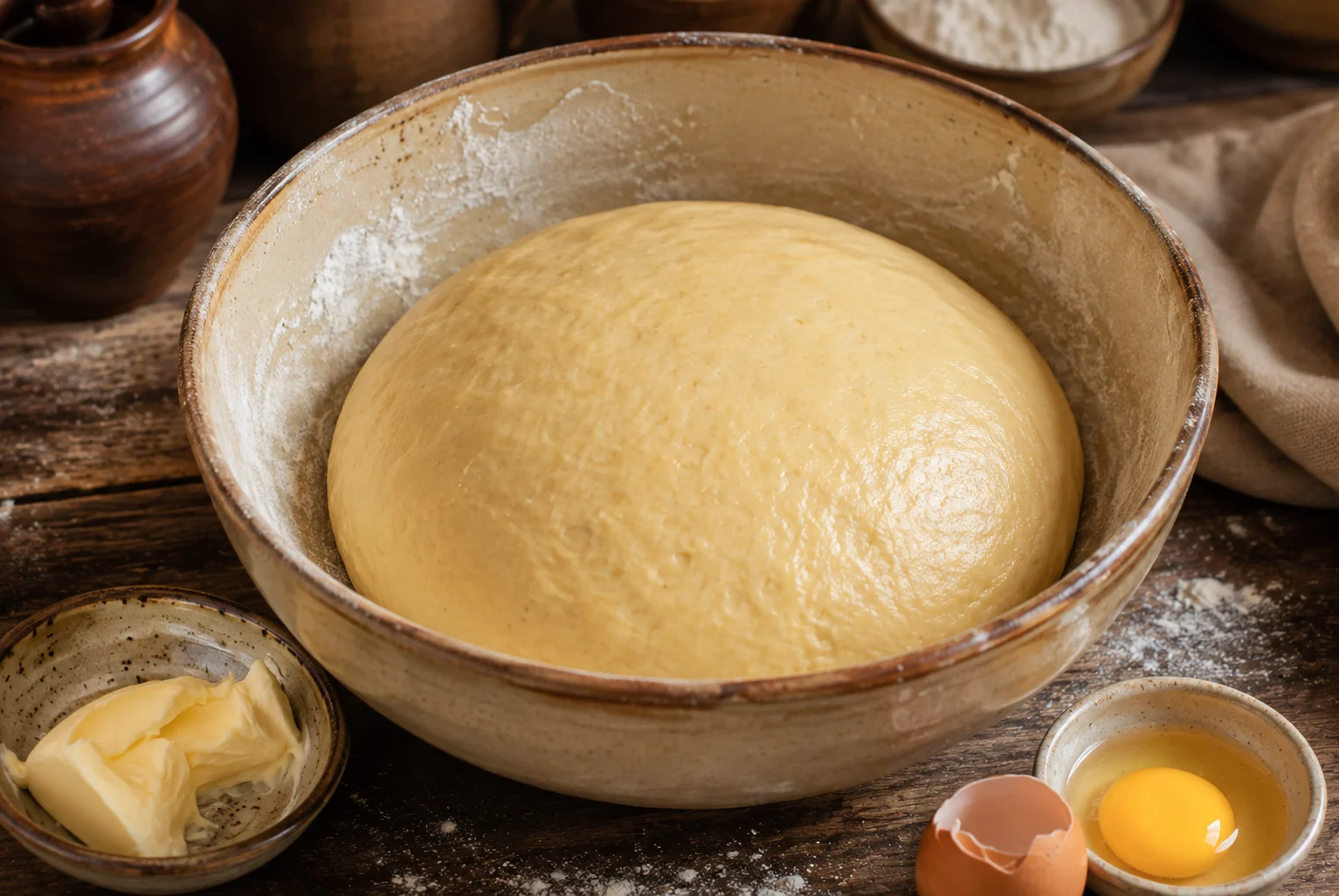
- Mix and knead. Combine the flour and salt in a large bowl. Add the yeast mixture, the remaining sugar, the egg yolks and the softened butter, and knead for about 10 minutes, until the dough is smooth and elastic.11
- First rise. Cover and leave in a warm place until doubled, 1–2 hours.7,9,10,11
- Finish the filling. Whip the egg whites to stiff peaks and fold them gently into the cooled filling. The whites hold the filling together, so it doesn’t crumble out when the roll is sliced.7,12
- Shape the roll. On a floured surface, roll the dough into a long rectangle about 1cm thick.7 Spread the filling over it, leaving a narrow border, and roll it up tightly from one long side. Pinch the seam to seal. The roll comes out about 50cm (20 inches) long; if that is too long for your oven, divide the dough and the filling in half and make two rolls.7
- Second rise. Lay the roll seam-side down on a sheet of parchment and fold the paper loosely over it into a tunnel, leaving about 1cm of room so it can rise. Leave for 20–30 minutes.7,11
- Bake. Bake at 180°C (350°F) for 35–45 minutes, until golden.7,9,11 If the top browns too fast, cover it loosely with foil.
- Cool and glaze. Unwrap the roll and let it cool completely on a rack.7 Mix the powdered sugar with the lemon juice, adding water a few drops at a time until the glaze is thick but pourable, then spread it over the cooled roll.7
Kitchen Tips
Grind the poppy seeds more than once. One pass through the grinder leaves many seeds whole; two or three passes turn them into the smooth paste that gives makowiec its texture.8,12
Don’t skip the egg whites. Whipped whites folded into the filling hold it together, so it stays in the spiral instead of crumbling out with the first cut.7
Keep the parchment loose but closed. The paper tunnel holds the roll’s shape in the oven; leave about 1cm of room inside so the dough can still rise.7
Let the roll cool completely before you slice it.7 A warm roll squashes under the knife and the filling smears, while a cooled one cuts into clean spirals.
Nutritional Information
Per serving (1 of 16 slices)
- Calories: approximately 390–475 kcal
- Protein: approximately 8–10g
- Total fat: approximately 18–22g
- Saturated fat: approximately 6–7g
- Carbohydrates: approximately 50–62g
- Dietary fiber: approximately 5–6g
- Sugars: approximately 23–28g
- Sodium: approximately 90–110mg
Nutritional values are estimates based on standard ingredient databases (USDA FoodData Central).13 They include the optional glaze; without it, a slice has about 25 kcal and 6g of sugar less.
Storage and Reheating
Makowiec keeps for up to 4 days in a cool place, covered with a towel; unless the kitchen is hot, it doesn’t need the refrigerator.7 It tastes best fresh, but it can be baked up to 2 days before serving.7
The roll freezes well. Wrap it in cling film, label it and freeze it before glazing, since the glaze turns runny and sticky in the freezer. Thaw it at room temperature for about 2 hours, then glaze it.7
Traditional Makowiec

Ingredients
For the Poppy Seed Filling
- 300g (2 cups) poppy seeds
- 200ml (generous ¾ cup) whole milk
- 100g (⅓ cup) honey
- 50g (¼ cup) granulated sugar
- 50g (3½ tbsp) unsalted butter
- 80g (⅔ cup) walnuts, finely chopped
- 80g (generous ½ cup) raisins
- Finely grated zest of ½ orange
- 2 large egg whites
For the Dough
- 500g (4 cups) all-purpose flour
- 100g (½ cup) granulated sugar
- 100g (7 tbsp) unsalted butter, softened
- 2 large egg yolks
- 120ml (½ cup) whole milk, warmed
- 12g (about 4 tsp) active dry yeast, or 40g fresh yeast
- ½ tsp salt
For the Glaze (optional)
- 100g (¾ cup plus 2 tbsp) powdered sugar
- 1 tbsp fresh lemon juice
- 1–2 tsp water, as needed
Instructions
- Soak the poppy seeds. Bring the milk just to a simmer and pour it over the poppy seeds in a heatproof bowl. Cover and leave for at least 30 minutes, or overnight in the refrigerator.
- Grind the poppy seeds. Tip the seeds into a fine sieve and press out the milk they haven’t absorbed. Grind them two or three times through the finest disc of a meat grinder, until they turn into a dark, sticky paste. A food processor also works, but the paste comes out looser and lumpier.
- Cook the filling. Put the ground poppy seeds, honey, sugar and butter in a saucepan and cook over low heat, stirring all the time, for about 10 minutes, until thick. Off the heat, stir in the walnuts, raisins and orange zest. Let the filling cool completely.
- Start the dough. Warm the milk until lukewarm, stir in the yeast with a pinch of the sugar and leave until foamy, about 10 minutes.
- Mix and knead. Combine the flour and salt in a large bowl. Add the yeast mixture, the remaining sugar, the egg yolks and the softened butter, and knead for about 10 minutes, until the dough is smooth and elastic.
- First rise. Cover and leave in a warm place until doubled, 1–2 hours.
- Finish the filling. Whip the egg whites to stiff peaks and fold them gently into the cooled filling. The whites hold the filling together, so it doesn’t crumble out when the roll is sliced.
- Shape the roll. On a floured surface, roll the dough into a long rectangle about 1cm thick. Spread the filling over it, leaving a narrow border, and roll it up tightly from one long side. Pinch the seam to seal. The roll comes out about 50cm (20 inches) long; if that is too long for your oven, divide the dough and the filling in half and make two rolls.
- Second rise. Lay the roll seam-side down on a sheet of parchment and fold the paper loosely over it into a tunnel, leaving about 1cm of room so it can rise. Leave for 20–30 minutes.
- Bake. Bake at 180°C (350°F) for 35–45 minutes, until golden. If the top browns too fast, cover it loosely with foil.
- Cool and glaze. Unwrap the roll and let it cool completely on a rack. Mix the powdered sugar with the lemon juice, adding water a few drops at a time until the glaze is thick but pourable, then spread it over the cooled roll.
Frequently Asked Questions
What does makowiec taste like?
The filling is dense, nutty and only mildly sweet, closer to a poppy seed paste than to jam, with honey, raisins and orange zest coming through. The dough around it is soft and lightly sweet.
Can eating makowiec cause a positive drug test?
It can. Poppy seeds can carry traces of the plant’s sap, which contains opiates; cleaning and cooking reduce these compounds by around 90%, but not completely.6 A slice won’t make anyone high,2 yet a Polish forensic journal has noted that eating poppy seed pastries can show up as morphine on a test for several hours afterwards.1
Can I use a store-bought poppy seed filling?
Yes, but taste it first. Many ready-made fillings are too sweet and contain little nut or fruit. If the filling is loose, cook it down over low heat with a teaspoon of butter, stir in some chopped nuts and dried fruit, let it cool and fold in whipped egg whites.7
Why did my filling crumble out when I sliced the roll?
Usually because the egg whites were left out or not whipped enough. Whipped whites folded into the filling bind it, so it holds together when the roll is cut.7
Can makowiec be frozen?
Yes, it freezes very well. Freeze it unglazed, wrapped in cling film, and thaw it at room temperature for about 2 hours before glazing.7
How far ahead can I bake it?
Makowiec tastes best fresh, but you can bake it up to 2 days before serving and keep it covered with a towel in a cool place.7
Looking for a Lighter Version?
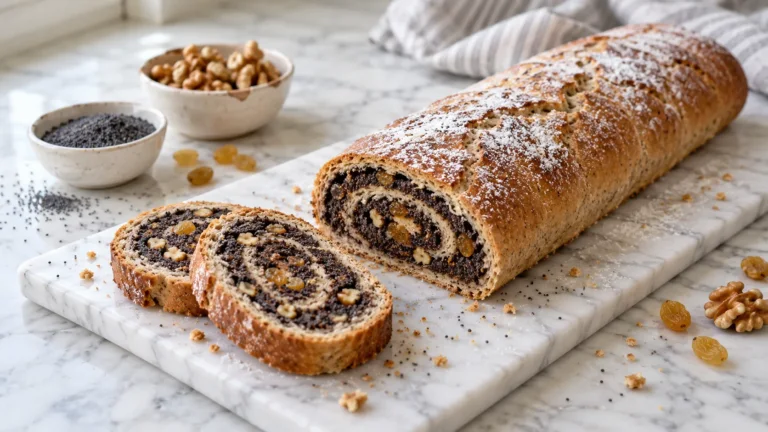
The Healthy Makowiec recipe keeps the same poppy seed filling and spiral, makes half the dough with whole wheat flour, uses less sugar in the dough and filling, and replaces part of the butter in the dough with oil.
Further Reading & Sources
The recipe is a compilation based on the published recipes listed here; these links are provided for readers who want to explore further.
- Kępa, Marek. “Makowiec: The Most Scandalous Cake in the World?” Culture.pl, September 29, 2017. culture.pl
- “The Polish ‘Makowiec’: An Intoxicating Cake?” Culture.pl (no author named), December 20, 2022. culture.pl
- Kasprzyk-Chevriaux, Magdalena. “The 12 Dishes of Polish Christmas.” Culture.pl, December 2013, updated December 2022. culture.pl
- “Wigilia.” Cztery pory roku, Stowarzyszenie „Pracownia Etnograficzna” im. Witolda Dynowskiego (no author named). czteryporyroku.etnograficzna.pl (in Polish)
- “Wigilijna opowieść o maku.” RMF24 (RMF FM), December 19, 2023. rmf24.pl (in Polish)
- Barrell, Amanda. “Poppy seeds: Nutrition and health benefits.” Medical News Today, medically reviewed by Sade Meeks, MS, RD, May 27, 2021. medicalnewstoday.com
- Polonist Test Kitchen. “Makowiec: Polish Poppy Seed Roll.” Polonist, September 6, 2019, updated June 5, 2023. polonist.com — recipe
- Polonist Test Kitchen. “Masa Makowa (Polish Poppy Seed Filling).” Polonist, September 15, 2019, updated June 5, 2023. polonist.com — recipe
- Klesta, Karolina. “Polish Poppy Seed Roll (Makowiec).” Polish Foodies, November 14, 2025. polishfoodies.com — recipe
- Britton, Lois. “Makowiec Polish Poppy Seed Roll.” Polish Housewife, October 10, 2017. polishhousewife.com — recipe
- “Makowiec.” Kwestia Smaku (editorial team), December 4, 2017, updated December 16, 2025. kwestiasmaku.com — recipe (in Polish)
- “Makowiec wigilijny – przepis.” Wroclaw.pl (editorial team), December 19, 2017. wroclaw.pl — recipe (in Polish)
- U.S. Department of Agriculture. FoodData Central, SR Legacy: poppy seed (FDC 171330), walnuts (170187), raisins (168165), honey (169640), egg yolk (172184), egg white (172183), whole milk (171265), granulated sugar (169655), powdered sugar (169656), all-purpose flour (169761), unsalted butter (173430), active dry yeast (175043), orange peel (169103), lemon juice (167747), salt (173468). fdc.nal.usda.gov
Disclaimer
The information in this article is provided for educational and informational purposes only. Heritage Healthy Kitchen makes no representations or warranties regarding the accuracy or completeness of any content on this site. Nutritional values are estimates only and will vary depending on the specific ingredients, brands, and measurements used. This content is not intended as dietary, medical, or professional nutritional advice. Always consult a qualified healthcare provider regarding any dietary needs or health conditions. Heritage Healthy Kitchen is not responsible for any outcomes resulting from the use of recipes or information published on this site.
Cook by Occasion
This recipe is part of our Wigilia menu.
You Might Also Like
More heritage recipes from our kitchen
Leave a Reply