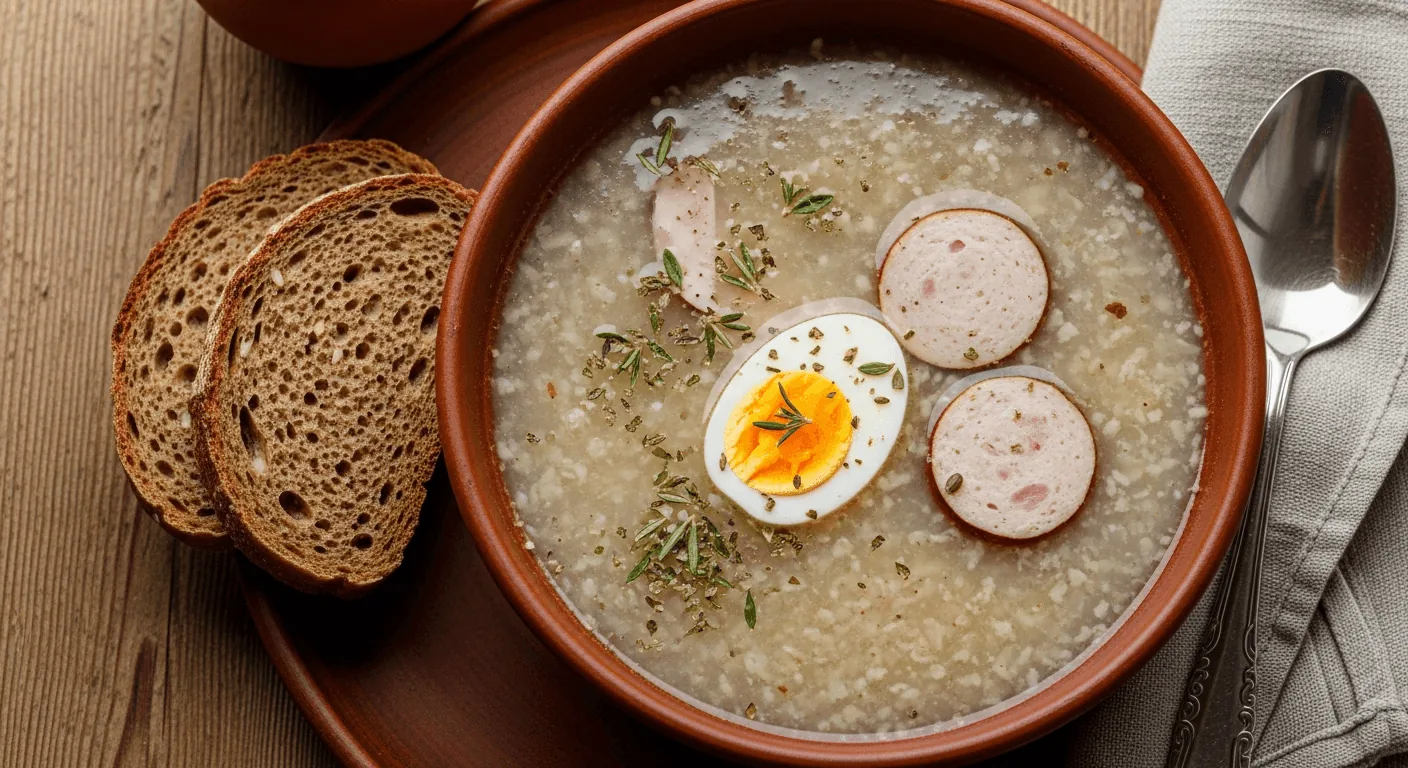
Traditional Polish Żurek Recipe: Authentic Sour Rye Soup
Zakwas starter: 5–7 days | Total soup time: 1 hour active | Serves: 4–6 | Difficulty: Intermediate
Quick Overview

- Make the zakwas (fermented rye starter) 5–7 days ahead — it needs time to sour properly
- Simmer broth with white sausage until cooked through — about 25 minutes
- Add potatoes, allspice, bay leaves, cook until tender
- Pour in the zakwas gradually, tasting as you go — sourness is personal
- Add garlic and marjoram at the end, serve with halved boiled eggs
What Żurek Is
Żurek is a Polish sour soup built on a fermented rye flour starter called zakwas. The starter is what makes it. Not vinegar, not lemon, but the real low-acidity tang that comes from lactic fermentation of grain. Nothing else produces that particular flavor.¹
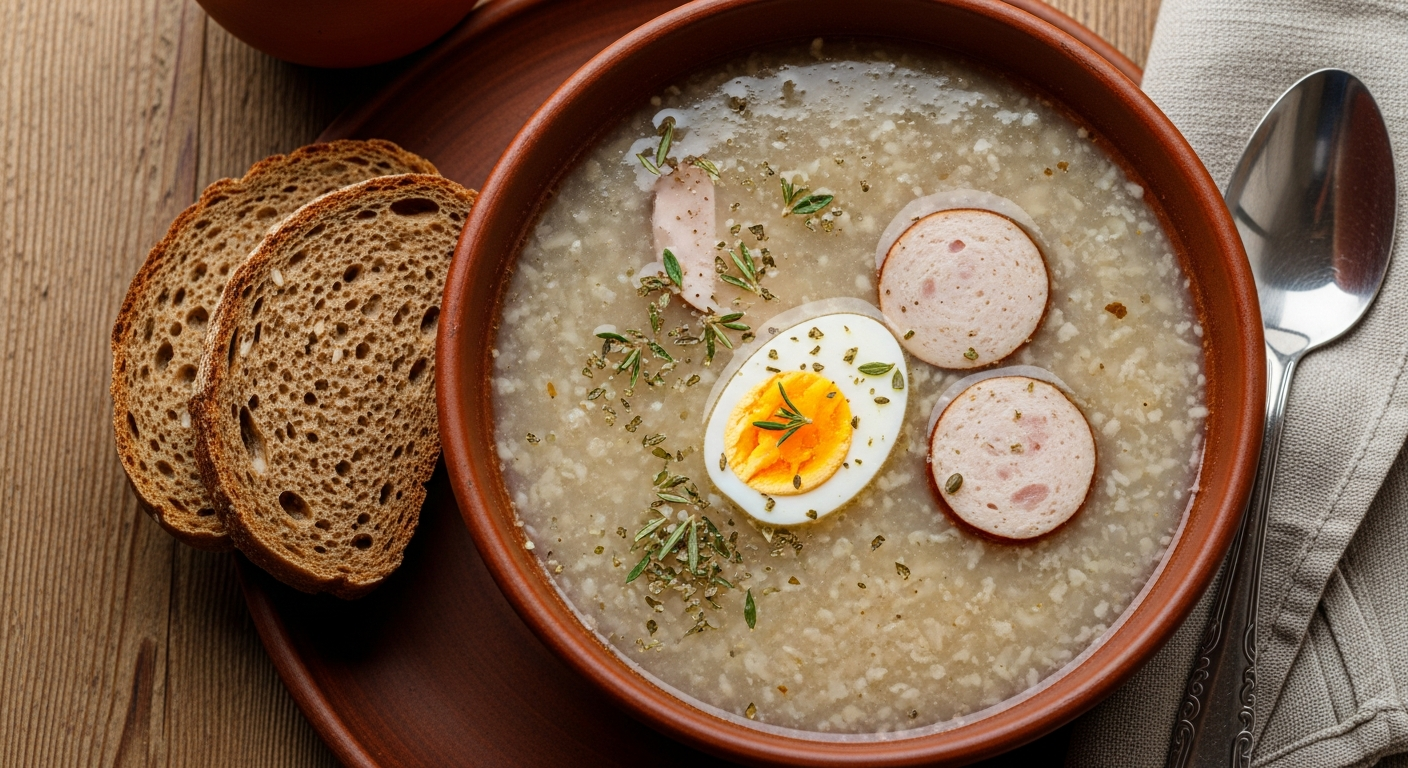
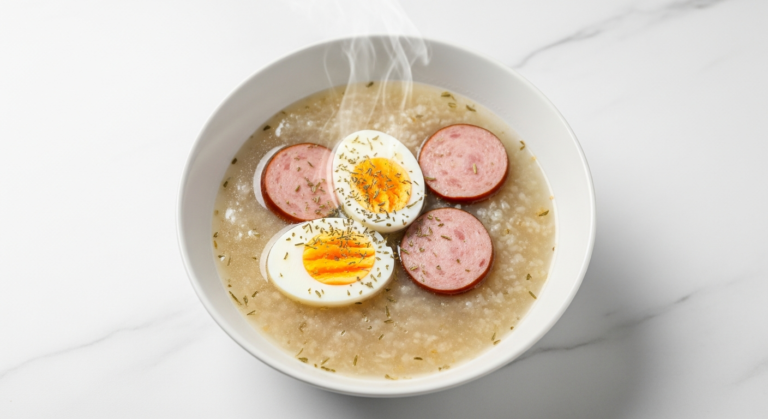
The soup is thick, cloudy, and pale gray-white in color. It smells of rye and garlic. A halved hard-boiled egg floats on top, white sausage sits in the broth, and dried marjoram perfumes every spoonful. You either know this soup from childhood or you encounter it for the first time and wonder how you went without it.²
Żurek is Poland’s Easter soup, though calling it only an Easter soup undersells it. Every restaurant in Poland with any self-respect serves it year-round. The name comes from żur, which traces to the Germanic word “sur” — simply meaning sour. The diminutive “-ek” is typically Polish: affectionate, familiar, a word that belongs to home kitchens.¹
History and Cultural Roots
The first written references to sour rye soup in Poland date to the 15th and 16th centuries, though the tradition almost certainly goes back further. Before refrigeration, fermenting grain was a practical solution to preservation. The sour liquid that developed when rye flour sat in water was too useful to discard. Polish cooks turned it into soup.¹
For centuries, żurek was peasant food. Rye was the grain of the Polish countryside; wheat was for nobility. The soup reflects that — honest, filling, made from what was always at hand. It sustained people through winters and Lenten fasting alike.²
The Easter connection runs deep. During Lent, żurek was meatless — rye, potatoes, eggs for those who could afford them. On Easter Sunday, the full version appeared: white sausage simmering in the broth, a celebration of abundance after weeks of restraint. Many Polish families still consider Easter breakfast incomplete without it.¹
During the communist period, żurek quietly became a symbol of getting by. Rye flour, potatoes, and eggs were almost always available even when other foods were not. The soup kept feeding families through scarcity. Older Poles who lived through that period carry that memory in how they talk about it.¹
Regional Variations Across Poland
No two regional versions of żurek agree on much beyond the fermented rye base. In Silesia, the soup tends to be thicker, more heavily seasoned, and often served with smoked kiełbasa śląska alongside or instead of white sausage. In Greater Poland, the version is lighter, sometimes includes dried mushrooms for depth, and uses both white and smoked sausage together for a more layered flavor.¹
In the Tatra Mountains, żurek’s highland cousin appears: chrzonica — a horseradish-based soup of similar structure but considerably more intensity. The Mazovian version uses more potatoes and root vegetables and comes out milder and more filling than most other regional versions.³
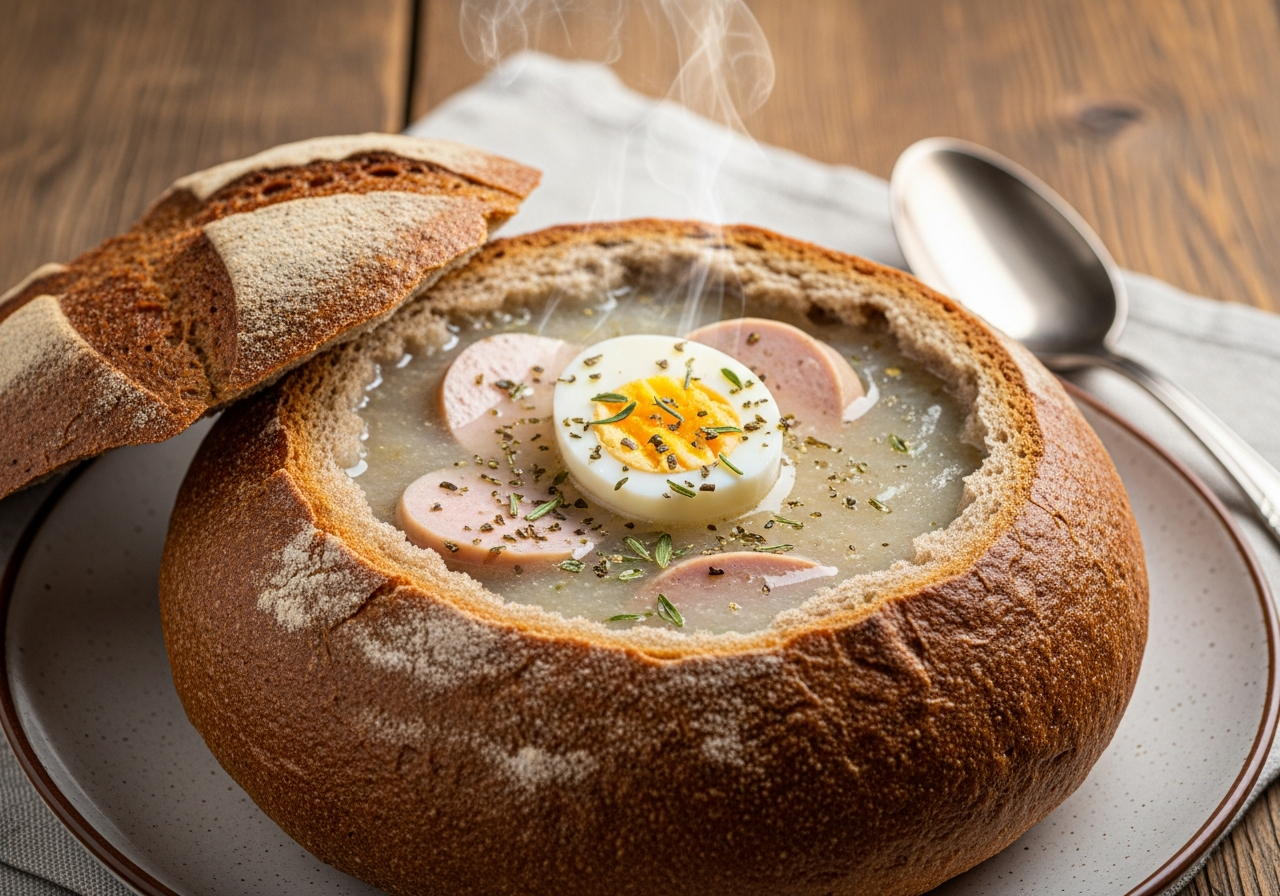
The bread bowl is a Małopolska (Lesser Poland) tradition, particularly around Kraków. The soup arrives inside a hollowed round rye loaf — you eat the bowl after the soup, which has soaked into the bread. Some regions add cream to the finished soup; others find this an offense. Marjoram is nearly universal, but even that is debated: some cooks in Poznań believe it overwhelms the rye flavor and skip it.¹
The Lenten version — meatless, made with vegetable stock and dried mushrooms — is technically as old as the meat version and entirely authentic. It is not a modern adaptation. It is what Polish Catholics cooked every Friday from Ash Wednesday to Holy Saturday for generations.²
Traditional Żurek Recipe
Recipe developed independently by Heritage Healthy Kitchen, drawing on traditional Polish culinary methods. Sources for further reading are listed at the end of this article.¹²³
Part One: Zakwas (Fermented Rye Starter)
Start the zakwas 5–7 days before you plan to make the soup. It cannot be rushed.
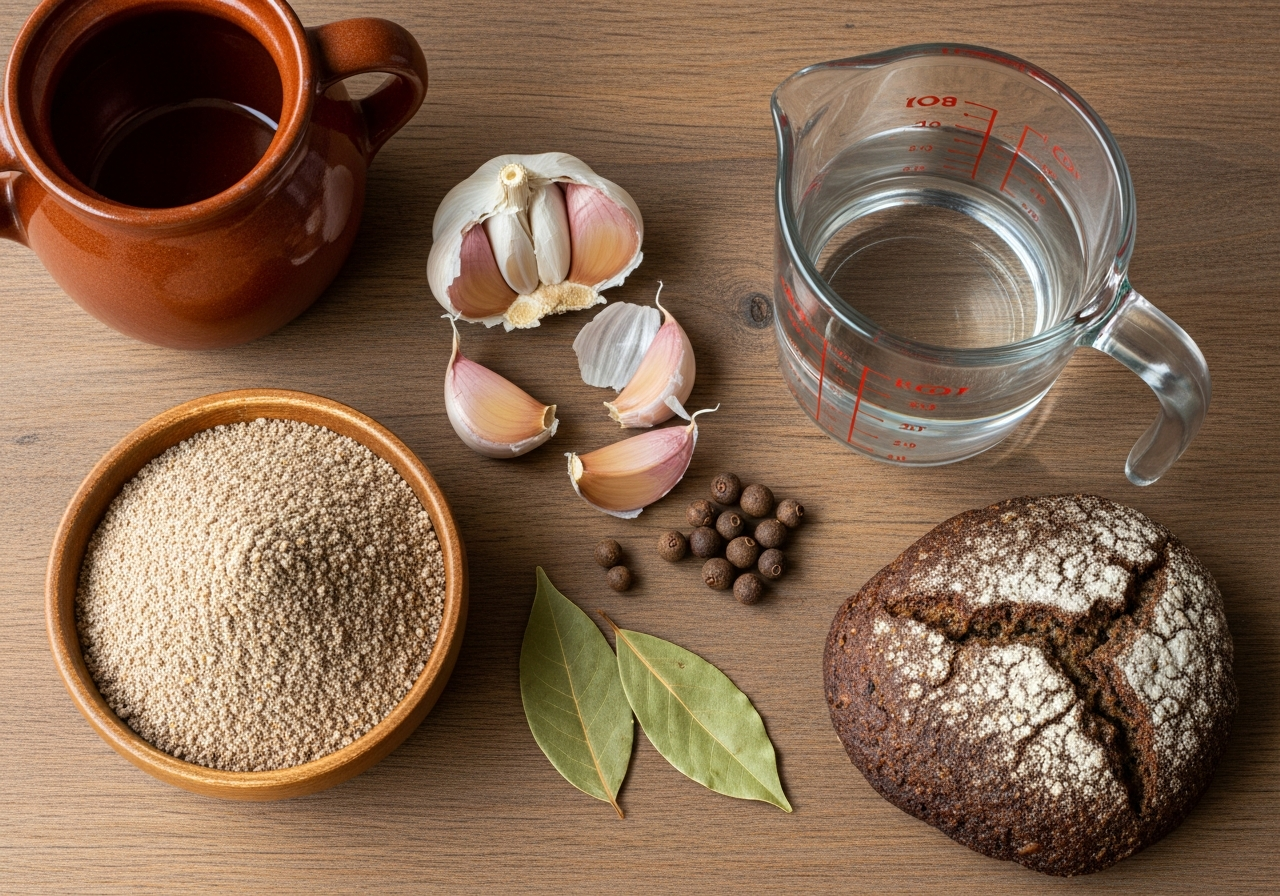
Ingredients for the Zakwas
- 4 tablespoons (40g) whole grain rye flour (dark rye, not light)
- 400ml (1¾ cups) cooled boiled water — use non-chlorinated water if possible, as chlorine slows fermentation
- 3 garlic cloves, lightly crushed (not minced)
- 2 bay leaves
- 4 allspice berries
- Optional: 1 small piece of rye bread crust — accelerates fermentation
How to Make the Zakwas
- Sterilize a glass jar (at least 1 liter capacity) by rinsing with boiling water. Let it dry completely.
- Add the rye flour. Pour in the cooled boiled water and stir until smooth with no lumps.
- Add the garlic, bay leaves, and allspice. Stir gently. Drop in the bread crust if using.
- Cover the jar with cheesecloth or a clean breathable cloth secured with a rubber band. Do not seal airtight — the fermentation needs to breathe.
- Leave at room temperature (ideally 20–24°C / 68–75°F), away from direct sun. Stir once daily with a clean spoon.
- After 3–5 days the mixture will smell pleasantly sour and slightly garlicky, and may show small bubbles. After 5–7 days it is ready to use. Strain out the solids before using. Store the strained zakwas in the refrigerator for up to 2 weeks.
What ready zakwas should smell like: sour, earthy, and faintly garlicky — not rotten or overly sharp. Trust your nose. If it smells wrong, start again.
Part Two: The Soup
Ingredients
- 1.5 liters (6 cups) good chicken or pork broth — homemade is better, low-sodium if using store-bought
- 300–500ml (1¼–2 cups) zakwas — start with less, add more to reach the sourness you want
- 400g (14 oz) biała kiełbasa (Polish white sausage) — or good smoked kiełbasa if white is unavailable
- 3 medium potatoes, peeled and cut into 2cm cubes
- 4 large eggs, hard-boiled and halved lengthwise
- 1 large onion, finely diced
- 4 garlic cloves, minced or pressed
- 2 teaspoons dried marjoram
- 3 bay leaves
- 5 allspice berries
- 1 teaspoon white pepper
- Salt to taste
- Optional: 3–4 tablespoons heavy cream or sour cream, stirred in at the end
- Optional: 100g smoked bacon, diced and pan-fried separately, for serving
Instructions
- Cook the sausage. Place the biała kiełbasa in the broth with the bay leaves and allspice. Bring to a gentle simmer and cook 20–25 minutes until the sausage is cooked through. Remove the sausage, slice into rounds or chunks, and set aside. Keep the broth.
- Soften the onion. In a separate pan, sauté the diced onion in a little oil or butter over medium heat until soft and translucent, about 8 minutes. No need to brown it. Add this to the broth.
- Add the potatoes. Add the cubed potatoes to the broth. Simmer 15–18 minutes until tender but still holding their shape. Remove the bay leaves and allspice at this point.
- Add the zakwas. Stir the zakwas well to mix the settled starchy layer back in. Pour it into the soup gradually, tasting as you go. 300ml gives a mild sourness; 500ml gives a pronounced, characterful sourness. Stop where you like it. Bring the soup back to a gentle simmer — do not boil hard after adding the zakwas, which can dull the flavor.²
- Add garlic and marjoram. Add the minced garlic and dried marjoram. Stir and cook 4–5 more minutes. Taste and adjust salt and pepper.
- Optional cream finish. If adding cream or sour cream, temper it first: take a ladle of hot soup and slowly whisk it into the cream in a bowl, then pour the tempered mixture back into the pot. This prevents curdling.
- Assemble and serve. Return the sliced sausage to the pot and warm through. Ladle the soup into bowls. Place two halved boiled eggs in each bowl. Add fried bacon on top if using. Finish with a pinch of fresh or dried marjoram.
To serve in a bread bowl: hollow out a round rye loaf, keeping the walls thick enough to hold liquid. Ladle the hot soup inside and serve immediately. The bread soaks up the żurek as you eat — this is not a mess, it is the point.
Kitchen Tips and Pro Tips
Use dark whole grain rye flour for the zakwas, not light rye or rye flour blend. The bran and germ carry the wild bacteria that drive fermentation. Light rye flour ferments weakly and produces a thinner, less sour result.¹
Non-chlorinated water makes a real difference. Tap water in many cities contains enough chlorine to slow or prevent fermentation. Filtered water or bottled mineral water works best. If tap water is all you have, boil it and let it cool completely before using — this drives off most chlorine.¹
Add the zakwas gradually and taste as you go. The sourness of a finished starter varies depending on how long it fermented and at what temperature. Some batches are mild; some are sharp. You cannot know until you taste. Add half, taste the soup, then add more if you want.²
Biała kiełbasa (white sausage) is sold raw and must be cooked before eating. It is a fresh, unsmoked sausage traditionally available at Easter in Poland — a seasonal food you buy and eat in spring, not in July. Polish delicatessens in most cities carry it. If you cannot find it, good smoked kiełbasa works well and gives the soup more depth of flavor, just a different character.²
Marjoram goes in at the end, not the beginning. Added too early, it turns bitter. Stirred in during the last few minutes of cooking, it turns warm and herbal in a way that holds the whole bowl together. Worth not skipping.³
The soup is better the next day. Like most fermented-base soups, żurek deepens after a night in the refrigerator. Make a large pot and plan for leftovers.
Nutritional Information
Per serving (1 bowl, approximately 400ml with sausage and one egg)
- Calories: approximately 370–400 kcal
- Protein: ~22g
- Total fat: ~20g
- Carbohydrates: ~28g
- Dietary fiber: ~2.5g
- Sodium: ~700–800mg (varies significantly with sausage type and broth saltiness)
Nutritional values are estimates based on standard ingredient databases. They will vary significantly depending on the sausage used, whether cream is added, the saltiness of the broth, and portion size.
Storage and Reheating
Żurek keeps well in the refrigerator for up to 3 days. Store the soup separately from the boiled eggs — eggs become rubbery when stored in hot liquid. Reheat gently over medium-low heat, not at a hard boil. Add the eggs to individual bowls when serving.
The soup can be frozen, though the potatoes will soften and become a little grainy after thawing. For better results, freeze the soup without the potatoes and add freshly cooked potato when reheating. The zakwas flavor survives freezing well.
Leftover zakwas starter keeps in the refrigerator for up to 2 weeks. Feed it with a tablespoon of rye flour and a little water every 4–5 days if you want to keep it alive longer — it behaves like a sourdough starter.
More Heritage Classics
If you love this soup, explore more from the region: our Traditional Polish Pierogi, and another iconic sour Eastern European soup, Traditional Ukrainian Borscht.
Traditional Polish Żurek

Ingredients
Ingredients for the Zakwas
- 4 tablespoons (40g) whole grain rye flour (dark rye, not light)
- 400ml (1¾ cups) cooled boiled water — use non-chlorinated water if possible, as chlorine slows fermentation
- 3 garlic cloves, lightly crushed (not minced)
- 2 bay leaves
- 4 allspice berries
- Optional: 1 small piece of rye bread crust — accelerates fermentation
Instructions
- Make the zakwas (fermented rye starter) 5–7 days ahead — it needs time to sour properly
- Simmer broth with white sausage until cooked through — about 25 minutes
- Add potatoes, allspice, bay leaves, cook until tender
- Pour in the zakwas gradually, tasting as you go — sourness is personal
- Add garlic and marjoram at the end, serve with halved boiled eggs
Looking for a Lighter Version?
If you want a lighter take on this dish, see our Healthy Żurek: Polish Sour Rye Soup with Less Sodium and Leaner Protein.
Frequently Asked Questions
What is the difference between żurek and barszcz biały (white borscht)?
They are related but distinct. Both use a fermented sour base, but barszcz biały uses a wheat flour or mixed flour starter, not rye. The result is milder and less earthy. Żurek uses dark rye flour exclusively, which gives it a characteristic tang and color. Some regions use the names interchangeably, which causes ongoing confusion — and occasional arguments.²
Can I use store-bought zakwas?
Yes. Jarred żurek concentrate is sold at Polish grocery stores and on some online retailers. The flavor is acceptable, and it is a reasonable shortcut if you cannot wait 5–7 days. Homemade zakwas has more complexity, but a good commercial version makes a perfectly fine soup. Avoid instant powder mixes — they produce a flat, one-dimensional sourness that doesn’t represent the dish well.²
My zakwas doesn’t smell sour after 3 days. What’s wrong?
Most likely the kitchen is too cold (below 18°C / 64°F), or chlorinated tap water slowed the fermentation. Move the jar somewhere warmer — near a radiator or on top of the refrigerator. Give it another 2–3 days before worrying. If there is no sourness at all after 7 days, start again with filtered water and a fresh piece of rye bread crust to inoculate the batch.¹
Is there a vegetarian version?
Yes, and it is entirely traditional — not a modern adaptation. The Lenten żurek made every Friday during fasting was always meatless. Use vegetable stock or mushroom stock as the base, add a generous handful of dried forest mushrooms (soaked and chopped), and increase the egg and potato portions. It is a different soup, but a good one.¹
Why does my żurek taste flat even though I added the zakwas?
Two possibilities. First, the zakwas may not have fermented long enough — young starter is weak. Second, the soup may have been boiled hard after adding the zakwas, which degrades the lactic acid. Keep the heat at a gentle simmer once the zakwas is in. Also check the marjoram — it plays a bigger role in the final flavor than it looks like it should.³
What kind of bread works best for the bread bowl?
A round rye loaf or sourdough boule with a thick, firm crust. The walls need to hold liquid for at least 20 minutes without leaking. Soft sandwich bread is not suitable. In Poland, bakeries around Easter sell round bread specifically for this purpose — ask at a Polish deli if you want to do it properly.³
Can I make żurek without potatoes?
Yes. Some regional versions, particularly in Silesia, serve żurek without potatoes and instead thicken it with more zakwas or a small amount of cream. Others add bread directly to the bowl. Potatoes are common but not universal.¹
Looking for a Lighter Version?
A healthier żurek is achievable — the fermented rye base is already probiotic and nutritious, and the meatless Lenten version shows that the soup doesn’t need sausage to be satisfying. Our Healthy Żurek recipe explores a lower-sodium, leaner version with turkey sausage, more vegetables, and the full fermented rye base intact.
Further Reading & Sources
The following sources were consulted in researching the history, technique, and regional variations of traditional Polish żurek. Heritage Healthy Kitchen’s recipe was developed independently; these links are provided for readers who want to explore further.
- “Żurek Recipe: Polish Fermented Rye Soup.” Figaro Shakes. figaroshakes.com — detailed historical background, fermentation science, and regional variation notes.
- “Żurek: Polish Sour Rye Soup.” The Polonist. polonist.com — traditional recipe with practical ingredient sourcing guidance and serving variations.
- “Żur (Żurek) Sour Rye Soup — Its History and Legends.” Polish Mama Cooks. polishmamacooks.com — cultural history and folk legends of the dish.
Disclaimer
The information in this article is provided for educational and informational purposes only. Heritage Healthy Kitchen makes no representations or warranties regarding the accuracy or completeness of any content on this site. Nutritional values are estimates only and will vary depending on the specific ingredients, brands, and measurements used. This content is not intended as dietary, medical, or professional nutritional advice. Always consult a qualified healthcare provider regarding any dietary needs or health conditions. Heritage Healthy Kitchen is not responsible for any outcomes resulting from the use of recipes or information published on this site.
You Might Also Like
More heritage recipes from our kitchen

Leave a Reply