

Active time: ~40 minutes | Total time: ~6 hours (including rising and cooling) | Serves: 16 (1 loaf, 16 slices) | Difficulty: Moderate
Quick Overview
- Use a half whole wheat, half all-purpose flour blend for real fiber
- Cut the sugar in the dough by nearly half, leaning on vanilla and lemon zest for flavor
- Replace half the butter with olive oil to shift some saturated fat to unsaturated
- Rise, shape, and bake exactly as in the traditional version
- Finish with a thinner, lighter glaze instead of a full sugar coating
What This Version Changes — and What It Keeps
This version keeps what makes paska recognizable: the tall cylindrical loaf, the egg-enriched dough, the same rise-shape-rise-bake sequence, and the same yield. Nothing about the shaping or baking method changes from the traditional recipe.
What changes is the flour, the sugar, and part of the fat. Half the all-purpose flour becomes white whole wheat, the sugar is cut by close to half between the dough and the glaze, and half the butter is replaced with olive oil. None of these swaps are extreme on their own, which is the point: real, measurable changes that still bake into a loaf people will recognize as paska.
Why These Swaps Work
Half the all-purpose flour here becomes white whole wheat flour, which keeps the bran and germ that milling strips out of refined flour, along with most of the wheat kernel’s fiber and B vitamins.1 Refining wheat removes more than half of its B vitamins and virtually all of its fiber. Cleveland Clinic registered dietitian Elyse Homan notes that whole wheat flour can generally be substituted for all-purpose flour in equal amounts, though the result bakes somewhat denser, which is why this recipe swaps half the flour rather than all of it.2
The dough’s sugar is cut by nearly half, and the glaze uses half the powdered sugar of the traditional version, trimming close to 47% of the added sugar across the whole recipe. The Dietary Guidelines for Americans cap added sugar at under 10% of daily calories, and the American Heart Association sets a tighter limit still, around 24 grams a day for most women and 36 grams for most men.3 Harvard’s Nutrition Source specifically suggests cutting added sugar in baking by about a quarter to a third, which this recipe does in the dough while trimming the glaze further still, since a thick sugar coating wasn’t doing much for the loaf beyond decoration.3
Half the butter is replaced with extra-virgin olive oil, which shifts the type of fat rather than removing it outright. Butter runs about 60% saturated fat, while olive oil is only about 13% saturated and mostly monounsaturated, and Harvard’s Nutrition Source notes that replacing saturated fat with unsaturated fat lowers LDL cholesterol and improves the ratio of total to HDL cholesterol.4 The Dietary Guidelines recommend keeping saturated fat under 10% of daily calories, and the American Heart Association sets a tighter 7% limit.4 Because oil is pure fat while butter is roughly a fifth water, this swap doesn’t reduce total fat by much and can even nudge it up slightly; the real change is in the type of fat, which is what the saturated-fat guidance is actually built around.
Healthy Paska Recipe
Recipe developed independently by Heritage Healthy Kitchen. Sources for the reasoning behind each swap are listed at the end of this article.
Ingredients (makes 1 tall loaf, serves 16)

For the dough
- 1 cup (240ml) whole milk, warmed to about 110°F (43°C)
- 1 packet (2¼ teaspoons / 7g) active dry yeast
- ½ cup (110g) granulated sugar, divided (reduced from 1 cup)
- 5 large eggs, at room temperature, plus 1 more for egg wash
- 6 tablespoons (85g) unsalted butter, melted and cooled slightly
- 6 tablespoons (82g) extra-virgin olive oil
- 1 teaspoon (6g) fine salt
- 1 tablespoon (13g) vanilla extract
- Zest of 1 lemon
- Scant 3 cups (360g) white whole wheat flour
- 2⅔ cups (330g) all-purpose flour, plus more for kneading
- ⅔ cup (100g) raisins, optional, soaked in warm water for 10 minutes and drained

For the glaze
- ½ cup (60g) powdered sugar (reduced from 1 cup)
- 1–2 tablespoons (15–30ml) fresh lemon juice
Instructions
- Bloom the yeast: Stir the warm milk with the yeast and 1 tablespoon of the sugar. Let stand until foamy, about 10 minutes.
- Mix the dough: In a large bowl, whisk 5 eggs with the remaining sugar, the melted butter, olive oil, salt, vanilla, and lemon zest. Stir in the yeast mixture. In a separate bowl, whisk together the whole wheat and all-purpose flours, then add to the wet ingredients gradually, mixing until a soft dough forms. Knead 8–10 minutes, by hand or with a dough hook, until smooth and elastic; the dough will feel a little heavier than an all-white-flour dough. Knead in the raisins, if using, during the last minute.
- First rise: Place the dough in a greased bowl, cover, and let rise in a warm spot until doubled, 1½–2 hours.
- Shape the loaf: Grease a tall, narrow pan (a 9-inch/23cm panettone mold or two lined 28-ounce cans work well) and line the bottom with parchment. Punch down the dough, shape it into a smooth ball, and settle it into the pan; it should fill it about halfway.
- Second rise: Cover loosely and let rise until the dough nears the top of the pan, 45–60 minutes. Preheat the oven to 350°F (175°C).
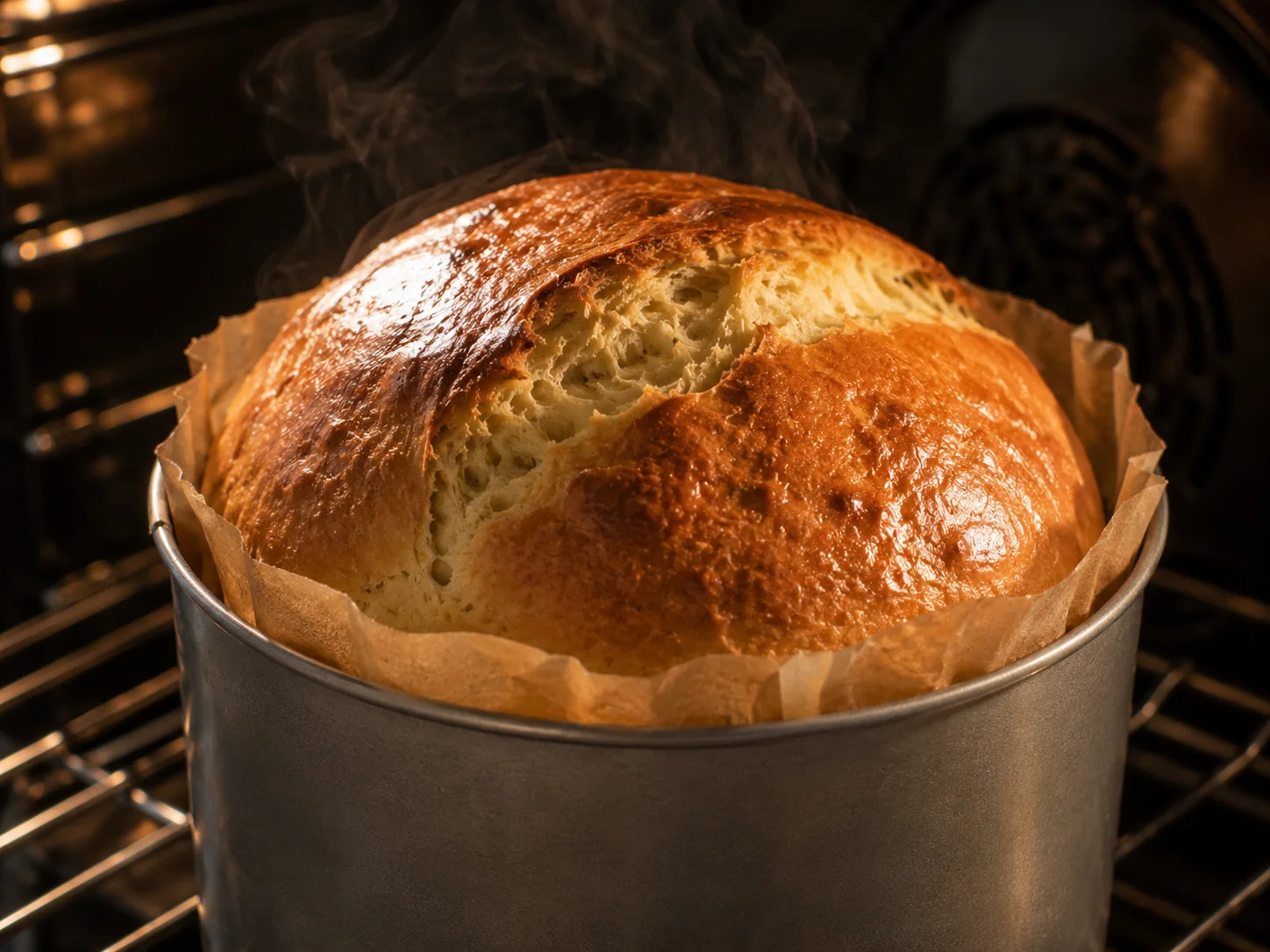
- Bake: Brush the top with the reserved beaten egg. Bake 45–55 minutes, tenting loosely with foil after the first 20–25 minutes if the top browns too quickly, until deep golden and a skewer inserted in the center comes out clean.
- Cool: Let the loaf rest in its pan for 15 minutes, then turn it out onto a rack and cool completely, at least 2 hours, before glazing.
- Glaze: Whisk the powdered sugar with the lemon juice until smooth. The glaze will be thinner than the traditional version; drizzle it over the cooled loaf rather than trying to coat it fully, and let set before slicing.
Nutritional Comparison
| Per serving (1 of 16 slices) | Traditional | This Version |
|---|---|---|
| Calories | ~315–390 kcal | ~285–350 kcal |
| Protein | ~7–8g | ~7.5–9g |
| Total fat | ~10–12.5g | ~11–13.5g |
| Saturated fat | ~5.8–7g | ~4–4.8g |
| Carbohydrates | ~49–60g | ~40–48g |
| Fiber | ~1–1.5g | ~2.8–3.5g |
| Sodium | ~165–200mg | ~165–200mg |
Values are estimates, calculated ingredient-by-ingredient using USDA reference data, and will vary with slice thickness and exact brands used. The honest read here: total fat and calories don’t drop dramatically, and total fat can even edge up slightly, since olive oil is denser in fat than the butter it partly replaces. What actually moves is the composition — saturated fat drops by roughly a third, fiber more than doubles, and added sugar across the whole recipe falls by close to half. Sodium barely changes, since salt wasn’t part of any swap here; it was never the primary issue with this recipe to begin with.
Storage and Reheating
Store the cooled, glazed loaf at room temperature in an airtight container or wrapped tightly for up to 3 days, a little shorter than the traditional version since less sugar and butter mean less of the fat and moisture that keep a loaf soft on the counter.
For longer storage, wrap the unglazed loaf tightly in plastic and then foil and freeze for up to 2 months. Thaw at room temperature and glaze just before serving.
Healthy Paska Variations

Ingredients
For the dough
- 1 cup (240ml) whole milk, warmed to about 110°F (43°C)
- 1 packet (2¼ teaspoons / 7g) active dry yeast
- ½ cup (110g) granulated sugar, divided (reduced from 1 cup)
- 5 large eggs, at room temperature, plus 1 more for egg wash
- 6 tablespoons (85g) unsalted butter, melted and cooled slightly
- 6 tablespoons (82g) extra-virgin olive oil
- 1 teaspoon (6g) fine salt
- 1 tablespoon (13g) vanilla extract
- Zest of 1 lemon
- Scant 3 cups (360g) white whole wheat flour
- 2⅔ cups (330g) all-purpose flour, plus more for kneading
- ⅔ cup (100g) raisins, optional, soaked in warm water for 10 minutes and drained
For the glaze
- ½ cup (60g) powdered sugar (reduced from 1 cup)
- 1–2 tablespoons (15–30ml) fresh lemon juice
Instructions
- Bloom the yeast: Stir the warm milk with the yeast and 1 tablespoon of the sugar. Let stand until foamy, about 10 minutes.
- Mix the dough: In a large bowl, whisk 5 eggs with the remaining sugar, the melted butter, olive oil, salt, vanilla, and lemon zest. Stir in the yeast mixture. In a separate bowl, whisk together the whole wheat and all-purpose flours, then add to the wet ingredients gradually, mixing until a soft dough forms. Knead 8–10 minutes, by hand or with a dough hook, until smooth and elastic; the dough will feel a little heavier than an all-white-flour dough. Knead in the raisins, if using, during the last minute.
- First rise: Place the dough in a greased bowl, cover, and let rise in a warm spot until doubled, 1½–2 hours.
- Shape the loaf: Grease a tall, narrow pan (a 9-inch/23cm panettone mold or two lined 28-ounce cans work well) and line the bottom with parchment. Punch down the dough, shape it into a smooth ball, and settle it into the pan; it should fill it about halfway.
- Second rise: Cover loosely and let rise until the dough nears the top of the pan, 45–60 minutes. Preheat the oven to 350°F (175°C).
- Bake: Brush the top with the reserved beaten egg. Bake 45–55 minutes, tenting loosely with foil after the first 20–25 minutes if the top browns too quickly, until deep golden and a skewer inserted in the center comes out clean.
- Cool: Let the loaf rest in its pan for 15 minutes, then turn it out onto a rack and cool completely, at least 2 hours, before glazing.
- Glaze: Whisk the powdered sugar with the lemon juice until smooth. The glaze will be thinner than the traditional version; drizzle it over the cooled loaf rather than trying to coat it fully, and let set before slicing.
Frequently Asked Questions
Will the whole wheat flour make this taste noticeably different from the traditional version?
It adds a slightly nuttier flavor and a somewhat denser crumb, a texture change that’s well documented at this substitution level.2 At a 50/50 split with all-purpose flour, most people still recognize it clearly as paska.
Why does the total fat go up slightly if this is the healthy version?
Olive oil is pure fat, while butter is roughly a fifth water, so swapping in oil by volume can nudge the fat grams up even as it improves the balance of fat types. The meaningful change is that saturated fat drops by about a third, which is the specific target of the dietary guidance behind this swap.4
Does this version actually lower the sodium?
No, not meaningfully. The salt amount wasn’t changed, since sodium was never the main nutritional issue with traditional paska to begin with; the swaps here target added sugar, saturated fat, and fiber instead.
Why does this version keep whole eggs instead of using egg whites?
Paska’s structure depends on the fat and richness whole eggs provide alongside the butter and oil; this recipe focuses its changes on the flour, sugar, and fat instead of the eggs.
Can the sugar be reduced even further than this recipe does?
Some, though yeast needs a small amount of sugar to activate well, and cutting too much from the dough can slow the rise. The glaze has more room to shrink further or be skipped entirely without affecting the bread itself.
Can all the butter be replaced with olive oil instead of half?
It’s possible, and it would lower saturated fat further, but a fully oil-based dough loses some of the richness and flavor that butter contributes to paska specifically; this recipe keeps half the butter as a middle ground.
Is this version appropriate for someone managing diabetes or watching blood sugar?
It’s a modest improvement thanks to the added fiber and reduced sugar, but an enriched sweet bread remains a carbohydrate-dense food regardless of these swaps. Anyone managing diabetes should discuss portion sizes with a healthcare provider or registered dietitian.3
Looking for the Full Story?
This article focuses on the swaps and the reasoning behind them, not on paska’s history or the Easter traditions around it. For the background, the blessing ritual, and the full traditional recipe this version is based on, see the Traditional Paska article on this site.
Read the Traditional Ukrainian Paska recipe
Further Reading & Sources
The following sources support the reasoning behind each swap in this article. Heritage Healthy Kitchen’s recipe was developed independently; these links are provided for readers who want to explore further.
- Harvard T.H. Chan School of Public Health. “Whole Grains.” The Nutrition Source. nutritionsource.hsph.harvard.edu/what-should-you-eat/whole-grains — the nutrient loss involved in milling whole grain into refined flour.
- “Are Some Flours Healthier Than Others? Here Are 8 Worth Trying.” Cleveland Clinic, Health Essentials. health.clevelandclinic.org/how-to-use-healthy-flour-substitutes — registered dietitian Elyse Homan on white flour’s limited nutritional value and whole wheat flour’s substitution ratio and effect on texture.
- Harvard T.H. Chan School of Public Health. “Added Sugar.” The Nutrition Source. nutritionsource.hsph.harvard.edu/carbohydrates/added-sugar-in-the-diet — Dietary Guidelines and American Heart Association limits on added sugar, and guidance on reducing sugar in baking.
- Harvard T.H. Chan School of Public Health. “Types of Fat.” The Nutrition Source. nutritionsource.hsph.harvard.edu/what-should-you-eat/fats-and-cholesterol/types-of-fat — the saturated and unsaturated fat composition of butter versus olive oil, and Dietary Guidelines and American Heart Association limits on saturated fat.
Disclaimer
The information in this article is provided for educational and informational purposes only. Heritage Healthy Kitchen makes no representations or warranties regarding the accuracy or completeness of any content on this site. Nutritional values are estimates only and will vary depending on the specific ingredients, brands, and measurements used. This content is not intended as dietary, medical, or professional nutritional advice. Individual dietary needs and suitability vary, particularly for anyone managing diabetes or other health conditions. Always consult a qualified healthcare provider or registered dietitian regarding any dietary needs or health conditions. Heritage Healthy Kitchen is not responsible for any outcomes resulting from the use of recipes or information published on this site.
Cook by Occasion
This recipe is part of our Velykden table.
You Might Also Like
More heritage recipes from our kitchen

Leave a Reply