
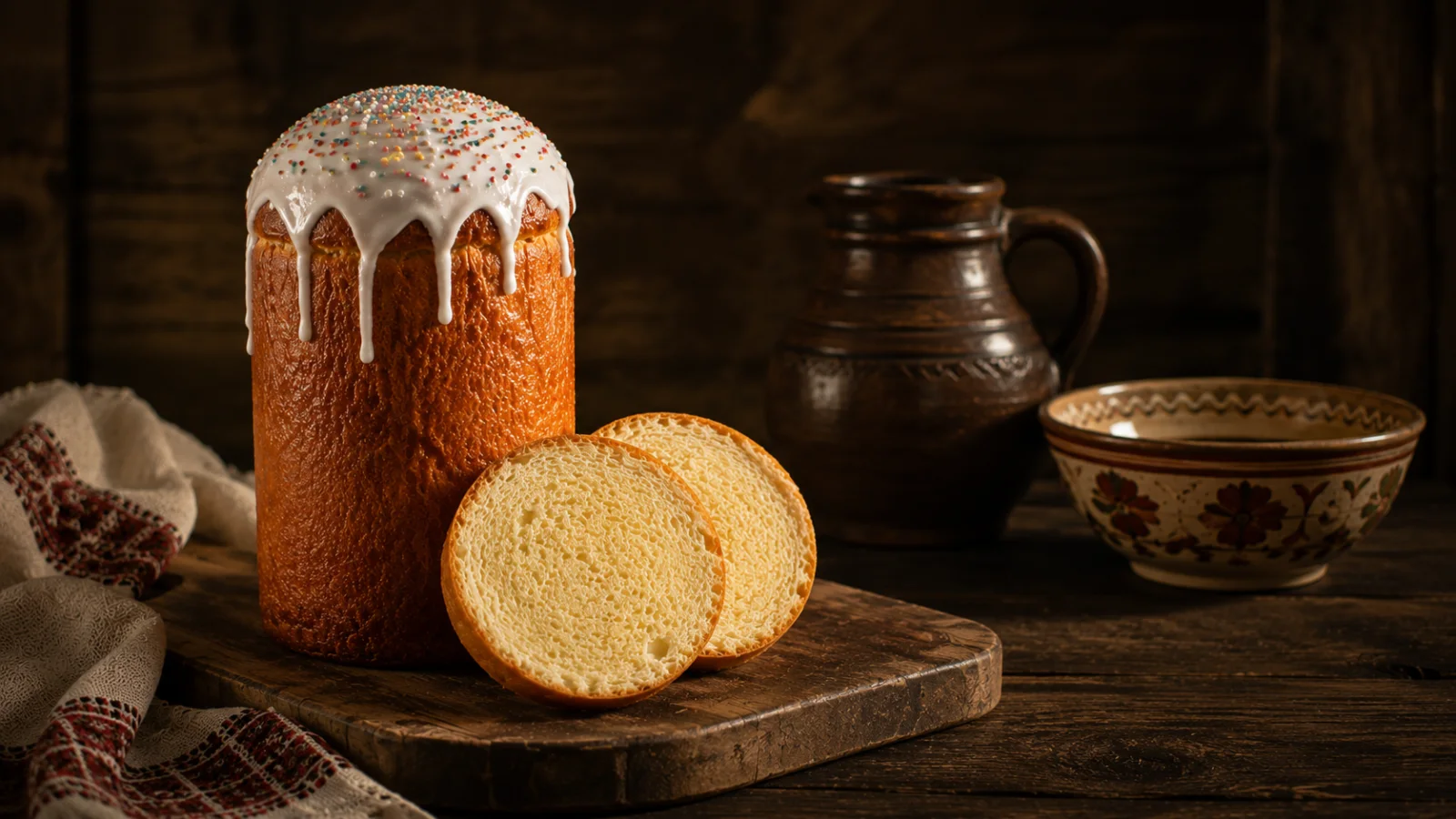
Active time: ~40 minutes | Total time: ~6 hours (including rising and cooling) | Serves: 16 (1 loaf, 16 slices) | Difficulty: Moderate
Quick Overview
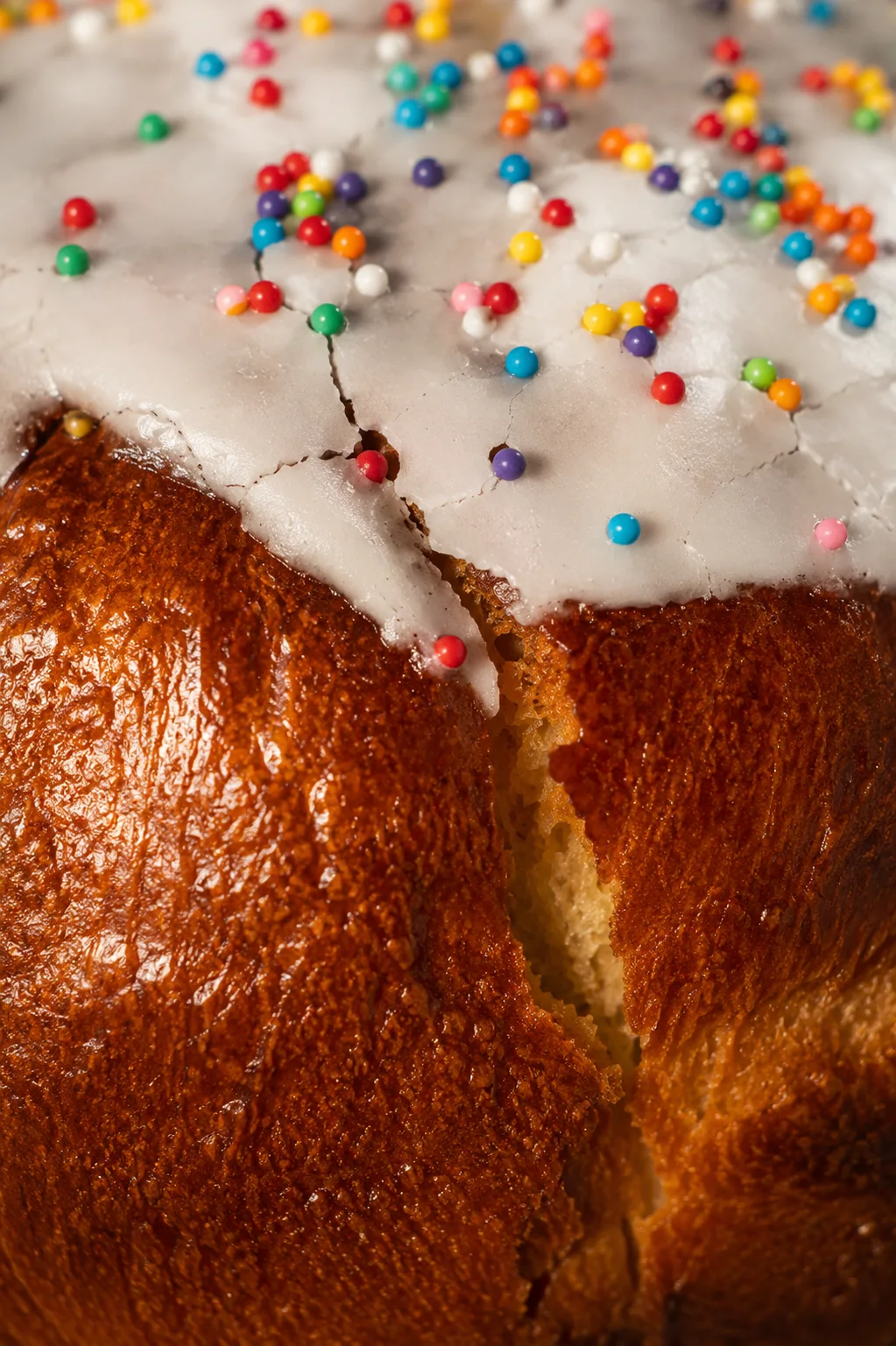
- Bloom yeast in warm milk, then build a soft, buttery dough enriched with eggs and sugar
- Let the dough rise until doubled, about 1½–2 hours
- Shape it into a tall, narrow pan and let it rise a second time
- Bake until deep golden and a skewer comes out clean
- Cool completely, then finish with a simple lemon glaze
- Set the first slice aside until the loaf has been blessed at church
What Paska Is
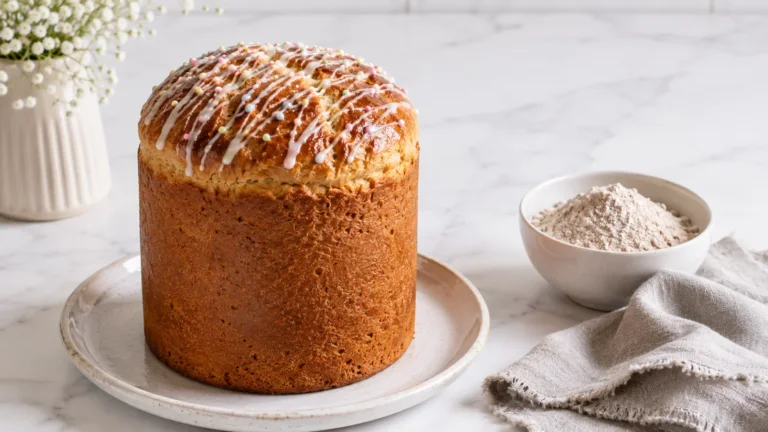
Paska is a sweet, egg-and-butter-enriched yeast bread baked across Ukraine for Easter, traditionally carried to church in a decorated basket to be blessed before anyone eats it.1,4 The name comes from an old word for Easter that entered Ukrainian by way of Greek, ultimately tracing back to the Aramaic word for Passover.4
The shape varies by region. In eastern Ukraine, paska is built tall and cylindrical, the form most familiar outside the country and the one this recipe follows. In western Ukraine, bakers traditionally shape it lower and rounder, finished with dough ornaments instead of icing, a style closer to the sweet bread called babka.2
History and the Blessing of the Basket
Ukrainian Easter, Velykden (“The Great Day”), lands on a date set by the Council of Nicea in 325: the first Sunday after the full moon following the vernal equinox, timed so it would never fall on the same day as Passover.1 Since 2023, Ukraine’s Orthodox and Greek Catholic churches have moved fixed-date holidays such as Christmas to the Revised Julian calendar. That change didn’t extend to Easter, whose date is still worked out the traditional way, so it typically still falls on a different Sunday than the Western holiday.7 Much of the ritual layered onto the day predates Christianity in Ukraine: Velykden combines pagan and Christian elements, and many of its customs echo older spring rites tied to agriculture and the remembrance of the dead.1
By custom, paska was baked only by women, most often on Maundy Thursday or Holy Saturday, since cooking of any kind was strongly forbidden on Good Friday itself.6 While the dough rose, the house was expected to stay quiet.5 A cracked top or a loaf that failed to rise was read as a bad omen for the year ahead, and no one, not even the baker, was allowed to taste the bread before it had been blessed.5
That blessing happens at the Easter liturgy, where paska sits at the center of a basket alongside painted eggs, butter, cheese, sausage, and small bundles of salt, pepper, and horseradish.1,3 Families carry the blessed food, called sviachene, home to break weeks of Lenten fasting.1 In eastern Ukraine, the oldest family member traditionally slices and distributes each item at the table; in the Hutsul region of the west, families circle the house three times before going inside, sharing the blessed food with the animals in the barn before sitting down to eat.1
The dough ornaments some bakers still shape onto the crust carry their own meaning: wheat sheaves for a good harvest, leaves for spring’s return, birds for the coming of the season, and crosses for the resurrection itself.4,5 The 19th-century Brockhaus and Efron Encyclopaedic Dictionary counted as many as 40 regional paska recipes, and one Ukrainian cookbook writer included a rye version among hers, unusual since most bakers insisted on the best wheat flour available.5
Traditional Paska Recipe
Recipe developed independently by Heritage Healthy Kitchen, drawing on traditional Ukrainian baking methods. Sources for further reading are listed at the end of this article.
Ingredients (makes 1 tall loaf, serves 16)
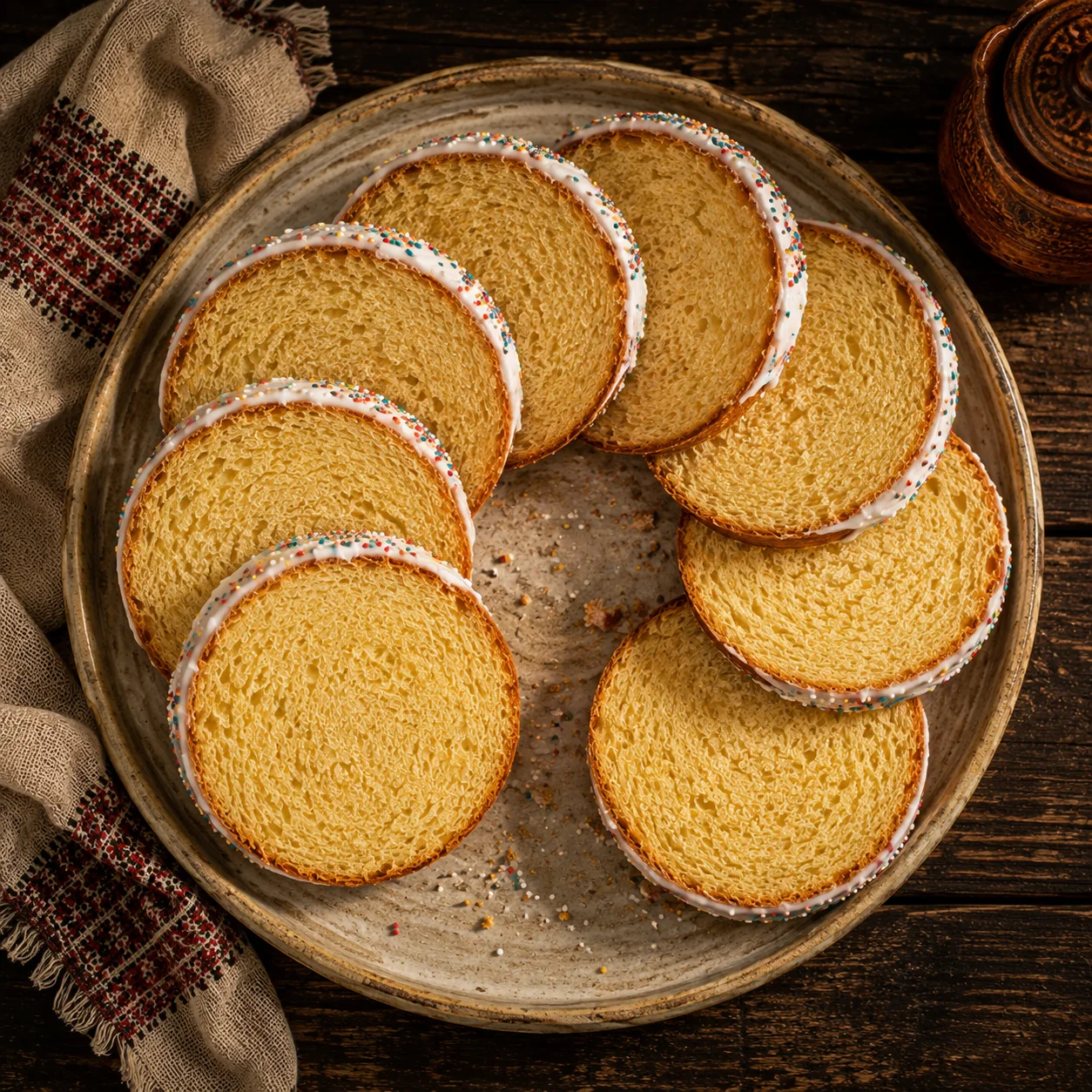
For the dough
- 1 cup (240ml) whole milk, warmed to about 110°F (43°C)
- 1 packet (2¼ teaspoons / 7g) active dry yeast
- 1 cup (200g) granulated sugar, divided
- 5 large eggs, at room temperature, plus 1 more for egg wash
- ¾ cup (170g) unsalted butter, melted and cooled slightly
- 1 teaspoon (6g) fine salt
- 1 tablespoon (13g) vanilla extract
- Zest of 1 lemon
- 5½ cups (690g) all-purpose flour, plus more for kneading
- ⅔ cup (100g) raisins, optional, soaked in warm water for 10 minutes and drained
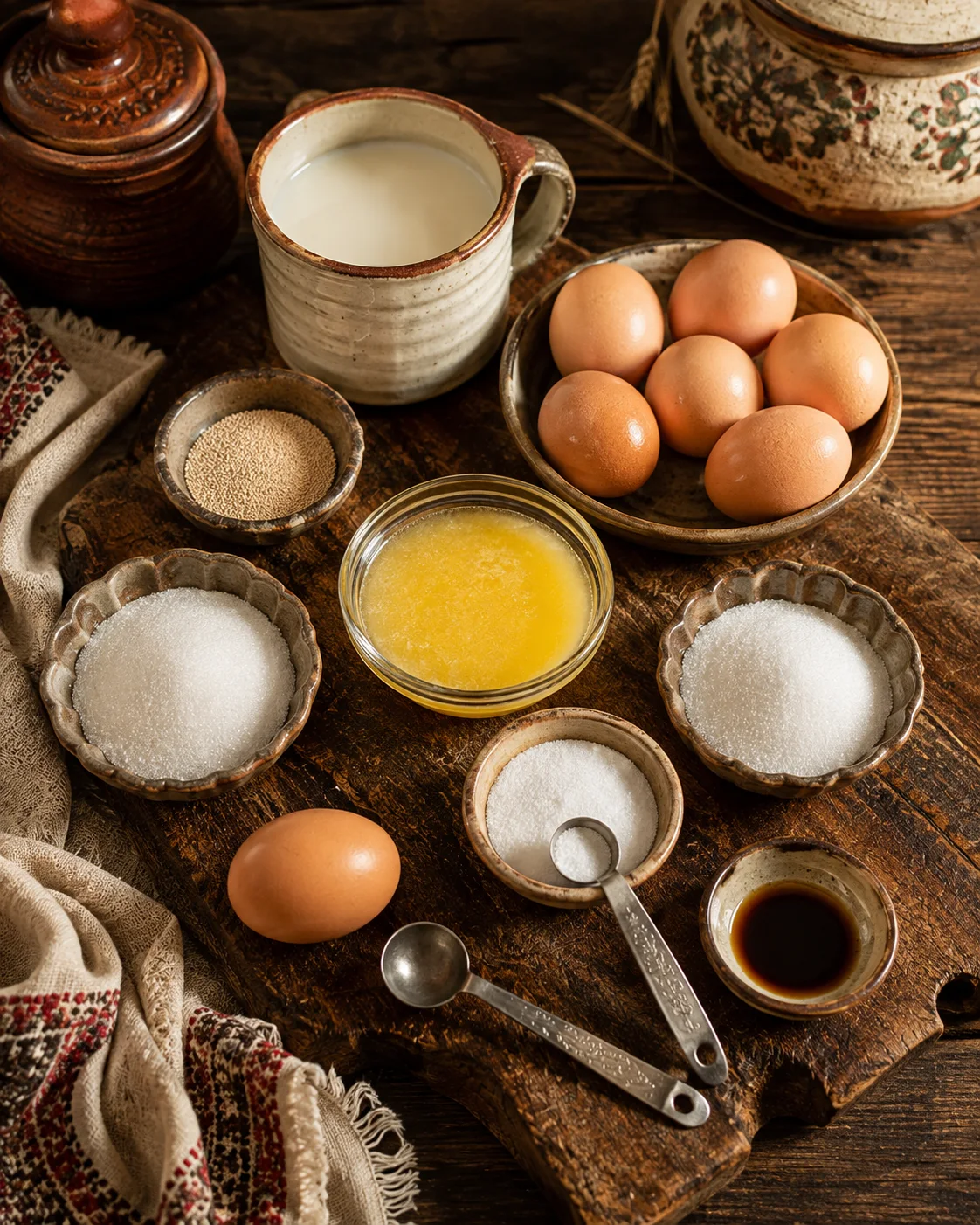
For the glaze
- 1 cup (120g) powdered sugar
- 2–3 tablespoons (30–45ml) fresh lemon juice
Instructions
- Bloom the yeast: Stir the warm milk with the yeast and 1 tablespoon of the sugar. Let stand until foamy, about 10 minutes.
- Mix the dough: In a large bowl, whisk 5 eggs with the remaining sugar, melted butter, salt, vanilla, and lemon zest. Stir in the yeast mixture, then add the flour gradually, mixing until a soft dough forms. Knead 8–10 minutes, by hand or with a dough hook, until smooth and elastic; the dough should stay soft and slightly tacky. Knead in the raisins, if using, during the last minute.
- First rise: Place the dough in a greased bowl, cover, and let rise in a warm spot until doubled, 1½–2 hours.
- Shape the loaf: Grease a tall, narrow pan (a 9-inch/23cm panettone mold or two lined 28-ounce cans work well) and line the bottom with parchment. Punch down the dough, shape it into a smooth ball, and settle it into the pan; it should fill it about halfway.
- Second rise: Cover loosely and let rise until the dough nears the top of the pan, 45–60 minutes. Preheat the oven to 350°F (175°C).
- Bake: Brush the top with the reserved beaten egg. Bake 45–55 minutes, tenting loosely with foil after the first 20–25 minutes if the top browns too quickly, until deep golden and a skewer inserted in the center comes out clean.
- Cool: Let the loaf rest in its pan for 15 minutes, then turn it out onto a rack and cool completely, at least 2 hours, before glazing.
- Glaze: Whisk the powdered sugar with the lemon juice until smooth and pourable. Drizzle over the cooled loaf and let set before slicing.
Kitchen Tips
Use room-temperature eggs and butter that’s melted but no longer hot. Butter that’s too warm when it meets the yeast mixture can slow fermentation.
Resist adding much extra flour beyond what’s listed. This dough is meant to stay soft and slightly tacky, which is what gives paska its light, almost cake-like crumb instead of a dense one.
A tall, narrow mold is what produces paska’s signature shape. A clean, empty coffee can lined with parchment is a common substitute if you don’t have a traditional pan.
Check doneness with a skewer rather than by color alone. The egg wash and sugar in this dough brown quickly on the outside, often before the center has finished baking.
Nutritional Information
Per serving (1 of 16 slices)
- Calories: approximately 315–390 kcal
- Protein: ~7–8g
- Total fat: ~10–12.5g
- Carbohydrates: ~49–60g
- Fiber: ~1–1.5g
- Sodium: ~165–200mg
Values are estimates, calculated ingredient-by-ingredient using USDA reference data, and will vary with slice thickness and the exact brands used. Most of the fat and calories come from the butter and eggs, and most of the carbohydrate from the sugar and flour. Because this dough is built on refined all-purpose flour rather than a whole grain, it doesn’t carry the fiber and B vitamins a whole-grain loaf would: milling strips away more than half of wheat’s B vitamins and virtually all of its fiber along with the bran and germ.8 That’s typical of a festive bread meant for a holiday table rather than daily eating.
Storage and Reheating
Store the cooled, glazed loaf at room temperature in an airtight container or wrapped tightly for up to 4 days. The butter and eggs in the dough help it stay moist longer than a lean bread would.
For longer storage, wrap the unglazed loaf tightly in plastic and then foil and freeze for up to 2 months. Thaw at room temperature and glaze just before serving. Slightly stale slices are good lightly toasted.
Traditional Ukrainian Paska

Ingredients
For the dough
- 1 cup (240ml) whole milk, warmed to about 110°F (43°C)
- 1 packet (2¼ teaspoons / 7g) active dry yeast
- 1 cup (200g) granulated sugar, divided
- 5 large eggs, at room temperature, plus 1 more for egg wash
- ¾ cup (170g) unsalted butter, melted and cooled slightly
- 1 teaspoon (6g) fine salt
- 1 tablespoon (13g) vanilla extract
- Zest of 1 lemon
- 5½ cups (690g) all-purpose flour, plus more for kneading
- ⅔ cup (100g) raisins, optional, soaked in warm water for 10 minutes and drained
For the glaze
- 1 cup (120g) powdered sugar
- 2–3 tablespoons (30–45ml) fresh lemon juice
Instructions
- Bloom the yeast: Stir the warm milk with the yeast and 1 tablespoon of the sugar. Let stand until foamy, about 10 minutes.
- Mix the dough: In a large bowl, whisk 5 eggs with the remaining sugar, melted butter, salt, vanilla, and lemon zest. Stir in the yeast mixture, then add the flour gradually, mixing until a soft dough forms. Knead 8–10 minutes, by hand or with a dough hook, until smooth and elastic; the dough should stay soft and slightly tacky. Knead in the raisins, if using, during the last minute.
- First rise: Place the dough in a greased bowl, cover, and let rise in a warm spot until doubled, 1½–2 hours.
- Shape the loaf: Grease a tall, narrow pan (a 9-inch/23cm panettone mold or two lined 28-ounce cans work well) and line the bottom with parchment. Punch down the dough, shape it into a smooth ball, and settle it into the pan; it should fill it about halfway.
- Second rise: Cover loosely and let rise until the dough nears the top of the pan, 45–60 minutes. Preheat the oven to 350°F (175°C).
- Bake: Brush the top with the reserved beaten egg. Bake 45–55 minutes, tenting loosely with foil after the first 20–25 minutes if the top browns too quickly, until deep golden and a skewer inserted in the center comes out clean.
- Cool: Let the loaf rest in its pan for 15 minutes, then turn it out onto a rack and cool completely, at least 2 hours, before glazing.
- Glaze: Whisk the powdered sugar with the lemon juice until smooth and pourable. Drizzle over the cooled loaf and let set before slicing.
Frequently Asked Questions
Why can’t paska be eaten before it’s blessed?
Tradition holds that the bread belongs to the church blessing first; not even the person who baked it was supposed to taste it beforehand. Breaking that rule was considered bad luck, and the blessed bread was meant to be the first food eaten after 40 days of Lenten fasting.5
Why does paska look different depending on where in Ukraine it’s from?
Eastern Ukrainian bakers traditionally shape it into a tall cylinder, while western Ukrainian bakers make a shorter, rounder loaf finished with dough ornaments instead of glaze, closer in style to babka.2
What do the shapes on top of some pasky mean?
Dough ornaments carry old spring symbolism: wheat for a good harvest, leaves for nature’s return, birds such as larks for spring itself, and crosses for the resurrection.4,5
Can paska be made with rye flour instead of wheat?
It’s unusual but not unheard of. Most traditional recipes call specifically for the best wheat flour available, though at least one Ukrainian cookbook writer included a rye version among her recipes.5
What else goes in the Easter basket alongside paska?
A typical basket includes painted eggs, butter, cheese, sausage, and small bundles of salt, pepper, and horseradish, all blessed together at the Easter liturgy.1 Paska is also traditionally served with hrudka, a sweet egg custard, and a beet-and-horseradish relish called chren.4
When is paska traditionally baked?
Most commonly on Maundy Thursday or Holy Saturday. Cooking of any kind, including baking, was traditionally forbidden on Good Friday, which falls between the two.6
Looking for a Lighter Version?
Paska leans on a full cup of sugar, three-quarters of a cup of butter, and refined white flour to get its rich, tender crumb. The Healthy Paska recipe on this site works through a whole-grain flour blend, a reduced-sugar dough, and a lighter glaze while keeping the tall, golden loaf recognizable.
Further Reading & Sources
The following sources were consulted in researching the history and background of traditional Ukrainian paska. Heritage Healthy Kitchen’s recipe was developed independently; these links are provided for readers who want to explore further.
- “Easter.” Internet Encyclopedia of Ukraine, Canadian Institute of Ukrainian Studies. encyclopediaofukraine.com — Easter — the Council of Nicea’s dating of Easter, the Julian calendar, Velykden’s pre-Christian layers, and the basket blessing and sviachene distribution customs in eastern and western Ukraine.
- “Traditional foods.” Internet Encyclopedia of Ukraine, Canadian Institute of Ukrainian Studies. encyclopediaofukraine.com — Traditional foods — ritual bread types and the regional difference between eastern Ukraine’s tall cylindrical paska and western Ukraine’s lower, ornamented form.
- “Ukrainian Easter Celebrations.” Kule Folklore Centre, University of Alberta. artsrn.ualberta.ca/folkloreukraine — the Holy Week timeline and the contents of the blessed Easter basket.
- “Paska (bread).” Wikipedia. en.wikipedia.org/wiki/Paska_(bread) — the word’s etymology from Aramaic and Greek, dough ornament symbolism, and traditional accompaniments including hrudka and chren.
- Yakovenko, Svitlana. “Ukrainian Easter bread, paska – its secrets.” Sova Books. sovabooks.com.au — paska secrets — the prohibition on tasting paska before its blessing, the quiet-house custom during rising, cracked-loaf omens, ornament symbolism, and the historical count of regional recipes including a rye version.
- Chaikovska, Lisa. “Key Facts to Know About Ukrainian Easter.” UkraineWorld. ukraineworld.org — Ukrainian Easter facts — the custom of paska being baked by women on Maundy Thursday or Holy Saturday, with baking forbidden on Good Friday.
- “Orthodox Church of Ukraine to switch to Revised Julian calendar, celebrate Christmas on Dec. 25.” The Kyiv Independent. kyivindependent.com — Revised Julian calendar switch — confirmation that the Orthodox Church of Ukraine’s 2023 calendar change applies to fixed-date holidays only and does not affect the date of Easter.
- Harvard T.H. Chan School of Public Health. “Whole Grains.” The Nutrition Source. nutritionsource.hsph.harvard.edu/what-should-you-eat/whole-grains — the nutrient loss involved in milling whole grain into refined flour.
Disclaimer
The information in this article is provided for educational and informational purposes only. Heritage Healthy Kitchen makes no representations or warranties regarding the accuracy or completeness of any content on this site. Nutritional values are estimates only and will vary depending on the specific ingredients, brands, and measurements used. This content is not intended as dietary, medical, or professional nutritional advice. Always consult a qualified healthcare provider regarding any dietary needs or health conditions. Heritage Healthy Kitchen is not responsible for any outcomes resulting from the use of recipes or information published on this site.
Cook by Occasion
This recipe is part of our Velykden table.
You Might Also Like
More heritage recipes from our kitchen
Leave a Reply