
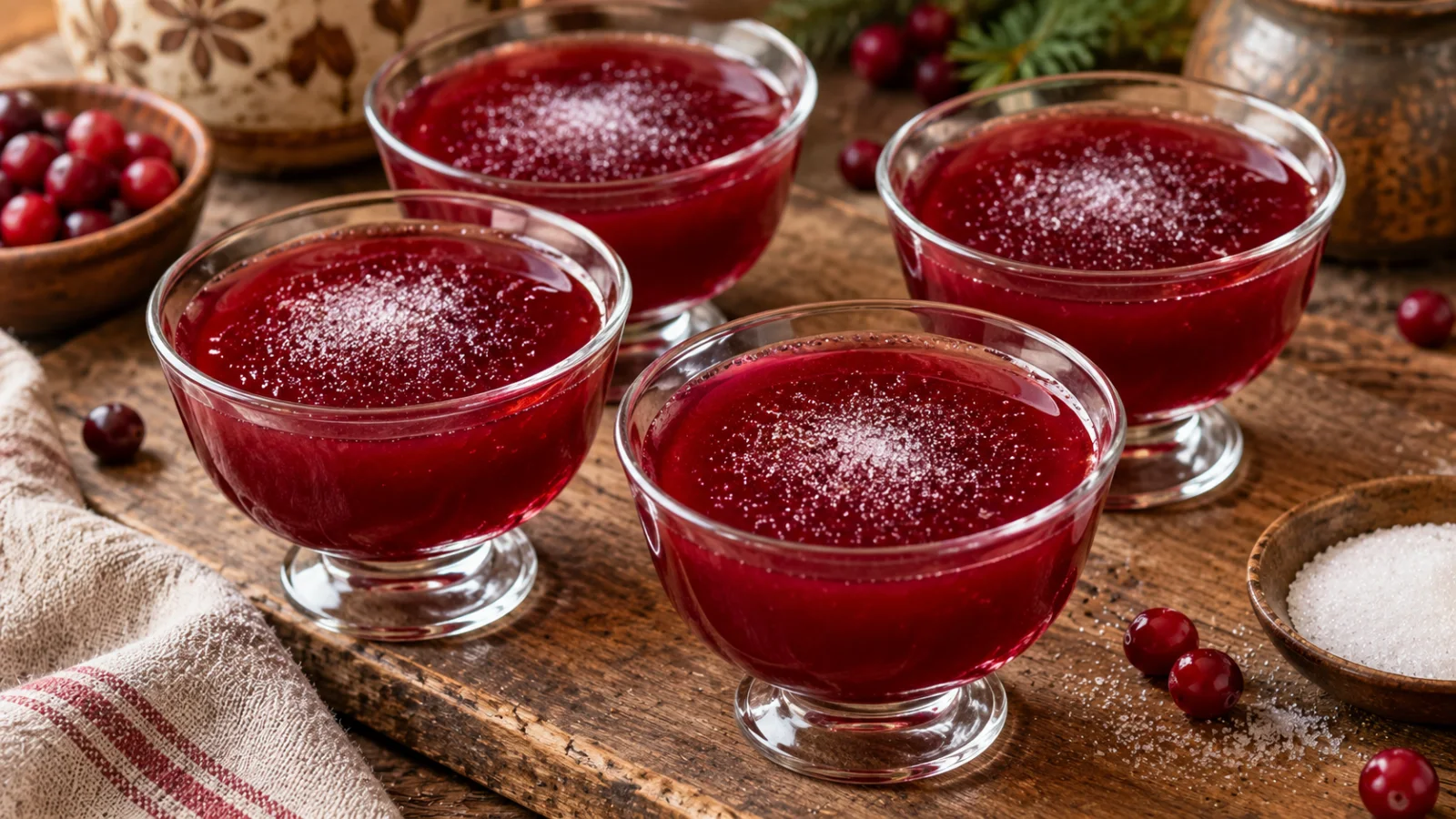
Active time: ~25 minutes | Total time: ~1 hour (includes cooling) | Serves: 6 | Difficulty: Easy
Quick Overview
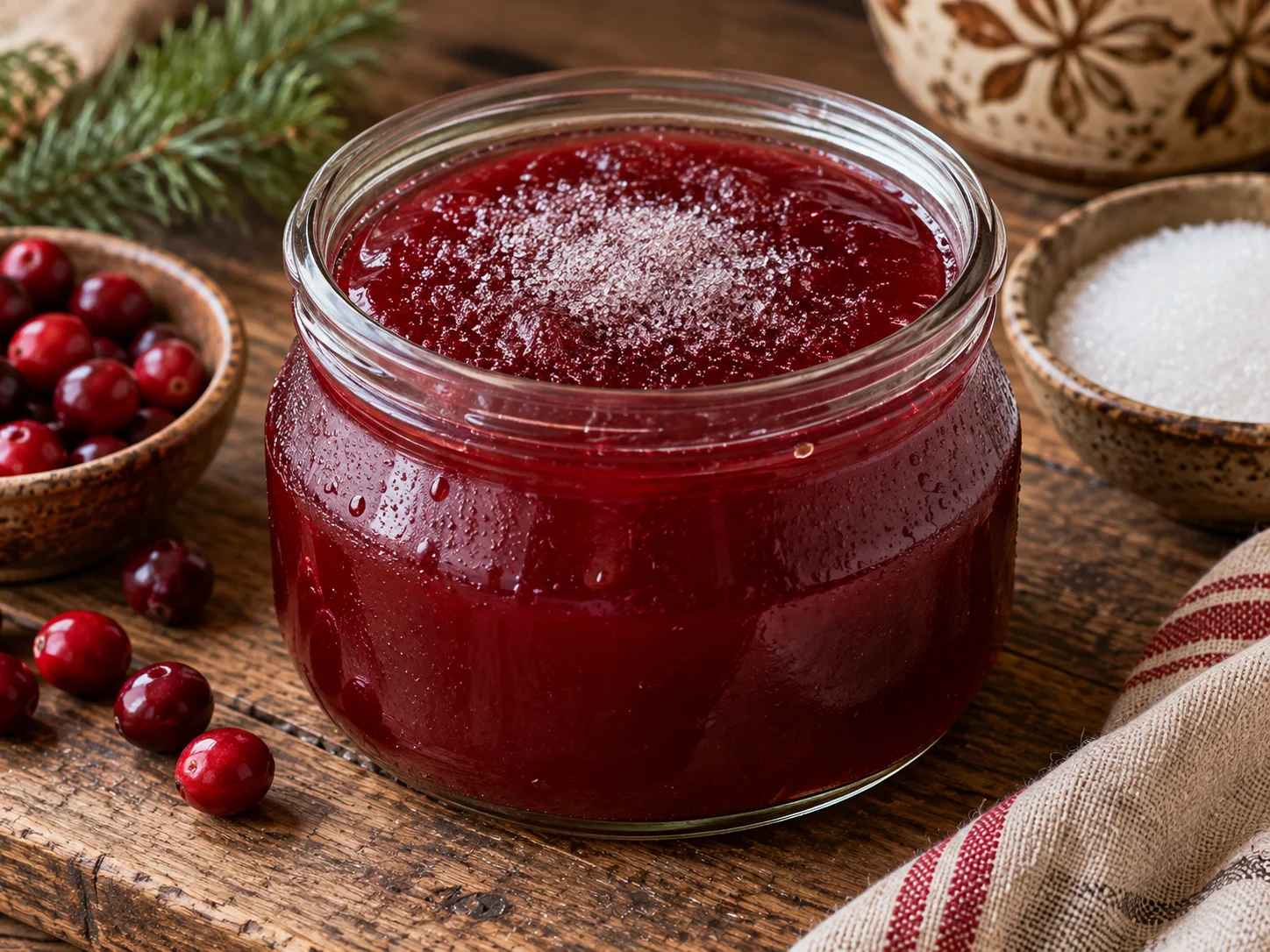
- Simmer cranberries in water until they burst and release their juice
- Strain the liquid, pressing the pulp to extract as much as possible
- Stir sugar into the strained liquid and bring it back to a gentle simmer
- Whisk potato starch into a little cold water, then stream it into the pot while stirring
- Heat just until the mixture thickens and starts to bubble, then remove from the heat right away
- Cool to room temperature, or chill for a firmer texture, before serving
What Kisielius Is
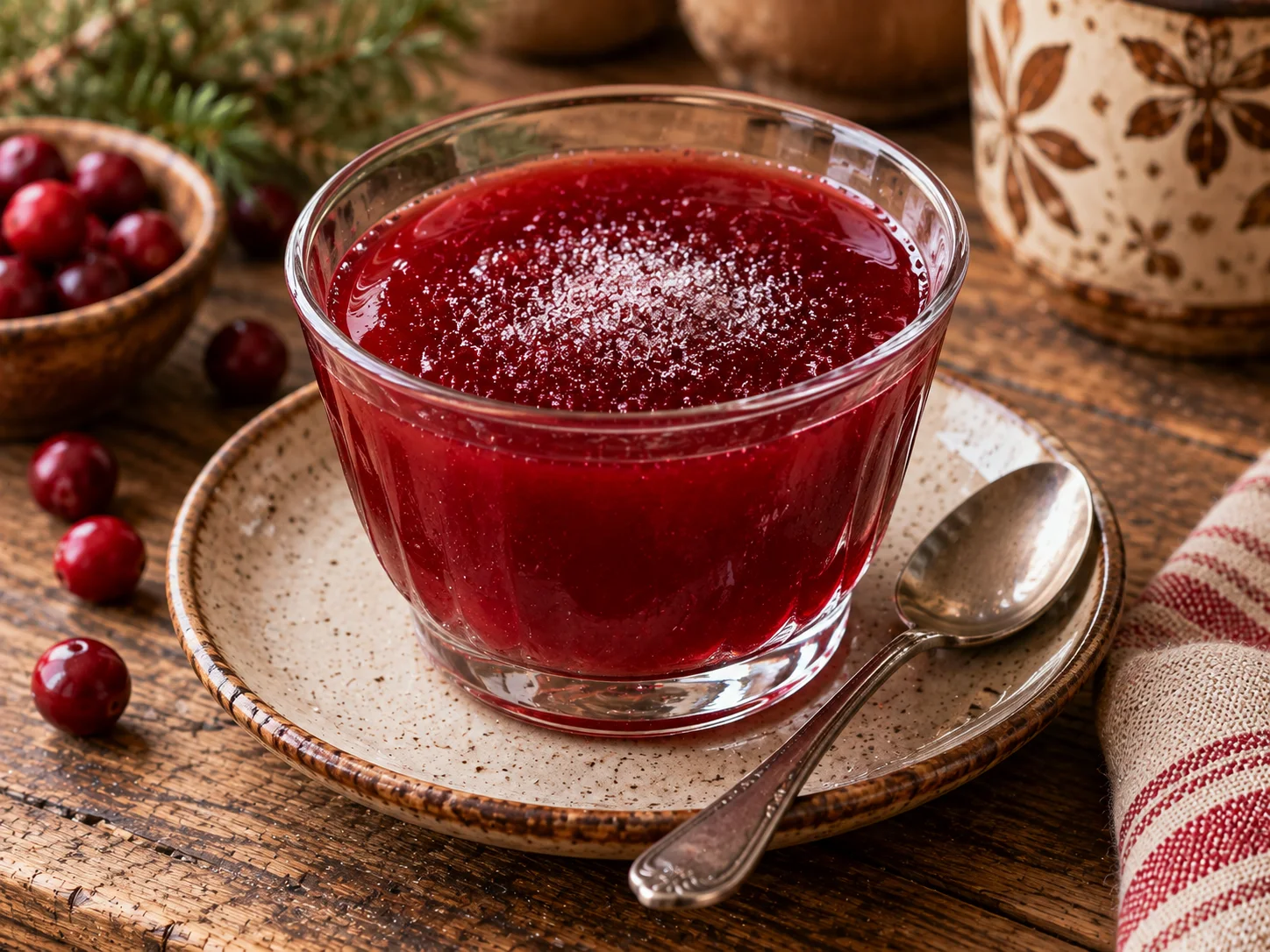
Kisielius, or spanguolių kisielius in full, is cranberry kissel: a thick, deep-red fruit drink made by simmering cranberries, sweetening the strained juice, and thickening it with potato starch.1,2 It’s usually served at the end of Kūčios, the Lithuanian Christmas Eve supper, closing out the meal much the way a dessert would.4
Cranberry is only one kind of kissel. In Lithuania it has long been made from oat flour as well as from fruit and berries, and oat kissel sits next to the cranberry version among the ritual dishes of Kūčios.5,6 At other times of the year, kissel is made from cherries, strawberries, bilberries, or raspberries, depending on what a family has on hand.1,2 For Christmas Eve, though, cranberry is the traditional choice.1
History and Cultural Roots
The name comes from a Slavic word for “sour,”4 which fits the oldest kind of kissel. Until the early 20th century, Lithuanian peasant households mostly made it from oat flour that was left to sour for two or three days in a warm room before cooking.5 Starch came into use in the middle of the 20th century.5 Cranberry kissel became a family tradition over the 20th century, at a time when sugar was still a luxury kept for special occasions such as Christmas.1
Kissel also had a place in ritual. It was offered to the gods and the forces of nature, and the souls of the dead were treated to it.5 In Suvalkija, an old custom had women send children running around the house so the kissel would set better and faster.5 People also believed that cranberries protected a family from its enemies.1
Kūčios itself is a fasting meal of traditionally twelve dishes, with no meat or dairy.7 Cranberry kissel, made from fruit, water, sugar, and starch, fits that rule without any changes. Fruit kissel is made in many northern European and Slavic countries,4 but in Lithuania the cranberry version has a fixed place on the Christmas Eve table. It’s one of the foods, along with herring and hard biscuits with poppy seed milk, that no table goes without on that day.8
Traditional Recipe
This recipe was compiled by Heritage Healthy Kitchen from a comparison of published recipes; the sources are listed at the end of this article. Figures that are Heritage Healthy Kitchen’s own estimates rather than taken from a published source are marked as such.
Kisielius (Cranberry Kissel)
Per liter of water, the recipes compared here use roughly 65–260g of cranberries, 30–260g of sugar, and 15–100g of starch, so the result ranges from a drink to a pudding firm enough for a spoon.1,2,3 The amounts below sit inside those ranges. The yield and the number of servings are Heritage Healthy Kitchen estimates.
Ingredients (Makes About 1.2L / 5 Cups, Serves 6; an Estimate)
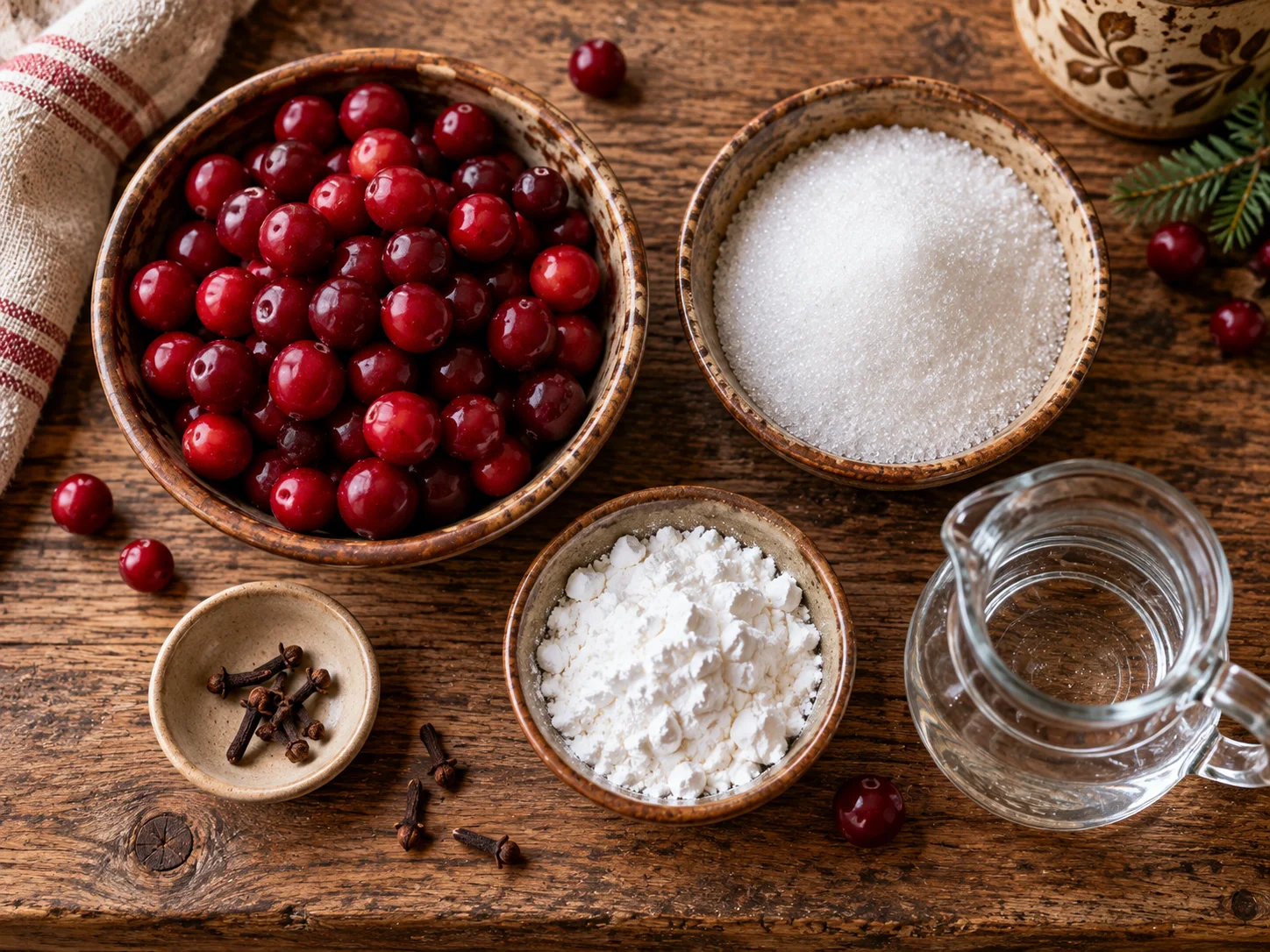
- 300g (about 3 cups) fresh or frozen cranberries
- 1.3L (5½ cups) water, divided
- 90g (scant ½ cup) granulated sugar, or to taste
- 3 tablespoons (30g) potato starch, or cornstarch
- 2–3 whole cloves (optional)
Instructions
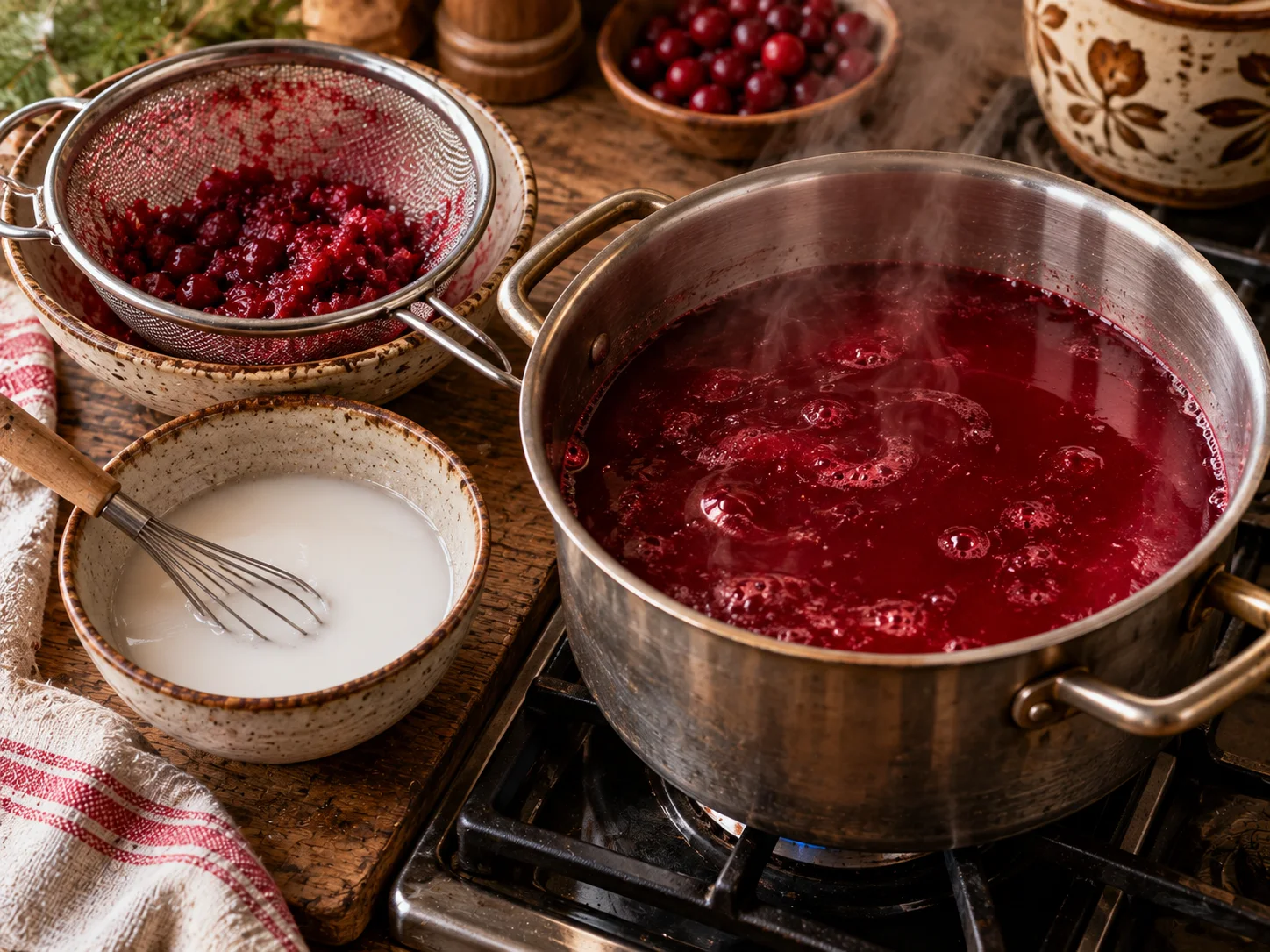
- Simmer the cranberries. Rinse the cranberries and discard any soft or discolored ones. Combine with 1.2L of the water (and the cloves, if using) in a pot. Bring to a boil, then cover and simmer over medium heat for 12–15 minutes, until the berries burst.2
- Strain. Pour the mixture through a fine sieve into a clean pot, pressing the pulp with the back of a spoon to extract as much liquid as possible. Discard the solids, or save them for another use.1,3
- Sweeten. Stir the sugar into the strained liquid and return the pot to a gentle simmer over low heat.
- Make the slurry. In a small bowl, whisk the potato starch into the remaining 100ml of water until completely smooth, with no lumps.
- Thicken. Pour the starch slurry into the pot in a thin, steady stream, stirring constantly. Heat just until the mixture returns to a gentle boil and visibly thickens, about 1–2 minutes.2
- Cool. Remove from the heat as soon as it thickens; boiling it any longer will thin it back out. Pour into a bowl or serving cups, sprinkle a little sugar over the surface to stop a skin from forming (or press plastic wrap directly onto the surface), and cool to room temperature or chill for a firmer, more pudding-like texture.1,3
Kitchen Tips
Fresh and frozen cranberries both work.1,2 Because the berries here are boiled whole rather than blitzed into a paste first, frozen ones can go straight into the pot without thawing.2
The trickiest step is the last one. Once the starch slurry goes in, don’t let the kissel boil hard or for very long, since overcooked starch won’t set and the kissel stays thin.2
Thickness is a matter of taste. Some households like kissel thick enough to eat with a spoon, others thin enough to drink from a glass, so use a little more or less starch to suit.1,3 Too much starch turns it stiff.3
Sweetness is adjustable too.2 For a less sweet kissel, cut the sugar from 90g to about 60g. By Heritage Healthy Kitchen’s estimate, that takes off roughly 20 calories and 5 grams of sugar per serving, and the texture stays the same, since it’s the starch that thickens the kissel.
Nutritional Information
Per Serving (⅙ of the Recipe, About 200ml)
- Calories: approximately 85–110 kcal
- Protein: approximately 0.1–0.3g
- Total fat: less than 0.1g
- Saturated fat: negligible
- Carbohydrates: approximately 22–28g
- Dietary fiber: approximately 0.1–1g
- Total sugars: approximately 15–22g
- Sodium: approximately 1–2mg
Nutritional values are estimates based on standard ingredient databases (USDA FoodData Central). They will vary with how much of the cranberry pulp is pressed through the sieve and how much sugar is used.
Most of the calories come from the added sugar and starch. Cranberries themselves are low in sugar for a fruit, at about 4g per 100g,9 and fiber stays low because the skins are strained out.
Storage and Reheating
Sprinkle the surface with sugar or cover it directly so no skin forms.1,3 Cranberry kissel then keeps at room temperature for up to a day, or in the refrigerator for up to 3 days.1
It can be reheated gently over low heat.1 Kissel is served hot, at room temperature, or chilled, depending on the household.1,4
Traditional Kisielius

Ingredients
Ingredients (Makes About 1.2L / 5 Cups, Serves 6)
- 300g (about 3 cups) fresh or frozen cranberries
- 1.3L (5½ cups) water, divided
- 90g (scant ½ cup) granulated sugar, or to taste
- 3 tablespoons (30g) potato starch, or cornstarch
- 2–3 whole cloves (optional)
Instructions
- Simmer the cranberries. Rinse the cranberries and discard any soft or discolored ones. Combine with 1.2L of the water (and the cloves, if using) in a pot. Bring to a boil, then cover and simmer over medium heat for 12–15 minutes, until the berries burst.
- Strain. Pour the mixture through a fine sieve into a clean pot, pressing the pulp with the back of a spoon to extract as much liquid as possible. Discard the solids, or save them for another use.
- Sweeten. Stir the sugar into the strained liquid and return the pot to a gentle simmer over low heat.
- Make the slurry. In a small bowl, whisk the potato starch into the remaining 100ml of water until completely smooth, with no lumps.
- Thicken. Pour the starch slurry into the pot in a thin, steady stream, stirring constantly. Heat just until the mixture returns to a gentle boil and visibly thickens, about 1–2 minutes.
- Cool. Remove from the heat as soon as it thickens; boiling it any longer will thin it back out. Pour into a bowl or serving cups, sprinkle a little sugar over the surface to stop a skin from forming (or press plastic wrap directly onto the surface), and cool to room temperature or chill for a firmer, more pudding-like texture.
Frequently Asked Questions
What does kisielius taste like?
Tart and sweet at once, with the cranberries’ natural sourness balanced by the added sugar, which can be adjusted to taste.2 The texture is smooth and thick, somewhere between a drink and a loose pudding.1,3
Is kisielius served hot or cold?
Either way. It can be served hot or at room temperature, or chilled in the refrigerator first.1,4
Can kisielius be made with other berries?
Yes. Outside Christmas, Lithuanian families make kissel with raspberries, strawberries, cherries, or bilberries, depending on what’s on hand, but cranberry is the traditional choice for Christmas Eve.1,2
Can kisielius be made ahead?
Yes. It keeps in the refrigerator for up to 3 days, so it can be made a day or two before Kūčios.1
Why didn’t my kisielius thicken properly?
Almost always because it boiled too long after the starch went in, which keeps it from setting. Next time, bring it just back to a boil and take it straight off the heat.2
Is this recipe vegan and gluten-free?
Yes, as written. All the ingredients are plant-based, and potato starch and cornstarch contain no gluten.
Further Reading & Sources
The recipe is a compilation based on the published recipes listed here; these links are provided for readers who want to explore further.
Published recipes
- Ieva. “Cranberry Kissel (Spanguoliu Kisielius).” Taste of Lithuania, August 25, 2023. tasteoflithuania.com.
- “Cranberry Kissel / Spanguolių kisielius.” Lithuanian in the USA (blog; author not named), December 11, 2018. lithuanianintheusa.com.
- Siliūnas, Dana. “Christmas Favorites: … Cranberry Pudding Kisielius.” Draugas News, November 15, 1999. draugas.org.
- Daugirdienė, Ona. “Setting the table for Kūčios.” Draugas News, December 16, 2017. draugas.org.
History, culture, and nutrition
- Milius, Vacys. “Kisielius.” Visuotinė lietuvių enciklopedija (Universal Lithuanian Encyclopedia), 2018, updated 2025. vle.lt.
- “Kūčios.” Visuotinė lietuvių enciklopedija (Universal Lithuanian Encyclopedia; no author listed). vle.lt.
- “A Feast for the Living – and the Dead.” Draugas News, November 15, 2007 (no byline). draugas.org.
- Siliūnas, Dana. “Meatless Dishes — for Kūčios and Other Days.” Draugas News, November 15, 1998. draugas.org.
- “Cranberries, raw” (FDC 171722). USDA FoodData Central, via MyFoodData. tools.myfooddata.com.
Disclaimer
The information in this article is provided for educational and informational purposes only. Heritage Healthy Kitchen makes no representations or warranties regarding the accuracy or completeness of any content on this site. Nutritional values are estimates only and will vary depending on the specific ingredients, brands, and measurements used. This content is not intended as dietary, medical, or professional nutritional advice. Always consult a qualified healthcare provider regarding any dietary needs or health conditions. Heritage Healthy Kitchen is not responsible for any outcomes resulting from the use of recipes or information published on this site.
Cook by Occasion
This recipe is part of our Kūčios menu.
You Might Also Like
More heritage recipes from our kitchen

Leave a Reply