
Active time: about 20 minutes | Marinating time: 6–8 hours or overnight | Serves: 4 | Difficulty: Easy
Quick Overview
- Peel the skin off the herring fillets if needed, rinse them, and cut into bite-sized pieces
- Slice the onions into thin rings
- Dissolve the sugar in water and vinegar with bay leaf and peppercorns, then cool the brine
- Layer the herring and onion in a jar and cover with the brine
- Refrigerate for at least 6–8 hours, or overnight
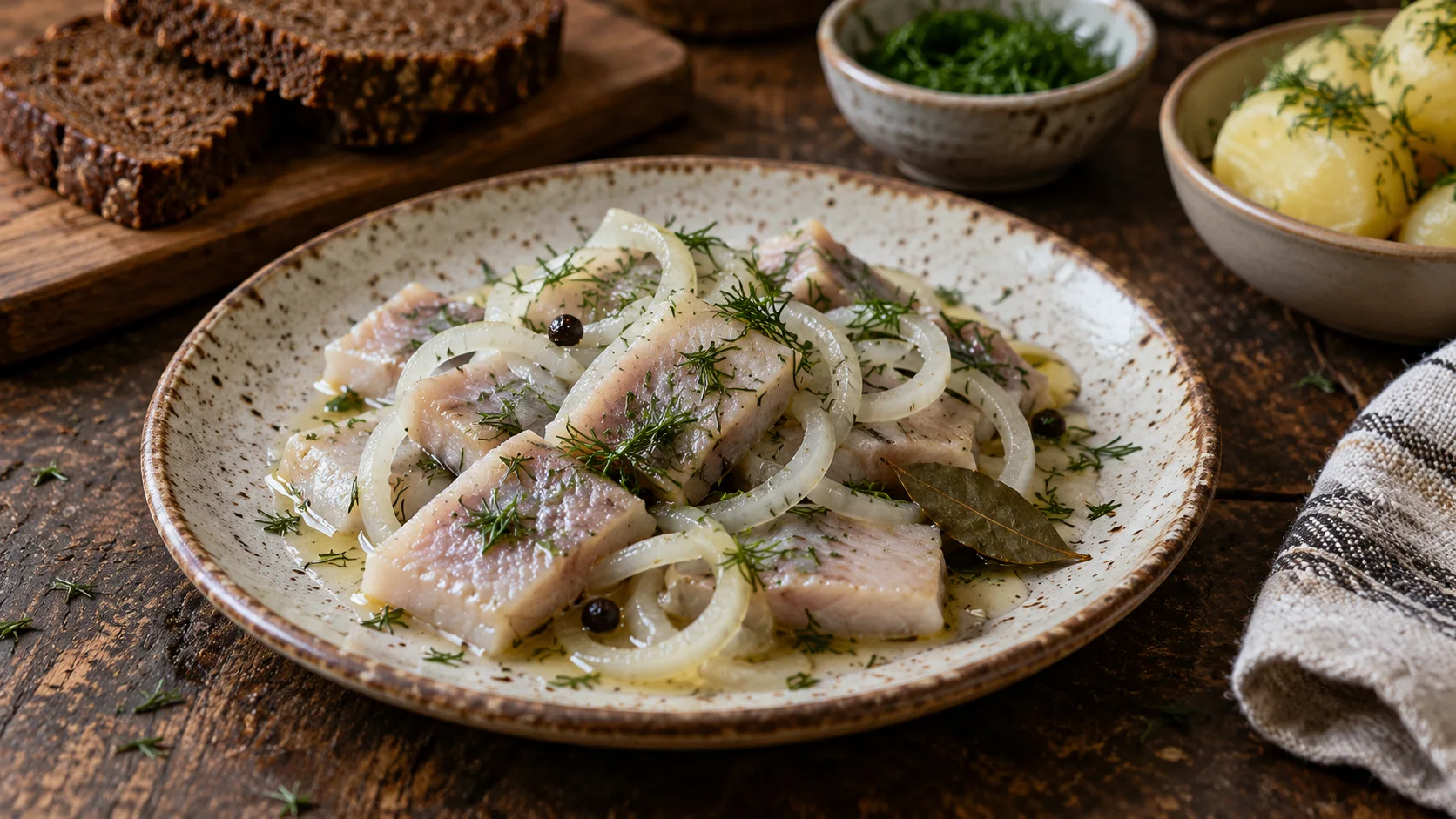
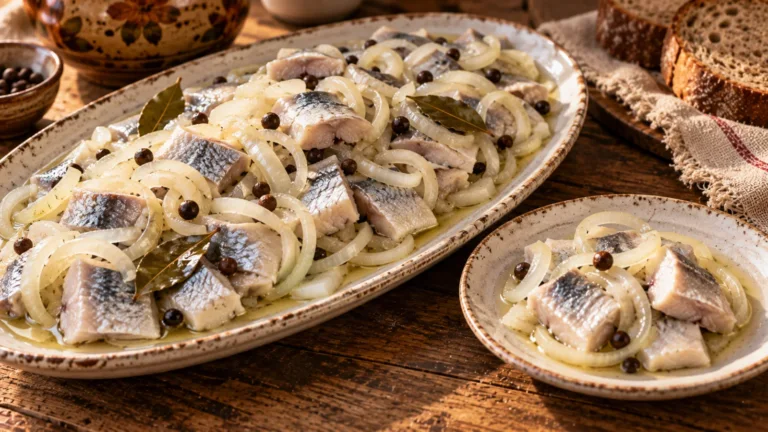
- Serve cold with a drizzle of oil, rye bread, or boiled potatoes
What Silkė Is
Silkė is the Lithuanian word for herring.9 On the Christmas Eve table, one of its most familiar forms is pickled herring: salted herring with onion in a sweet-sour vinegar brine, served cold with rye bread or boiled potatoes.2,3 Herring rarely appears in just one form. On Christmas Eve it’s customary to set out at least three preparations: in vinegar, in tomato sauce, or with a creamy dressing.2
The vinegar version in this article contains no meat or dairy, so it fits the rules of Kūčios, the Lithuanian Christmas Eve supper.9
History and Cultural Roots
In the traditional Lithuanian diet, herring was a fasting food.7 Kūčios, the supper on December 24, is a fasting meal. The custom goes back to the vigils of the first Christian centuries and also draws on older pagan rites for the souls of the dead and for the harvest. It reached Lithuania by way of Poland.6
In early 20th-century villages, the whole household gathered for Kūčios, and the table held nine to twelve ritual fasting dishes: stewed peas and wheat, boiled beans, small biscuits with poppy seed milk, mushrooms, herring, oat and cranberry kissel, beer, honey, nuts, and apples.6 Later accounts describe twelve dishes, with no meat and no dairy.9
Herring is the king of the Kūčios table, worked into a long list of dishes on the same evening.8 Lithuanian-American food columns give recipes for herring with mushrooms, in tomato sauce, rolled around pickles, or just marinated with onion, all for the same supper.1,3,4,5 Like the rest of the meal, it is tied to frugality, purity, and respect for nature, and leftovers are often eaten for breakfast on Christmas morning with rye bread and potatoes.2
Traditional Recipe
This recipe was compiled by Heritage Healthy Kitchen from a comparison of published recipes; the sources are listed at the end of this article. Figures that are Heritage Healthy Kitchen’s own estimates rather than taken from a published source are marked as such.
The recipes compared here pour about three to four parts water to one part vinegar over the herring, sweeten the brine with anywhere from half a tablespoon to a quarter cup of sugar, and leave the fish to marinate from six hours to a full day.1,2 Simpler versions skip the brine and just dress the herring with a spoonful each of vinegar and oil.3 The amounts below sit inside those ranges. The amount of herring per serving and the cooking time are Heritage Healthy Kitchen estimates.
Ingredients (Serves 4)
- 400g (14 oz) salted herring fillets in brine (not in oil), drained
- 2 medium onions (about 250g / 9 oz), thinly sliced into rings
- 400ml (1⅔ cups) cold water
- 120ml (½ cup) apple cider vinegar or white vinegar (5% acidity)
- 2 tablespoons (25g) granulated sugar
- 1–2 bay leaves
- 6 whole black peppercorns
- 2–3 whole cloves (optional)
- 2 tablespoons (30ml) sunflower oil or another neutral oil, for serving
- Fresh dill or parsley, chopped, for serving (optional)
Instructions
- Prepare the herring. If the fillets have skin, peel it off. Rinse them briefly under cold running water to wash off the surface brine, then pat dry with paper towels.2 Cut into bite-sized pieces, about 2.5cm (1 inch) long.3,4
- Slice the onions. Peel the onions and slice them into thin rings.2,4
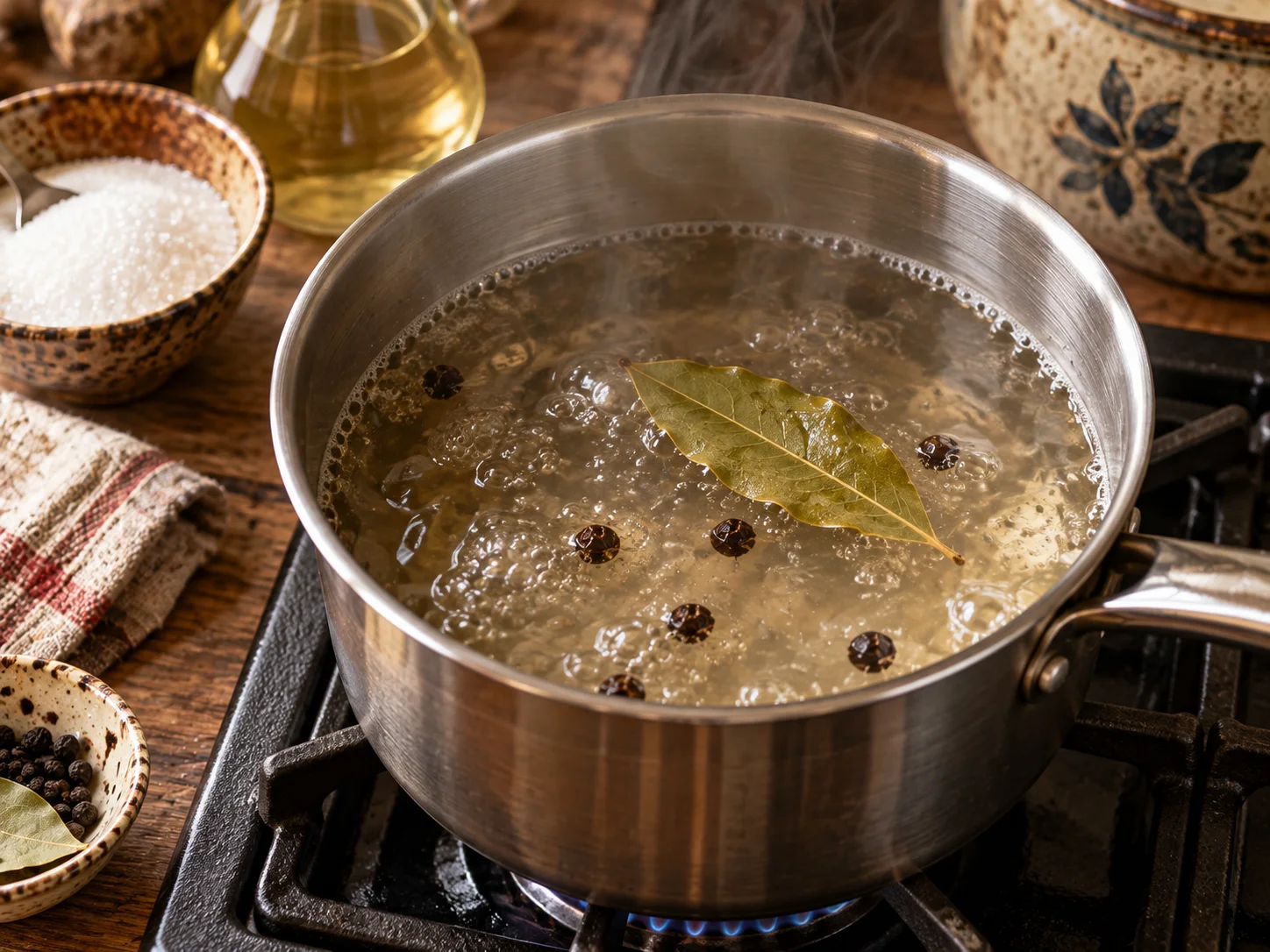
- Make the brine. Combine the water, vinegar, sugar, bay leaves, peppercorns, and cloves (if using) in a small saucepan. Warm over low heat, stirring, just until the sugar dissolves, then let the brine cool completely.1 Or stir everything together cold until the sugar dissolves.2
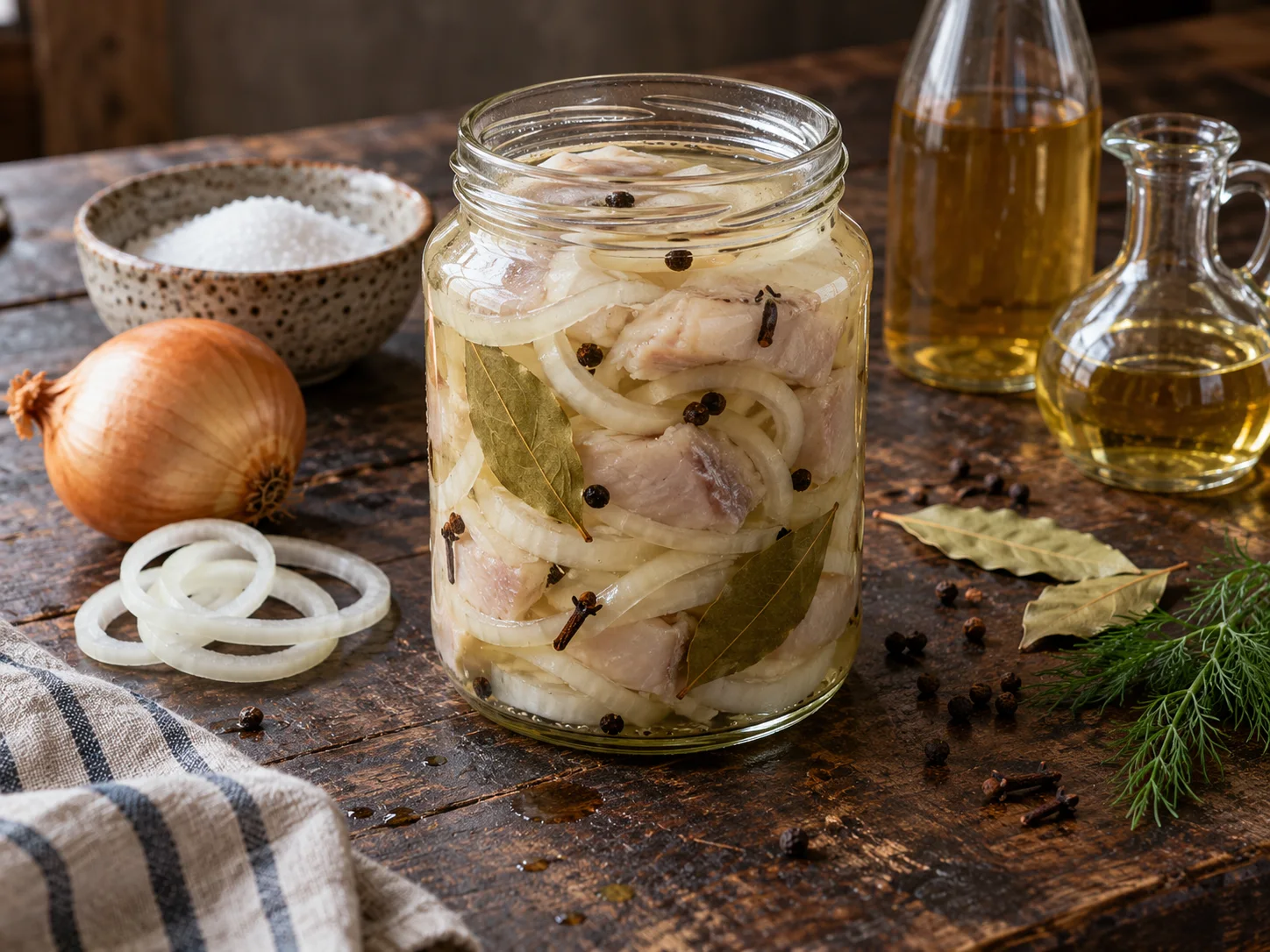
- Layer the jar. In a clean glass jar or container, layer the herring pieces and onion rings.2
- Pour and seal. Pour the cooled brine over the herring and onion so that everything is fully covered, then seal the jar.2
- Marinate. Refrigerate for at least 6–8 hours, or overnight.2 Some recipes leave it for a full day before serving.1
- Serve. Lift the herring and onion out of the brine with a slotted spoon and arrange them on a plate. Drizzle with the oil, scatter with dill or parsley, and serve cold with rye bread or boiled potatoes.2,3
Kitchen Tips
Buy herring fillets packed in brine, not in oil, since oil changes the texture of the fish.2 A whole salted herring works too, but it needs soaking first: older recipes leave it in cold water for 24 to 48 hours, changing the water, so that it isn’t too salty, then skin and fillet it.1,5
Let the brine cool completely before it goes over the fish.1 If you use a stronger vinegar than 5%, use less of it or dilute it with extra water.2
Some families add a few mustard seeds or an extra bay leaf to the brine.2 Older recipes also simmer a sliced carrot and a few cloves in it.1 For rollmops, roll each fillet around a quarter of a dill pickle, secure it with a toothpick, and marinate it the same way.1,2
The oil at serving is optional. Simpler recipes use only a tablespoon or two,3 and by Heritage Healthy Kitchen’s estimate, leaving it out takes about 60 calories off each serving. Salted herring stays salty even after rinsing, and the sodium figure below comes almost entirely from the fish. A longer soak in cold water draws out more of the salt.5
Nutritional Information
Per Serving (¼ of the Recipe)

- Calories: approximately 270–330 kcal
- Protein: approximately 15–19g
- Total fat: approximately 21–25g
- Saturated fat: approximately 4–5g
- Carbohydrates: approximately 6–8g
- Total sugars: approximately 3–4g
- Sodium: approximately 870–1,060mg
Nutritional values are estimates based on standard ingredient databases (USDA FoodData Central and the Norwegian Food Composition Database).10 They will vary with how salty the herring is, how long it is rinsed or soaked, and how much oil goes on at serving.
Storage and Reheating
Keep leftovers in an airtight container or a tightly covered dish in the refrigerator for up to a week.2 Silkė is served cold, so there is no reheating step.
Traditional Silkė

Ingredients
Ingredients (Serves 4)
- 400g (14 oz) salted herring fillets in brine (not in oil), drained
- 2 medium onions (about 250g / 9 oz), thinly sliced into rings
- 400ml (1⅔ cups) cold water
- 120ml (½ cup) apple cider vinegar or white vinegar (5% acidity)
- 2 tablespoons (25g) granulated sugar
- 1–2 bay leaves
- 6 whole black peppercorns
- 2–3 whole cloves (optional)
- 2 tablespoons (30ml) sunflower oil or another neutral oil, for serving
- Fresh dill or parsley, chopped, for serving (optional)
Instructions
- Prepare the herring. If the fillets have skin, peel it off. Rinse them briefly under cold running water to wash off the surface brine, then pat dry with paper towels. Cut into bite-sized pieces, about 2.5cm (1 inch) long.
- Slice the onions. Peel the onions and slice them into thin rings.
- Make the brine. Combine the water, vinegar, sugar, bay leaves, peppercorns, and cloves (if using) in a small saucepan. Warm over low heat, stirring, just until the sugar dissolves, then let the brine cool completely. Or stir everything together cold until the sugar dissolves.
- Layer the jar. In a clean glass jar or container, layer the herring pieces and onion rings.
- Pour and seal. Pour the cooled brine over the herring and onion so that everything is fully covered, then seal the jar.
- Marinate. Refrigerate for at least 6–8 hours, or overnight. Some recipes leave it for a full day before serving.
- Serve. Lift the herring and onion out of the brine with a slotted spoon and arrange them on a plate. Drizzle with the oil, scatter with dill or parsley, and serve cold with rye bread or boiled potatoes.
Frequently Asked Questions
Is silkė the same thing as rollmops?
Not quite. Rollmops are herring fillets rolled around a filling, often a dill pickle or onion, and secured with a toothpick, a style that traces back to Germany.2 The fish, onion, and vinegar brine are the same; in Lithuania, herring cut into bite-sized pieces is the more common way to serve it.2
Why is herring served at Kūčios?
Kūčios is a fasting supper with no meat or dairy,9 and herring was a traditional fasting food in Lithuania.7 It is one of the ritual dishes named for the evening, along with mushrooms, peas, beans, and kissel.6
Can silkė be made with sour cream?
Not for a strict Kūčios table, since the supper traditionally excludes dairy.9 Herring in a sour cream dressing is a separate dish.
What is kapota silkė?
Kapota silkė, or chopped herring, is a different dish. The herring is chopped with apple, onion, hard-boiled egg, and soaked white bread, dressed with oil, vinegar, and a little sugar, and shaped into a fish on the plate. It was very popular in pre-war Kaunas.8
How far ahead can I make it?
It needs at least 6–8 hours in the brine and can be made a day ahead.1,2 Covered and refrigerated, it keeps for up to a week.2
Can I use herring in oil, or a whole salted herring?
Use fillets packed in brine; herring in oil changes the texture.2 A whole salted herring works if you soak it in cold water for 24 to 48 hours, changing the water, then skin and fillet it before marinating.1,5
Further Reading & Sources
The recipe is a compilation based on the published recipes listed here; these links are provided for readers who want to explore further.
Published recipes
- Siliūnas, Dana. “For your Kūčios table.” Draugas News, November 15, 2004. draugas.org.
- Ieva. “Lithuanian Pickled Herring Rollmops (Christmas Eve Recipe).” Taste of Lithuania, December 12, 2024. tasteoflithuania.com.
- “A traditional Kūčios table.” Draugas News, November 15, 2011 (no byline). draugas.org.
- “For a typical Kūčios supper.” Draugas News, November 15, 2009 (no byline). draugas.org.
- “What is Kūčios without fish?” Draugas News, November 15, 2008 (no byline). draugas.org.
History, culture, and nutrition
- “Kūčios.” Visuotinė lietuvių enciklopedija (no byline). vle.lt.
- Milius, Vacys. “Lietuvių valgiai.” Visuotinė lietuvių enciklopedija. vle.lt.
- Daugirdienė, Ona. “Setting the table for Kūčios.” Draugas News, December 16, 2017. draugas.org.
- “A Feast for the Living – and the Dead.” Draugas News, November 15, 2007 (no byline). draugas.org.
- “Herring, cured, soaked in water” (04.310). Norwegian Food Composition Database (Matvaretabellen). matvaretabellen.no.
Disclaimer
The information in this article is provided for educational and informational purposes only. Heritage Healthy Kitchen makes no representations or warranties regarding the accuracy or completeness of any content on this site. Nutritional values are estimates only and will vary depending on the specific ingredients, brands, and measurements used. This content is not intended as dietary, medical, or professional nutritional advice. Always consult a qualified healthcare provider regarding any dietary needs or health conditions. Heritage Healthy Kitchen is not responsible for any outcomes resulting from the use of recipes or information published on this site.
Cook by Occasion
This recipe is part of our Kūčios menu.
You Might Also Like
More heritage recipes from our kitchen

Leave a Reply