
Active time: ~15 minutes (plus steeping) | Total time: ~4.5 hours | Serves: 8 | Difficulty: Easy
Quick Overview
- Rinse the dried fruit and raisins under cold water
- Bring water to a boil, add the fruit, and simmer until soft and fragrant
- Remove from the heat, cover, and let the compote steep for several hours
- Stir in honey once the liquid has cooled to warm
- Chill and serve alongside kutia as part of the Christmas Eve table
What Uzvar Is
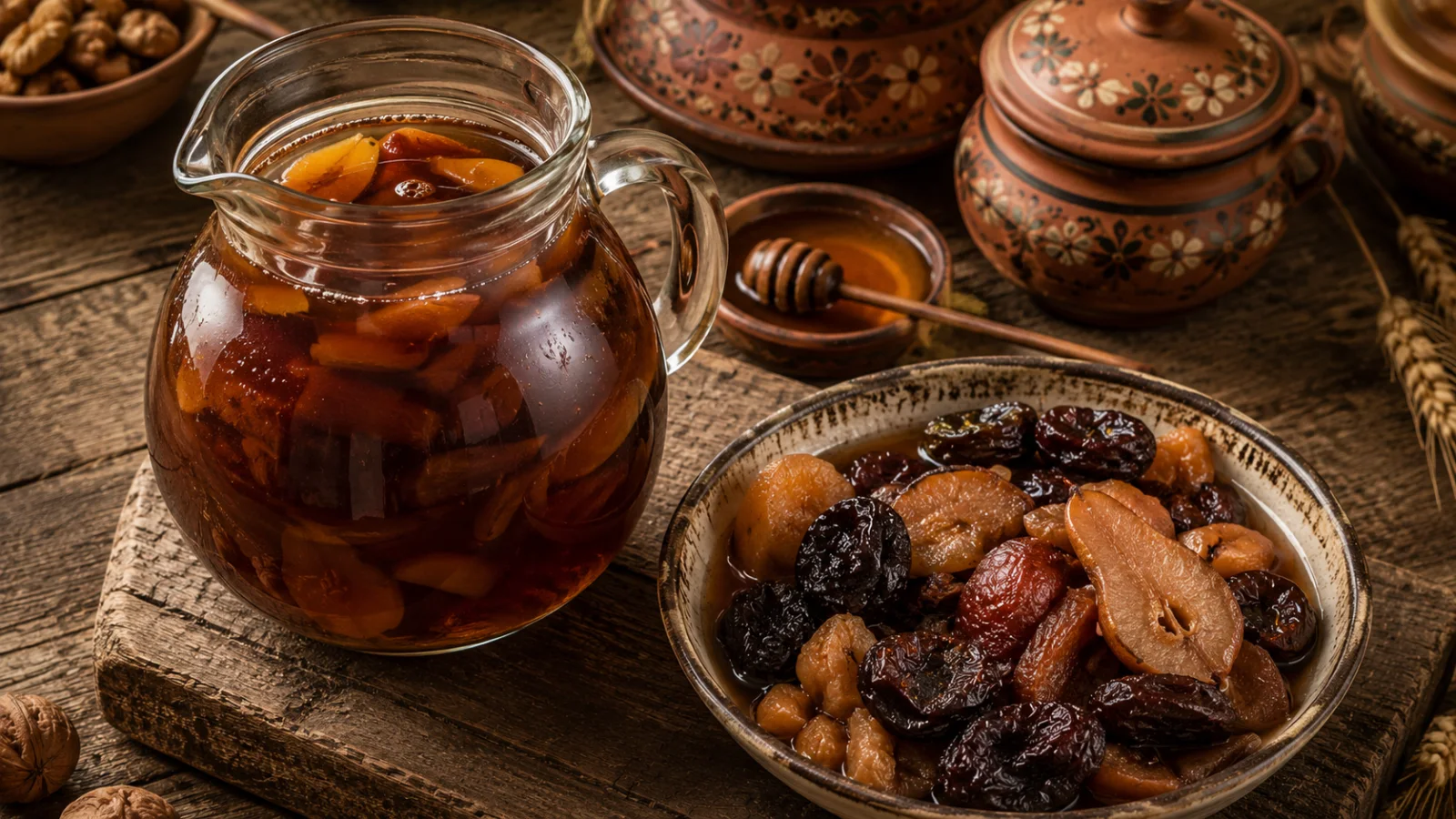
Uzvar is a traditional Ukrainian drink made by boiling dried fruit into a sweet compote.1 The usual base is apples, pears, and plums, with dried apricots especially common in southern regions and other fruit, such as cherries, sometimes joining the pot.3 The name is thought to come from an old root meaning “to boil” or “to brew,” a nod to the drink’s simple method.4
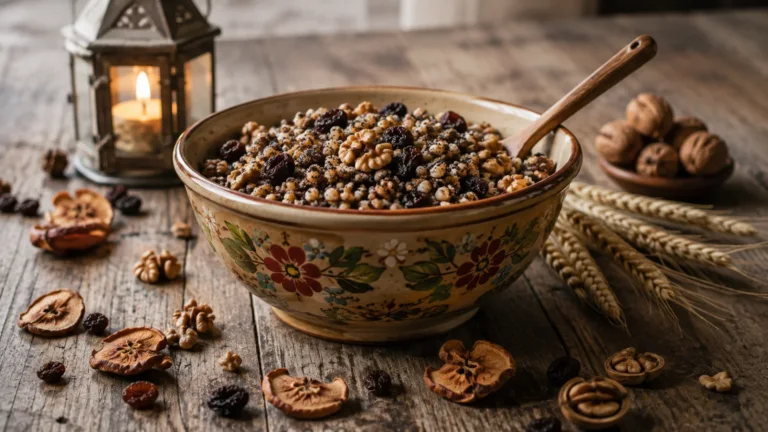
Alongside kutia, the sweetened wheat porridge, uzvar is one of the two central dishes of Sviata Vecheria, the Ukrainian Christmas Eve Holy Supper.2 Together they anchor a table of twelve meatless dishes, and in the older tradition both were spoken of as “food of the gods.”2 The pot of uzvar traditionally sat under the household icons in the home’s holy corner, and a portion was set aside to drink right after the family shared its first spoonful of kutia from one communal bowl.2
Ukrainians historically poured the liquid into a jug while keeping the softened fruit in a separate bowl that was also brought to the table.3 Uzvar belongs most firmly to Christmas Eve, but it was traditionally made on ordinary days as well as holidays, and the same dried-fruit method lives on today as a version of kompot, the more general Ukrainian fruit drink made with whatever fruit is in season.3,5
On the Holiday Table
Uzvar comes back three weeks after Christmas Eve. On 13 January, at the Shchedryi Vechir table that closes the season, kutia and uzvar are again the two dishes that have to be there — only the kutia is the richer shchedra version, and the fast is over.⁸ Both are on our Malanka menu.
Traditional Uzvar Recipe
Recipe developed independently by Heritage Healthy Kitchen. Sources for further reading are listed at the end of this article.
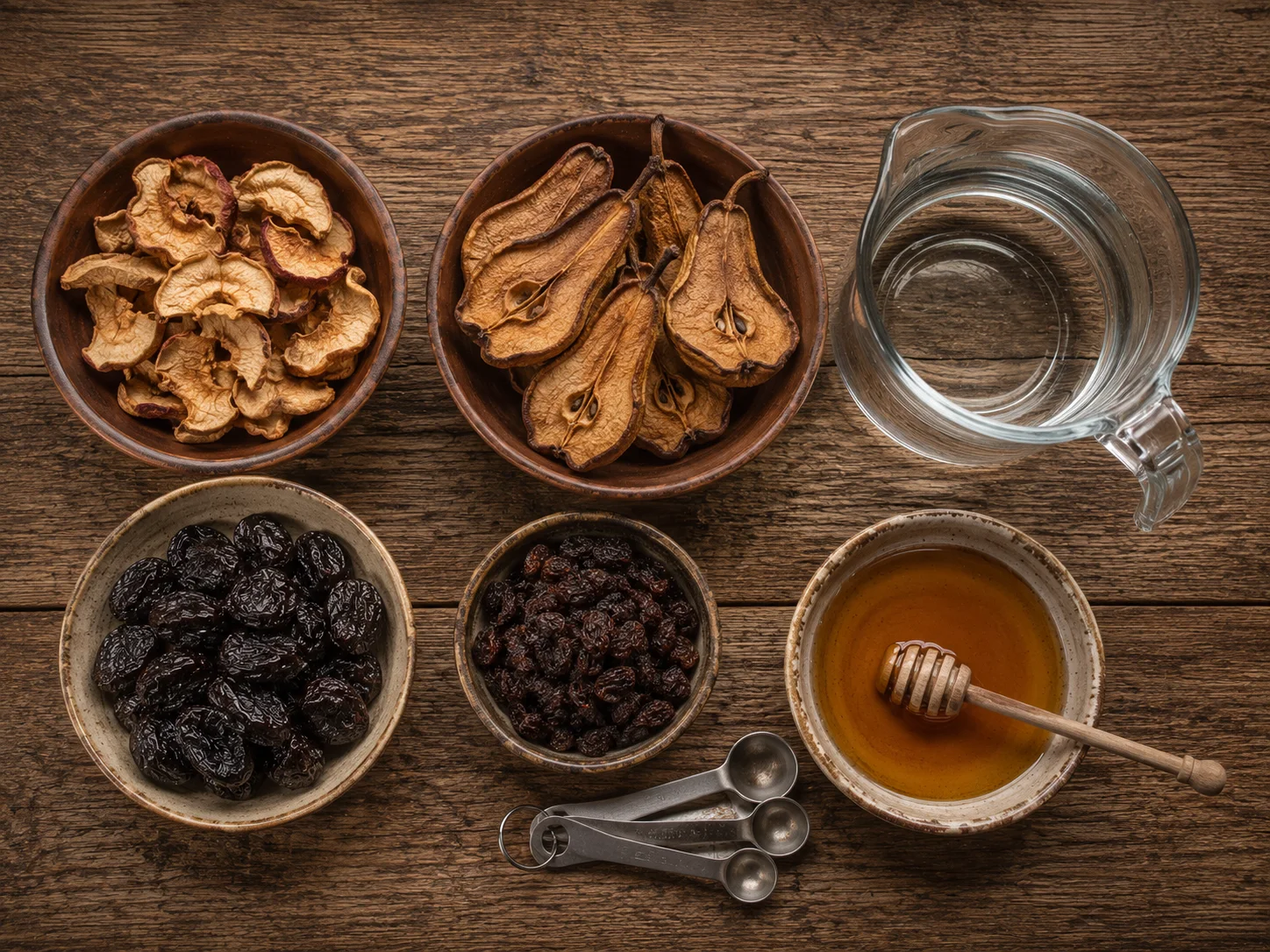
Ingredients
For the uzvar (serves 8, about 2.5 liters)
- 100g (about 3.5 oz) dried apples
- 100g (about 3.5 oz) dried pears
- 100g (about 3.5 oz) pitted prunes
- 50g (about 1¾ oz) raisins
- 3 liters (about 12¾ cups) water
- 80g (about 3¾ tablespoons) honey, or to taste
Instructions
Step 1: Rinse the fruit
Rinse the dried apples, pears, prunes, and raisins under cold water to remove any dust or residue left over from drying.
Step 2: Simmer
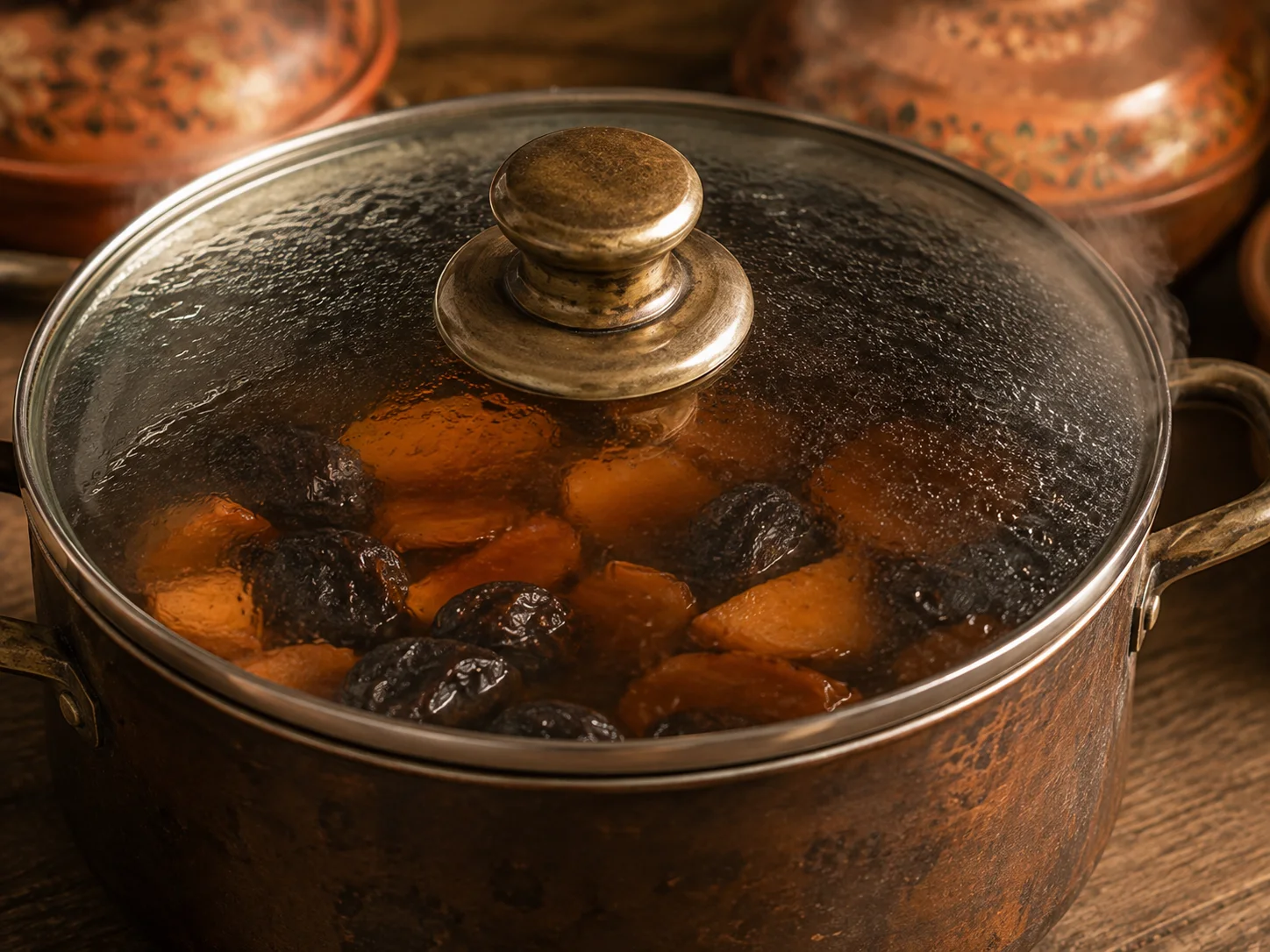
Bring the water to a boil in a large pot. Add all the dried fruit, return to a boil, then reduce to a gentle simmer and cook uncovered for 20–25 minutes, until the fruit is soft and the water has turned a deep amber color.
Step 3: Steep
Remove the pot from the heat, cover it, and let the compote steep for at least 4 hours, or overnight, so the fruit’s flavor fully colors the water.
Step 4: Sweeten
Once the liquid has cooled to warm, stir in the honey until dissolved. Taste and add more honey if the fruit was on the tart side.
Step 5: Chill and serve
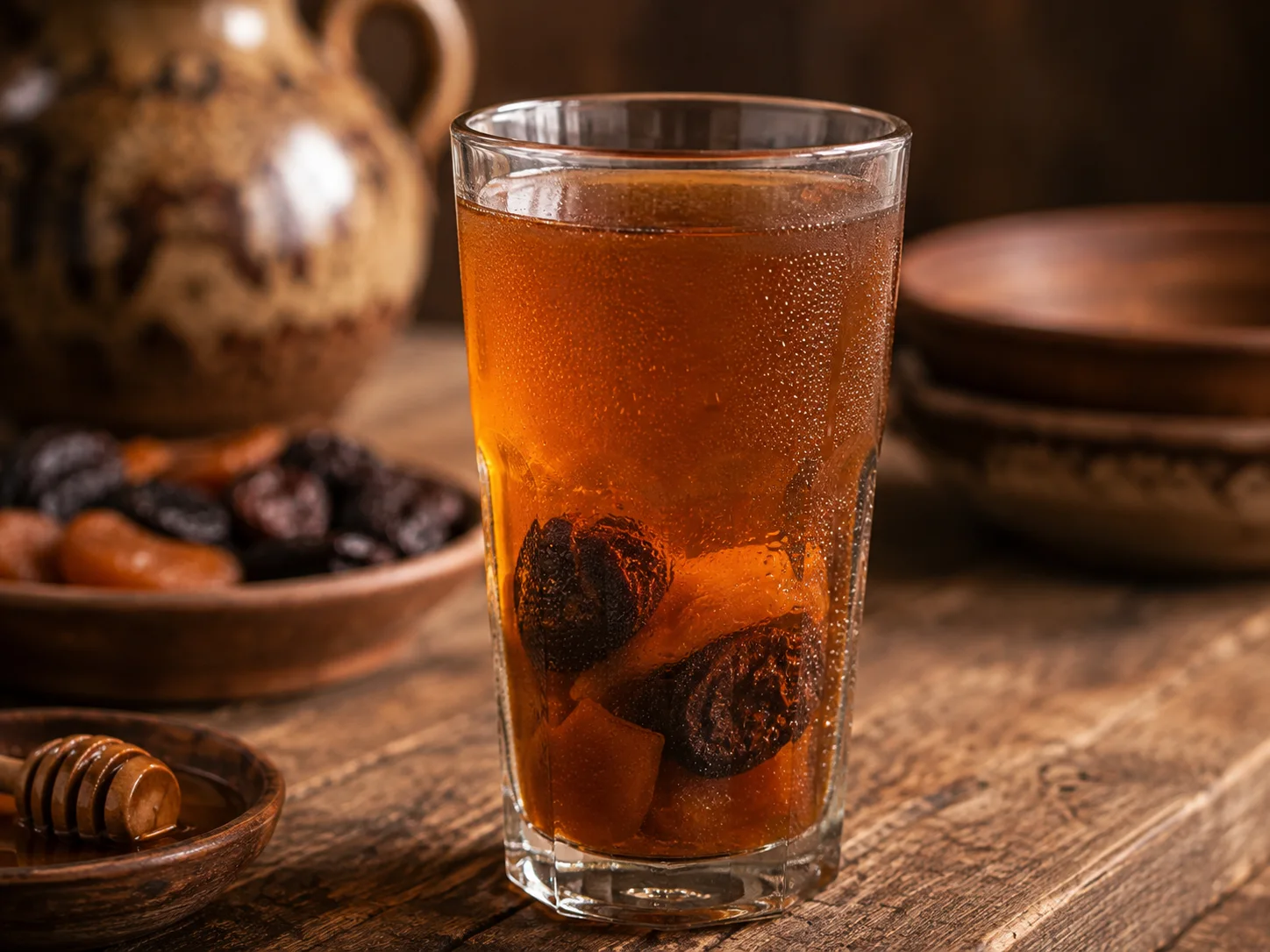
Strain the liquid into a jug for a clear drink, or serve it with the softened fruit still in the glass. Chill before serving alongside kutia.
Kitchen Tips
Traditionally, the liquid was strained into a jug while the softened fruit was kept in a separate bowl for the table; some modern versions skip this step and serve the fruit right in the glass.3
The finished compote can also be poured straight over a bowl of kutia rather than served on its own, a pairing some families keep at the table.2
A longer steep produces a darker, more concentrated compote, so it’s worth tasting along the way rather than following a fixed steeping time.
Nutritional Information
Per serving (1 of 8 servings)
- Calories: approximately 128–156 kcal
- Protein: ~0.7–0.9g
- Total fat: ~0.2g
- Carbohydrates: ~34–42g
- Fiber: ~2.8–3.5g
Nutritional values are estimates based on standard ingredient databases. They will vary depending on the specific dried fruit used and how much honey is added.
Storage and Reheating
Uzvar keeps well in the refrigerator, tightly covered, for several days.
It is most often served cold or at room temperature, so reheating usually isn’t necessary, though gently warming a portion on the stove is also traditional in some households.5,6
Traditional Uzvar

Ingredients
For the uzvar (serves 8, about 2.5 liters)
- 100g (about 3.5 oz) dried apples
- 100g (about 3.5 oz) dried pears
- 100g (about 3.5 oz) pitted prunes
- 50g (about 1¾ oz) raisins
- 3 liters (about 12¾ cups) water
- 80g (about 3¾ tablespoons) honey, or to taste
Instructions
- Rinse the dried fruit and raisins under cold water
- Bring water to a boil, add the fruit, and simmer until soft and fragrant
- Remove from the heat, cover, and let the compote steep for several hours
- Stir in honey once the liquid has cooled to warm
- Chill and serve alongside kutia as part of the Christmas Eve table
Frequently Asked Questions
Is uzvar the same as kompot?
Uzvar is essentially a variation of kompot made specifically with dried fruit rather than fresh, prepared when fresh fruit is out of season.5
Why is uzvar served specifically alongside kutia?
The two are the central ceremonial dishes of Sviata Vecheria, the Ukrainian Christmas Eve Holy Supper, and are traditionally the first things eaten that night, before any of the meal’s other ten dishes.2
Is uzvar served hot or cold?
Both are traditional. It’s most often served cold or chilled, though some households enjoy it warm, especially in winter.5,6
What dried fruits go into uzvar?
Apples, pears, and plums form the usual base, with dried apricots especially popular in southern Ukraine and other fruit, such as cherries, sometimes added as well.3
Can sugar replace the honey?
Yes. Older recipes often list sugar as the base sweetener with honey as a substitute, though plenty of households do the reverse and default to honey.3
Is uzvar alcoholic?
No. Unlike some other traditional Ukrainian fruit-based drinks, uzvar is a non-alcoholic beverage made only from dried fruit, water, and a sweetener.7
Further Reading & Sources
The following sources were consulted in researching the history, tradition, and cultural background of traditional uzvar. Heritage Healthy Kitchen’s recipe was developed independently; these links are provided for readers who want to explore further.
- “Traditional foods.” Internet Encyclopedia of Ukraine, Canadian Institute of Ukrainian Studies, University of Toronto/University of Alberta. encyclopediaofukraine.com — Traditional Foods — definition of uzvar as a compote made from fresh or dried fruit.
- Poshyvailo, Tetiana. “‘Food of the Gods’ for Ukrainian Christmas: Kutia and Uzvar.” Smithsonian Center for Folklife and Cultural Heritage. folklife.si.edu — Kutia and Uzvar — the pairing with kutia, the twelve dishes of Sviata Vecheria, the holy-corner placement, and drinking uzvar after the first taste of kutia.
- “Uzvar.” Authentic Ukraine, supported by Ukraine’s Ministry of Culture and Google Ukraine. authenticukraine.com.ua — Uzvar — regional dried-fruit variation, the traditional serving of liquid and fruit separately, and the sugar-or-honey sweetening option.
- “Ukrainian Words Used In English.” Promova. promova.com — Ukrainian Words Used In English — etymology of “uzvar” from an old root meaning “to boil” or “brew.”
- “Ukrainian Christmas Uzvar.” Savas Kitchen. savaskitchen.com — Ukrainian Christmas Uzvar — uzvar’s place among the twelve Christmas Eve dishes, its relationship to kompot, and serving it warm or cold.
- “Uzvar – Traditional Ukrainian Dried Fruit Compote.” The Taste of Ukraine. thetasteofukraine.com — Uzvar — modern serving temperature and the drink’s presence across all regions of Ukraine.
- “Mulled Uzvar – Dried Fruit Compote Recipe.” COOK.ME. cook.me — Mulled Uzvar — description of uzvar as a traditional non-alcoholic Ukrainian Christmas beverage.
- “Щедрий вечір. 12 страв, які варто поставити на стіл на Маланку.” НВ (NV.ua). nv.ua — kutia and uzvar as the two dishes that must stand on the Malanka table on 13 January, and the richer shchedra kutia that distinguishes it from Christmas Eve.
Disclaimer
The information in this article is provided for educational and informational purposes only. Heritage Healthy Kitchen makes no representations or warranties regarding the accuracy or completeness of any content on this site. Nutritional values are estimates only and will vary depending on the specific ingredients, brands, and measurements used. This content is not intended as dietary, medical, or professional nutritional advice. Always consult a qualified healthcare provider regarding any dietary needs or health conditions. Heritage Healthy Kitchen is not responsible for any outcomes resulting from the use of recipes or information published on this site.
Cook by Occasion
This recipe is part of our Sviata Vecheria menu and our Malanka feast.
You Might Also Like
More heritage recipes from our kitchen

Leave a Reply