
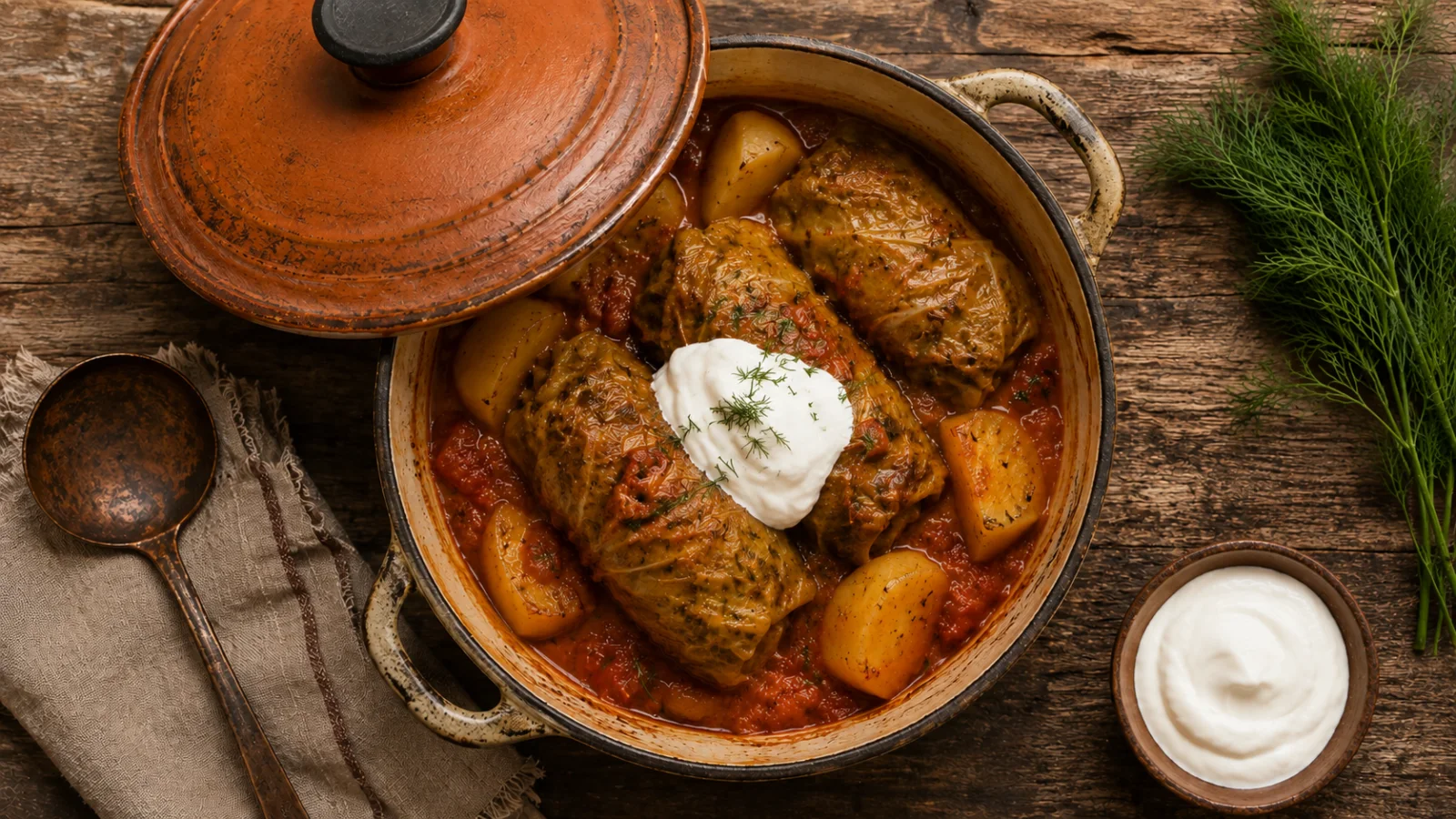
Prep: ~1 hour | Cooking: ~1 hour 15 minutes | Serves: 6 | Makes: about 16–18 rolls | Difficulty: Intermediate
Quick Overview
- Blanch a whole head of cabbage in boiling water, peeling off leaves as they soften
- Mix the filling raw: ground pork, half-cooked rice, grated onion, egg, caraway seeds, salt, and pepper
- Roll each leaf around a spoonful of filling, dust in flour, and sear briefly for color
- Layer the rolls with potatoes, carrot, and onion in a heavy pot, cover with a tomato-stock sauce, and simmer for about an hour
- Rest for 15 minutes, then serve with the potatoes, a spoonful of sauce, and a generous dollop of sour cream
What Balandėliai Is
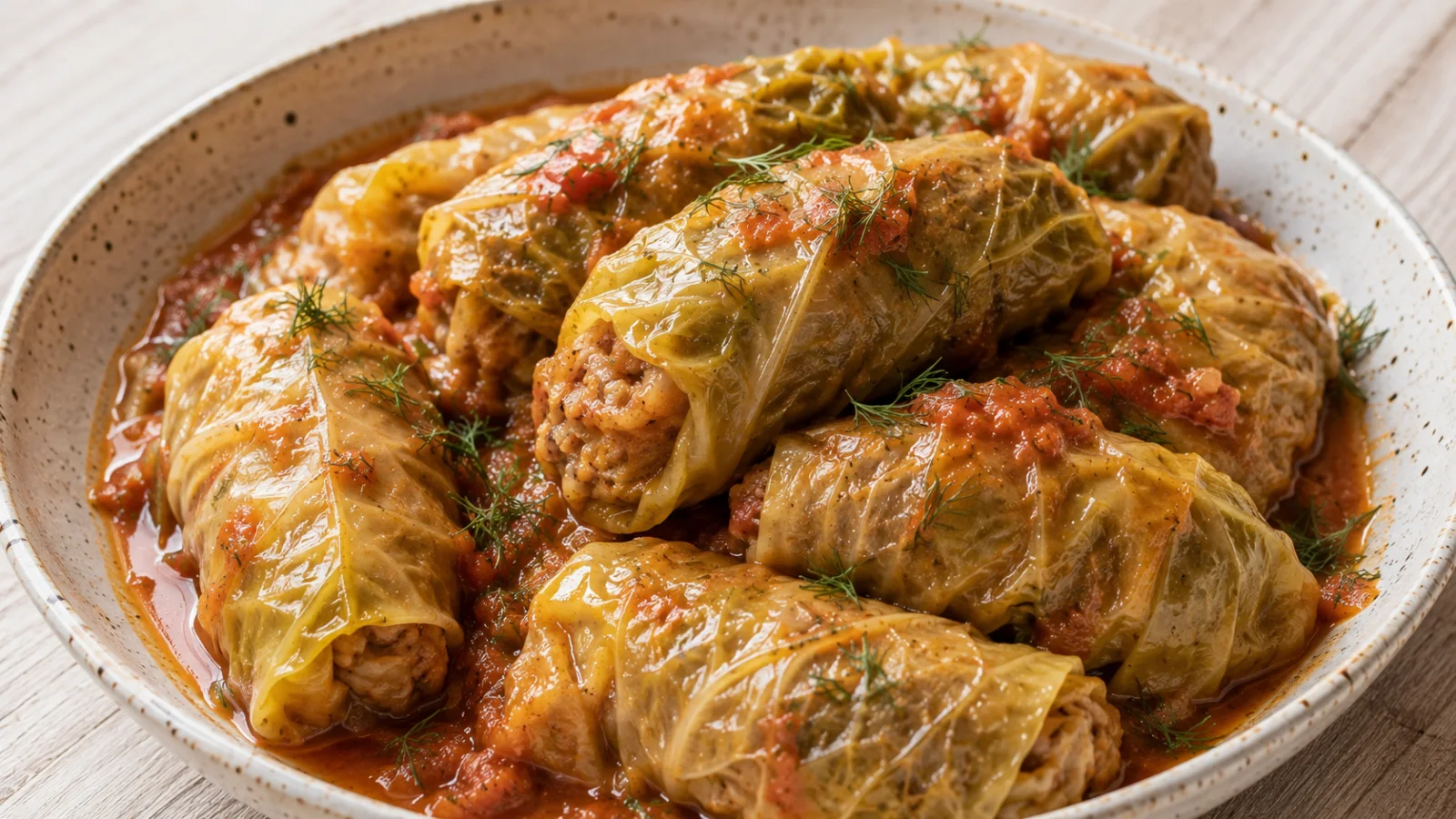
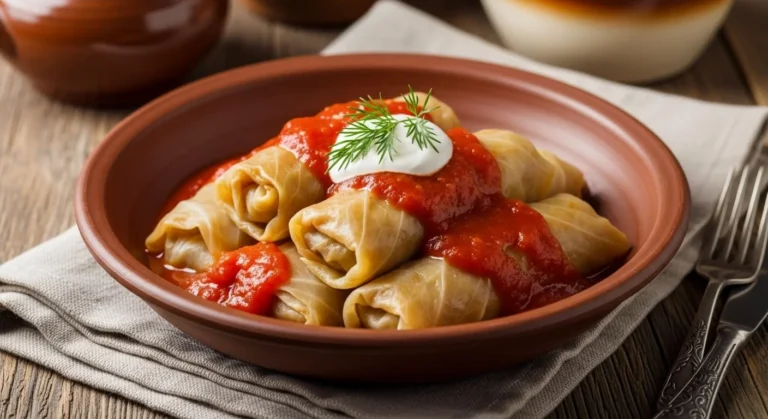
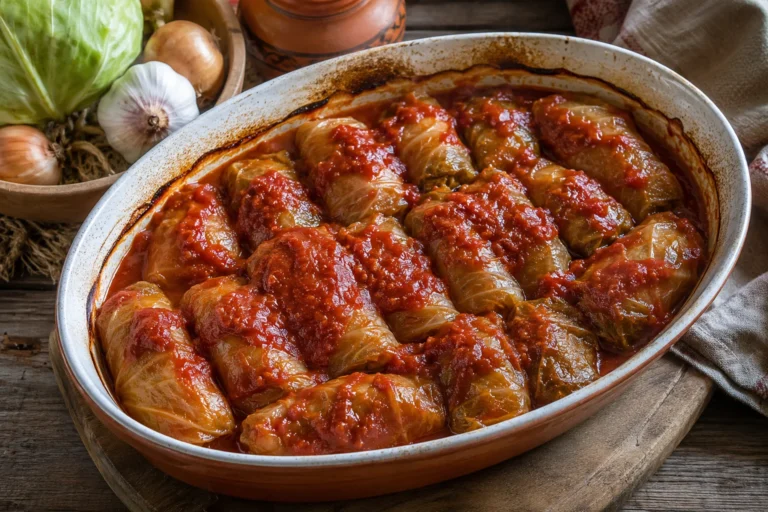
Balandėliai are Lithuania’s stuffed cabbage rolls: blanched cabbage leaves wrapped around a filling of ground pork and rice, then simmered in a tomato-and-stock broth until tender. The name translates to “little pigeons” or “little doves,” a detail the History section below tries and fails to fully explain.
The dish belongs to a family found across Europe under different names, including chou farci in France and krautwickel in Germany.2 On Heritage Healthy Kitchen, balandėliai joins Poland’s gołąbki and Ukraine’s holubtsi as the latest entry in a growing line of stuffed-cabbage dishes covered on the site, close relatives that share the same basic method. Two details set the Lithuanian version apart: potatoes go into the same pot as the rolls rather than being served alongside, and the filling sometimes carries a note of caraway seed.2
A Name Nobody Can Explain
Every Lithuanian home cook who has looked into the question comes back with the same answer: nobody actually knows why cabbage rolls got named after birds. Ieva, the Lithuanian-born writer behind the blog Taste of Lithuania, says she has asked around and never gotten a straight answer.2
The word itself has a documented history, even where the dish’s connection to it doesn’t. Balandis likely traces to a Proto-Indo-European root meaning “white,” possibly through an old form for “white-marked pigeon,” related to the Latin columbus, meaning “male dove.”1 The same word also names April in Lithuanian, and that meaning seems to come from the same “white or bare patch” sense rather than from doves nesting in spring, the explanation most food writers reach for.1
The bird, the month, and the dish all share one word, and nobody has fully connected the dots.
Arrival and Adaptation
There is no firm date for when balandėliai entered Lithuanian cooking, though the dish has circulated in the country for centuries.4 Two food-reference sites independently trace a possible origin to the Tatars: one dates the arrival to the fourteenth or fifteenth century, the other to the fourteenth century specifically and adds Armenians as an alternative for that same period. Neither confirms the theory outright.3,4
The filling adapted to what Lithuanian farms actually grew. Rice was not historically cultivated in Lithuania, so many households used pearl barley in its place.5 Balandėliai also became a fixture of Christmas tables and family gatherings, the kind of dish built for a pot with more mouths than usual around it.4
Traditional Recipe
This recipe was developed independently by Heritage Healthy Kitchen; the sources cited throughout are for further reading on the dish’s history and background, not the basis of the recipe itself.
Ingredients (Serves 6, About 16–18 Rolls)

For the Filling
- 600g (1.3 lb) ground pork
- 100g (½ cup) white rice, uncooked
- 1 large onion, finely grated
- 1 large egg
- 1 tsp caraway seeds, lightly toasted and crushed
- 1 tsp salt
- ¼ tsp black pepper

For Rolling and Searing
- 1 large head white cabbage (about 1.8–2kg / 4 lb)
- 2 tbsp all-purpose flour
- 2 tbsp neutral oil, such as sunflower or vegetable
For the Braise
- 700g (1.5 lb) potatoes, peeled and cut into large chunks
- 2 medium carrots, coarsely grated
- 1 medium onion, thinly sliced
- 500ml (2 cups) chicken or beef stock
- 3 tbsp tomato paste
- 2 bay leaves
- ½ tsp salt, plus more to taste
- 3–4 tbsp sour cream, plus extra to serve
- Fresh dill, to serve
Instructions
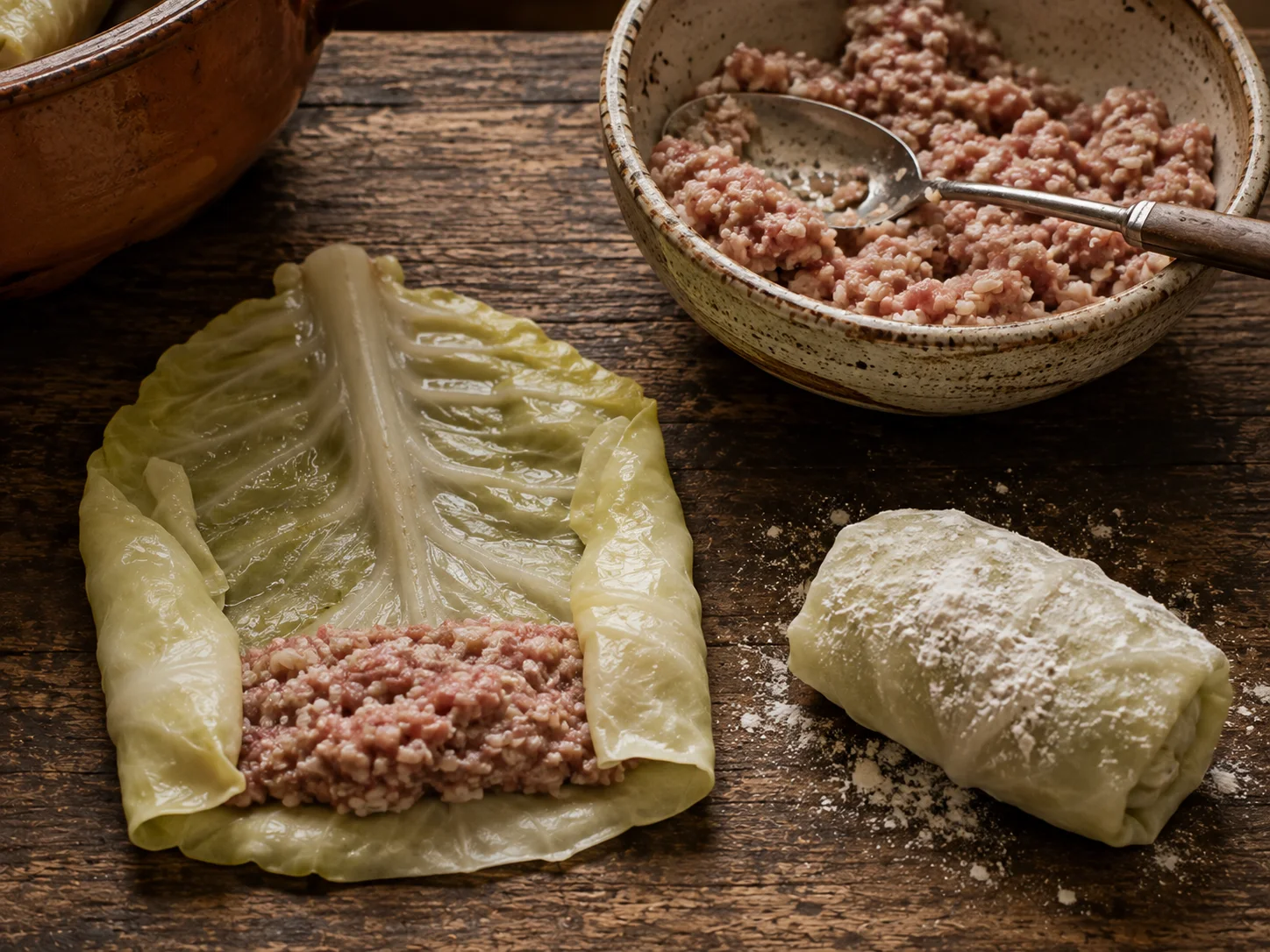
- Prepare the cabbage. Cut a deep cone around the core to loosen the leaves, then lower the whole head into a large pot of boiling water. As the outer leaves soften, after 2–3 minutes, peel them off with tongs and transfer to a colander. Keep rotating the head and removing leaves as they soften; 16–18 whole leaves are needed. Trim the thick central rib flat on each one so it rolls without cracking.
- Half-cook the rice. Rinse the rice, then boil in salted water for about 7 minutes, still firm at the center. Drain and rinse with cold water to stop the cooking; it finishes inside the roll during the long simmer.
- Make the filling. Combine the ground pork, half-cooked rice, grated onion, egg, caraway seeds, salt, and pepper in a bowl. Mix by hand until evenly combined. Fry a small test piece and taste before rolling, since this is the only chance to adjust the seasoning.
- Roll the balandėliai. Lay a cabbage leaf flat, inner side up, stem end toward you. Spoon 2–3 tablespoons of filling onto the lower third, fold the sides in, and roll from the stem end into a snug parcel. Patch any tears with a spare piece of leaf.
- Sear. Roll each parcel lightly in flour, then sear on both sides in the oil in a hot skillet until golden, about 4 minutes total. This step is optional but common in home kitchens; it adds color and thickens the sauce slightly.
- Layer and cook. Scatter a third of the grated carrot and sliced onion across the bottom of a heavy pot. Arrange a layer of rolls, seam side down, filling any gaps with potato chunks. Repeat the layers, finishing with the remaining carrot and onion on top.
- Add the sauce. Whisk the stock and tomato paste together and pour over the rolls until they are about two-thirds submerged. Tuck in the bay leaves, dot the top with sour cream, and season with the remaining salt. Bring to a boil, then reduce to a low simmer, cover, and cook for 55–70 minutes, until the potatoes are tender.
- Rest and serve. Remove from the heat and rest, covered, for 15 minutes. Serve two to three rolls per portion with the potatoes, a spoonful of the braising liquid, a fresh dollop of sour cream, and a scatter of dill.
Kitchen Tips
Searing the rolls before braising is a matter of family habit, not necessity. Plenty of households skip it and go straight from rolling to the pot, which saves a step and gives a somewhat thinner sauce.2
Caraway is easy to leave out, and many Lithuanian kitchens do. Toasting the seeds briefly in a dry pan before crushing them brings out a rounder flavor than adding them raw.
Pick a cabbage head that feels heavy for its size. Fresher heads separate into leaves more easily and cook faster than an older one bought out of season.
Nutritional Information
Per serving of 2–3 rolls with potatoes and sauce (approximately 450g)
- Calories: approximately 490–600 kcal
- Protein: ~22–27g
- Total fat: ~26–32g
- Carbohydrates: ~42–52g
- Dietary fiber: ~5–6g
- Sodium: ~770–945mg
Values are estimates based on standard ingredient databases, calculated from the recipe above and divided across 6 servings. They will vary depending on the fat content of the pork, how much sauce is absorbed, and how much added salt is used.
Ground pork and sour cream account for most of the saturated fat in this dish, which comes to roughly 9–11g per serving. That’s about 70–85% of the American Heart Association’s recommended daily limit of 13 grams within a 2,000-calorie diet, so this is a dish worth balancing against the rest of the day’s meals rather than eating routinely.6
Storage and Reheating
Cooked balandėliai keep in the refrigerator for 4–5 days in a sealed container with the sauce and potatoes. Reheat gently in a covered pot on the stove, or in the oven at 160°C (325°F) for 20–25 minutes.
Uncooked, assembled rolls freeze well for up to 3 months. Arrange them in a single layer until solid, then transfer to a container; cook from frozen, adding 20–30 minutes to the simmer time.
Cooked balandėliai also freeze for up to 3 months. Defrost overnight in the refrigerator and reheat covered, with a splash of stock if the sauce has thickened too much.
Traditional Lithuanian Balandėliai

Ingredients
Ingredients (Serves 6, About 16–18 Rolls)
- 600g (1.3 lb) ground pork
- 100g (½ cup) white rice, uncooked
- 1 large onion, finely grated
- 1 large egg
- 1 tsp caraway seeds, lightly toasted and crushed
- 1 tsp salt
- ¼ tsp black pepper
For Rolling and Searing
- 1 large head white cabbage (about 1.8–2kg / 4 lb)
- 2 tbsp all-purpose flour
- 2 tbsp neutral oil, such as sunflower or vegetable
For the Braise
- 700g (1.5 lb) potatoes, peeled and cut into large chunks
- 2 medium carrots, coarsely grated
- 1 medium onion, thinly sliced
- 500ml (2 cups) chicken or beef stock
- 3 tbsp tomato paste
- 2 bay leaves
- ½ tsp salt, plus more to taste
- 3–4 tbsp sour cream, plus extra to serve
- Fresh dill, to serve
Instructions
- Prepare the cabbage. Cut a deep cone around the core to loosen the leaves, then lower the whole head into a large pot of boiling water. As the outer leaves soften, after 2–3 minutes, peel them off with tongs and transfer to a colander. Keep rotating the head and removing leaves as they soften; 16–18 whole leaves are needed. Trim the thick central rib flat on each one so it rolls without cracking.
- Half-cook the rice. Rinse the rice, then boil in salted water for about 7 minutes, still firm at the center. Drain and rinse with cold water to stop the cooking; it finishes inside the roll during the long simmer.
- Make the filling. Combine the ground pork, half-cooked rice, grated onion, egg, caraway seeds, salt, and pepper in a bowl. Mix by hand until evenly combined. Fry a small test piece and taste before rolling, since this is the only chance to adjust the seasoning.
- Roll the balandėliai. Lay a cabbage leaf flat, inner side up, stem end toward you. Spoon 2–3 tablespoons of filling onto the lower third, fold the sides in, and roll from the stem end into a snug parcel. Patch any tears with a spare piece of leaf.
- Sear. Roll each parcel lightly in flour, then sear on both sides in the oil in a hot skillet until golden, about 4 minutes total. This step is optional but common in home kitchens; it adds color and thickens the sauce slightly.
- Layer and cook. Scatter a third of the grated carrot and sliced onion across the bottom of a heavy pot. Arrange a layer of rolls, seam side down, filling any gaps with potato chunks. Repeat the layers, finishing with the remaining carrot and onion on top.
- Add the sauce. Whisk the stock and tomato paste together and pour over the rolls until they are about two-thirds submerged. Tuck in the bay leaves, dot the top with sour cream, and season with the remaining salt. Bring to a boil, then reduce to a low simmer, cover, and cook for 55–70 minutes, until the potatoes are tender.
- Rest and serve. Remove from the heat and rest, covered, for 15 minutes. Serve two to three rolls per portion with the potatoes, a spoonful of the braising liquid, a fresh dollop of sour cream, and a scatter of dill.
Frequently Asked Questions
Why are balandėliai called “little pigeons” if there’s no bird in the recipe?
Nobody has a confirmed answer. The name shares a root with the Lithuanian word for April, which most likely traces to an old word for “white” rather than to birds nesting in spring, so even the tidiest folk explanation doesn’t quite hold up.1
Can balandėliai be made without meat?
Yes. Mushrooms, buckwheat, or extra rice and vegetables all work as fillings, using the same rolling and braising method. Without meat’s fat, the filling behaves a little differently, so it is worth checking the rolls a few minutes early to avoid overcooking the cabbage.
How is this different from Polish gołąbki or Ukrainian holubtsi?
The core idea, meat and rice wrapped in cabbage and simmered, is close to identical across all three. What sets balandėliai apart is potatoes cooked directly in the same pot and, in some households, caraway seed worked into the filling.2
Do the rolls have to be seared before going into the pot?
No. Searing shows up often but isn’t universal, and skipping it saves time without ruining the dish.2 The sauce just ends up a little thinner without the flour coating.
Can something replace the rice in the filling?
Historically, yes. Rice was not grown in Lithuania, so pearl barley filled the same role in older versions of the dish.5 Barley needs a longer pre-cook than rice, closer to 20 minutes, to reach a similar texture by the time the rolls finish braising.
What keeps the rolls from falling apart while they cook?
Three things, usually: a leaf that wasn’t softened enough and cracks under pressure, an overfilled roll with no room to expand, or loose packing that lets the rolls drift apart in the sauce. Rolling snugly and packing the pot tightly handles most of it.
Can balandėliai be prepared ahead of a gathering?
Yes, and it helps with a dish that has this many steps. Roll and refrigerate the parcels up to a day ahead, or freeze them raw, then braise on the day itself so the cabbage doesn’t turn watery from sitting around already cooked.
Looking for a Lighter Version?
Between the pork, the sour cream, and the potatoes simmered right in the sauce, this traditional recipe is a substantial one by design. The Healthy Balandėliai article on this site covers a leaner filling, a lighter braise, and a few targeted swaps, while keeping the same shape and the same pot intact.
Further Reading & Sources
The following sources were consulted in researching the history, etymology, and cultural background of traditional balandėliai. Heritage Healthy Kitchen’s recipe was developed independently; these links are provided for readers who want to explore further.
- “balandis.” Wiktionary. en.wiktionary.org/wiki/balandis — the Proto-Indo-European root of balandis, its possible link to a word for “white-marked pigeon,” and the separate derivation of April’s name from a sense of “having a white or bare patch.”
- “Balandėliai: Lithuanian Cabbage Rolls.” Taste of Lithuania, Ieva. tasteoflithuania.com — the unresolved etymology of the name, the dish’s place among Europe’s other stuffed-cabbage traditions, the option to skip searing, and the potato-in-the-pot and caraway seed details that set the Lithuanian version apart.
- “Balandėliai.” TasteAtlas. tasteatlas.com/balandeliai — the theory that balandėliai arrived in Lithuania with the Tatars in the 14th or 15th century.
- “Balandėliai – Lithuanian cabbage rolls.” Traditional Recipes. traditional.recipes — the dish’s centuries-long presence in Lithuania without a fixed origin date, the alternative Tatar-or-Armenian arrival theory, and its traditional association with Christmas and family occasions.
- “Lithuanian Food – Dishes from Lithuania.” Travel East and Central Europe. codelt.nl — the historical use of pearl barley in place of rice.
- “Saturated Fats.” American Heart Association. heart.org — the recommended daily limit of about 13 grams of saturated fat.
Disclaimer
The information in this article is provided for educational and informational purposes only. Heritage Healthy Kitchen makes no representations or warranties regarding the accuracy or completeness of any content on this site. Nutritional values are estimates only and will vary depending on the specific ingredients, brands, and measurements used. This content is not intended as dietary, medical, or professional nutritional advice. Always consult a qualified healthcare provider regarding any dietary needs or health conditions. Heritage Healthy Kitchen is not responsible for any outcomes resulting from the use of recipes or information published on this site.
You Might Also Like
More heritage recipes from our kitchen
Leave a Reply