
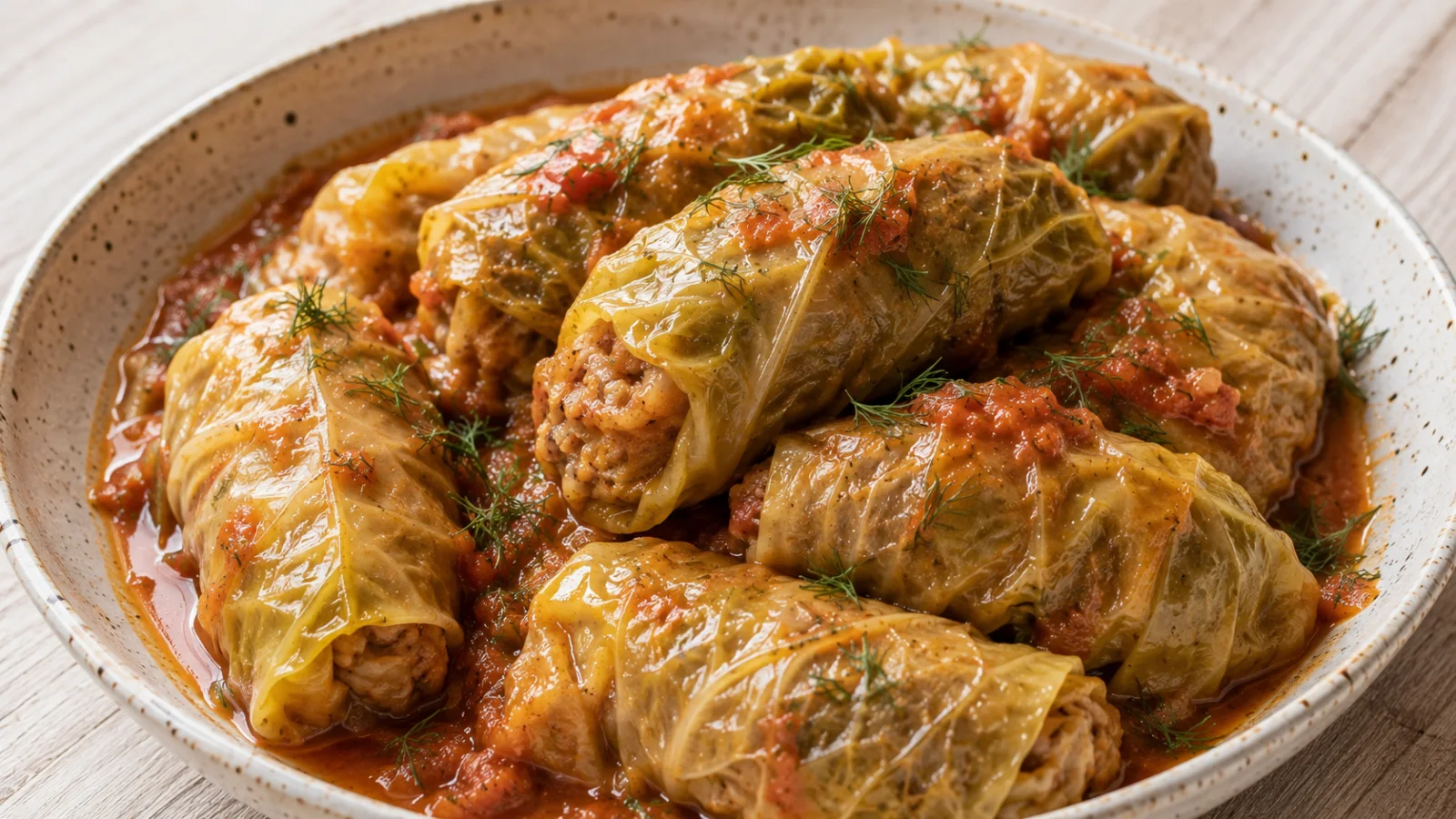
Prep: ~1 hour | Cooking: ~1 hour 15 minutes | Serves: 6 | Makes: about 16–18 rolls | Difficulty: Intermediate
Quick Overview
- Choose a filling: leaner ground pork stays closest to tradition, lean ground turkey or chicken breast cuts saturated fat much further
- Use brown rice in the filling instead of white rice, whichever protein is chosen
- Skip the flour dredge and pan-sear; roll the leaves straight into the pot instead
- Layer with potatoes, carrot, and onion in a lighter tomato-stock sauce
- Finish with plain Greek yogurt instead of sour cream, plus extra dill and a little lemon juice
- Simmer the same 55–70 minutes, then serve
What This Version Changes (and What It Keeps)
This version leans on five changes: a choice between leaner ground pork or lean ground turkey (either one instead of regular ground pork), brown rice instead of white, no flour-and-oil searing step, plain Greek yogurt instead of sour cream, and less added salt overall. Together they bring down saturated fat and sodium, with the size of that drop depending on which protein is chosen.
Everything else stays as it was. The rolling method is the same, the potatoes still cook right in the pot instead of on the side, the caraway note is still there if a household wants it, and the simmer time doesn’t change. Anyone who has made the traditional version will recognize this one at the table.
Why These Swaps Work
The filling swaps regular ground pork for a leaner option, and there are two reasonable ways to do that. Ninety percent lean ground pork cuts saturated fat by roughly half, down to around 4g per 100g raw from close to 8g in standard ground pork, while keeping the same protein and staying closest to the traditional flavor.
Lean ground turkey or chicken breast (93% lean or leaner) goes further, down to about 2g of saturated fat per 100g, since poultry carries less fat overall than any cut of pork. Harvard’s Nutrition Source lists fish, poultry, beans, and nuts as the healthy protein choices and specifically advises limiting red meat, of which pork is one, which is the reasoning behind the poultry option.1 Either protein works with the rest of the recipe unchanged; the choice is really a question of how far to go.
White rice becomes brown rice, which keeps its bran and germ instead of having them milled away. Harvard Health reports that brown rice delivers more fiber and has a lower glycemic index than white rice, and describes it as the better pick for people without a digestive condition that calls for easier-to-digest grains.2 It needs a longer pre-cook than white rice, but otherwise drops into the recipe as a straight substitution.
The traditional recipe often includes a flour dredge and a quick pan-sear before the rolls go into the pot. This version skips that step and rolls straight into the pot instead. The American Heart Association calls for preparing meat without added saturated or trans fat, and cutting the searing oil and flour removes fat the dish doesn’t need to hold together or taste right.3
Sour cream gives way to plain, whole-milk Greek yogurt in the braise. Harvard’s Nutrition Source lists plain yogurt as a direct substitute wherever a recipe calls for sour cream or mayonnaise.4 The straining process that makes Greek yogurt thick also concentrates its protein, and a typical serving carries roughly double the protein of regular yogurt.5
Against sour cream specifically, the trade is more lopsided still: swapping in Greek yogurt roughly triples the protein in that spoonful while cutting its calories by more than half.
Total added salt comes down by roughly a third, split between the filling and the braise. Harvard’s Nutrition Source notes that most people can’t detect a salt reduction of up to 30% in a dish.6 A little extra dill and a squeeze of lemon juice at the end help fill in the gap, since citrus and sodium activate some of the same taste receptors, which is why a dish can read as fully seasoned with less salt in it.6
Healthy Recipe
This recipe was developed independently by Heritage Healthy Kitchen; the sources cited above support the health claims made about each swap, not the recipe itself.
Ingredients (Serves 6, About 16–18 Rolls)
For the Filling
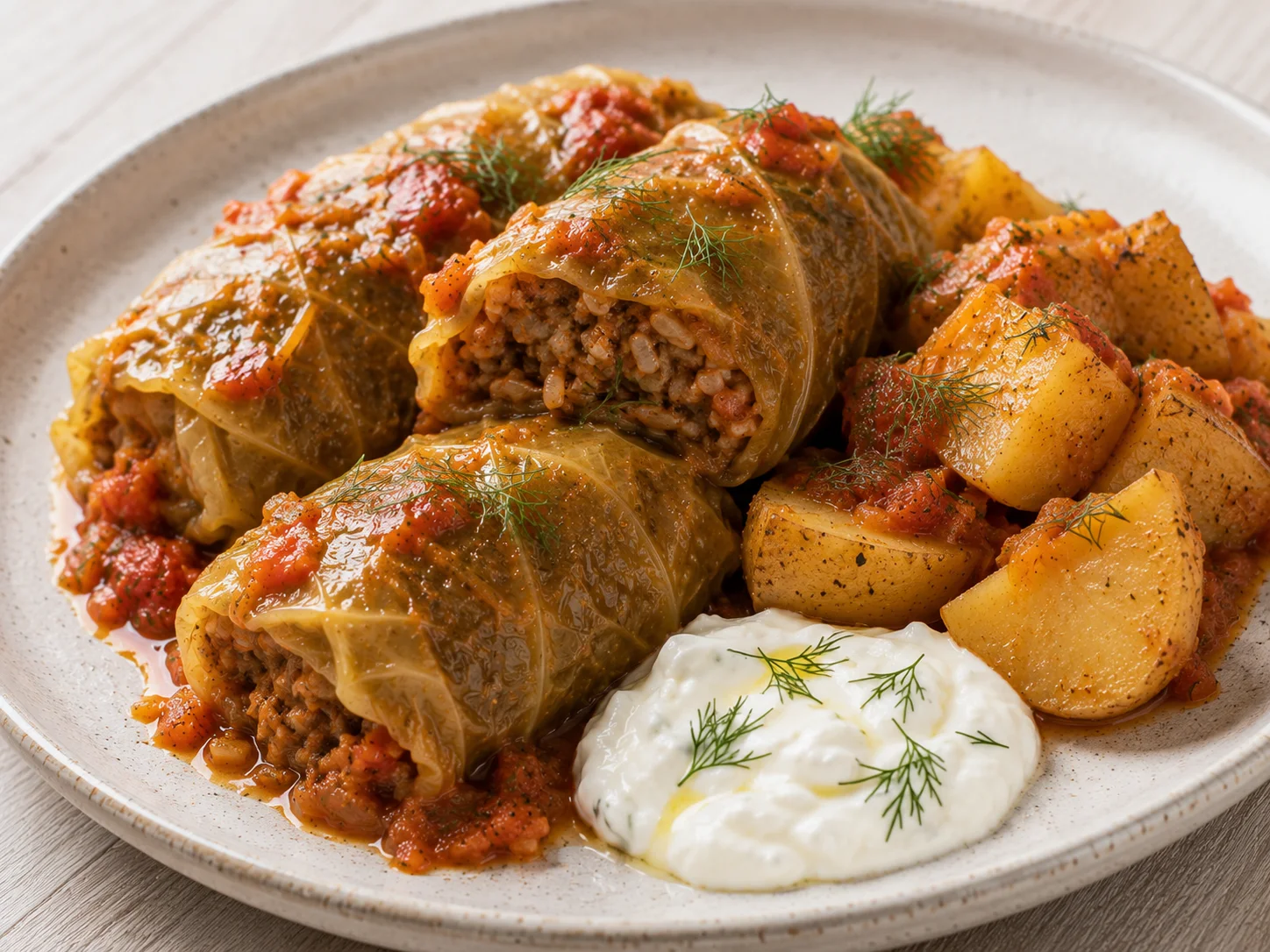
- 600g (1.3 lb) lean ground pork (90% lean or leaner), or lean ground turkey or chicken breast (93% lean or leaner) for a lighter option (see Kitchen Tips)
- 100g (½ cup) brown rice, uncooked
- 1 large onion, finely grated
- 1 large egg
- 1 tsp caraway seeds, lightly toasted and crushed
- ⅔ tsp salt
- ¼ tsp black pepper
For Rolling
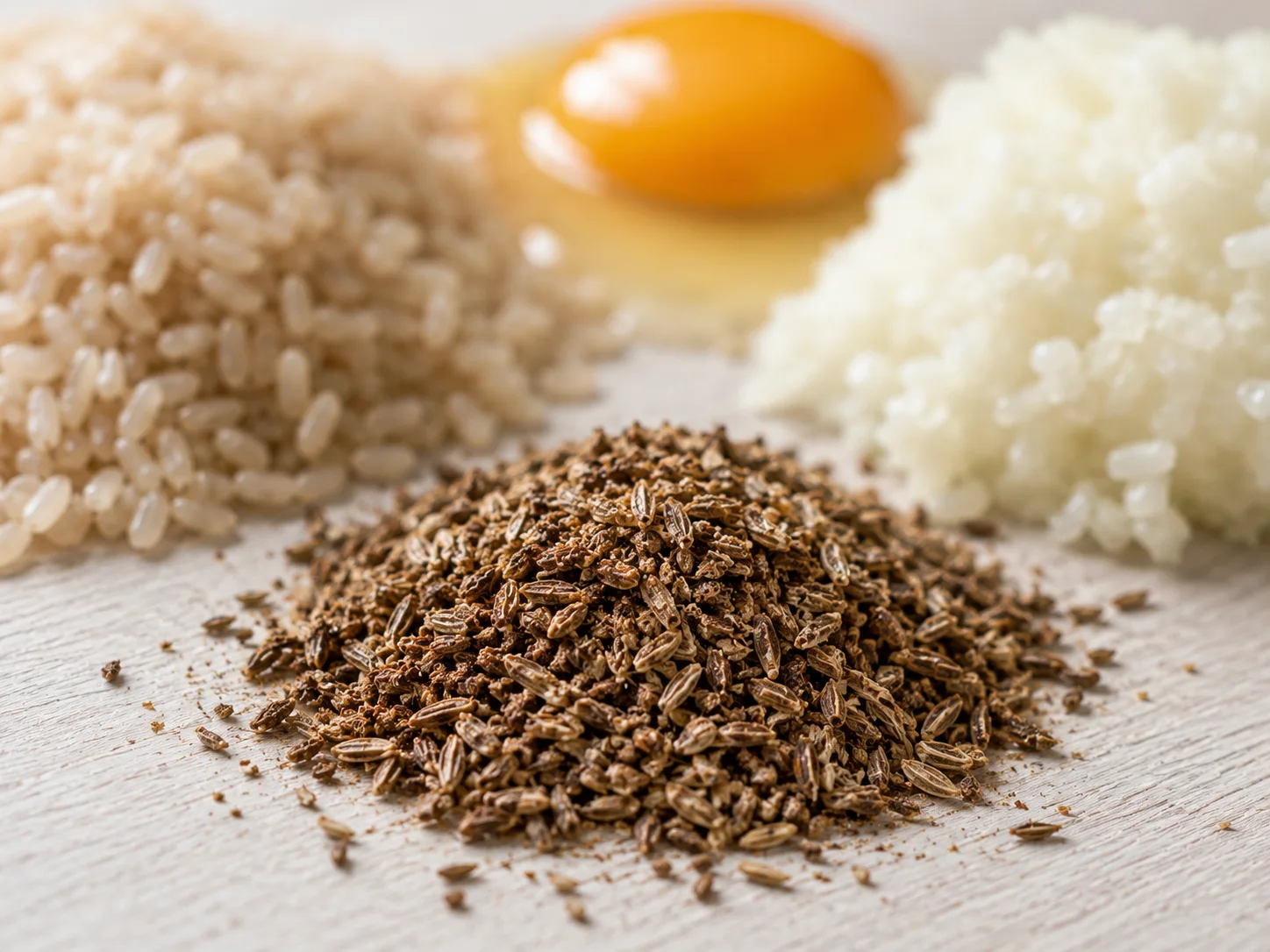
- 1 large head white cabbage (about 1.8–2kg / 4 lb)
For the Braise
- 700g (1.5 lb) potatoes, skin on, scrubbed and cut into large chunks
- 2 medium carrots, coarsely grated
- 1 medium onion, thinly sliced
- 500ml (2 cups) low-sodium chicken or beef stock
- 3 tbsp tomato paste
- 2 bay leaves
- ⅓ tsp salt, plus more to taste
- 3–4 tbsp plain, whole-milk Greek yogurt, plus extra to serve
- Fresh dill, to serve
- Juice of ½ lemon
Instructions
- Prepare the cabbage. Cut a deep cone around the core to loosen the leaves, then lower the whole head into a large pot of boiling water. As the outer leaves soften, after 2–3 minutes, peel them off with tongs and transfer to a colander. Keep rotating the head and removing leaves as they soften; 16–18 whole leaves are needed. Trim the thick central rib flat on each one so it rolls without cracking.
- Pre-cook the brown rice. Rinse the rice, then boil in salted water for about 15 minutes, still firm at the center, since brown rice needs longer than white to soften. Drain and rinse with cold water to stop the cooking; it finishes inside the roll during the long simmer.
- Make the filling. Combine the ground pork or poultry, pre-cooked brown rice, grated onion, egg, caraway seeds, salt, and pepper in a bowl. If using turkey or chicken, mix in 1 tbsp olive oil as well, since poultry has less natural fat to keep the filling moist through the long braise. Mix by hand until evenly combined. Fry a small test piece and taste before rolling, since this is the only chance to adjust the seasoning.
- Roll the balandėliai. Lay a cabbage leaf flat, inner side up, stem end toward you. Spoon 2–3 tablespoons of filling onto the lower third, fold the sides in, and roll from the stem end into a snug parcel. Patch any tears with a spare piece of leaf. No flour, no searing: the rolls go straight into the pot.
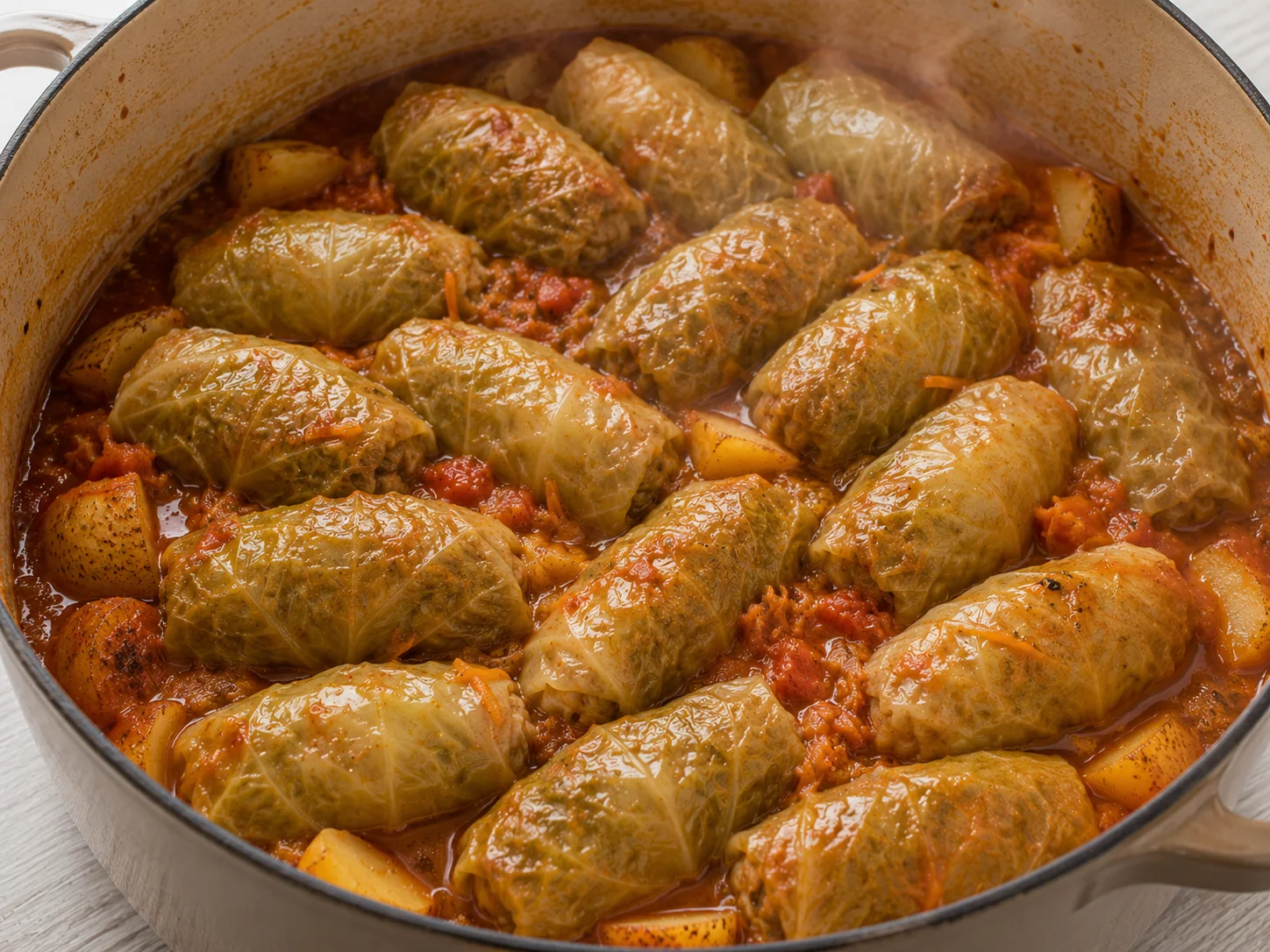
- Layer and cook. Scatter a third of the grated carrot and sliced onion across the bottom of a heavy pot. Arrange a layer of rolls, seam side down, filling any gaps with potato chunks. Repeat the layers, finishing with the remaining carrot and onion on top.
- Add the sauce. Whisk the stock and tomato paste together and pour over the rolls until they are about two-thirds submerged. Tuck in the bay leaves and season with the remaining salt. Bring to a boil, then reduce to a low simmer, cover, and cook for 55–70 minutes, until the potatoes are tender.
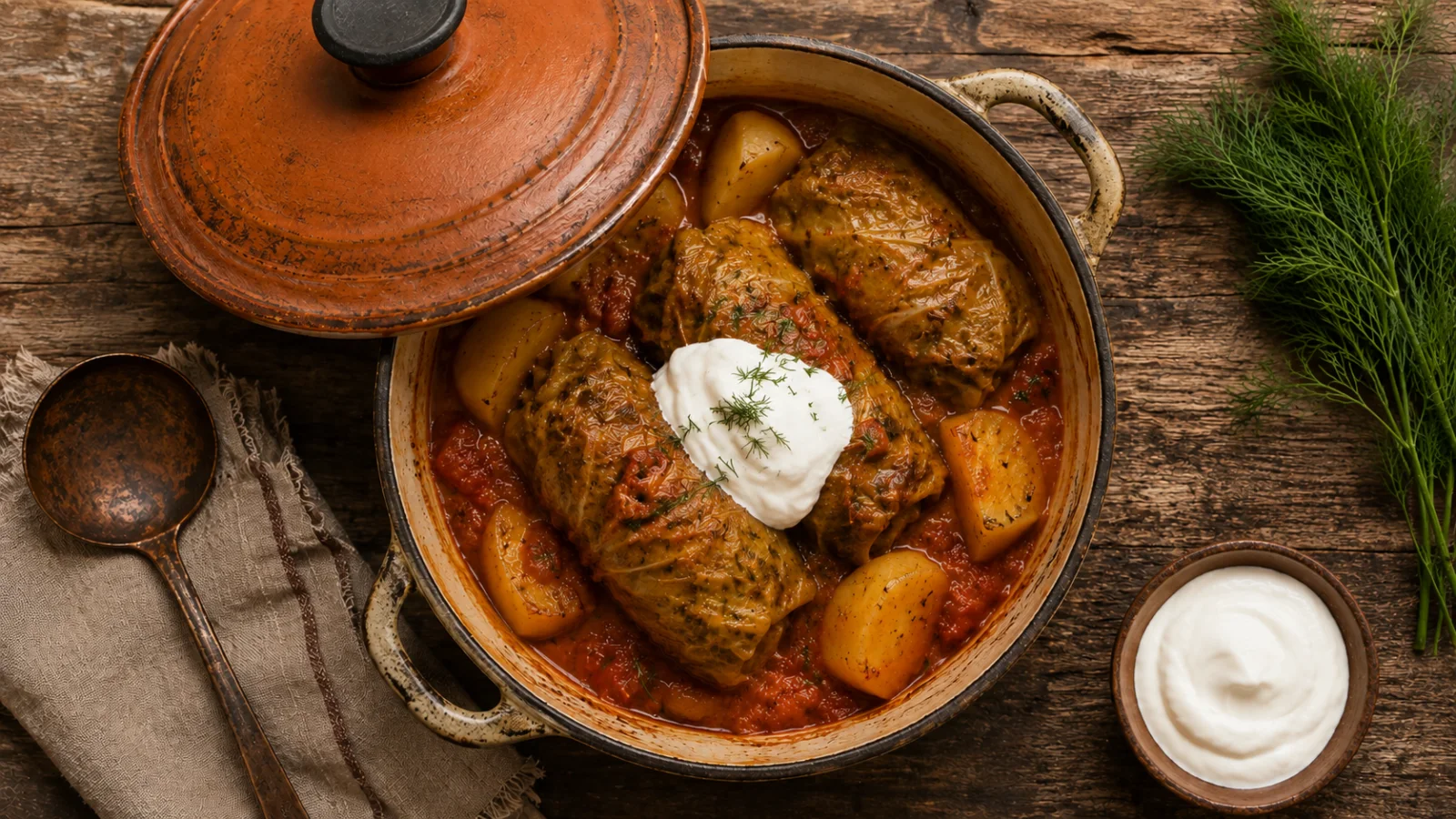
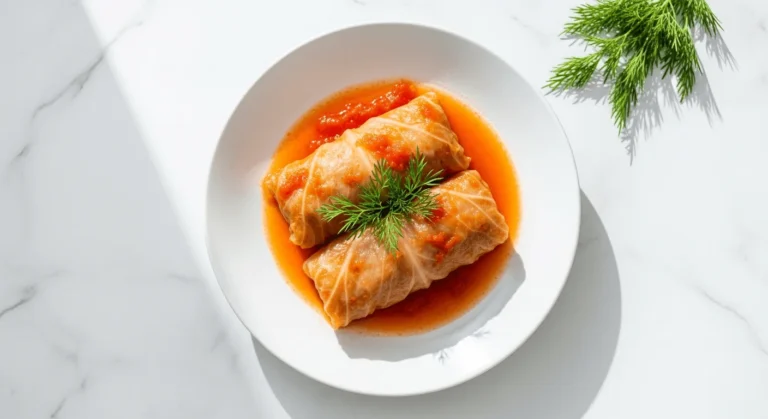
- Finish and serve. Off the heat, stir the Greek yogurt into a ladleful of the warm braising liquid to temper it, then stir that mixture back into the pot, which keeps the yogurt from splitting. Add the lemon juice, rest for 15 minutes, and serve two to three rolls per portion with the potatoes, a spoonful of sauce, extra yogurt, and dill.
Kitchen Tips
Choosing between pork and poultry is mostly a question of priorities. Ninety percent lean pork tastes closer to the traditional version and behaves the same way in the pot, while turkey or chicken cuts saturated fat much further but needs the tablespoon of olive oil noted in the recipe to avoid drying out over the long simmer.
Leave the potato skins on and just scrub them well. They hold their shape fine in the braise and add a little more fiber than peeled potatoes would.
The egg is doing real work in this filling regardless of which protein is used. Leaner meat has less fat to bind it together, so the egg matters more here than it does in the traditional version. Don’t leave it out.
Full-fat Greek yogurt curdles less than low-fat or nonfat versions when it meets heat. Tempering it with warm liquid first, as in the recipe above, is what actually prevents splitting, more than the fat content does.
Nutritional Comparison
Per serving of 2–3 rolls with potatoes and sauce (approximately 430g)
| Nutrient | Traditional | Lean Pork Version | Turkey/Chicken Version |
|---|---|---|---|
| Calories | 490–600 kcal | 375–460 kcal | 355–435 kcal |
| Protein | 22–27g | 27–33g | 24–30g |
| Total Fat | 26–32g | 12–15g | 11–14g |
| Saturated Fat | 9–11g | 4–5g | 3–4g |
| Carbohydrates | 42–52g | 40–49g | 40–49g |
| Dietary Fiber | 5–6g | 5–7g | 5–7g |
| Sodium | 770–945mg | 515–630mg | 520–635mg |
All three columns are independently calculated estimates based on standard ingredient databases, divided across 6 servings. The turkey/chicken column includes the tablespoon of olive oil the recipe adds to that variant for moisture.
Actual values vary with the specific cut and brand of meat, the brand of yogurt, and how much sauce ends up in each portion. Lean ground pork is sold under varying fat percentages depending on the butcher or brand, so the pork column carries more real-world variation than the turkey column.
Both protein choices cut fat and saturated fat well below the traditional recipe. The turkey or chicken option still comes out lower in saturated fat than the pork option, even with the added olive oil counted in, since poultry itself starts with so little fat that there is room for the oil without erasing the advantage.
The missing searing oil and the smaller amount of added salt account for the remaining gap in fat and sodium in both versions. Protein goes up rather than down in either case, since both alternatives carry more protein per gram of fat than standard ground pork.
Storage and Reheating
Cooked rolls keep in the refrigerator for 4–5 days in a sealed container with the sauce and potatoes. Reheat gently in a covered pot on the stove, or in the oven at 160°C (325°F) for 20–25 minutes.
Uncooked, assembled rolls freeze well for up to 3 months. Arrange them in a single layer until solid, then transfer to a container; cook from frozen, adding 20–30 minutes to the simmer time.
If freezing cooked portions, add the yogurt fresh after reheating rather than freezing it in the sauce, since it separates less that way.
Healthy Balandėliai

Ingredients
Ingredients (Serves 6, About 16–18 Rolls)
- 600g (1.3 lb) lean ground pork (90% lean or leaner), or lean ground turkey or chicken breast (93% lean or leaner) for a lighter option (see Kitchen Tips)
- 100g (½ cup) brown rice, uncooked
- 1 large onion, finely grated
- 1 large egg
- 1 tsp caraway seeds, lightly toasted and crushed
- ⅔ tsp salt
- ¼ tsp black pepper
For Rolling
- 1 large head white cabbage (about 1.8–2kg / 4 lb)
For the Braise
- 700g (1.5 lb) potatoes, skin on, scrubbed and cut into large chunks
- 2 medium carrots, coarsely grated
- 1 medium onion, thinly sliced
- 500ml (2 cups) low-sodium chicken or beef stock
- 3 tbsp tomato paste
- 2 bay leaves
- ⅓ tsp salt, plus more to taste
- 3–4 tbsp plain, whole-milk Greek yogurt, plus extra to serve
- Fresh dill, to serve
- Juice of ½ lemon
Instructions
- Prepare the cabbage. Cut a deep cone around the core to loosen the leaves, then lower the whole head into a large pot of boiling water. As the outer leaves soften, after 2–3 minutes, peel them off with tongs and transfer to a colander. Keep rotating the head and removing leaves as they soften; 16–18 whole leaves are needed. Trim the thick central rib flat on each one so it rolls without cracking.
- Pre-cook the brown rice. Rinse the rice, then boil in salted water for about 15 minutes, still firm at the center, since brown rice needs longer than white to soften. Drain and rinse with cold water to stop the cooking; it finishes inside the roll during the long simmer.
- Make the filling. Combine the ground pork or poultry, pre-cooked brown rice, grated onion, egg, caraway seeds, salt, and pepper in a bowl. If using turkey or chicken, mix in 1 tbsp olive oil as well, since poultry has less natural fat to keep the filling moist through the long braise. Mix by hand until evenly combined. Fry a small test piece and taste before rolling, since this is the only chance to adjust the seasoning.
- Roll the balandėliai. Lay a cabbage leaf flat, inner side up, stem end toward you. Spoon 2–3 tablespoons of filling onto the lower third, fold the sides in, and roll from the stem end into a snug parcel. Patch any tears with a spare piece of leaf. No flour, no searing: the rolls go straight into the pot.
- Layer and cook. Scatter a third of the grated carrot and sliced onion across the bottom of a heavy pot. Arrange a layer of rolls, seam side down, filling any gaps with potato chunks. Repeat the layers, finishing with the remaining carrot and onion on top.
- Add the sauce. Whisk the stock and tomato paste together and pour over the rolls until they are about two-thirds submerged. Tuck in the bay leaves and season with the remaining salt. Bring to a boil, then reduce to a low simmer, cover, and cook for 55–70 minutes, until the potatoes are tender.
- Finish and serve. Off the heat, stir the Greek yogurt into a ladleful of the warm braising liquid to temper it, then stir that mixture back into the pot, which keeps the yogurt from splitting. Add the lemon juice, rest for 15 minutes, and serve two to three rolls per portion with the potatoes, a spoonful of sauce, extra yogurt, and dill.
Frequently Asked Questions
Should I choose the pork or the turkey/chicken option?
It depends on the priority. Lean pork stays closer to the traditional taste and texture with a meaningful fat reduction; turkey or chicken cuts saturated fat much further but drifts a bit further from the original flavor. Neither is more “correct” than the other.
Will the leaner filling turn out dry?
Not with the egg and the rice both doing their part to hold moisture in, and with the added olive oil if using turkey or chicken. The bigger risk is overcooking the rolls past the 70-minute mark, not the leanness of the protein itself.
Does brown rice change the texture much?
It’s slightly chewier than white rice, but inside a rolled cabbage leaf and braised for over an hour, the difference is subtle. Most people notice the flavor more than the texture.
Is it really fine to skip the searing step?
Yes. Many traditional households already skip it, since it’s an optional step rather than a defining one. This version simply treats “optional” as “not included” by default.
Won’t the Greek yogurt curdle in the hot sauce?
It can, if stirred in straight from the fridge over direct heat. Tempering it with a ladleful of the warm braising liquid first, then off the heat, keeps it smooth.
How much saturated fat does this version actually save?
About half with the lean pork option, or roughly two-thirds with turkey or chicken even counting the added olive oil, mainly from the leaner protein and the missing searing oil. Neither is a low-fat dish, but both use noticeably less of the day’s saturated fat allowance than the traditional version.
Can this version be frozen the same way as the traditional recipe?
Yes, raw rolls freeze the same way regardless of which filling they carry. The only difference is on the finishing end: add the yogurt after reheating rather than freezing it in the sauce.
Is it very different in taste from the traditional version?
With the lean pork option, close but not identical. With turkey or chicken, a bit further still, since poultry has a milder flavor than pork. Brown rice adds a slightly nuttier note and Greek yogurt is tangier than sour cream in both cases.
The missing sear also means a slightly thinner sauce either way. Most people who know the traditional dish will still recognize this one immediately.
Looking for the Traditional Version?
This recipe keeps the shape and the pot but trims the fat and salt throughout. For the full story behind balandėliai, including the unexplained name and the dish’s history in Lithuania, the Traditional Balandėliai article on this site covers that ground.
Further Reading & Sources
The following sources support the health claims behind each swap in this recipe. Heritage Healthy Kitchen’s recipe was developed independently; these links are provided for readers who want to explore the underlying research.
- “Healthy Eating Plate.” The Nutrition Source, Harvard T.H. Chan School of Public Health. nutritionsource.hsph.harvard.edu — the recommendation to choose fish, poultry, beans, and nuts as protein sources while limiting red meat.
- “Brown rice versus white rice: A head-to-head comparison.” Harvard Health Publishing. health.harvard.edu — the fiber and glycemic index differences between brown and white rice.
- “Saturated Fats.” American Heart Association. heart.org — the recommendation to prepare meat without added saturated or trans fat, and the daily limit of about 13 grams of saturated fat.
- “Yogurt.” The Nutrition Source, Harvard T.H. Chan School of Public Health. nutritionsource.hsph.harvard.edu — the recommendation to substitute plain yogurt for sour cream in recipes.
- “Greek yogurt: Health benefits, protein content, and how to choose the best option.” Harvard Health Publishing. health.harvard.edu — the protein and calorie comparison between Greek and regular yogurt.
- “Take Action: How to Reduce Your Sodium Intake.” The Nutrition Source, Harvard T.H. Chan School of Public Health. nutritionsource.hsph.harvard.edu — the finding that salt reductions of up to 30% typically go unnoticed, and the use of citrus to offset reduced sodium.
Disclaimer
The information in this article is provided for educational and informational purposes only. Heritage Healthy Kitchen makes no representations or warranties regarding the accuracy or completeness of any content on this site. Nutritional values are estimates only and will vary depending on the specific ingredients, brands, and measurements used. This content is not intended as dietary, medical, or professional nutritional advice. Always consult a qualified healthcare provider regarding any dietary needs or health conditions. Heritage Healthy Kitchen is not responsible for any outcomes resulting from the use of recipes or information published on this site.
You Might Also Like
More heritage recipes from our kitchen


Leave a Reply