

Part of our Heritage Kitchen Glossary – short guides to the dishes, ingredients and techniques of Eastern European cooking.
Ask for a potato pancake in Warsaw, Kyiv and a Jewish home in either city, and you will get three different answers that look almost the same on the plate: placki ziemniaczane, deruny, and latkes. All three are shredded potato bound with egg and fried in hot fat. The differences are small, real, and tell you a great deal about who was cooking and when.
The three cousins at a glance
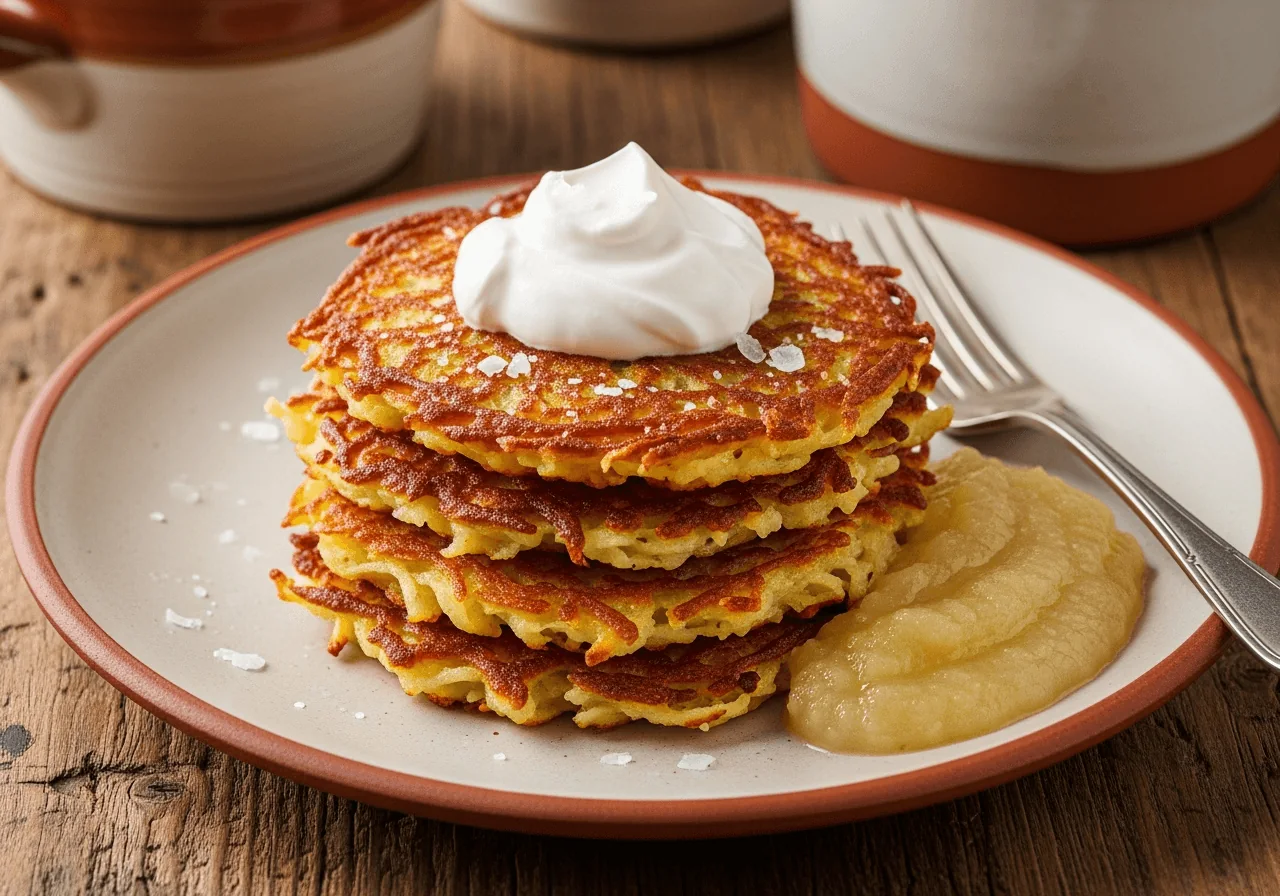
Latkes are the Ashkenazi Jewish version, tied to Hanukkah, where frying in oil is the whole point of the holiday. Matzo meal often stands in for flour, keeping the recipe kosher for Passover as well, and the traditional frying fat was schmaltz. Latkes are usually smaller, with deliberately lacy, crisp edges, served with sour cream or apple sauce.
Placki ziemniaczane are the Polish everyday version – larger, flatter, bound with flour, fried in oil or lard, eaten as a full meal rather than a holiday side. Classic toppings run from sour cream and sugar to goulash draped over the top in the mountain south.
Deruny are the Ukrainian cousin, closest to placki in size and role, but the batter often includes onion grated straight into the potato and sometimes a spoon of kefir or smetana, giving a slightly tangier, softer interior. They are eaten at breakfast and are a staple of Polissia cooking.
Same village, different tables
These recipes did not travel between countries – they grew up in the same places. Jewish, Polish and Ukrainian families lived in the same towns for centuries, shopped the same markets, and fried the same potatoes. What separated the recipes was the calendar and the pantry: kosher law shaped the fat and the flour on the Jewish table, while the Christian tables next door reached for lard and wheat. The potato pancake is less a national dish than a shared regional language with three accents.
Which one should you cook?
For a Hanukkah table or anything kosher-adjacent, latkes – and there is a lighter air-fryer version that keeps the crisp. For a hearty lunch that eats like a meal, placki ziemniaczane (lighter version here). For breakfast with sour cream the way half of Ukraine eats it, deruny (lighter version here). You cannot really go wrong: it is potato, onion and hot fat, perfected three ways.
Further Reading & Sources
This entry draws on the sources below and on the recipes it links to elsewhere on this site. They are listed for readers who want to go further.
- “The Modern Potato Latke Was Not Inevitable.” Smithsonian Center for Folklife and Cultural Heritage. folklife.si.edu — why the potato won, and what was fried before it.
- “The Real History of Potato Latkes Will Surprise You.” My Jewish Learning. myjewishlearning.com — the cheese pancake that came first.
- “10 Latke Facts Every Jew Should Know.” Chabad.org. chabad.org — the Hanukkah oil connection and the sour cream question.
- “Deruny.” Authentic Ukraine. authenticukraine.com.ua — the Ukrainian potato pancake and its regional names.
Leave a Reply