
Active time: ~30 minutes | Total time: ~40 minutes | Serves: 4 (about 14–16 pancakes) | Difficulty: Easy
Quick Overview
- Grate the potatoes and onion together into a large bowl
- Squeeze out the excess liquid, letting the starch settle before pouring off the watery part
- Mix the squeezed potato and onion with egg, flour, salt, and pepper
- Fry spoonfuls in hot oil until deep golden on both sides, about 3 minutes per side
- Drain briefly and serve immediately with a generous spoon of sour cream
What Bulviniai Blynai Is
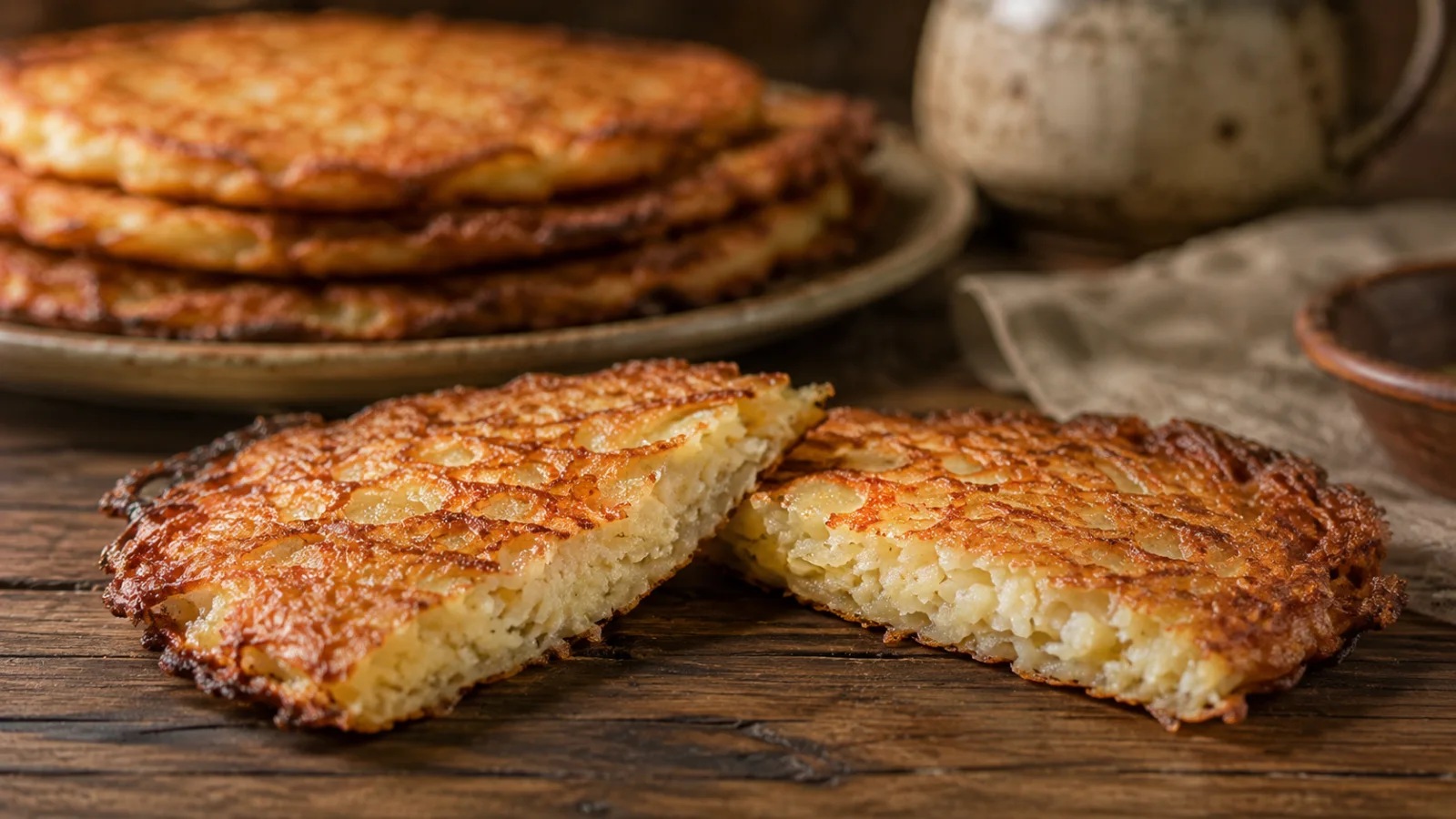
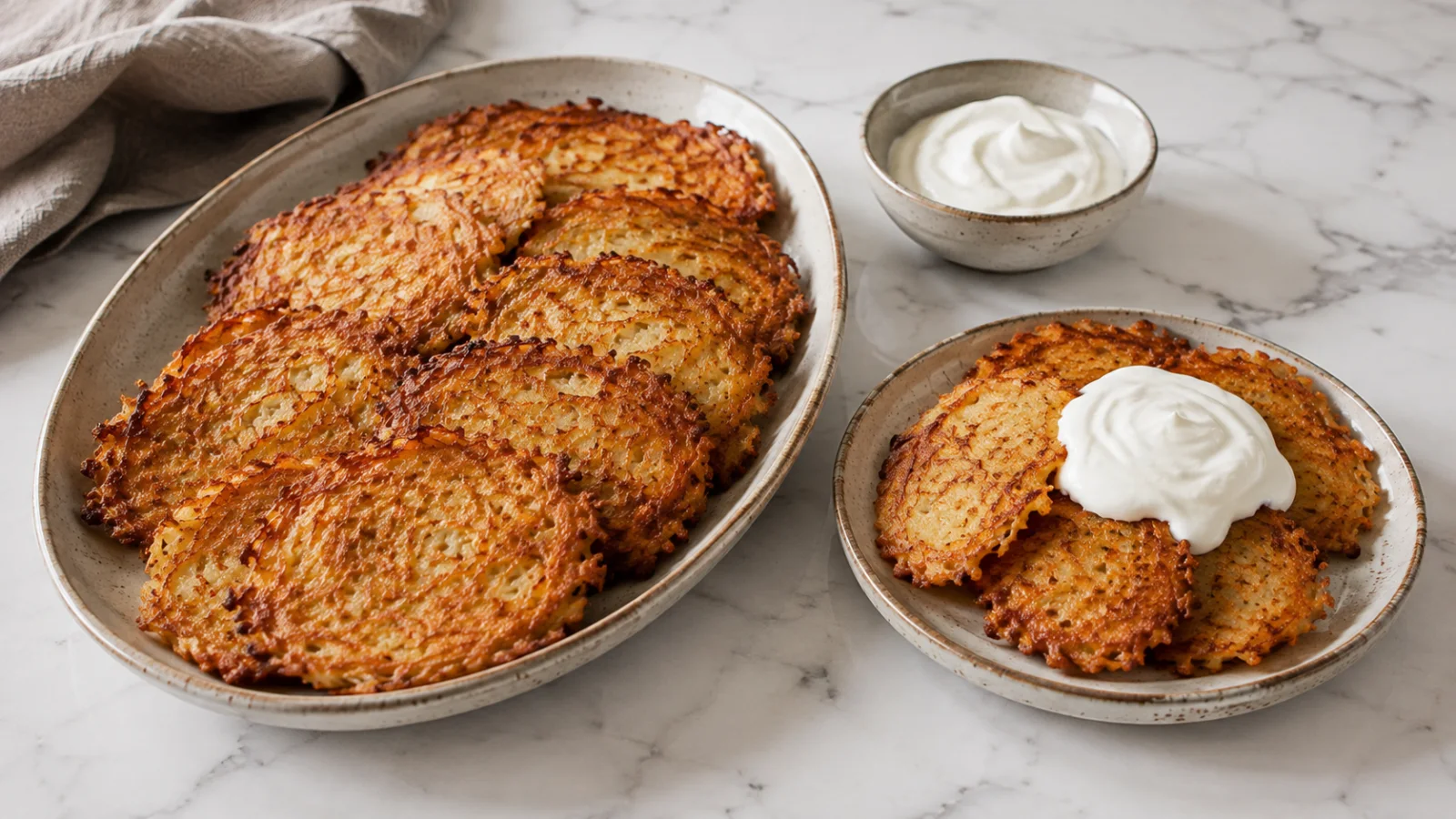
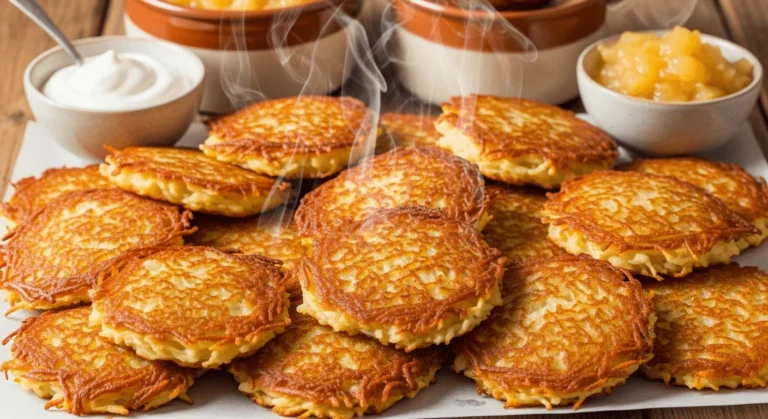
Bulviniai blynai are Lithuania’s grated potato pancakes: raw potato and onion, bound with egg and a little flour, fried until the edges turn dark gold and crisp. The name is about as literal as food names get — bulvė is potato, blynas (plural blynai) is pancake, and “bulviniai blynai” translates directly as “potato pancakes.”3 No filling, no meat, nothing hidden inside; the potato itself is the point.
Lithuania has two close relatives of this dish that are easy to confuse with it. Samogitian pancakes, žemaičių blynai, use mashed potato worked into a batter with ground meat, then fried — a heartier, filled dish named for the country’s northwestern Samogitia region.2,3 Kėdainių blynai, another regional relative, use grated rather than mashed potato but still fold in a meat filling.3 Bulviniai blynai stay simpler than either: raw grated potato, no meat, no filling.2
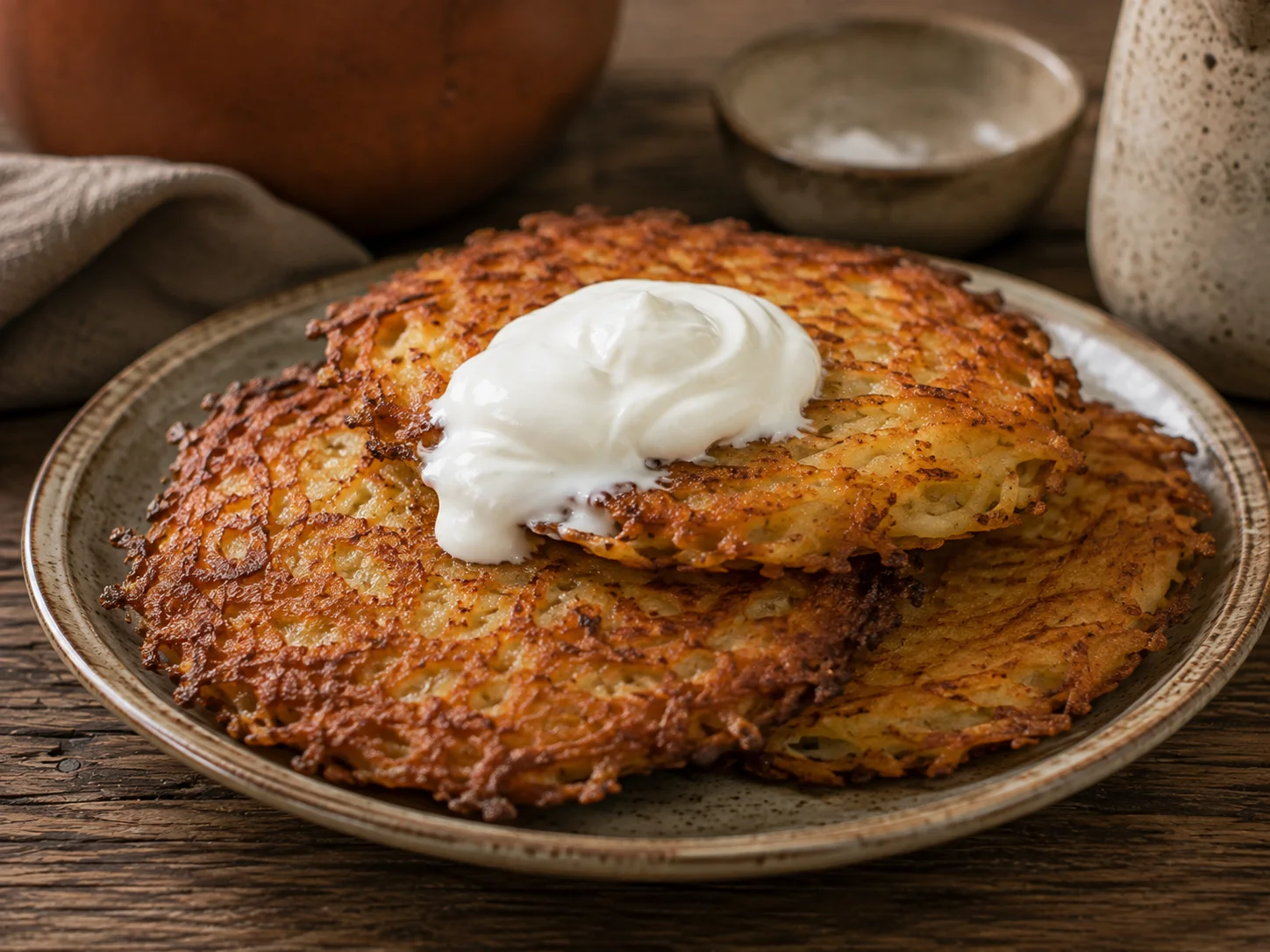
Sour cream is the standard topping, though it isn’t the only one. A curd cheese dip shows up almost as often, and on a table without either, a glass of kefir or soured milk does the job instead.3 Crispy bacon bits or a fillet of smoked salmon on top turn the same pancakes into a heartier plate, closer to a main course than a side.3
History and Cultural Roots
The potato arrived in Lithuania long before it became Lithuanian food. The earliest confirmed record is a Vilnius garden: in 1640, the magnate Kiszka family grew “bulbos americanos” alongside melons and figs, a curiosity for the wealthy rather than something anyone ate as a staple.1 For more than a century afterward, potatoes stayed a rarity. Peasants were openly suspicious of them — some believed they caused fever, and the largely Catholic countryside treated the crop as something close to a Protestant import to be avoided.1 Even at the close of the 18th century, potatoes covered less than half a percent of the country’s farmed land.1
That changed through the 19th century, as potatoes proved more reliable than grain when the weather turned bad, and mass cultivation finally took hold at scale.1 Once the potato was genuinely everywhere, grating it raw and frying it in a pan was one of the simplest ways to turn a basic, cheap staple into a hot meal — no oven, no lengthy prep, nothing beyond what a rural kitchen already had on hand. Unlike cepelinai or kugelis, bulviniai blynai never picked up a single documented origin story or inventor; the dish is really just the potato’s own adoption into Lithuanian cooking, worn down into its plainest, fastest form.
Pancakes of every kind get their biggest annual moment at Užgavėnės, Lithuania’s pre-Lenten festival held on Shrove Tuesday — official tourism materials describe it outright as the country’s own “Pancake Day.”6 The day is built around driving out winter: an effigy called Morė is burned, and a mock duel plays out between costumed figures representing Lašininis, “porky lad,” who stands for winter, and Kanapinis, the “hempen man,” who stands for spring.6 Bulviniai blynai are one of several kinds of pancake eaten on the day, alongside sweeter and meat-filled versions.2 The word itself sits inside a much older family: etymologists trace Lithuanian blynas to the same root as the Slavic blin, a connection documented across Russian, Polish, and other regional languages as well as Latvian and Lithuanian.5
Traditional Recipe
This recipe was developed independently by Heritage Healthy Kitchen; the sources cited throughout are for further reading on the dish’s history and background, not the basis of the recipe itself.
Ingredients (Serves 4, About 14–16 Pancakes)
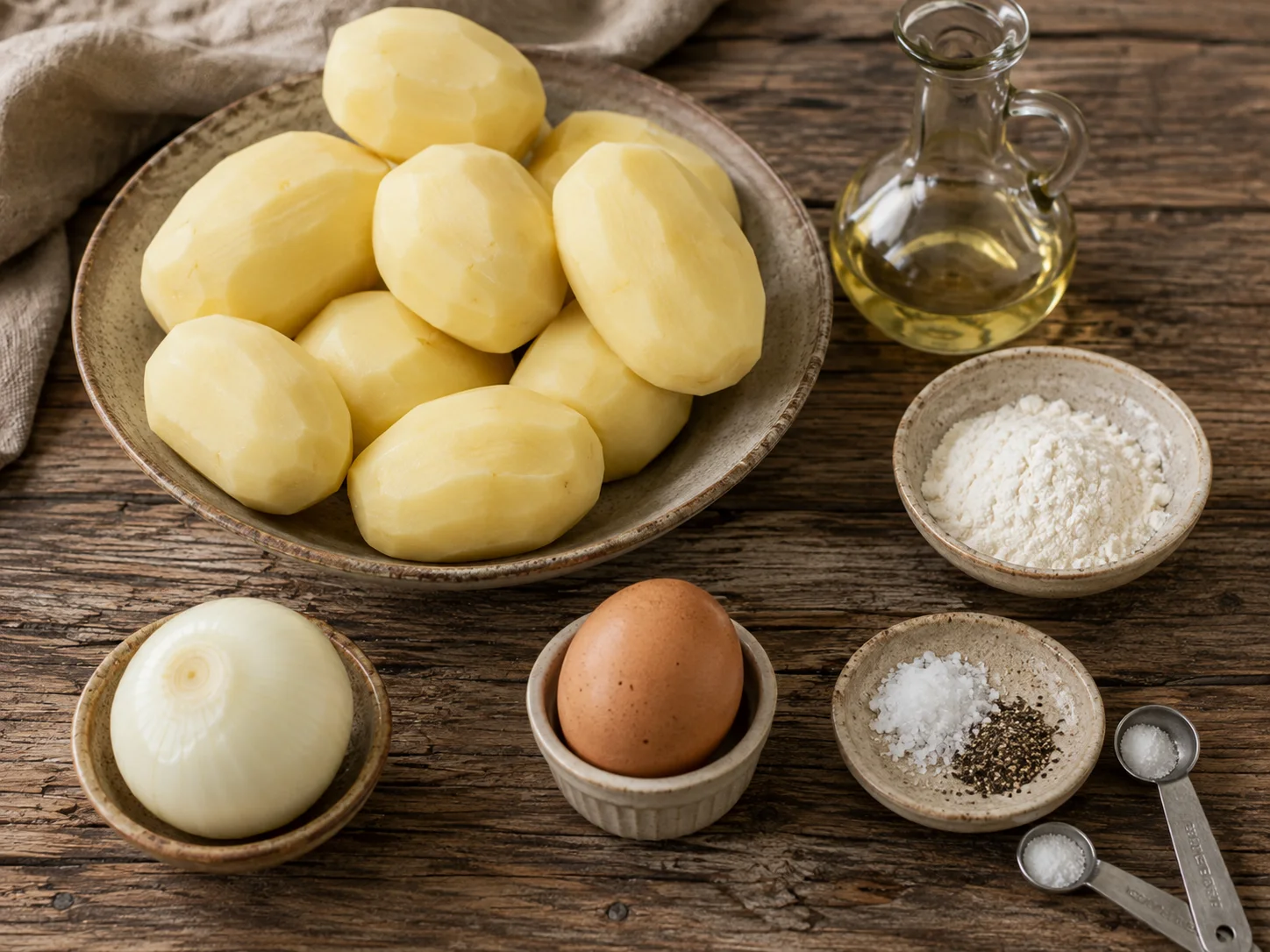
- 1 kg (2.2 lb) starchy potatoes, such as russet or Maris Piper, peeled
- 1 medium onion, peeled
- 1 large egg
- 2 tbsp all-purpose flour, optional, for extra binding
- 1 tsp salt, plus more to taste
- 1/4 tsp black pepper
- Neutral oil, such as sunflower or vegetable, for frying
- Sour cream, to serve
Instructions
- Grate the potatoes and onion. Working over a large bowl, grate the potatoes and onion on the fine or medium holes of a box grater, alternating between the two as you go. The onion’s juice slows down how quickly the grated potato turns gray.
- Squeeze out the liquid, but keep the starch. Gather the grated mixture into a clean kitchen towel or a double layer of cheesecloth and wring out as much liquid as possible over a bowl. Let that liquid sit for a minute or two so the starch settles at the bottom, then carefully pour off the watery part on top and keep the starch.
- Mix the batter. Return the squeezed potato and onion to the bowl with the reserved starch. Add the egg, flour, salt, and pepper, and mix until evenly combined.
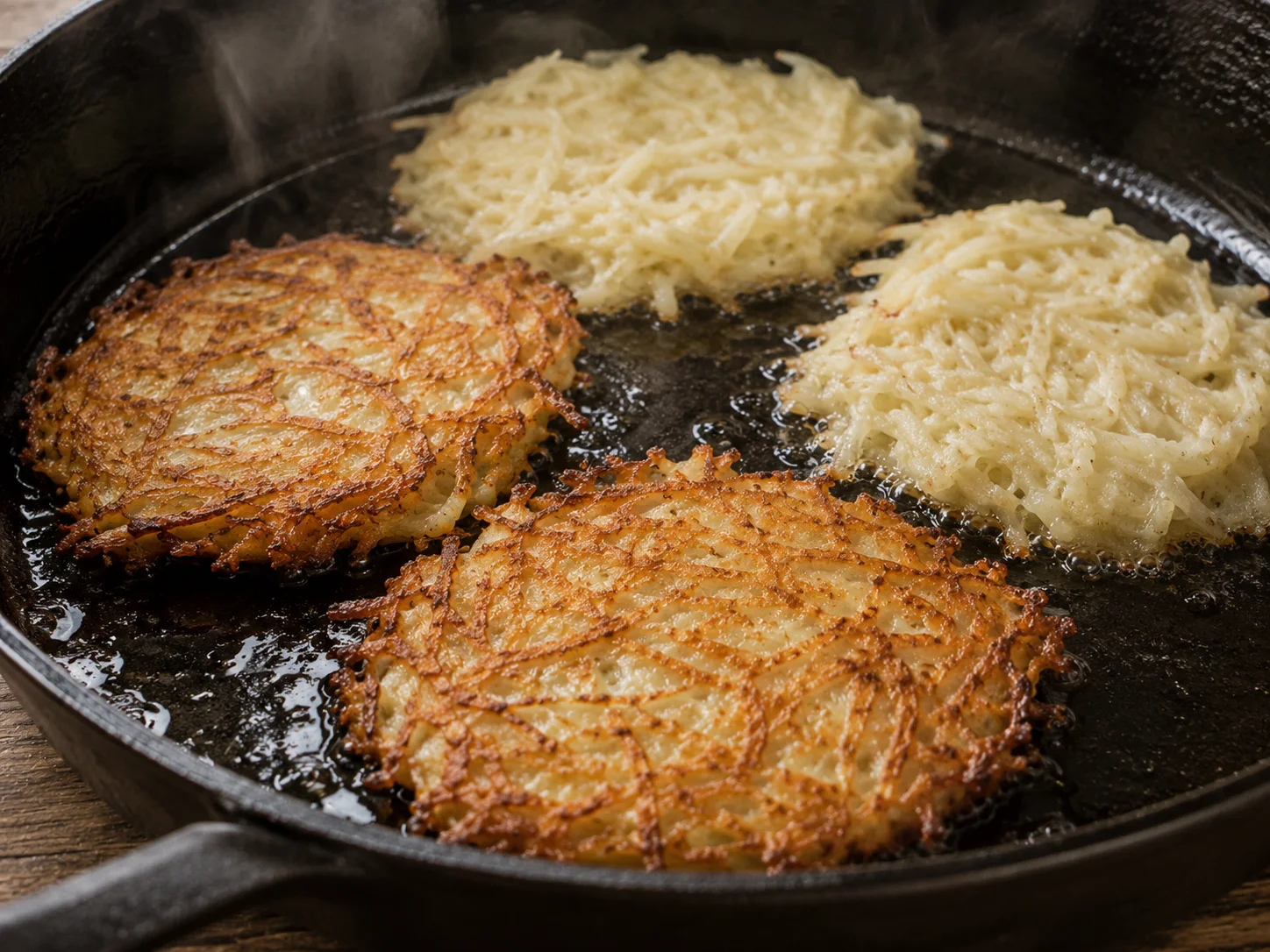
- Fry. Heat a generous layer of oil in a large skillet over medium-high heat. Drop heaping spoonfuls of the mixture into the pan, flattening each one slightly, and fry undisturbed until deep golden on the base, about 3 minutes. Flip and fry the second side the same way.
- Drain and serve. Transfer the finished pancakes to a plate lined with paper towels, sprinkle with a little extra salt if desired, and serve right away with a generous spoon of sour cream.
Kitchen Tips
Starchy, high-starch potato varieties give the crispest result, since their lower water content lets the edges brown properly instead of steaming in the pan.7 Yukon Gold is the standard recommendation in the US, Russet potatoes work nearly as well, and Butter Gold potatoes are the usual choice in the UK.3
Grated potato oxidizes fast, turning gray within minutes of contact with air. Working quickly from grating straight through to frying keeps the color and the flavor cleaner; a small squeeze of lemon juice into the bowl slows the browning further if there’s any delay.3,4
Don’t skip letting the squeezed-out liquid settle before pouring it away. The starch that collects at the bottom of the bowl does real work holding the pancakes together and helping them crisp, and it’s easy to lose by mistake if the liquid gets poured off too quickly.
Keep the oil at a steady medium-high heat rather than adjusting it up and down between batches. Oil that’s too cool gets absorbed into the batter instead of crisping it, leaving the pancakes greasy rather than golden.
Beyond sour cream, a curd cheese dip, a scattering of crispy bacon, or a piece of smoked salmon all make traditional, well-attested toppings.3 Any of them turns the same base recipe into a different plate.
Skip any potato with a greenish tinge under the skin. That color signals solanine, a natural plant compound that can cause digestive upset in larger amounts.7
Nutritional Information
Per Serving (About 3–4 Pancakes With 2 Tbsp Sour Cream, 1 of 4 Servings)
- Calories: approximately 330–400 kcal
- Protein: approximately 7–9g
- Total fat: approximately 14–17g
- Saturated fat: approximately 4–5g
- Carbohydrates: approximately 45–54g
- Dietary fiber: approximately 5–6g
- Sodium: approximately 570–700mg
- Potassium: approximately 930–1,140mg
Nutritional values are estimates calculated from the specific ingredient quantities in this recipe, using standard reference values. They will vary depending on the exact potato variety, how much oil the pancakes absorb during frying, and the size of the sour cream serving.
Most of the fat in this dish comes from the frying oil rather than the potato itself, which is naturally close to fat-free.7 The saturated fat above sits at roughly a third of the American Heart Association’s suggested daily limit of about 13 grams, mostly contributed by the sour cream rather than the pancakes.8 On the other side of the ledger, potatoes carry a genuinely useful amount of potassium, and this recipe’s onion and flour add small amounts of fiber and protein on top of what the potato itself provides.7
Storage and Reheating
Store leftover pancakes in an airtight container in the refrigerator for up to 3 days.
Reheat in a dry skillet over medium heat, or in a 190°C (375°F) oven for about 10 minutes, until hot and crisp again. A microwave will warm them through but leaves the edges soft rather than crackling.
Raw batter doesn’t hold well, since the grated potato continues releasing water the longer it sits. Cooked pancakes freeze acceptably for up to 2 months; reheat directly from frozen in a hot oven rather than thawing first.
Traditional Lithuanian Bulviniai Blynai

Ingredients
Ingredients (Serves 4, About 14–16 Pancakes)
- 1 kg (2.2 lb) starchy potatoes, such as russet or Maris Piper, peeled
- 1 medium onion, peeled
- 1 large egg
- 2 tbsp all-purpose flour, optional, for extra binding
- 1 tsp salt, plus more to taste
- 1/4 tsp black pepper
- Neutral oil, such as sunflower or vegetable, for frying
- Sour cream, to serve
Instructions
- Grate the potatoes and onion. Working over a large bowl, grate the potatoes and onion on the fine or medium holes of a box grater, alternating between the two as you go. The onion’s juice slows down how quickly the grated potato turns gray.
- Squeeze out the liquid, but keep the starch. Gather the grated mixture into a clean kitchen towel or a double layer of cheesecloth and wring out as much liquid as possible over a bowl. Let that liquid sit for a minute or two so the starch settles at the bottom, then carefully pour off the watery part on top and keep the starch.
- Mix the batter. Return the squeezed potato and onion to the bowl with the reserved starch. Add the egg, flour, salt, and pepper, and mix until evenly combined.
- Fry. Heat a generous layer of oil in a large skillet over medium-high heat. Drop heaping spoonfuls of the mixture into the pan, flattening each one slightly, and fry undisturbed until deep golden on the base, about 3 minutes. Flip and fry the second side the same way.
- Drain and serve. Transfer the finished pancakes to a plate lined with paper towels, sprinkle with a little extra salt if desired, and serve right away with a generous spoon of sour cream.
Frequently Asked Questions
What’s the difference between bulviniai blynai and Samogitian pancakes?
The potato, mainly. Bulviniai blynai use raw grated potato with no filling. Samogitian pancakes, žemaičių blynai, start from mashed potato worked into a batter with ground meat.2,3 They look similar on a plate but come from a different base and a different region.
Can the onion be left out?
Yes, and some households do exactly that, keeping the recipe down to potato, egg, and salt. The onion adds flavor and slows down browning, but it isn’t essential to the dish.
Why do my pancakes turn gray or fall apart in the pan?
Gray color is oxidation from grated potato sitting too long before frying; work quickly and a splash of lemon juice helps.3 Falling apart usually means too much moisture was left in the batter, so squeeze the grated mixture harder than feels necessary and don’t skip reserving the starch.
Is this the same dish as latkes or Polish placki ziemniaczane?
Closely related, not identical. All three are grated raw potato bound with egg and fried, and each cuisine developed its own version independently rather than one being copied from another. The differences come down to seasoning habits, typical toppings, and the occasions each dish is associated with.
What’s traditionally served alongside these pancakes?
Sour cream is the everyday default. A curd cheese dip is nearly as common, and on the occasions they’re treated as a heartier main course, crispy bacon or smoked salmon are traditional additions on top.3
Can they be made ahead?
Not really, in raw form — the batter loses quality quickly as the potato releases water. Frying the full batch just before serving and reheating any leftovers is the more reliable approach than trying to prep the batter in advance.
Why are pancakes such a big part of Užgavėnės?
Užgavėnės is Lithuania’s pre-Lenten festival, held on Shrove Tuesday and marketed in official tourism materials as the country’s own Pancake Day.6 Bulviniai blynai are one of several traditional pancakes eaten on the holiday, though they’re just as much a year-round dish as a seasonal one.2
Looking for a Lighter Version?
Traditional bulviniai blynai are fried in a generous amount of oil, which is a real part of what gives them their crisp, golden edge. A lighter version is possible without losing too much of that character — the Healthy Bulviniai Blynai article on this site covers baking and pan-searing with less oil, ways to work extra vegetables into the batter, and lower-sodium adjustments for the topping.
Further Reading & Sources
The following sources were consulted in researching the history, technique, and cultural background of traditional bulviniai blynai. Heritage Healthy Kitchen’s recipe was developed independently; these links are provided for readers who want to explore further.
- “When did potatoes come to Lithuania?” LRT (Lithuanian National Radio and Television), part of the Orbis Lituaniae project by Vilnius University. lrt.lt/en/news-in-english — the 1640 Kiszka family garden record, peasant suspicion of the crop, and the slow spread of potatoes to widespread cultivation by the mid-19th century.
- “Lithuanian Cuisine.” True Lithuania, Augustinas Žemaitis. truelithuania.com — the distinction between vegetarian potato pancakes and meat-filled Samogitian pancakes, and the range of pancake styles eaten in Lithuania.
- “Lithuanian Potato Pancakes (Traditional Bulviniai Blynai).” Taste of Lithuania, Ieva. tasteoflithuania.com — literal translation of the name, potato variety recommendations, serving traditions, and the distinction from Kėdainių blynai.
- “Bulviniai Blynai.” TasteAtlas. tasteatlas.com — general recipe composition, including the optional use of lemon juice to prevent browning.
- “Blini.” Wikipedia. en.wikipedia.org/wiki/Blini — the shared linguistic root of Lithuanian blynas with the Slavic blin family, as documented in Max Vasmer’s Etymological Dictionary of the Russian Language.
- “Užgavėnės: Lithuanian Pancake Day.” Lithuania Travel, official state tourism board. lithuania.travel — description of the Užgavėnės festival, the Morė effigy, and the Lašininis–Kanapinis duel.
- “Are Potatoes Healthy?” The Nutrition Source, Harvard T.H. Chan School of Public Health. nutritionsource.hsph.harvard.edu/potatoes — potassium content of potatoes, fat content of fresh potatoes versus fried preparations, starchy versus waxy varieties, and guidance on solanine in green-tinged potatoes.
- “Saturated Fats.” American Heart Association. heart.org — recommended daily limit for saturated fat intake.
Disclaimer
The information in this article is provided for educational and informational purposes only. Heritage Healthy Kitchen makes no representations or warranties regarding the accuracy or completeness of any content on this site. Nutritional values are estimates only and will vary depending on the specific ingredients, brands, and measurements used. This content is not intended as dietary, medical, or professional nutritional advice. Always consult a qualified healthcare provider regarding any dietary needs or health conditions. Heritage Healthy Kitchen is not responsible for any outcomes resulting from the use of recipes or information published on this site.
You Might Also Like
More heritage recipes from our kitchen


Leave a Reply