

Part of our Heritage Kitchen Glossary – short guides to the dishes, ingredients and techniques of Eastern European cooking.
Put a plate of pierogi, a bowl of varenyky, and a ladle of barszcz with uszka floating in it on the same table, and a stranger to the region could be forgiven for thinking they’re looking at one dish shot three times. All three start from the same idea: unleavened dough, a filling, a pot of boiling water. What actually separates them is size, shape, what goes inside, and the job each one has to do once it’s on the table.
The three cousins at a glance
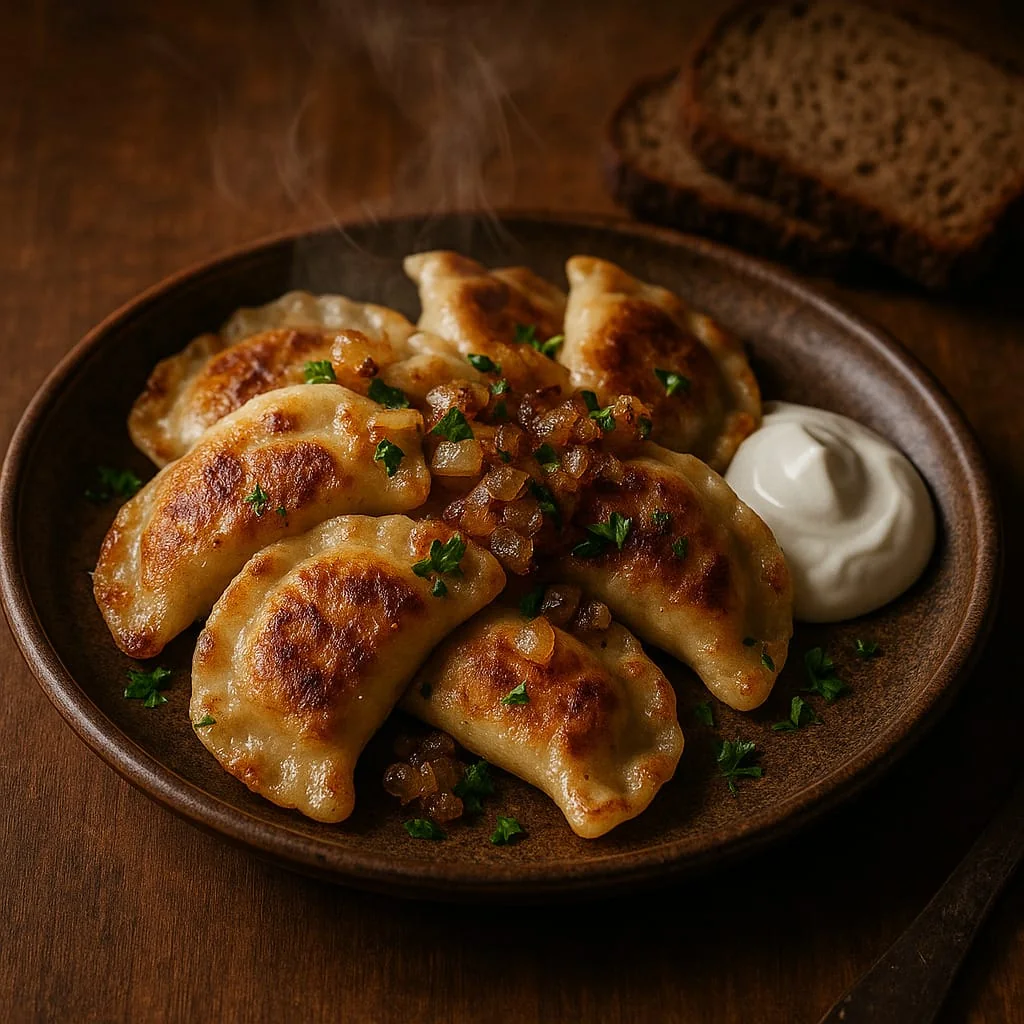
Pierogi are the Polish dumpling the rest of the world learned the word from. The earliest documented recipe appears in the “Compendium ferculorum” manuscript from 1682. They are folded into a half-moon, boiled until they float, and often pan-fried afterward in butter for a crisp exterior. The best-known version, pierogi ruskie, is potato and farmer’s cheese in a 2:1 ratio with caramelized onion, though fillings range widely: meat, sauerkraut with mushroom, sweet fruit for dessert. Pierogi are the largest of the three and are eaten as a full meal, usually with sour cream. This site also has a lighter version, with keto, gluten-free and plant-based options.
Varenyky are the Ukrainian dumpling, and the older name of the two: the word comes from varyty, “to boil.” The dough is thinner and the dumplings are smaller than pierogi, folded into a crescent rather than a full half-moon. Fillings split into savory (potato, sauerkraut with mushroom, farmer’s cheese, meat, cabbage) and sweet (sour cherries, berries, sweetened cheese, poppy seed). Both come from the same batch of dough in the same session, and a family will happily serve a savory bowl and a sweet one at the same meal. With varenyky, sour cream isn’t a topping choice. It’s required. There’s a lighter version here too.
Uszka are the smallest of the three by design. The name means “little ears,” from ucho, the Polish word for ear, describing the tight curled shape the dough takes once folded and pinched. Uszka are filled only with dried wild mushroom and softened onion, rolled from dough thinner than standard pierogi dough. They’re built to be eaten inside a bowl of soup, not beside one: specifically barszcz czerwony, the clear beet soup that anchors the Polish Christmas Eve supper, Wigilia. A lighter version of the whole pairing, soup and dumplings, is on the site too.
The one shape with a story behind it
Ukrainian tradition tied the crescent shape of varenyky to the young moon. In pre-Christian village life the dish carried real ritual weight: cheese-filled varenyky were left near spring wells as an offering, farmers carried them to the fields at harvest believing they gave strength to the reapers, and women brought them to new mothers with the wish that the baby would grow “as plump as a varenyk.” Nothing that specific survives for the other two. The ear shape of uszka is functional, not symbolic: small enough to fit on a spoon alongside a mouthful of broth, and that’s the whole reason for it. Pierogi’s half-moon is plainer still: fold a circle of dough over the filling and press the edge shut. No ritual meaning attached to it has survived in the record, just the practical need for a wide seal so a generous filling doesn’t burst open in the water.
Which one should you cook
For a dinner that stands on its own, pierogi is the answer: filling, sour cream, done. For a meal that wants to be savory and sweet in the same sitting, varenyky covers both without a second batch of dough. And if barszcz czerwony is already on the Christmas Eve menu, uszka comes with it. Polish tradition treats the soup and the dumpling as a single dish, not a soup with a garnish.
Further Reading & Sources
This entry draws on the sources below and on the recipes it links to elsewhere on this site. They are listed for readers who want to go further.
- “Polish Food 101 — Pierogi.” Culture.pl. culture.pl — the Polish dumpling, its fillings and its place in the Christmas Eve meal.
- “Pierogi.” Encyclopaedia Britannica. britannica.com — a short reference definition and the spread of the dish.
- “Uszka Dumplings.” Polonist. polonist.com — the small ear-shaped dumpling served in clear barszcz.
Leave a Reply