

Active time: about 1 hour 30 minutes | Cook time: 35 minutes | Serves: 4 per filling (8 dumplings) | Difficulty: Advanced
Quick Overview
- Grate raw potatoes and combine with cooled mashed potato to form a dense dough
- Mix a seasoned ground pork filling, or a curd cheese and mushroom filling for a vegetarian version
- Wrap the dough around the filling and shape into large oval dumplings
- Simmer gently until the dumplings float, then keep cooking until done through
- Fry bacon and onion for the classic sauce, or warm butter and onion for the curd cheese version
- Serve hot with the sour cream sauce spooned generously over the top
What Cepelinai Is
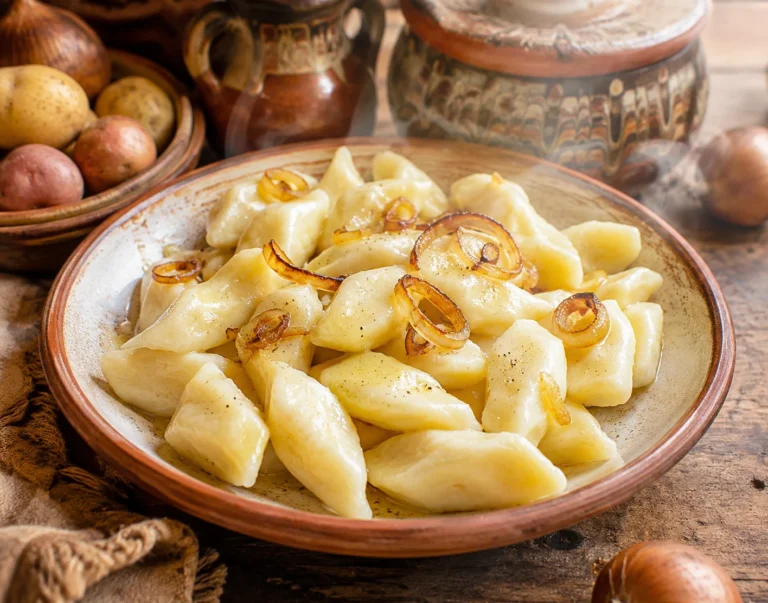
Cepelinai are large oval dumplings made from a dough of raw grated potato and cooked mashed potato, stuffed with a savory filling and served under a warm sour cream sauce. Lithuania’s national dish, they take their name from their resemblance to Zeppelin airships; before that name caught on, they were called didžkukuliai, “big dumplings.”¹ Ground pork is the most common filling, though dry curd cheese and mushrooms are both traditional, vegetarian-friendly alternatives.³
Two things make the dish distinctive: the two-texture potato dough, dense and faintly translucent once cooked, and the sheer size of it, with each dumpling running to about 300 grams before it even reaches the pot.⁴ The meat version is finished with a bacon and sour cream sauce; the curd cheese version gets a butter and sour cream sauce instead.² They were first made to fuel workers through cold Lithuanian winters, and the dish has stayed a heavy, filling meal ever since.³
History and Origins
Part of what makes cepelinai interesting is a small detail hiding in a very familiar dish: the name comes from the Zeppelin airship rather than from Lithuanian.¹ Before cepelinai caught on, the dumplings were known as didžkukuliai, simply “big dumplings,” a name some Lithuanians still prefer today.¹
Lithuanian ethnologist Vitalija Vasiliauskaitė has traced the dish’s likely path to Lower Saxony and Prussia before it took the shape and name Lithuania made its own.¹ The first written recipes appeared in the country only in the 1930s, and the dish became widely popular after the Second World War, arriving just too late for Lithuania’s first published cookbook.¹
Its postwar rise had a practical driver: cepelinai were cheap and filling, and Soviet-era factory canteens needed to feed large numbers of workers on a budget, which helped push the dish onto menus across the country; it was also one of the specific dishes permitted on the standardized restaurant menus the Soviet Union enforced at the time.¹,² Regional variation stayed limited given how recently the dish had spread, though potato dishes generally took hold earlier in areas historically closer to Prussia, such as Sūduva and Žemaitija, while potato pancakes stayed more common than cepelinai further east, in Aukštaitija.¹
A couple of Lithuanian food writers have floated a separate, unconfirmed idea: that cepelinai and other potato dishes may owe something to the Litvaks, Lithuania’s historic Jewish community, who relied on potatoes as a cheap, reliable ingredient during wartime shortages in the early twentieth century.² Food historians have not established this theory, and Lithuanians themselves overwhelmingly, and rightly, regard cepelinai as fully their own, a genuine point of national pride whatever its exact path into the country’s kitchens.² The dish has had its own holiday since 2014, World Cepelinai Day, proposed by Juozas Vaičiūnas, a Lithuanian-American in Detroit who noticed that a cepelinas is shaped rather like an American football and that Super Bowl Sunday was therefore the obvious date; it falls on the first Sunday of February.⁷
Traditional Recipe
This recipe was developed independently by Heritage Healthy Kitchen; the sources cited throughout are for further reading on the dish’s history and background, not the basis of the recipe itself.
Potato Dough (Makes Dough for 8 Dumplings)
Ingredients
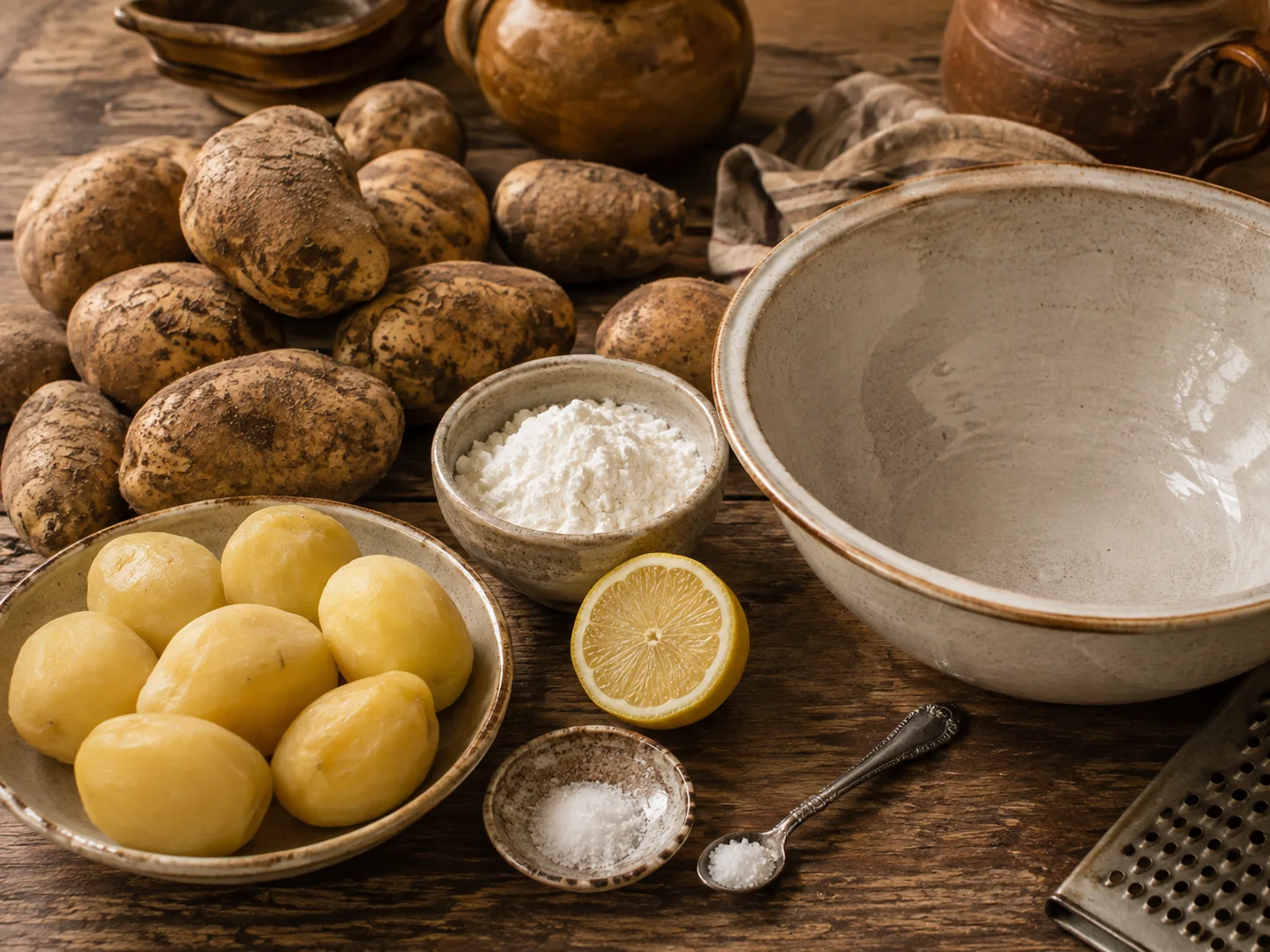
- 1.5 kg (3.3 lb) starchy potatoes, such as russet or Maris Piper, peeled
- 250 g (9 oz) cooked potatoes, peeled, boiled the day before and cooled
- 1 tbsp lemon juice or white vinegar
- 1 tsp salt
- 1 tbsp potato starch, optional, for extra binding
Instructions
- Grate the potatoes. Grate the raw potatoes on the fine holes of a box grater or in a food processor, working in batches and tossing with the lemon juice as you go to keep them from browning.
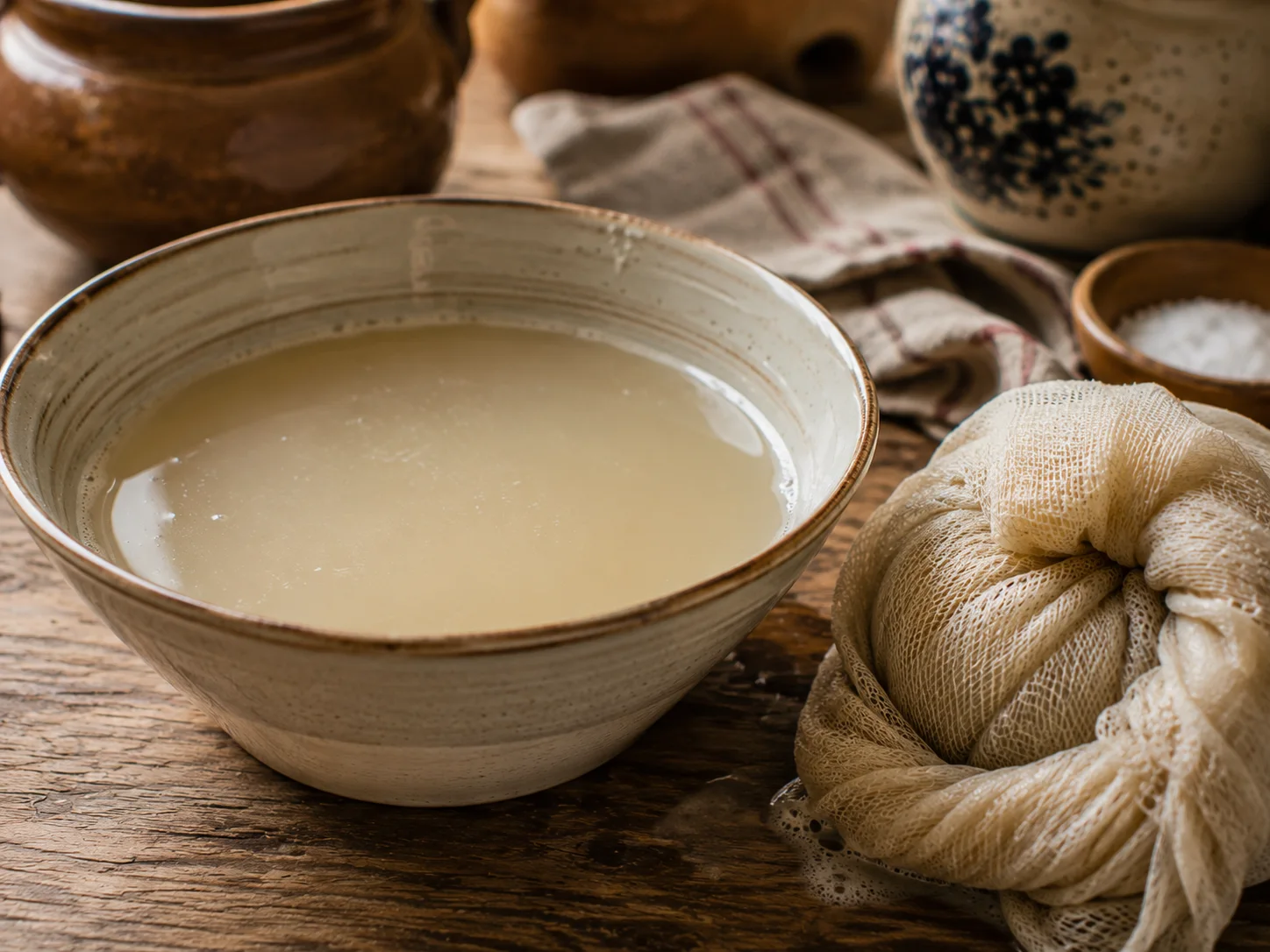
- Squeeze and settle the starch. Wrap the grated potato in a clean tea towel or muslin and wring out as much liquid as possible over a bowl. Let the liquid sit for 10 minutes so the starch settles at the bottom, then pour off the watery liquid and keep the starch.
- Build the dough. Mash the cooled cooked potatoes until smooth. Combine with the squeezed grated potato, the reserved starch, salt, and the optional extra potato starch. Mix until dense and firm enough to hold its shape when pressed.
Meat Filling (For a Full Batch of Meat Cepelinai)
Ingredients
- 400 g (14 oz) ground pork, not lean
- 1 medium onion, finely chopped
- 1 tsp salt
- 1/2 tsp black pepper
- 1/2 tsp dried marjoram
Instructions
- Soften the onion. Cook the onion in a little oil over medium heat until translucent, about 4 minutes, then let it cool completely.
- Mix the filling. Combine the raw pork with the cooled onion, salt, pepper, and marjoram until evenly mixed. Don’t cook the meat any further; it finishes cooking inside the dumpling.
Curd Cheese and Mushroom Filling (Vegetarian, For a Full Batch)
Ingredients
- 250 g (9 oz) dry curd cheese, such as farmer’s cheese or well-drained quark
- 150 g (5 oz) mushrooms, finely chopped
- 1 small onion, finely chopped
- 1 tbsp fresh dill, chopped
- 1/2 tsp salt
- 1/4 tsp black pepper
Instructions
- Cook the mushrooms. Sauté the mushrooms and onion in a little oil or butter over medium heat until the mushrooms release their liquid and it evaporates, about 8 minutes. Let cool completely.
- Mix the filling. Combine the cooled mushroom mixture with the curd cheese, dill, salt, and pepper. The filling should hold together when pressed; if it feels too wet, drain the curd cheese further first.
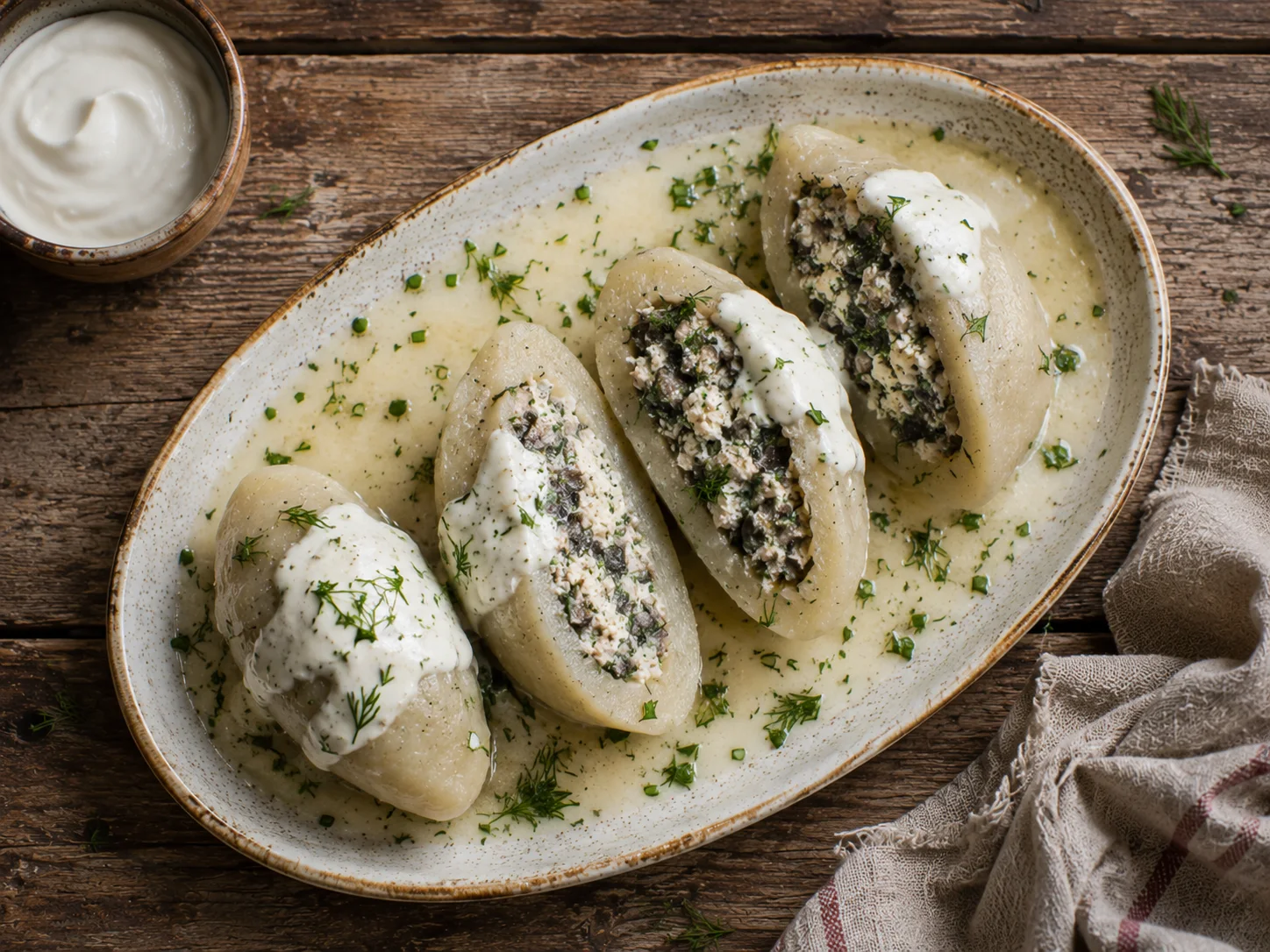
To make a mixed batch instead of an all-meat or all-vegetarian one, use half of each filling recipe above, enough for four dumplings of each kind.
Shaping and Cooking the Dumplings
Instructions
- Portion the dough. Divide the dough into 8 portions, about 220 g each. With wet hands, flatten one portion into a disc about 1 cm thick in your palm.
- Fill and shape. Place about 50 g of filling, meat or curd cheese and mushroom, in the center. Fold the dough up and around it, pinching the seam closed, then shape into an oval. Repeat with the remaining dough and filling.
- Start the water. Bring a wide pot of well-salted water to a gentle simmer, not a rolling boil. Lower the dumplings in carefully, one at a time.
- Cook through. Keep the water at a steady, gentle simmer. The dumplings will sink, then rise to the surface after about 15 minutes; continue cooking another 15 to 20 minutes once they’ve risen.
- Drain and plate. Lift the dumplings out with a slotted spoon and drain briefly before serving.
Sauce for Meat Cepelinai
Ingredients
- 150 g (5 oz) smoked bacon or pork belly, diced small
- 1 small onion, finely chopped
- 200 ml (a scant cup) full-fat sour cream
Instructions
- Fry the bacon slowly in a dry pan until the fat renders and the pieces turn crisp, about 8 minutes.
- Add the onion in the last 2 minutes and cook until softened.
- Remove from the heat and let the pan cool slightly, then stir in the sour cream so it doesn’t split. Spoon generously over the dumplings.
Sauce for Curd Cheese and Mushroom Cepelinai
Ingredients
- 3 tbsp (45 g) butter
- 1 small onion, finely chopped
- 200 ml (a scant cup) full-fat sour cream
- Fresh dill or chives, chopped, to finish
Instructions
- Melt the butter in a small pan over medium-low heat and cook the onion until soft, about 5 minutes.
- Remove from the heat and stir in the sour cream. Spoon over the dumplings and finish with dill or chives.
Kitchen Tips
Squeeze the grated potato harder than feels necessary. Leftover moisture is the main reason homemade cepelinai fall apart in the pot; the mixture should feel dry, almost crumbly, before it goes into the dough.
Keep the dough wall around the filling to roughly half a centimeter. A thicker wall cooks unevenly and throws off the balance between potato and filling.
A gentle simmer, not a rolling boil, keeps the dumplings intact. A hard boil is the second most common cause of cepelinai splitting apart in the pot.
Curd cheese fillings vary by household. Some cooks add chopped tarragon or mint alongside the dill for a brighter, more herbal filling, and either works well with the curd cheese base.²
Some Lithuanian kitchens serve a creamy mushroom sauce in place of the classic bacon or butter and sour cream toppings, a modern variation worth trying once the traditional version is familiar.⁴
If serving a mixed batch of both fillings, shape the meat and curd cheese dumplings a little differently, rounder versus more pointed, so they’re easy to tell apart once plated.
Nutritional Information
Meat Cepelinai, Per Serving (2 Dumplings with Bacon-Sour Cream Sauce, 1 of 4 Servings)
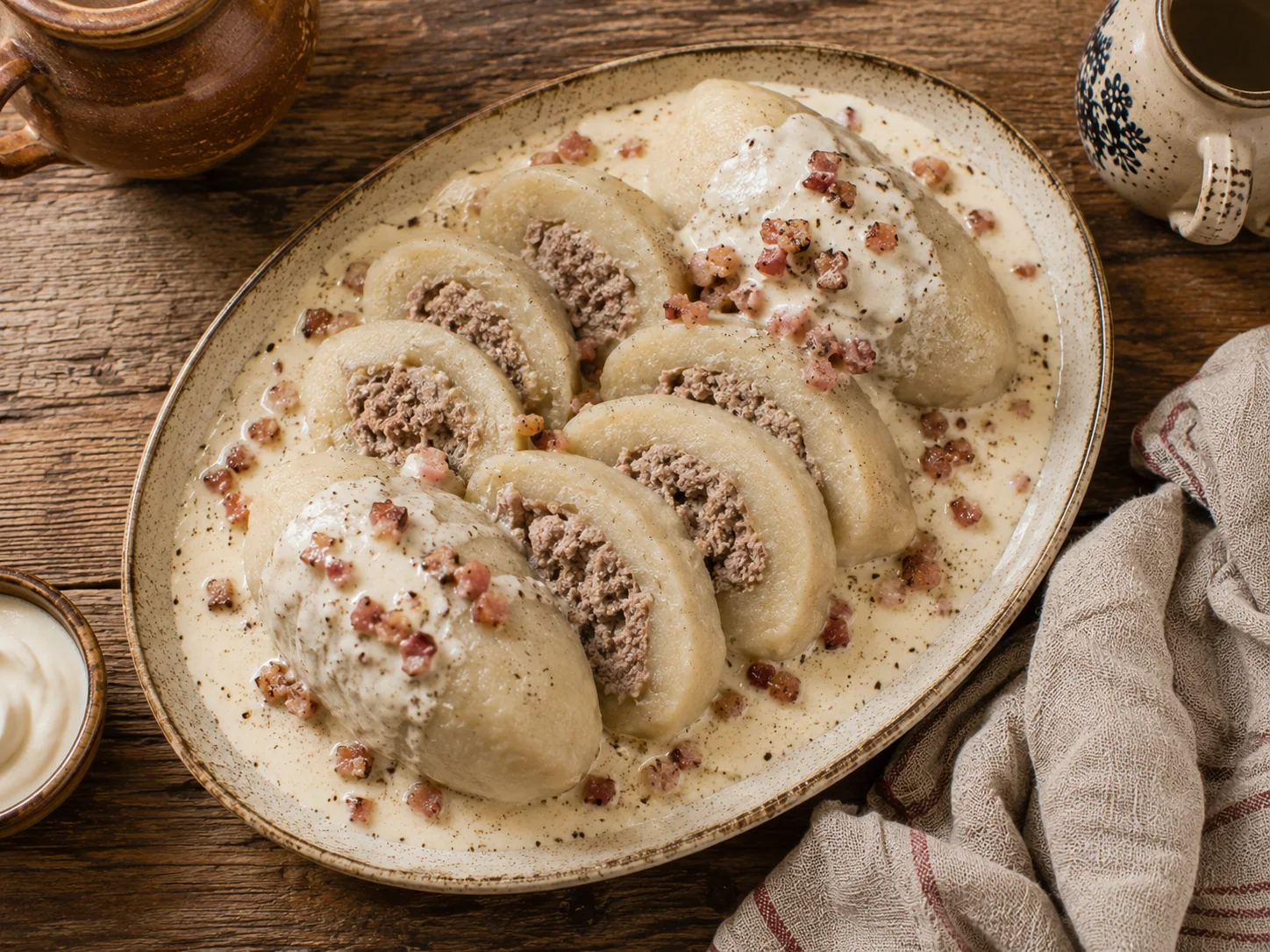
- Calories: approximately 840–1,030 kcal
- Protein: approximately 37–45g
- Total fat: approximately 44–53g
- Carbohydrates: approximately 75–91g
- Dietary fiber: approximately 7–9g
- Sodium: approximately 1,730–2,115mg
Curd Cheese and Mushroom Cepelinai, Per Serving (2 Dumplings with Butter-Sour Cream Sauce, 1 of 4 Servings)
- Calories: approximately 560–680 kcal
- Protein: approximately 17–21g
- Total fat: approximately 22–26g
- Carbohydrates: approximately 76–93g
- Dietary fiber: approximately 7–9g
- Sodium: approximately 840–1,030mg
Nutritional values are estimates calculated from the specific ingredient quantities in this recipe, using standard reference values. They will vary depending on the exact cut of pork, the fat content of the curd cheese, and how much sauce is served.
Cepelinai is a genuinely heavy dish by design, and the numbers above bear that out. A meat serving alone carries roughly 18 to 22 grams of saturated fat between the pork and the bacon-sour cream sauce, comfortably above the American Heart Association’s suggested daily limit of about 13 grams in a single plate.⁶ The curd cheese and mushroom version runs noticeably lighter across the board, since it swaps fatty pork and bacon for cheese and vegetables and trades the bacon sauce for a butter-based one.
For a lighter plate either way, a smaller sauce portion or light sour cream cuts a meaningful amount of saturated fat without changing the dumpling itself. One detail already works in the dish’s favor: the portion of potato that’s boiled and cooled before going into the dough develops more resistant starch in the process, which tends to lower the meal’s overall glycemic load compared with using only raw grated potato.⁵
Storage and Reheating
Cooked cepelinai keep in the refrigerator for up to 3 days in an airtight container. Store the sauce separately so the dumplings don’t turn soggy.
They also freeze well before cooking. Freeze the shaped, uncooked dumplings on a tray until solid, then transfer them to a bag; boil straight from frozen, adding about 10 extra minutes to the cooking time.
Reheat cooked dumplings gently, either in a covered pan with a splash of water over low heat, or in the microwave in short bursts. A hard reheat toughens the dough.
Traditional Lithuanian Cepelinai

Ingredients
Potato Dough
- 1.5 kg (3.3 lb) starchy potatoes, such as russet or Maris Piper, peeled
- 250 g (9 oz) cooked potatoes, peeled, boiled the day before and cooled
- 1 tbsp lemon juice or white vinegar
- 1 tsp salt
- 1 tbsp potato starch, optional, for extra binding
Meat Filling
- 400 g (14 oz) ground pork, not lean
- 1 medium onion, finely chopped
- 1 tsp salt
- 1/2 tsp black pepper
- 1/2 tsp dried marjoram
Bacon and Sour Cream Sauce
- 150 g (5 oz) smoked bacon or pork belly, diced small
- 1 small onion, finely chopped
- 200 ml (a scant cup) full-fat sour cream
Instructions
- Make the dough: Grate the raw potatoes, tossing with lemon juice to keep them from browning. Wrap in a clean tea towel and wring out the liquid, letting it settle for 10 minutes to reserve the starch. Mash the cooled cooked potatoes and combine with the squeezed potato, reserved starch, and salt into a dense, firm dough.
- Make the filling: Cook the onion in a little oil until translucent, about 4 minutes, and let it cool completely. Combine with the raw ground pork, salt, pepper, and marjoram until evenly mixed.
- Shape the dumplings: Divide the dough into 8 portions, about 220 g each. With wet hands, flatten each into a disc, place about 50 g of the meat filling in the center, fold the dough around it, pinch the seam closed, and shape into an oval.
- Cook: Lower the dumplings into a wide pot of gently simmering, well-salted water. They will sink, then rise after about 15 minutes; continue simmering another 15 to 20 minutes once risen, then drain briefly.
- Make the sauce: Fry the diced bacon slowly until the fat renders and it turns crisp, about 8 minutes. Add the onion in the last 2 minutes, then remove from the heat and stir in the sour cream so it doesn’t split.
- Serve: Spoon the bacon and sour cream sauce generously over the hot dumplings.
Curd Cheese and Mushroom Cepelinai
Ingredients
Potato Dough
- 1.5 kg (3.3 lb) starchy potatoes, such as russet or Maris Piper, peeled
- 250 g (9 oz) cooked potatoes, peeled, boiled the day before and cooled
- 1 tbsp lemon juice or white vinegar
- 1 tsp salt
- 1 tbsp potato starch, optional, for extra binding
Curd Cheese and Mushroom Filling
- 250 g (9 oz) dry curd cheese, such as farmer’s cheese or well-drained quark
- 150 g (5 oz) mushrooms, finely chopped
- 1 small onion, finely chopped
- 1 tbsp fresh dill, chopped
- 1/2 tsp salt
- 1/4 tsp black pepper
Butter and Sour Cream Sauce
- 3 tbsp (45 g) butter
- 1 small onion, finely chopped
- 200 ml (a scant cup) full-fat sour cream
- Fresh dill or chives, chopped, to finish
Instructions
- Make the dough: Grate the raw potatoes, tossing with lemon juice to keep them from browning. Wrap in a clean tea towel and wring out the liquid, letting it settle for 10 minutes to reserve the starch. Mash the cooled cooked potatoes and combine with the squeezed potato, reserved starch, and salt into a dense, firm dough.
- Make the filling: Sauté the mushrooms and onion in a little oil or butter until the mushrooms release their liquid and it evaporates, about 8 minutes, then let cool completely. Combine with the curd cheese, dill, salt, and pepper.
- Shape the dumplings: Divide the dough into 8 portions, about 220 g each. With wet hands, flatten each into a disc, place about 50 g of the curd cheese and mushroom filling in the center, fold the dough around it, pinch the seam closed, and shape into an oval.
- Cook: Lower the dumplings into a wide pot of gently simmering, well-salted water. They will sink, then rise after about 15 minutes; continue simmering another 15 to 20 minutes once risen, then drain briefly.
- Make the sauce: Melt the butter and cook the onion until soft, about 5 minutes, then remove from the heat and stir in the sour cream.
- Serve: Spoon the sauce over the hot dumplings and finish with chopped dill or chives.
Frequently Asked Questions
What does cepelinai actually taste like?
Mild and starchy on the outside, with a dense, faintly chewy bite closer to an oversized gnocchi than a typical dumpling wrapper. The filling carries most of the seasoning; the potato dough itself is deliberately plain.
Why are cepelinai named after an airship?
Their shape resembles the rigid Zeppelin airships that were well known across Europe in the early twentieth century, and the name stuck.¹ Before that, they were called didžkukuliai, or “big dumplings.”¹
Is didžkukuliai a different dish, or just an older name for cepelinai?
Same dish, older name. Didžkukuliai was the original term, and it’s the one Vasiliauskaitė considers more honest, since the dish likely wasn’t a Lithuanian invention to begin with. Cepelinai is what shows up on virtually every restaurant menu today.¹
Can the dumplings be made ahead and frozen?
Yes, and it’s the easiest way to manage the amount of work involved. Shape the raw dumplings, freeze them solid on a tray, then bag them; boil straight from frozen rather than thawing first.
What kind of potatoes work best?
Starchy varieties like russet or Maris Piper. Waxy potatoes hold more water and less starch by nature,⁵ and in this dough that difference shows up as a looser mix that’s more likely to fall apart during cooking.
Is the curd cheese and mushroom filling suitable for vegetarians, and can it be made vegan?
As written, it’s vegetarian but not vegan, since it uses dairy curd cheese, butter, and sour cream. A vegan version is possible with a plant-based cheese and a dairy-free sour cream alternative, though the texture and flavor shift noticeably from the traditional version.⁴
Is there a lighter or “healthy” version of this recipe on the site?
Not as a separate article, but the curd cheese and mushroom version above is a genuinely lighter, vegetarian alternative to the meat version, with its own recipe card: roughly half the fat and about a third fewer calories per serving. For either version, a smaller sauce portion or light sour cream trims even more without changing the dish itself.
Further Reading & Sources
The following sources were consulted in researching the history, technique, and cultural background of traditional Lithuanian cepelinai. Heritage Healthy Kitchen’s recipe was developed independently; these links are provided for readers who want to explore further.
- “Cepelinai, a not so traditional staple of Lithuanian cuisine.” LRT (Lithuanian National Radio and Television). lrt.lt/en/news-in-english — ethnologist Vitalija Vasiliauskaitė on the dish’s German origin, the didžkukuliai name, its recent adoption and postwar popularization, regional variation, and World Cepelinai Day.
- “Cepelinai dumplings help tell the story of Lithuania’s past.” SBS Food. sbs.com.au/food — the Litvak-origin theory from chef Rita Kersulyte-Ryckova and food writer Nida Degutiene, filling and sauce variations, and Soviet-era menu standardization.
- “Cepelinai: Lithuania’s Famous Dish.” Lithuania Travel, official state tourism board. lithuania.travel — filling types, the dish’s origin as workers’ fuel, and the standard sour cream and bacon serving.
- “The story behind Cepelinai (Zeppelins).” Šnekutis, Vilnius. snekutis.com — dumpling size, vegetarian and vegan filling variations, and the mushroom sauce alternative.
- “Are Potatoes Healthy?” The Nutrition Source, Harvard T.H. Chan School of Public Health. nutritionsource.hsph.harvard.edu/potatoes — potassium and fiber content of potatoes, starchy versus waxy varieties, and the effect of boiling and cooling on resistant starch.
- “Saturated Fats.” American Heart Association. heart.org — recommended daily limit for saturated fat intake.
- Tvirbutas, Saulius. “Amerikos lietuvis populiarina Pasaulinę cepelinų dieną.” Kauno diena, 2 February 2014. kauno.diena.lt — interview with the founder in the week of the first celebration: his full name, his home in Detroit, and the Super Bowl reasoning behind the date. Some later accounts give the first name as Jonas; this contemporaneous interview and the 2016 report in the Lithuania Tribune both give Juozas.
Disclaimer
The information in this article is provided for educational and informational purposes only. Heritage Healthy Kitchen makes no representations or warranties regarding the accuracy or completeness of any content on this site. Nutritional values are estimates only and will vary depending on the specific ingredients, brands, and measurements used. This content is not intended as dietary, medical, or professional nutritional advice. Always consult a qualified healthcare provider regarding any dietary needs or health conditions. Heritage Healthy Kitchen is not responsible for any outcomes resulting from the use of recipes or information published on this site.
You Might Also Like
More heritage recipes from our kitchen


Leave a Reply